
2026
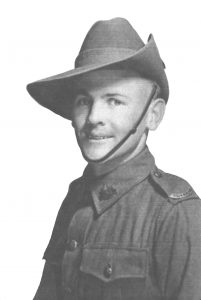
Below is the speech presented by Michele Flanders, daughter of WX9132 Arthur Gamble 2/4TH MGB at this year’s Anzac Day Service in Leeman.
‘Each one of us here today, all have stories about our family and friends involved in the horrific suffering of past and present wars of the world.
I would like to tell you my story about a young man.
Like many others in 1940, this young man was caught up in the pre-war fever of World War II and volunteered for military service. He had just turned 22 years old.
Leaving the family farm, his parents, brothers and sisters, he and a mate walked 105 kilometres to the Northam Army Camp and enlisted with the then named Australian Imperial Forces.
He was posted and trained with the newly formed 2nd/4th Machine Gun Battalion, all West Australian personnel and based in Northam.
After training, his Battalion marched 115 kilometres to Fremantle where they embarked on ships for overseas services Landing in Singapore … their mission was to help with fire support and defend the island against Japanese invasion. During these campaigns the 2/4th Machine Gun Battalion personal were either killed or became Prisoners of War.
15th of February 1942 will always be one of the darkest days in Australia’s wartime history. It was this day that Singapore fell to the Imperial Japanese Army and more than 15,000 Australian soldiers became Prisoners of War. Of these, more than 7,000 did not make it home.
Now a POW, this young man was imprisoned in Changi Prison, and he was required to work for the Japanese loading supplies at the wharves, building roads and constructing the Singapore Airport Runways. Life was relatively easy but was soon to take a turn for the worse, for his Japanese captors were intent on building a railway through the thick jungle of northern Thailand and into Burma.
The POWs were loaded like cattle onto trains and transported north to BAM PONG. From here they began an exhausting 140-kilometre journey on foot through hilly, mosquito and rat-infested jungle terrain with many rivers to cross. They walked from one primitive work camp to another, losing friends along the way, dying from exhaustion, dehydration, starvation or beatings from the Guards.
Each camp was as bad as the next; the huts were constructed of bamboo with palm leaves for the roof, Bedding nothing more than planks of bamboo with just 70 centimetres between each prisoner. Cramped conditions, Poor sanitation, Starving and with very little or no medication … Eventually these weary young lads came to a stop and were detailed to begin work on a railway with enforced hard labour!
The prisoners worked under gruelling conditions sometimes 16/18 hours a day …followed by several kilometres walk back to camp. It was here that many Australians, worked on Konyu Cutting or Hellfire Pass …a particularly difficult section of the railway. During the six weeks it took to build this section of the railway, 69 men were beaten to death by the Japanese and Korean guards.
His job was part of a hammer and tap team. Breaking rocks on steep cliffs …one man holding a steel chisel while the other would slam down a hammer to split the rock. More than once the hammer would miss its stop!
Every now and then he and his mates managed to slip away, unnoticed by the guards and steal from the local farmers…eggs, chickens and produce from their gardens. They even managed on one occasion to find some homemade whiskey…which they polished off with much GUSTO AND Laughter, trouble was they had to go back the very next night to retrieve one of the POW’s false teeth.
As the monsoon season set in, their boots and clothing disintegrated, along with their health. Weak and starved, disease was rife and loss of life was common. This young man (along with many others) suffered various ailments including beriberi, dysentery, rubella, malaria and tropical ulcers. He was incredibly fortunate to survive cholera, thanks to the help of his Buddies, who carried him from the makeshift cholera hospital, back to his filthy bed, force-fed him and nursed him back to relative health.
Wonderful mateship was the only way many men survived the suffering they endured day in day out for years on end. This lad survived his time on the railway and was returned to Changi Prison to await further orders from the Japanese. He undertook work in the prison gardens and considered Changi a Palace compared to the horrific camps he and his mates had lived in.
The Construction of this Railway of Death was 415 kilometres long, through almost impassable jungle was responsible for the loss of over Ninety-Four thousand deaths.
The railway was completed in October 1943 but was never used as the Americans dropped bombs and blew half of it up.
Japan surrendered August 1945 when the USA dropped an atomic bomb on Hiroshima and then Nagasaki. Killing One Hundred & Twenty Thousand (120,000) Japanese civilians. The Second World War was now over.
Word got back to families that their sons were alive as most had received letters stating their sons were either missing or killed in action.
The Australian troops embarked on ships to finally arrive home after five long years. The 2/4th Machine Battalion was never re-raised.
The man is my story weighed just 40 kilograms and after some time in hospital was welcomed home by his family who had believed he was dead.
His name Private Arthur Raymond Gamble (WX9132) of the 2nd 4th Machinegun Battalion. He was officially discharged from the Australian Army on December 13th, 1945, …. This man was and still is my hero… he’s, my Dad.
At the age of 93, in 2012 Dad was invited to Japan by the Japanese Government in conjunction with the Australian Government to take part in a Prisoner of War Friendship programme. During the visit he received a formal apology from the Japanese Minister of Foreign Affairs. Dad’s reply
“I have many memories of my mates and experiences during the war; however, I harbour no animosity towards the Japanese people. I have watched with interest the development of Japan after the war and their growth into a world economic influence and their development as one of Australia’s major trading partners,
Dad passed away 2013 aged 94.
I tell this story because I believe it epitomises the mateship and camaraderie of the Australian Diggers in the true spirit of ANZAC.
To all our Service Men and Women (and Service Animals) who have served, or are servicing our nation, my heart goes out to you…. let’s hope our world can learn to live together in peace
I thank them all……. Lest We Forget….’