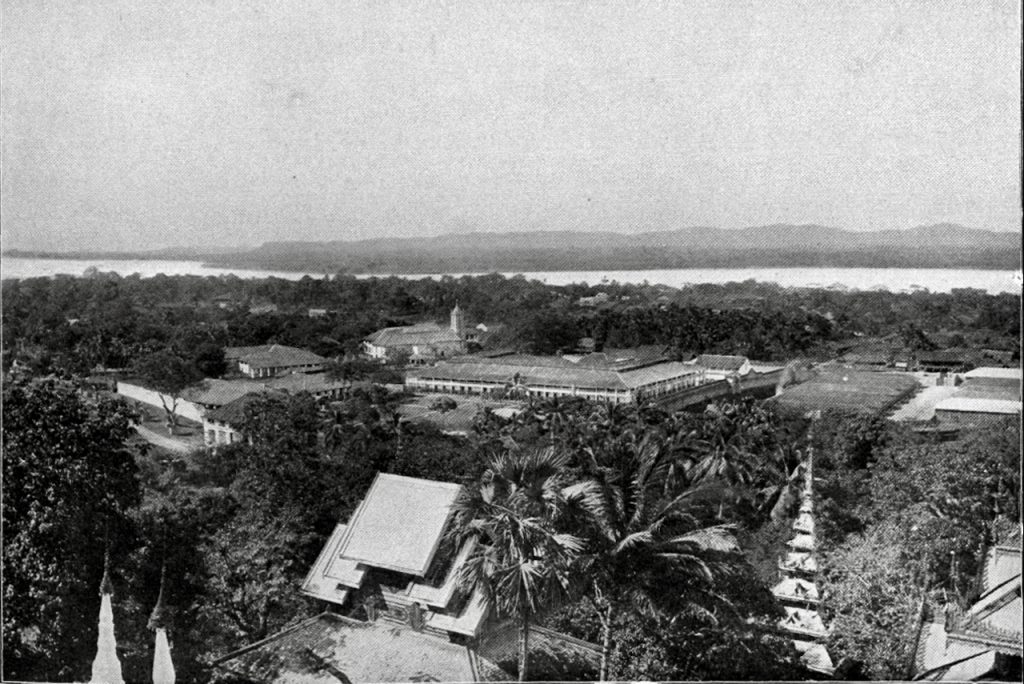
Moulmein - Burma
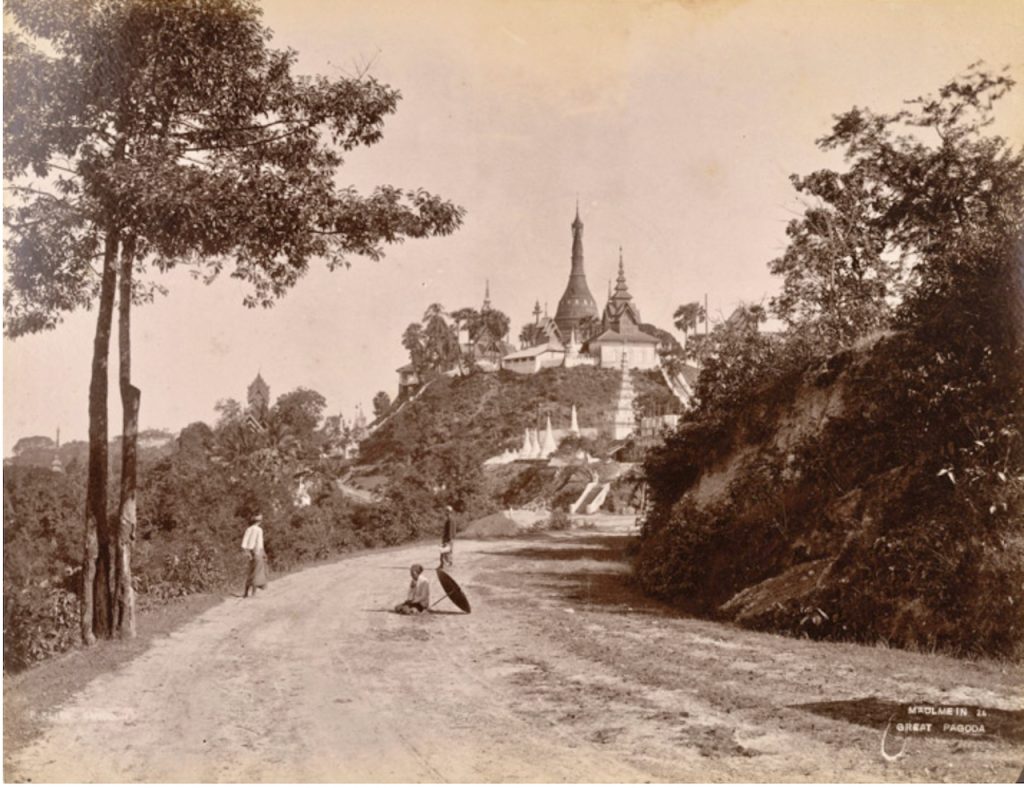
THE GREAT PAGODA, MOULMEIN
This was a Transit Camp – some POW groups staying one or two nights and others a little longer.
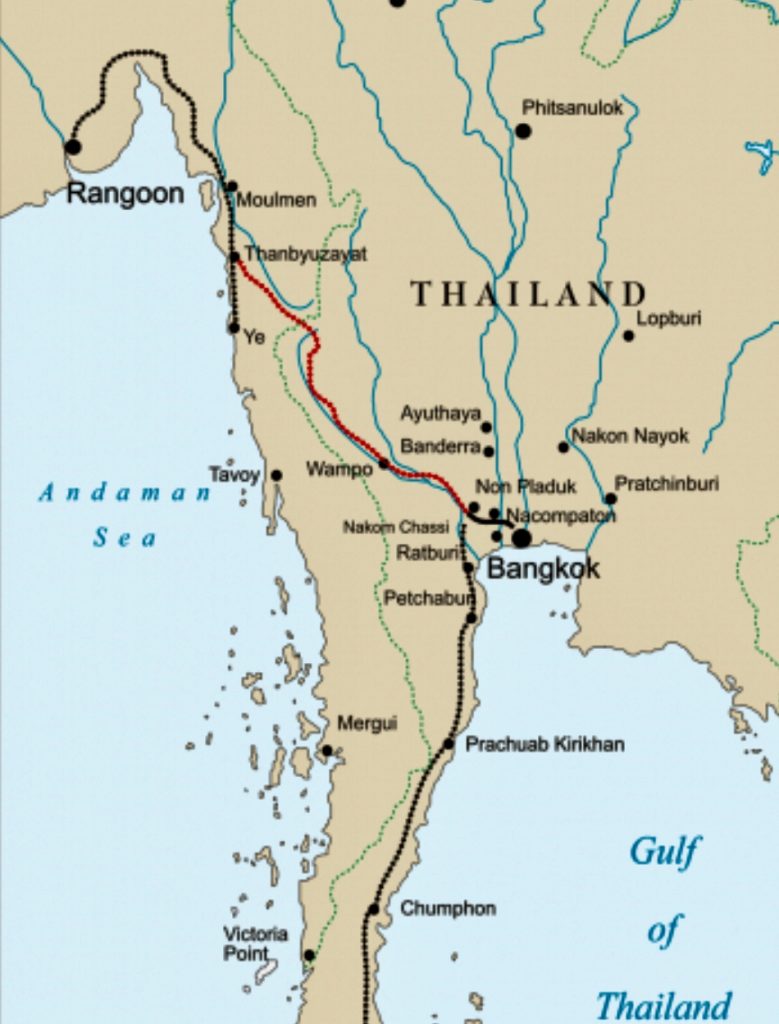
MOULMEIN PORT, BURMA – A rail link existed between here and Thanbuzayat and to Ye pre war. It was possible to travel by train to Rangoon.
It is about 100 miles across the bay from Rangoon in a south- east direction on the Irrawaddy River. POWs were kept in an old British gaol (the date 1909 over the door).
It was a town where POWs from ‘A’ Force from Java passed through on their way to Burma Railway and Thanbyuzayat the first to arrive was in 1942.
POWs who successfully send cards home to their families used Moumein Camp, although none were written here.
JAVA PARTY NO. 4 (about 33 men survived, 10 died, 1 remained Singapore, one sent to Sandakan, died)
Was under the command of Lt. Col J.M. Williams. This Party departed Tanjong Priok 8 October 1942 on ‘Kimmon Maru’ for Singapore where they disembarked 12 October 1942.
At Changi, Java Party No. 4 was reunited with Java Party No. 3 who had reached Singapore a few days earlier.
Two days later Java Parties 3 and 4 departed Singapore having boarded ‘Maebashi Maru ‘ to Rangoon, Burma arriving on 23 October 1942. They were transhipped to a smaller vessel called ‘Yamagata Maru’ which took the men up the Salaween River in Burma to Moulmein. They arrived late on 24 October and were accommodated overnight in the local gaol.
It was at Moulmein Java Party No. 4 was organised into 2 groups, Black and Williams Force. There were approximately 43 men from 2/4th with Williams Force (and about 6 men with Black Force, including William ‘Bill’ Gregory).
Williams Force from Java (884 POWs mainly from 2/2 Pioneers & ‘Perth’ survivors) arrived Moulmein 25 October 1942 via Singapore. Joined by Anderson Force January 1943 to become No 1 Mobile Force
In late October 1942 Williams and Black Forces travelled from South Moulmein Railway Station 40 miles to Thanbyuzayat which became the HQ for Burma Administration Group 4. Group 4 also included Green, Ramsay and Anderson Forces.
From AWM:
‘Prisoners of war from Java (Williams Force, commanded by Lieutenant Colonel J. M. Williams, and Black Force, including 593 Australians commanded by Lieutenant Colonel C. M. Black) travelled via Singapore and thence to Moulmein, arriving in Burma on 29-30 October 1942. Williams Force was based at Tanyin and Black Force at Beke Taung camp at Kilo 40. In October 1942 survivors from the HMAS Perth were shipped to Singapore, and then to Burma. In October 1942, 385 Australians, commanded by Major L.J. Robertson, left Java on board the Moji Maru ; they joined up with A Force on 17 January 1943.’
Below: Moulmein map prepared by US POWs.