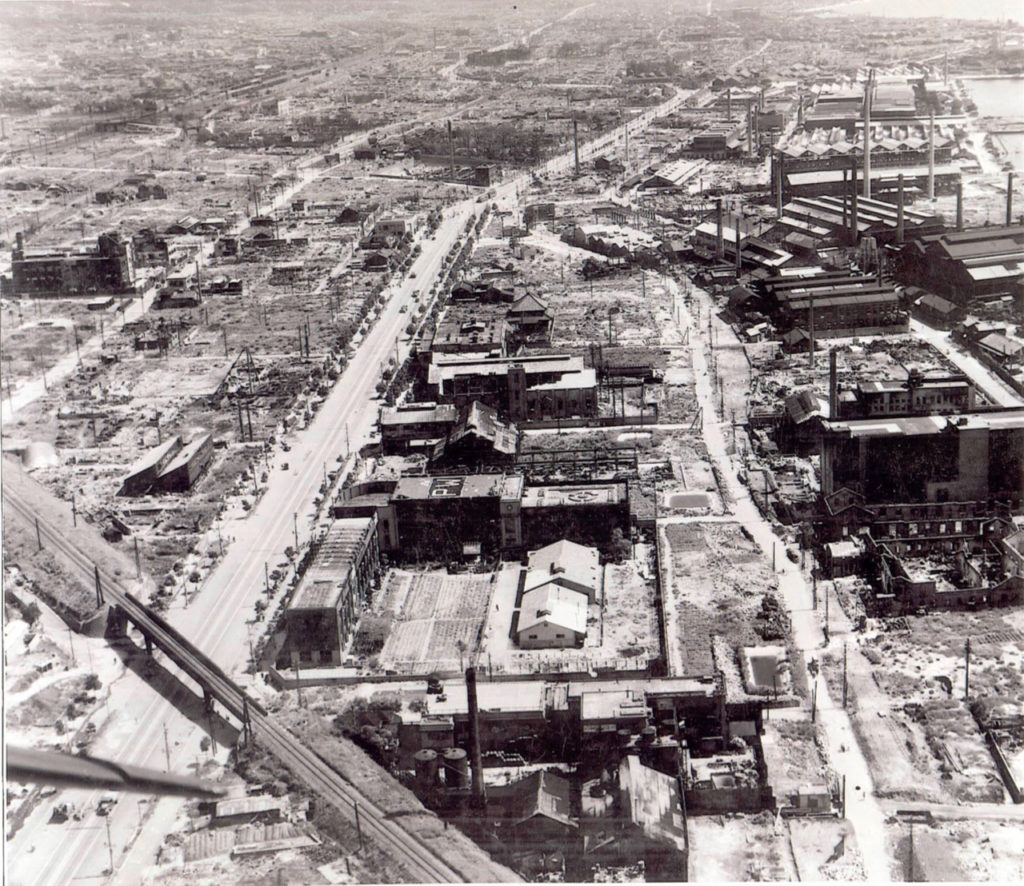
Wakinohama, Osaka #14-B - Japan
Wakinohama, Osaka #14-B – Japan
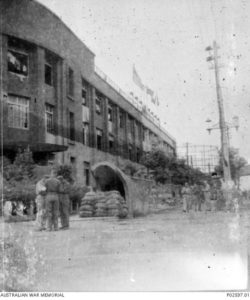
‘Kobe, Japan. c. August 1945. Wakinohama Prisoner of War (POW) camp after it had been liberated. A number of allied flags are flying, including a United States flag closest to view. Members of a United States unit who presumably liberated the camp are left and right and a sandbagged entrance is just outside the building. Many Australians were held here, including members of the 2/4th Machine Gun Battalion. (Donor J. Lane) ‘ alias John Ramsbottom (Lane) donated this and a great number of his personal photos to AWM.
Fifty prisoners, including six 2/4th members, moved from Maruyama Park to Wakinohama on 21st June 1945. This was a partially burnt out brick building that was once used as a school located a mile and a half east of the ruins of Kobe House. There was a large yard divided by a fence, most of which was used as a vegetable garden by the guards. The water supply was inadequate and the effluents were blocked. Diet was mainly salvaged rice, generally dirty, partially burnt and often riddled with shrapnel. As a result, diarrohea was prevalent. Rice soon became in short supply and was replaced by barley and sorghum seed. The POW’s worked in go-downs. There were frequent air raids on the city.
It was at Wakinohama, now housing 545 prisoners of war , that the men were to hear a special announcement on the night of Wednesday 15th August 1945 from the camp commander that there would be no more bombs and no more sirens and that they could sleep in peace this night, the war was over!
On 6th September 1945 an allied recovery team arrived to repatriate the POW’s.
From here the men began their journey home.
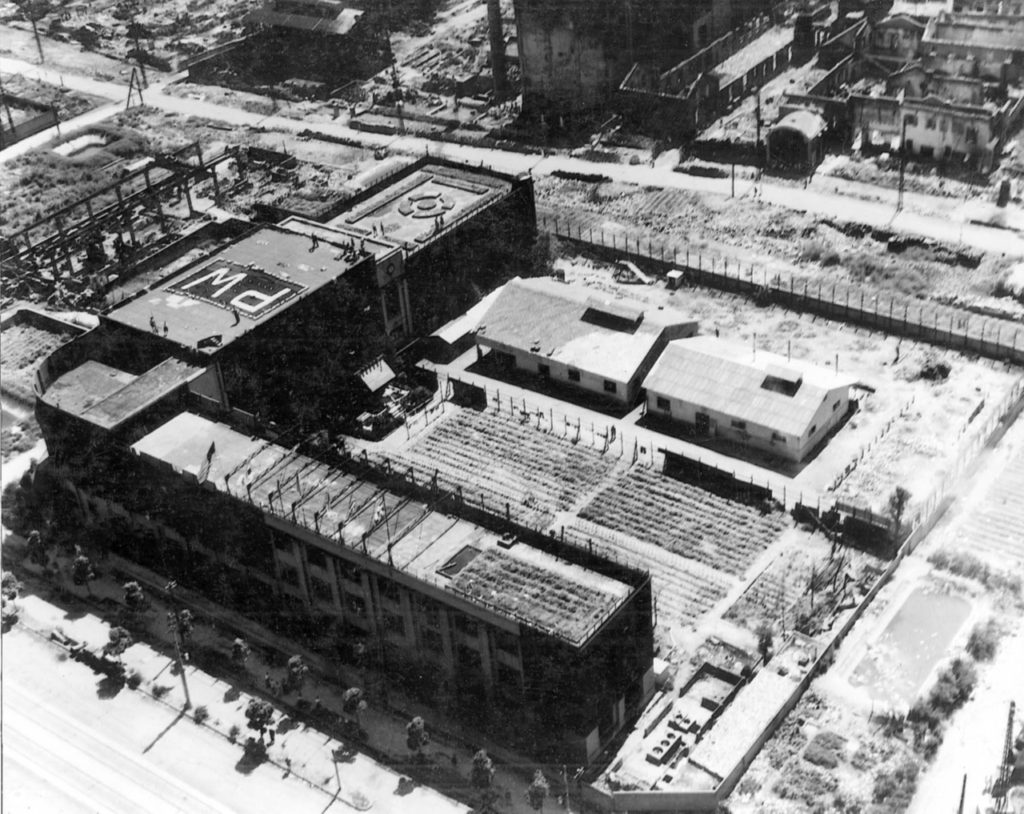
Wakinohama Camp with the distinctive PW painted on roof in both photographs.