11TH BATTALION WW1
2/4th family names include ALLPIKE, ATTENBOROUGH (BAILEY), HALL, HEWBY, HINDLE, HOLME, MCGLINN, NICHOLSON, O’NEIL, PARD RICHES, THORNS.
Among the first infantry units raised during World War I for First Australian Imperial Force.
Headquarters: PERTH
“LEGS ELEVEN”
BLACKBOY HILL CAMP
“They were the boys from the Western State, Brave Battalion Eleven;
They did not tarry, they did not wait, When the call was given. First to respond to their Country’s need, Nothing they feared, nor death did they heed
………. Brave Battalion Eleven”
(Verse by S.M. Harris – copied from “Legs-Eleven” the story of the 11th Battalion AIF in the Great War by Capt. Walter C Belford)
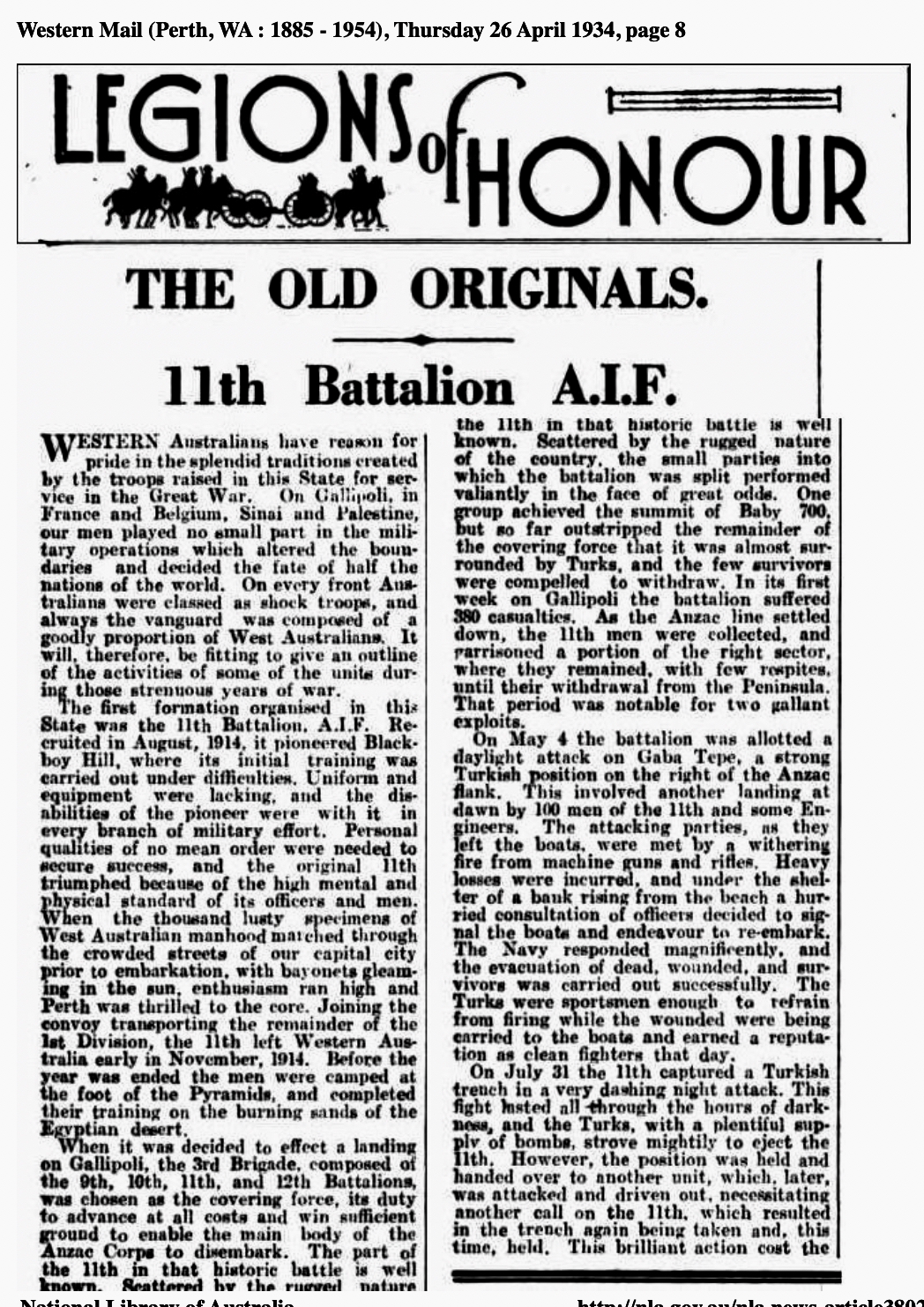
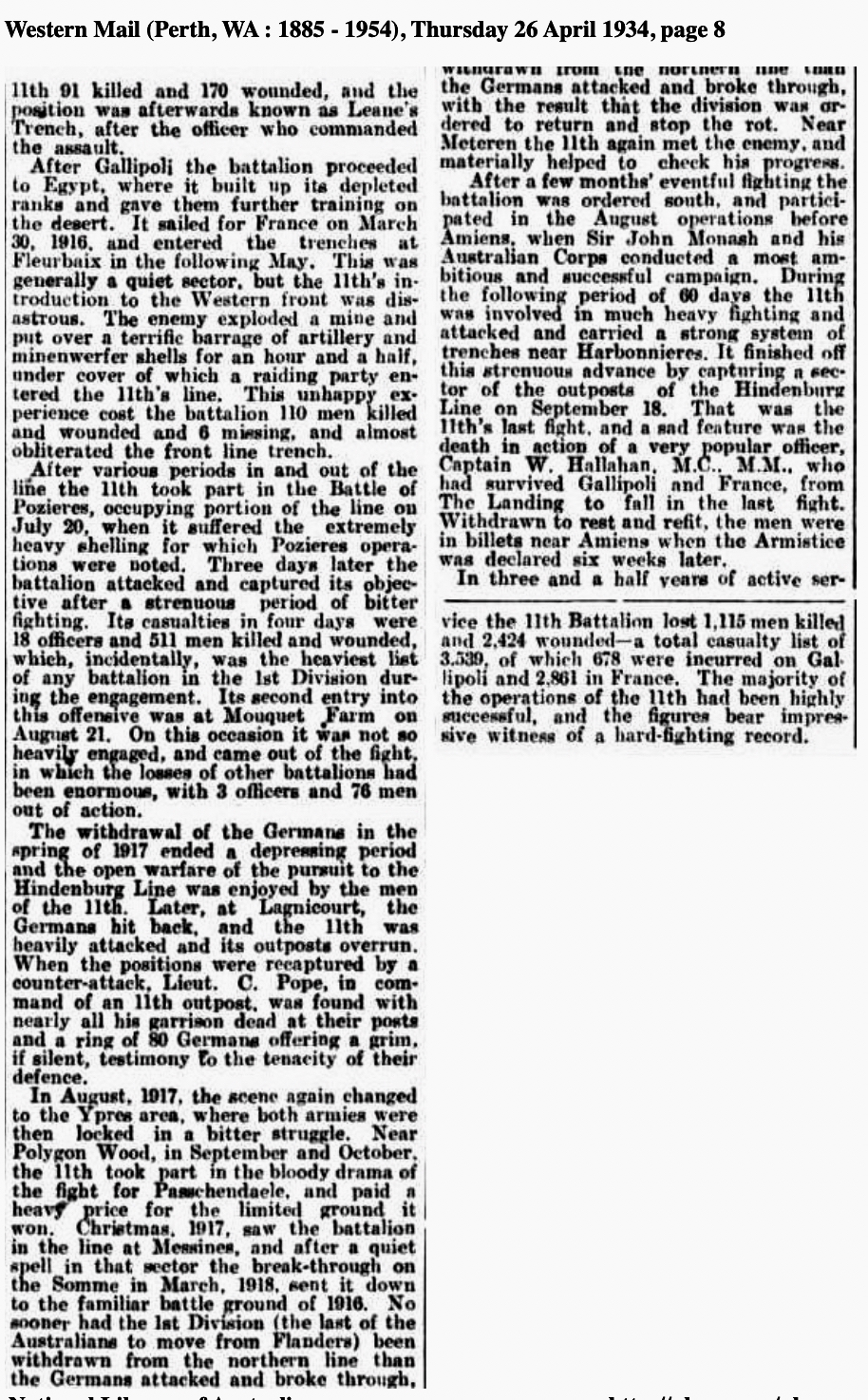
During 3 1/2 years of active service 11th Battalion lost 1,115 men killed, 2,424 injured; a total casualty list of 3,539 of which 678 occurred Gallipoli and 2,861 in France.
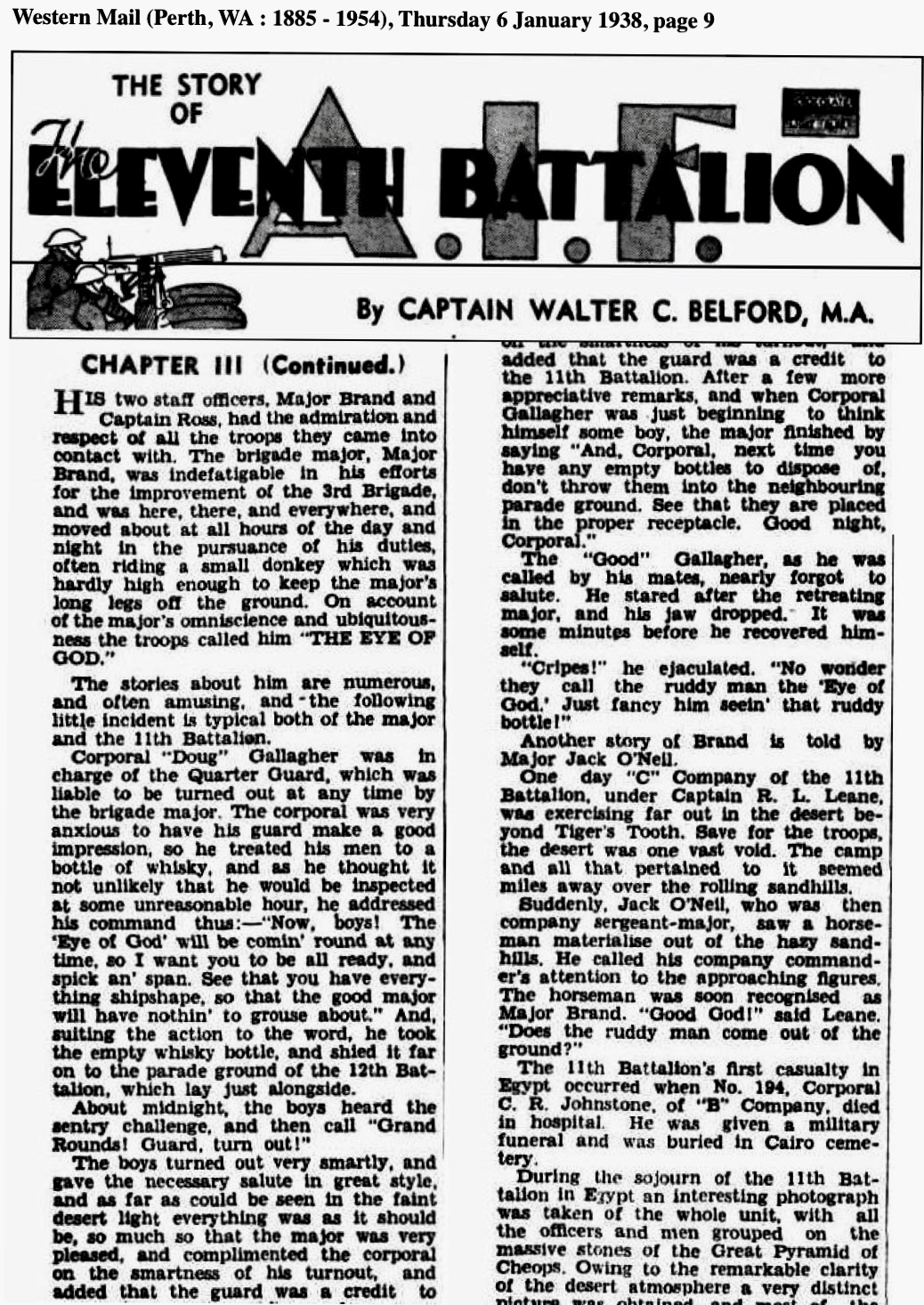
The Gallipoli Sentry who didn’t think much of ‘fried snapper’
The 11th Infantry Battalion of WW1 was formed mostly from Western Australians, trained at Blackboy Hill and included fathers, uncles, grandfathers of the men of 2/4th. They first fought at Gallipoli, landing at Anzac Cove. In August 1915 the battalion was in action in the Battle of Lone Pine. Following the withdrawal from Gallipoli, the battalion returned to Egypt where it was split to help form the 51st Battalion. In March 1916, the battalion was deployed to the Western Front in France and Belgium where it took part in trench warfare until the end of the war in November 1918.
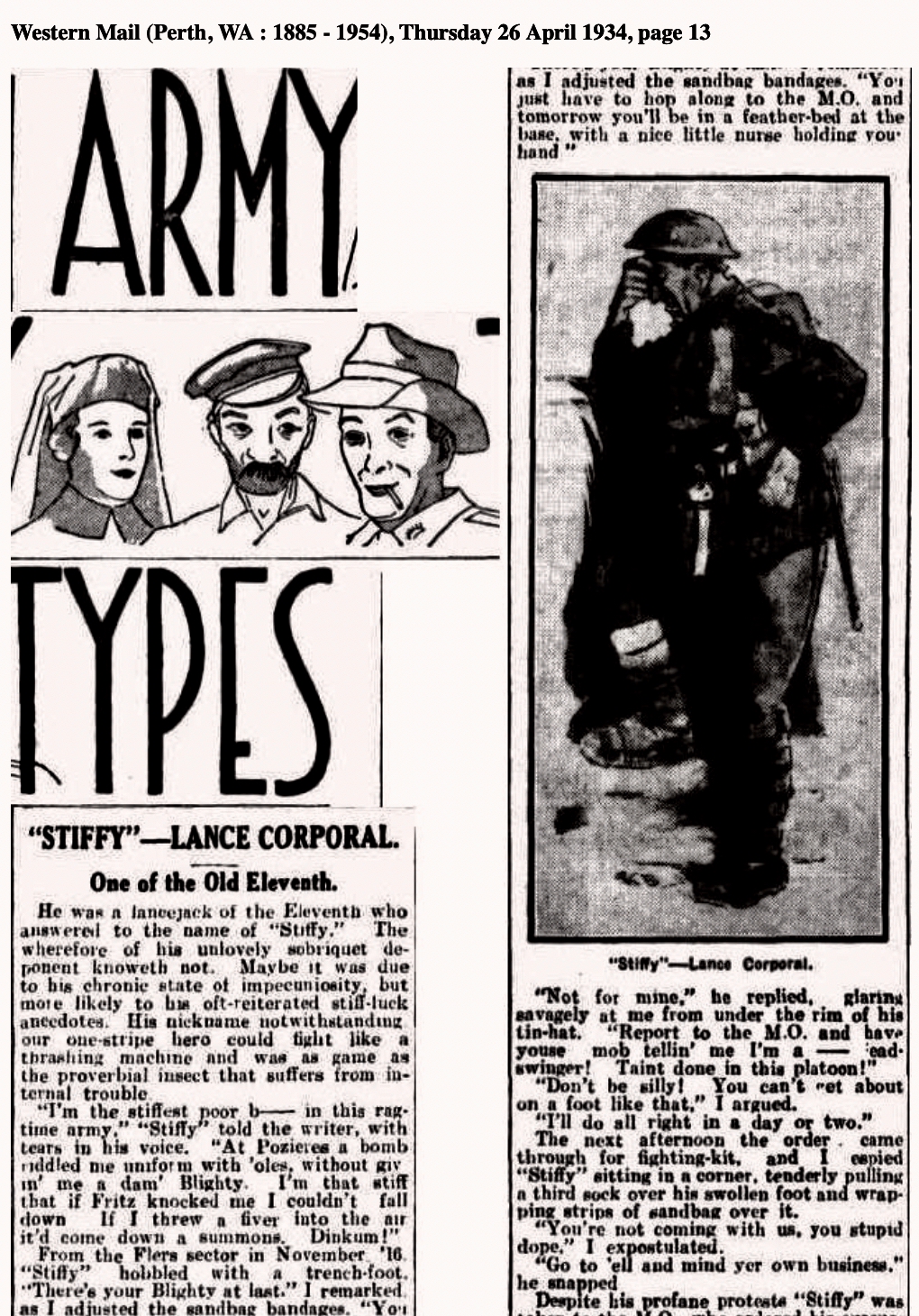
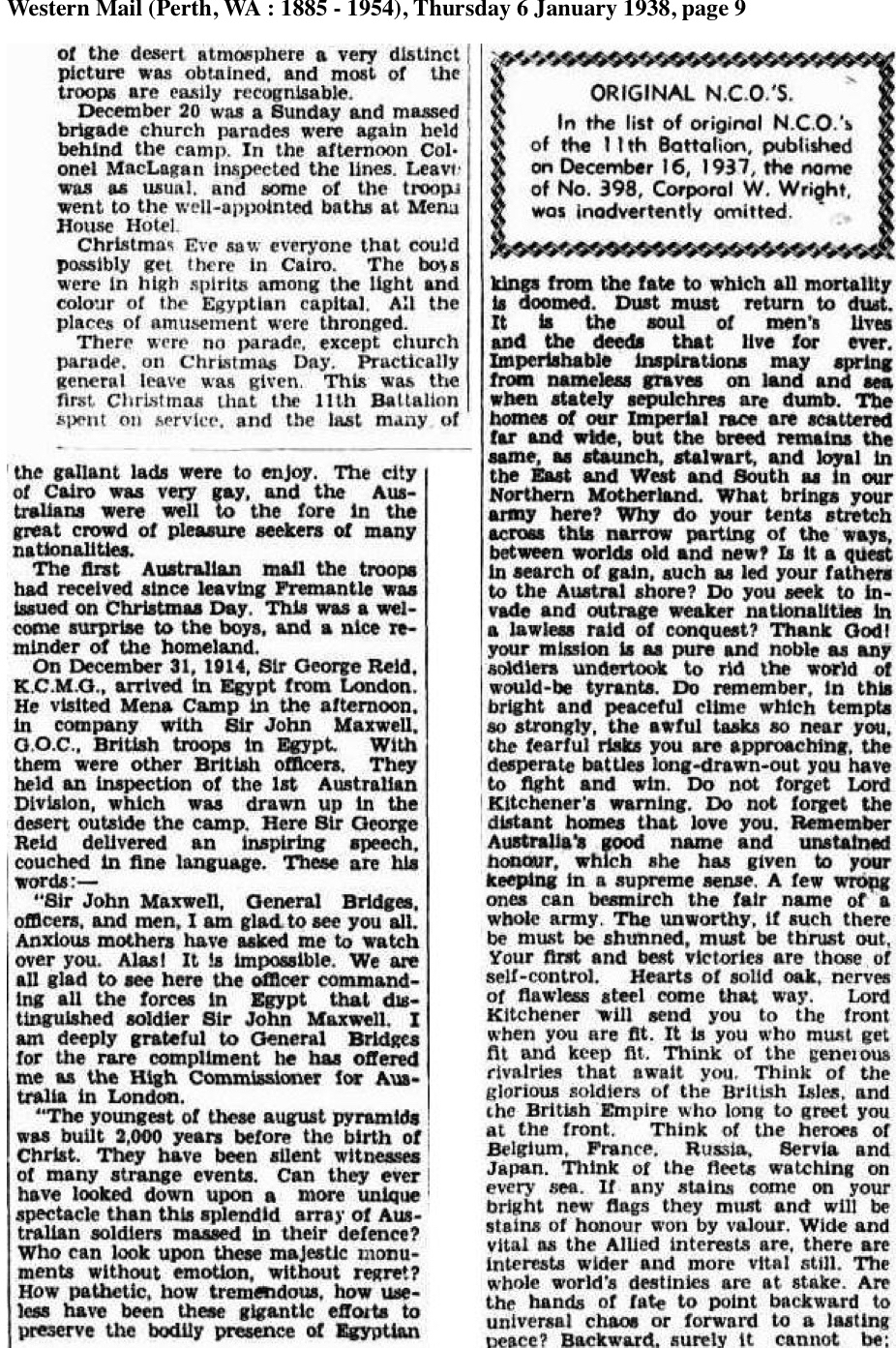
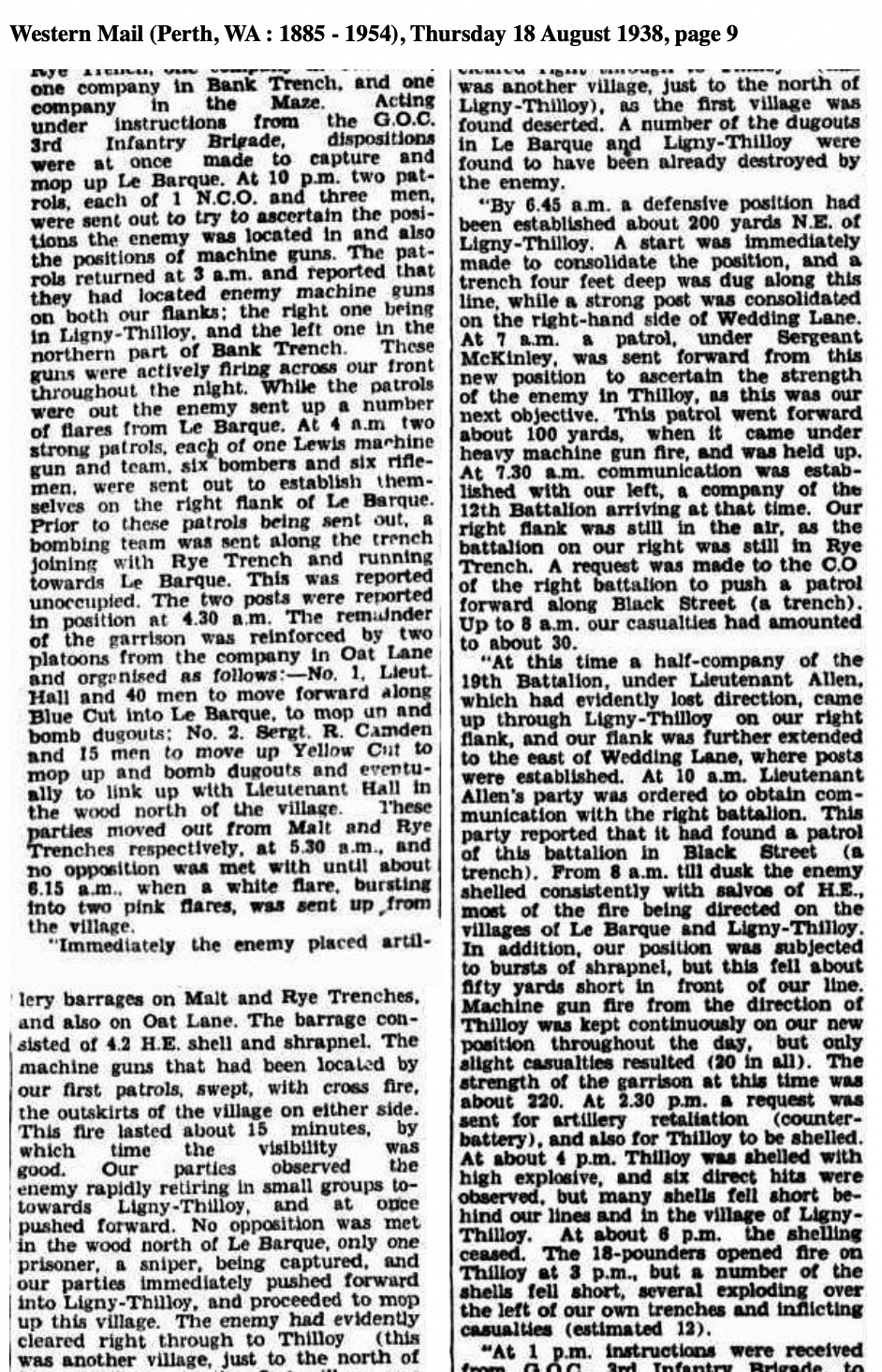
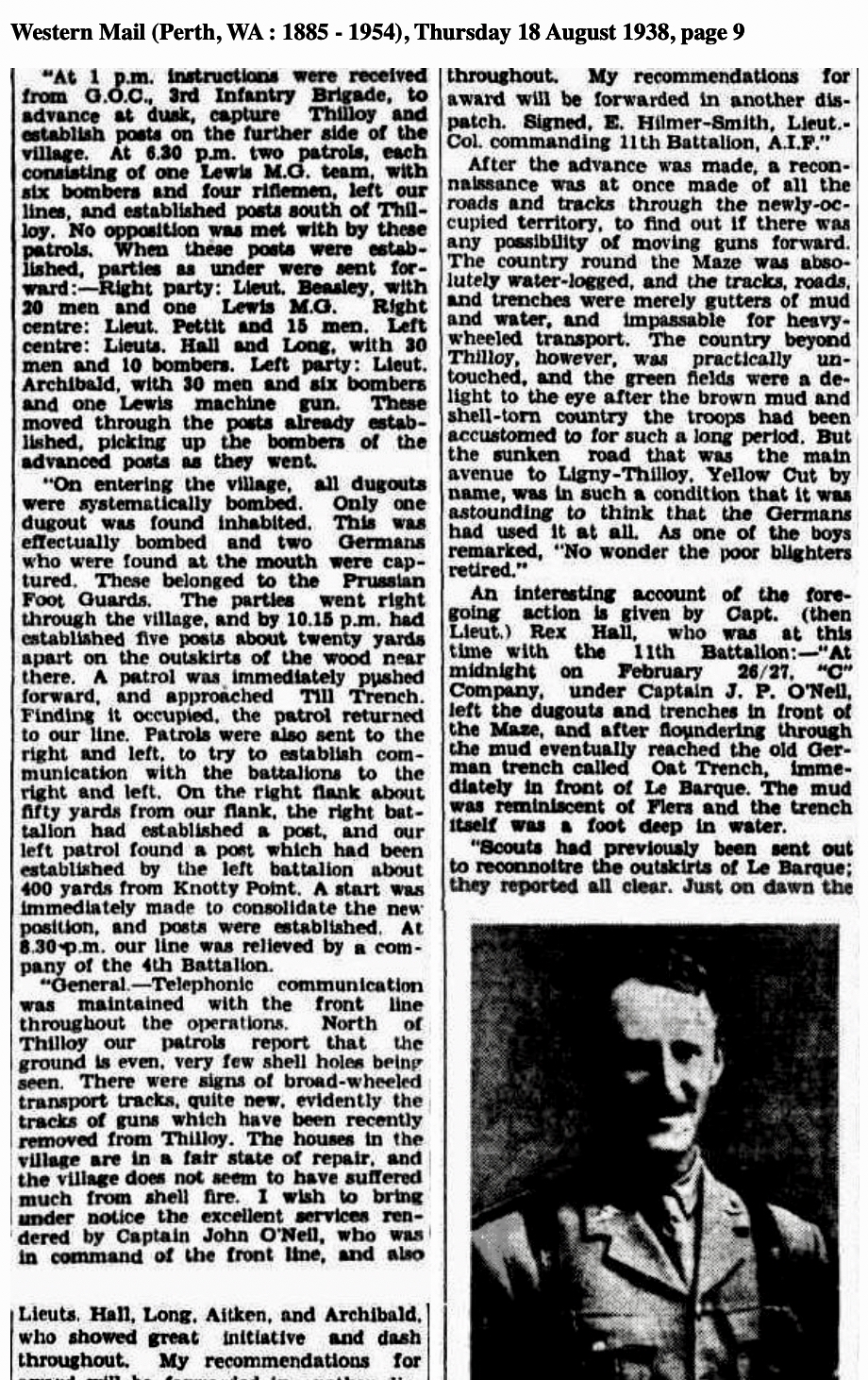
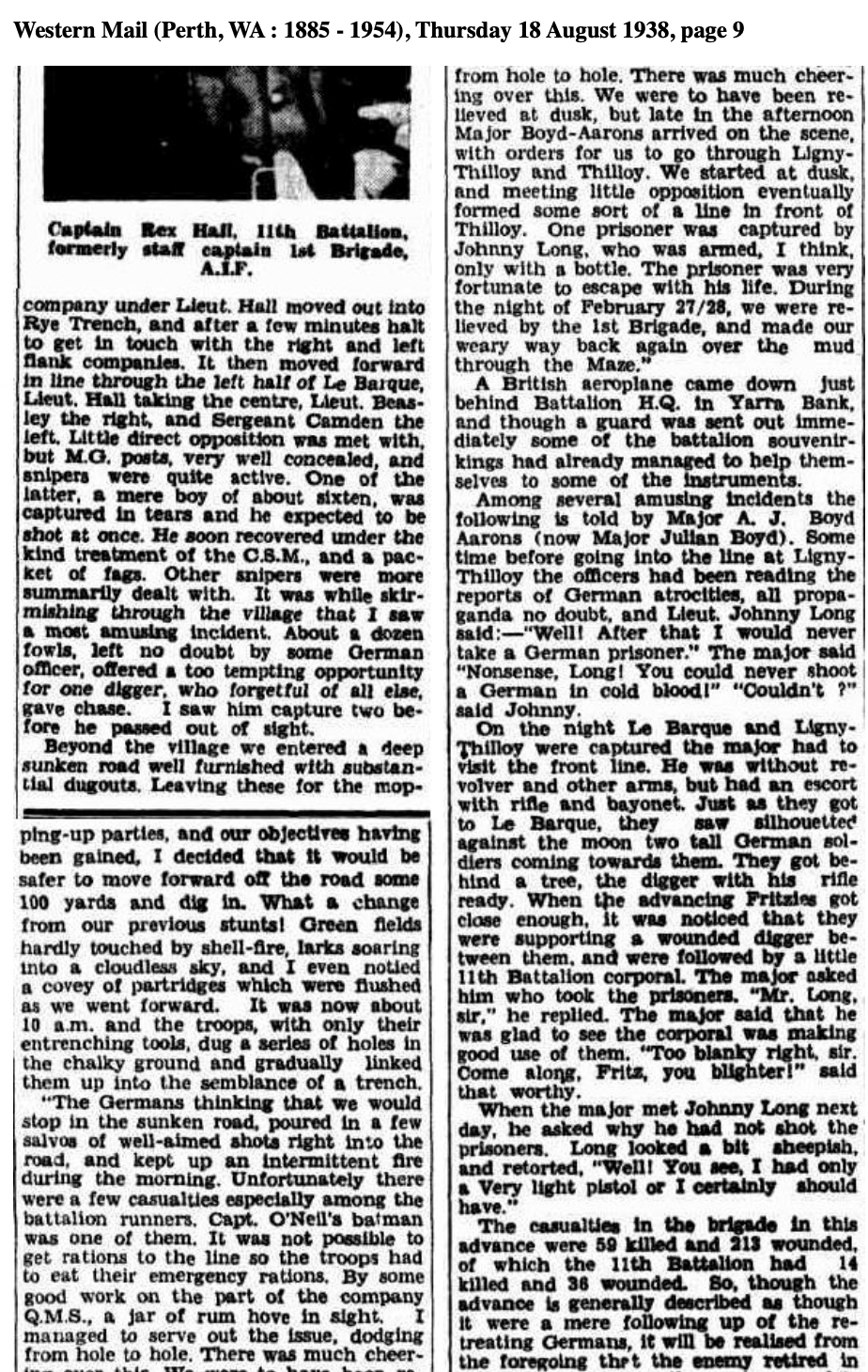
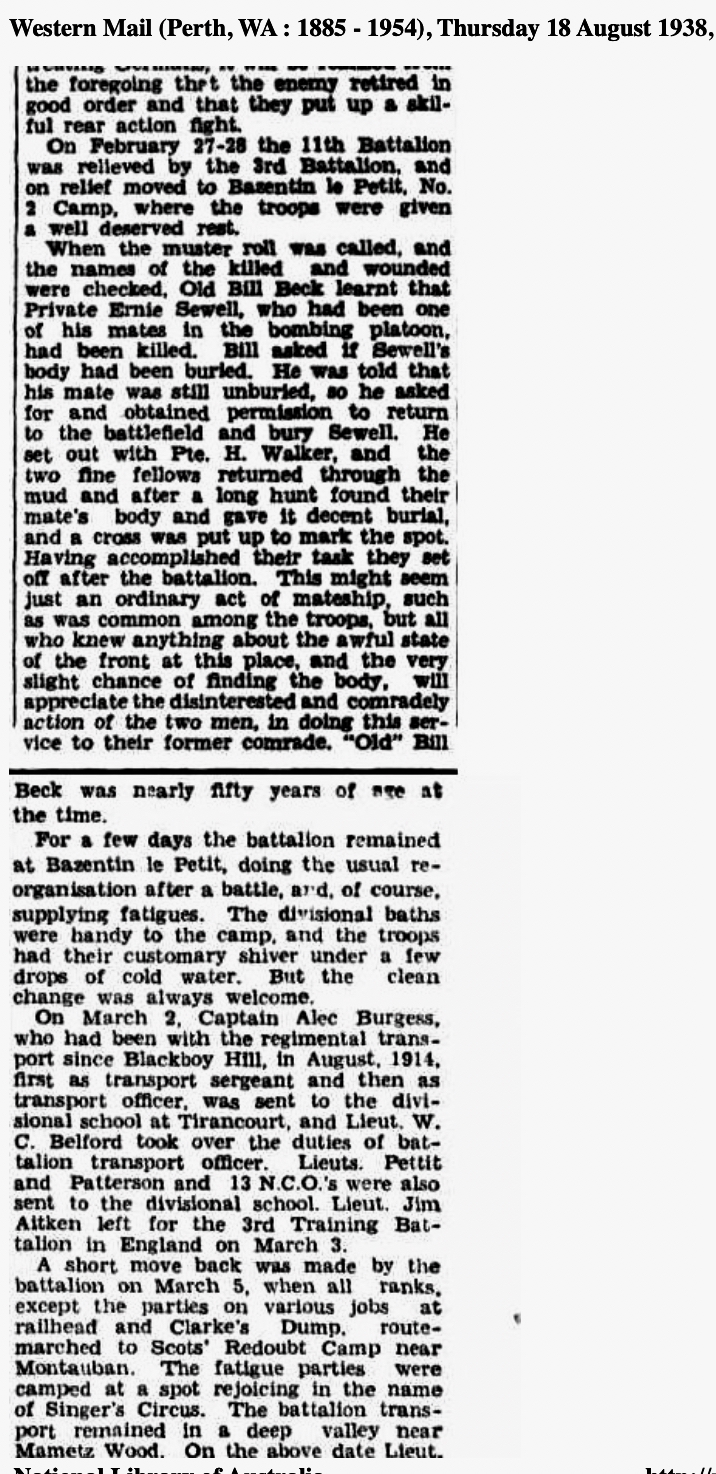
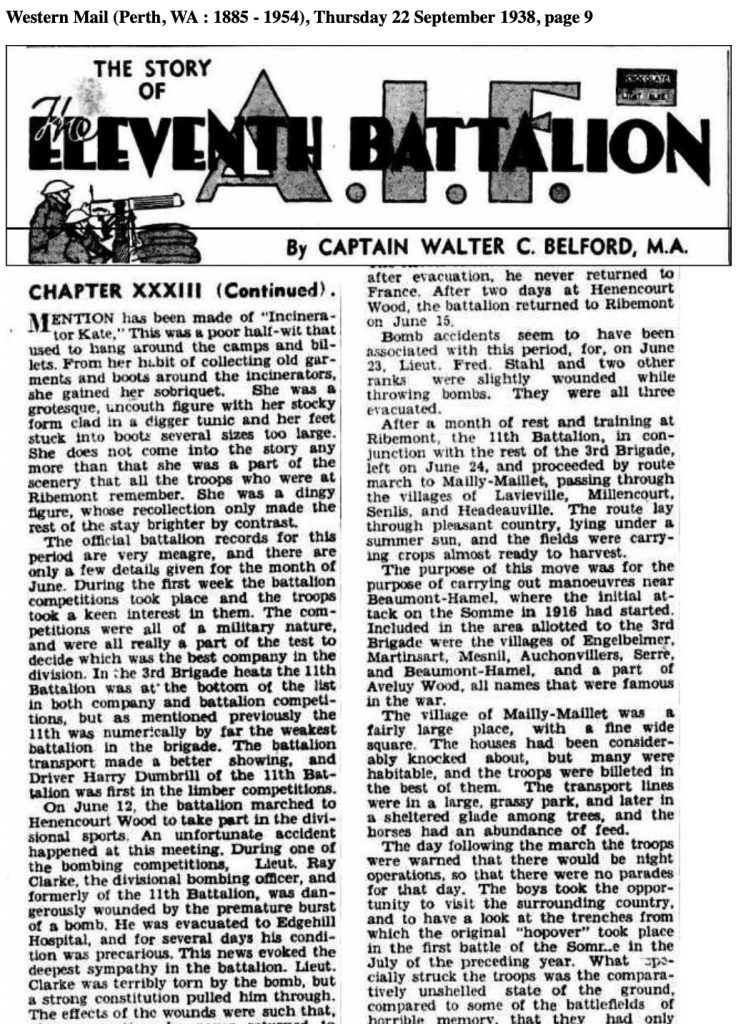
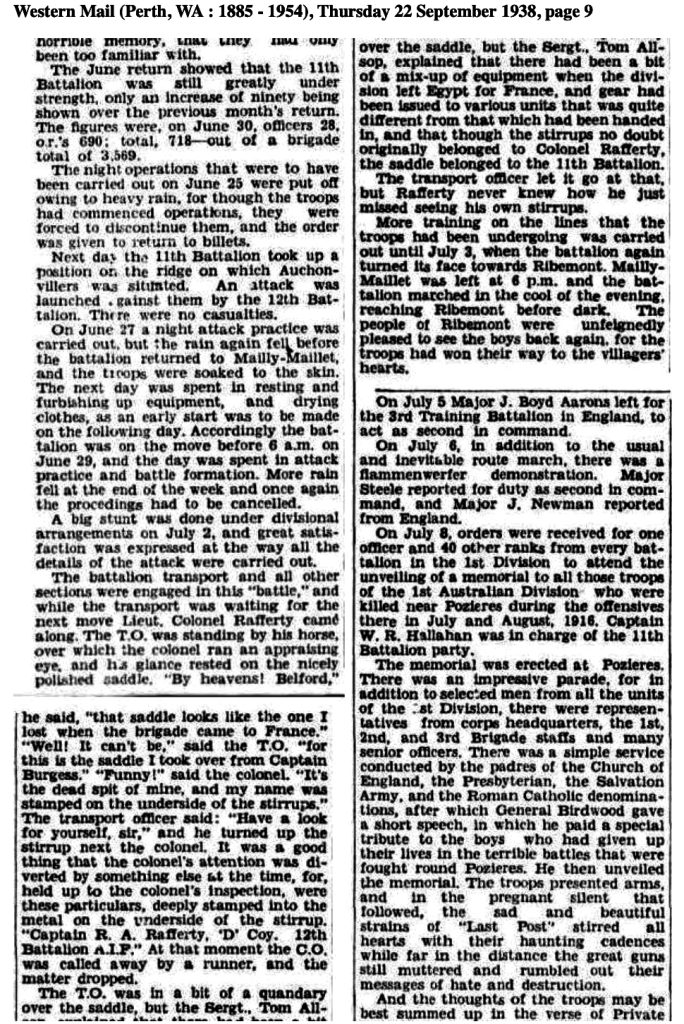
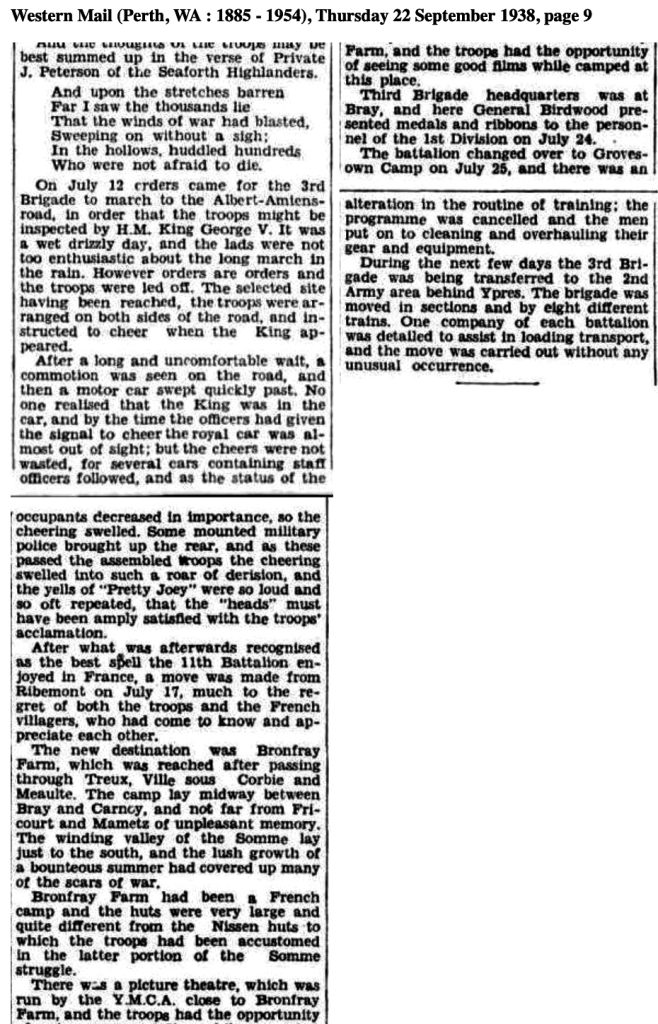
The ‘Western Mail’ regularly wrote stories submitted by their veterans from the 1920’s through to 1940.
It is stories such as the one below which encouraged enlistment for WW2!
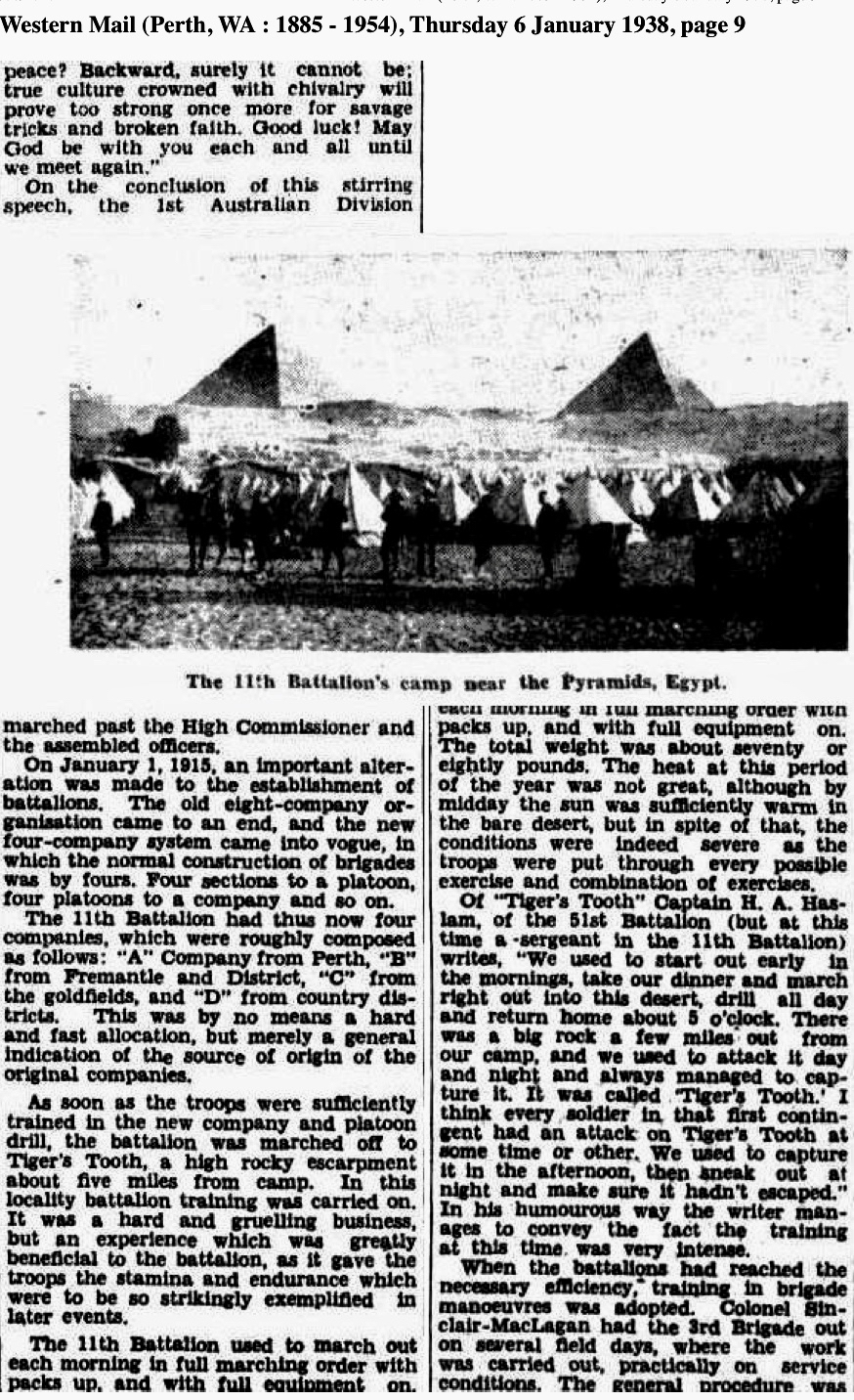
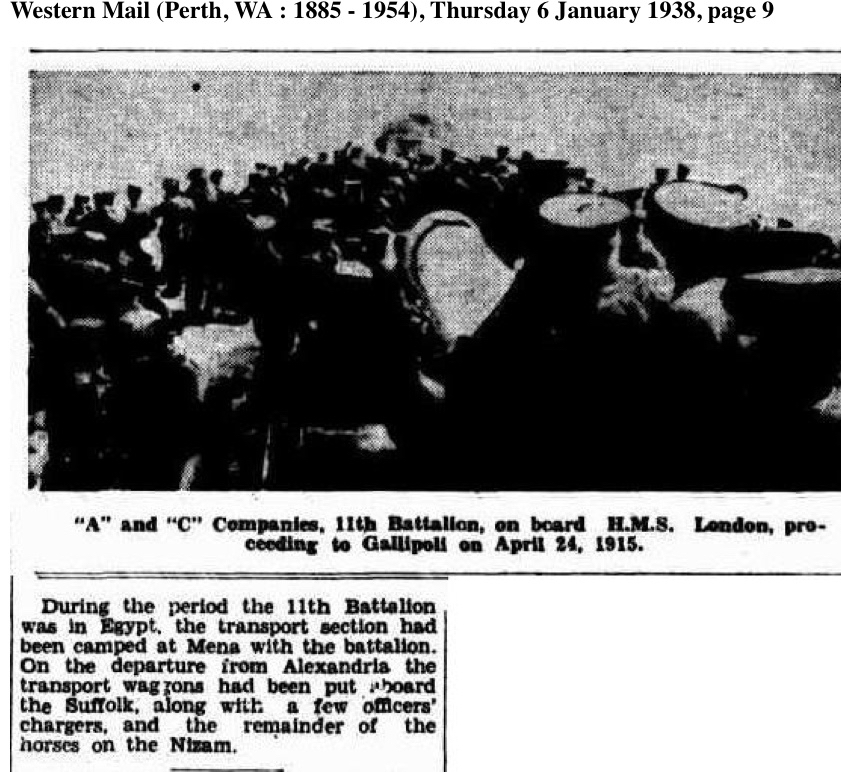
Below: 11th Battalion easily recognisable by this famous photograph below.
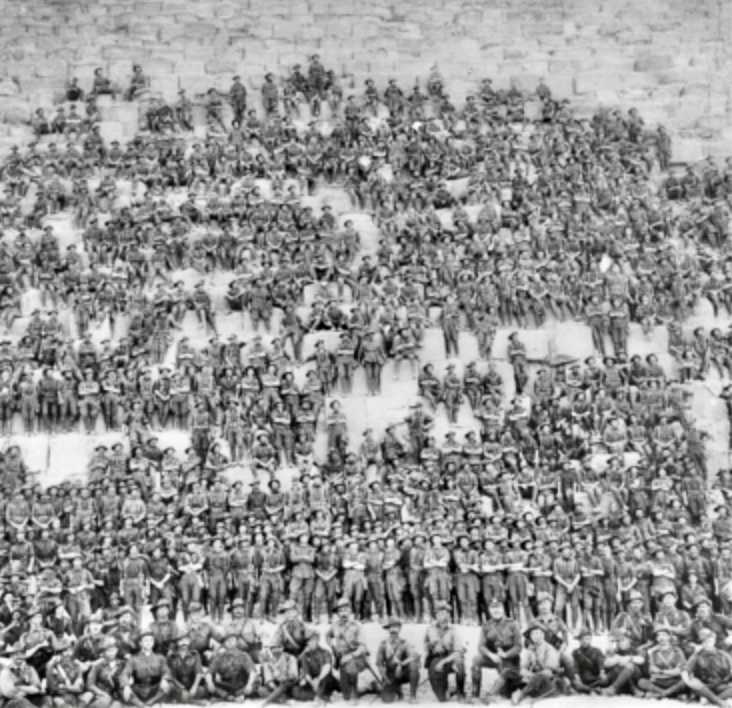
‘The 11th Battalion was raised at Blackboy Hill Camp near Perth and became the WA contribution to the 3rd Brigade in the 1st Division. The Third Brigade comprised Battalions from the smaller States. It was also destined to be the Covering Force (ie first ashore) at Gallipoli, and the 11th Battalion was to be the left forward Battalion.’
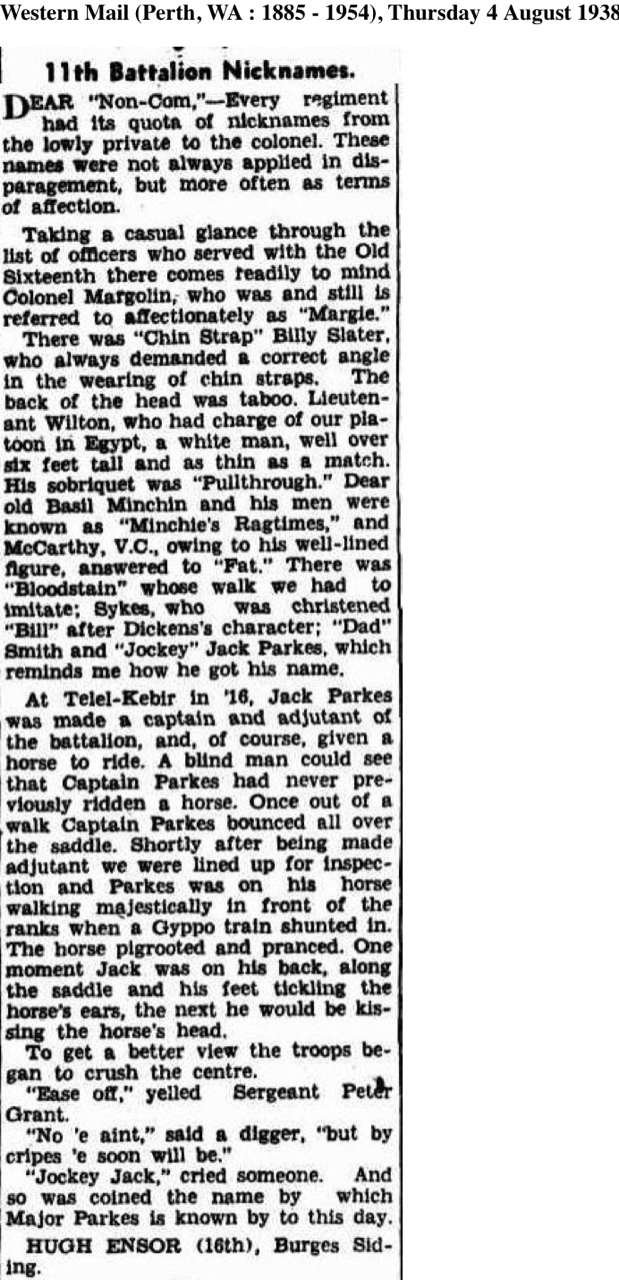
Below: Memorable nicknames ‘Jockey Jack’, ‘Chin Strap’, ‘Fat’ etc.
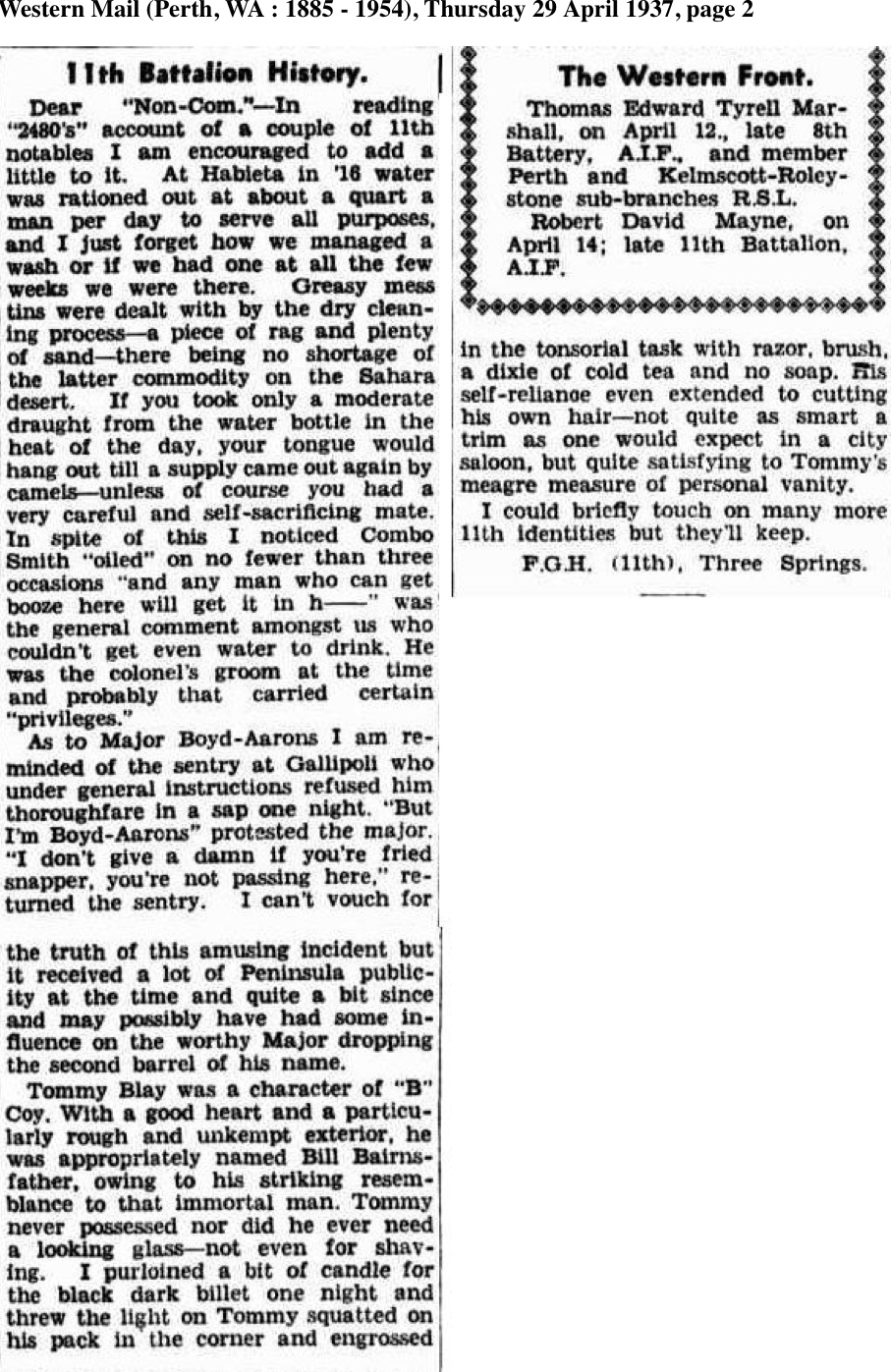
Please read about ‘Pard’ Riches who enlisted with 2/4th
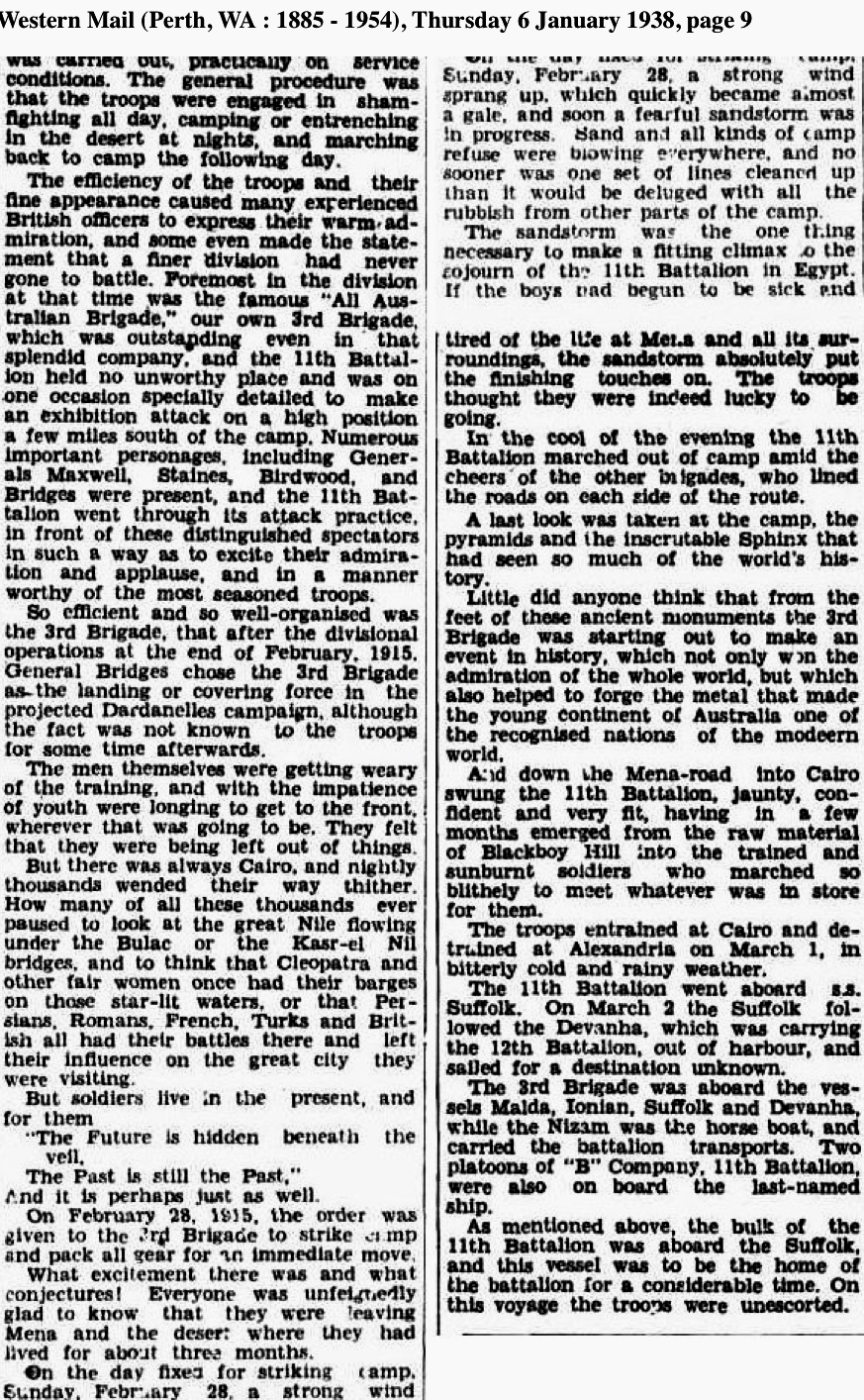
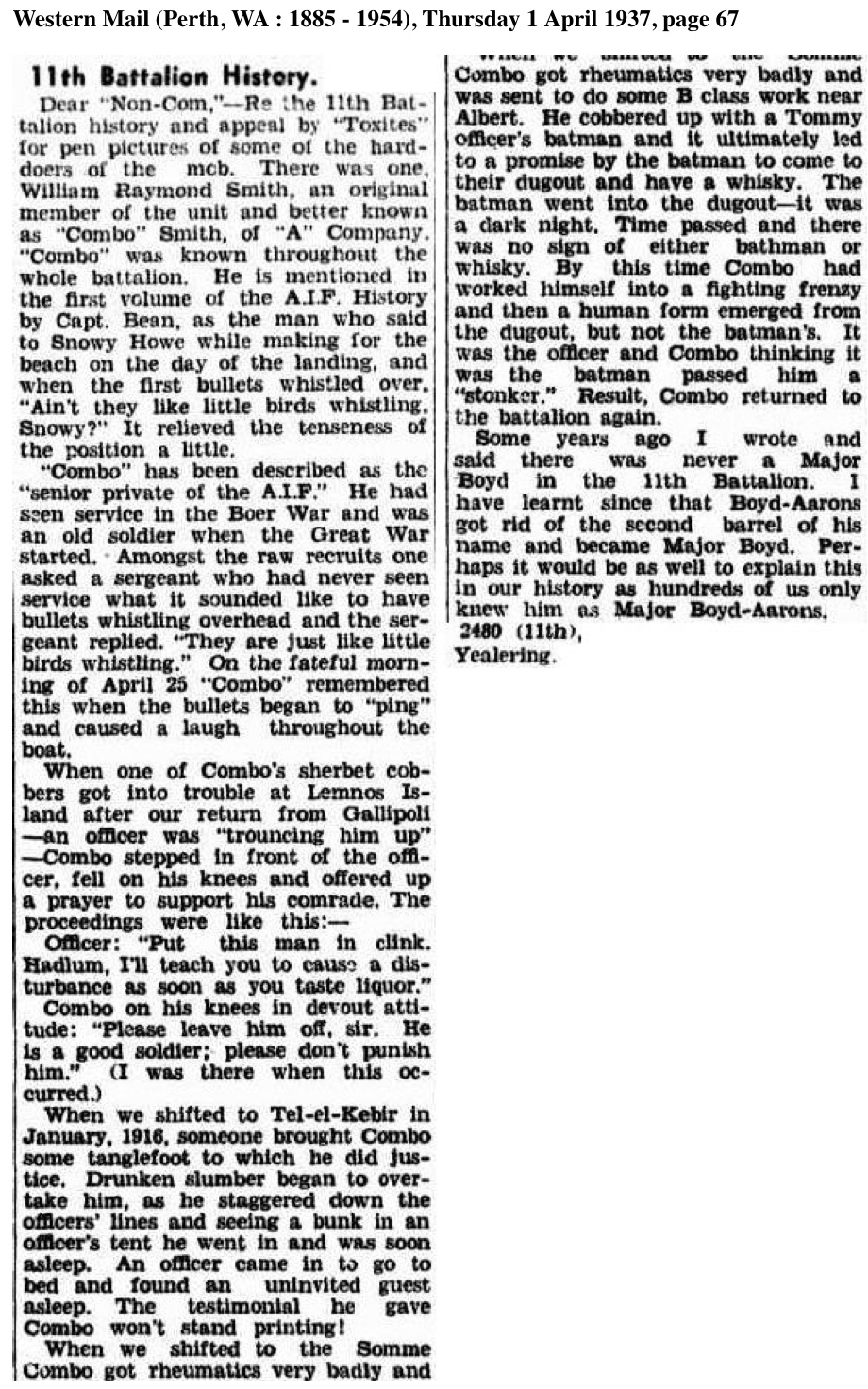
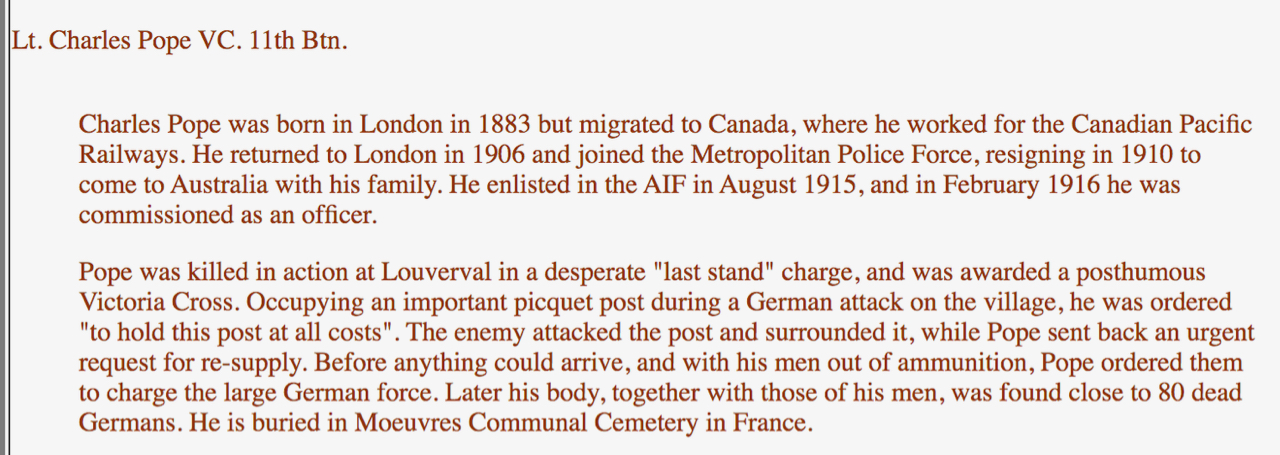
Les Carlyon’s book ‘Gallipoli’ referred to Suzanne Wellborn’s ‘Lords of Death’ which recorded a random statistical survey of half of the original 11th Battalion average age was 25.5 years. 89% were single, 58% were Anglican, 14% Roman Catholic. 34% were born in Britain, 31% in Victoria with only 17% born in West Australia.
Across Australia in 1914, 30% of those who enlisted were born in Britain.
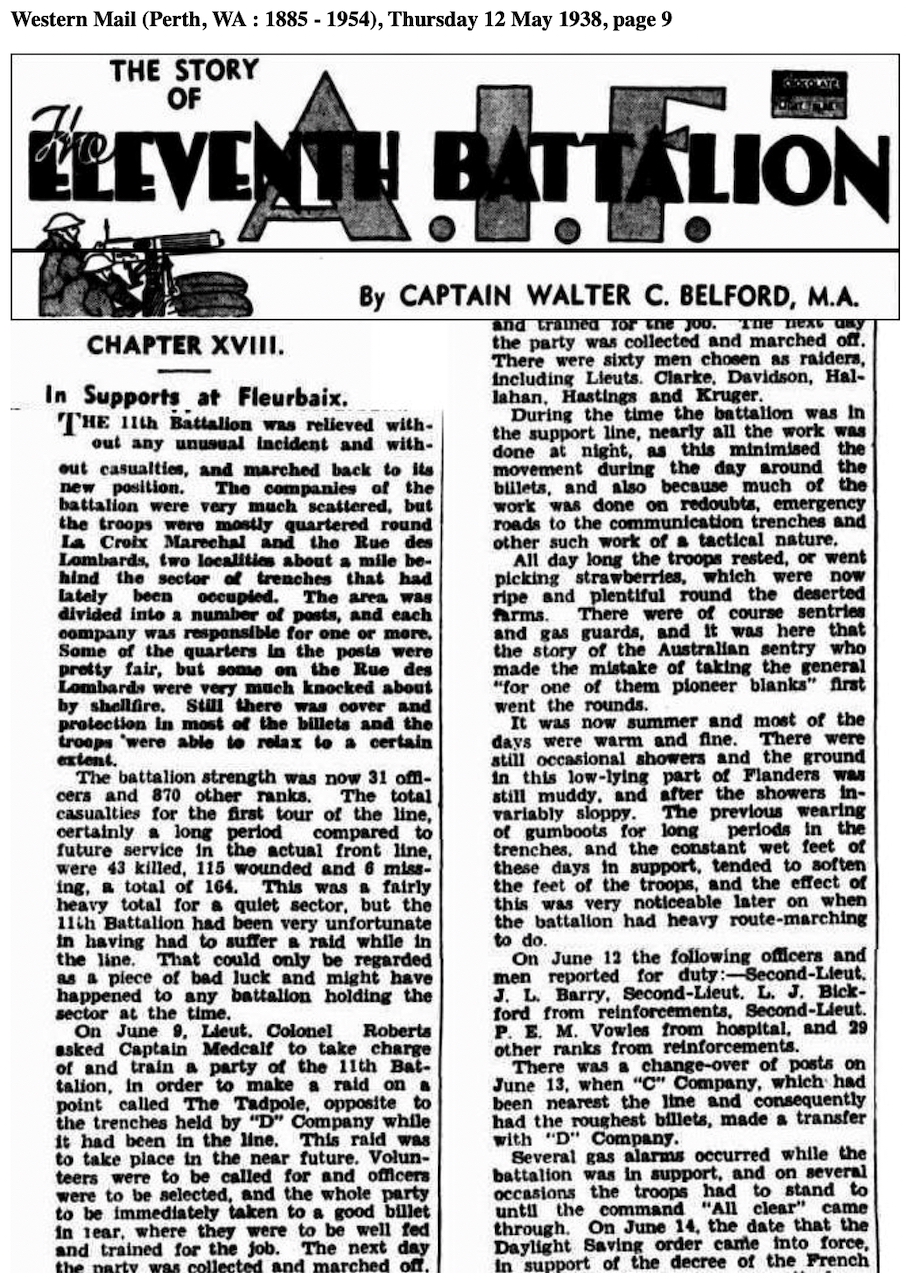
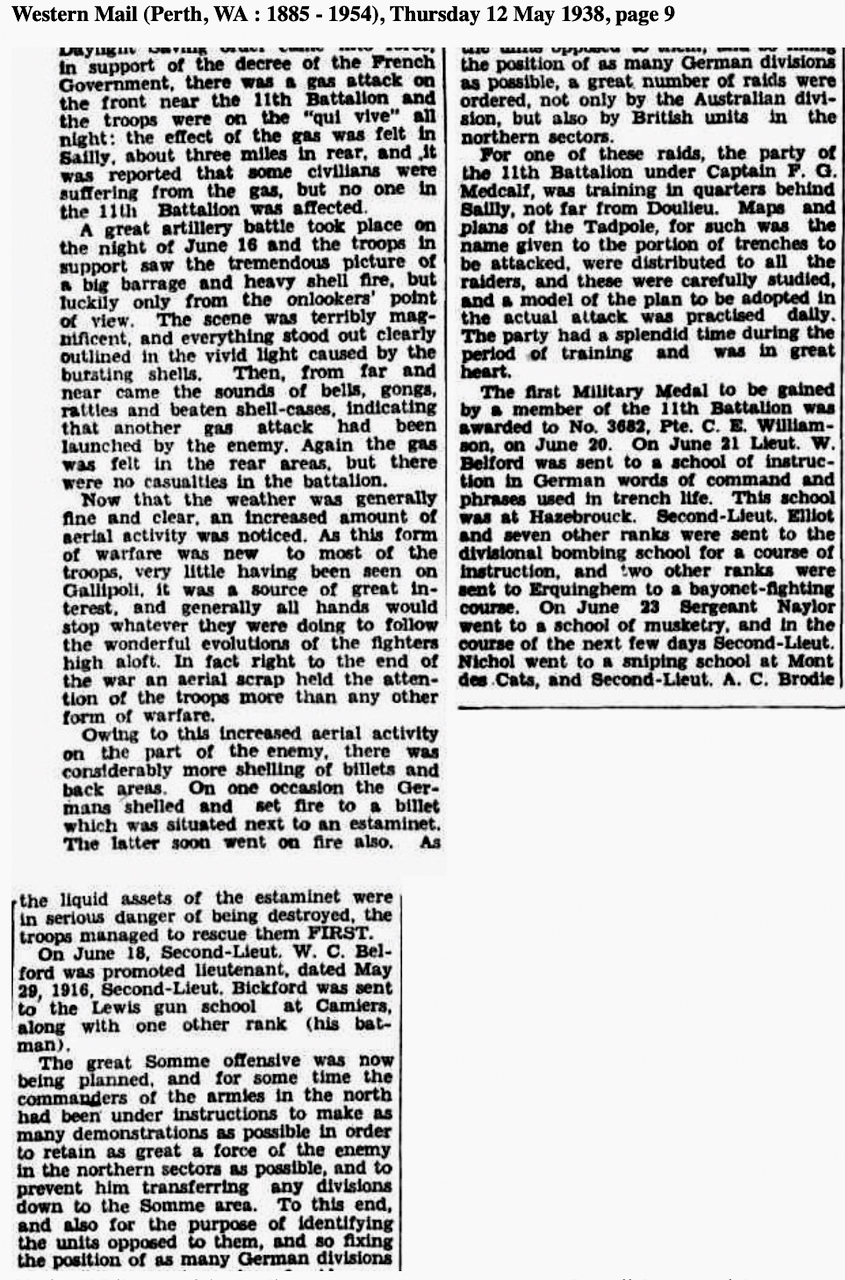
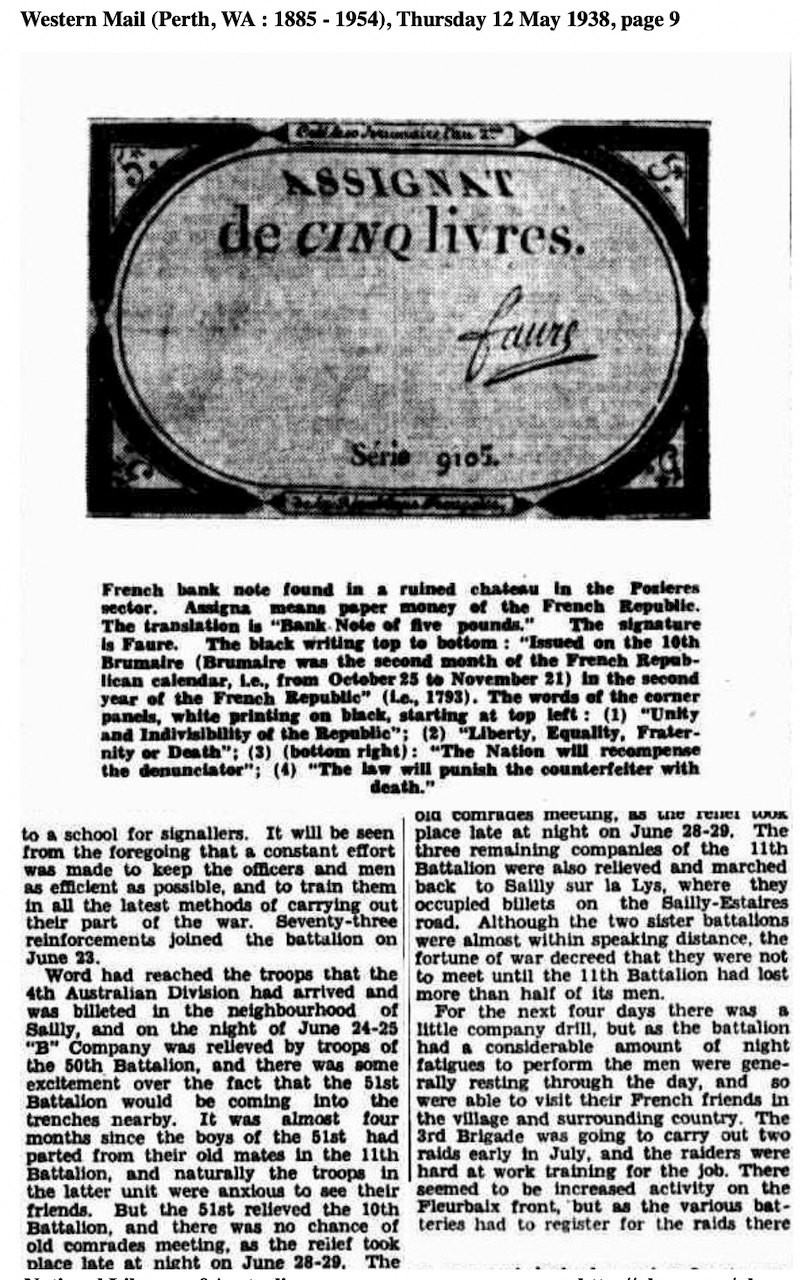

Several 2/4th men had father’s and uncles who enlisted, fought and some lost their lives with WW1’s 11th Battalion made up of large number of West Australians – Many of whom enlisted from Goldfields and were famous for ‘digging in’ using their knowledge and skills at Gallipoli.
WX7064 ALLPIKE, Bert Winfield (Jim) was POW working on Burma-Thai Railway with ‘D’ Force Thailand S Battalion.
His father Bertie Allpike enlisted Helena Vale 17 August 1914, 11th Battalion, 3rd Reinforcements ‘D’ Coy, Service No 402. Aged 24 years, he had completed his training as a Harness Maker. He recorded his NOK as his father – Henry James Allpike, 29 Wardle Street, South Fremantle.
Bert’s brother and Jim’s uncle Ernest Allpike also enlisted into 11th Battalion.
Shipped to Cario, Egypt Bert obviously enjoyed himself because on 11 Dec 1914 he received 7 days detention for ‘being drunk in town’. He also forfeited 2 days pay for being absent without leave from reveille 26 Dec 1914.
Bertie received a severe GSW to his hand at Gallipoli about 25 April 1915 and was evacuated to First Australia Aux. Hospital Harefield, England (possibly via Alexandria). Returned to Australia, he was granted a pension of 39 pounds per annum, then increased to 45/- per fortnight.
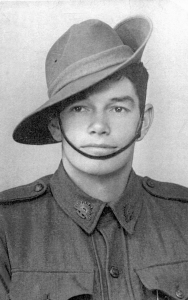
Jim was AWOL from ‘Aquitania’ following her sailing from Fremantle and with about 100 men from the 2/4th Jim was unable to reboard before their ship sailed to Singapore 16 Jan 1942. This group sailed later intending to land at Singapore, however the island was about to fall to Japan and the men instead were landed in Java.
He became part of ‘Blackforce’ at Java and was with 2/3 MGB. When told to lay down arms and surrender to Japanese, Jim broke away hoping to escape. However he realised there would be no further allied ships arriving or leaving. He ventured into the hills to a tea plantation. It was here he was bitten by a snake. He awoke later in a Japanese POW Camp with Dutch and Americans. He was first imprisoned at Bandeong and later sent to Bicycle Camp, Java.
Allpike with sent from Bicycle Camp, Java with ‘D’ Force Thailand No. 6 ‘O’ Battalion sailing to Singapore 7 Jan 1943, remaining there until 19 Jan 1943 when he left with this work party.
He contracted ‘Black Water’ fever (an illness foreign to Australians) in the Wampo region and was fortunate to be treated by Dr. Paviallard and survived.
Jim was recovered at the end of the war from Thailand.
Western Mail, Nov 1916
Three Sons of Mrs. J. Allpike, Fremantle
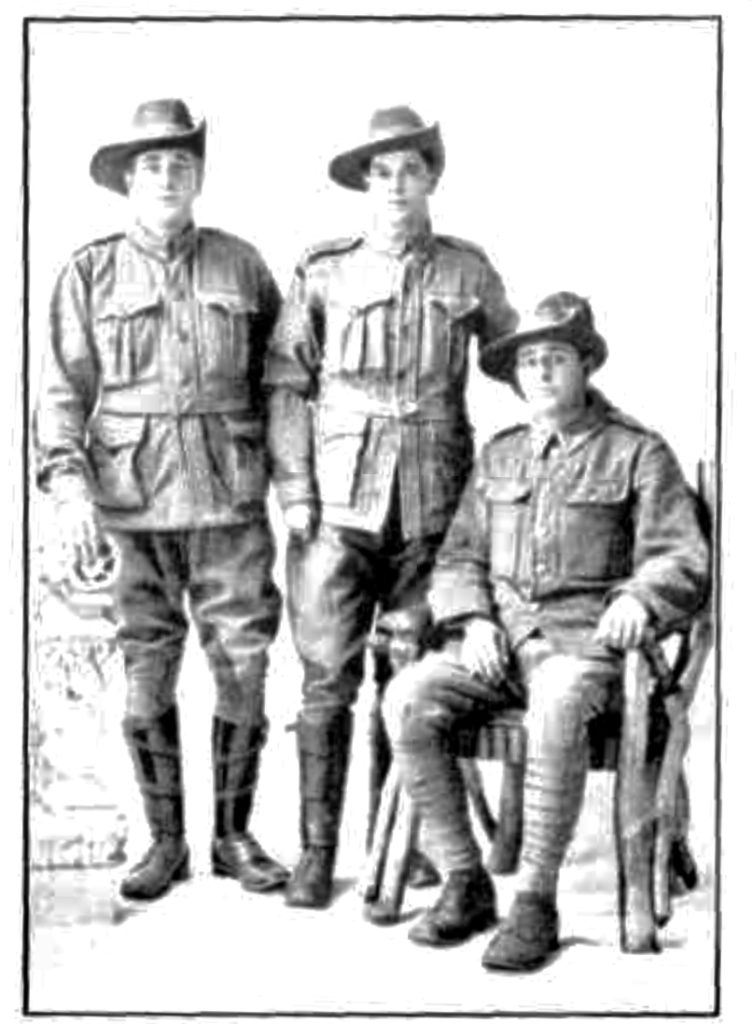
Above: Bert and Ernest 11th Battalion both wounded and Harry Allpike of Remount Corps who died in 1920.
Please read about Remount Corps
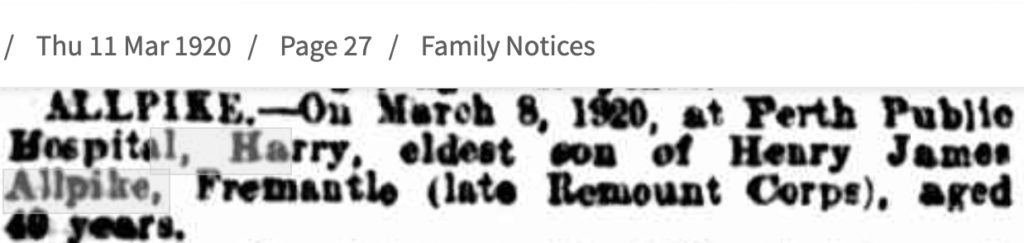
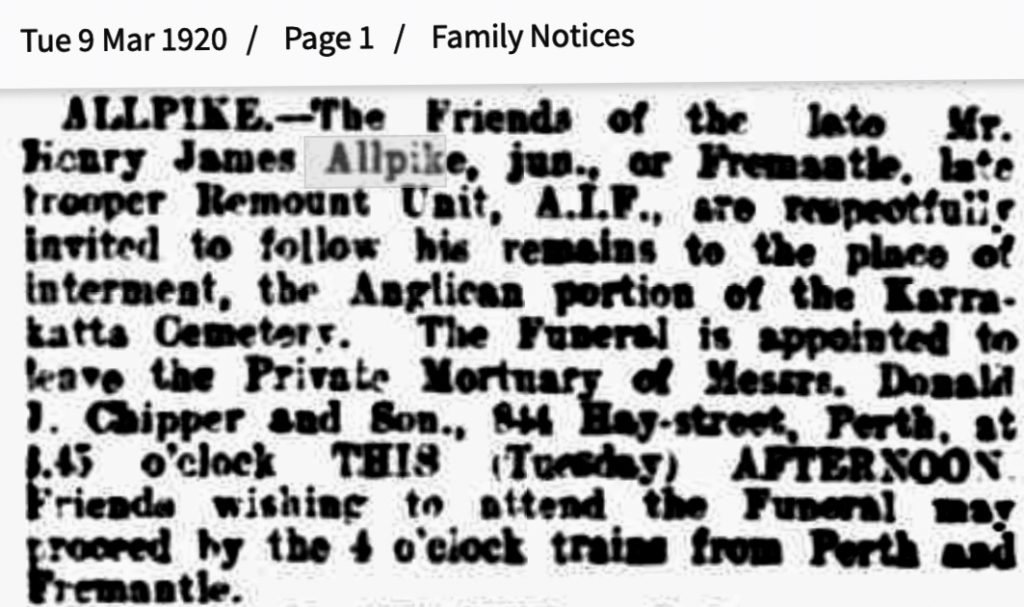
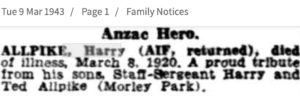
Below: A Memorial Noice in 1943 believed to from Harry’s sons.
__________________
WX7444 ATTENBOROUGH, Arthur Richard ‘Bill’
Attenborough enlisted AIF 6 Aug 1940 later joining ‘D’ Company No. 15 Platoon. At Singapore, a further Platoon was created and Bill moved to No. 16 Platoon.
Bill Attenborough left Sandakan in early Jan 1945 with the First Sandakan to Ranau March. He reached Ranau when so many POWs died on this treacherous mountainous jungle track. There were five 2/4th men who survived to reach Ranau –
Ron Page WX4934 died on 17 Feb 1945,
Tom Dorizzi WX12884 died on 11 March 1945,
Reg Ferguson WX7999 died on 23 March 1945 (both Dorizzi and Ferguson came from Toodyay),
Claude Nash WX17363 died on 23 March 1945 same day as Reg Ferguson.
Bill Attenborough WX7444 died on 12 Apr 1945.
For those who reached Ranau they faced further enforced ‘marches’ carrying heavy loads for the Japanese to locations near Ranau. With the Allies bombing Sandakan daily, the Japanese in January 1945 sought to have all evidence and records of Sandakan and its POWs erased.
ATTENBOROUGH, Private, Arthur Richard, WX7444, A.I.F. 2/4 M.G. Bn., Australian Infantry. 12 April 1945. Age 28. Son of Rippon and Jean Maud Attenborough, of East Perth, Western Australia. Panel 18.
Labuan Memorial, Malaysia.
Bill was born 1917 to Rippon Attenborough and Maude Mary Jane (Jean) Bailley who married 1916 Warragul, Victoria.
Jean Bailley b. Wiata, New Zealand was of Scottish ancestry. When Jean’s father Campbell Bailley died in New Zealand, for reasons unknown to descendants, her widowed mother Eliza Bailley (nee Stewart) with her four children (including Jean) moved to Australia, settling in Warragul, Victoria.
According to Bill’s niece Bernadette, daughter of his sister Beryl Attenborough “I am unsure when they moved to Western Australia, but I do recall Nan (Jean) telling me they came across with the bullock trains with her Mother Eliza. Jean had 2 brothers in Perth somewhere, their names were John and James Bailley. Jim Bailley married Dolly”.
We know John and James Bailley enlisted WW1. John enlisted first and was sent to Gallipoli but became ill and was soon after evacuated back to Australia before end of 1915 with heart problems. James Bailley enlisted and fought with 11th Battalion. He received GSW (gun shot wounds) at least twice during his time in France. James died Maylands 1964.
Bill’s parents divorced about 1928. Rippon Attenborough remarried in Victoria in 1934. He died in 1938.
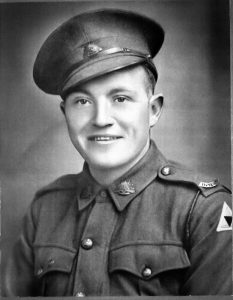
Bill’s identity disc was recovered from Ranau No. 1 Camp after the war by the War Graves Party. He died at Renau No. 1 Camp (near the airstrip) of acute enteritis according to Japanese Records and buried at the Ranau Main Cemetery approx. 16 March to 29 April 1945.
You can read further about Bill Attenborough
__________
WX7636 William John ‘Bill’ BEER from Bunbury. His father George Henry Joseph Beer SN 6471 enlisted WW1, joined 11th Battalion. He returned to Australia in 1918 following recovery from a serious injury.
His father’s brother, with 51st Battalion. Frank Beer DOW 1918 Mouque Farm, France.

Bill tragically died of Malaria at Sandakan, North Borneo on 14 Jun 1945 aged 28 years. He had sailed from Singapore to Sandkan with ‘E’ Force Borneo. There were no survivors – only the six POWs who managed to escape under the most horrific circumstance – they provided vital evidence for the war trials for the Japanese who ran this most horrific of all POW Camps.
______
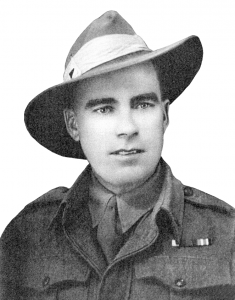
WX8788 Francis Leslie (Les) GILES ‘D’ Coy HQ, worked Burma-Thai Railway with ‘D’ Force Thailand V Battalion. Recovered from Thailand.
Les was one of 13 Children. Three of his older siblings enlisted WW1. The youngest Edward Chichelle Giles (known as ‘Edie’) fifth child born in 1900 enlisted with 10/28th Battalion SN 34125 aged 14 years. He was KIA Pozieres 28 July 1916 – aged 16 years.
2nd born, Nathaniel (known as ‘Nat’) Giles was born 1893. He enlisted 12/11th Battalion SN3795 on 9 Aug 1915 aged 22 years. He returned home to Australia.
Below: Les Giles of 2/4th
__________
HEWBY, William John ‘Bill’ older brother of ‘Snow’ Hewby WX8207 ‘B’ Coy HQ and manager/coach of 2/4th successful Football team Northam 1941. His brother Bill Hewby was KIA 1916 France aged 20 years.
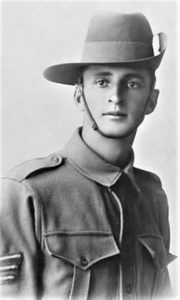 Snow also enlisted WW1 with 44th Battalion. Please read further
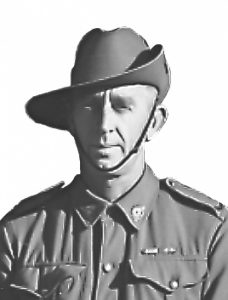
WX8869 HINDLE Herbert Roy ‘Roy’
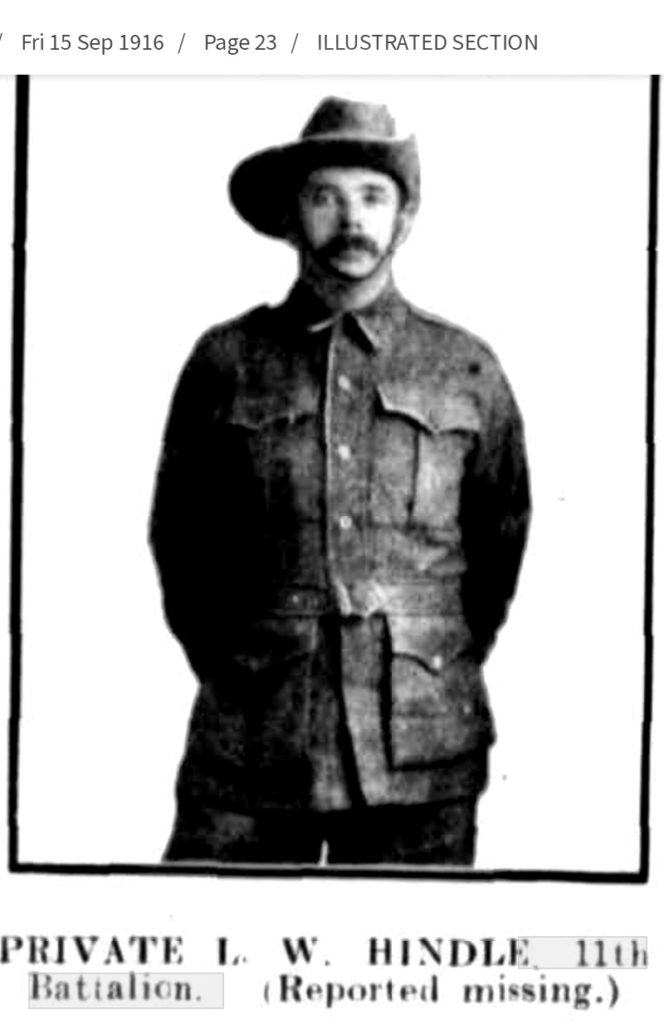
Known to his family as Dick he was one of seven children born to parents Lawrence William Hindle and Bridget Emily Danks who married at Mount Margaret 1895. When their youngest child was 12 months old, Lawrence William Hindle enlisted in WW1 with 11th Battalion. He was tragically killed in action at Pozieres, France 23 July 1916.
Dick was 12 years old.
Hindle aged 40 years, was killed by a fall of rock at Sumitomo Besshi copper mine at Yamane on Shikoku Island Japan on 30.9.1944. His body was cremated and his ashes were carried as far as Labuan Island.
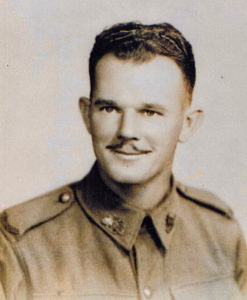
Below: Roy’s father Lawrence Wiliam Hindle
__________
McGLINN, Ernest William ‘Ern’ of York, 11th Battalion died 1916 at 15th General Hospital, Alexandria, Egypt of wounds – received a bomb wound to his head at Gallipoli.
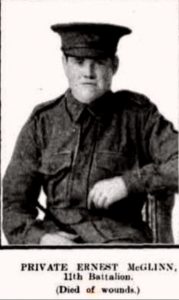
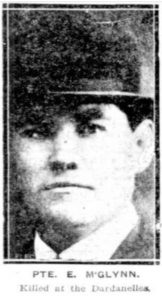
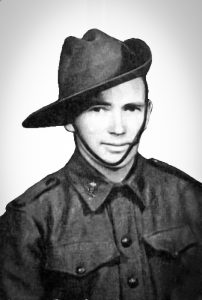
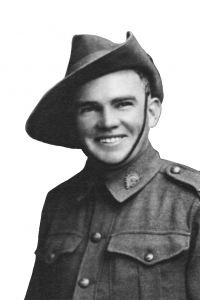
Ern McGlinn is uncle to cousins WX8478 Frank McGlinn and WX1580 Don McGlinn who died of illness at Tarsau 1943. Tragically, Frank McGlinn died in an accident after the end of war, at Bunbury 1948
Below: Frank and Don.
_________________
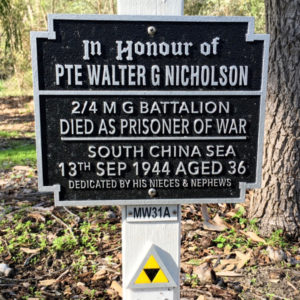
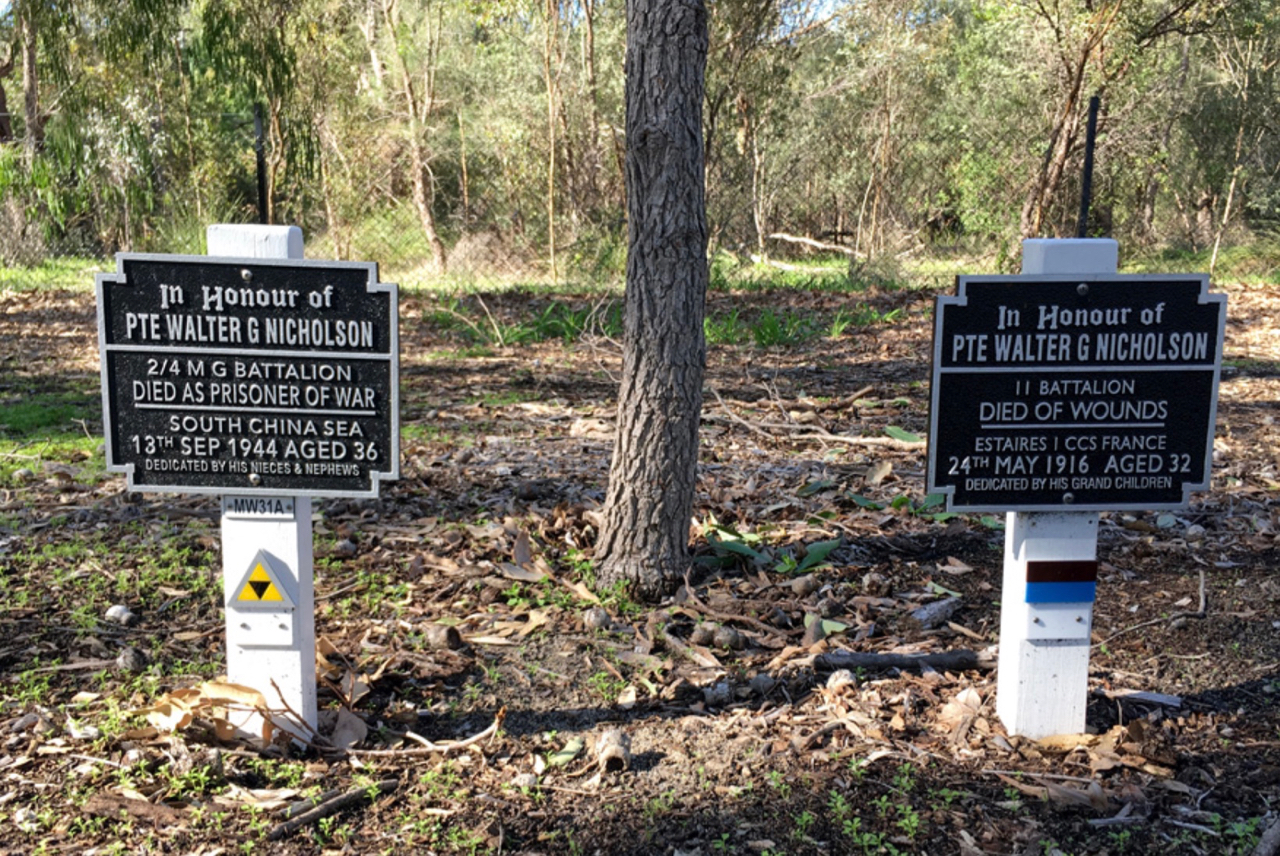
WX7940 NICHOLSON, Walter George son of Walter George (Snr) and Margaret Rebecca Nicholson of Mount Hawthorn d.13 Sep 1944 aged 36 years when his POW transport ship ‘Rakuyo’ Maru was sunk by US Submarines 12 September 1944 South China Sea.
-
Private Walter George Nicholson (Snr) was born in 1884 at Hellesdon, Norwich, England.
He had four brothers and two sisters, and they lived with their parents Walter and Mary Nicholson at Norwich.
In 1907, he married Margaret Moore and their first baby, Walter, was born later in the year.
Prior to coming Western Australia in 1908, he served for three years with the Royal Garrison Artillery in England
He came to Australia with two of his brothers and worked as an ostler/yardman at a Perth hotel. (Ostler takes care of horses, including feeding, grooming, and housing them for travelers). He also trapped and broke in wild horses north of Perth.
In 1910, his wife and son joined him, and they lived at Myrtle Street, Perth. They then set up a greengrocery business.
Walter enlisted in Perth in September 1914 and, after limited training, was posted to ‘E’ Company of 11 Battalion.
They boarded HMAT ‘Ascanius’ in November 1914 at Fremantle and arrived in Egypt in December.
They landed at Gallipoli on 25 April 1915. In June, Walter was deemed medically unfit due to deafness and returned to Australia aboard the Kyarra.
He didn’t leave the army – and left Fremantle for Egypt aboard HMAT Borda in January 1916. He rejoined the battalion at Serapeum and was posted to ‘A’ Company.
In March 1916 the battalion sailed on HMT Corsica for France and the Western Front.
Private Walter George Nicholson, service number 210 of 11 Battalion, died of wounds received in action on 24 May 1916 at 1 Australian Casualty Clearing Station, Estaires in France.
He was 32 years of age and lies at rest at the Estaires Communal Cemetery and Extension, Estaires, Nord Pas de Calais, France.
His son, Walter George, served in World War 2 with 2/4th MGB. Walter junior died as a prisoner of war when the Rakuyo Maru was sunk by an American submarine in the South China Sea Sept /1944.
A plaque forPrivate Walter George Nicholson is placed alongside his son Private Walter George Nicholson junior, of 2/4 Machine Gun Battalion.
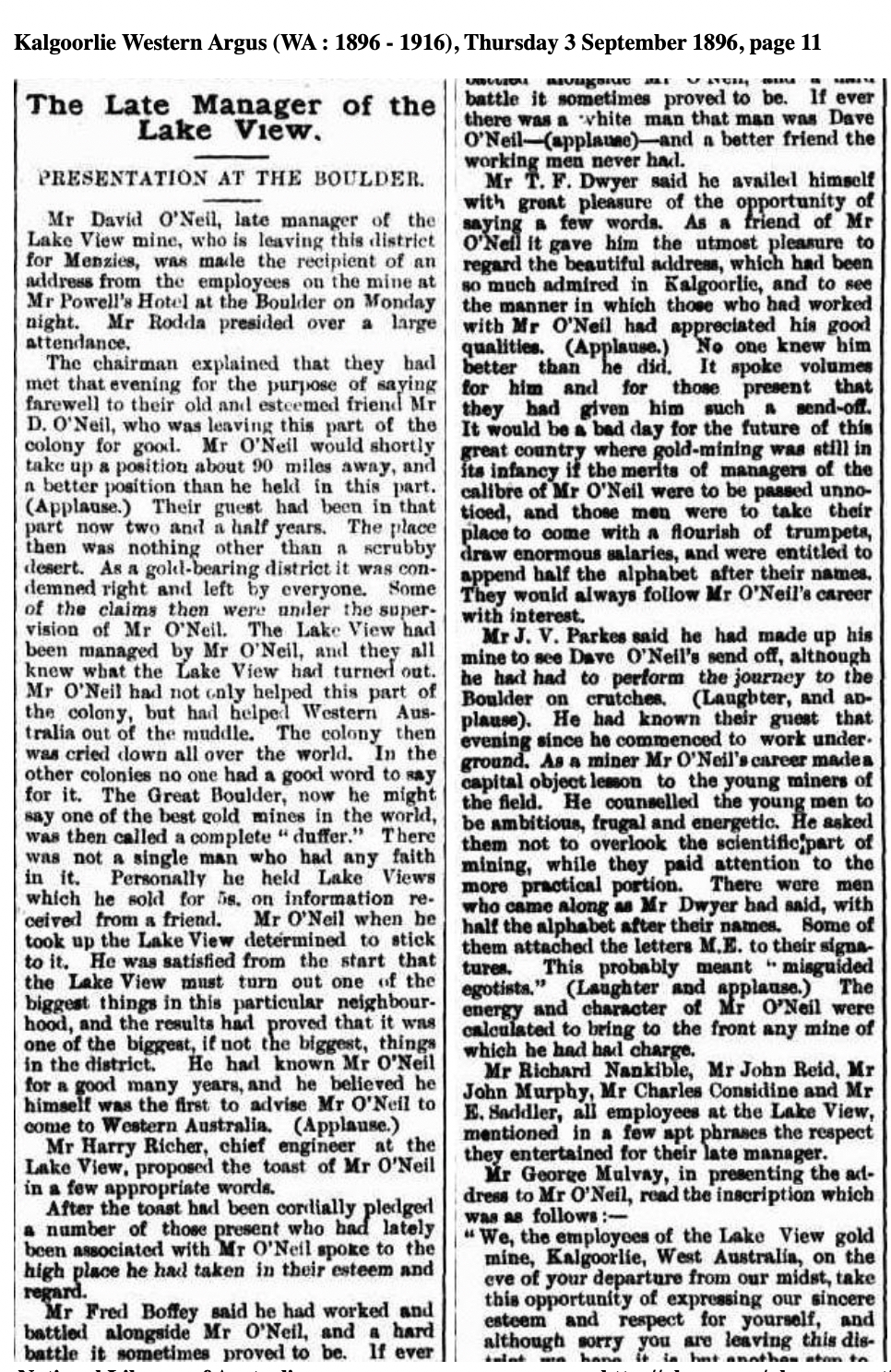
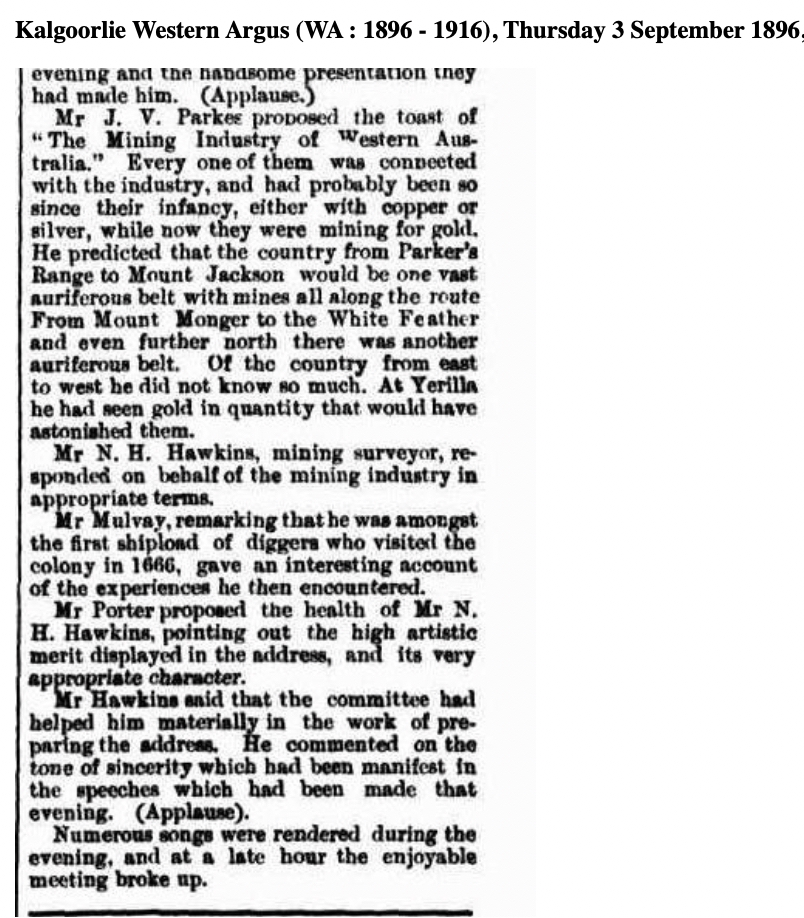
WX5222 O’NEIL, Les b. Kalgoorlie 1908, third child of parents Annie Edith Oneil (nee Sharpe) and David O’Neil. Les enlisted July 1940 and later joined 2/4th MGB’s ‘B’ Coy 9 Platoon as a driver.
As a POW Les sailed from Singapore for Sandakan, North Borneo with ‘E’ Force. He died of illness 16 Dec 1944 aged 36 years.
His father David O’Neil died Nov 1941 – while Les was with 2/4th at Darwin.
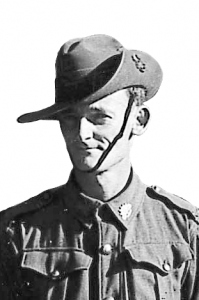
Sgt David O’Neil, Serial No. 1811 enlisted with 4th reinforcements and embarked on 18 April 1915. David O’Neil was discharged in 1919.
____________
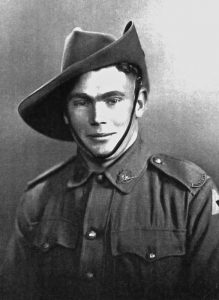
THORNS, Arthur H.’Stanley’ – died 1918 with 51st Btn, initially joined 11th Battalion and fought at Gallipoli. At Gallipoli the 11th Battalion served seven months before being relieved, the longest period of any Battalion. They had endured many deaths and injuries, departing exhausted.
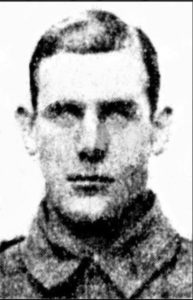
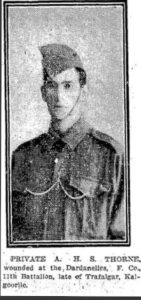
‘Alfred H.S. Thorns was a native of Gympie, Queensland, and went Western Australia with his family during 1902, and resided with his parents for seven or eight years at Kanowna, afterwards the family moved to Trafalgar. He worked as a miner for Lake View and Star Company, at the time of his enlistment on 16 August 1914, one of the earliest men to enlist in Australia. He left West Australia with the 11th Battalion, and participated in the Landing at Gallipoli on 25 April 1915, and took part in the evacuation of the peninsula. He had been slightly wounded there on two occasions. He then went to France, and was severely wounded at Pozieres on 16 August 1916. He was evacuated to England with a gunshot wound to the knee. He went back to the front after six months hospital treatment rejoined his unit during November 1916.
He was a remarkable soldier and his recommendation for the award of a mention in despatches was as good as it gets, “Was an original member of the 11th Battalion. Landed at Anzac on 25 April 1915. Wounded on 4 May 1915 and again on 28 June 1915. Joined the 51st Battalion at its formation and was wounded for a third time at Pozieres 14 August 1916. He rejoined in November 1916 and has at all times proved a steady and reliable NCO and his cheerfulness and devotion to duty stand out as an example. Recommended by Lieut-Col. Ridley 51st Battalion CO, signed by Major General William Homes, GOC 4th Division.”
He spent some time in England as sergeant-major in the instructional staff, training men, before he rejoined his unit in France in September 1917.
He was soon after recommended for a Military Medal, “on the night of 24/25 April 1918 during a counter attack by his Battalion on strong enemy positions near Villers-Bretonneux this NCO showed splendid courage and devotion to duty. Although wounded early in the fight he continued to lead his platoon under heavy rifle and machine gun fire, and when at one stage his platoon was hung up by fire, he went forward and at once attacked the position and forced the enemy to retire, thereby enabling his men to advance. When consolidating on the final position, he rendered valuable assistance by reconnoitering his front and gaining information of the enemy movements. His coolness under fire and determination to remain at his post were an excellent example to his men.”
He was wounded again 3 weeks later, this being his 5th wound and a mortal one. He was wounded by an aeroplane bomb when the Battalion was out of the line, in a village called Blangy-Tronville, 5 kilometeres east of Amiens. The bomb killed several other men, and Thorns died of his wounds the next day. One of the eye witnesses stated he was the longest serving man in the Battalion, having fought at the Anzac Day landing in 1915.
His older brother, 2235 Pte. Arthur John Vivian Thorns 28th Battalion AIF had been killed in action at Pozieres 29 July 1916, aged 24.
A third brother George Albert (Leslie) Thorns enlisted in 1917 into 48th Battalion. Les had his left foot severely damaged by a shell and was finally discharged during March 1918. Their parents were Albert and Emma Thorns, of Trafalgar, Western Australia.
Another brother, Albert Wilfred was the father to Arthur Stanley Thorns naming his son after his two brothers. WX10289 Private Arthur Stanley Thorns, 2/4th Machine Gun Battalion, died of ill treatment as a Japanese prisoner 8 August 1945.‘
(We wish to acknowledge the above information has been taken from Virtual War Memorial website)
Arthur Thorns is uncle to WX10289 ‘Codge ‘Thorns who died so tragically at Sandakan 1945
_________________
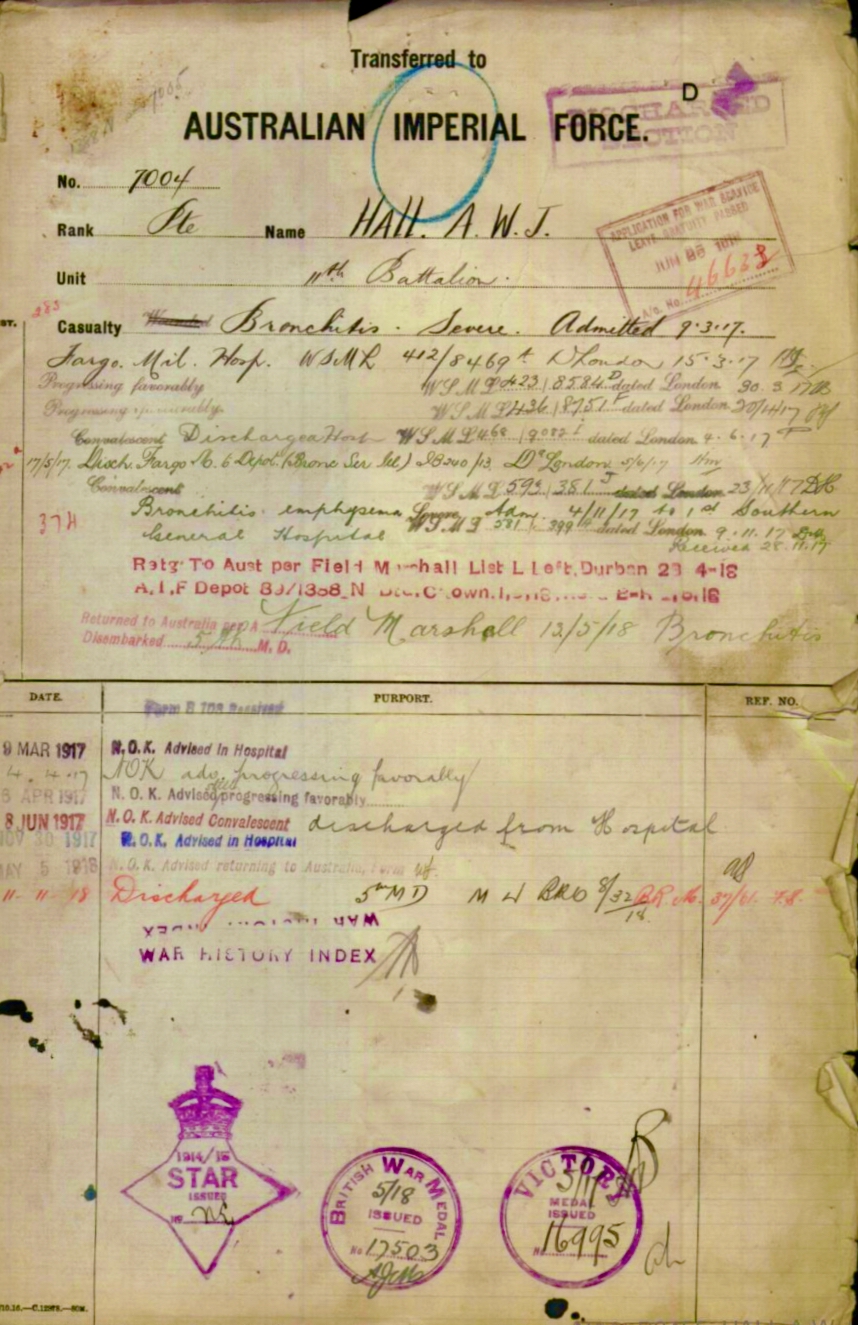
WX10370 ‘Doug’ Hall d. illness May 1944 aged 25 at Singapore having returned from Burma-Thai Railway with ‘H’ Force Thailand. Doug’s father Algernon William John Hall (Billy) 7004 served with 11th Battalion WW1. Billy Hall returned to resume work as a miner at Kalgoorlie. Tragically he died at Wooroloo Sanatorium September 1923 aged 41. His son Doug was then 4 ½ years old.
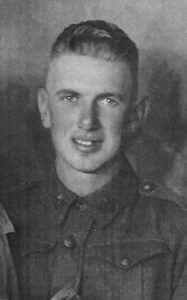
Returning with ‘H’ Force from Thailand Doug was evacuated to AGH Roberts Barracks with septic thrombosis pyaemia of the right iliac vein. He was operated on three times, the last time about a week before he died, to remove his left hip which had become diseased. As well, there were indications of stones in his kidneys and abscesses on his lungs. Doug had been ill for some 4 weeks, his weakened body unable to continue his fight.
He died during the morning of 21.5.1944 aged 25 years and was buried at 1430 hours. He was 25 years of age. The funeral service was conducted by Chaplain M. K. Jones from 8th Division Headquarters. Captain Tom Bunning wrote that he was buried with the greatest possible approach to full Military Honours and on the sounding of the ‘Last Post’ all within earshot stood to attention in respect of him.
_________________
_______________
WX16416 Holme, Charles (Bubbles) Please read further.
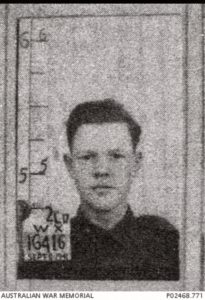
When ‘Bubbles’ was born, his father (Karl) was working for the Gardiners, at Worsley. Karl’s wife died during childbirth.
Karl returned to the Gardiners with his newborn son and it was Mrs Gardiner who cared for him. They had not been able to have their own children and it was arranged they would permanently look after Bubbles.
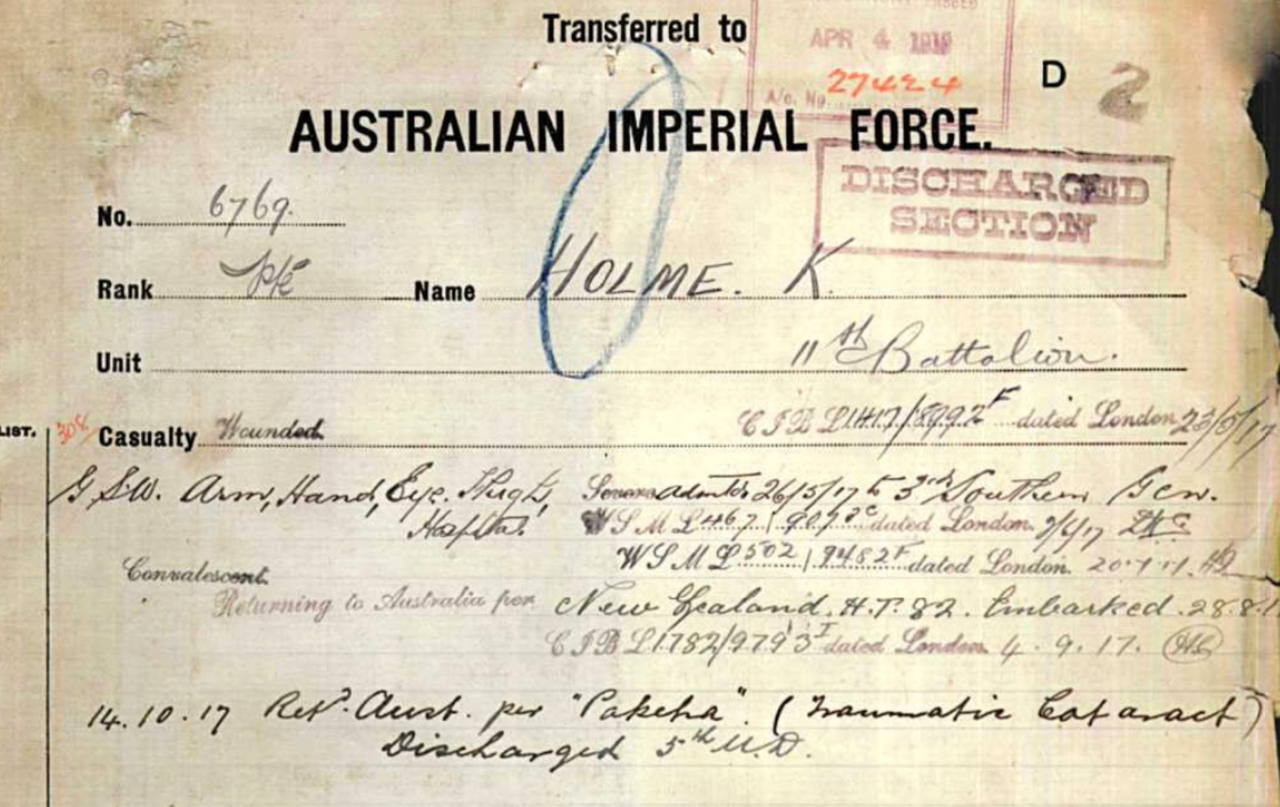
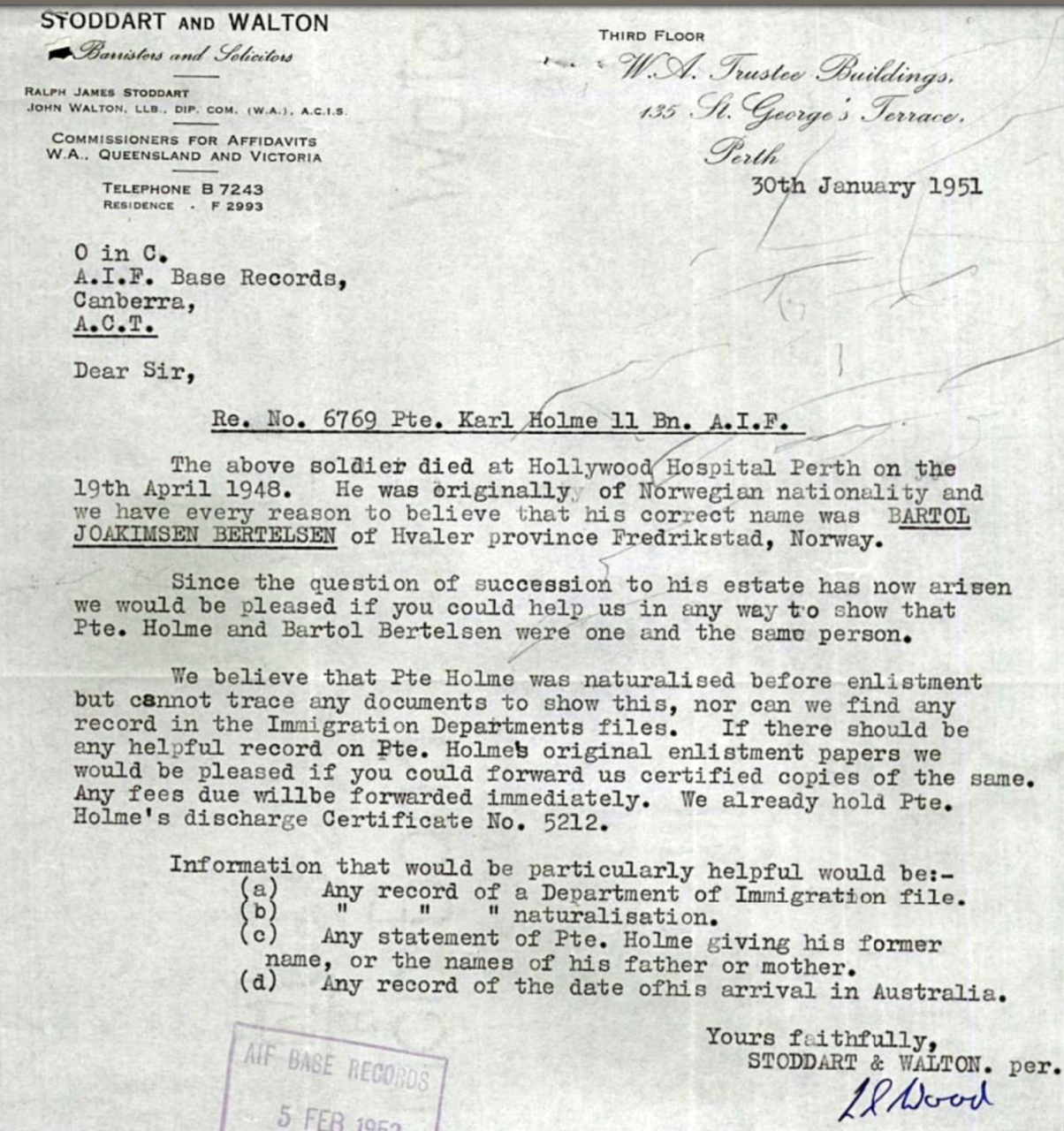
Karle Holme was born Fredriekstad, Norway about 1883. He served in the Australian Forces in WW1 – it is beleived he enlisted 1 July 1916 – possibly not long after he arrived aged 33 years. He recorded his mother as NOK, Jacobina Holme, Norway.
HOLME service 6769 served 11th Battalion in France. He received GSW arm, hand, thigh and eye (serious).
He was transported to hospital in England and then returned to Australia 24 August 1917 for Home Service (traumatic cataract).
Karle Holme was discharged from Army 16 January 1918. He died in 1948 – it is said his grief was so great and did not recover on learning the horror of his son’s death at Sandakan.
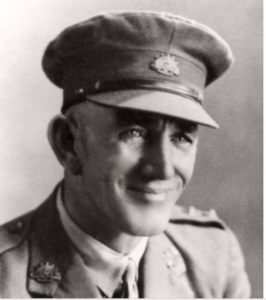
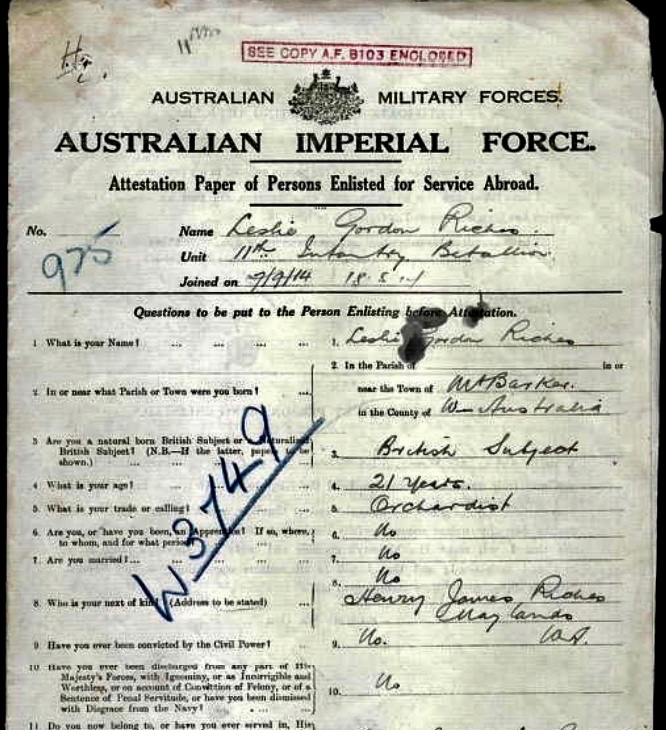
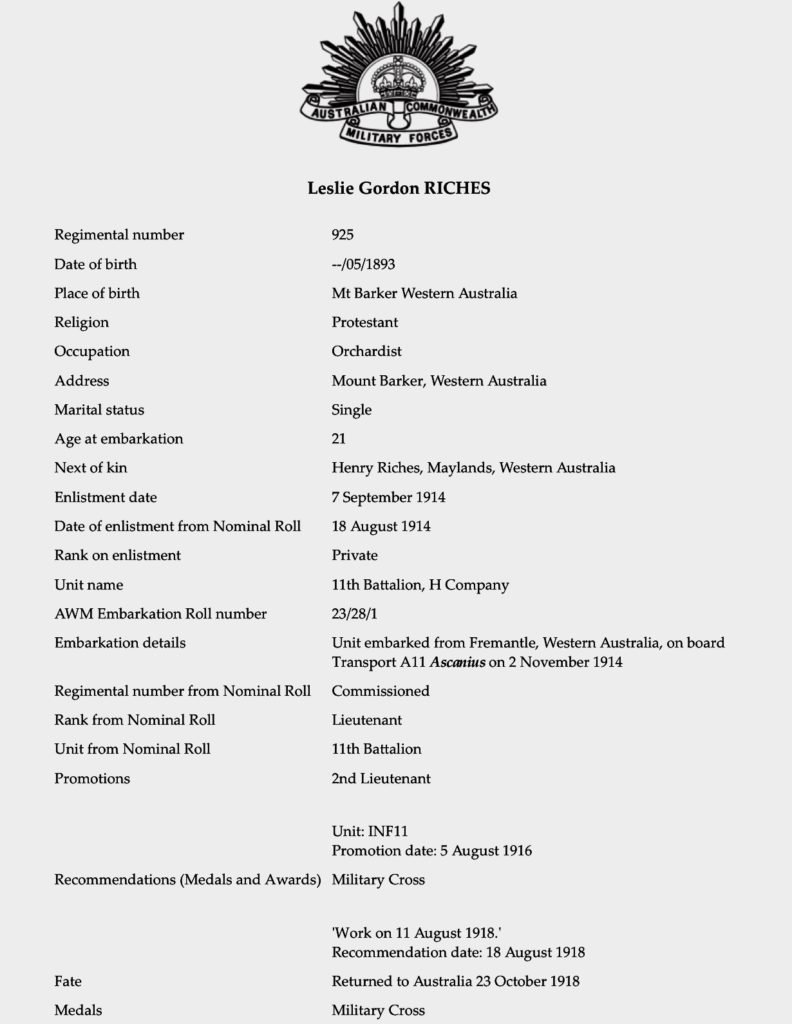
WX11046 RICHES, Leslie Gordon enlisted AIF WW2 joining 2/4th MGB 28 Feb 1941. Please read further about Les Riches in WW2
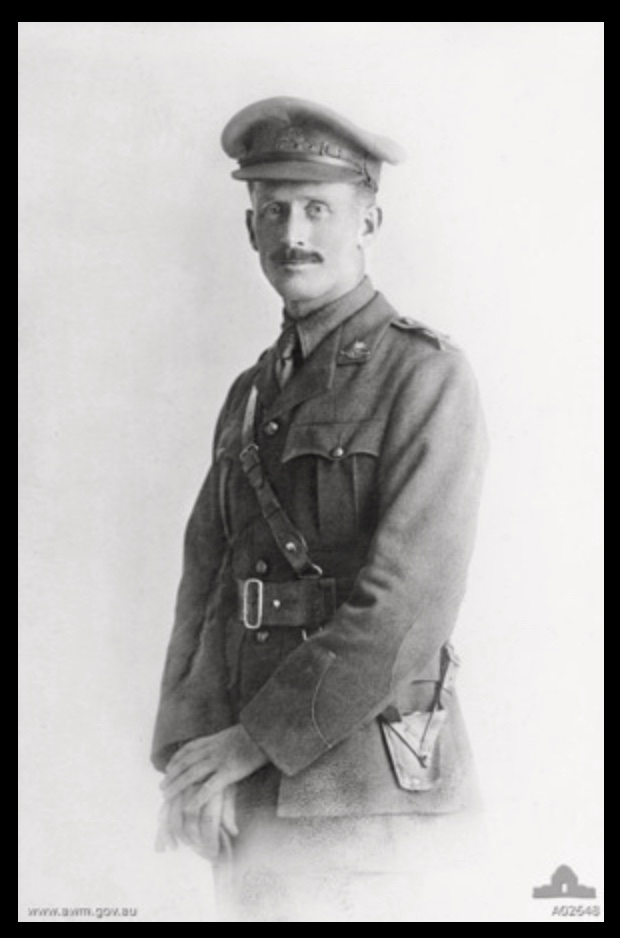
Riches served WW1 with 11th Btn. He was awarded Military Cross in 1918.
__________
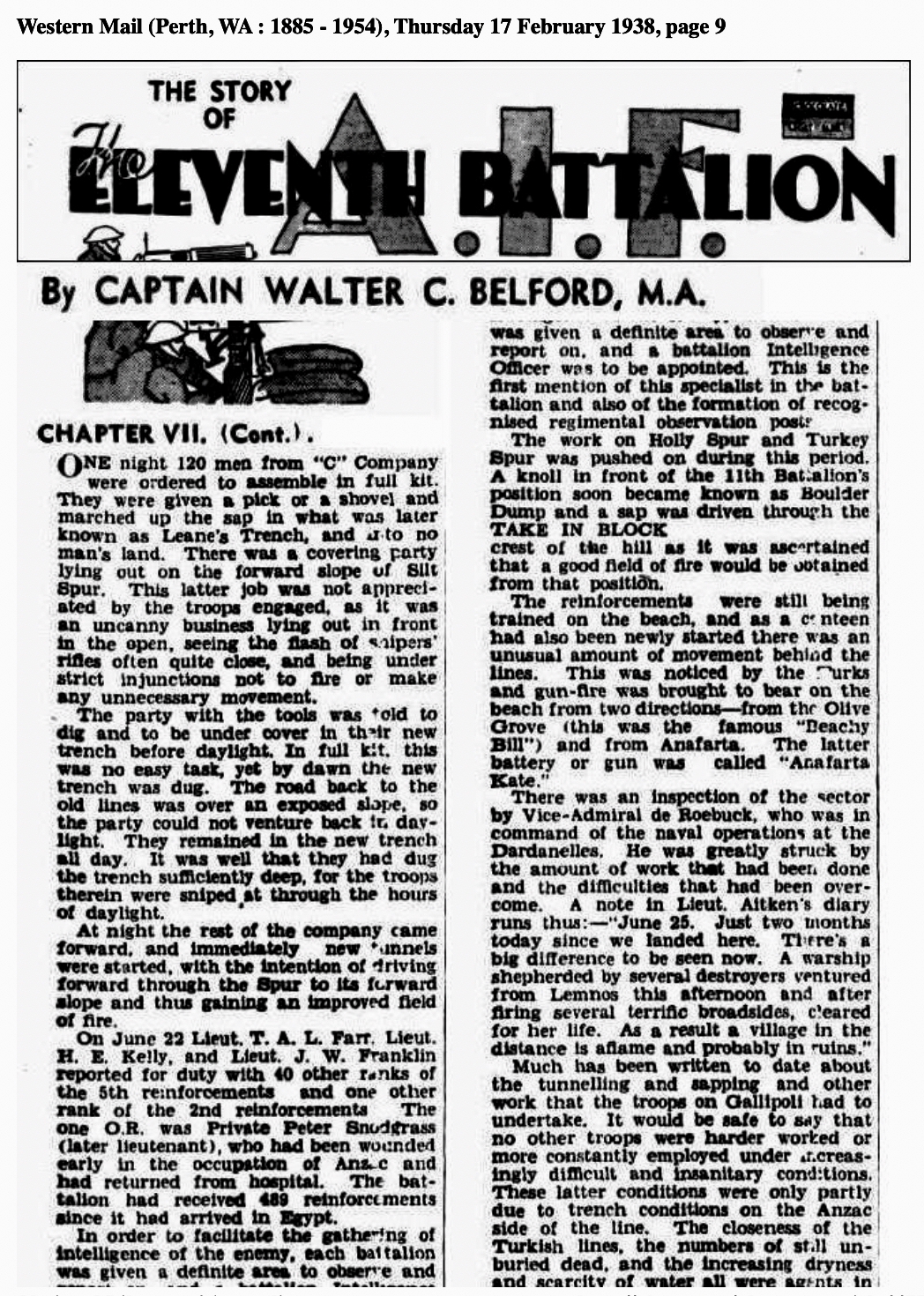
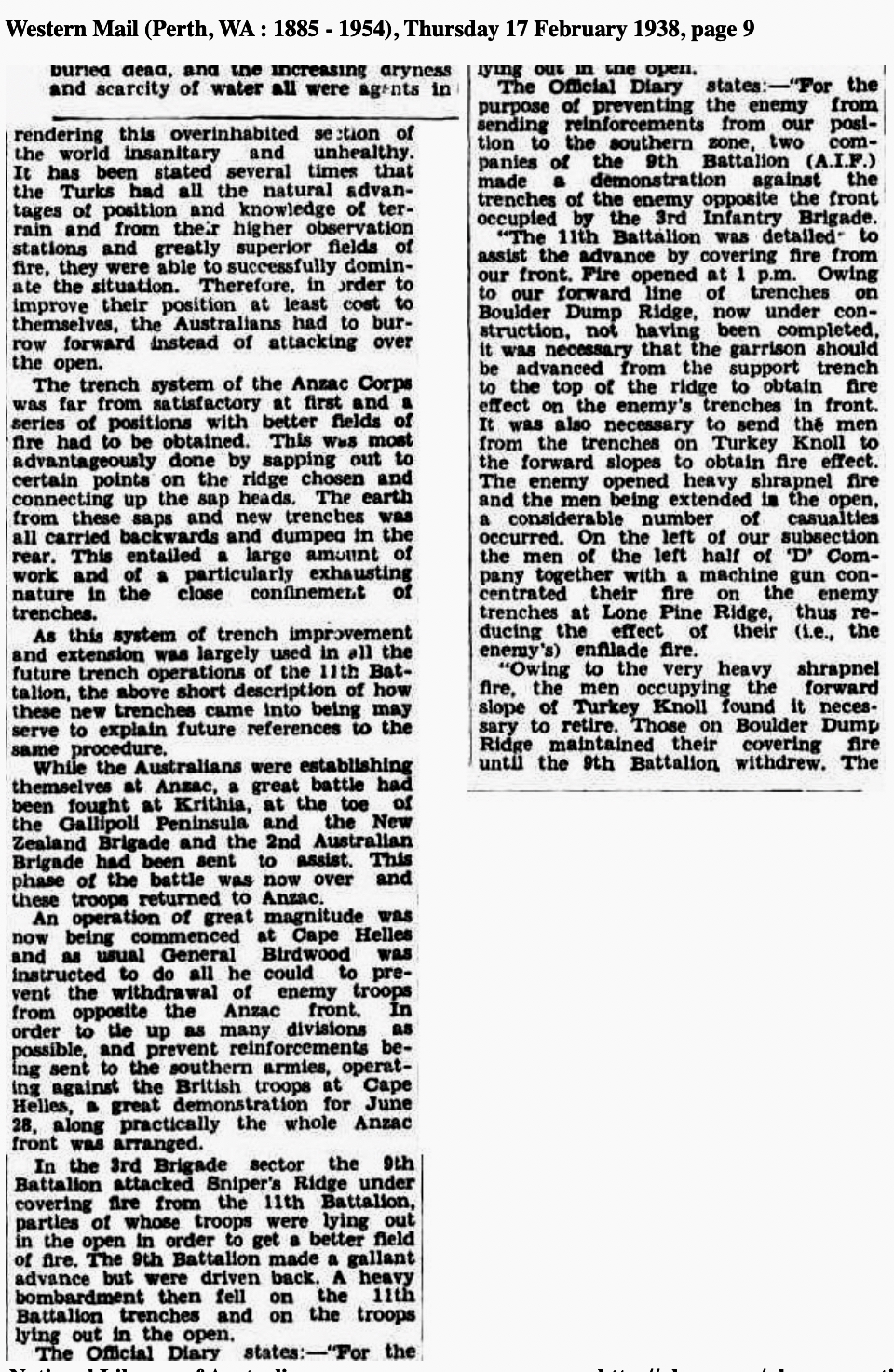
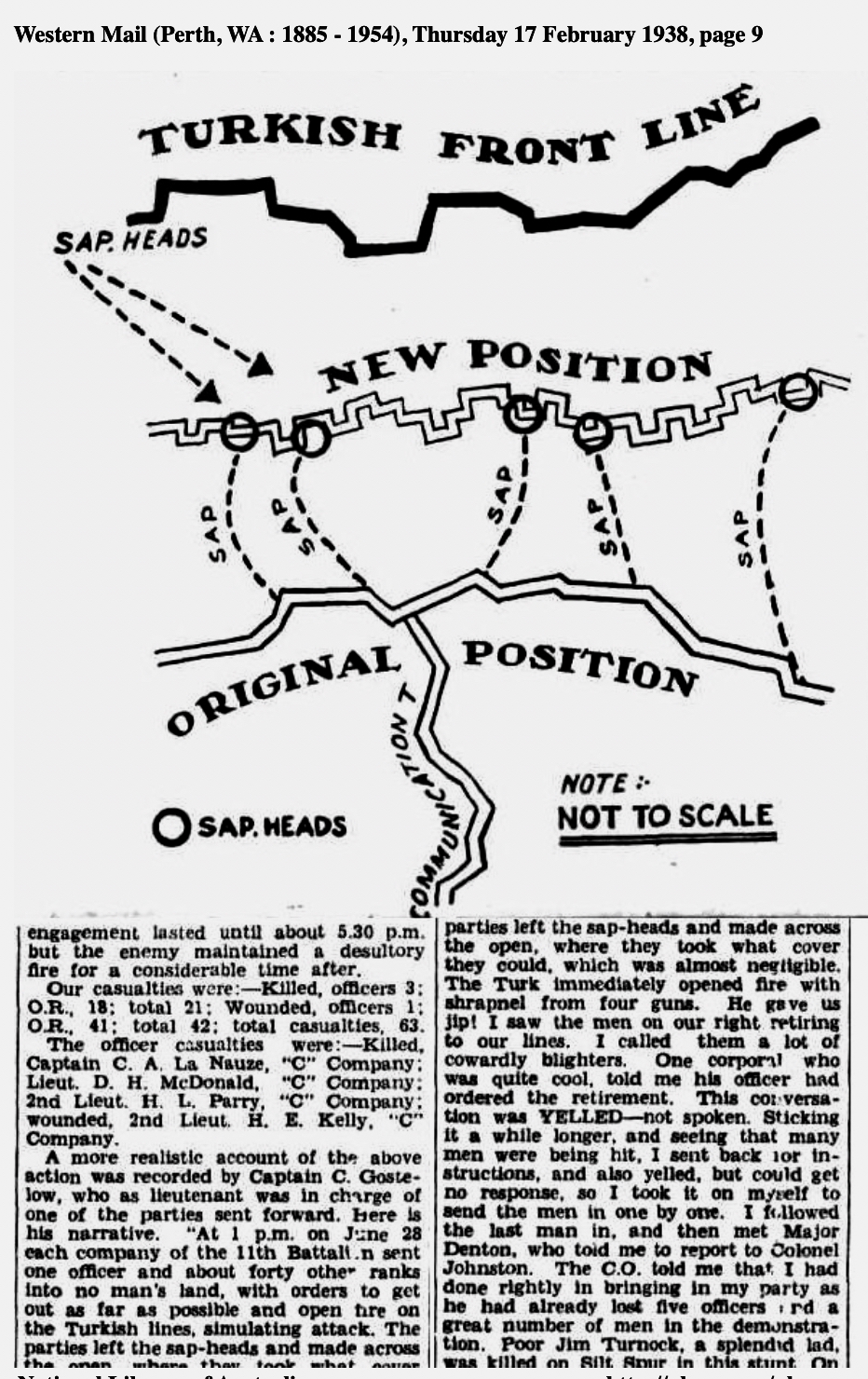
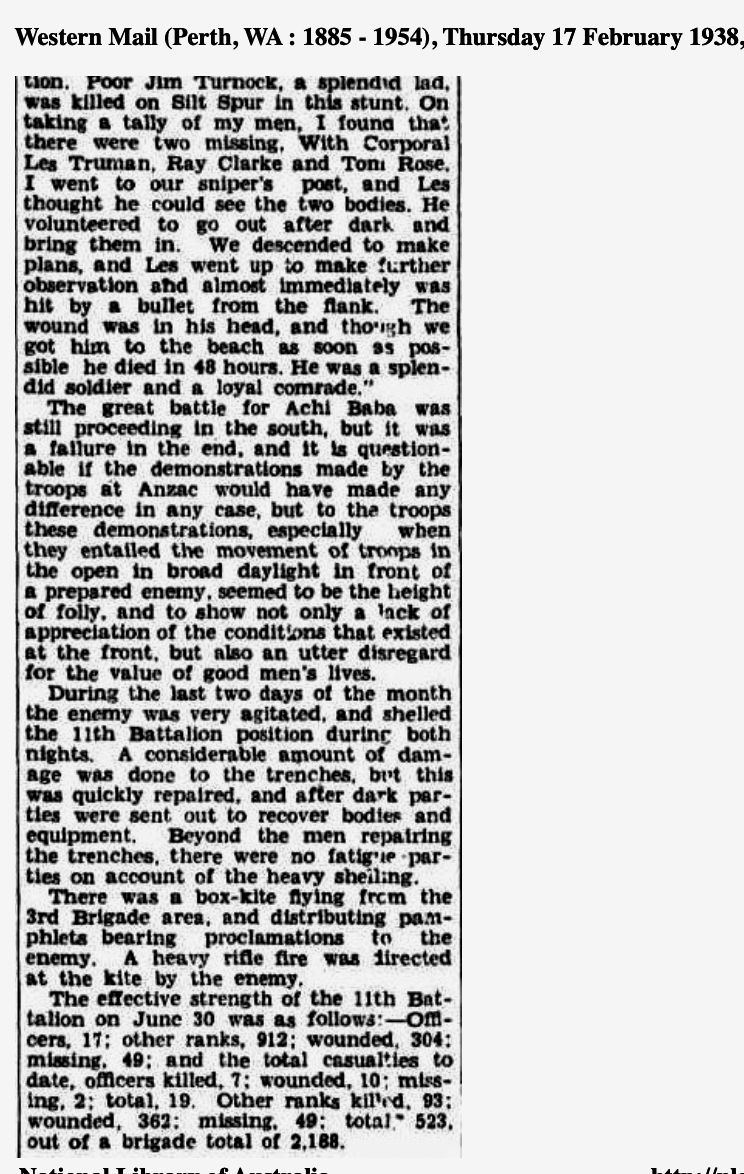
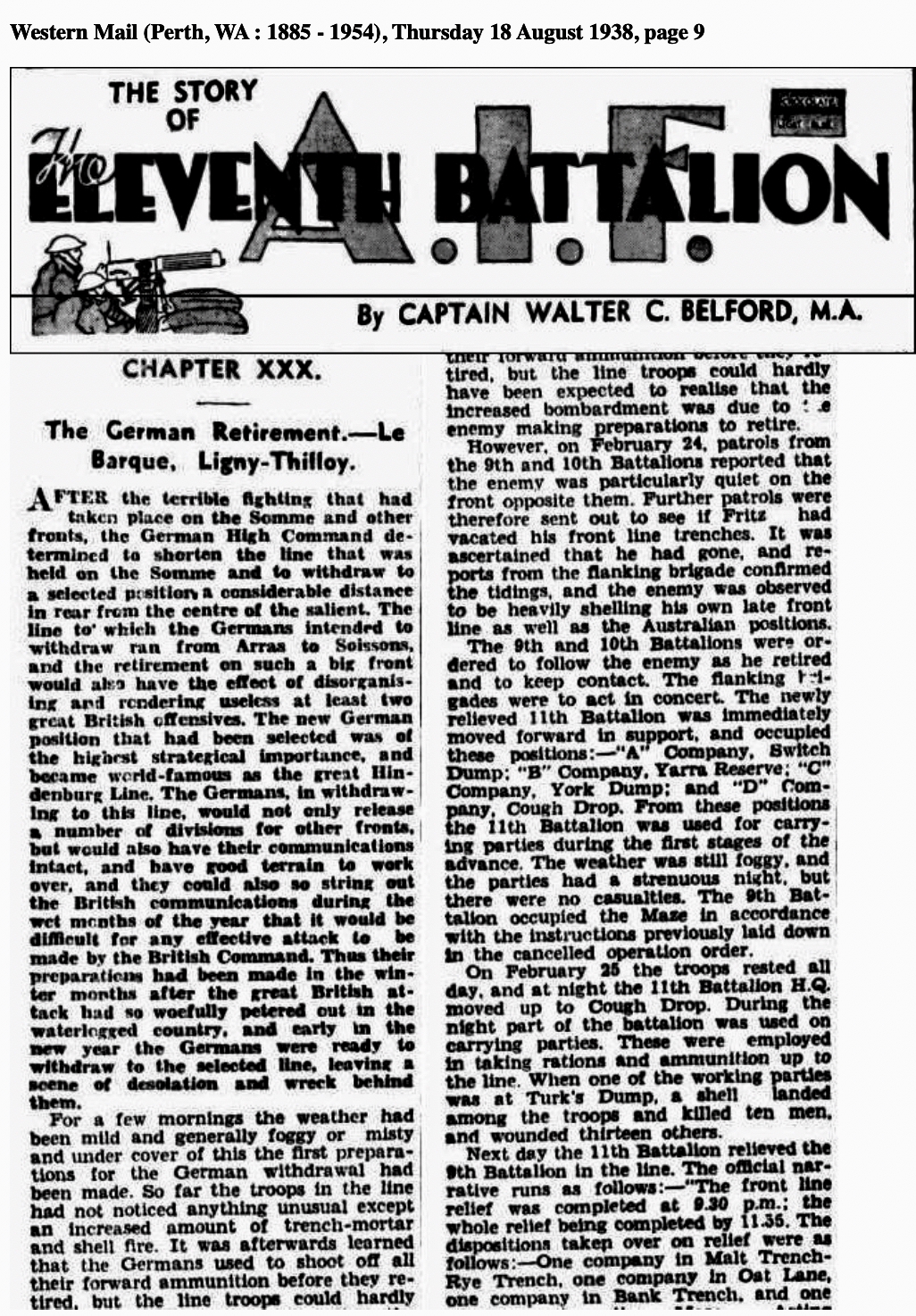
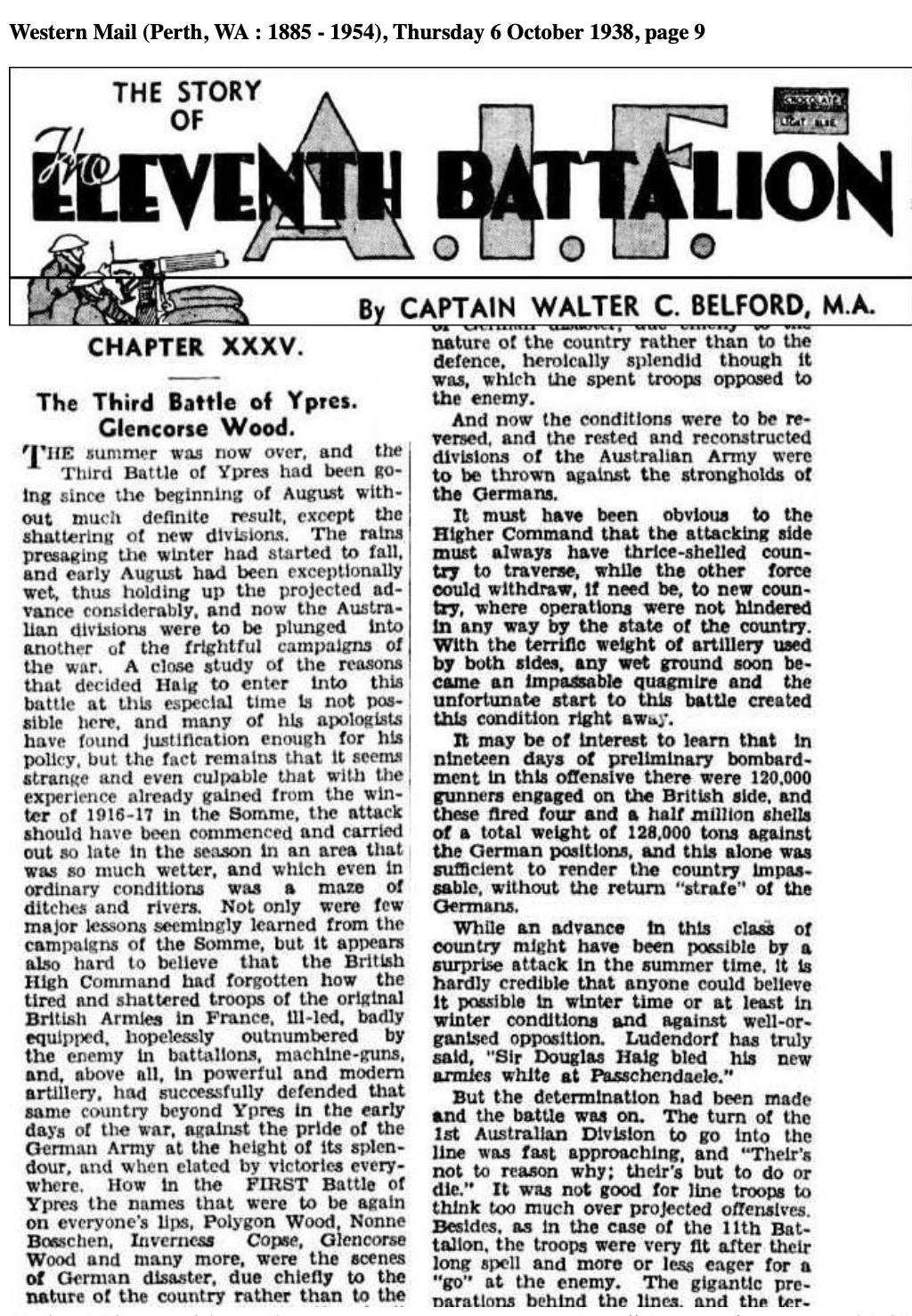
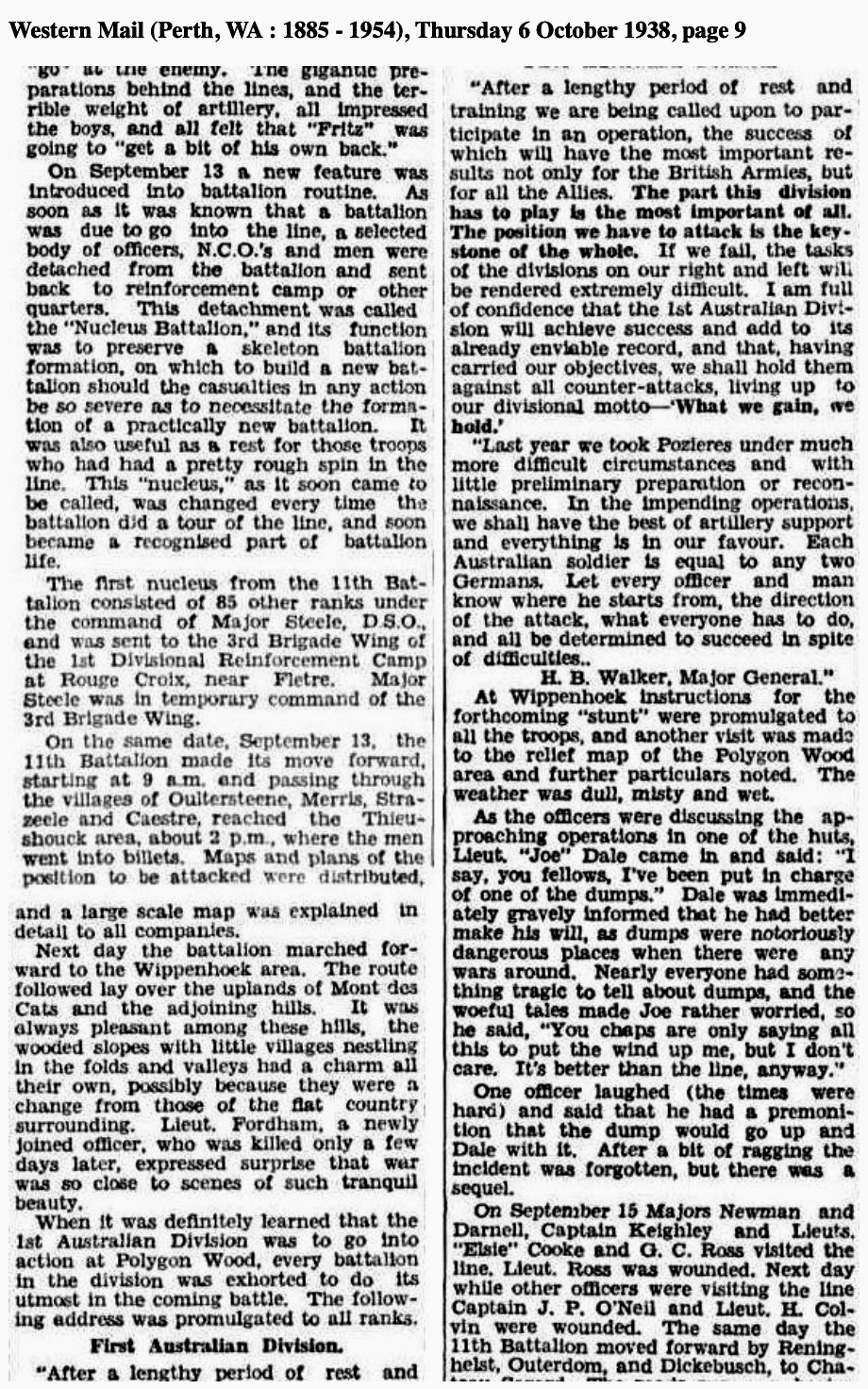
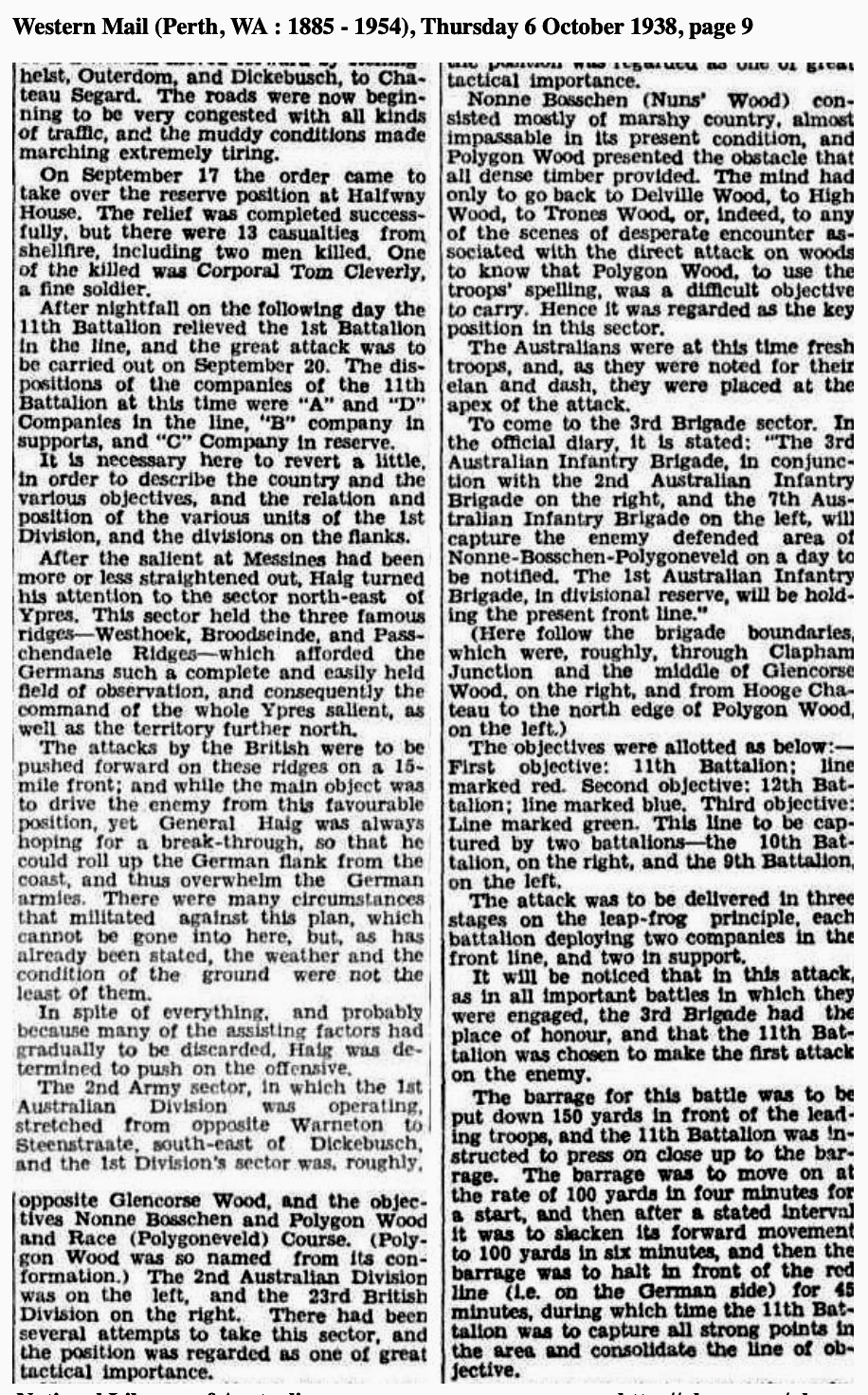
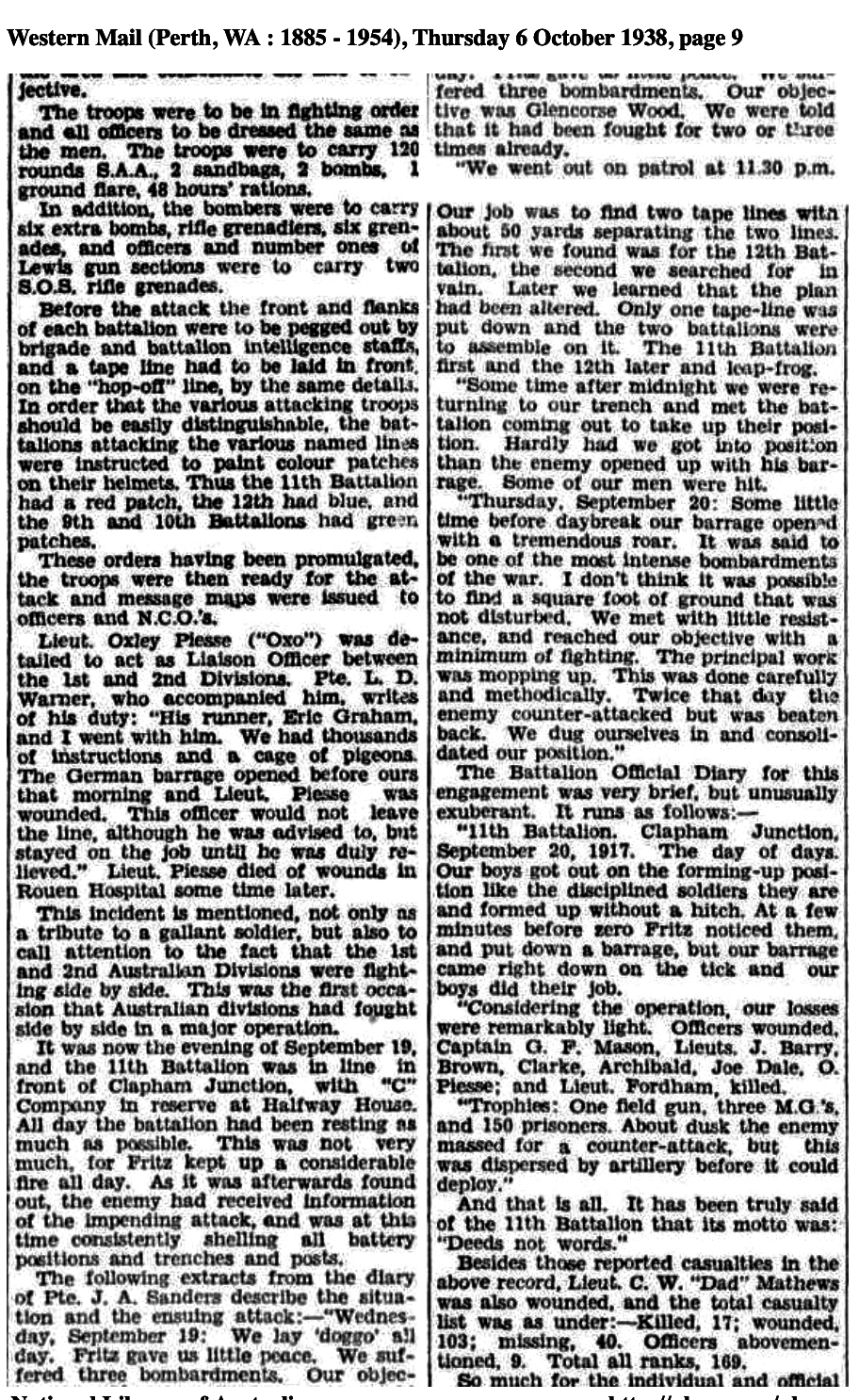
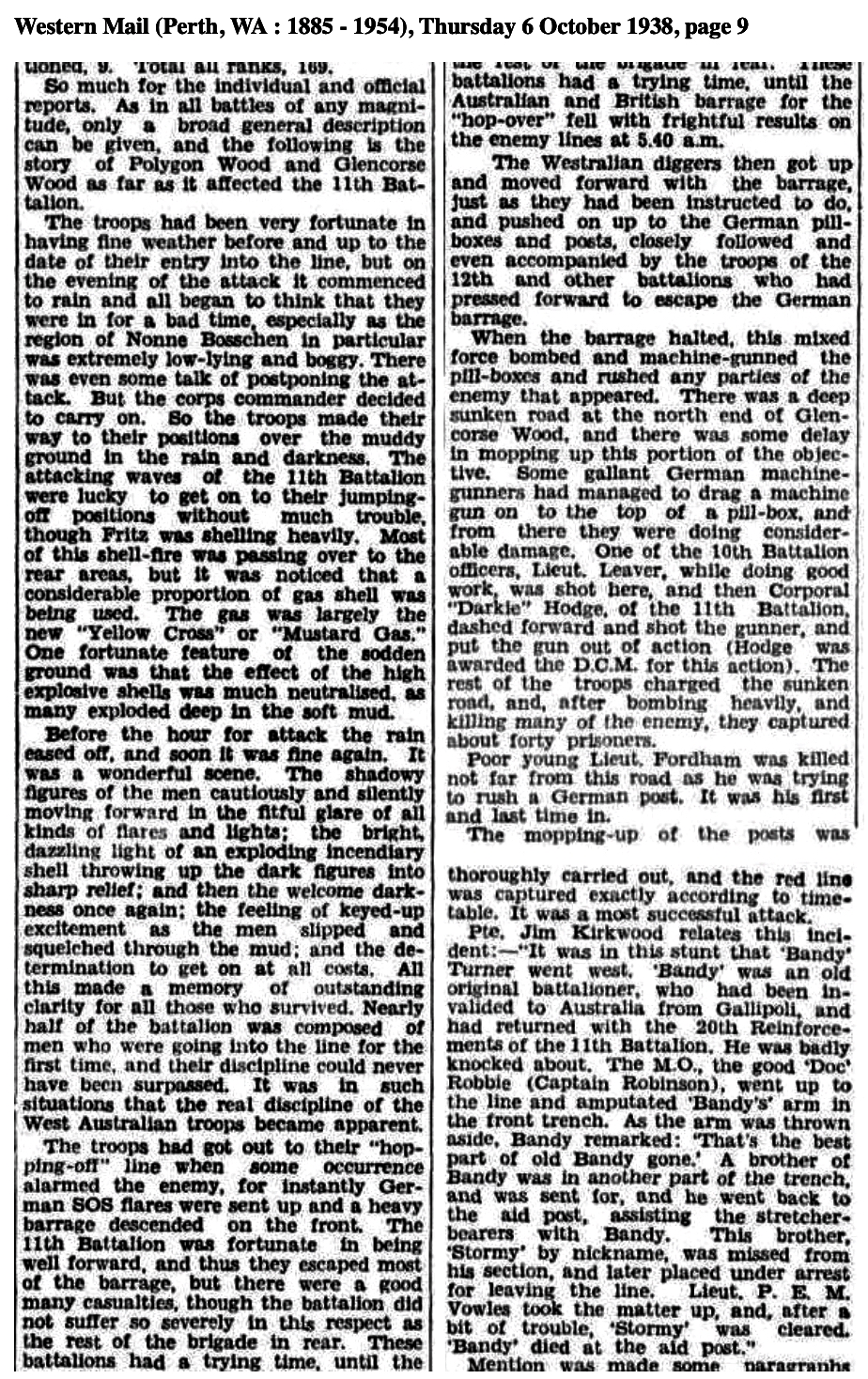
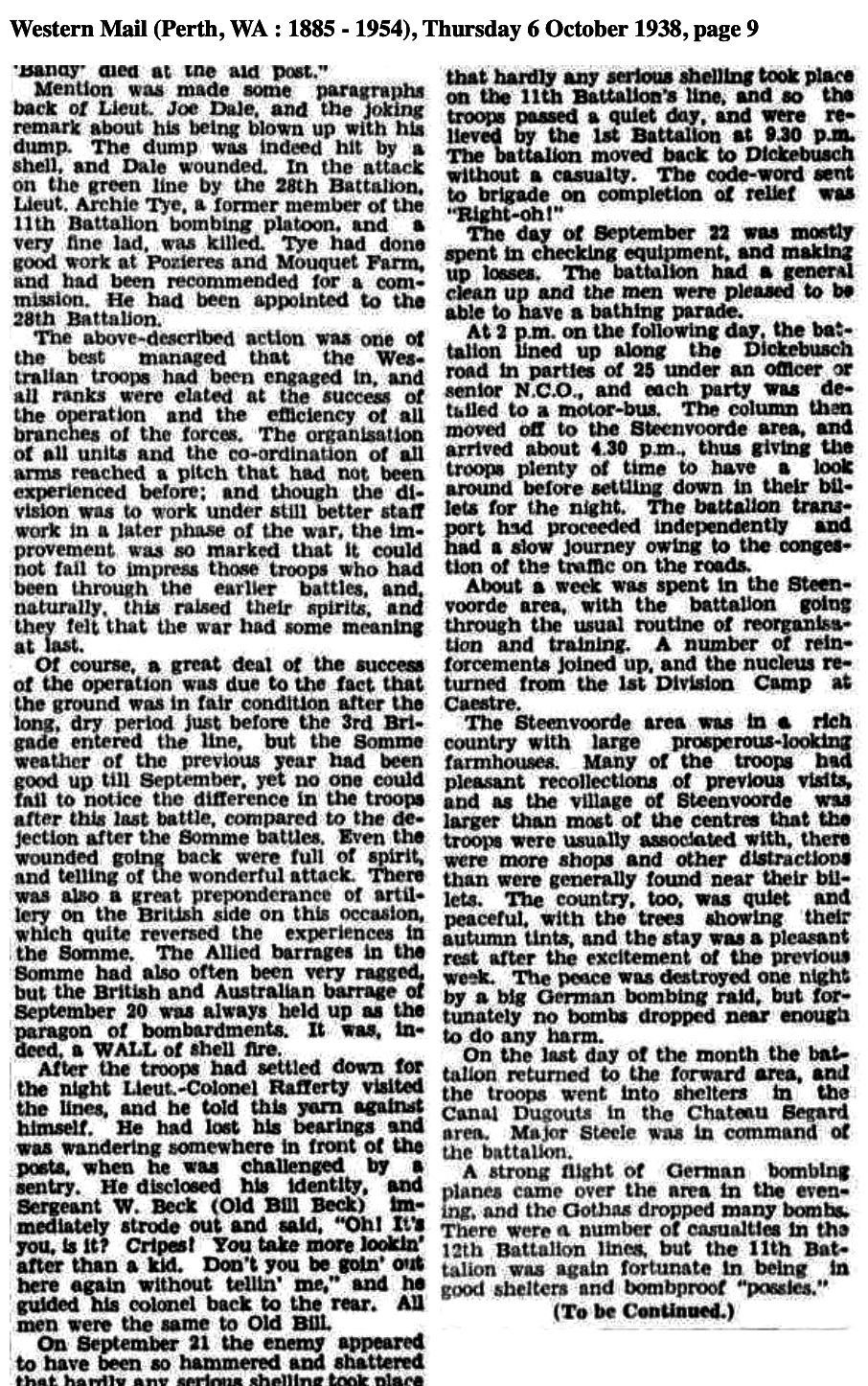
Below: about David O’Neil – grandfather to Les O’Neil.