The Soldier's Details

- Surname:
- Bow
- First Name:
- Walter Verdun
- Nick Name:
- Wally
- Rank:
- Private
- Regimental #:
- WX7253
- Classification:
- Driver
- Company:
- 'D' Company Headquarters
- Enlisted:
- 1.08.1940
- Discharged:
- 14.03.1946
- DOB:
- 19.03.1916
- Place of Birth:
- Perth, Western Australia
- Father's Name:
- Harry Bow
- Mothers's Name:
- Rachel Lambert Bow
- Religion:
- Church of England
- Pre-war Occupation:
- Blacksmith's Striker
- Singapore:
- Selarang Camp Changi, Thomson Road (Caldecot Hill Estate Camp), River Valley Road Camp, Selerang Barracks Camp
- Force:
- 'D' Force Thailand, V Battalion
- Camps Thailand:
- Brankassi, Hindaine, Hindato, Nacompaton, Bangkok (go-downs), Japanese Transport Camp just out of Bangkok to repair trucks. Accompanied by Swift & Manthorpe.
- POW#:
- 3/7016
- Return Details 1945:
- Thailand-Rangoon by aircraft, Rangoon-Singapore, HMT Highland Brigade, Singapore-Fremantle, HMT Moreton Bay.
General Description
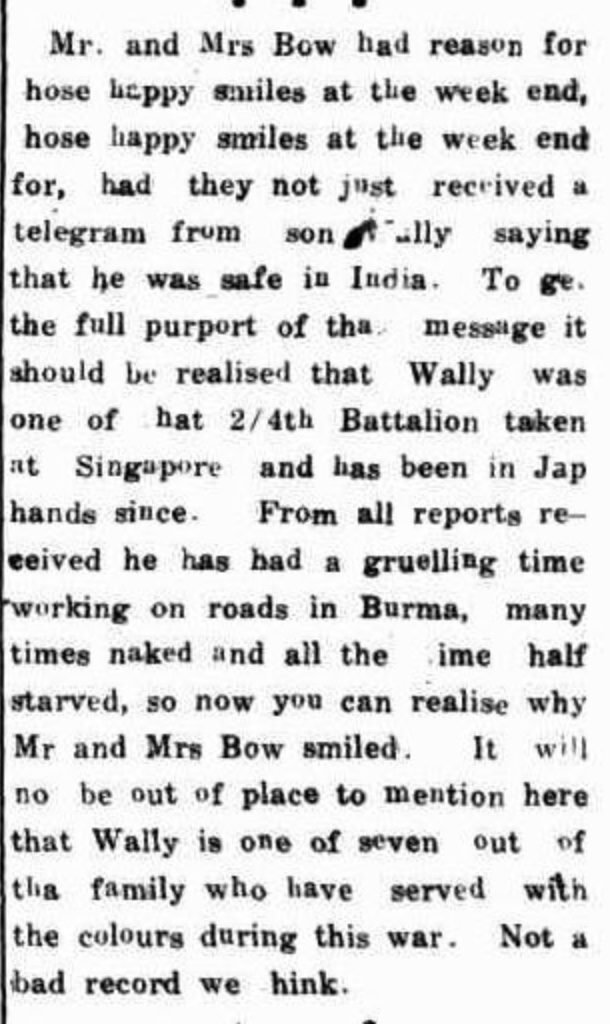
Bow enlisted AIF 1 Aug 1940 later joined ‘D’ Company Headquarters as a Driver. In Singapore when a further Platoon was created to support another Vickers Gun, Bow was moved to No. 15 Platoon.
Soldier was wounded in action at Buona Vista on 15/2/1942. Admitted to 2/13th Australian General Hospital on 16/2/1942 with shrapnel wounds to the left and right buttocks. Discharged to unit on 22/2/1942.
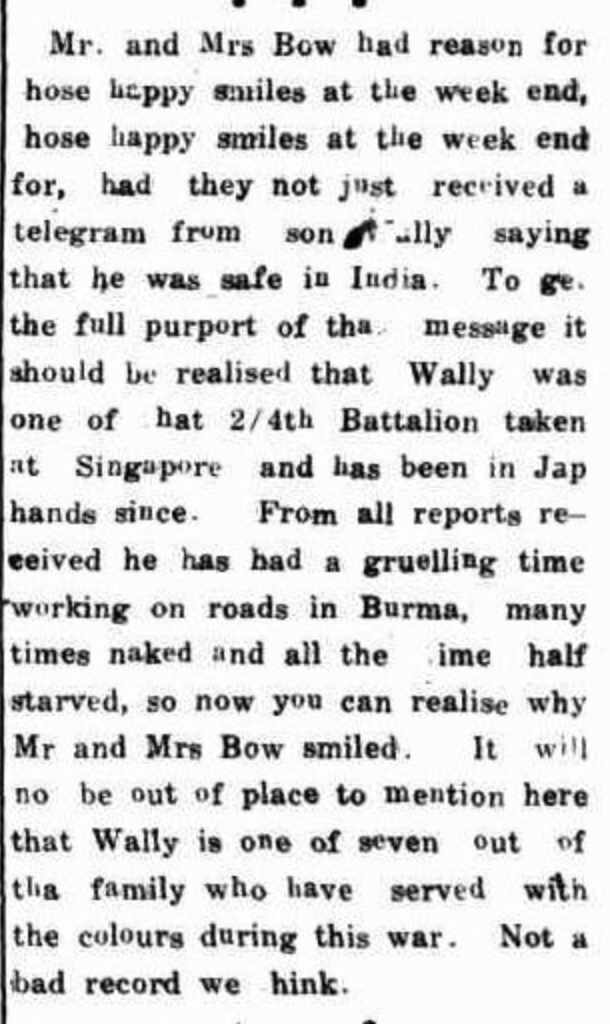
Bow later left Singapore to work on Burma-Thai Railway with ‘D’ Force Thailand V Battalion. Please read further about this Battalion.
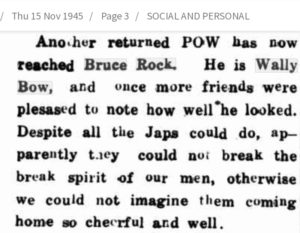
Wally survived the Railway, and at the end of 1943 the Japanese began moving all POWs south to one of several large camps and hospitals where the men could be treated and recover. He got a job working at truck depot near Bangkok with two other 2/4th men Swift and Manthorpe. This placement was far better than being sent on work parties throughout Thailand.
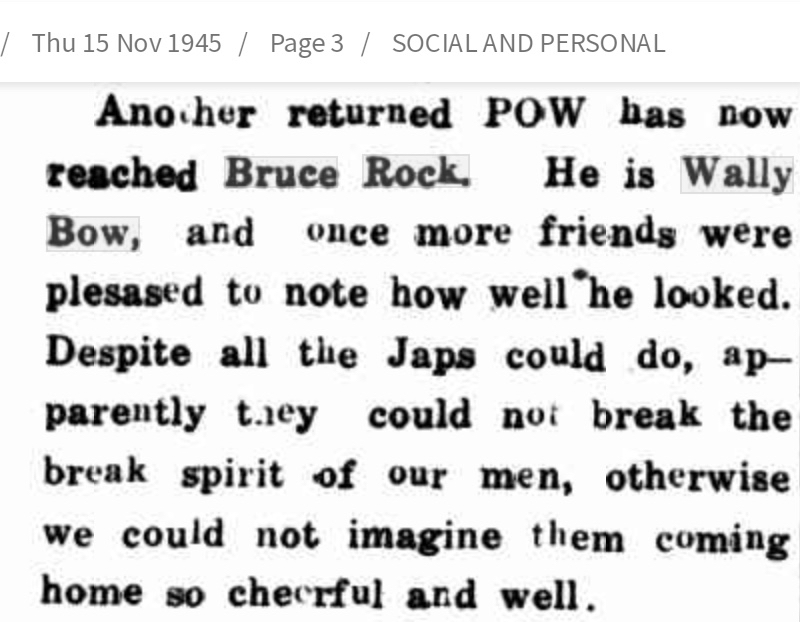
He remained in Thailand and was recovered from there at the end of the war.
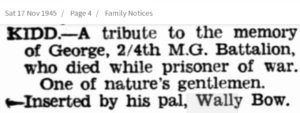
Wally’s mate George Kidd died of illness at Kanchanaburi, Thailand in 1943.
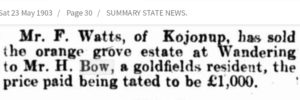
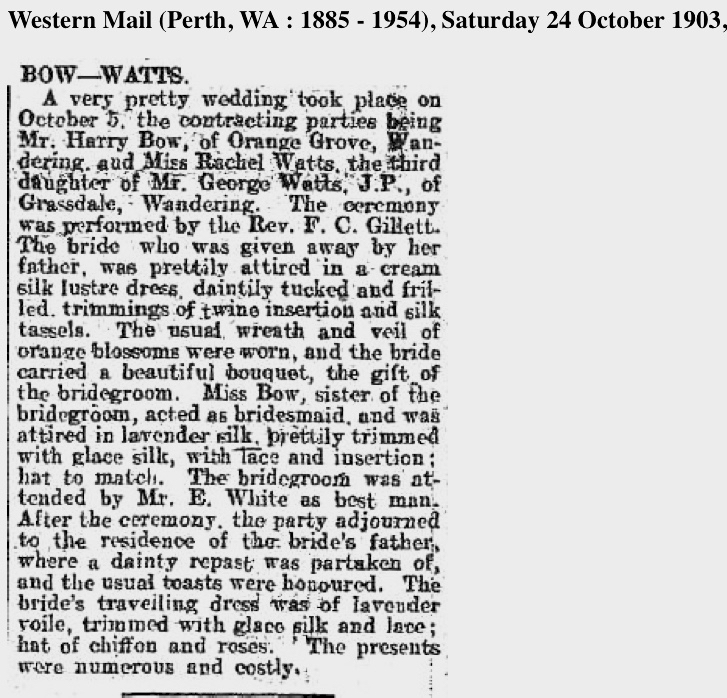
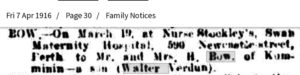
Walter Verdun was born Perth 1916 to parents Harry Bow and Rachel Watts who married 1903.
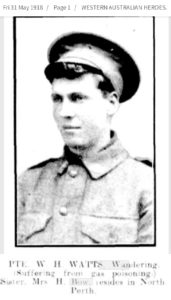
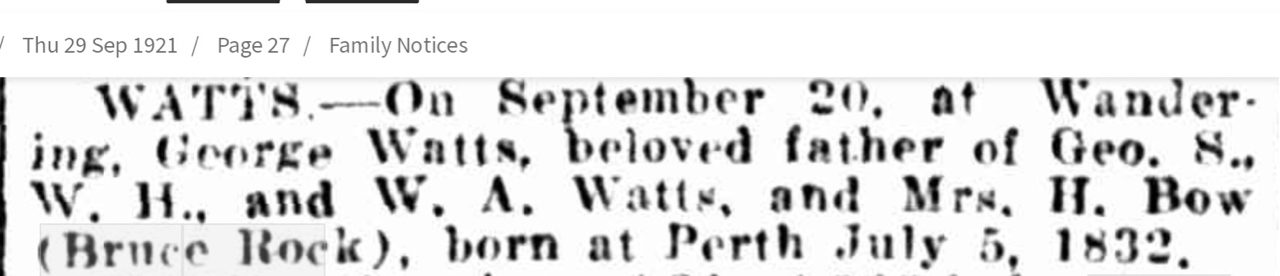
Rachel’s brother enlisted WW1, William Henry Watts later married in England 1919 to Ivy Bow. (It is unknown if Ivy Bow and Harry Bow are related – Harry’s father was one of 17 children or it may have been a coincidence).
William Henry known as ‘Dick’ Watts returned to WA after the end of war with his wife Ivy. However we believe Ivy and ‘Dick’ may have returned to live in England. William Henry Watts who was about 6 years younger than Rachel, died in about 1927. He suffered from gas poisoning and was earlier, in 1916 bitten by a camel in Egypt. He was hospitalised for many months as the camel bite on his leg became seriously infected. He suffered long term tendon injuries.
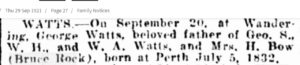
Father of Rachel Bow and Grandfather to Wally, died in 1921.
Wally Bow spent his formative years at Bruce Rock.
He was the second youngest of seven children.
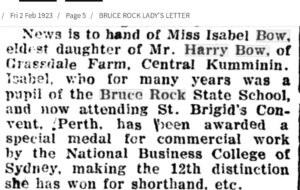
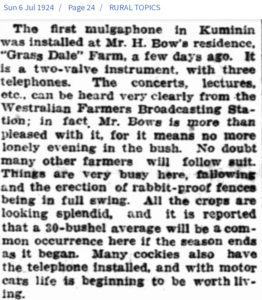
Wally was 7 years of age when his parents divorced in 1923. His father Harry Bow remarried in 1924 to Annie Wilson. Wally’s mother Rachel Isabella Bow (nee Watts) remarried Alfred Lambert in 1925.
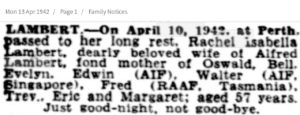
Below: Wally’s mother died 1942 aged 57 years.
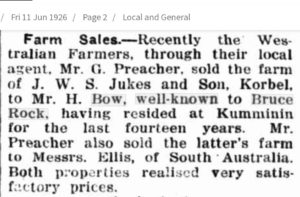
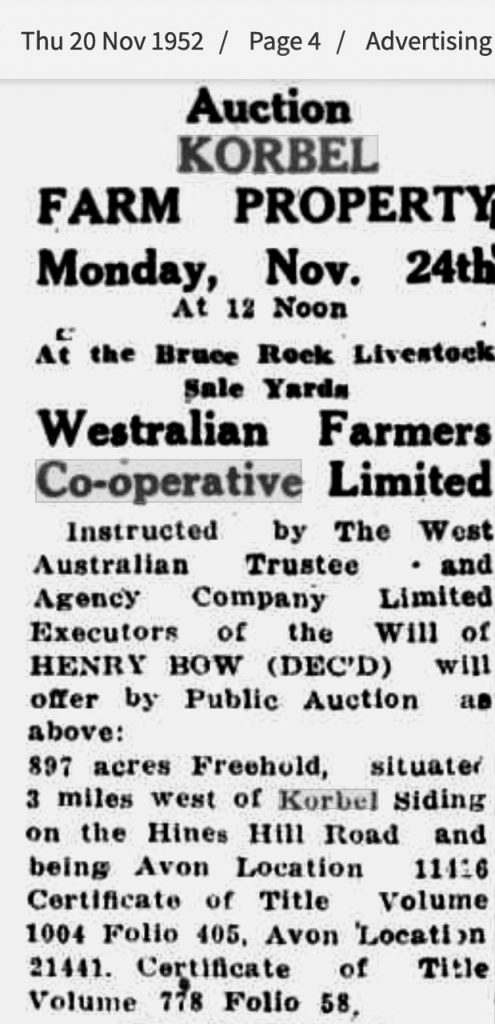
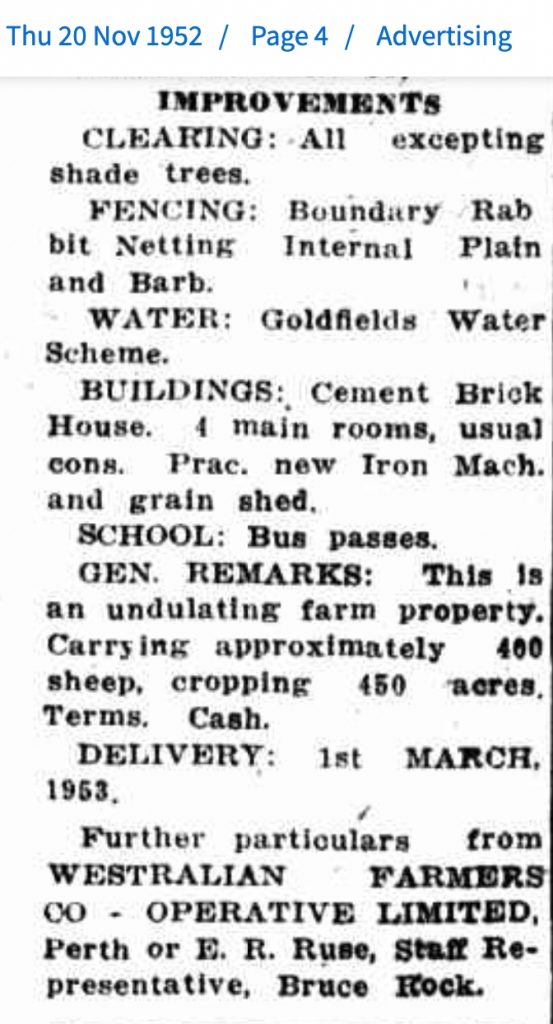
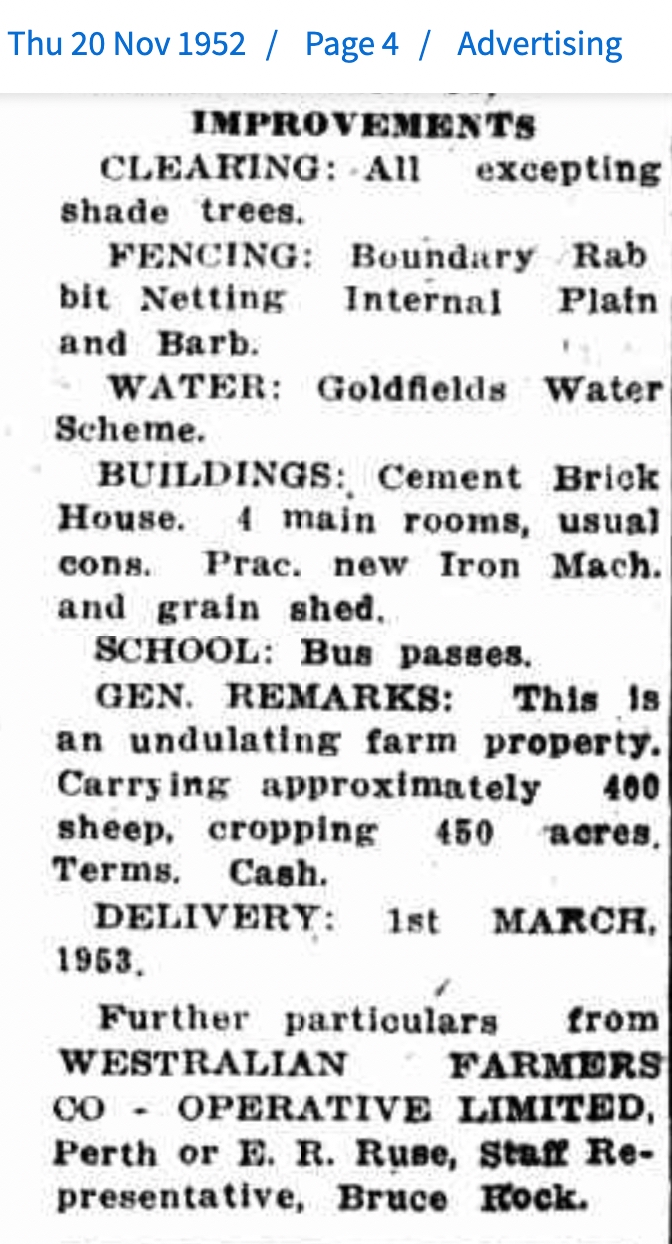
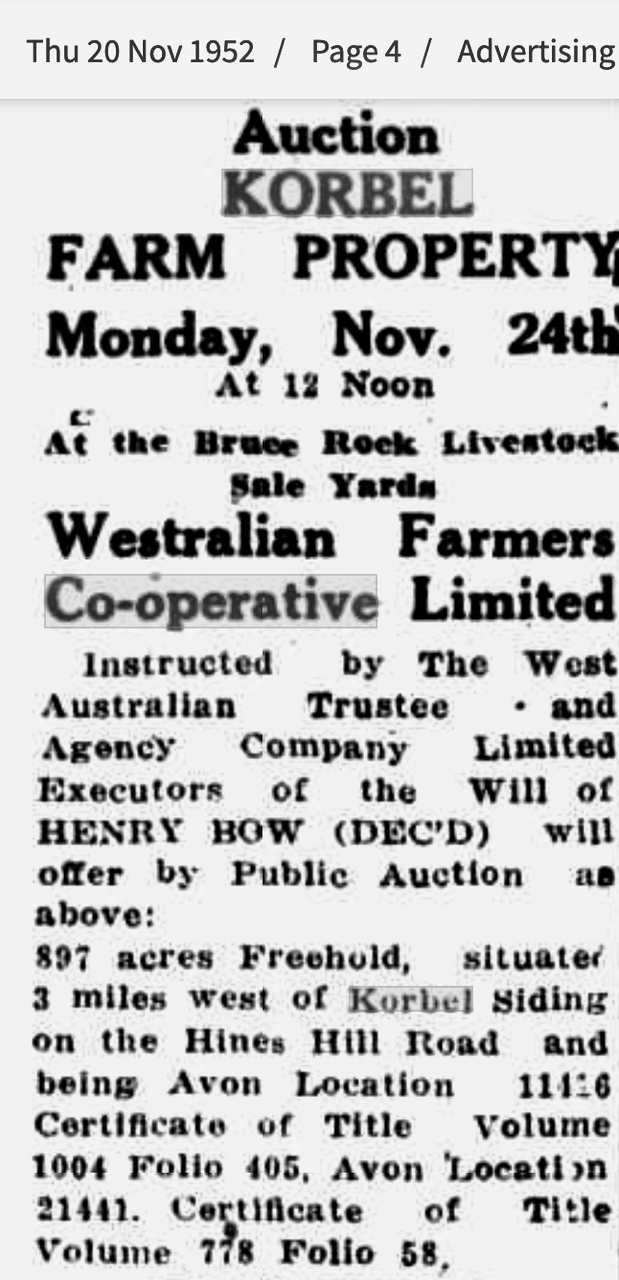
Above: The Bow property is being auctioned in 1952.
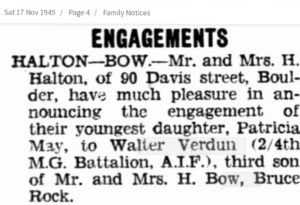
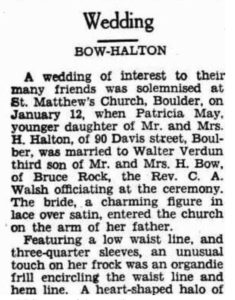
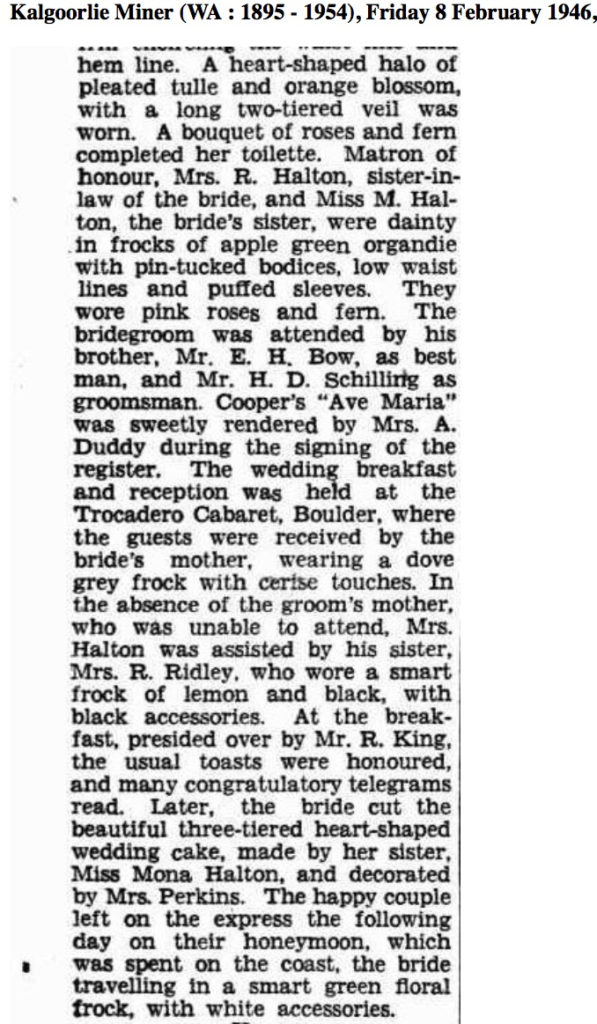
In 1949 Electoral Roll Walter and Patricia were residing at Kalgoorlie.
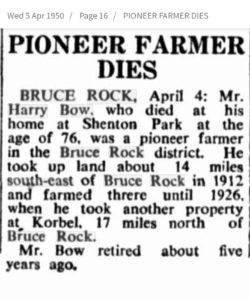
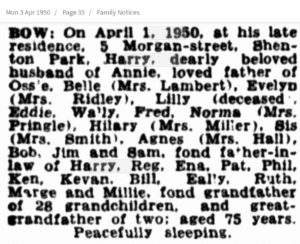
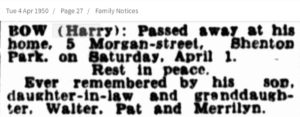
In 1950 Wally Bow’s father died.
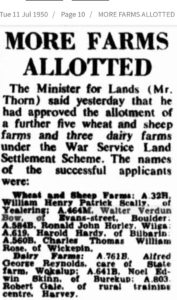
Above: Walter learns he has been awarded a War Service Farm.
In the 1958 and 1963 Electoral Rolls, Walter and Patricia were recorded farming at Bindi Bindi.
In 1972 the couple had moved to Kewdale. In 1977 and 1980 they were residing at Karrinyup.
Wally Bow died 2 February 1984 at Bentley aged 67 years. His wife Patricia died 2011 at Murdoch aged 87 years.
Camp Locations:
- River Valley Road Camp - Singapore
- Selarang Barracks Changi - Singapore
- Selarang Camp Changi - Singapore
- Thomson Road (Caldecot Hill Estate Camp) - Singapore
- Brankassi, Prang Kasi, 208k - Thailand
- Nacompaton, Nakom Pathom Hospital - Thailand