
By Wally Holding
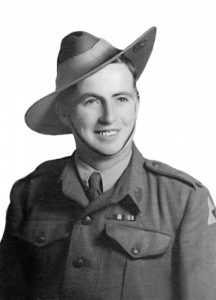
Just before “F” Force was formed up I was under Major Orr because my eyes had packed up and I could not see much. When all my mates were called up to go into “F” Force, I was paraded to Major Orr and told him our group was going away. He said “All right, if you want to go that is your problem”.
So I put myself into “F” Force. The only way we could get along up there was to stick together as a group, if one was crook his mates looked after him. Incidentally in the next month or so my eyes came good. If they had not I could not have gone back to the railways.
“F” FORCE – JOURNEY TO THAILAND
“F” Force was 7,000 strong; there were 3,338 British and 3,662 Australians and the first train left Singapore on 18 April 1943. There was a train every day for 134 days to take the whole lot of us up to Thailand. The lines up there are all 1m gauge, smaller than our narrow gauge here in WA, and we were put into steel trucks, I think 27 or 28 men were supposed to go into a steel truck, which was 20’ x 8’ x 8’ high – it took 5 days for the train to get to Bampong. If we could talk the guard into leaving the door ajar it was not too bad. We could not all lie down at once, we had to take it in turns.
The train was supposed to spend time at food points and sometimes food was there and sometimes it was not. The only decent break we had was when we went to Ipoh and the steam engine took on water then for some reason it pulled away from the water column. Of course, I knew all about the water column, so I went over there and someone got a fire iron and turned the water on so we walked in clothes and all and had a shower. Some of the boys took their clothes off. The civilian population took no notice at all. That was the only break we got in the five days it took to reach a place called Bampong in Thailand, just about 80 kms short of Bangkok.
Depart Bampong
After that we were marched out of Bampong at night. Why we were marched at night no-one has ever been able to work out. We marched for 17 nights right up to, or close to the Burma border.
One of the first sights we got used to in Thailand were vultures sitting in all the trees right through the town. Whether it was an omen or not I do not know.
The first night we marched through to a little camp and we stopped there during the daytime. We went down close to the river where we could buy duck eggs and little fish on platters, all sorts of things – three tiny little fish for 10c. We had quite a feed of duck eggs, which was good oh, but that was only the beginning. The snag about the duck eggs became evident the next night. Marching in the dark we had to keep close up to one another – after eating duck eggs if someone shifted wind it was a bit of a problem, but we had to keep close to each other or get lost so we put up with that.
Kanchanaburi
The next camp was Kanchanaburi, which everyone called Kanburi or Kamburi, from there on we started to catch up with “Don” Force they had gone up there before us, a pommy force had gone through and then “Don” Force. They were out working when we stopped in their camps through the day time and we marched out again at night before they came in. The guards would march us usually from around 8 o’clock at night through until daylight. This went on night after night.
“Don” Force at that time were building up the formation for the rail to go through and they were quite reasonable tracks that we were walking on. After we got a bit further up, when we got beyond their camps it was just a trail that we had to follow. We would wander along of a night time and we had to keep close to the bloke in front. The only thing was there were a lot of fire flies about and if we could catch a firefly, squash it on the shirt or the pack of the bloke in front that gave us something to follow to keep on going.
Night marches
One night we were going along there was just enough light so I could see, off the side of our track were some trees planted in orchard style lines. I thought that these trees might have something edible on them so I made a break and there were things on the trees that looked like Kurrajong pods. At any rate I grabbed a few of these and got back into the lines. I gave a few around to the boys and then I started to try to chew into one. I had a hell of a job trying to get into it but finally got some stuff out of the centre of it and put it in my mouth and started to chew. The more I chewed the more I had in my mouth. Finally I took it out of my mouth put it in my pack to check it in daylight. It turned out it was kapok! They grow kapok there in orchards, evidently they then get it out and tease it out.
We just kept on going. There was supposed to be food ready for us at the camps, half the time it was not cooked. We had all sorts of mixups in the daytime trying to get a feed. Then after about 5 or 6 nights up there we got an offer from some Thais with yak carts, which were like big old bullock carts, that they would take some of the packs up.
Hire Yaks
So we hired about 5 or 6 of these yaks carts and put our gear on so we could walk easier. That way we could give some of the other blokes a hand and spread the gear and the load around – that was quite good we reckoned. I cannot remember what it cost to hire the yak carts – I know I used the last of my money. But in the morning 2 of the yak carts did not turn up – one had my gear on board – everything I had my wallet, photos, stamps I had collected, what the devil I was collecting stamps for at that time I do not know. I lost everything I owned, all I had was what I stood up in, I did not even have a bloody dixie to eat out of or anything else.
Capt Gwynne & 2/4th boys
By this time a lot of the boys were realising they had more gear than they could carry so far and they were starting to discard some items, so I finished up with a blanket, a tin pannikin, and a mug and so forth. We kept going, we kept on walking and we were fairly well up the track. Our portion, the 2/4th portion of that force, was 30 odd men. I have never been sure of the exact number, some said 34 some said 37, we were under Captain Gwynne, who was quite a well-known solicitor here in Perth. He had been in the 10th Light Horse with Fred. He knew Fred and straight away asked what relation I was to Freddie Holding. He was also tied up with racehorses. He and his wife owned Raconteur and quite a lot of other horses in WA over the years.
Piano Accordian
Captain Gwynne said to us a few times, “If you can, give the bloke with the piano accordion a hand to carry that up, we want a bit of music round here.” So everyone had a turn at dragging this bloody piano accordion and cursing the bloody thing but we found out later that it had a wireless in it. I think it was a bloke from the 29th Battalion that had it, at any rate we kept this thing going, getting it up the track.
Of course later on when we tried to get news it was a bit of a problem because of the batteries. The only way they could get the radio to work was to pinch the batteries out of a truck for a time, or sneak over to a truck parked well away from the Japanese camp and couple onto the batteries there. They did get news every now and then, a bit of news coming through, about the time when Italy was chucking it in.
Additional asian workforce
At that time the Japanese were taking thousands of natives up there. It did not matter if they were Chinese, Malay, Indian or anything else, they were just people gathered up off the street, they took the whole lot of them up to work on the line. It was estimated that 270,000 Asians were impressed to work on the railway line, very few returned.
We kept going and got to one camp where these blokes were lying around some were dead, some were very sick – of course we kept away from them as much as we could.
Cholera
A few days later we got to below Neike (Nikki) and some of our blokes got crook, then the doctor said straight away, “Oh, its cholera”. We were supposed to have had cholera injections before we left Singapore but they evidently were not the dinkum McCoy and so then cholera started, well that was a nice old problem. At that time we were camped alongside a river, a fast flowing river, yet we could not go near it to drink or wash or anything else.
Boiling Water
The Japanese gave us 44 gallon drums that were placed at the end of the huts, to keep them out of the rain, and had our boys stoking the fires and boiling the water in the 44 gallon drums. We were given a water bottle full of the boiled water each day and that was for everything – to drink, to wash, that was all we had, so we did not wash. Luckily someone had given me a water bottle. When it came time to line up for tucker, I had an Indian style dixie and I would just go and hold it over the flame for a while to burn off anything that might be in it and collect my tucker – it did not look very bright when I finished with it but I carried it right through the camps up there with “F” Force.
Neike
We were kept going and it finished up we got to Neike, which was the headquarters for “F” Force, then a lot of us went on to two camps above that. One camp was a pommy camp and we were at a camp at the river building a big bridge over the river. I think we had every sickness you could think of there – diarrhoea, cholera, dysentery, tropical ulcers. By this time a lot of the blokes were going bare footed because walking through the mud had made our boots pack up.
THE BURMA-THAILAND RAILWAY
Shimo Sonkurai – Sonkurai – Kami Sonkurai
On the road back from our camp towards Neike the trucks were having a hell of a problem getting through. A lot of them were old Harringtons, or British Army trucks – four wheel drive – and they were battling to get through so we had to go back and corduroy the road through a lot of the dips. We used to cut logs about 8’ long, or timber about 6’’ in diameter and lay them across the tracks so that they could climb through on them. We were at that for a long time, it was a nasty old job and of course the main thing was building up the formations for the track.
The Japanese had specific instructions on what was to go into the track formations and all that, but they used logs and anything else it did not matter as long as it was built up to a height they did not give a damn, the engineers would go crook if they saw it but most of the time it went on.
Toyama & Dr Bruce Hunt
Toyama was in charge of the Korean guards, he always reckoned he was Japanese but he was a Korean and he spoke fairly good English. Of course the Korean guards wore no rank. We had Major Hunt, Dr Bruce Hunt with us. Major Hunt was about 6’2’’, Toyama was about 5’2’’ and they had some bloody arguments about how many men were going out to work and all sorts of things.
Of course we had a sick bay (what they called the hospital) which was a hut down the lower side of the river and all the sick boys went there – there were some shocking sights down there.
I worked in pretty long stretches because I was more afraid of going to hospital than of sickness – you would go in with one complaint and finish up with everything in the world. I kept pretty lucky right through the years of our confinement, I worked for 40 odd days straight at one stage. We would get malaria and still go to work, it sounds silly now but it was a case of have to, so many men had to go out to work each day.
Men with ulcers on their legs were going out to work. They were helped to go out and laid down till it was time to go back to camp – the numbers had to go out!
Major Hunt
We were on parade one day and Major Hunt was giving us a talk he said “This little Japanese gentleman alongside me was born out of wedlock” and he carried on. Of course Toyama heard the Japanese gentleman and he was bowing and the boys all had great grins on their faces. It helped to break things down a bit, but Toyama was an awful little bastard.
Toyama at Bampong
The first time we met Toyama was when we got off the train at Bampong. Toyama always carried a light wooden stick with him, this stick was nearly as tall as he was, and he would swing this stick around. Captain Gwynne, and another Major from the 29th or 30th I think, must have upset Toyama or something. Well Toyama swung his stick at Captain Gwynne, who wore big horn rimmed glasses, and knocked him over and his glasses off. Everyone was ready to sail in, but we could not do anything about it because if anyone had made a move we would have all been in trouble. We had the awful little bastard Toyama right through.
The Koreans’ camp was over the road from the jail and the Indian National Army camp was just down the road. After the war finished everyone volunteered to go and pick Toyama out of the camp, but the authorities gave Captain Gwynne the job. He never got as far as any court martial for war crimes or anything else they told them the whole story about him and they took him out and shot him.
Matsidor
While we were working on the business of building up the formation of the track and to get the trucks running through again I was lucky that I struck a job with a little Japanese, Matsidor, who had been conscripted into the army. He had been going to technical school or college in Japan and through reading quite a lot of books etc had some knowledge of English. He was given the job, with 10 of us, to go out and cut logs for the culverts at various places along the line.
Of course the usual thing was they would give us a quota of so much work to be done in a day. Matsidor had the lowest rank of all the Japanese there and they all used him for a punching bag sort of thing all along the track. He was a typical cartoon character – tiny little bloke with his “what’s it names” on his trousers wound right up to this knees, big thick horn rimmed glasses and a great big pith helmet that just about covered him up, he looked like a mushroom. Matsidor was quite a reasonable little bloke, he was dead against the war and everything that was going on but he had his job to do.
Reaching Quota
He woke up straight away that we could meet our quota in about three hours or so, so we would go out in the morning, get quite a bit of work done, then we would sit down and have a discussion. Matsidor wanted to know about Australia and we quizzed him on everything else as long as we could keep him from getting on and doing work but he did not get our quotas increased which was good.
We had about a fortnight of this and it was quite a good break from what we had been doing. The only problem was we would cut a fairly big log then maybe 5 or 6 of us would have to get underneath to carry it and we would be going over humps and hollows and drains and over big logs and so forth. One minute we had no weight on our shoulder and the next we got the whole darn lot and it is because of this that I have a back problem and will continue to have it for the rest of my days.
Life injuries
This back problem shows up every now and again, sometimes I will go for a couple of years and it does not worry me then all of a sudden some little thing will happen and it flares up again. Playing bowls in Narrogin I was in a team which won the triples. In the games leading up to the final my back gave out – I could get down to deliver my bowl but could not straighten up, so I had to have a sub for the final. The local paper published a photo of the four that won the threes.
Matsidor is the only Japanese I would not mind catching up with again. He explained to us that as far as English goes Matsidor was what we would call a “wooden door”. He was quite good on Japanese customs and habits so during the hours we sat down in the bush with him we got quite a lot of interesting information out of him. But like all good things it came to an end and then we were back to the old business of formations.
HAMMER AND TAP
Then we had a job of quarrying which meant we had a big granite hill alongside us and we had to get to with that they called a hammer and tap. We were given about a 4ft bar with a chisel end on it and an 8lb hammer and we worked in pairs. They had about 6 or 8 pairs working on the face of the rock. We would drill a hole in about 3ft and when we had all reached our quotas they would put charges in and blow it. Then the hammer and tap boys would shift onto a different place on the rock face.
All the mob would come in behind the hammer and tap boys and they had to stack this blue metal, all broken into a certain size, into heaps about 2m long 1m wide and 1m high. Well, off course we could not stack it straight so it had to go in a taper, the guards would carry a stick to measure it every now and then and if it was not wide enough we had to make it bigger and so forth.
Elephant
In the early stage, when we were working on the bridge they had a Burmese bloke with an elephant that could do some wonderful work, it could turn logs over so we could adze the flat tops on them and every thing else. But the elephant had a youngster – about 3 or 4 years old that was a bloody nuisance. We would get a nice stack of metal all stacked up and the Japanese would say that was OK and go onto the next one then this bloody little elephant would walk up, put his head against the stack and walk straight through the heap. The Japanese would laugh like hell and then we would have to put it all back together again. But, after a period of time, the Burmese bloke who handled the elephant got cholera so although the elephant was still in camp after that no one could get any sense out of it or make it work properly.
Jack Carroll – Sonkurai 22 June 1943
Working on this hammer and tap business did not worry me much as I had been on the farm swinging an axe and all that sort of caper, but it was a matter of getting someone decent to work with. If you got someone who did not know what they were doing when you were holding a 4ft long bar if they swung the 8lb hammer and missed the bloody bar it was your hands and wrists that were going to cop it. So I caught up with Jack Carroll again. I was pretty fine and he was this big tall bloke and twice my weight but we worked together for quite a while at the hammer and tap.
One night we came in after dark and were getting our rice when someone said, “You had better go and see your mate, he is pretty crook”. Well, I walked down to where I knew Jack was camped further down the hut and I could not recognise him, in about 2 hours since we had knocked off work he had lost probably half is body weight, he had cholera, he never saw that night out. The book “F” Force gives the details “NX 71966 Pte J.L. Carroll 2/30th Inf Lower Sonkurai 22.06.43 24 Murwillumbah NSW.”
CHOLERA
It was shocking the way cholera could hit in such a short time. When cholera showed up the person passed grey slime from both ends, it just seemed to take all the fluid out of the body.
When anyone died of cholera if they fouled their gear, blanket or anything else they whole lot went out, everything was burnt. They would build up a great big fire on a base of logs to get a fire burning that went for days at a time. And the bodies of the cholera deaths were burnt – there was not much left when they passed on. Those that were too sick to go out and work got the job of burning the bodies. They would have two poles, drop a body across the poles and then run in towards the fire and throw the body in, then get back as quick as you could because of the heat of the fire. It was strange, you would throw a body on the fire and all of a sudden you would see his arm come up or a head shift or some other movement. The heat of the fire pulled sinews in the body and caused the movement but it was a shocking thing.
I always remember we had two Doctors Cahill in the camp, Frank and Lloyd, they were both Captains. This day they were up there at the funeral fire and this little doctor was there and he had cloths around his legs because of the sores on them and wooden clogs on, he was squatting down over this body checking for something or other the body was all open up and he was pawing through it – probably a cholera case. When he finished he would wave to you then you had to go and pick up the body and throw it on the fire. It is hard now when any of us go to a Doctor – we get sat down at DVA when we go to the Doctor and we try to explain some of the sickness and things that people had there and they just look at us, they just can not comprehend that things went on the way they did.
Gilmore Brothers
Two brothers that were away with us were the Gilmores. John Gilmore’s pretty well known he holds most world records for running distances from a mile upwards, I was talking to him at the luncheon at Gloucester Park just a while ago and he said “I am still 9 stone 1 the same as when I joined the Army” it is hard to imagine a bloke like that holding world records. His brother Jim is quite a fair lump of a bloke, but he got through cholera. He owned a garden centre at Carousel Shopping Centre on the Albany Highway and he and his wife, daughter and son-in-law were running quite a big business. He had to front a Doctor at Hollywood Repatriation Hospital. The Doctor said what did you have while away and Jim went through all the usual complaints we had and then said cholera. The doctor said “Oh no, no cholera I won’t have that”. Jim was going on holidays going over to Queensland and the Doctor who treated him was still practising in Queensland so he went over and told the Doctor the story so he wrote out a screed about all the treatment he had given him. Jim took the letter to Hollywood and requested to see the same Doctor again. They classified him TPI on the spot so he had to hand over the business to his daughter and son-in-law. Jim is probably the fittest chap in our mob still going.
Gregory Brothers & Ken Lessels
Another chap, one of the two Gregory brothers with us, died of cholera in the hut alongside me. It is a terrible thing cholera, yet quite a few chaps came back. One of my mates here in Mandurah got through cholera. Ken Lessels, who married my sister Peg, is another one that had cholera.
English POW Camp Kami Sonkurai
The camp above us was an English camp which had a terrible lot of sickness so they could hardly get any of their blokes to go out to work. A lot of us were sent up there to help out. The English camp was a shocking mess: the latrines were not kept up, nothing was working, the cookhouse was not working properly and so forth so Major Hunt got the Japanese to give us two days off to try to sort out this camp. They had fouled the ground and it was a hell of a job to get it cleaned up.
We finally got some bit of semblance of order around the place and then we started going out to work from there. After we had finished the clean up the Lieutenant Colonel in charge of the camp had us on parade. He thanked us for coming up and, as he said, his chaps had got to the stage they had just thrown in the towel, they were dying of starvation and they just did not have the will to keep on going. It was a shocking bloody camp. We got it sorted out a bit.
Three Pagoda Pass
After we had done what we could to clean up the English camp we had another lot of trouble with the trucks not getting through – it was the top camp, Kami Sonkurai. When the trucks could not get through the stores did not get through so we had to walk up through Three Pagodas Pass into Burma to collect rice for our camp. These trips went on over a period of about 20 days. They picked the fittest of the blokes to go on these trips, I did two trips.
In Burma we would get a feed of rice when we got there and then we had to turn round and walk back, it was quite a job, it was dark by the time we got back to our camp. We had ordinary army packs strapped together, one in front and one behind filled with dry rice. Of course we were pretty fine at the time and the straps used to cut into our shoulders so we would always get a heap of banana leaves and fold them up as padding under the straps to stop the straps cutting into our shoulders.
After the need for these trips was over, about three days later someone said to me “What is Three Pagodas Pass like?” I had to stop and think about it and I realised that I had never seen it. We were walking through mud in bare feet, just paddling along and we were watching where we were going all the time. We just did not give a damn so long as we kept going because the track had been chopped up with that much broken bamboo and stuff like that. Of course the bamboos there were 10 or 12 inches in diameter, they used them for carting water! Also they used bamboo for bedpans – cut outside two knots then open at the top. So when the bamboo were broken up if we got one of those splinters into a foot we were really in trouble.
Hunt moves sick through to Burma
I went through Three Pagodas Pass twice each way and I am buggered if I know what it looked like, I never saw it. We just kept going – but at that time of course we had so much sickness, everything we could possibly think of was going through the boys. A few weeks before the rails came through Major Hunt took some of the sick through to Burma. Included in the party were Captain Gywnne and Bob Murray. I did not catch up with Bob again until we were both back in Singapore.
We all got through till we completed the embankments. The rail came through and passed us then the work eased off and we were just packing up, sorting out, checking up formations and covering/poking the blue metal in.
Rail laying gang
The rail laying gang came through the camp at night. They had their rail and sleeper trucks in front of the engine and they would push it through. This mob of blokes had come right through from the Burma end and they would run the sleepers out in front and then run the rails out. Every bloke seemed to have his job, it was something to see. When they talk here in WA about when they put the rails down for the interstate line, I saw work on that down the Avon Valley, it just was not the same. These blokes had it down to a fine art. Strange to see people as skinny as they were the way they could get that job done. They pushed the line through down below to Neike to where they joined the rail from the south end then things eased off.
Sonkurai
On one occasion, during the time at one of the Sonkurai camps, Bob Murray had to go and work in the Japanese cookhouse. He took the opportunity to bring a big piece of dried fish back with him. As the work party did not come in till 9 or 10 Bob boiled the fish and the maggots started coming to the top. After taking a few out he decided that we would not see them so he left them in. Then he left it outside so the smell would not attract attention. It put a good taste in the rice and was lovely and salty. A couple of days later he told me about the maggots! When he came home he loved telling that tale.
THE RETURN TO CHANGI
From the end of 1943 onwards, when the work on the railway line ended the forces kept coming back to Changi – like “F” Force which came back Christmas 1943.
To Kanchanaburi
After the line finished we headed back down to Kanburi. The rail up there was 1m gauge and the Japanese trucks all had dual axles designed so that the trucks could be driven over the line, the tyres had to be taken off and then the flanges fitted straight onto the rail. There were places on the side of the truck to bolt the tyres back up and away the trucks would go.
When they decided to bring us back down the line we came in two open rail trucks pulled by a Japanese truck. It took two days to come down to Kanburi because we would go a certain distance and then there would be a train coming or work on the track. We would put the wheels on and get out of the way or go into a siding and wait.
Malaria
By the time we got to Kanburi big lots of troops were being brought down the line so we were parked in the scrub around the camp. Jack Gorringe had a group of 2/4th, I do not know how many there were now, but I got a really bad dose of malaria. I got to the stage where I was rambling – I reckoned the guards were after me – they put a bloke on to watch me as I was wandering. I just got weaker and I have no recollection of when we were put on the rail to return the Singapore the same way we had come up.
Sick remain in Thailand
What remained of “F” Force were at Kanburi by this time. Most went back to Singapore by rail, some went back to Bangkok and went to Singapore by boat, and a few stayed in Thailand.
Kappe is found out
Ron Lee, WX 8208, Sapper 2/6th Field Park, a mate of mine here in Mandurah, tells a story of being on a boat out of Bangkok, packed like sardines and finding a senior Officer’s trunk, the name was on it. The boys decided to open it and found a lot of tinned food stuff. The food was rationed out, the trunk smashed and disposed off. How the Officer had kept it was a mystery. It must have been left at Bampong when we went up the line. In some cases the Japanese showed some respect for Officers, strange some of us did not.
We came back by rail and I have no recollection at all from when I was crook at Kanburi, but the boys carted me along, loaded me and unloaded me til we got back to Singapore.
Selarang
The Japanese brought us out to the Selerang area by truck and we were held on parade for hours and hours – I did not know anything about it at the time but the boys were held on parade while the Japanese tried to work out how many “F” Force had come back. To count them the Japanese would line them up in fives one bloke would count them then the next bloke would count them and get a different tally so it went on and on.
When we came back from Singapore in trucks to Selerang area our people used trucks stripped down, they just had the seat, steering wheel and foot brake. They were pulled by ropes – 8 or 10 blokes and a rope out in front and a crossbar, 2 blokes to each crossbar. They shifted everything around the camp throughout POW days this way. I was loaded on top of the gear when we were shifted. I must have been a bit of a sight I had not had a wash for many days.
At Selerang I opened my eyes and I saw a 2/4th Officer, colour patches, pips, polished shoes, long socks – just as if he might be on the parade ground in Northam. I made a noise to attract his attention and he came over, I wanted to try and tell him who was not coming back. He headed across towards the truck, took one quick look at me and went off for his life out of the way. I supposed he reckoned whatever I had would be contagious and he did not want to have anything to do with it. He was Captain Smith-Ryan of the 2/4th Machine Gun Battalion, one of our own Officers. I never caught up with him again, not that I wanted to. He had died since we came home.
On the parade ground there was another bloke in the same condition as I was, they carried us into a new hut which had just been built, there was no flooring – they usually put bamboo flooring into the huts but this one had bare ground. While they were counting the troops off Jack Gorringe brought the guard over to show there were two extra bodies that they had not counted. I was laying there, I knew what was going on but I could not move. The guard walked over and gave me a kick in the ribs to find out if I was still alive. It sticks in my mind and it always will, I felt I would like to get up and belt the bastard but I could not move.
Roberts Barracks Hospital
Once they finished the check parade in a matter of minutes I was on a stretcher and the boys from Roberts Barracks, which was the hospital, had me on the way to a hospital bed. Checking the last lot of my medical records from DVA I found out I was admitted to Roberts Barracks Hospital on 23 December 1943, that was the day we got back to Singapore.
I often wonder what weight I had got down to, but no-one worried at the time. The hospital was the only place I know that had scales.
Move back to Changi
In 1944, when the war was going bad for the Japanese, they shifted the detainees out of Changi Jail into jails in town at Sime Road and another one, then we were put into Changi Jail.
“F” FORCE SURVIVORS FROM THE BURMA-THAILAND RAILWAY
The exact figures on some of the Forces I am not sure about but of the 7,000 who were in “F” Force, 3,085 died in the 8 months in Thailand. That is 44% of the Force. Of that I think the British casualties were about double that of the Australians – it is hard to work out why, but I think a big thing was that they just could not keep their hygiene up and a lot of them sort of packed it in the finish – they just did not have the will to carry on.
Of course so many Australians were people who, like me, had been on the farm and been used to swinging an axe. Any physical work outside gave us a better chance than those blokes who had been working in offices and had not had a chance to rough it. Probably the troops that had been in the Army for a couple of years were a lot better off too, they were quite case hardened to that sort of business. The 144 of us that came on at Fremantle had only been in the AIF for 5 or 6 weeks and had little knowledge of army routine and had not been hardened up to what was ahead of us.
There were no reliable figures on the Asian civilians impressed to work on the line, but of the estimated 270,000 only 30,000 were ever traced or repatriated after the Japanese surrender
____________________