SCIENCE LEARNS FROM POW LIFE
WHAT DID SCIENCE LEARN FROM NEARLY 4 YEARS OF JAPANESE POW LIFE?
The men suffered numerous tropical illnesses – never before known to them. The hard-working and dedicated Doctors, particularly on the Burma-Thai Railway also learned of illnesses previously unknown to them – learning on the job one may say.
These diseases were the foremost cause of death on the Burma-Thailand railway. Almost every POW fell ill as a result of excessive work, malnutrition, poor food and Japan’s refusal to provide anything but minimal medical supplies.
The men often suffered from more than one disease at any time. Men who would have been considered seriously ill in former civilian working days, had to continue working and working long days with minimal food and water. Only the critically ill were permitted to rest and then received half rations!
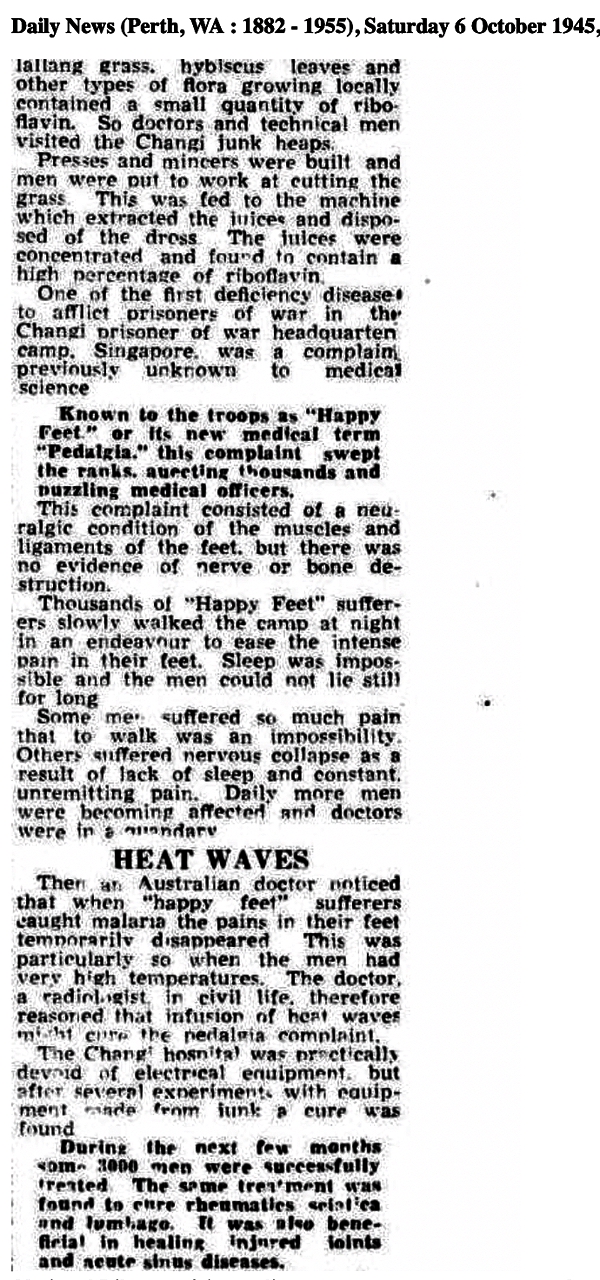
It was different in Changi – the medical fraternity was able to pool all their resources – which was not sufficient. They were forced to implement, use their initiative, bribery on the outside and really dig deep.
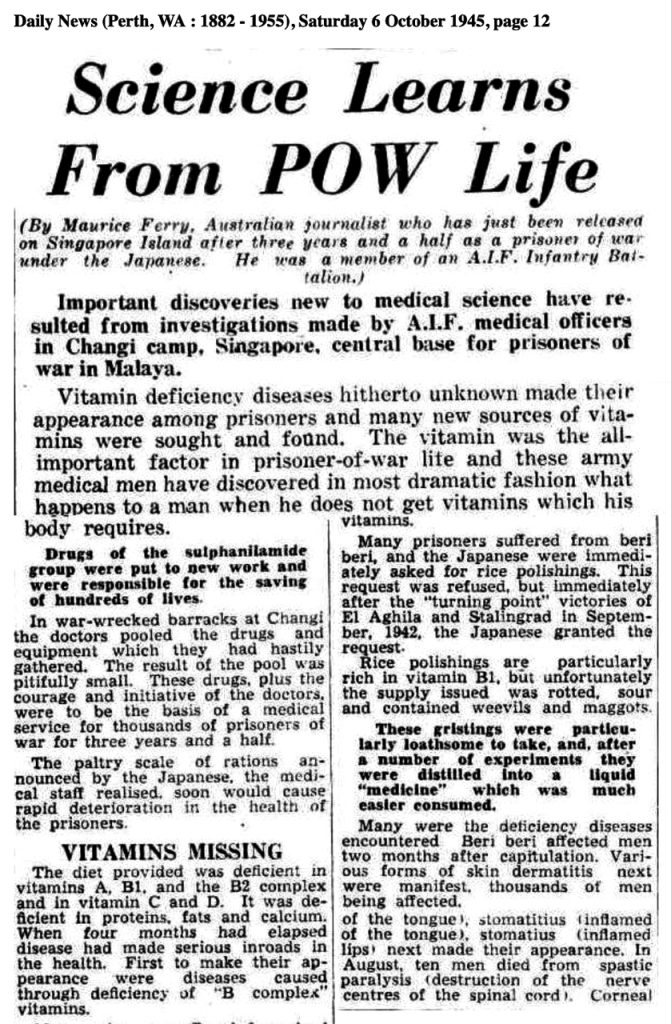
The POW diet, consisting of mostly of small servings of low grade rice failed to supply Vitamins A, B1 and B2 complex, Vitamin C and D, proteins, fats and calcium.
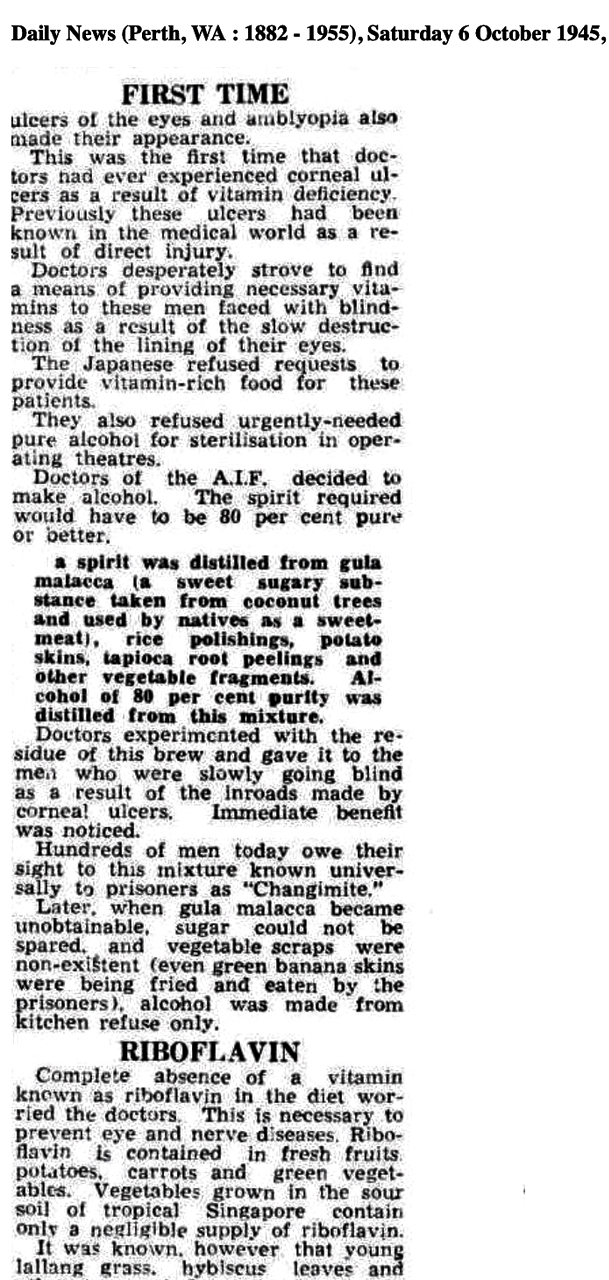
At Changi it became almost immediately evident the men were lacking ‘B’ Complex vitamins resulting ‘Happy feet’, in beri beri and skin dermatitis efffecting every part of the body, including the scrotum, followed by eye conditions such as ulcers of the cornea and amblyopia resulting in young men going terrifyingly and slowly blind. Tragically so many POWs permanently lost a percentage of their eyesight, or worse, became blind.
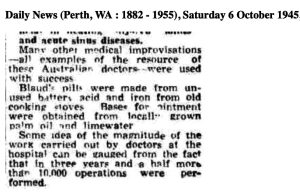
The Japanese ignored all requests to alter the POW diet. They also refused the surgeons’ request for pure alcohol essential for the sterilisation of medical equipment in the hospital.
AIF medical staff knew they would have produce their own alcohol – and so they did. Part of this alcohol was given to the men going blind. The affects were almost immediate.
Riboflavin available from fresh fruits and vegetables was essential the POW’s eyesight and nervous systems.
On the Railway line – doctors faced a new terror!
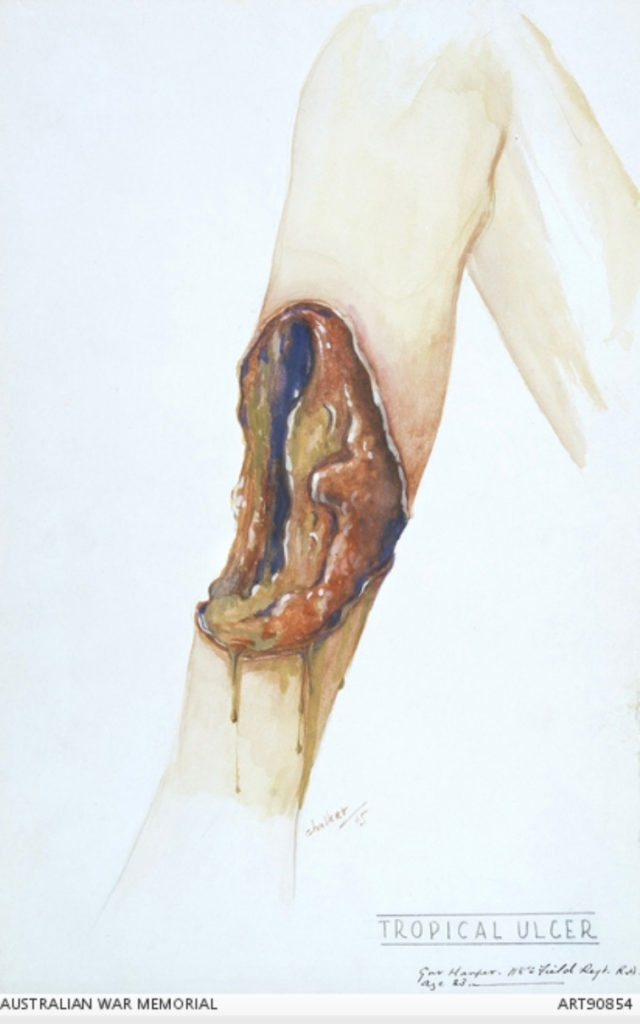
Ulcers so deep one could see the bone of the limb. Ulcerated limbs often required amputation resulting in death. Those who survived required the means to walk again.
A report published online 5 November 2003
“The Civil War’s surplus of amputations, gunshot wounds, and mental breakdowns gave America’s newly professionalizing neurologists plenty of patients and opportunity to investigate the intricacies of the nervous system …………”
“Soldiers during World War I came down with “shell shock,” “soldier’s heart,” and “effort syndrome”—all neurasthenia-esque conditions that had no obvious organic cause but needed to be distinguished from the general neurasthenia commonly associated with overworked businessmen and educated women……..”
