

Batu Lintang Barracks
Kuching, Sarawak – BORNEO
Borneo was a critical strategic target for Japan with its rich oil fields – essential for the Japanese war machine. It was the third largest island in the world, with a population of up to three million people – Borneo is one of the most culturally diverse islands in the world, home to a ‘mosaic’ of over 200 distinct ethnic sub-groups. The indigenous populations are known as ‘Dayak’ – a collective term for over 50 distinct ethnic groups (with sub-groups exceeding 200) primarily inhabiting the interior and riverine areas. In the 1940’s there was a growing Chinese community as well as Malays, along with the Dutch East Indies and British citizens. Coastal Borneo was developed, however the central area was not.
Prisoners at this camp endured extreme forced labor, starvation, and disease as POWs and civilians did throughout Borneo.
Batu Lintang housed both POWs and civilian internees (British, Dutch and women/children of other nationalities).
Of about 2000 British POWs incarcerated here, 2/3rds died.
The 2nd Battalion, 15th Punjab Regiment was sent to Sarawak to defend the territory arriving December 1941 from Singapore. The battalion consisted of approximately 1,000 men, including Punjabi Muslims, Sikhs, Khattacks, and Jats. These troops would be no match for 10,000 Japanese troops.
‘Sarfor ‘
‘The defence plan for British Borneo, which had been devised in Singapore, was not afforded a high priority in terms of resources. Initially an infantry brigade was laid down as the minimum requirement for a successful defence, but finally this formation was reduced to one battalion with a few supporting engineers and artillerymen. It was decided not to defend North Borneo but to prepare a static defence around Kuching and its airfield in southwestern Sarawak. The Brunei and Miri oilfields were to be demolished before an enemy landing could seize them intact. Although Labuan Island was an important cable and wireless station, no attempt was made to defend it.
The 2nd Battalion of the 15th Punjab Regiment was selected to be the principal unit in Sarawak Force which was referred to as Sarfor. Besides the Punjabis, and the sappers and gunners Sarfor would contain the four local Sarawak state forces:
· The Sarawak Coastal Marine Service
· The Sarawak Rangers
· The Sarawak Armed Police
· The Sarawak Volunteer Force
It was envisaged that Brunei, as part of Sarfor, would produce a unit of Volunteers. SARFOR was not allocated any dedicated air or naval units. Liaison with the Dutch forces across the land border was made but without much commitment from Singapore, despite the Dutch possessing military aeroplanes and vessels as well as ground forces.’
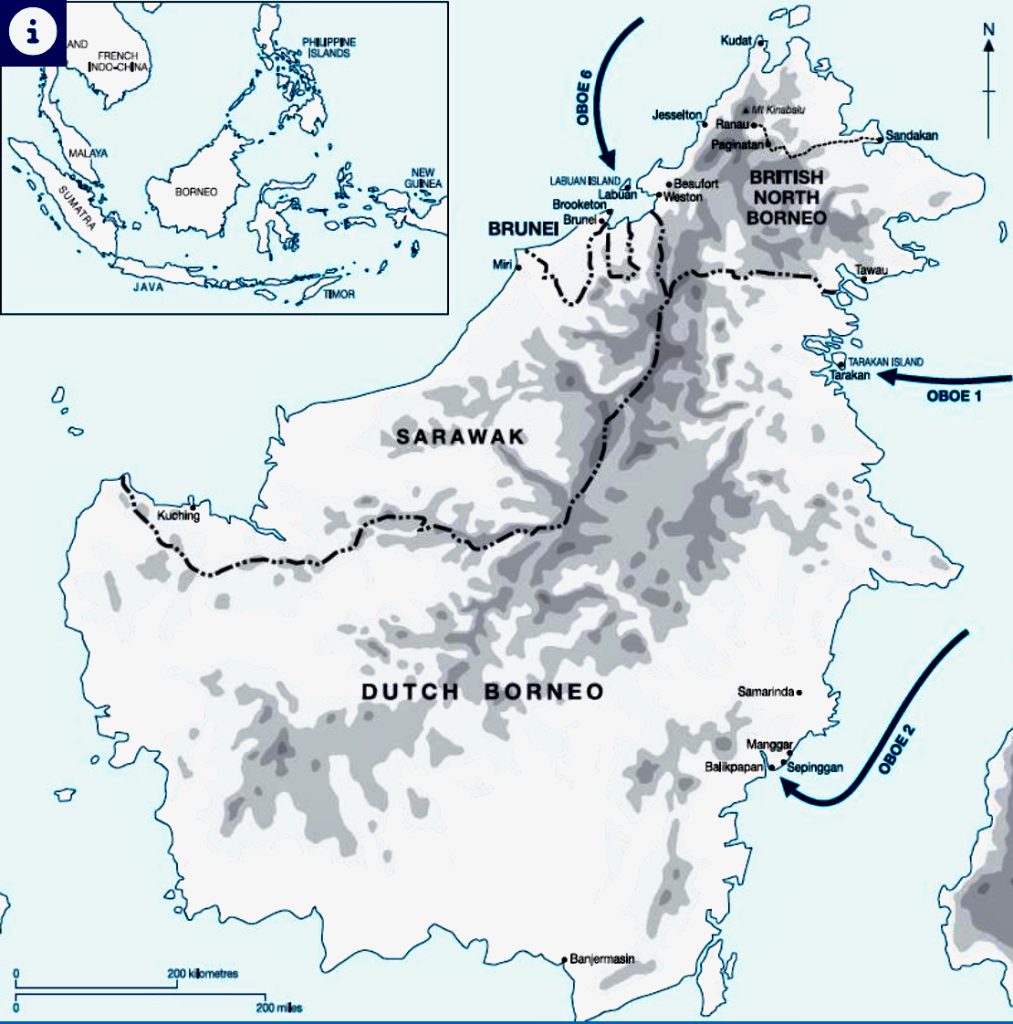
Borneo’s Key Oil Field Locations: and the British in Singapore did not believe it was worth protecting??
-
Tarakan (Northeast): A small island with high-quality oil that could be pumped directly into warships.
-
Miri (Northwest/Sarawak): One of the oldest oil fields, with about 300 wells.
-
Seria (Northwest/Brunei): Located 32 miles north of Miri, this was a major production site.
-
Lutong (Northwest/Sarawak): Contained the refinery centre for the Miri and Seria fields.
-
Balikpapan (East/Dutch Borneo): A major port and refining centre with advanced improvements made by the Dutch.
-
Kuching & Pontianak (West): Additional, smaller resource areas.
-
-
By 1943–1944, Borneo became one of Japan’s main sources of fuel, with Balikpapan providing 3,900,000 barrels (620,000 m3) of fuel oil to the Japanese war effort in 1943 alone.
Smaller fields included Tarakan and Seria, with the latter becoming the largest in the British Commonwealth by 1950.
August 13, 1943, with twelve US B-24 Liberators from the 380th Bombardment Group. Prior to this time, the distance was too great.
-
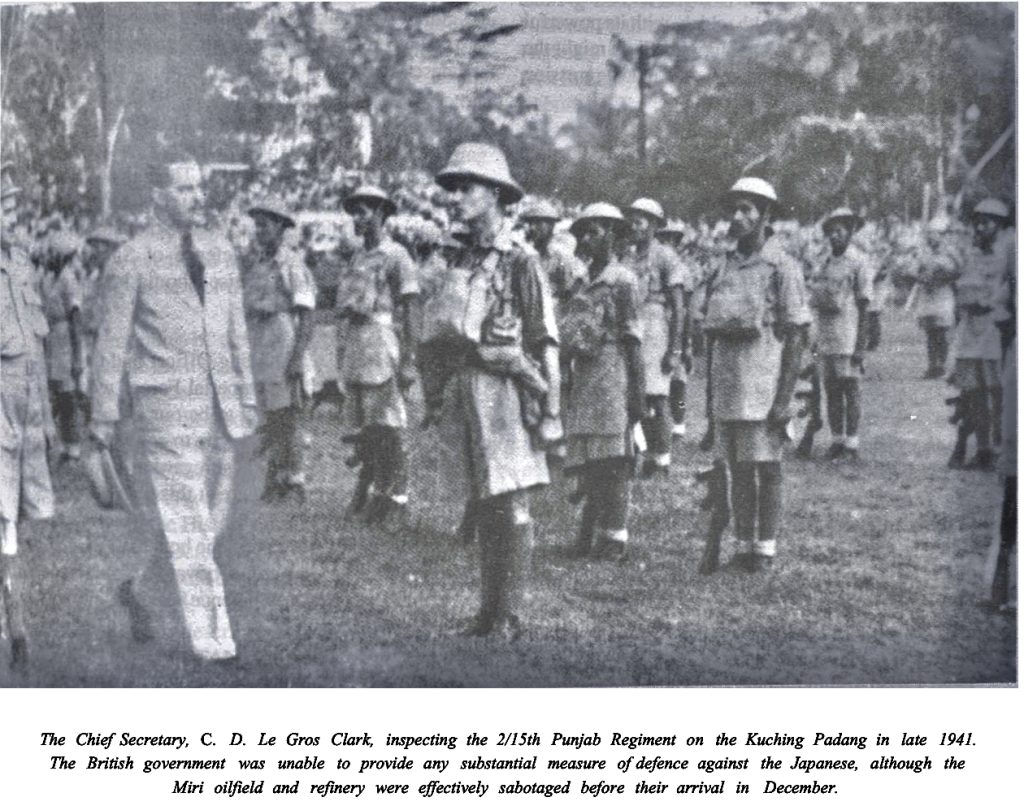
Batu Lintang Barracks was constructed 1940-41 for accommodatiion for the 2/15th Punjab Regiment and was completed by August 1942.
Japan’s invasion of North Borneo began in 19 January 1942 however they had earlier arrived 16 Dec 1941 at Miri, Sarawak. The Miri and Seria oilfields in Sarawak and Brunei were captured without much fuss in less than a fortnight of their initial landings off the north-west coast of Borneo in mid-December 1941. By the end of January 1942, the Dutch oilfields at Tarakan and Balikpapan were under Japanese control. By 1943 Bornean oil was contributing to the Japanese war effort.
The well regarded Punjab Regiment of 1,000 men fought against 10,000 Japanese soldiers 16 December 1941 at Miri.
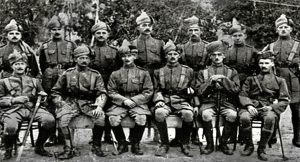
The Japanese were able to capture Sarawak on Christmas Eve and those of the Punjab Regiment who survived were imprisoned at Lintang Camp, subjected to Japanese brutality from Kempetie. Camp 2 at Lintang Camp is significantly small for the Indian POWs however many of the Punbjab Indian POWs were sent out of Kuching on working parties, such as the photo below this group, which was sent to Balikpapan where large numbers perished.
Below: L to R: JEMADAR NAZARI SINGH; SUBADAH LABH SING and HAVILDAH BALIVANT RAI – 2/15TH POWS

Below: Pubjab soldiers formerly POWs at Balikpapan providing details to Australian forces.
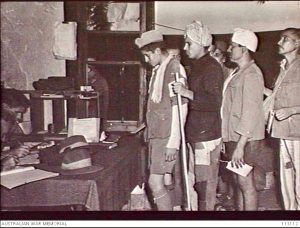

BALIKPAPAN, BORNEO, 1945-08-07.
SIAR GUL, OF 2ND BATTALION, 15TH PUNJAB REGIMENT AND EX POW OF JAPANESE. THIS INDIAN UNIT FOUGHT AT KUCHING GARRISON UNTIL CAPTURED BY THE JAPANESE WHO SENT THEM TO BALIKPAPAN FOR MANUAL LABOUR IN 1943-06. SIXTY EIGHT MEMBERS OF THE UNIT ARE NOW WAITING AT 2/2ND CASUALTY CLEARING STATION FOR MEDICAL INSPECTION AND TREATMENT
Following the surrender of Borneo, the Japanese immediately proceeded to enlarge Lintang Barracks to accommodate up to 3,000 prisoners both military and civilians. The huts were palm-thatched buildings 98 feet long set in rows on low stilts surrounded by rolls of barbed wire. Each hut housed between 30-100 people.
Lintang was also the HQ for the Japanese prisons in Borneo. The Camp Commandant Lt. Col Suga Tatsuji, was in charge of all POWs in Borneo. Suga is regarded as lenient, sometimes even kind, especially to the children. He lived in a private house at Nanas Road, Kuching. The second in command is Lieutenant (Later Captain) Nagata who is very unlike Suga and was known for his brutality.
The main Japanese HQ for the 37th Army in the northwest was located at Jesselton (Kota Kinabalu, Sabah) led by Lieutenant-General Masao Baba. Other key Japanese command centres were located in Samarinda and Balikpapan in the south/east, where Vice-Admiral Michiaki Kamada commanded the forces.

BALIKPAPAN, BORNEO, 1945-09. AERIAL VIEW OF BALIKPAPAN HARBOUR OUT TO BALIKPAPAN POINT SHOWING DAMAGE TO THE WHARVES AND SHORE AREA (DONOR: MUSEUMS AND ART GALLERIES OF THE N.T.)
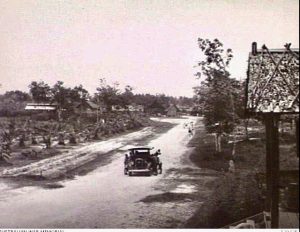
Above: KUCHING FORCE. LINTANG PRISONER OF WAR BARRACKS. PHOTOGRAPH TAKEN FROM CAMP GUARD HOUSE LOOKING UP THE ROAD TO THE ADMINISTRATIVE BUILDINGS. (Thanks to AWM)
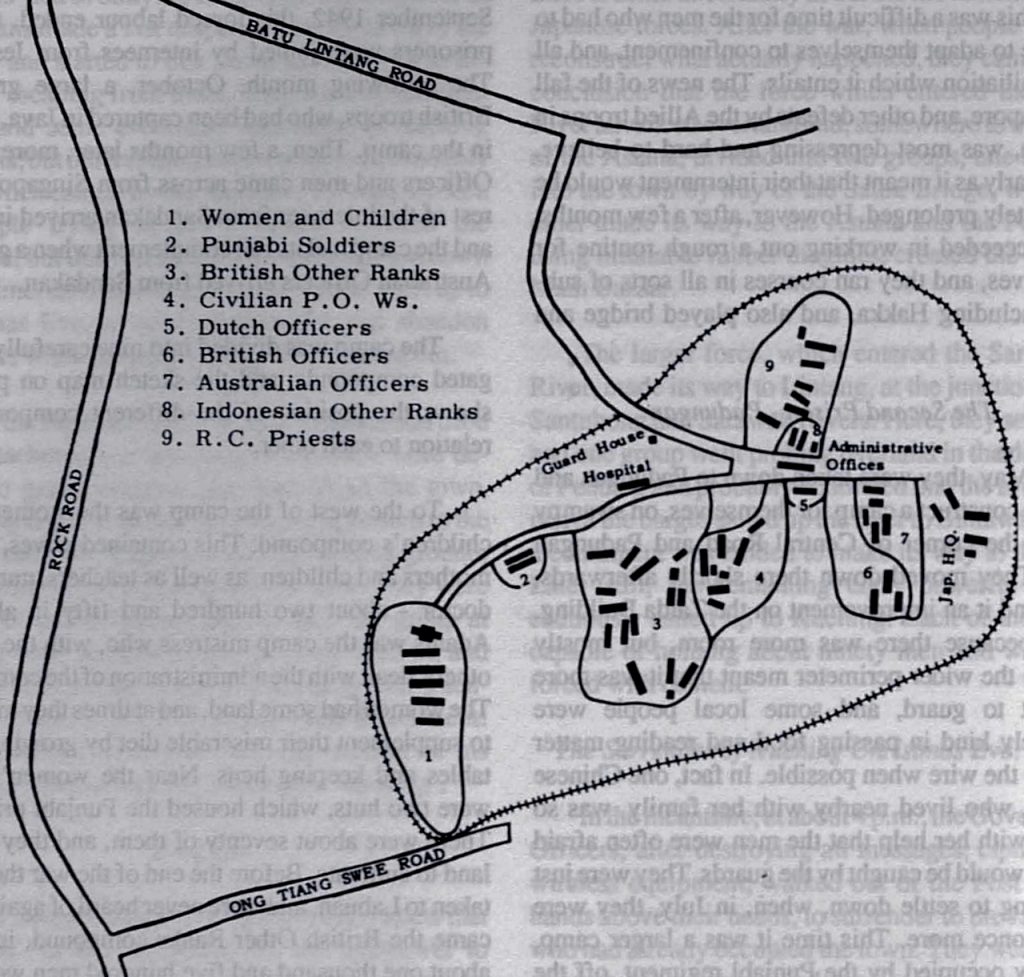
There were 9 individual Prisoner groups accommodated in this complex which covered 50 acres and included Japanese HQ in Borneo. The numbers varied regularly with the movement of work parties.
There were prisoners of many nationalities: British, Australian, Dutch, Indian, Chinese and Indonesians captured either Java or Singapore. There are also civilian prisoners (mostly European) including women and children. There was total of 280 women internees of which 160 are nuns, 85 lay women and 34 children. Boys 10 years and over are sent to adult male prison. Each prisoner has an area of 6ft X 4ft for their themself and their possessions.
All prisoners were answerable to their appointed camp master or mistress who in turn liaised with the Japanese Commandant.
The Australian Officers – Camp No. 7 (please read further – former POW Russ Ewen’s memories of Lintang)
The Japanese separated the Australian Officers from their soldiers of ‘B’ and ‘E’ Forces at Sandakan POW Camp and sent to Kuching to Camp 7 Batu Lintang arriving 22 October 1942. Kuching is 22 miles up the Sarawak River and the men were taken by truck to their camp Their journey on a steamer was relatively comfortable compared with other journeys. Seven Australian officers were originally shipped from Sandakn to Kuching, including two officers from 2/4th – Johnny Morrison & Brian Walton. Both survived to return home. The numbers of Australian officers POWs would increase with time. At the end of war, there were 178 Australian Officers.
Below: Group of Australian Officer POWs at Kuching.
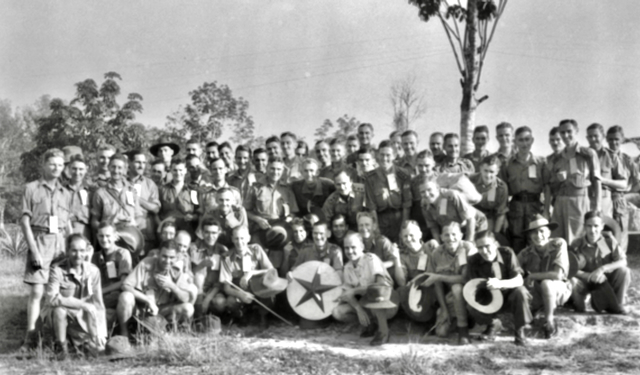
Below: Walton & Morrison


The one thing all the prisoners suffered at Batu Lintang is a very grave shortage of food, becoming less and less as the war dragged on resulting in terrible illnesses and deaths.
Below: Sandakan and Berhala Island. The local European men and women arrested by the Japanese were imprisoned on Beharla. This is where the Underground Radio operated to assist Australian POWs of ‘B’ and ‘E’ Forces.
‘E’ Force was accommodated at Berhala for about 6 weeks waiting for their Sandakan camp accommodation to be completed. During the first few weeks two Australian groups successfully escaped Berhala. These escapes were entirely due to the essential assistance of the Sandakan underground Group. Both groups reached the Philippines.
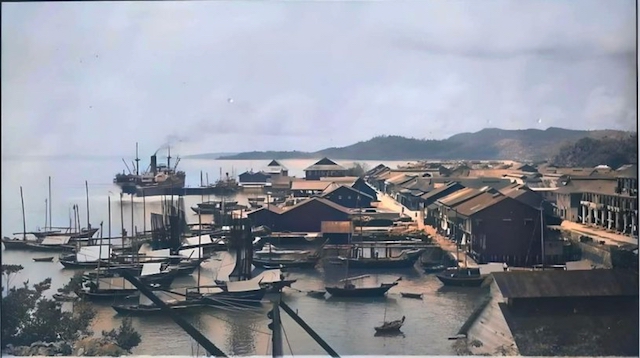
Above: The wharves Sandakan pre WW2
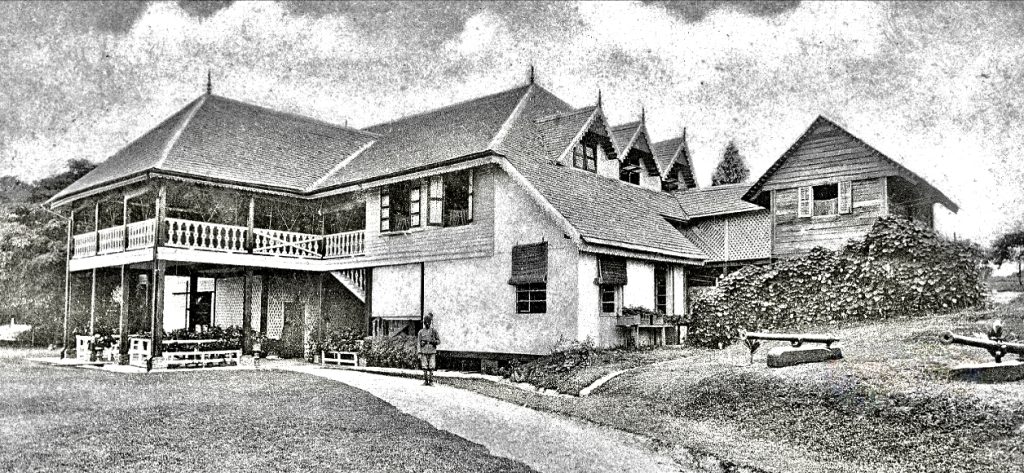
Above: Government House Sandakan, constructed 1907. This is where the European women and their children, including internationally known author Agnes Newton Keith and her young son, gathered here waiting for the Japanese to arrive – who when they walked in immediately began taking their watches and personal items. This procedure was widespread.
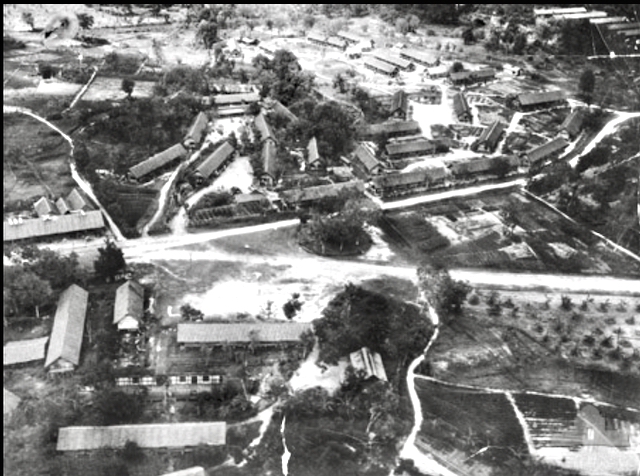
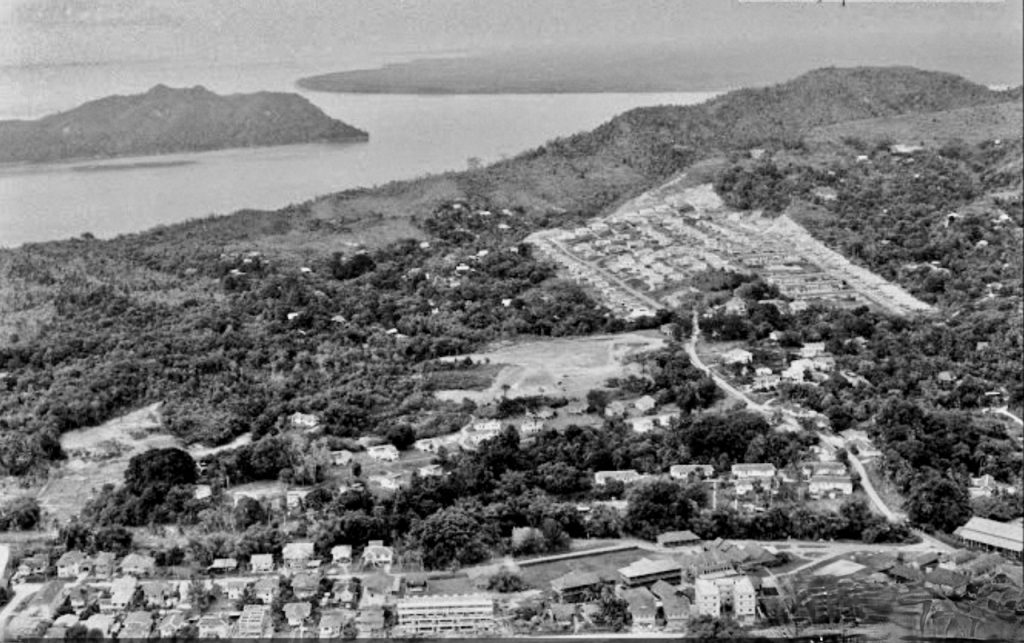
Above: Aerial photo taken Sept 1945 of Lintang Barracks built over 50 acres.
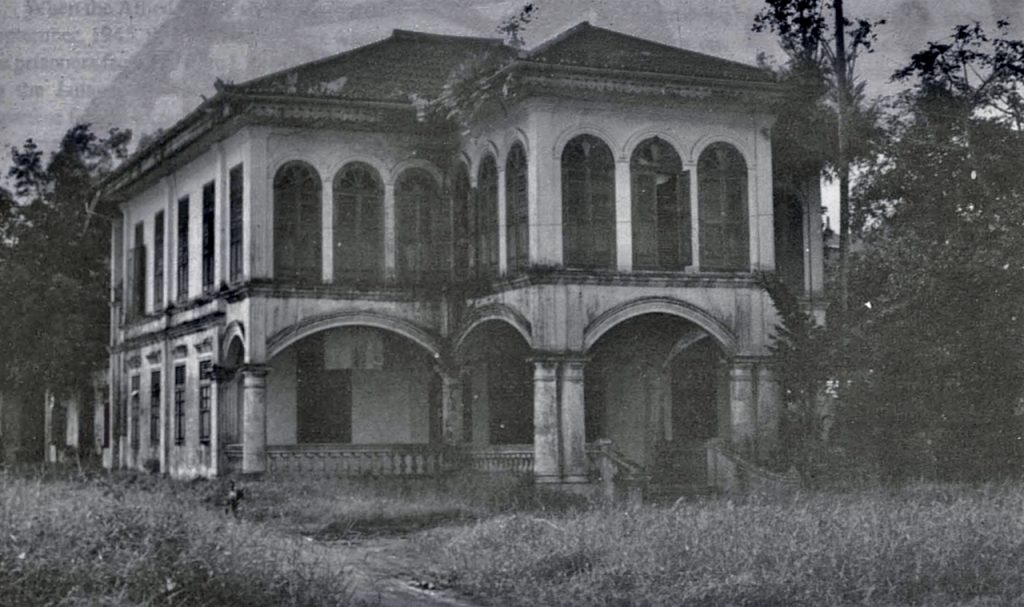
Above: This majestic home once belonged to the late Tan Choon. Between 1942-1945 it became Kempetei’s HQ in Kuching.
Following the Japanese invasion at Sandakan the European civilians, families with children included, were incarcerated on Berhala Island where they were never supplied sufficient food. Berhala was 8km from Sandakan – small forested island of 5 hectares with prominent cliffs at the northern end) guarded by local constabulary and Japanese soldiers. It continued to be used as a leper colony.
A local Sandakan secret society organised to regularly send food, medicine and necessities. At the top of this organisation was Australian-born Dr. James Taylor, chief medical Officer, Sandakan Hospital and his wife Celia Taylor – who were not initially incarcerated at Berhala however they were sentenced to Outram Road Gaol, Singapore at the trials Kuching for their roles assisting local civilians on Berhala and Australian POWs.
Please read further about the Underground Radio arrests
Below: Dr James Taylor

Other players in the clandestine group included Mr. G. Mavor, Manager and Chief Engineer of the Sandakan Electric Supply and his wife, both confined to the powerhouse bungalow by the Japanese. Also Mr. A. E. Phillips, Manager of the British North Borneo Trading Company and his Malayan wife who were permitted to carry on with their lives as usual, Dr J.F. Laband, Dental Surgeon, Jewish-German refugee from Nazi Germany, Dr. ‘Val’ Stookes, local GP and his sister Dr Stookes (Val Stookes was murdered by Japanese 6 July 1945 – one of the Keningau’s Brave Five Please read further)
Amongst those incarcerated on Berhala:
Major Rice Oxley, who was also Chief of the Volunteer Forces and was Chief of Police, requested the three junior officers to communicate with Dr James Taylor. Rice Oxley also asked them to communicate with POWs interned at Mile 8 POW Camp (‘B’ Force).
Below: Major Alan Rice-Oxley with his son.
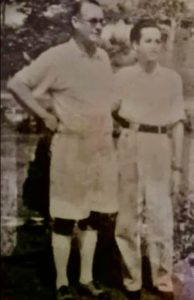
When construction of Batu Lintang was completed, the citizens taken prisoners were moved from Berhala Island to the other side of Borneo in January 1943, they continued to be separated, i.e. the men and women’s Huts/Camp. The women to Camp 1 and the male civilians to Camp 4. Lintang covered more than 50 acres of land and also accommodated up to 3,000 POWS
At No. 1 Camp there where 280 women, including 180 nuns from Kuching and approximately 250 male civilian internees (excluding Roman Catholic Mission personnel) were accommodated separately.
The following information is from the book ‘Three Came Home’ by Agnes Newton Keith who wrote a very true and often detailed account of her life and that of her very young son George – first at Berhala Island, Sandakan and then Lintang. She was constantly looking for food for young son. George was not even two when he and his mother became POWs. Agnes Keith and mothers worried about the physical development of their young children receiving so little food. The women were sent daily to labour in the fields outside the camp where the Japanese planned to grow food. The work was demanding.
Please read further about Agnes Newton Keith
Her husband Harry Keith was interned in the men’s camp. The men/husbands were only rarely allowed to meet with their families, and then it was a very short time.
Harry Keith was sent to the Lintang Camp ‘gaol’ for an unknown misdeamor. It was here Harry like other prisoners were locked into cages. This would put the wives through terrible emotional turmoil because they would hear about it via the ‘grapevine.’ Many men sent to the camp ‘gaol’ perished.
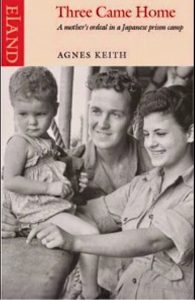
Initially the Camp Master for the women’s camp was Sister Bernadine from the Kuching convent. This fragile looking English-born woman was in charge of the entire female community. The Sisters were disciplined, well organised and ‘outwardly’ accepted the Japanese with good grace and more obedience than any civilian woman. Even better the Sisters acted as if they took the Japanese seriously.
Another women was elected to support Sister Bernadine was Dorie Adams from Jesselton, wife of the British Commandant of Armed Constabulary – Borneo’s only armed constabulary. Dorie was particularly shy and quiet. Most importantly she was a great humanitarium.
Sadly Sister Bernadine became ill (and never returned to her role). She was permitted by Col Suga to return to her Kuching Convent, where she could be looked after by the Chinese nuns. Col Suga brought her back to Lintang for one occasion to spend time with the Sisters of her convent, on the date of The Feast of Assumption, then she was returned by Suga and his car to the convent.
Dorie Adams then became Camp Master for a short time before the Japanese installed a spy as Camp Master. The only other woman permitted to deal directly with the Japanese was Dr. Gibson (a female medical doctor).
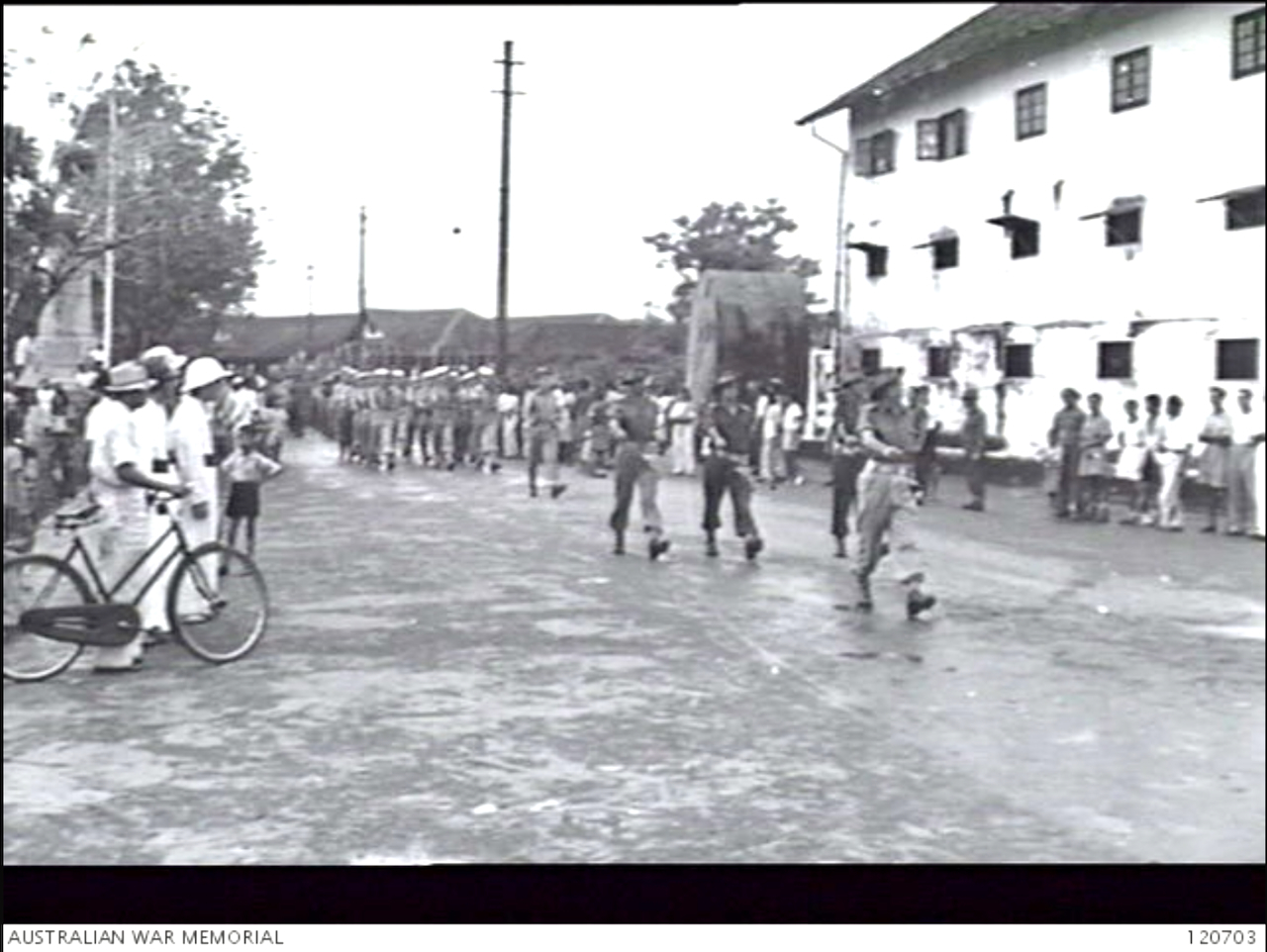
Below: Freedom at last – Australian soldiers marching at Kuching.
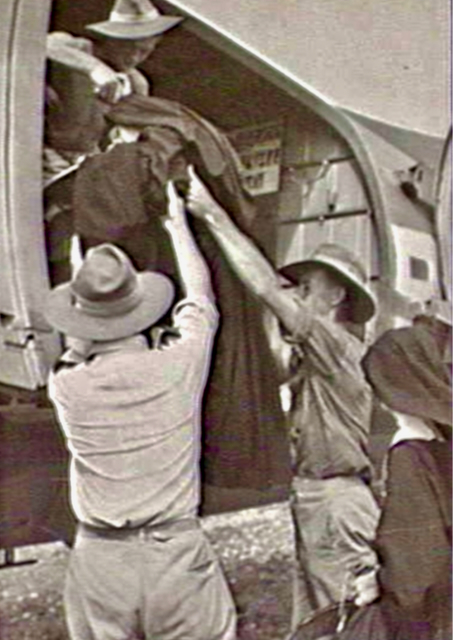
Above: KUCHING, SARAWAK. 1945-09-18. AUSTRALIAN SOLDIERS ASSISTING A GROUP OF NUNS ABOARD AN RAAF DOUGLAS C47 DAKOTA AIRCRAFT. THE NUNS, ALL EX INTERNEES OF THE JAPANESE, WERE BEING EVACUATED TO LABUAN.
Below: Kuching being visited by Australian troops
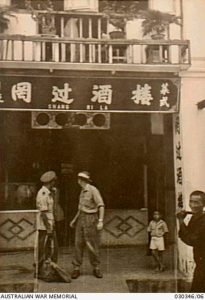
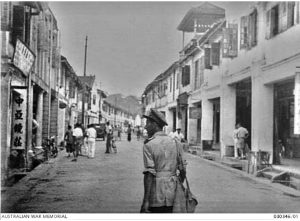

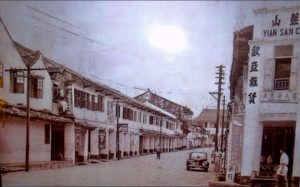
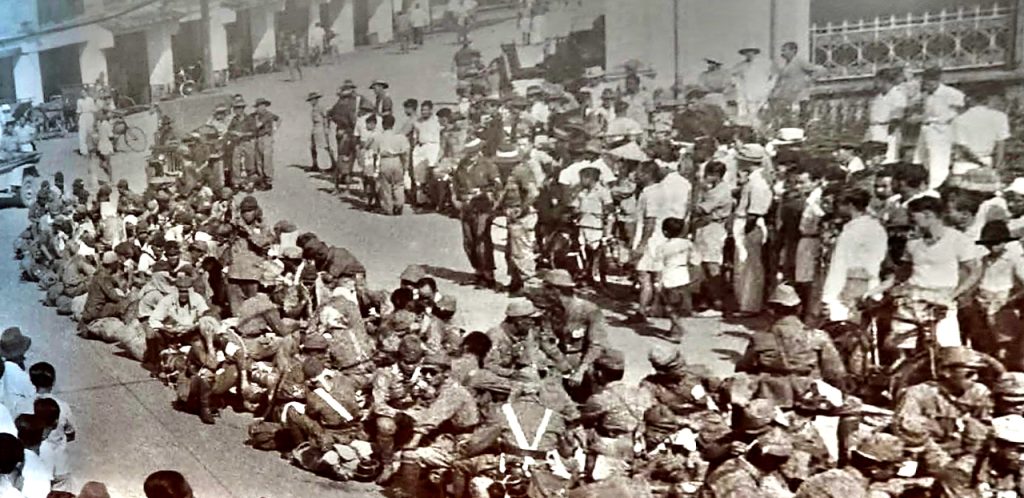
Above: Japanese preparing to depart Kuching with many interested and probably happy locals looking on.

Above: camp commander, Lt.-Col. Tatsuji Suga (right) with Brigadier Thomas Eastick (left) and Lt.-Col. A. W. Walsh (centre) shortly after the liberation of Batu Lintang on 11 September 1945. Suga killed himself five days later.
Following the unconditional surrender of Japan 15 August 1945, Lintang camp was liberated on 11 September 1945 by the Australian 9th Division. The camp population was 2,024, of whom 1,392 were POWs, including 395 male civilian internees and 237 were civilian women and children.
The first Allied prisoners held in the camp were about 340 British and Indian soldiers who were interned there in mid-March 1942. In time, it held both Allied POWs and Allied civilian internees. Local Sarawakians including ethnic Chinese were not interned in the camp, although some were imprisoned in Kuching jail. Allied civilian prisoners came almost exclusively from different territories on Borneo: from North Borneo (now Sabah), from Brunei, from the Straits Settlements island of Labuan, and from Sarawak, all of which were under British control, and from Dutch Borneo (now Kalimantan). In contrast, the POWs were brought to Batu Lintang from places such as mainland Malaya and Java as well as from Borneo. Many spent time at transit or temporary camps, such as the one at Berhala Island, North Borneo, prior to their transfer to Batu Lintang.
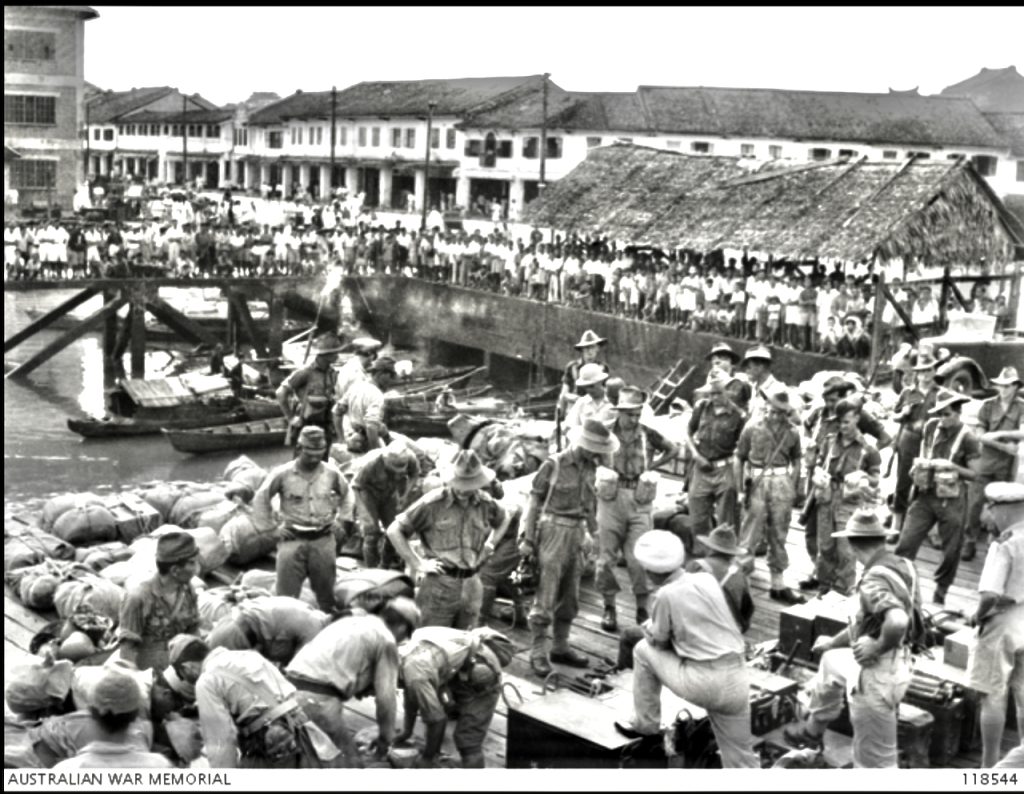
KUCHING, SARAWAK, BORNEO. 1945-09-22. KUCHING FORCE. AT BAZAAR WHARF. IN THE FOREGROUND ARE JAPANESE AND AUSTRALIAN TROOPS. NATIVES CROWDED THE NEARBY WHARF TO SEE THE DISARMING AND SEARCHING OF THE JAPANESE BEFORE THEY WERE ALLOWED TO PROCEED UPSTREAM TO BAU. (PHOTOGRAPHER SERGEANT F. A. C. BURKE)
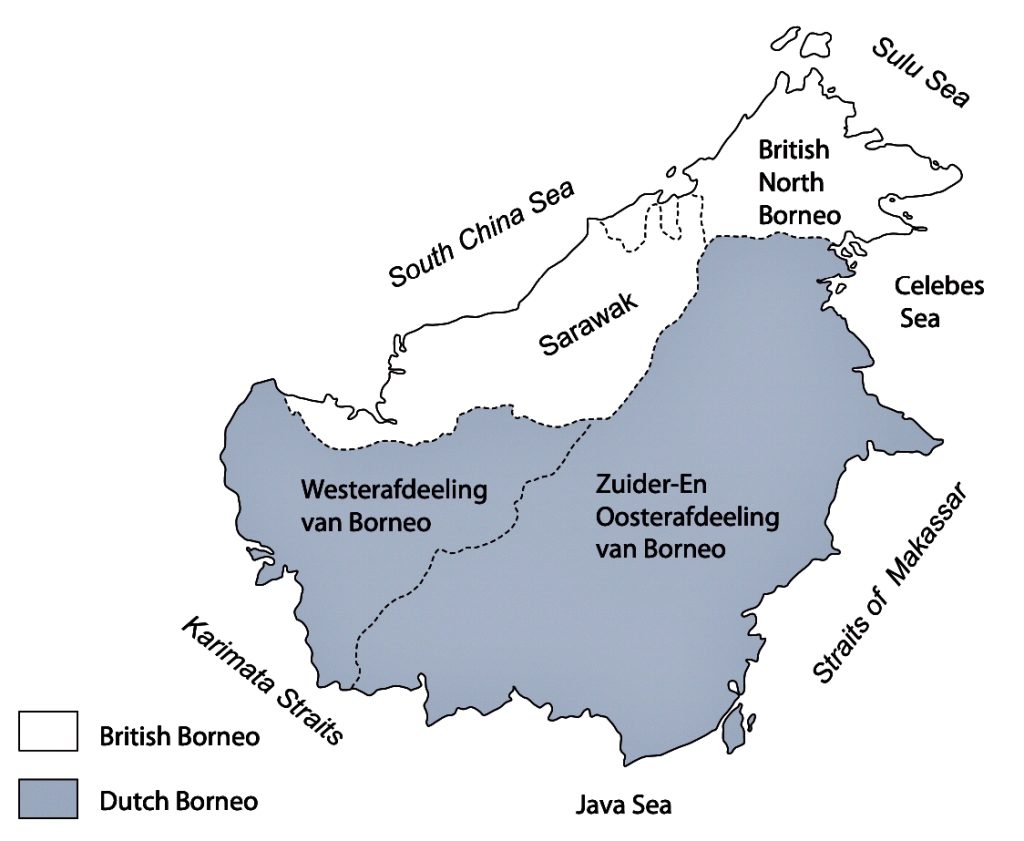
Below: Map of Borneo showing Kuching, Jesselton, Tarakan, Sandakan and Balikpapan.
JESSELTON
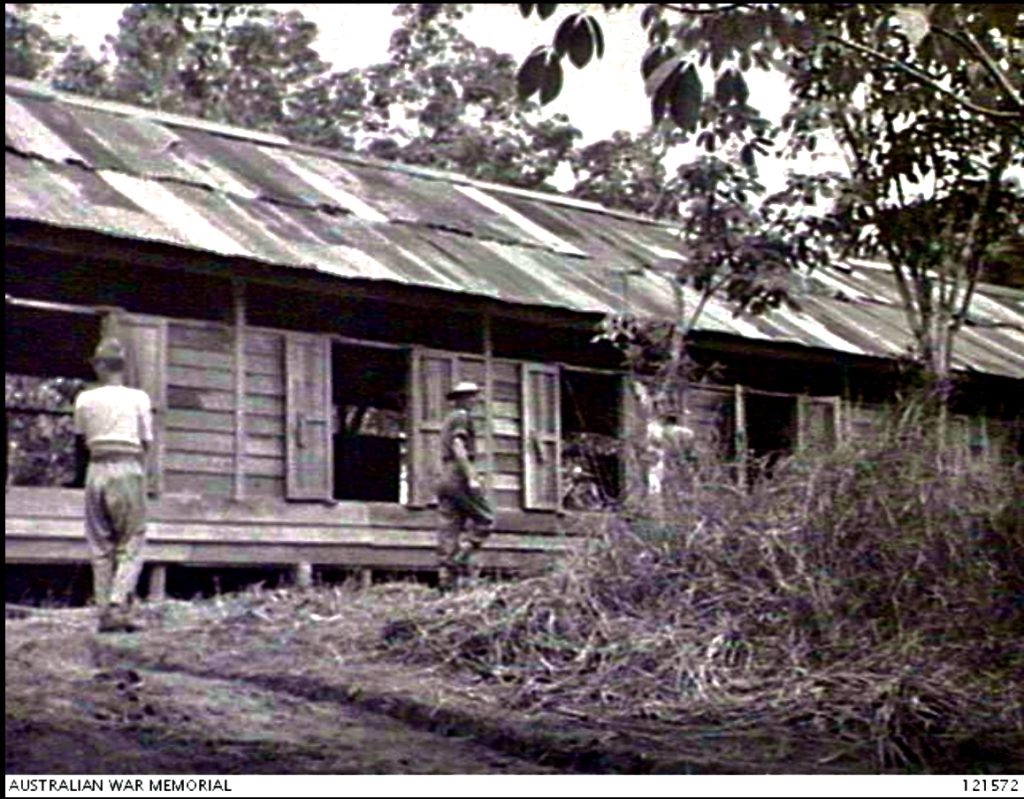
ABOVE: POW accommodation Jesselton
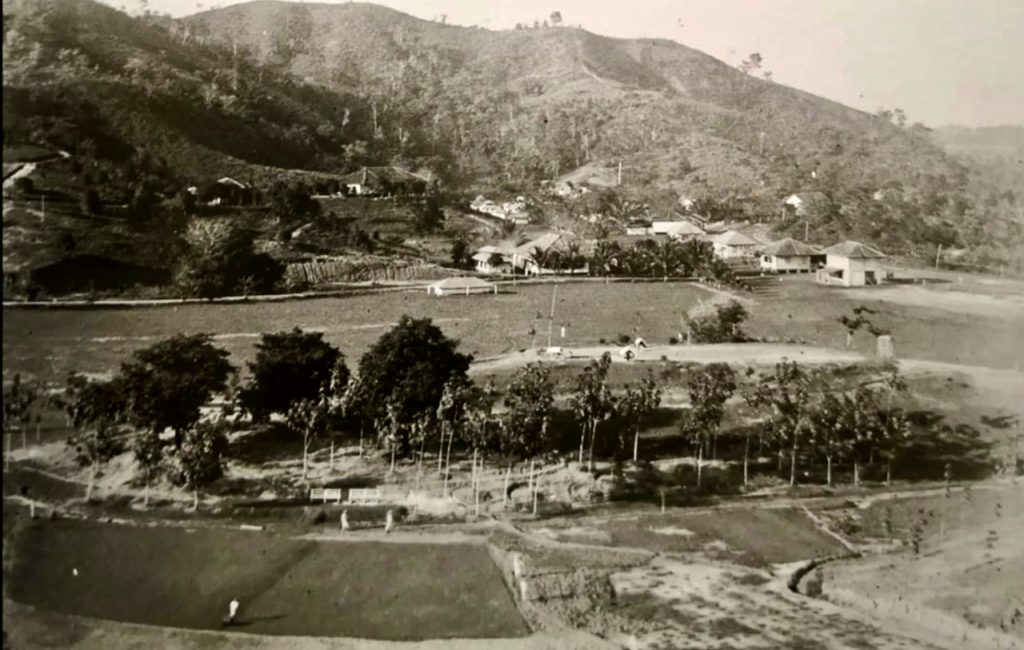
BELOW: Jesselton Pre WW2

BALIKPAPAN

BALIKPAPAN, BORNEO. 1945-07-01. FROM A GUN EMPLACEMENT ON A HILL OVERLOOKING THE RUINS OF THE FORMER DUTCH BARRACKS, AN AUSTRALIAN SOLDIER ARMED WITH AN OWEN SUB MACHINE WATCHES JAPANESE POSITIONS. IN THE BACKGROUND MANY OF THE LANDING CRAFT INVOLVED IN THE LANDING LIE OFF-SHORE. (NAVAL HISTORICAL COLLECTION)
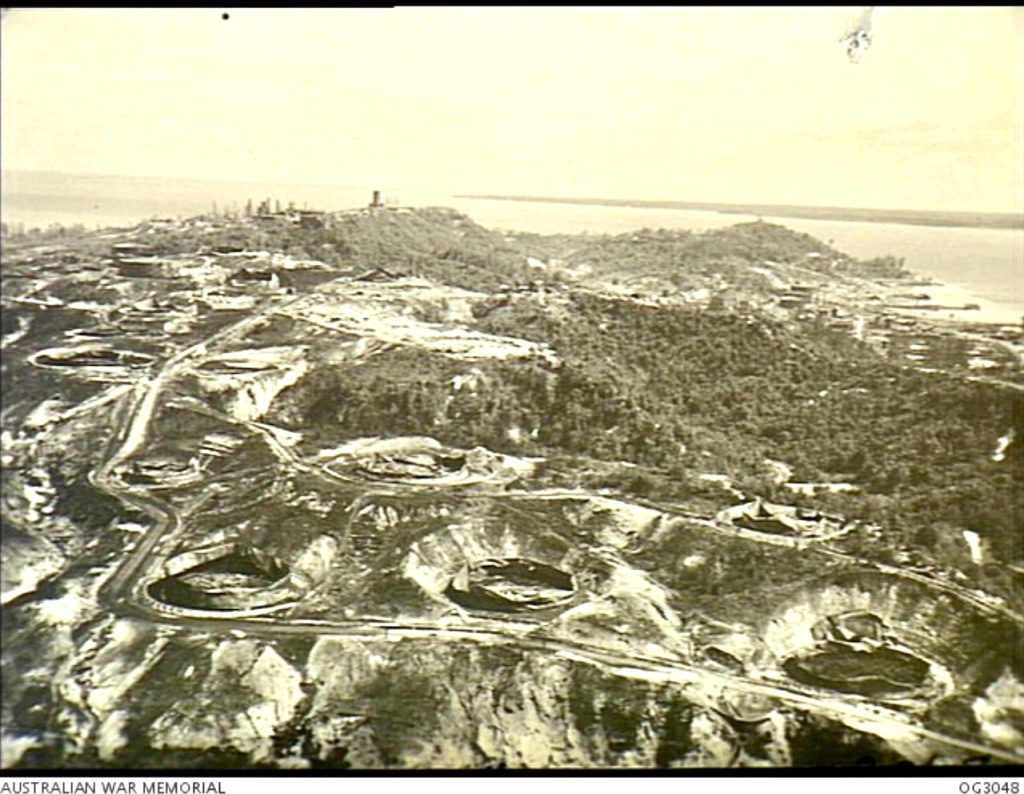
Above: Balikpapan – An aerial photograph showing oil storage tanks destroyed.