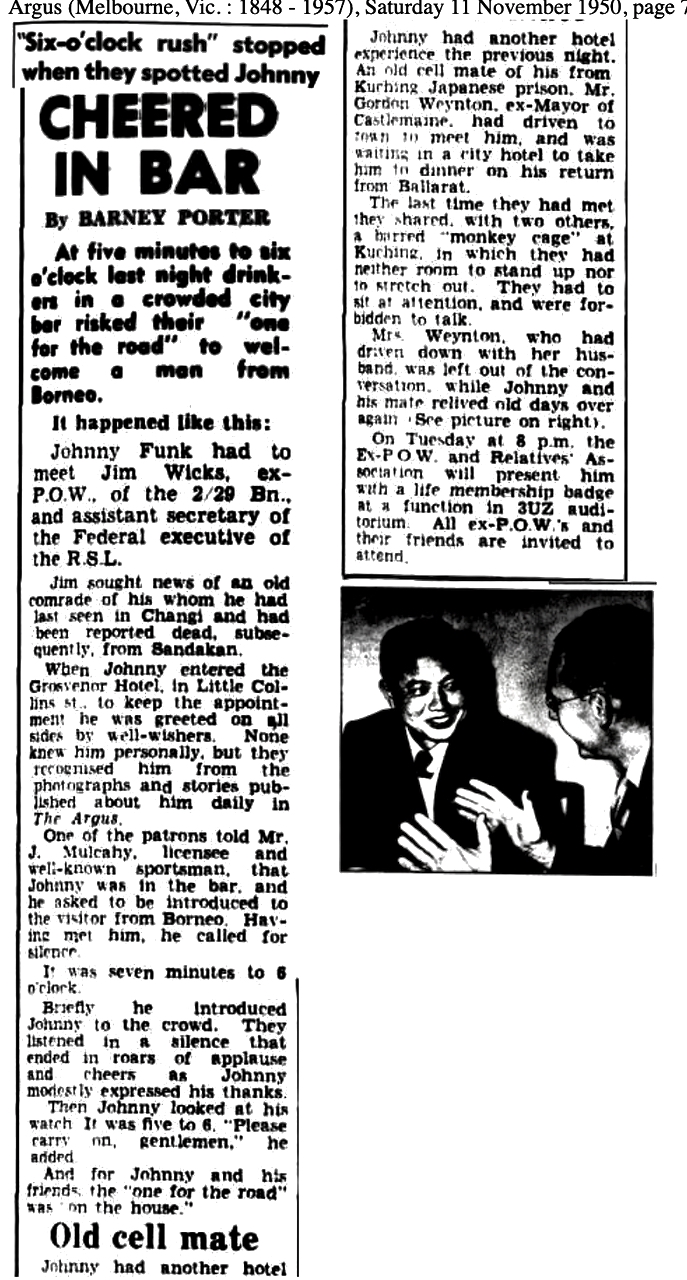
AUTRALIAN POWS SENTENCED at KUCHING’s JAPANESE HQ TRIALS FOR ESCAPING SANDAKAN OR INVOLVEMENT IN UNDERGROUND RADIO
nearly 200 Australian POWs and civilans and members of the Sandakan Constabulary who were sentenced at Kuching
Arrived 11 March 1944
OUTRAM ROAD PRISON, SINGAPORE WW2
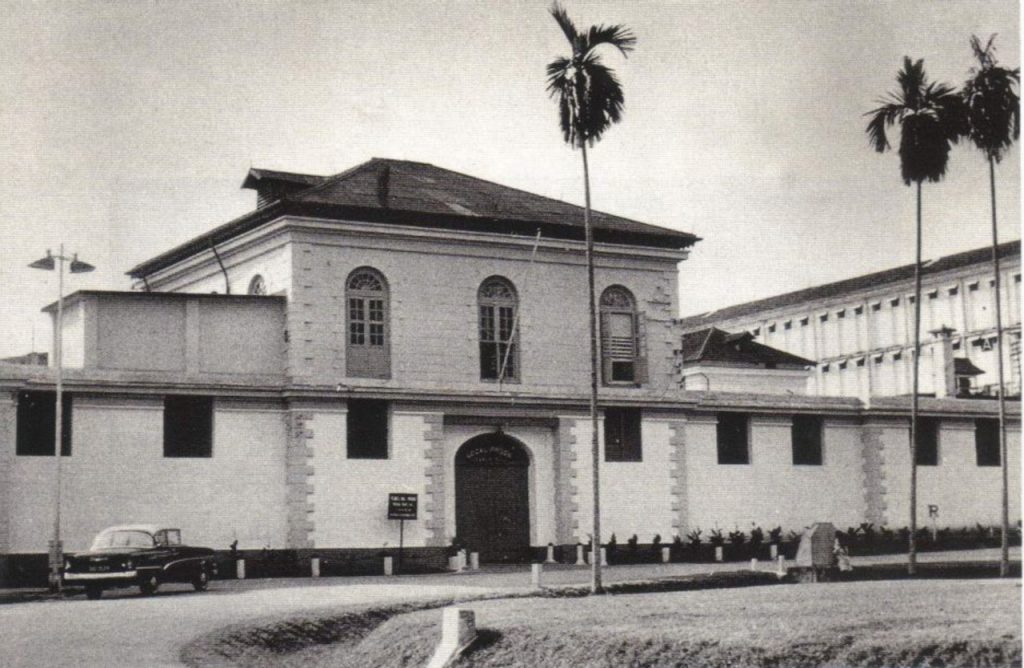
Outram Prison was one of the earliest prisons in Singapore. Originally known as Pearl’s Hill Prison before being called Outram Prison or Outram Road Prison.
For a group of POWs at Sandakan POW camp, British North Borneo, (originally shipped from Singapore, known as ‘B’ Force and later joined by ‘E’ Force) – their crime against Japan centred around an ‘underground radio’. Found guilty at Sandakan and later trials held by the Japanese at their HQ Kuching on 29 February 1944. Most were sentenced to years of solitary confinement, some with hard labour to Outram Road Prison – a hell-hole. A miserable prison for the worst crimes committed by POWs and citizens.
One of the Australian POWs who arrived in Sandakan POW camp to work on the airfield in July 1942 was Capt Lionel Colin Matthews. (Below)

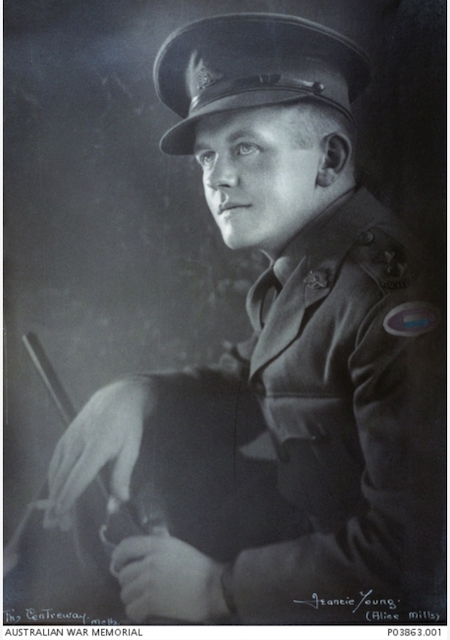
WX12404 Lt Col Roderick Graham Wells enlisted 23 Nov 1939 grew up near Tatura on a Dhurringile dairy farm. He was commissioned on 1 November 1940 and posted to 8th Division Signals. Wells had been a school teacher when he enlisted.
He served as a radio operator with 8th Division Signals in Malaya and Singapore.
His first duties were associated with high frequency radio sets fitted to Army vehicles. Later during the Malaya campaign, Wells worked in radio detection operations searching for clandestine radios sending messages to the Japanese.
When Singapore fell to the Japanese Wells became one of thousands of Australians to become a POW of Japan.
On 7 July 1942, along with 1,494 other ‘B’ Force POWs, he left Singapore on Japanese ship Ubi Maru, arriving in Sandakan Harbour on 18 July 1942.
At Sandakan, Wells became active in a clandestine underground network with some of the other officers, including Captain Lionel Matthews.
Using local Chinese contacts to collect parts, Wells organised to build a radio receiver and transmitter. Lt Weynton with the help of Corp Rickards NX68389 from 2/3 and Sgts Small and Mills built the set which was operational on 4 November 1942.
The Kempetei had received information about the underground activity from their spies and unfortunately a disgruntled local. They immediately swooped on the POW Camp and conducted a major search. A list of radio parts was discovered. The list was linked to Wells whose detailed diary they found and when confronted by Captain Hoshijima, he eventually led the Kempetei to the transmitter, leaving the receiver in its hiding place.
He was immediately arrested, paraded to the camp and transported to Kempetei headquarters in Sandakan and eventually to Kuching, where he was joined by others arrested for their part in the Sandakan underground.
Wells and those arrested endured daily horrific cruelty from the Kempetei including starvation, no water, endless torture, broken bones and solitary confinement at Sandakan, Kuching and Outram Road Gaol, Singapore. At one point the Kempeteis pushed/hammered a bamboo skewer into one ear which exited the other side of Wells head. He suffered all his life from this barbaric act. At Outram Road, when Wells was eventually too weak to walk, he was sent to Changi hospital in the expectation that he would die there. Fortunately, the war ended before he did.
The Kempetei were particularly spiteful towards two members of local constabulary and Sandakan civilians arrested. They threatened and carried out arrests of their family members – their wives, and worse, involved their children.
All those arrested were brutally tortured daily for three months at Sandakan as the Japanese tried unsuccessfully to extract information. The torture continued at Kuching while waiting trials.
Matthews, Wells and Weynton these men are with Signals 8th Division – reveal nothing, never revealing any name or piece of information other than what the Japanese already had. They were able to message each other and others by tapping their fingers without the Japanese ever knowning. The accused group were shipped to Kuching, most in 4ft x 4ft bamboo cages where men were unable to stand or stretch out and were forced to squat or sit.
In February 1944, the accused were tried by court martial and found guilty. On 28 February 1944, Lt Wells and Capt Matthews were both sentenced to death.
Japanese HQ, Kuching sent a signal to Japanese command in Saigon requesting permission to execute two Australian officers. The reply from Saigon only authorised one execution; after the war it was discovered that this was a simple typographical error in Saigon. Wells should have been executed along with Matthews.
Both men were brought before the court again on 29 February 1944. Matthews was sentenced to death along with two members of the British North Borneo Constabulary and six other local Sabahans. They were immediately excecuted.
ARRESTED AND TRIED AT KUCHING, SENTENCED TO DEATH (SHOT BY FIRING SQUAD 2.3.1944) :
- Abin, Sergeant
- Azcona, Felix Junior
- Funk, Alexander
- Matusup Gungau
- Lagan, Detective Ernesto
- Matthews, Captain Lionel
- Heng Joo Ming
- Jemadar Ojagar Singh Mannan
- Wong Mu Sing
As the court did not have authority to execute Wells, he was sentenced to 12 years penal servitude in solitary confinement. Wells was nailed into a crate, loaded into the hold of a ship and transferred to the infamous Outram Road Jail in Singapore.
Meanwhile, Wells and 18 others were sentenced to Outram Prison. Wells was extraordinarily lucky man!
Wells was sentenced to 12 years solitary confinement, said goodbye to Matthews with a handshake and a few personal message from Matthews to his wife.
Two days after departing Kuching, Wells arrived in Singapore where he had been captured two years before.
In Singapore, he was imprisoned at Outram Prison and here is his account as recorded by Christoper Somerville’s Our War: Real Stories of Commonwealth soldiers during World War II.
“on entering the prison I found the most terrible sights of dejected people with absolutely no will to live, just slowly walking around. From the back you could see their reproductive organs hanging down between their legs. There was no flesh on them. It made sitting very hard. The hip bone would be pressing into bare skin. But you had to just sit up and put up with the pain.
Everything was done to order. No talking was allowed. When no order was given you were silent and just stayed in the same position you were in when the last order was given. At nine o’clock at night you were sent back to your cell. There was a light on all night in the cell, so there was not a second in the twenty four hours you were in darkness. This went on for me twenty three months, including my period in Kuching. Twenty three months in solitary.
Meals were roughly 5 oz cooked rice and a bit of stewy water with a bit of weed in it, green gassy stuff. Tea – that was like a 100 to one whisky and water, pale discoloured stuff that was always cold when you got it.
The little pair of shorts you had on had your number on them. 641 that was me! You had to learn that in Japanese pretty quick, because that was your name and address and everything else. I lost all identity. I was no longer a POW – I was a criminal, just a number. That was the worst thing of the lot, just a number.”
He was finally released in August 1945 having endured 21 months of brutal and cruel treatment from his Kempetei jailers.
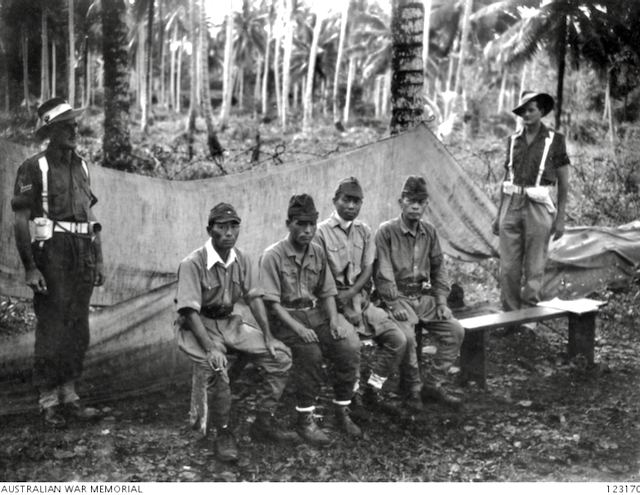
Below: Some of the arrested Japanese jailers.
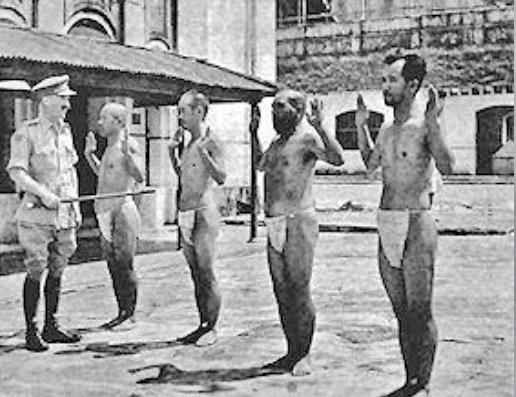
We wish to acknowlege much of the information we have gleamed from ‘The story of Rod Wells’ author Pam Wells taken from the Dairy News
We also wish to acknowledge AWM
SANDAKAN CIVILIAN EXECUTIONS MAY 1945 IN RETALIATION OF AN ALLIED ATTACK
SANDAKAN CIVILIAN EXECUTIONS MAY 1945 IN RETALIATION OF AN ALLIED ATTACK
The people of Sandakan were not only brave but knew their actions endangered the lives of their families to risk supporting the Australian POWs, and to help civilians imprisoned on Berhala Island. It is so very important to acknowledge them, their bravery and their generosity. They were able to smuggle into camp medicines, foods as well as radio parts.
Above: Capt Matthews
The following eight men aside from Capt. Matthews, are condemned to death by firing squad 2nd March 1944. Most were married with young families. We acknowledge and thank these brave men and their families for all they did for the Australian POWs. We salute them!
ERNESTO LAGAN (Snr)
HENG JOO MING
SGT. AHBIN
ALEXANDER CLARENCE LEONARD FUNK
FELIX AZCONA (Jnr)
JEMADER UJAGAR SINGH
WONG MU SING
MATUSUP BIN GUNGAU (aka MUTUSUP GUNGAU)
Their names are listed on the “Heroes’ Grave” plaque at St. Joseph’s Church Cemetery in Kuching.
Below: Wife and young son of Matusup Bin Gungau
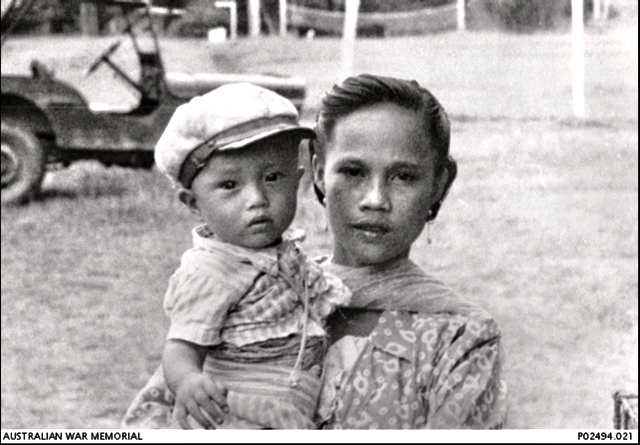
Jesselton, North Borneo. October 1950.
Informal portrait of Halima binte Binting, widow of Matusup bin Gangau, holding their child. Matusup, who was part of a local assistance group, had been executed in Kuching, along with other civilians, for helping the prisoners of war in Sandakan Camp. Halima had also acted as a go-between for her husband and VX24597 Captain (Capt) Lionel Matthews, the camp-appointed intelligence officer. On one occasion Halima was caught talking with Capt Matthews and was interrogated and tortured by the Japanese but was later released. For her husband’s assistance Halima was rewarded by the representatives of the Australian-British Reward Mission. In 1946 the Mission led by V18803 Major (Maj) H. W. S. (Harry) Jackson, Australian Government representative, was joined by Maj. R. K. Dyce, representing the British Army, and two journalists from the ABC, Colin Simpson and William McFarlane, travelled to North Borneo to investigate, report and reward the assistance provided to Australian and British prisoners of war (POWs) by local natives. In 1942, 1800 Australian and 600 British POWs were sent to Sandakan from Singapore and Java. Those prisoners still alive in the Sandakan POW Camp in January 1945 were forced to help evacuate the Japanese Imperial Army from Sandakan to Ranau in three brutal death marches where the men were forced to march the 150 miles to Ranau. Any POWs still alive after the last march, were killed. Only six prisoners, who had all escaped during the death marches, were still alive at the end of the war. POWs had made pledges to the local people who had assisted them and the Australian Government decided that these obligations should be investigated and rewarded. (Donor H. W. S. Jackson)

Above: JEMADER UJAGAR SINGH…. a very tall Sikh was a proud man was fiercely loyal to the British. So was his father Pal Singh, who had come out to British North Borneo with his brother Chanda from their home village of Mannan, India. Both men had joined the constabulary in Jesselton, where Pal had married Sant Kaur the daughter of another policeman, Sadhu Singh, whose son, Dial, was also in the Police force. Pal’s second son, Ojagar, born in Mannan where he spent his childhood, arrived in Borneo at the age of ten. By the time he was eleven he, too, had joined the Constabulary, as a bugler.
As a Jemadar (Senior Warrant Officer), he was the father of eight children, five daughter and three sons, the youngest of whom was Anup. Raised in a family with high developed sense of duty, Ojagar would have wished for nothing more than able to fight for the King and to defend the country and the empire that he loved.
Jemadar Ojagar Singh’s house was on top of a hill near the Police Headquarters at Bukit Merah. From there he could see what was happening out at the sea and on the Island of Berhala.
In the absence of European officers, local policemen at Sandakan (imprisoned Berhala Island) were led by three local junior officers : Inspector Samuel Guriaman, Sergeant Major Yansalang and Warrant Officer Jemadar Ojagar Singh. The Japanese believed these men were loyal to them. Instead, the three remained loyal to their European officers and the Allied cause.
Major Rice Oxley, who was Chief of the Volunteer Force and Police Force was interned at Berhala Island, requested the three junior officers to corporate with Dr James Taylor the principal medical officer who was allowed to remain free in order to carry out his duties at the Sandakan civil hospital. Rice Oxley also asked them to cooporate with POWs interned at Mile 8 POW Camp.
The civilians and constabulary at Sandakan have been secretly and active sending the foods, drugs money and other necessities to Berhala Island. Dr Jim Taylor headed a humanitarian underground assistance group. The group existence was due partly to Dr Laband and partly to Ernesto Lagan an ex employee of Harrison and Crossfield and a member of the volunteers, who was married to Pedro Dominic’s granddaughter Katherine Neubronner.

The same group developed close links with Chinese, Malay and other native people who opposed Japanese occupation such as the families of Funk, Azcona, Peter Lai, Apostol, Mrs ‘Ma’ Cohen, Dick Majinal, Pop Wong, Matusup Gungau and others. Together, they became a larger movement known as a local assistance group. This free men and women smuggled foods and medicines to their families and friends interned on Berhala Island. All racial groups were involved in the underground : Europeans, Chinese, Indians and Locals. All groups are represented.
Jemadar Ojagar Singh was stationed at mile 8 police station. As officers, he and Inspector Guriaman were responsible for the area in the vicinity of the POW camp. He was also responsible, along with other junior officers, for providing guards for the civilian internment centre on Berhala Islands.
The Constabulary was closely connected with Ernesto Lagan, who was now working as a detective for the Japanese. Shortly after the civilians were sent to Berhala, he had received a message from the Constabulary’s Commanding officer, Major A Rice Oxley, seeking financial assistance for himself and two other officers, Captain HB Rowland and Lieutenant MG Edge. The note had been passed from Salleh to Sergeant Ikes and Corporal Koram. Corporal Koram passed the note to Lagan who canvassed those he was sure he could trust and appointed Sergent Yusof Basinau to begin collecting whatever money anyone can spare. The contributors were Inspector Samuel Guriaman, Sergeant Major Yansalang, Sergeant Abin, Corporal Koram, PC Kai, Damudaran, Lumatop, Kassiu, Gorokon, Mohamed Tahir Matusin and Jemadar Ojagar Singh.
They ensured only trustworthy men were rostered for guard duty at Berhala. The most loyal and sympathetic policemen were allocated to duties that took them regularly to Berhala Island and mile 8 station. With reliable men in place, many activities started to take place. Food and medicine were smuggled in from the mainland to the civilian internees and a group of POWs on Berhala Island (at that time, ‘E’ Force). Supplies were also made available to POWs at mile 8.
After Major Rice Oxley and Governor were moved to Kuching, Ojagar and his men, on Major’s instruction, were nominally placed under the charge of Captain Lionel Colin Matthews, main contact person with Australian POWs and to assist Matthews carrying out underground activities.
Initially their goal was humanitarian however expanded into smuggling food/medicines, smuggling of radio parts, collecting of money, gathering of intelligence and eventually military. The underground turned into a dangerous organisation. With the help of these and other courageous locals, a cache of small arms was organised including some British equipment – mostly weapons brought in from Philippines. There were about a hundred weapons including three machine guns, hidden about three kilometres from the camp near mile six. The plan was to use this weapons as part of a general prisoners insurrection to either seize the camp and town or undertake a mass escape of all prisoners and become guerrilla fighters.
As well as the plan for insurrection, was the building of a transmitting radio. This would be used to contact American Guerrillas in Philippines and submarines with a view to obtaining more arms and other support. This development was not just about escaping; it was a challenge to the Japanese position in North Borneo, and one that inevitably would invoke most violent Japanese response.
Berhala Island was where the first and second team of the allied POWs escaped. The first team comprised R.K. Mc Laren, Private R.N. Butler and R.J. Kennedy. They arrived at Batu Batu, Philippines 13rd June 1943 and greeted by Colonel A Suarez. The second team consisted five colleagues Lt. Rex Blow, Lt. L.N. Gillon and Sgt. W. Wallace, Captain R.E. Steele and Lt. C.A. Wagner followed and arrived Tawi Tawi, Philippines on 30th June 1943. They were all integrated into the Philippines guerrilla forces.
Their escape from Berhala Island was successfully executed by members of the underground intelligence organisation directed by an intelligence officer, Captain Lionel Colin Matthews and Dr Taylor. They were responsible with the delivery arrangement of food, medical supplies and money to the POWs. Matthews introduced secret radio links with the outside world and organised the British North Borneo Constabulary for armed uprising against the Japanese.
The Japanese ordered their guards in combination with the local Police Force to search for the escaped Australians, hunting frantically all over the island but could not locate them. The Japanese military police offered enormous sums of money as rewards for the recapture of the Australians.
The underground movement was soon discovered by the Japanese. Matthews was arrested by the Kempeitai and was subject to brutal treatment and starvation. He refused to implicate anybody else.
The Japanese arrested all who were involved in the Underground movement. Those captured included many international groups – Chinese, Europeans, Eurasians, Kadazan, Sikh, Murut, Filipinos, Suluk, Javanese and Ma Cohen a wealthy and very generous Jewish women, (who gave the largest financial commitment to the Australian Underground movement) together with 19 Australian POWs and five civilians and their wives.
Ojagar Singh was involved in helping the eight Australian POWs escape from Berhala Island. People attributed the escape to Corporal Koram but Ojagar was the man in charge of the police detachment on Berhala allowing Rex Blow, Ray Steele and six others to escape to Tawi Tawi. He was also one of the major contributors to a fund that assisted the POWs to escape.
Others in the Constabulary including Detective Ernesto Lagan and Corporal Abin who gave money to the fund.
Ojagar assisted in mapping possible escape routes by providing a map taken from the Constabulary office by Abin. The map passed to Matthews showing the main installations and buildings in Sandakan.
Copied from Borneo History https://borneohistory57.blogspot.com/p/homepage.html

Above: Heng Choo Ming
Lt Wells was one a number of Australian POWs from Sandakan to survive. Tragically some POWs died at Outram Road Gaol. WA Goldfields boy Ted Keating of 2/5th, died of injuries received whilst at Kuching awaiting trial.
After the war, Wells studied at Melbourne University, graduating with a BSc and Dip Ed. In 1951, he was again commissioned into the Army, rising to the rank of Lieutenant Colonel, before resigning in 1960 to work in communications and engineering in the Australian Public Service.
Rod Wells died 12 October 2003 aged 83 years.
This story tells of about 30 citizens of the town of Sandakan, executed by the Japanese because there had been an Allied attack for a few hours in the Sandakan Harbour on the morning of 27 May 1945.

Above: KWAN LOKE MING
Please read MRS COHEN, SANDAKAN WHO DONATED THE LARGEST AMOUNT OF MONEY TO AUSTRALIAN POWS
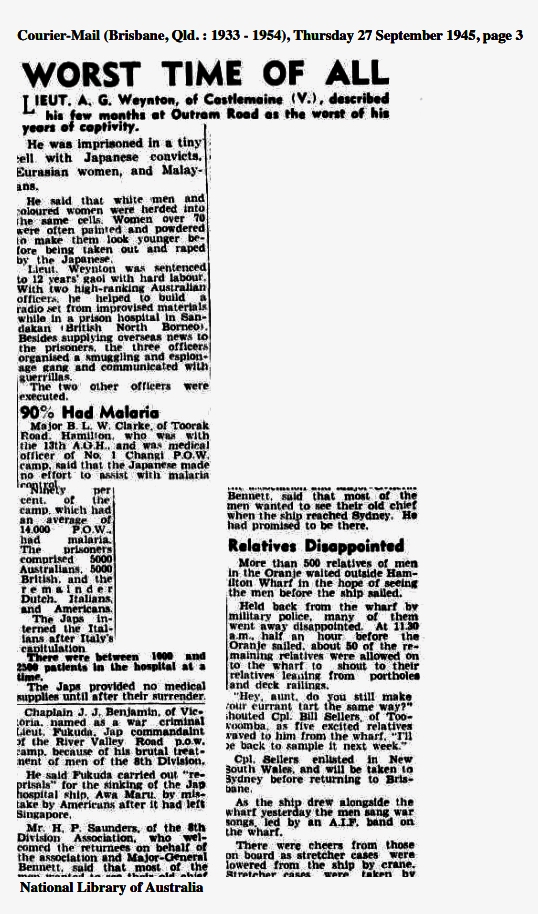
VX28397 Lt Gordon Alexander Weynton, 8th Division Signals – Survived, returned to Australia and later became a Councillor of Castlemaine, his hometown. Weynton was listed as having been
“the Ex-gaolbird Mayor, guest of his imperial highness Hirohito in the infamous Outram Rd Gaol, Singapore”
where he was sentenced first to death, then to 10 years imprisonment.
Lt Weynton attended the War Trial in Tokyo joining Brigadier Arthur Seaforth, VC, much admired Lt.Col ‘Bertie’ Coates, 8th Division, POWs in hospitals were suffering ulcers requring amputation and endless tropical illnesses. Capt Viviene Bullwinkel, from ‘Vyner Brooke’ sinking who survived the murder of a large group of Australian nurses on Bangka Island.
WX227 SGT ALFRED STEPHENS 2/4th MGB, 8th division was sentenced to foour years Outram Road Gaol for his role in the ‘underground radio’. Alf returned to his hometown in Western Australia.
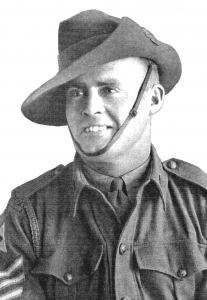
Please read further about Alf Stephens and others arrested and sent to Outram Road.
MOST EUROPEANS SENT TO BERHALA ISLAND
Most of the Europeans were sent to Berhala Island by the Japanese – except for those with essential jobs such as Dr. James, Gerald Mavor, A.E. Phillips, General Manager North Borneo Trading Company, Dr J.F. Laband, Dental Surgeon and refugee from Nazi Germany, Dr. ‘Val’ Stookes, local GP.
Below: Local Sandakan doctor and hero, Australian born surgeon general and principal Medical Officer James Taylor is sentenced and survived Outram Road Gaol.
Gerald Mavor, Chief Engineer & Manager, Sandakan Light & Power Company was also sentenced to Orchard Road. He died 5 May 1945.

Mrs Ceila Taylor was also sent to Outram Road Prison with Mrs Mavor – they shared a cell with an Asian woman whom they believed was placed with them to listen to their conversations an report to the Japanese.
Below: former POWs from Sandakan and Outram Road Gaol return to Australia Sept 1945 or death details.
FIVE MEN (B Force) FROM 2/29TH ATTEMPTED ESCAPE
They survived for almost six months on the run in the jungles of Borneo, moving only late at night and eating “things that creep and crawl”.
The five men were recaptured just as they secured a boat and supplies from a local member of the underground with a promissory note for 200 pounds.
The Australian government would honour that debt to Tek Sing at the end of the war.
The government honoured that note at the end of the war because of the assistance he gave to the soldiers.
Private Norman Morris, Pte Bruce McWilliams, Pte Allan Minty, Lance Corporal Fred New and Corporal William Fairy of the 2/29 Battalion.
VX56828 Cpl. W. Fairey 2/29th from Victoria died at Outram Road Gaol. William Fairy died on 5 April 1944.
VX56725 Pte Allan Roy Minty 2/29th of Essendon sentenced to 6 years Rigorous Imprisonment at Outram Road Gaol, served 2 years and 7 months of which the first 13 months were in Solitary Confinement in a small cell. Minty lead an escape of five AIF POWs from Sandakan, capital of British North Borneo.
Other escapees in the party who survived were: L/Cpl. New QX23995; Pte. Norman Stanley Morris VX59433, and Pte. Bruce McWilliams VX39255 who is believed to have left in the ‘Duntroon.’
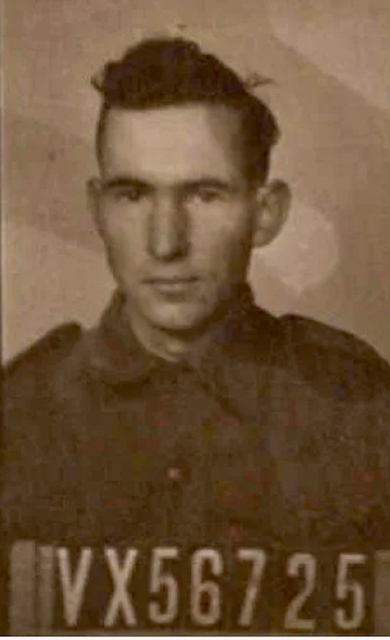
Above: Minty
The following is from Courier-Mail (Brisbane, Qld. : 1933 – 1954), Thursday 27 September 1945, page 3
‘Interviewed while in bed, too ill to walk, Pte. Minty told of privations which caused him to lose nearly five stone in weight. Captured in Singapore on February 15, 1942, he was taken to Sandakan in July. With four other 2/29th men he escaped 18 days later. They trudged down the coast, hiding from Jap patrols, and eluded capture for six months, living on what food they could get out of the jungle.’
After being sentenced in Borneo they were taken to Outram Road Gaol in a bamboo cage, 10ft. by 8ft., into which eight men were jammed, in the hold of a captured Dutch tramp steamer. Minty endured the first 12 months of his term in solitary confinement, locked in a cell 10ft. by 5½ft.’
The ‘Three Musketeers’ from Western Australia and 2/5th Field Artillery, sailed to North Borneo with ‘E’ Force:
WX8818 Edward James (Ted/Teddy) KEATING who died of illness and injuries received during months of torture and beatings at Sandakan and Kuching.
WX9682 Carl Edgar ‘Snowy’ Jensen – the only survivor.
WX10932 Don Marshall who died of illness at Outram Road Gaol.
We know the names of several other POWs sentenced to Outram Road:
Northern Queenslander 19 year old HERB TRACKSON escaped 8 mile camp with his mate former dairy farmer MATTHEW (MATT) CARR. They had run their escape past two officers and waited until a stormy night. Apparently another group of four POWs also broke out and were caught 3-4 days later. Trackson said Bill Sticewich (then living outside the compound) said he would assist them, held up the wire for them, said he would delay the role call to give them time. Trackson said Sticewich had not done this. He believed he was in cahoots with the Japanese. Trackson also believed Sticewich assisted the Japanese to recapture the group of 4 POWs.
Trackson and Carr were recaptured 3-4 weeks later and returned to Sandakan. They were sent to Kuching with the others and sentenced to Outram Road Gaol.
NX40325 JIMMY DARLINGTON who tried to protect an older POW from being pushed around and beaten in the cookhouse, received such horrendous beatings and torture over several days before being thrown into Sandakan prison with BILLY YOUNG. It was Billy YOUNG who looked after the very poorly Darlington and possibly saved his life. They were both sentenced at Kuching to Orchard Road Gaol.
Please read the story of Jimmy Darlington
In early 1943, Billy Young one of the youngest men in the camp, was working at the drome and at lunchtime was looking around at what he could scrounge. An unexpected roll call found him missing. Having witnessed what had happened to Jimmy Darlington, Billy Young and his companion were terrified and decided they could not go back. They were quickly captured.
NX32348 Pte JOHN ALLAN MACMILLAN was sentenced to 18 months imprisonment Outram Road. He had been jailed for obtaining radio parts and medicine at Sandakan. When released from Outram Road, his weight had dropped by half.
Below: John Allan MacMillan

Others to be Sentenced
FIFTEEN YEARS
1. Damodaran, Mr M
2. Yangsalang, Sgt. Maj.
3. Yusop (Usop) Basinau, Sgt.
TWELVE YEARS
1. Lai, Peter Raymond Kui Fook
2. Mohammed Salleh Bin Madang
3. Wells, Lt. Roderick (sent to Outram Road Goal Singapore)
Below: Peter Lai

TEN YEARS
1. Apostol, Lamberto
2. Ng Ho Kong
EIGHT YEARS
1. Amigau Bin Bassan (Died at Kuching)
2. Chin Piang Syn @ Chin Chee Kong @ Edmond Kong
3. Guriaman, Inspector Samuel
4. Soh Kim Seng (Ah Tu) (Died at Kuching)
5. Weynton, Lieutenant Gordon (sent to Outram Road Goal Singapore)
SEVEN YEARS
1. Peter Leong
2. Dick Majinal
Below: Dick Marginal

SIX YEARS
1. Chang Tiang Kiang, Henry
2. Funk, Patrick H (Paddy) (escaped from penal servitude)
3. Chan Tian Joo
4. Kassiu, PC (Died at Kuching)
5. Richards,Cpl. J. (sent to Outram Road Goal Singapore)
6. Stevens, Sgt. Alfred (sent to Outram Road Goal Singapore) from 2/4th MGB.
FIVE YEARS
1. Foo Seng Chow
2. Jakariah
3. Sidek Bin Simoen
FOUR YEARS
1. Funk, John Simon Jr (Johnny)
2. Gorokon, PC
3. Lumatop, PC
4. Marshall, Sapper Donald (sent to Outram Road Goal Singapore)
5. Chan Ping (Ah Ping)
6. Felix Tang
THREE YEARS
1. Aruliah, Samuel
2. Martin, Private Frank (sent to Outram Road Goal Singapore)
3. Phillips, Mr A.E. (Manager North Borneo Trading Coy).
4. Tahir, Mohammad PC
TWO AND HALF YEARS
1. Lau Bui Cheng (Bueh Ching)
2. Ngui Ah Kui
TWO YEARS
1. Davis, Private Stanley G. (sent to Outram Road Goal Singapore)
2. Western Australian Jensen, Sapper Carl (sent to Outram Road Goal Singapore) Photo Below.

3. Kassim Bin Jumadi @ Mandor (Died at Kuching)
4. Mills, Corporal Cyrill (sent to Outram Road Goal Singapore)
5. Suratmin Bin Jumadi (escaped from Kuching Goal)
6. Sastroh (Died at Kuching)
ONE AND HALF YEARS
1. Blain, Sergeant Alister M. (sent to Outram Road Goal Singapore)
2. Davis, Sapper Roy 2/12th Field Company, RAE (sent to Outram Road Goal Singapore)
3. Graham. Cpl Thomas G. (sent to Outram Road Goal Singapore)
4. Holly, Sgt Ray B. (sent to Outram Road Goal Singapore)
5. James, Staff Sergeant J.H. (sent to Outram Road Goal Singapore)
6. McMillan, Corporal J (sent to Outram Road Goal Singapore)
7. Roffely, Cpl L.A.D. (sent to Outram Road Goal Singapore)
8. Small, Cpl Arnold (sent to Outram Road Goal Singapore)
ONE YEAR
1. Allan, D R
2. Amat
3. Goh Tiek Tshi (Teck Chai)
4. Dahlan
5. Kai, PC
6. Laband, Dr J F
7. Rice Oxley, Major
8. Goh Tiek Soong (Teck Sing)
TEN MONTHS
1. Yong Cha Ming
SIX MONTHS
2. Mc Donough, Sergeant William J. (sent to Outram Road Goal Singapore)
3. Rumble, Private Thomas H. (sent to Outram Road Goal Singapore)
“Sandakan should be remembered because it was more than a battle between nations and more than a battle between conflicting ideologies; it was a war between human decency and human depravity. The victims [of the Death March] were as much casualties of evil as those who died in the Nazi death camps in Europe. ”
by Paul Keating
Lest We Forget
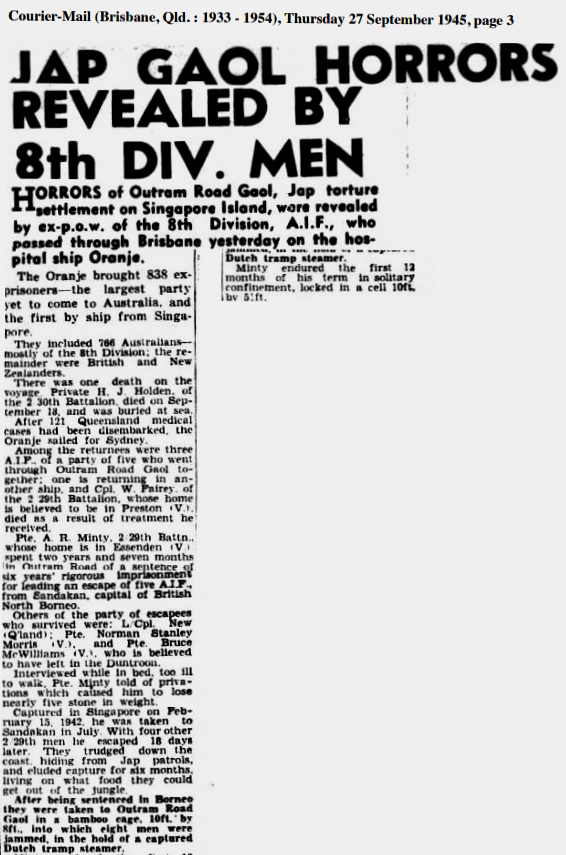
Below: September 1945l. Lt S.G. Weynton of Castlemaine describes his sentence in Outram Road Gaol in a tiny cell with Japanese convicts, Eurasion women and Malayans. Weynton was sentenced to 12 years gaol with hard labour. He said ‘coloured’ women over 70 years were often painted and powdered to make them look younger before being taken out and raped by the Japanese.
‘Interestingly! their ‘old’ chief of 8th Division’ Bennett was at the wharf to greet their return (Bennett was dreaming! – he received mixed reaction because many men were pretty disgusted with his early departure from Singapore – it was reported some former POWs brown-eyed him – not necessarily from this ship load of POWs.)
Below: Sept 1945 Lt Weynton
Below: Sandakan’s Johnny Funk visits Victoria. He had met with Gordon Weynton, Castlemaine the previous day. Funk and Weynton had share a barred ‘monkey cage’ with two other POWs at Kuching, North Borneo awaiting trial for their roles in the Underground Radio. A cage so small the men could not stand or stretch out in. A favourite cruel act of the Japanese at Sandakan!