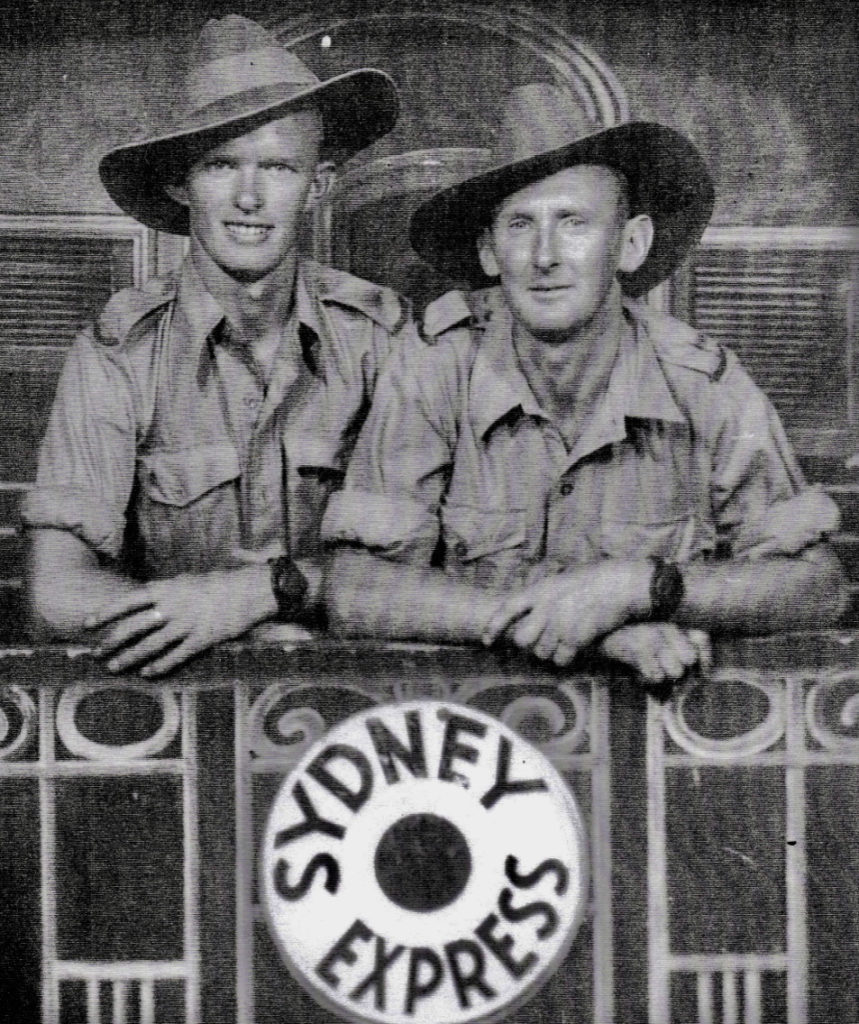
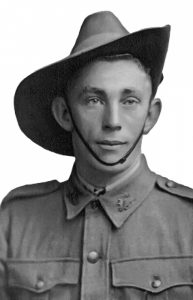
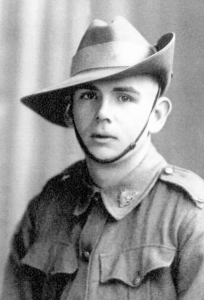
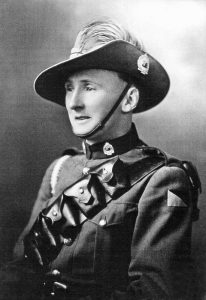
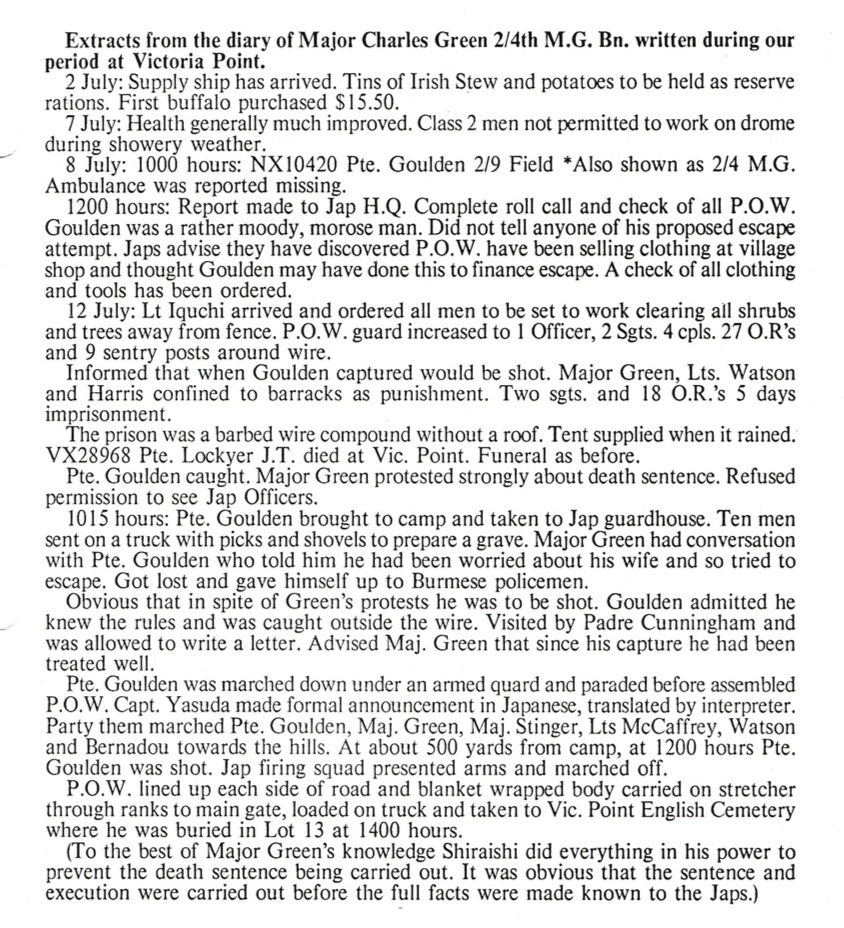
Rashin (Byoki) Maru Party to Japan-a death defying voyage of 70 days


Rashin (Byoki) Maru

The POW transport ‘Junk’ Ship which took 70 days sailing from Singapore to Japan – surviving Allied submarine attacks and a typhoon
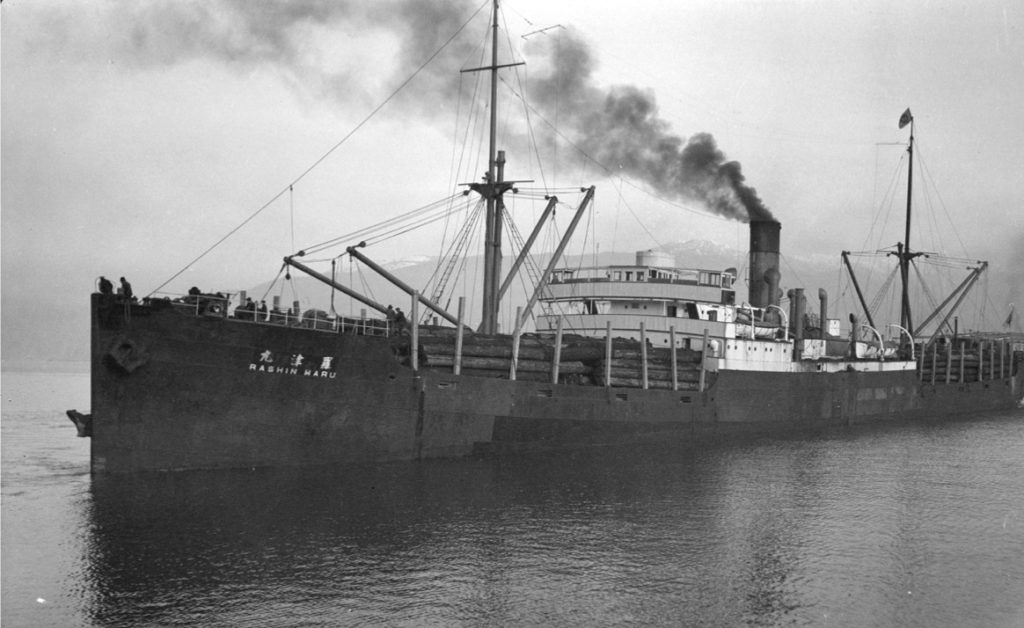


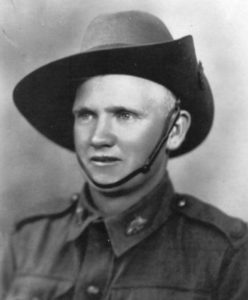
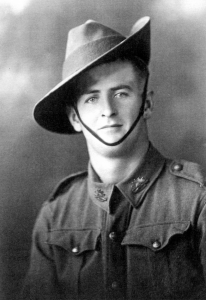
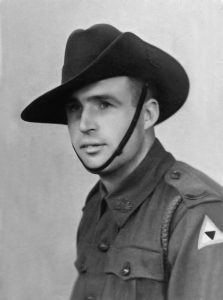
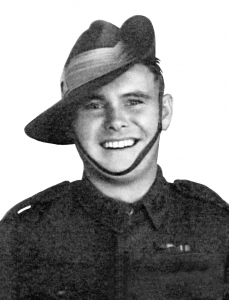
Having survived the horrors of labouring on the Burma Thai railway, since January 1943, members of D Force that were deemed fit enough were drafted into Japan Party. Again to advance the Japanese war machine, this time as labourers in Nippon. Amongst them were seven members of the 2/4th machine gun battalion including Doug Carter WX8240, Alex Oag WX8481, Bert Poulton WX9764, Aub Schuts WX8562, Arthur Walker WX16370, Alf Worth WX7440 and Bob Whitelaw WX9076.
In fact there were many more machine gunners with ‘D’ Force Thailand who sailed with ‘Rashin’ Maru to Japan.
The train journey from Tamuang, Thailand 21st June 1944 to Singapore, 26th June was slow. In the iron trucks they broiled by day and shivered by night, crowded thirty to a truck. Only half of them could stretch out at a time.
For the next week the men were part of working parties around River Valley Transit Camp, Changi where they were accommodated.  One day some of the men came back with a tall story of a ship being loaded with bales of rubber.
‘Her forward holds had been burnt out. The decks were littered with wreckage. She couldn’t last a day at sea’,
they said. They joked about it being the ship they would travel to Japan on.
The first Japan Party had already left from Saigon. But the Allied submarine offensive forced the Japanese to send this and subsequent convoys from Singapore to sneak across to Borneo along the coasts of the island chains.
On the 1st July POWs left the Transit camp and marched to the harbour from Changi. There lay the ship that was to take them to Japan.
‘It’s the bloody ship we were kidding about.’
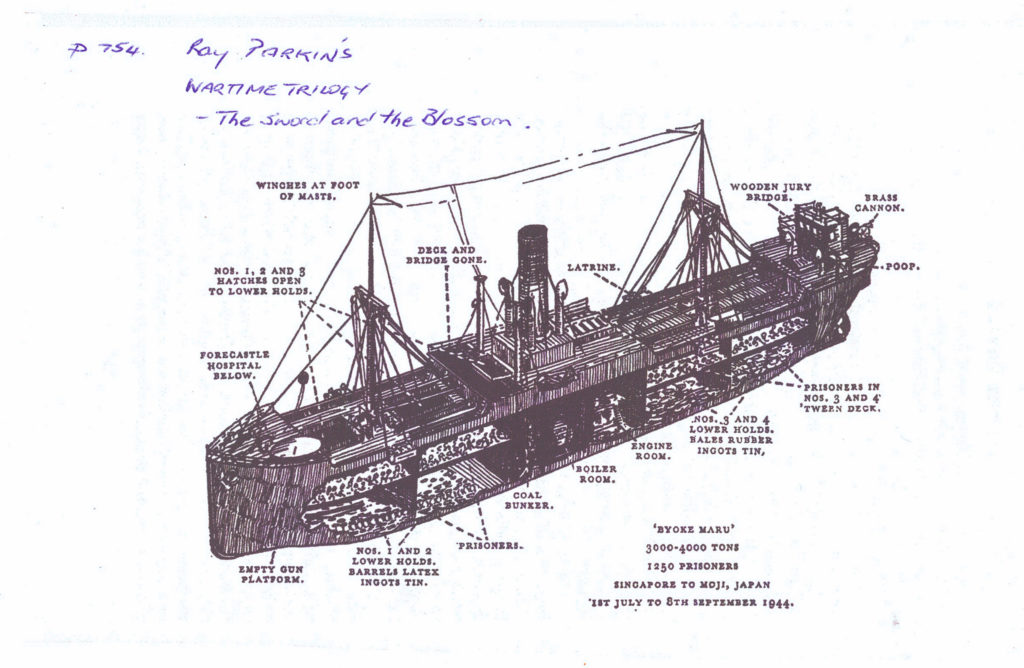
There was no bridge to speak of, bombed and burnt out, a transitory wooden hut had been built aft on the poop.
The deck had dropped about  15″ .
The two forward holds had no hatch covers –  approx 600 POWs would be exposed to the weather.  
The toilets were four wooden boxes lashed to the ship’s side with a gap in the centre of the floor – allowing the POWs to squat above the ocean!
This was to be the men’s home for the next 70 days – ONLY THEY HADN’T KNOWN THAT as they boarded.

‘I wonder what her name is?’

She’ll be something Maru now you can bet.’

‘There’s only one name they can give her…’

‘What?’

‘The BYOKI Maru!’ 
Byoki being the Japanese word for ‘sick’
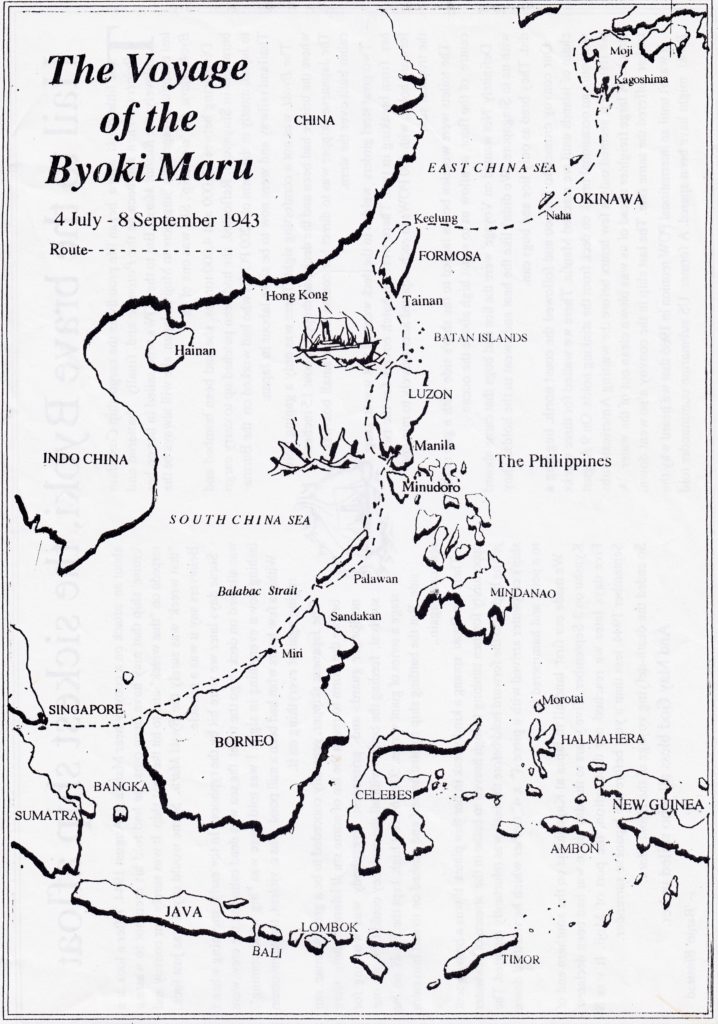
Below:  Sailing Route of Byoki Maru – from Beattie Collection from a ‘Rashin’  Maru POW Reunion.
 

Ray Parkin noted the ship was riding high in the water with the top of one of the propeller blades showing in the rudder’s recess like a shark fin. Every joint and corner bled from neglect.
They were herded up the gangway with shouts and pushes. On the way they had to go through a low cargo shed where each man had to pick up two bales of sheet rubber weighing around 75lbs. The guards told them that they could be used as lifebelts, the bales floated but only just. Struggling aboard the men deposited them using the bales as a seat with the bulkhead as a backrest. With hard feet and knees in their backs and elbows in their ribs they sat around an open hold twenty feet below them with nothing but a four-inch coaming  to stop them falling over the edge. Six hundred men had been squeezed into the forward open hatches.
Serving out the meagre meal of rice for was all confusion and complaint, they were afraid of being missed out.
Meals were served out on the decks.
It was almost impossible to put a foot between the men.
Each man brought his own supply of lice  and bugs which would multiply with very cramped conditions in the heat.
There was one wooden ladder to the deck.  The sailors found rope and made up climbing ropes for the men to get to the deck, showing them how best to do so without falling 30ft.
Their officer spoke with the Tiger who eventually agreed for the POWs to practice exiting with the ropes if it became necessary to abandon ship-especially if a torpedo should hit them.  With the large open holds with no hatch covers, the ship would sink immediately.
Initially the Japanese wanted each man to bring up a bale of rubber.  But there was no way the men could do this while climbing the ropes, particularly when they had to climb over the coaming with a 30 ft drop below them.
A naval petty officer yelled out instructions:
“For christ’s sake move quickly, but don’t rush and don’t panic…….take your turn……….and take your finger out when you are on a rope-think of your next astern ………..I know you’re only soldiers, but you’re too hairy-arsed to act like sheilas ………so dont be like a pack of girl-guides!”
They also roped off the open hold to a drop of 20ft below their quarters, hopefully to prevent deaths if the ship began rolling.
The POWs managed to get rid of many of the bales of rubber, taking them upstairs when going to the banjo tat night time – they would be dropped overboard.  The guards never noticed – they didn’t bother to keep an eye on the men at night .
Initially only men going to the latrine were allowed on deck. There were only four latrines (for 1250 men), wooden structures built out over the side.
 

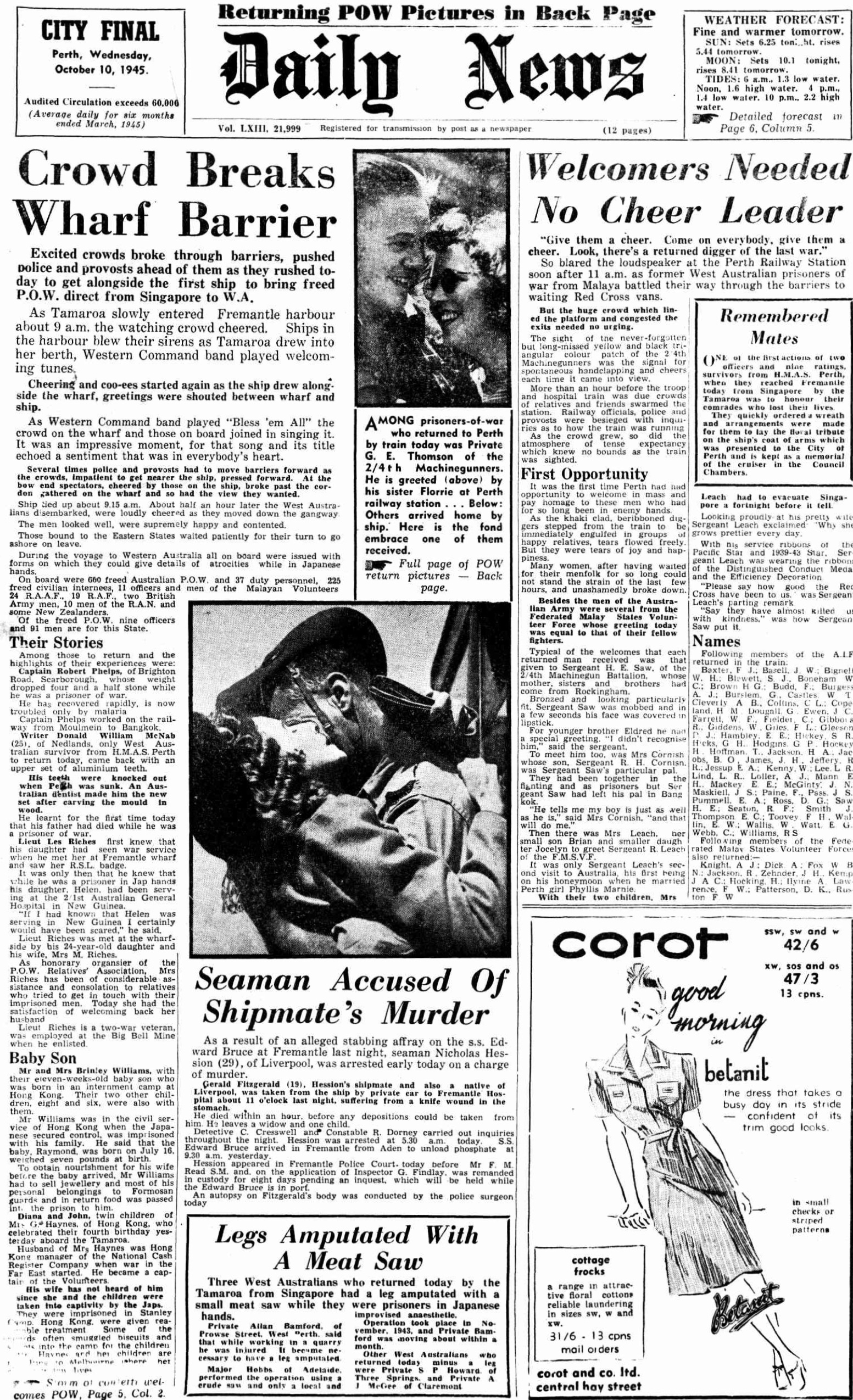
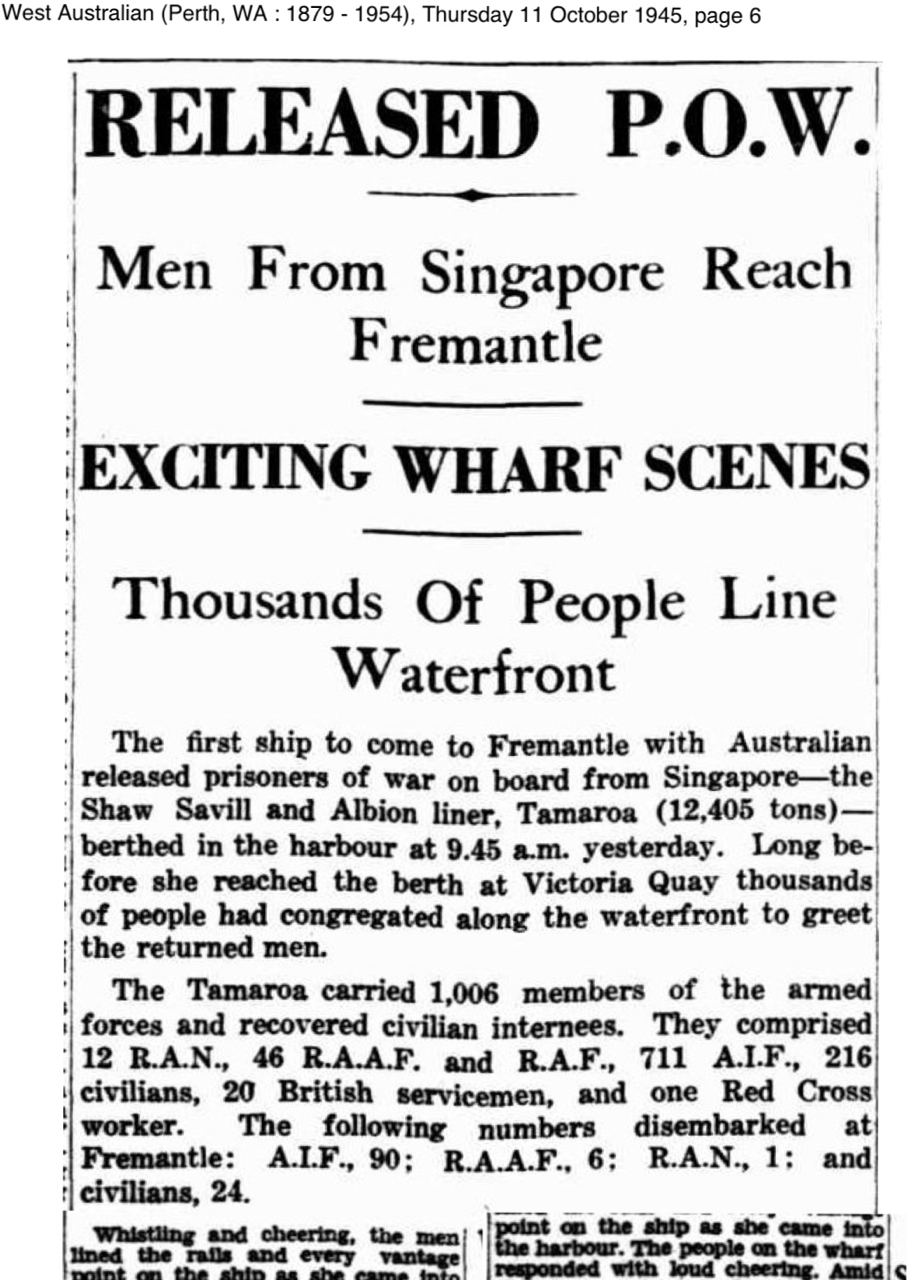
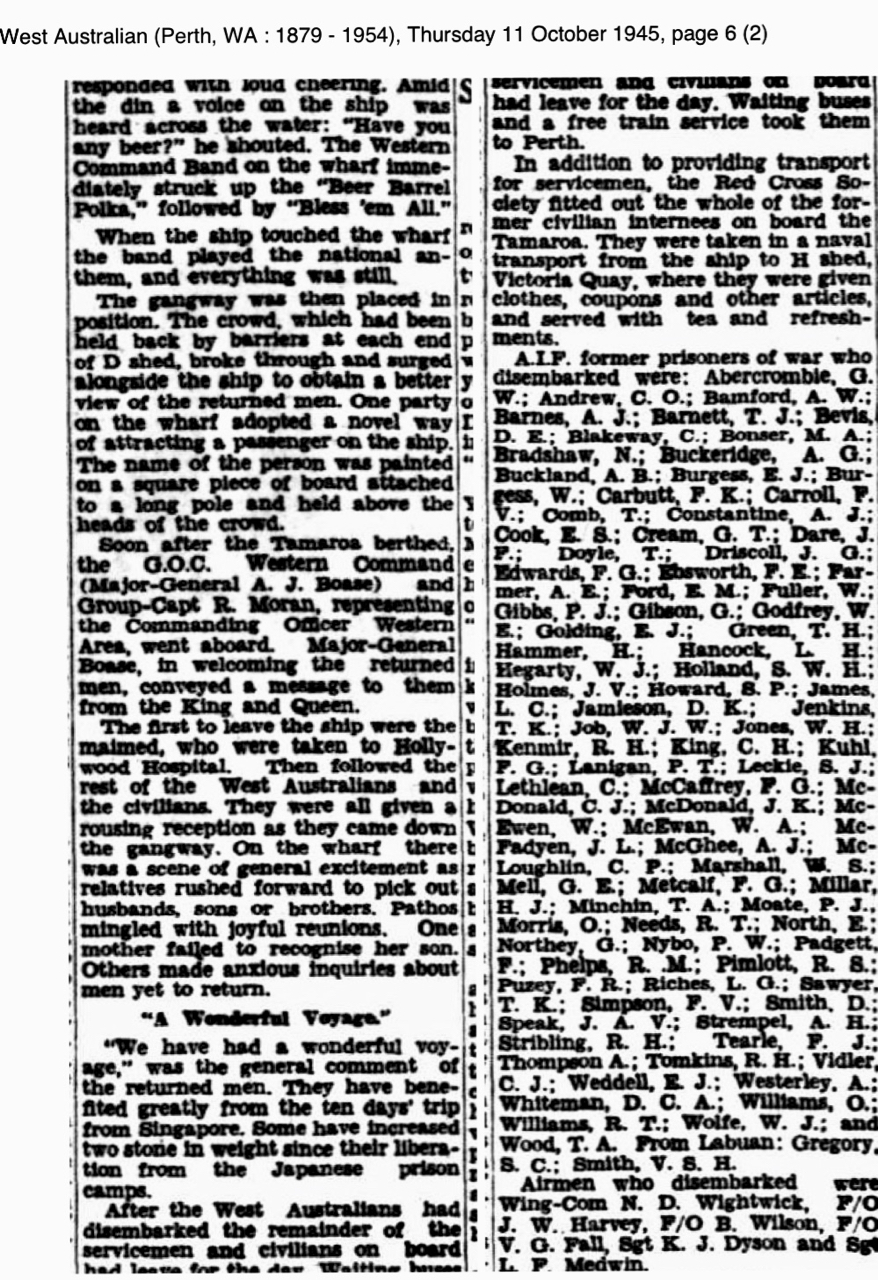
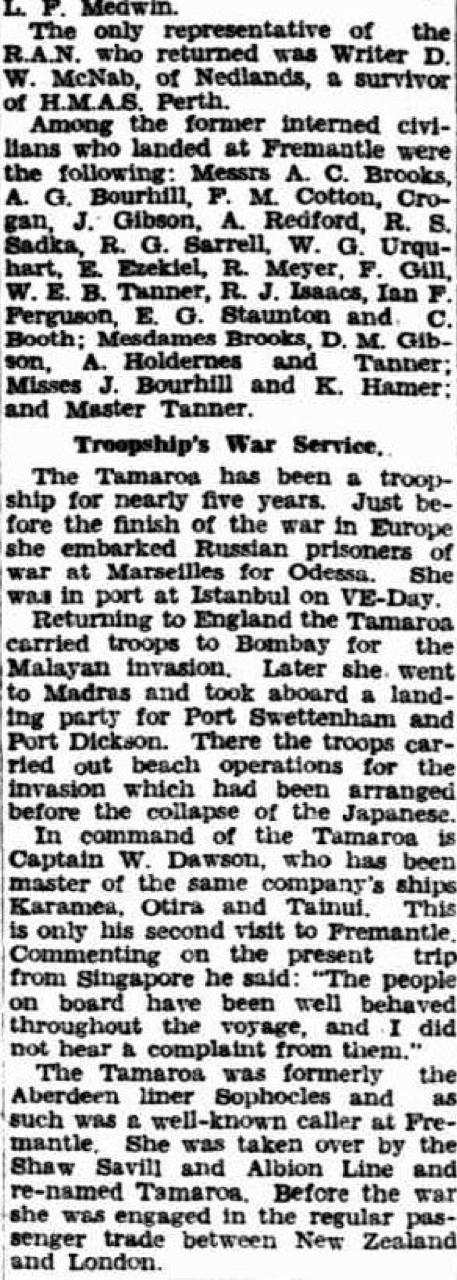
The transport took place in a convoy of 10 ships (with 4 other ships transporting POW’s:
Asaka Maru 1, Haku­shika Maru, Hofuku Maru and Sekiho Maru).
With the convoy being persistently challenged by allied submarine forces, the convoy zig zagged past Borneo and the Phillipines taking shelter in quieter waters after other ships in the convoy had been sunk.
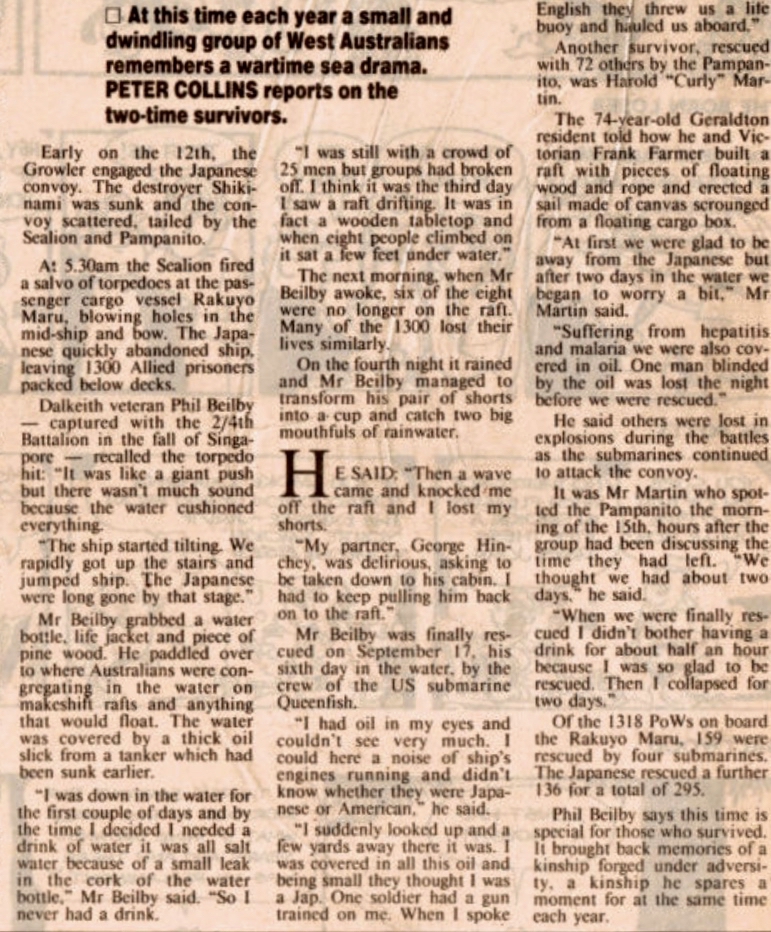
On 8-7-1944 the convoy arrived in Miri (halfway up the north-coast of Borneo); here the composition of the convoy was changed (the Hofuku Maru remained in Miri).
On 26-7-1944 the ship arrived in Manila; here ‘Rashin’ Maru  must wait for a new convoy.
on 9-8-1944 (after a stay of 22 days at anchor in Manila Bay) the ship sailed in a convoy of seventeen other ships  including Asaka Maru 1 for Formosa (via Takao in the south to Keelung in the north, navigating close to the coast).  
Suddenly the prisoners realised the convoy was under attack. The convoy broke up in the chaos and ‘Rashin’ Maru  put into Lingayen Gulf at the opposite side of the landmass that juts out on the west coast of Luzon Island.    After leaving Manila the ship immediately in front and the ship behind had been torpedoed.
With minimal space, disease such as malaria and dysentery, the fetid atmosphere became a breeding ground for bugs. To relieve this the men managed to surreptitiously dispose of as many of the bales of rubber over the side at night time, one breeding source of bugs removed. The guards would never come into the hold and therefore were none the wiser. Then the Japanese decided to get rid of the flies, each man had to catch 100 flies a day. These were counted by the ‘Tiger’ and an officer with slapping and much unpleasantness for a short tally.
On August 13th  the little Rashin Maru nosed out of the Lingayen Gulf under a threatening overcast sky with an even more insidious threat, a typhoon. It was if only the age-old sea knew how to defeat these men after the jungle, disease and the Japanese had failed.
That night the wind became gusty, howling over the ship and then dropping away. Heavy rain-squalls swept over them. Those on that section of hatches in the square were half-drowned. They tried to crowd into another shelter under the coamings). 
It was impossible, they were beyond complaining.
The ship flung them, sweat streaming and rain streaming, against each other. It was too dangerous for the men to go on deck now. The seasick added their groans and substance to the thick pungency.
The ship seemed as if she were driving straight at the bottom when an overtaking sea lifted her stern high and ran forward with her as if to fling her down and stick her stern in the bottom of the sea like a dart. The crew raced about, threatening the shaft bearings until the throttle was cut.
For six hours the men fell into helpless paroxysms of sickness. And total fear.  Stomachs contracted, rock-hard. It was a miracle that the prisoners were not thrown from the ‘tween deck into the lower hold. All at once the ship gave five violent rolls that surpassed anything that had been experienced before. The elements catching her throwing her on her side right down to the lee bulwarks and beyond, with her high free-board it meant that her decks were almost vertical. Little spurts of water were forced through the plates of the hull as it twisted. Large girders on the deck were carried away giving the appearance that she was breaking up.
The storm drove them northwards in the vicinity of the island of Mavudis where finally the winds abated and they were able to take anchorage.
Thankfully the Japanese Captain was a cautious man, indicated by the manner in which he had steered the ship abeam of any landform in sight. Again realising that the ship would be in danger from a typhoon, he put into the leeward side of Mabudi Island.  This haven offered a sheltered anchorage formed by the triangle of the three Bataan Islands.
For the next 25 days the Rashin Maru, now only one of two ships, without an escort, island hopped from island to island expecting to get to Japan by stealth.
14 Aug 1944 ‘Rashin’ Maru set sail again arriving at Takao on the southern end of Formosa on 15th Aug 1944.
The next port of call was Keelung only to be forced back again by US Navy submarines, the ‘Rashin’ Maru made Naha on the island of Okinawa on 30 Aug 1944.    Finally after sailing from Kagoshima on the southern end of Kyushi Island and along the west coast of Kyushu, the ‘Rashin’ Maru after 70 long days and nights finally put into the Japanese port of Moji on 7th September 19444.
5 men of the 2/4th MGB and many of the 2/3rd MGB were to be transported to Ohama on Honshu to work in the coal mine for the next year until they were liberated in August 1945.  The remainder of 2/4th’s D Force on board were sent to Yamane and Niihama mines.  
Reference: PARKIN Ray, Wartime Trilogy, The Sword and the Blossom.
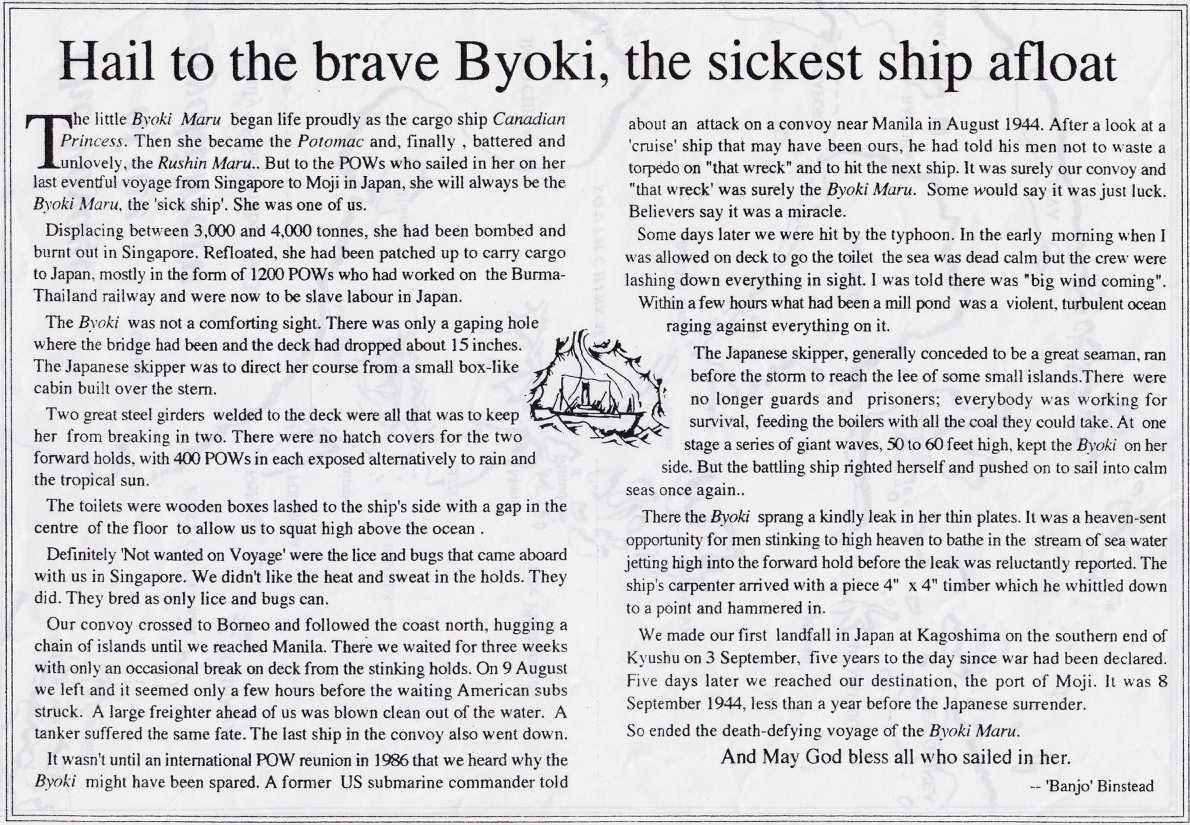


Banjo Binstead was a fellow traveller and POW on the ‘Rashin’ Maru.  This information was provided by the family of Joe Beattie, who attended the 50th Anniversary of the 70 day sea voyage on Byoki Maru from Singapore to Moji Japan in 1944.

I was a miracle as there were no deaths on this 70 day journey.

There were about  57 Machine Gunners on board ‘Rashin’ Maru with most sent to Yamane and Niihama;
however few were sent to Ohama 9B; Fukuoka sub-Camp 17 Omuta and Fukuoka sub-Camp No. 13 Saganoeski. 
Five of following (highlighted in Green) are ‘D’ Force Thailand, Java Party 6 O & P Btns


WX8245 ADAMS, Edwin Thomas – Java Party No. 6 P Btn sent to Ohama 9B Camp.

WX10787 ARBERY, Ronald Edward

WX73470 ARMSTRONG, Charles William

WX8963 ARMSTRONG, Leonard (Len)

WX17251 ASHBOLT, Lloyd George

WX9342 ATKINSON, Herbert

WX10791 BEATTIE, Alan Robert (Bob) – Java Party No. 6 P Btn. sent to Ohama 9B Camp.

WX9278 BUNCE, Edward William Henry

WX8240 CARTER, Douglas Newington Hunter (Doug) Java Party No. 6 O Btn – sent Ohama 9B Camp, Japan

WX11279  CHATFIELD, George Keith

WX210609 COLEVAS, John Verdun (Des)

WX4912 CONWAY,  Thomas James

WX8778 DAILY, Louis Jordan (Lou)

WX9328 DICKIE, Gordon Thomas

WX17591 DOW, Claude

WX7599 DYSON, ‘Arch’ Archiband Henry

WX8619 ELLIOTT, James Stuart (Jim)

WX7886 FINLAY, Thomas Albert

WX8900 GIBSON, Thomas Crosby

WX7246 HADFIELD, Ralph William

WX8374 HAYES, Norman Patrick

WX7642 HENDERSON, Clarence Gordon – Java Party No. 6 P Btn – Sent Fukuoka sub-Camps No. 13 Saganoeski (copper smelter) & No. 6 (Coal mining)
WX8869 HINDLE, Herbert Roy – aged 40 years, killed by rock fall Sumitomo Beshi copper mine Yamane 30 Sep 1944

WX8984 HOGBEN, Sydney Mervyn

WX9418 HORN, Douglas Radcliffe (Doug)

WX10804 JACOBS, Harold

WX8610 JAMES, Trevor Ernest James

WX16236 KING, Alfred Victor – aged 26, KIA Korea 8 Nov1950

WX9528 LAMBIE, Andrew

WX5175 MANN, Eric Horsley

WX17000 MATTHEWS, Frederick Noel

WX8478 MCGLINN, Francis Thomas (Frank)

WX7608 McLENNAN, Chris

WX7241 MEAKINS, Eric

WX9339 MOIR, George

WX15751 MORRISSEY, Albert Edward (Bert)

WX4941 MULLER, Raymond

WX12599 MURDOCH, Arthur Reginald

WX9849 NEWELL, Archie Gerald

WX8493 NORTON, Albert William

WX9181 NOTTLE, Wilfred Harold

WX8481 OAG, Alexander Sutherland

WX12326 PASCALL, Reginald (Reg)

WX9764 POULTON, Bertram Frederick – Sent Ohama Camp 9B.

WX8562 SCHUTS, Aubrey Vincent – sent Ohama Camp 9B.

WX6841 SMITH, John Stewart

WX10927 Thompson, Norman Harding Edward

WX10927 TOMPKINS, Percy Reeve

WX8357 TUCKER, Kenneth Dudley (Ken)

WX16370 WALKER, Arthur Lewis – sent Ohama Camp 9B, Japan.

WX7466 WALSH, Bernard James – Java Party 6, O Btn – sent Fukuoka sub-Camp 17 Omuta.
WX7913 WARD, Frederick Thomas – sent Fukuoka sub-Camp No. 13 Saganoeski and  Fukuoka sub-Camp No. 17 Omuta.
WX7502 WAYMAN, Thomas Sylvester – Java Party No. 6 P Btn – Yamane & Niihama
WX9076 WHITELAW, Robert Greigson (Bob) – sent Ohama Camp 9B, Japan

WX10561 WHITFIELD, Robert George (Bob)

WX7440 WORTH, Alfred (Alf) – Ohama Camp 9B, Japan


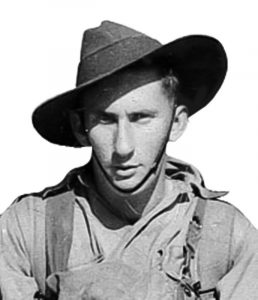
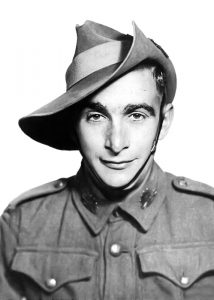
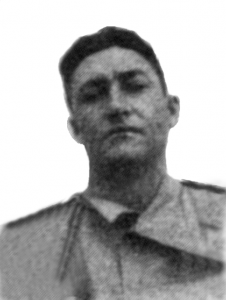
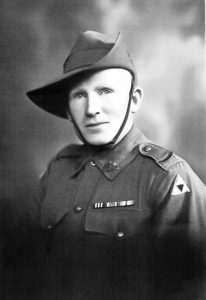
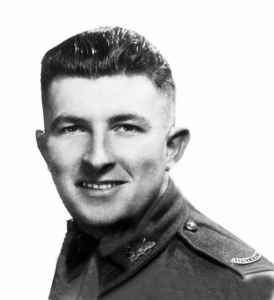
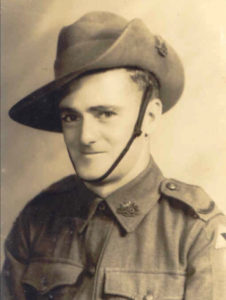
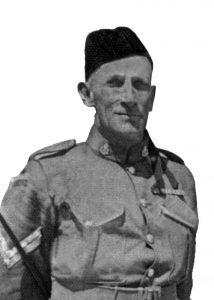
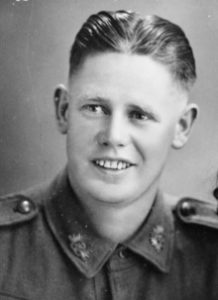
Left:  Hindle died in a rock fall and Right:  King KIA Korea 1950
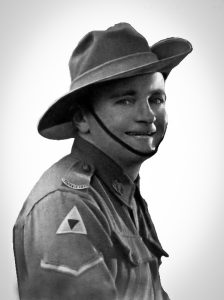


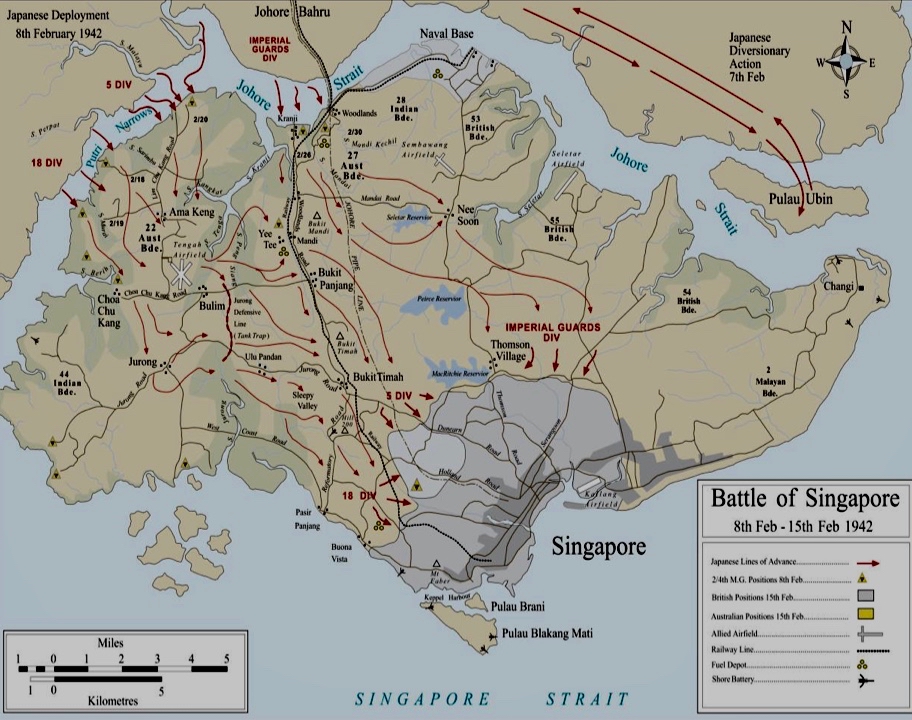
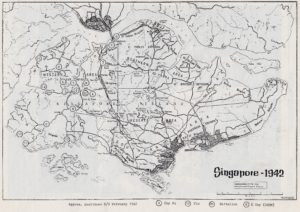
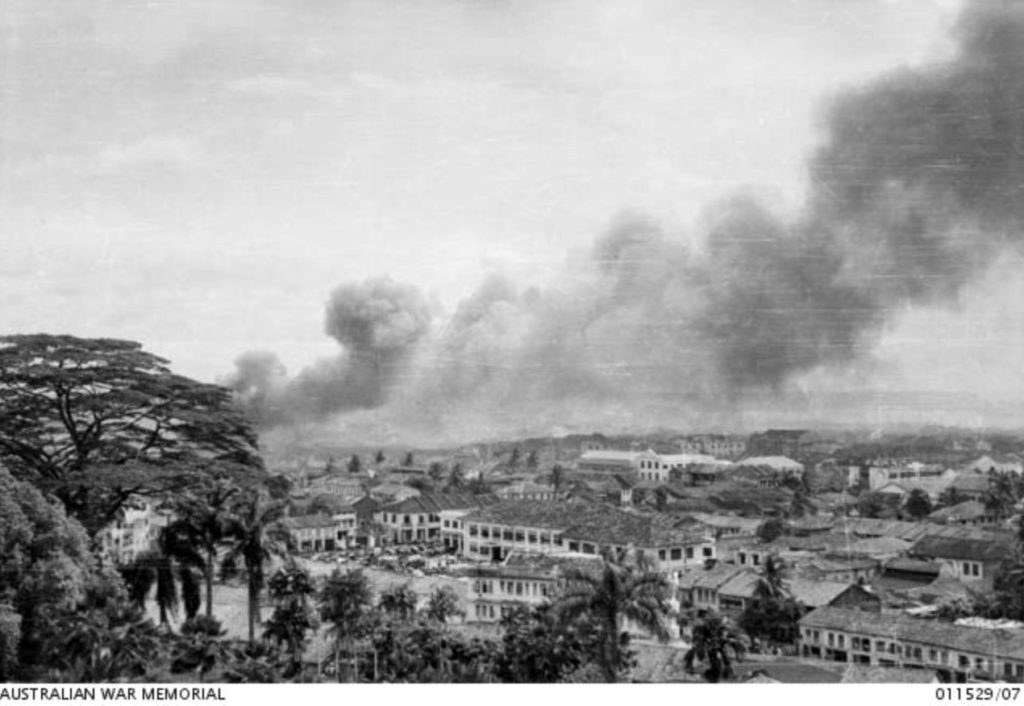
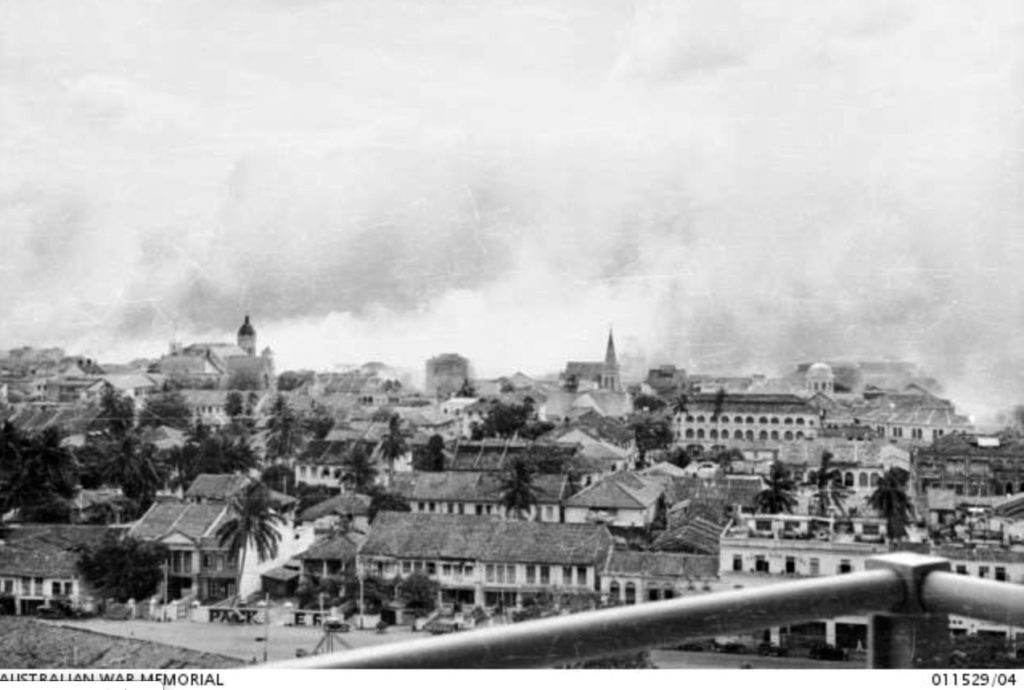
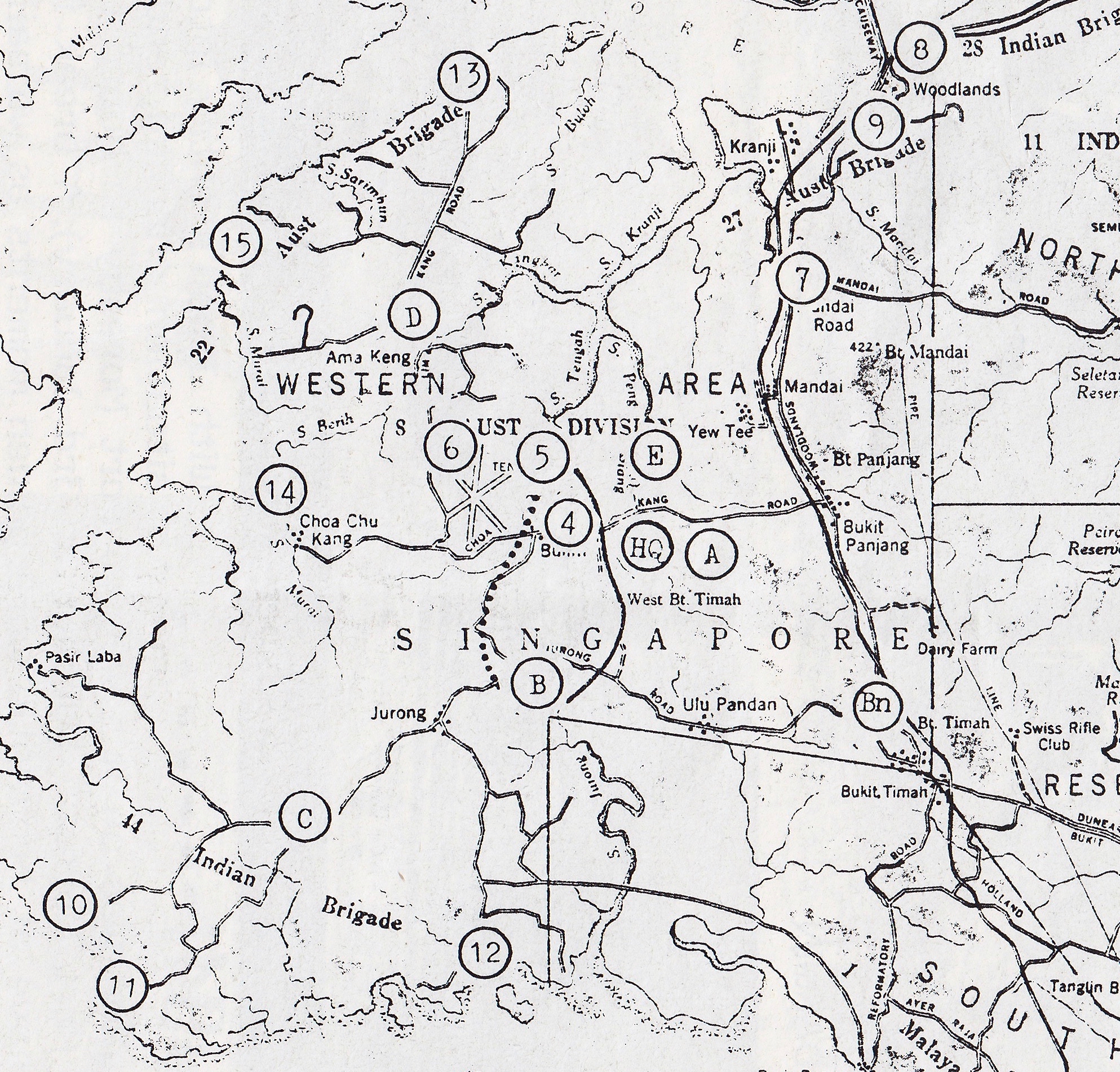
Singapore’s Defence Plan Feb 1942

Singapore’s Defence Plan

Defend the beaches or hold the line inland

2/4th MGB arrived Singapore 25 Jan 1942

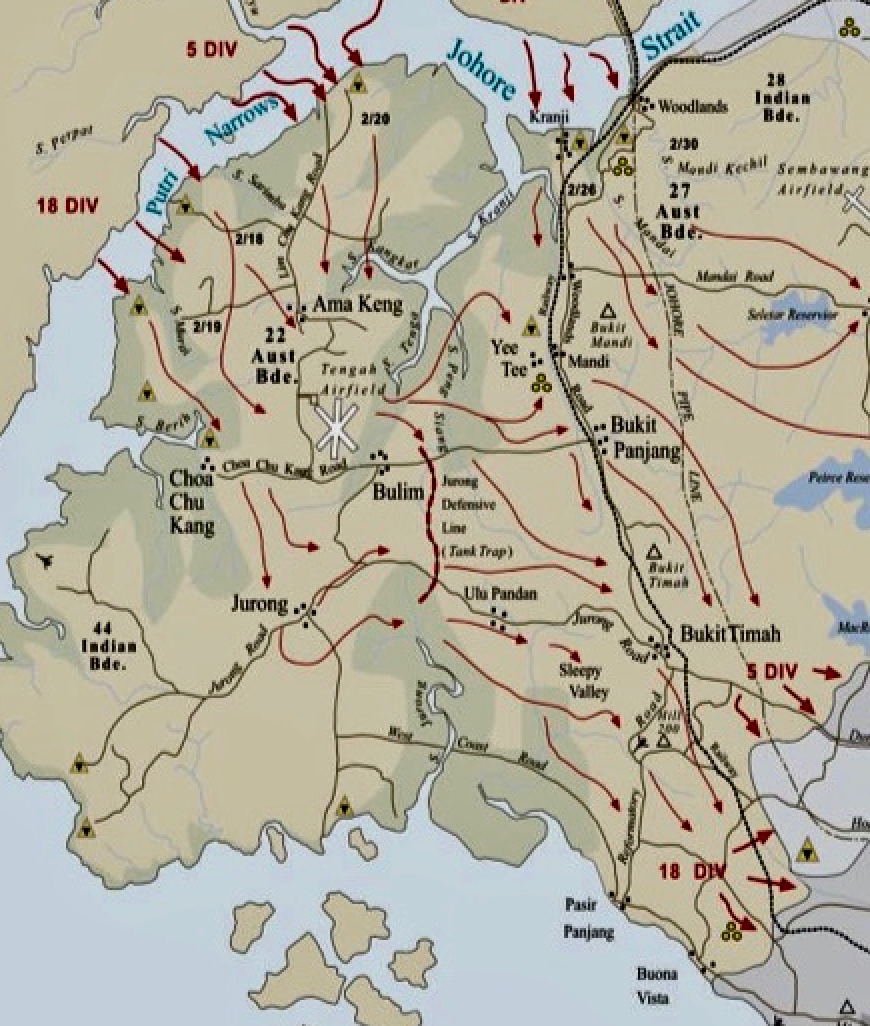
Singapore totalled 220 square miles, extended about 26 miles West to East and about 14 miles from North to South. The Jahore Strait was up to 5000 yards wide east of the Causeway – but only 2000 yards at its widest point on the western side and narrowed to 600 yards. The Naval Base was on the northern shore east of the Causeway. The City of Singapore was located on the South coast.
There were few major roads, the Island was covered with rubber and other plantations with secondary jungle. The highest points were in the centre of the island as were water reservoirs (supplemented by supplies from Jahore). The Northern and Western areas were fringed by coastal swamps intersected by innumerable creeks and two major river systems. There were three military and one civilian airfields on Singapore.
Withdrawal from Malaya
At 0815 hrs 31 Jan 1942 with all Allied troops had been withdrawn from Malaya –  a gap of 70 feet was blown in the Causeway linking Malaya and Singapore Island.
A military decision had been made earlier to defend the entire 72 miles of Singapore’s coastline – this decision thought to have been made by Lt-Gen Arthur Percival, however it appears the originator was really Air Vice Marshall Sir Robert Brooke-Popham.  The other option being to hold the Allied lines further inland.
The greatest challenge facing Allied Forces was lack of fighting forces –the battalions who had fought in Malaya had lost lives and of those who returned many were injured and all were weary. Reinforcements of Australia and Indian troops had been arriving in Singapore since mid January.   Too many lacked training and all were inexperienced.
Work had commenced as late a 3 Feb 1942 on the digging of an Anti-Tank ditch on the defensive line on Singapore’s coast.   Except for swamp at its northern and southern extremities, the Kranji-Jurong area was sparsely timbered – offering fields of fire of up to 250 yards – ideal for the Vickers machine guns.
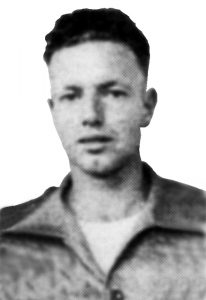
On the night 8 Feb 1942 Japan attacked the west coast of Singapore where the Anti –Tank ditch had been completed, but little done to prepare infantry positions.
The total number of uniformed Allied troops was 85,000.
The greatest problem was the composition of the Allied forces.
Japan’s infantry troops amounted to 50,000 in 70 Battalions with about another 25,000 attendant combat support troops, artillery, armour, engineering, bridging, reconnaissance. There were few non-combatant troops in the Japanese Army spearheading their drive through Malaya to Singapore. Whereas Singapore’s base /administrative centre was heavily staffed by British.
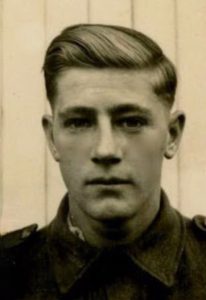
Throughout the Malaya Campaign Japan always had fresh Battalions to relieve front line troops. They assembled about 35 Battalions of fresh troops for the assault on Singapore and had the ability to concentrate troops in strength anywhere on the vulnerable coastline.
The total infantry forces to defend Singapore was the equivalent of 13 infantry brigades – three British and two Australian (22nd and 227th Brigade) The reality was quite different.
The British 18th Division and 53rd Brigade arrived Singapore 18 Jan 1942 and had been in action in Malaya.
The 54th and 55th arrived 5 Feb 1942 (three days prior to Japanese attack). One ship in the convoy Empress of Asia was bombed entering the harbour – most troops were rescued but all their equipment was lost.
They with the 28th Indian Brigade and 8th Indian reserve Brigade (both had been reconstituted) the British Division was responsible for the northern area of 14 miles of coastline from Causeway to Changi.
The remaining British troops made up of two Malayan Brigades, a SSVF (militia) Brigade and British Fortress troops (3 Battalions) covered the southern coast.
Recently arrived and inexperienced 44th Indian Brigade in south west sector provided the link with the Australians on north west Coast.
Reserves: 3rd Indian Corps was the only shattered British Battalion remaining and what was left of the Argylls.
The Indian Battalions who had lost heavily in Malaya were brought up to strength with 60% reinforcements. Several were labour Battalions and most had limited training and nearly all were short of Officers.
With the exception of two Australian Brigades nearly every Battalion was short of equipment. The effective strength of what was 39 Battalions was in fact no more than 25 Battalions – many of doubtful value, to protect a 70 mile coastline.


AUSTRALIAN FORCES:

Had 9 ½ miles of difficult coastline to protect. The Australian area divided by the broad reaches of the Kranji River was hopelessly undermanned.
27th Brigade (3 Battalions – 2/26, 2//29, 2/30) had the difficult Causeway-Kranji River section.
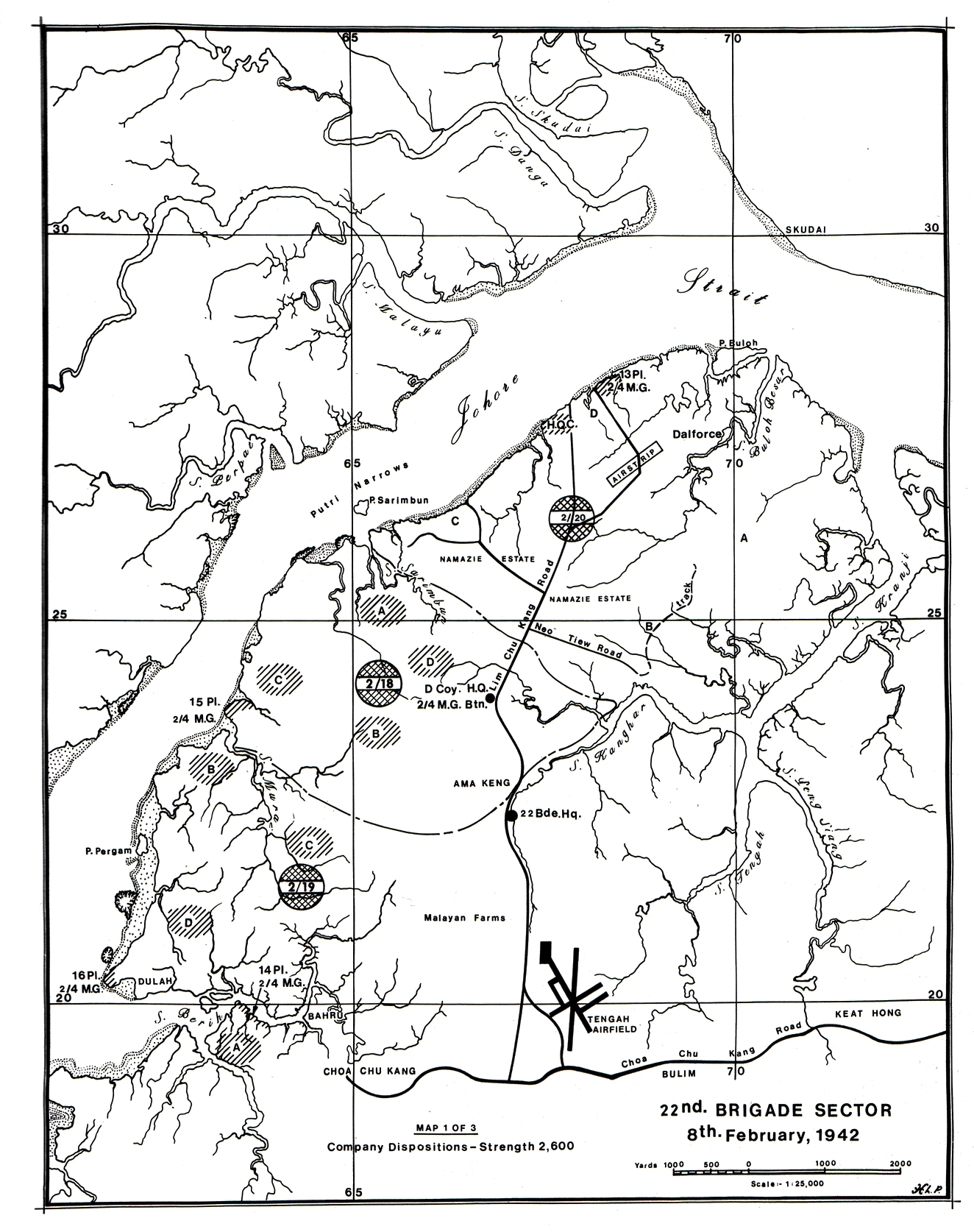
22nd Brigade (3 Battalions – 2/18, 2/19, 2/20) had the eight mile NW coast Sector.
The Australians had to provide their own reserves.
Following their losses in Malaya, the Australians had been brought up to strength
2/18th – 100 reinforcements
2/19th – 370 reinforcements
2/29th – 500 reinforcements.
More importantly, the majority of those reinforcements allocated to 2/19th and 2/20th Battalions were those who had arrived from Australia with the Machine Gunners as late as 25th Jan 1942. These virtually untrained reinforcements who were included in front line units created serious problems.

‘D’ Company (No 16 Platoon) – Vickers Machine Gun Companies – Central Story

‘Don Company formation of 16 Platoon


7 February 1942 a further platoon was created within Don Company –  16 Platoon was made up of 27 men transferred from D Company platoons (large number of these men were from the Fremantle area) The senior Officer was Sgt Ron Arbery.   These 27 Men of 16 Platoon faced the Japanese invasion on 8th Feb 1942 dug into their pits on the shores of north-west Singapore.  


Commanding Officer WX10787 Sgt R E Arbery (formerly 13 Platoon) was wounded at 0800 hours  8 Feb evacuated with gunshot wound to his scalp, he took no further part in the fighting.


And 2 I/C  Platoon Sergeant WX10609 Sgt J V Des Colevas (formerly 14 Platoon)
with crew of Tom Edwards, Charlie Holme and Bob Evan were in a completely isolated location.
Arbery was wounded at 0800 hours on 8 Feb 1942 with GSW to Scalp and was not discharged to Unit until 20 Feb 1942


Colevas received gunshot wound to left side of chest wall at Sungei Berih at 1000 hours on 9 Feb 1942.  Evacuated, Colevas also took no further part in the fighting.
Admitted to Casualty Clearing Station then to Field Ambulance.  Transferred to 2/13th AGH on 15 Feb and discharged to unit 22 Feb 1942.  ‘D’ Force S Battalion to Burma-Thai Railway. ‘Rashin’ Maru to Japan.  Recovered from Niihama.  RTA

9 men lost their lives

and

WX7745 B G Harrison (formerly 15 Platoon) – disappeared/ did a runner when Arbery was leading the men out of their front line positions under heavy fire & about to fall to Japanese on night of 9 Feb 1942.
WX5073 Thomas Ashton Wood (formerly 14 Platoon) – Listed as missing from 9 Feb 1942. Escaped to Java.
WX17370 John Wilson – Reinforcement.  Missing from action from 8 Feb 1942. Rejoined unit 15 Feb 1942.
By the end of war this 16 Platoon suffered another 4 deaths.   Borneo –  2,  ‘Rakuyo’ Maru -2.

‘D’ COMPANY HQ & PLATOONS 13, 14, & 15 (& 16)
In total ‘D’ Company had 15 guns on the northwest coast of Singapore as at 8 Feb, 1945.


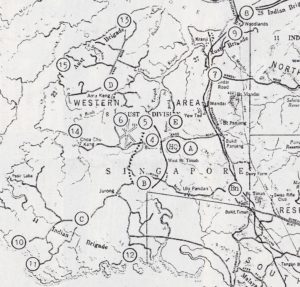
Singapore’s defence plan was to man the coastline – the Australian forces were given the North West Sector.
With the exception of two Australian Brigades nearly every Battalion was short of equipment. The effective strength of what was 39 Battalions was in fact no more than 25 Battalions – many of doubtful value, to protect a 70 mile coastline.
AUSTRALIAN FORCES:  Had 9 ½ miles of difficult coastline to protect. The Australian area was divided by the broad reaches of the Kranji River, and was hopelessly undermanned.
27th Brigade (2 Battalions) had the difficult Causeway-Kranji River section.
22nd Brigade (3 Battalions) had the eight mile NW coast Sector and was supported by 2/4th’s ‘D’ Company 13, 14, 15, and 16 Platoons
The Australians had to provide their own reserves (of which there were zero!)

Please read further about No. 13 Platoon


 Vickers Machine Gun Companies
There were four Vickers Machine gun companies. Each company had its own HQ consisting of three platoons. In the case of ‘D’ Company HQ and Platoons 13, 14, 15 (and later in Singapore) No 16 Platoon was formed for defence of the west coast of Singapore (made up from Fremantle reinforcements and spare numbers from ‘D’ Company.)
Other Companies were:
‘A’ Coy HQ and No’s 4, 5, 6 Platoons
 B’ Coy HQ and No’s 7, 8, 9 Platoons
‘C’ Coy HQ and No’s 10, 11, 12 Platoons
Each Machine Gun Platoon consisted of two sections each with two Vickers machine guns giving the Battalion a total of 48 Vickers machine Guns.
No. 1 and 2 on the gun were to be issued with revolvers, but in the case of 2/4th, this never happened.
Supposedly each Platoon was to be equipped with a Boyes Anti-Tank rifle – but these were never issued to 2/4th. For each platoon six 15 cwt trucks were provided, giving each Company a total of 21 vehicles.
The battalion was organised by attaching certain personnel from Battalion HQ and HQ Companies to the Machine Gun Companies – enabling each Machine Gun Coy to be self-contained administratively.
Battalion transport included 122 vehicles as well as motorcycles – the reason for the inclusion of a high number of driver trade groupings in the Battalion. The handling and maintenance of all these vehicles was paramount to the efficiency of the Battalion. Therefore the Transport Sergeant, Corporals and Light Aid Detachment (L.A.D.) who serviced these vehicles had a big responsibility to ensure serviceability of the Battalion’s transport.


‘D’ Coy No  14 and 16 Platoons supported 2/19th Battalion (Lt-Col Anderson VC/Lt-Col Oakes)

The wide expanse of the mouth of Sungei River (Berih) and  estuary provided an ideal opportunity for deep penetration by Japanese landing craft – giving access to Tengah airfield and ability to attack the rear of 22nd Brigade which included the 2/19th which was located on the north side of the mouth.  The 44th Indian Brigade was located south of Sungei mouth.
2/19th under leadership of Lt-Col Anderson and VC Lt-Col Oakes extended from the Murai to Berih Rivers and Choa Chu Kang Road with 14 and 16 Platoons of 2/4th Machine Gunners.
From  ‘Singapore Story’ and described by Lt. Col Oakes of 2/19th Btn.
“…………a scraggy waste of stunted rubber and tangled undergrowth ……vision limited to the next rise in undulating ground    ………movement confined to a few native tracks winding through the wilderness … the 2/28th away to the north in a similar desolation of waste and confusion  …. 
A mile of single track through the belukar (secondary jungle) 8 ft high to where D Coy overlooked the mangrove swamp …. under tide at high water.  A wooden footbridge crossed the swamp to a small hill on the coast occupied by a platoon.  On its southern flank the broad reaches and monotonous swamps of the Sungei (River) Berih.  A long trek through more swamps and beluka brought us to another Platoon covering a hill on the coast large enough to be held at east by a Company …………….. the rest of B Coy was swallowed un in the ridiculous immensity of the area.”
Les Cody’s description of this area:  ‘The estuary was really a large tidal basin 3/4 mile wide from north to south and twice that in length.  This area required required additional machine guns – Platoon 16 was formed from spare gun numbers from the three platoons of “D” Company.’

16 Platoon was positioned on the exposed north headland of Tanjong Skopec with a section of two guns sited at the water’s edge and another, 400 yards further east covering a wide expanse of 4000 yd coastline.

Cody described one gun as being a ‘fluted barrel old-timer which could have been as old as Boer War’ was under Sgt Des Colevas and his crew – Tom Edwards, Charlie Holmes and Bob EvansThey were completely isolated.  Dug in on the rear slopes of a rise set back some thousand yards from the coast – their responsibility was to cover the mile wide mouth of Sungai Beri (River) with no supporting infantry within call.’
(Tom Edwards DOW on 12 Feb 1942; wounded in a trench by a shell burst from enemy artillery fire at Hill 200, Ulu Pandan.  Edwards was carried by stretcher bearers to RAP 100 yards away where Capt Anderson from 2/4th pronounced him dead.)
(Charlie Holme died Sandakan-Ranau track, Borneo 7 June 1945)
In Les Cody’s book ‘Ghosts in Khaki’ P. 107  is a copy of  Lacey’s description waiting for the Japanese invasion.

Lacey Gibbs, 16 Ptn – 2 February 1941

“We are getting ourselves dug in waiting for the Japs and they tell us it won’t be long now.  We were working late, till one o’clock in the morning getting our gun pit ready, up to our knees in mud and water.  We are sleeping in the open and after knocking off we’re just going to open some rations when down came the rain.  It was a real tropical downpour and you couldn’t see much more than 10 yards. We are working at night because we are under observation by the Japs over the Strait in daylight.
My bed, made out of a piece of wire netting is up a tree to keep me out of the mud – my hole (slit trench) is right below me.  I have made use of it already; since I started to write this we have had two waves of Jap bombers over and the ack ack fire has been pretty heavy.  We are set up in a coconut grove and there are plenty of nuts but they are hard to get down.  Maybe the Japs will help by lobbing a few shells amongst them – as long as they give us time to get out!
We have been scouting the area looking for pigs and anything else edible but had no luck.  There are some beautiful homes about here, all abandoned.  It is sad to see so many groups going along the roads with their belongings on their backs.  One lovely home near our position, set in lawns and gardens must have cost thousands to build.  I found a very good fishing rod in one of the houses but it is pretty risky going fishing in daylight with the Japs camped across the water you could catch more than a fish.
We have to be careful with water, there is plenty about as the water table is pretty high but it all has to be boiled.
Now we just have to sit and wait.”


16 Platoon was made up of 27 men

By Surrender on 15 Feb 1942

9 men KIA
3 Men WIA evacuated 8/9th Feb 
3 men shell-shocked
(Harrison did runner & boarded ship to Fremantle, 
Wilson MIA 8/2 returned to Unit 15 Feb,
Richard Annear escaped Sumatra, Wood escaped to Java )
8 Men Standing
.

Above 16 Platoon Corporal WX9080 L/Cpl Albert ‘Bert’  W Stribley 30 years (Formerly Coy HQ & No 15 Platoon) – was KIA 9 Feb 1942 West coast of Singapore (his brother Norm Stribley also joined ‘D’ Company, served 13 Platoon.  Was recovered from Thailand at end of war).;


Privates


WX13468 Pte Richard Winston ANNEAR (transf from 13 Platoon) escaped to Sumatra, worked on the Sumatran Railway.   Survived war.


WX7444 Pte Arthur Richard ‘Bill’ Attenborough (formerly 15 Platoon) – ‘B’ Force Borneo died 12 Apr 1945 Ranau area (28 years) having marched from Sandakan.
WX7796 Pte Joseph John Samuel Barras (formerly 15 Platoon) – Was with a party which scattered under heavy fire.  Last seen 11 Feb 1942 by WX8958 William Gibbs at Tanjong Murai. KIA
WX10805 Pte Reginald James Brown (formerly 13 Platoon) – Withdrawing from coast, this party came under heavy fire from Japanese small arms.   Brown & several others never sighted again until KIA Lin Chu Kang Road aged 22 years.)
WX7148 Pte Maurice Lester Browne (formerly14 Platoon) – 38 years KIA 9 Feb 1942 14 mile peg Lim Chu Kang Road
WX9060 Pte Alfred Thomas ‘Tom’ James Cato  despatch rider (formerly Coy HQ moved to 13 Platoon then to 16 Platoon) – worked Burma-Thai Railway with ‘D’ Force S & U Battalions.  He was recovered from Thailand.
WX7997 Pte Herbert ‘Bert’ Dorrizi (formerly Driver HQ Coy) – ‘B’ Force Borneo d. 11 Feb 1945 Sandakan (26 years). Dorizzi’s two brothers also died Borneo.
WX7620 Pte Thomas Henry (Tom) Edwards (formerly 14 Platoon) – wounded in trench by shell burst from enemy artillery fire at Hill 200, Ulu Pandan.
Stretcher  bearers carried him to the Regimental Aid Post where Capt Anderson of 2/4 MGB pronounced him dead, Tom was 42 years old.  It was 12 Feb 1942.
Tom enlisted 10 Aug 1940.
As a young couple,Tom with his wife migrated to WA from England and took up land at Busselton with Group Settlement.  He had served with British Forces in WW1. He had several adult children as well as grandchildren.
WX9497 Pte Benjamin (Bob) Evans – Shell-shocked at Buona Vista on 13 Feb and evacuated on 15 Feb 1942.
Worked on Burma-Thai Railway with ‘F’ Force  He was medical orderly at Shimo Sonkurai.  Returned to Singapore and was recovered  end of the war from Kranji Hospital Camp Woodlands where he had been since 28 May 1944.
Please read about ‘F’ Force Thailand
Right:  Evans
WX16407 Pte Lacey Gordon Gibbs (formerly 13 Platoon) – Green Force to Burma.  Perished ‘Rakuyo’ Maru 14 Sep 1944 South China Sea (27)
WX8958 Pte William Herbert (Jim) Gibbs (formerly 13 Platoon) – brother of above Green Force to Burma,  perished ‘Rakuyo’ Maru 12 Sep 1944 (28).
The Gibbs brothers were from a large family undertaking mixed farming at Wanneroo which at that time, was considered remote with a small population.


WX7745 B G Harrison (formerly 15 Platoon) – disappeared when Arbery was leading the men out of their front line positions under heavy fire and about to fall to the Japanese on the night of 9 Feb 1942.  It was later found Harrison had got himself onto a civilian ship at the Singapore wharves and arrived Fremantle on ‘Edindale’ 5 March 1942. He would not have been able to board the ship in his military clothes (there were military police ensuring only civilians board ‘Edindale’) and obviously shed his uniform to sneak on board.  Harrison was never welcomed at 2/4th reunions.
WX7029 Pte HILL, Ernest (Ernie) Thornton – (formerly 15 Platoon) ‘B’ Force – died Borneo at Sandakan 25 May 1945 aged 27 years.

With the creation of an additional Machine Gun Platoon in ‘D’ Company he was transferred to 16 Platoon, which together with 14 Platoon was attached to the 2/19th Infantry Battalion and occupied beach positions on the W NW shore of Singapore Island in the vicinity of the Sungei Berih Inlet. The platoon was in action during the landing until cut off and were forced to break through the encirclement. Ernie was in a section of Machine Gunners seven strong, who were ambushed, he was one of the only two survivors.

Please read about Sandakan, Borneo

WX9286 Pte Charles Holmes (formerly 15 Platoon) – Green Force to Burma.  Recovered from Thailand.

WX7441 Pte T H ‘Tommy’ Lewis (Formerly 14 Platoon)  – Shell shocked 14 Feb 1942 and evacuated to AGH at Roberts Barracks Changi on 18th Feb with early stages of encephalitis. Remained in a coma drifting between life and death for nearly three weeks – survived but thereafter suffered speech and eye disability, initially unable to speak or walk. On return to WA he underwent treatment, but sadly Tommy never fully recovered.
WX7330 Pte Ellis Shackleton (formerly 15 Platoon) – 27 years.  Missing in Action 11 Feb 1942 West coast of Singapore – believed killed or badly wounded.

Below:  L-R Shackleton and Stuart.

WX14495 Pte William George Raymond Stuart (14 Platoon) KIA 49 years 9 Feb 1942 14 mile peg, Lim Chu Kang Road – coming from west coast of Singapore – group split up under enemy small arms fire  (formerly WW1 16th Btn Veteran, Staff Sgt & Vickers gun instructor 16th Btn Militia)
WX8180 Pte Frederic Laurence Taylor (formerly 15 Platoon) – badly shell shocked following heavy artillery barrage, as were so many. 
Known as ‘Laurie’, he enlisted 18 Oct 1940.
6 ft tall Taylor was only 22 years old when KIA 9 Feb 1942 Tanjong Murai.
From a large Fremantle family,  he was formerly employed as a civil servant.
Right:  Laurie Taylor
WX9002 Pte Harry Charles Frederick WHITE (formerly 13 Platoon) – ‘D’ Force Thailand, Capt Fred Harris Party.  He was sighted by Capt George Gwynne of ‘F’ Force.  Recovered from Ubon at end of war.

WX7499  Pte Ralph Thomas Williams (formerly 15 Platoon) shell-shocked at Ulu Pandan on 12 Feb 1942.  ‘D’ Force Thailand ‘S’ Battalion to Burma-Thai Railway.  He was recovered from Nakom Nayok.

WX5073 Pte Thomas Ashton Wood (formerly 14 Platoon) – Listed as missing from 9 Feb 1942.  He had escaped to Java.  Recovered from Batavia and flown to Singapore at end of war.  Wood did not join any work parties to leave Java.


Reinforcements

WX13079 Pte ELLIS Ronald (Ron) ( Reinforcement ) WIA 10 Feb 1942 GSWs right arm & shrapnel wound chest. Arm was amputated2″ below shoulder at 2/13th AGH.  DOW 11 Feb 1942 aged just 21 years.  
Wagin born Ron arrived with the reinforcements on ‘Aquitania’ with 2/4th.  He was Ron was one of three reinforcements sent to 16 Platoon.    Please read of his bravery


WX12157 Pte Edward Charles Hardey – Reinforcement wounded with gunshot to right buttock and leg 10 Feb 1942 and evacuated.   Admitted to 2/10th Field Ambulance then to 2/13th AGH transferred to 2/10th AGH on 6 March 1942.  Discharged to unit 27 Mar 1942.  Green Force to Burma.  ‘Awa’ Maru to Japan.  Recovered from Omuta, Japan.   RTA
WX17370 Pte WILSON, John – missing in action from 9 Feb.  He rejoined Unit on 15 Feb.  Worked on Burma-Thai Railway with ‘F’ Force Thailand.   Critically ill Kranji Hospital, Woodlands with beri beri, malaria and dysentery  Recovered & returned to Australia.


Please read further about ‘D’ Company, No. 15 Platoon  Under Commanding Officer Lt. Meiklejohn who was KIA.

Read about 14 Platoon under Commanding Officer Lt Tompkins

D Company 13 Platoon under Commanding Officer Lt Wankey

D Company Headquarters under Commanding Officer Major Alf Cough

Please read address Fall of Singapore 12 Feb 2023

10TH LIGHT HORSE – NOV 1939 to APR 1940 & MILITIA

NAVAL BASE TRAINING FACILITY 1939 ONWARDS.

Please read further about 10th Light Horse Militia Regiment formed in 1939 – while 2nd AIF was being formed.
Militia units – such as 28th Battalion and 10th Light Horse Regiment – who were already organised and ready to train, were given precedence at their regular camps while the Second Australian Imperial Force (2nd AIF) was raised.’
‘All of these militia units using Naval Base as their exercise site meant that, when war was declared in September 1939, it was considered a regular militia site and was immediately held aside as army training grounds.’


10TH LIGHT HORSE, THE HORSES AND MEN

They came from the farm and the station,
They rode in from the far outback –
From the Gulf and Wyndham they hurried
Short cutting the drover’s track.
Then they sauntered ungainly and awkward,
These lantern-jawed Aussies and lean
To enlist in the Empire’s legions
Large-hearted dinkum and green.
And they fought as their fathers before them:
‘All in’ as a matter of course –
These Aussies of whipcord and sinew –
The men of the Tenth Light Horse.


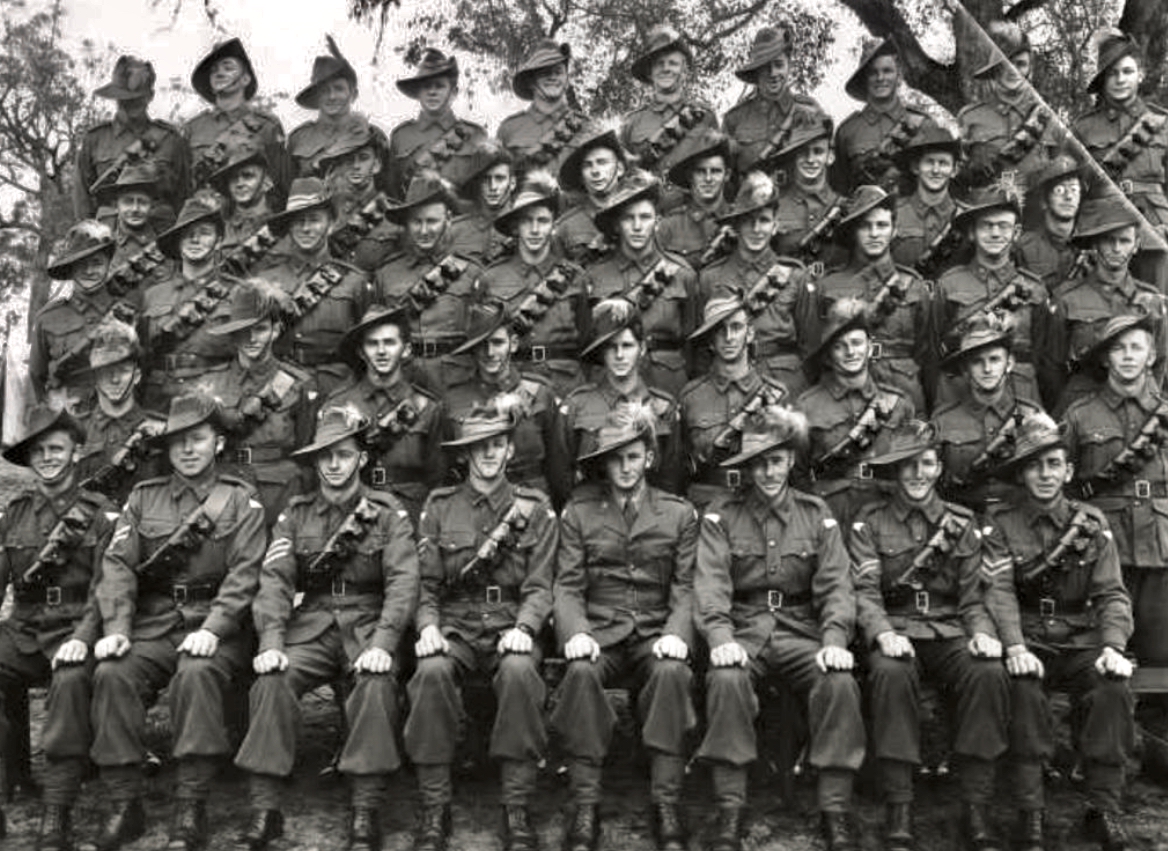
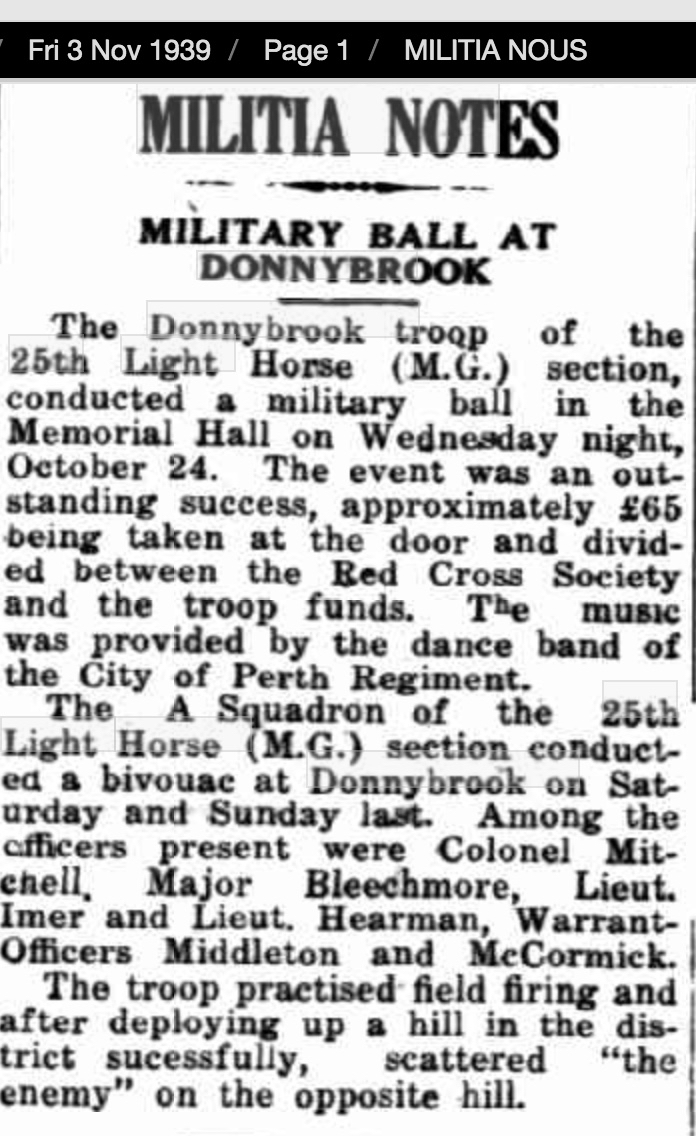
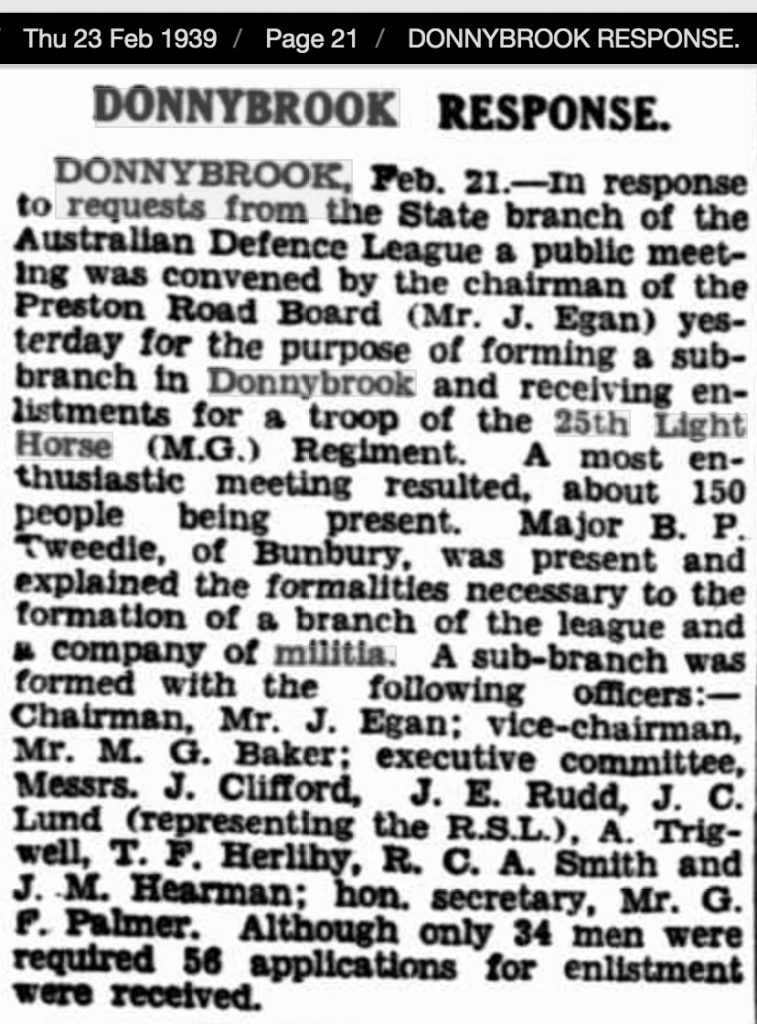
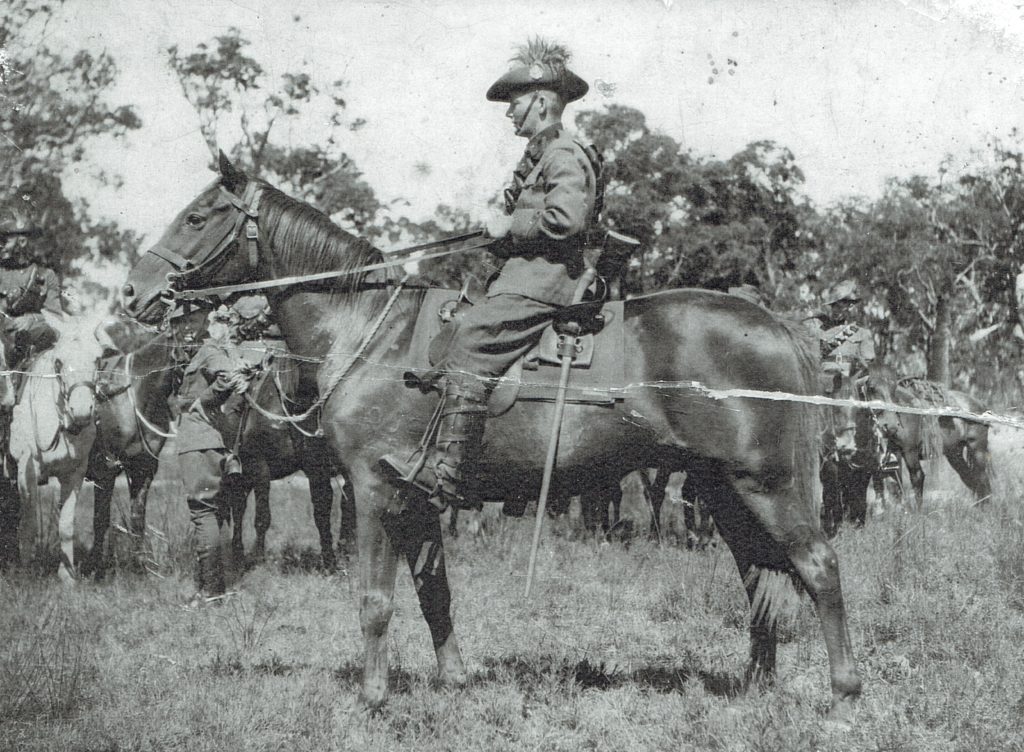
Below:  25th Light Horse from Donnybrook.


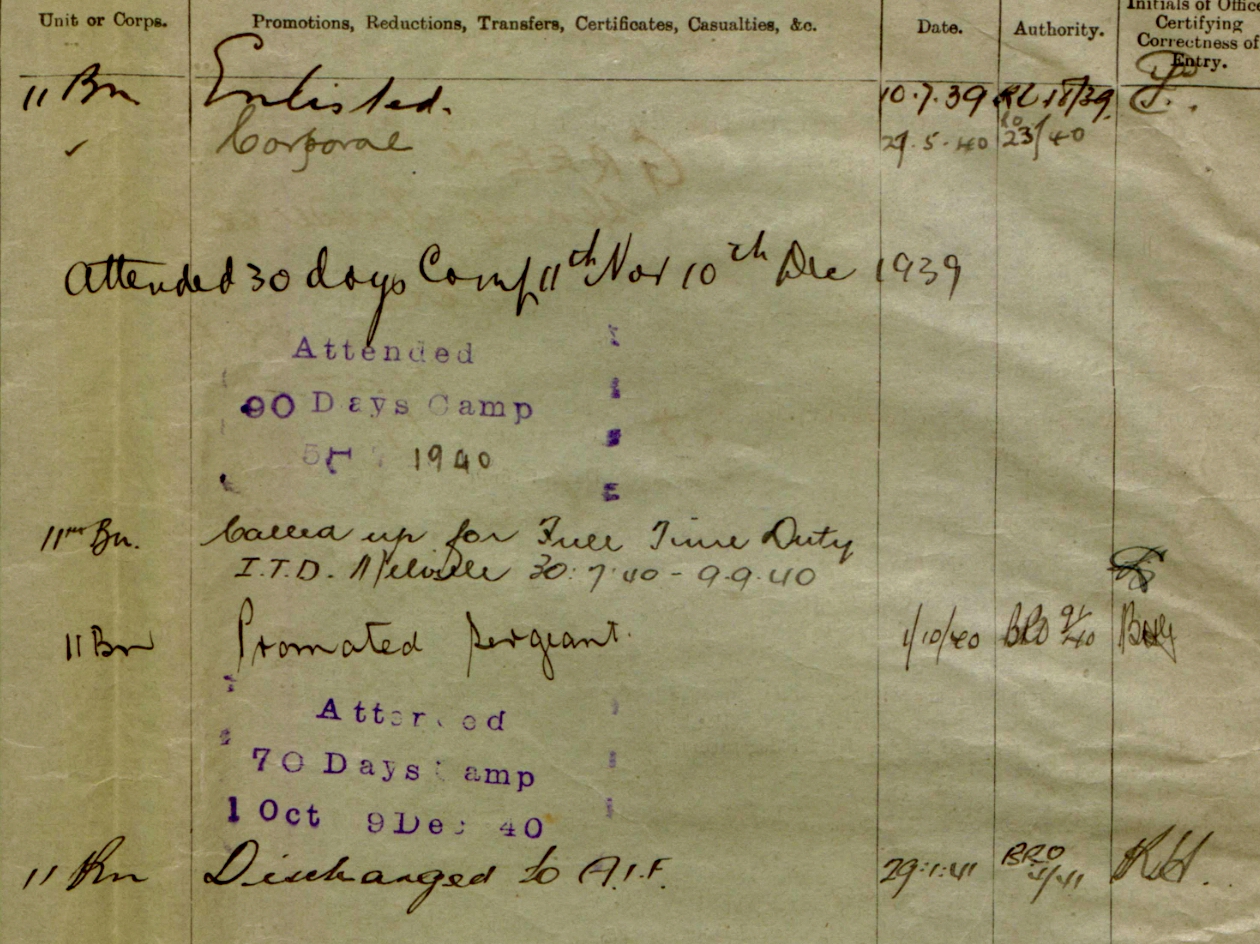
John Stewart Smith WX6841 10 Light Horse Militia 17 Dec 1936


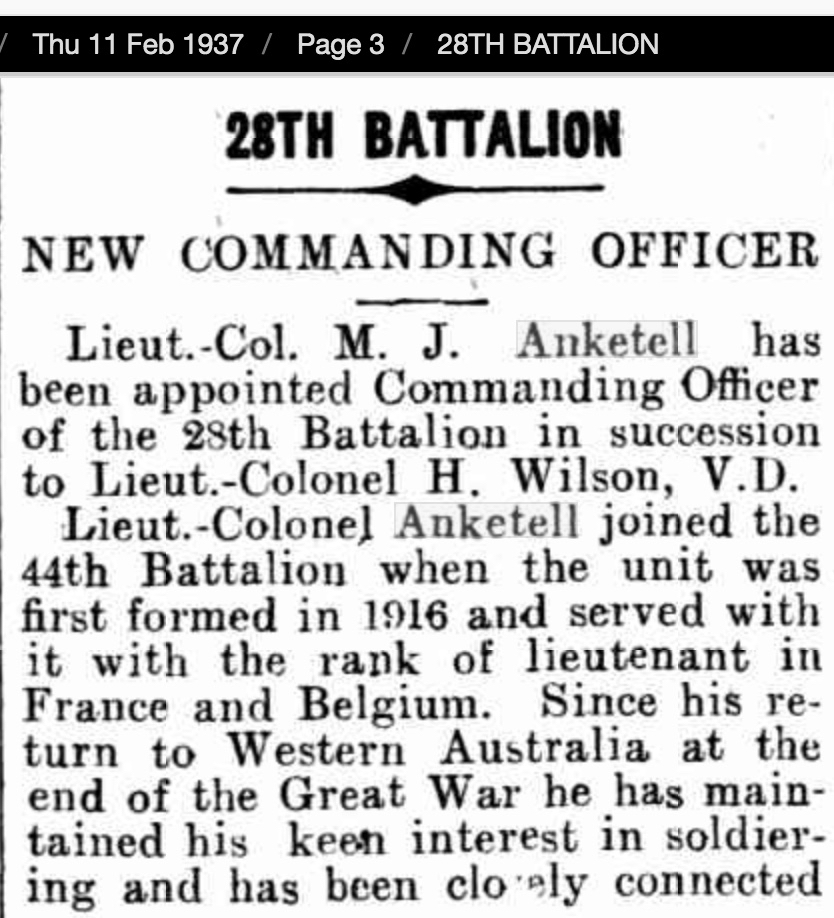
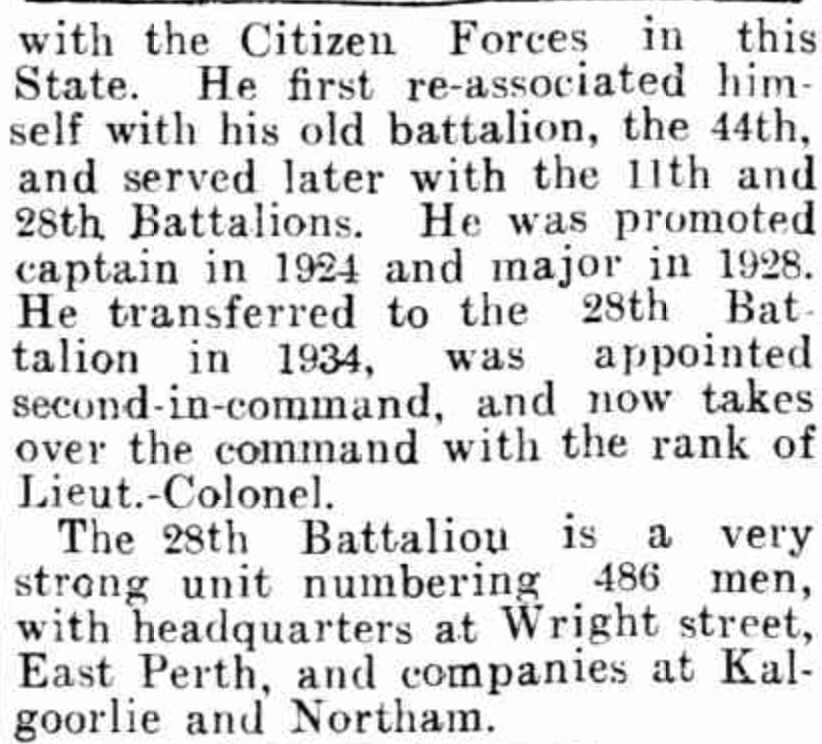
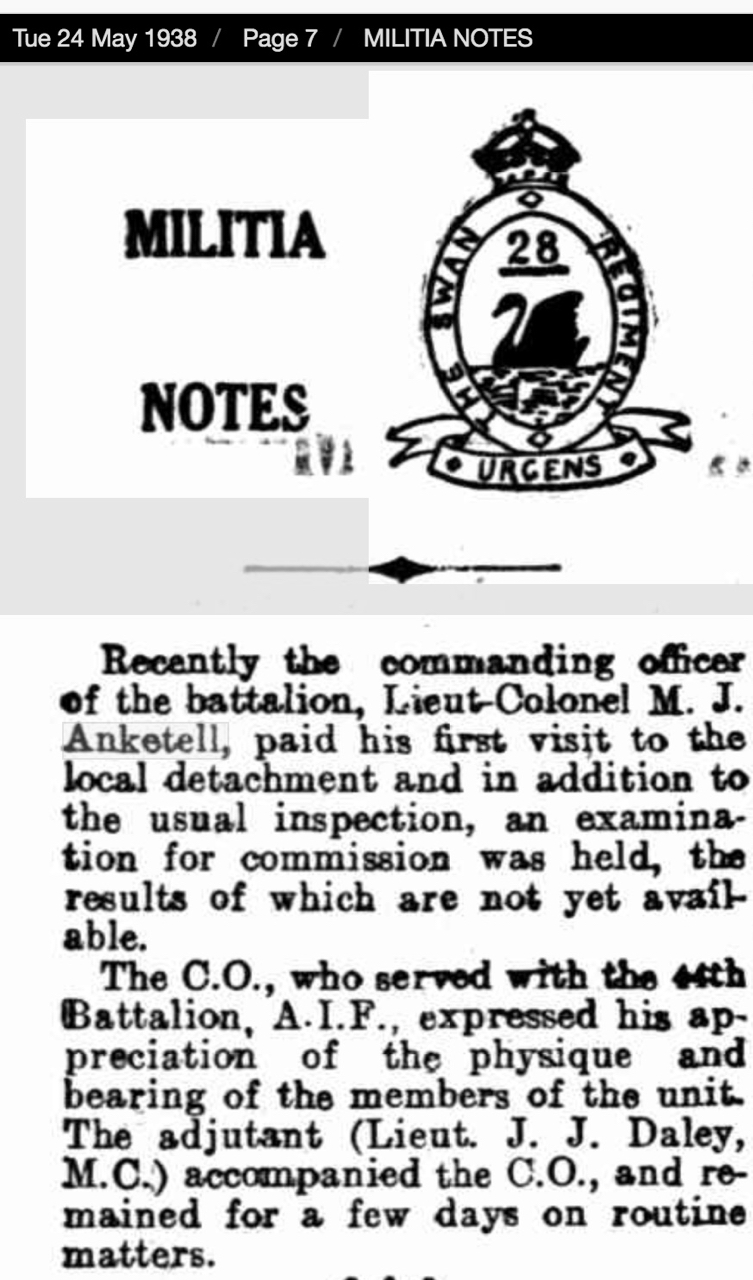
Below:1937 Lt.Col Anketell


Below:  Corporal Harry Green with 11th Battalion Militia – enlisted AIF 15 Jan 1941.  He became Lieutenant WX10788 with ‘E’ Coy, Special Reserve Battalion, 2/4th MGB.  Green was KIA 11 Feb 1942 Singapore in a Japanese ambush.  He was 22 years old.


WESTERN AUSTRALIAN MILITIA

(from AWM with our thanks and acknowledgement)

‘After the First World War the defence of the Australian mainland lay with the part time soldiers of the Citizens Military Force, otherwise known as the Militia. The Militia was organized to maintain the structure of the First AIF and kept the same numerical designations. In 1936 Perth’s 16th Infantry Battalion became the “Cameron Highlanders of Western Australia” and was linked with the Queen’s Own Cameron Highlanders. The 16th carried out the traditions of the Cameron Highlanders by having an “excellent” band of 16 pipers and seven drummers.

Like the other battalions in the Western Australia’s 13th Brigade (11th and 28th Battalions) the 16th had a long war primarily carrying out garrison duties. As part of the 4th Division, the 13th Brigade remained in Western Australia and during the second half of 1942 was III Corps’s main infantry force. III Corps was responsible for the state’s defence. In 1943 the 13th Brigade moved to the Northern Territory, where the 28th was based at 49 Mile Creek. The brigade’s commander, Brigadier Eric George Henderson McKenzie, held the longest brigade command of the war. McKenzie took over the brigade in June 1940 and relinquished command in May 1945 because of illness.

The long period of static garrison ended towards the end of 1944, when the 13th Brigade became part of the 5th Division. In late-November the brigade sailed to Jacquinot Bay in New Britain. It remained at the bay until mid-April 1945, when it moved to Wide Bay to relieve the 6th Brigade.

Rather than carry out a major offensive against the Japanese on New Britain, the much smaller Australian force instead confined the Japanese to Rabaul and the Gazelle Peninsula with active patrolling. It had been the 6th Brigade that had established the line across the Gazelle Peninsula, by patrolling between Open and Wide Bay. The 13th Brigade was to hold this line and patrol forward from it but did not make any major move beyond it into Japanese-controlled territory.

Based in the Bulus area, from the second week in April to the end of the Second World War, the 16th sent out daily patrols into the surrounding jungle around Waitavolo. But contact with the Japanese was limited.

After the war the 13th Brigade moved to Rabual, to assist in supervising the Japanese prisoners. In January 1946 the brigade returned to Australia and in February the 16th was disbanded at Puckapunyal.’

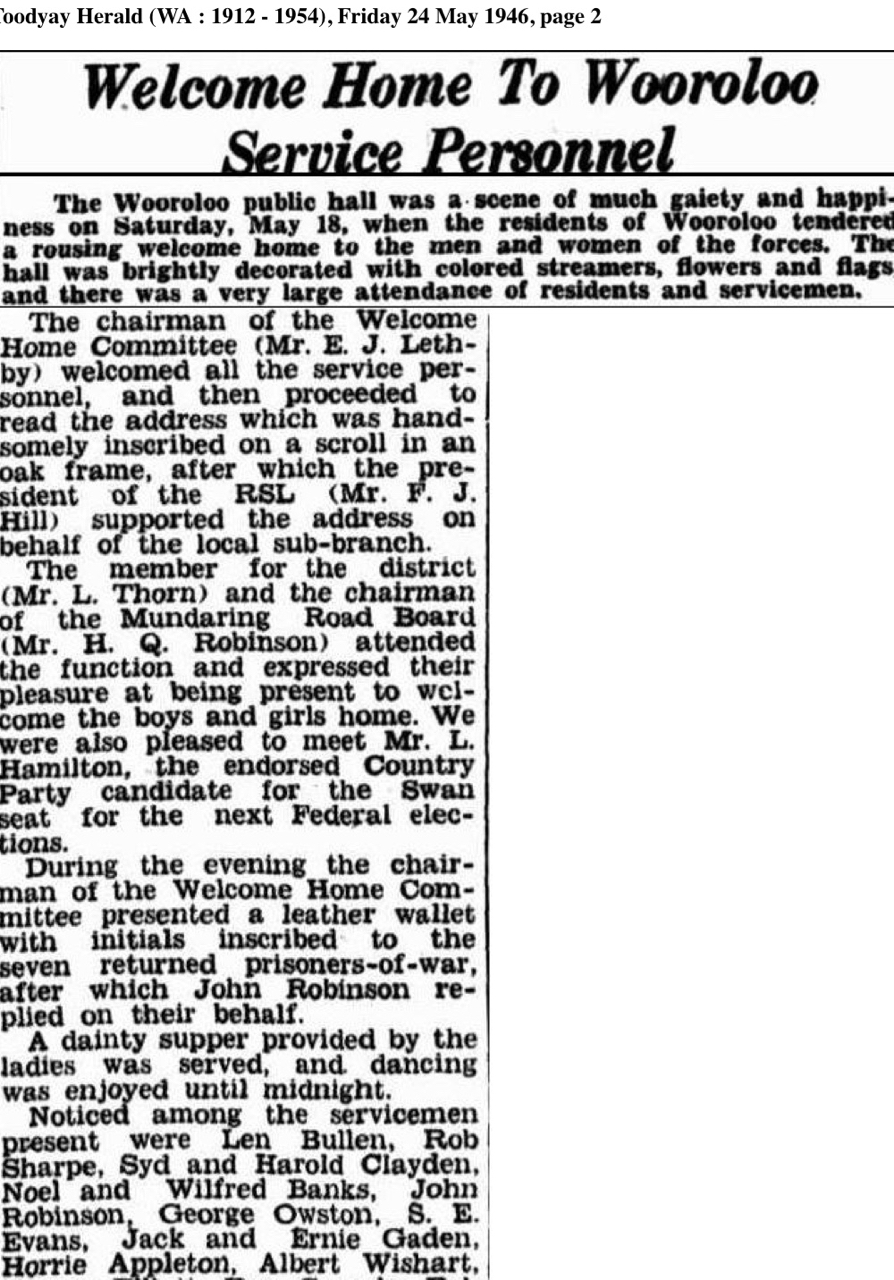
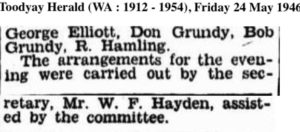
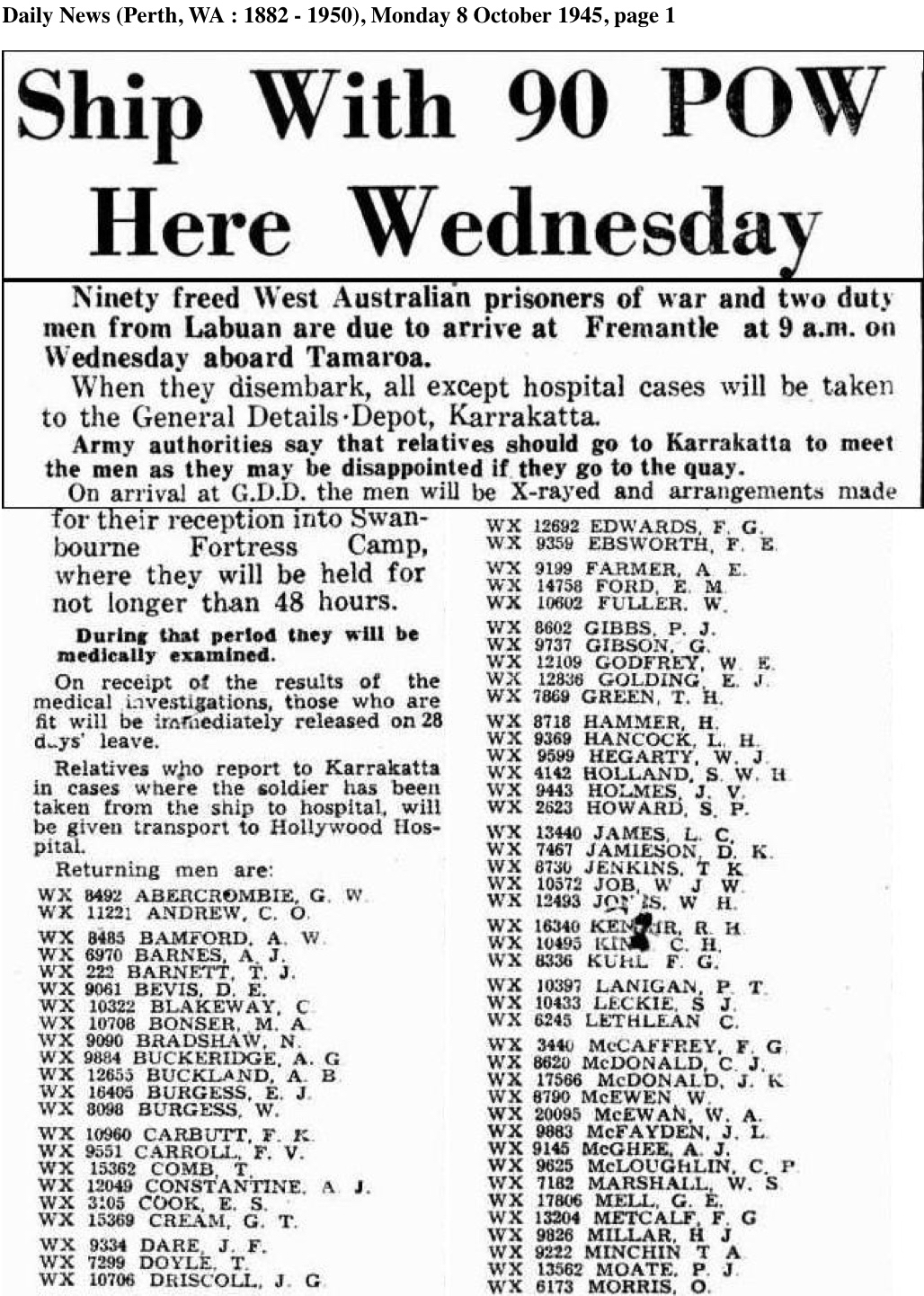
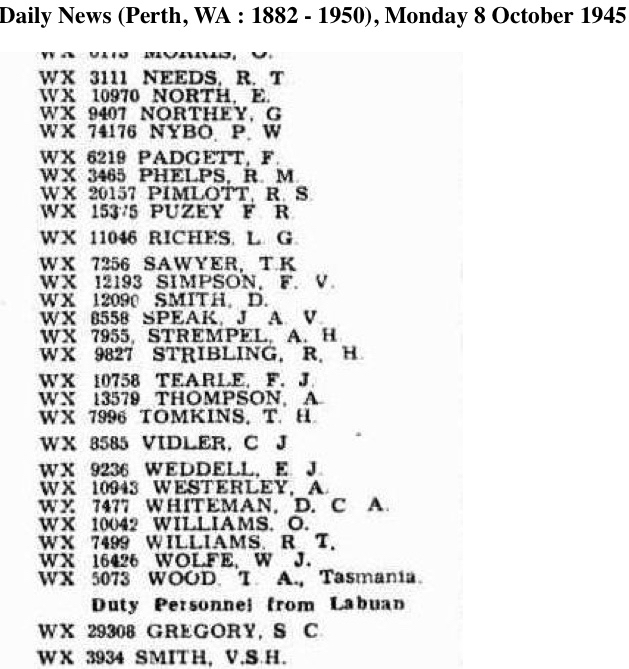
Wooroloo, Mundaring, Mt Helena, Sawyers Valley Enlistments 2/4th MGB

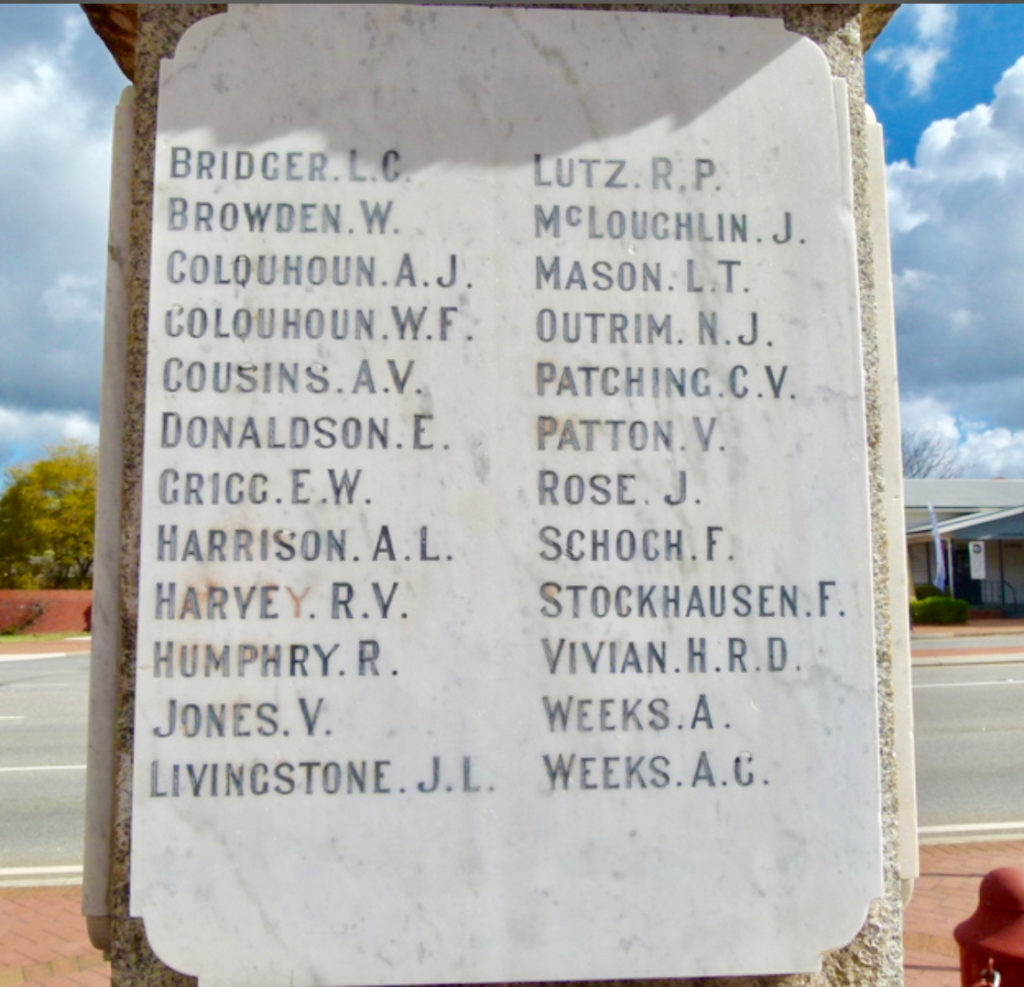
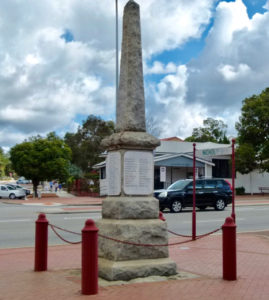
MUNDARING WW2 WAR MEMORIAL

A.J. COLQUHOUN

A.V. COUSINS

N.J. OUTRIM

Men of 2/4th Machine Gun Battalion whose names are inscribed and remembered for their sacrifice.


The following men were in 2/4th MGB – our apologies if we have omitted family names.  We invite families to forward any photos or information you would like your family’s future generations to read and learn about the sacrifice and bravery of these men.   Please advise email:  2nd4thmgb@gmail.com


Wooroloo Boys
WX10343 BANKS, Noel Edwin b. 1916 son of James Albert and Celia Lydia Banks enlisted AIF 18 Dec 1940, later joining ‘C’ Company. He had worked as an orchardist.
Noel was AWOL from ‘Aquitania’ at Gage Roads, Fremantle anchoring on 15 Jan 1942 having sailed from Sydney. He left the ship with others from his hometown.  The following morning the truck transporting them back to Fremantle broke down.  They were unable to report for duty when the ship sailed next day,16 Jan 1942 for Singapore. Please read further.
At Java Noel was assigned to ‘Blackforce’ attached to 2/2nd Pioneers Battalion. Allied forces joined with Dutch East Indies to fight Japan. They were taken POWs  8 March 1942.   Suffering with malaria, Noel Banks was being transferred by an ambulance to hospital on 8th March when the vehicle was captured by Japanese troops. He was initially treated at 2/2nd Casualty Clearing Station until 18 April then attached to 2/3rd Reserve motor Transport Company to convalesce until 5 Nov 1942.
During next few years Noel moved to several camps in Java. Finally in 1945, having regularly suffered malaria he was selected with a Work Force to work in Sumatra on Pakan Baroe-Mocearo Railway – having endured more 3 years of captivity, POWs  were in poor health having endured various tropical illnesses, diminished food supplies and no medicines – now they had to construct a railway through  unimaginably challenging tropical terrain and conditions.
So little is written about Sumatran Railway – Sumatra was hell on earth.


Mid 1944 construction of railway began.  During 1945 there was an even greater shortage of food.  The men were dressed in just a few rags & ‘Jap happys’ .  Sickness was rife, the men were weak after several years as POWs.

Noel himself had recurring malaria. The reason he did not make the work parties out of Java with other Australians.

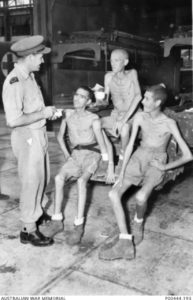
AWM Photo of POWs who had just returned Singapore from Sumatra – shows condition of men.
The POWs endured a terrible time and were urgently airlifted with aid of Red Cross to Singapore, such was there precarious health.   Please read further about POW built railway Sumatra
Noel’s twin brother Wilfred also enlisted and returned home to West Australia.


CLAYDEN BROTHERS OF 2/4TH 

SYDNEY RICHARD (SYD) born 1915. Recovered from Japan 1945

HAROLD THOMAS (BUCK)  born 1917. Recovered Saigon, French Indo-China 1945.


WX10354 CLAYDEN, Harold Thomas (Buck) b. 1917 son of Jesse Thomas and Elizabeth Clayden and younger brother to Sydney Richard (Syd) Clayden.  Harold enlisted with AIF 18 December 1940, later joining 2/4th MGB’s ‘C’ Company, 11 Platoon with Cousins, Dusty Millar and John Robinson.
Harold was one of many 2/4th boys who jumped ship,  AWOL from ‘Aquitania’ at Gage Roads, Fremantle 15 January 1942. ‘Aquitania’ had sailed from Sydney heading for Singapore (although the men aboard did not know their destination at that time). When their ship sailed following day 16 January more than 90 well-trained machine Gunners were left behind, many had been locked up by over-zealous police officers and didn’t think it was important to release them. Read further about AWOL Fremantle.
Buck Clayden was on the truck which broke down Greenmount Hills returning to Fremantle & Aquitania – missing Aqjuitania.


Harold travelled with Dusty Millar, Bill Steel, Reg Striblng and Noel Banks away from  ‘Aquitania’.  From Geoff Bank’s son Noel we hear Noel had told his family, he had not been desperate to visit home (ie. leave ‘Aquitania’ against orders)  however one of his senior officer’s assured him there would be time to travel home and back again to Fremantle before ‘Aquitania’ departed midday the following day!  Which really was very unlikely with the vehicles available then.  
According to one of Harold Clayden’s daughters, their family always knew that the truck Harold was returning on to Fremantle, broke down on Greenmount Hill, and they were unable to reach Fremantle on time.
It is very likely the men travelled together away from 
Fremantle and likewise, they together planned to return to Fremantle travelling by truck.  It was not uncommon for vehicles to break down.  There were frequent vehicle breakdowns throughout the country & city.
Almost 100 men from 2/4th did not reach ‘Aquitania’ before sailing midday on 16th January.
We believe there were others who from 2/4th who were on the broken down truck at Greenmount.  We believe about 600 men from 2/4th climbed off the ‘Aquitania’ against orders.  Most returned by the following morning except about 90 men.  Several of these had been locked up at Fremantle by overzealous Military Police who would not release them.
Harold Clayden sailed several weeks later supposedly to join 2/4th in Singapore, however when their ship sailed near Singapore coast  Australian Government knew Singapore was about to fall. Their ship was ordered to Java.
In Java Harold was assigned to ‘Blackforce’ made up of combination of Australian Forces from middle east who arrived Java without military equipment nor their personal baggage. With  Dutch East Indies (local) Forces, the Australians and seaman from ‘Perth’ and US ‘Houston’ prepared to fight the invading Japanese Imperial Army. There was minimal fighting before The Dutch East Indies capitulated to Japan.   Australians deeply unhappy with their decision.  Allied soldiers were taken POWs 8 March 1942.
Harold sailed from Java to Singapore then onto Burma arriving 14 Oct 1942 to work Burma end of Burma-Thai Railway with ‘A’ Force Burma, Java Party No. 4, Williams Force –   Williams Force included a large number of experienced engineers from 2/2nd Pioneers (having come from Middle East) the Japanese were ‘lucky’  – their very own engineering work party who moved up and down Burma end of Railway line laying track!  Williams Force was pushed endlessly.
Harry was at 30km camp and 55km Camp, both were hospital camps before being sent to Tamarkan.  Williams Force working Camps in Burma included Tanyin 35, Anakwin 45km, Taungzan 57 km, Mezali 72 km, Apalon 77km and Kondaw.
In 1944 Harold was considered ‘fit’ by Japanese and selected to work in Japan with what would be known as ‘Awa’ Maru Party. Firstly entrained to Saigon, French Indo-China the POWs worked around the docks and city while waiting for a ship to take them to Moji, Japan. American submarines had by this time successfully blockaded Saigon and surrounding French-Indo China coast *** – Japan was alternatively forced to send POWs to Singapore where the chances of successfully leaving port were much greater.
*** Saigon, French Indo-China had been important and effective route for Japan for supplies to Burma

for several  years.  This blockade forced Japanese shipping to take longer route to Singapore – 
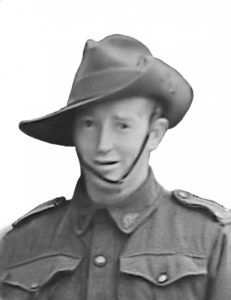
subjecting their ships to submarine attacks.
Harold was ill when the ‘Awa’ Maru Party departed Saigon and he remained behind. He was recovered from Saigon at the end of the war.  He returned home.
WX10358 CLAYDEN, Sydney (Syd) Richard b.1915. Enlisted 18 Dec 1940, same day as his brother Harold Clayden. Both Harold and Syd worked in the local and quite extensive timber industry. Syd joined ‘C’ Company HQ.
Syd sailed into Singapore with 2/4th where 2/4th Battalion was split up to reinforce 8th Battalion Forces. The Japanese attack from 8th to 15th Feb 1942 was intense and as the men would say, a ‘shambles’. Singapore surrendered – the men  taken POWs.
In May 1942 Syd sailed with  first Japanese work Force out of Singapore, 3,000 POWs  with ‘A’ Force Burma, Green Force No. 3 Btn were transported on three boats to south west coast of Burma, where they would spend the next few months repairing and enlarging the airfields at Victoria Point, Tavoy and Ye before heading for the northern most point of the planned Burma-Thai Railway.
Syd was with Green Force which began working on the Railway 1st October 1942 at Kendau. The POWs would continue working on the line until end of 1943.
By end of 1943 the Japanese had started moving all POWs in Burma south to one of several large camps in Thailand. It was here Syd was selected as ‘fit’ to work in Japan with what would become known as ‘Rakuyo’ Maru party.
This party was entrained to Saigon, French-Indo China – it was planned to sail from here to Moji, Japan. After several months when the POWs worked around the docks and Saigon, the Japanese realized their plans had been thwarted by the success of the American submarines who had blockaded Saigon and surrounding coast.
‘Rakuyo’ Maru Party were entrained for Singapore to await a ship. In early September 1944, their ship ‘Rakuyo’ Maru finally sailed out of Singapore. By 12 September the POWs were fighting for their lives in South China Sea when their ship was hit by American submarine fired torpedoes, and then sank.
While most of the POWs perished, a small number survived long enough in the water, attached to whatever floating craft they could find, to be finally picked up by a Japanese corvette (about 195 POWs were picked up by American submarines 4 days later).

After a ‘rough’ trip to Japan, i.e. there was no sympathy or medical assistance provided, the POWs arrived Moji. Syd was sent to Kawasaki Camp No. 14D. He was recovered from Japan at end of war.
We believe Banks, Steele, Harold Thomas (Buck) Clayden Hubert Millar, Reg Stribling left together from ‘Aquitania’ to travel to their families before sailing for Singapore.
We know the truck with Banks was returning on, broke down on Greenmount Hill and failed to reach Aquitania before she sailed the next day on 16 Jan 1945 for Singapore.

These 2/4th men were dropped to Java instead of Singapore.

WX10693 GRUNDY, William Duncan (Bill) b. 1911 Perth. Enlisted AIF 15 Jan 1941, later joined HQ Company as Signaller. Selected to work Burma-Thai Railway with ‘D’ Force ‘T’ Btn departing by train from Singapore May 1943. Worked at Hellfire Pass Cutting. Later selected to work Japan with ‘Both’ Party.   ‘Both’ Party travelled to Saigon, French-Indo China and remained there until end of war.
Gundy returned home to Western Australia.  Please read further about ‘Both’ Party.


Gang of ‘7’ Signals in Adelaide.
Rear L-R: Ron Evans, Jack Kyros, Claude Gault, Merve Wilkinson.
Front: Vern Hoppe, Bill Grundy & Ted Cosson.
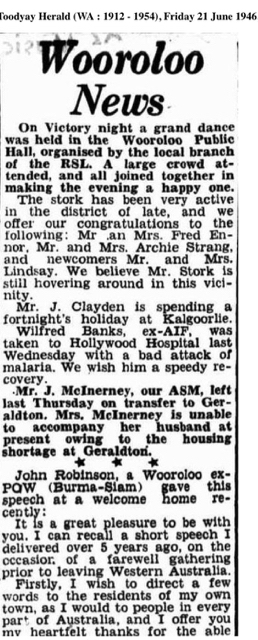
WX10351 ROBINSON, John  b. 1918 Cottesloe to Harry Quinn and Josephine Robinson. Enlisted AIF 18 Dec 1940, later joined 2/4th’s ‘C’ Company as did the Clayton brothers.  Robinson and Banks were competitors in local Rifle Schooting Club.  Robinson Worked Burma end of Burma-Thai Railway with ‘A’ Force Green Force No. 3 Btn sailing from Singapore May 1942. Was recovered from Thailand at end of war. Returned to Western Australia.

John developed tropical ulcers on both ankles/legs whilst in Thailand.  He was fortunate the ulcers healed sufficiently to avoid amputation.  On his return home John required ongoing skin grafts and treatment for his injuries.


John Robinson(in white shirt) 14.9.1945 Nacompaton Thailand.


MUNDARING BOYS

WX10721 de’ CASTILLA, Harry Bussell b. 1908 Perth to Harry and Violet de Castilla. Enlisted AIF 15 Jan 1941 – joined 2/4th’s ‘C’ Company. Worked Burma end of Burma-Thai Railway with ‘A’ Force, Green Force No. 3 Battalion. Remained POW Thailand recovered from Kachu Mountain Camp at end of war. Returned home to Western Australia.
WX8726 MILLAR, Hubert James (Dusty) b. 1921 Mundaring to William Duncan and May Millar.  Enlisted 6 Dec 1940.  Later joined 2/4th MGB ‘C’ Company as a Driver.  Was AWOL at Fremantle off ‘Aquitania’ and thereafter sent to Java where he was taken POW.
Selected with ‘A’ Force Burma, Java Party No. 4 Williams Force to work on Burma end of Burma-Thai Railway.  Millar was with Harold Clayden and de’Castilla – sent to Kachu Mountain Camp, Nakom Nayok, Thailand and recovered from here at end of war.

Above:  Millar with Arnie Cousins. Cousins, Millar & Colquhuon were all mates together in ‘C’ Company.
After the war Dusty Millar initially returned to Mundaring where he and his brother Harry worked at his father’s store.  His father died in 1946 and some time after this, Dusty and his wife Jean moved to Mullewa where they took up ownership of ‘Cutbush’s Store’ at Mullewa.  (His mother May also moved to Mullewa).  They remained here throughout 1960’s to 1980 when they returned to Perth and were residing 126 Morley Drive, Nollamara (Electoral Roll 1980).  Dusty’s occupation was recorded as proprietor – it would seems he possibly took up storekeeping again!
Also in the town of Mullewa was a store owned by former 2/4th Gabriel ‘John’ Wade.  Bill  Grundy of 2/4th worked on a farm out of Mullewa at Tardun.


WX9419 STEELE, Harold William (known as Bill) born Glen Forrest to Harold (William) and Florence Steele of Mundaring.

After the war, Millar and Steele married Siggins sisters, Jean and Joye, whose family had earlier also resided at Mundaring.
Bill Steele also missed the ‘Aquitania’ before she departed 16 January 1945 to Singapore.


WX9827 STRIBLING, Reginald Harold (Reg) b. Victoria Park 1919 to Cecil Sydney Stribling and Elsie Isobel Gibbons who married Perth 1908.

Reg enlisted 6 Dec 1940 and later joined ‘C’ Coy 12 Platoon as a driver. Reg left ‘Aquitania’ 15 January 1942 and was not able to return before ‘Aquitania’ sailed the following day.  We assume Reg also travelled with the group from Fremantle to the Perth Hills.

Sailing to Java he was taken POW of Japan about 8 March 1942.

He sailed from Java with Java Party No. 4 via Singapore to north coast of Burma with Williams Force to work on the northern end of the railway.  Reg survived and was recovered from Thailand and the end of the war.

In 1951, Reg married Mundaring girl Vera Fogarty.

MT HELENA BOYS

 WX9092 COUSINS, Arnold Vivian (Arnie) b. 1913 Mt. Helena to William Robert and Clara Matilda Cousins. Was with 10th Light Horse Militia. Enlisted 25 Oct 1940, later joined 2/4th MGB ‘C’ Company, 11 Platoon with Harold Clayden, Dusty Millar and John Robinson.
Worked Burma end of Burma-Thai Railway with ‘A’ Force Burma, Green Force No. 3 Btn. Selected in Thailand 1944 to work in Japan – Arnie lost his life aged 30 years when Japanese POW transport ship‘Rakuyo’ Maru was torpedoed byAmerican submarines and sank in the South ChinaSea Sep 1944.  Cousins’ name is inscribed on the Mundaring WW2 Memorial.
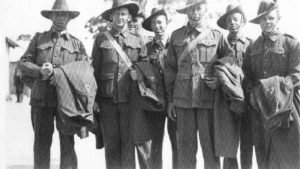
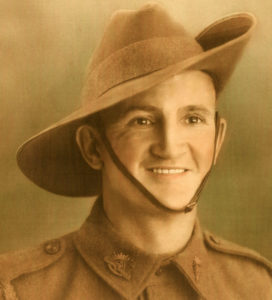


A Climie, A Cousins, D Squire, A Miller, A Minchin, V Dewar, Brambles.


SAWYERS VALLEY Enlistments

WX9109 COLQUHUON, Alexander John (Alex) b. 1906 Midland Junction to Robert and Mary Ann Colquhuon. Enlisted AIF 30 Oct 1940, joined 2/4th’s ‘C’ Company. As a POW in Singapore, Alex was selected to work Burma end of Burma-Thai Railway with ‘A’ Force Burma, Green Force No. 3 Battalion. In 1944 Alex was selected to work in Japan and lost his life aged 38 years when ‘Rakuyo’ Maru POW transport ship, was torpedoed by American submarines South China Sea Sep 1944.
Colquhoun WX9109

Alex Colquhuon’s name is inscribed on the Mundaring WW2 Memorial.
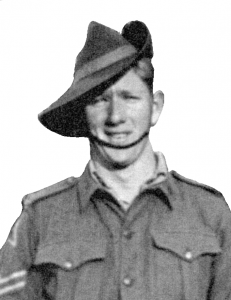
Alex’s two brothers Bill (W.F. Coloquhuon) and Harry also enlisted.  Bill who was father to two children, died New Guinea.


WX10802 OUTTRIM, Noel James  b. 1920 Ravensthorpe to
Edwin Kingston and Annie Florence Outtrim. Enlisted AIF 15 Jan 1941. Later joined 2/4th’s ‘B’ Company as a Rangetaker. Selected with ‘D’ Force Thailand departing Singapore by train in March 1943 – joined Captain Fred Harris Party working around Hellfire Pass Cutting. Died aged 24 years of Cerebral Malaria at Kinsaiyok Camp,Thailand 22 Nov 1944.

Noel Outtrim’s name is inscribed on Mundaring WW2 Memorial.


10TH LIGHTHORSE MILITIA  – ‘A’ SQUADRON was  located at Mt. Helena, Waroona, Toodyay and Narrogin which Lt. Colin Cameron was one of the training officers.We believe believe many of these young men joined the Militia and was one of the reasons for enlisting 2/4th and joining ‘C’ Company.  Please read further about 10th Light Horse Militia


WX3451 CAMERON, Colin Major (Promoted14 Feb 1942 on death of Lt-Col M.J. Anketell, CO 2/4th MGB)),  b. 1900 Digby, Victoria.  Enlisted 5 Dec 1940 joined  ‘C’ Company Headquarters.  Sent  Burma end of Thai-Biurma Railway with ‘A’ Force Burma, Green Force No. 3 Btn. 
Served WW1 Trooper 3rd Camel Regiment, 8th & 4th Australian Light Horse Regiment.  Was on regimental strength when well-known mounted charge took place at Beersheba 31 Oct 1917 against fortified Turkish position.
Cameron was wounded in action (unknown date) receiving bullet in base of his spine.
After WW1 Cameron served as Captain with 10th Light Horse Regiment before resigning his commission to enlist 2nd AIF with 2/16th Battalion.  Attended NCO School Randwick, NSW but unable to continue due to WW1 injury.  Rejoined 10th Australian Light Horse Regiment before enlisting a second time with 2nd AIF when he became member of 2/4th MGB.


Victoria Point, Burma – Major Green

The following was printed in Borehole Bulletin 1982  – Extracts from Major Charles Green’s diary written at Victoria Point July 1942 – included is  death of Pte. Goulden