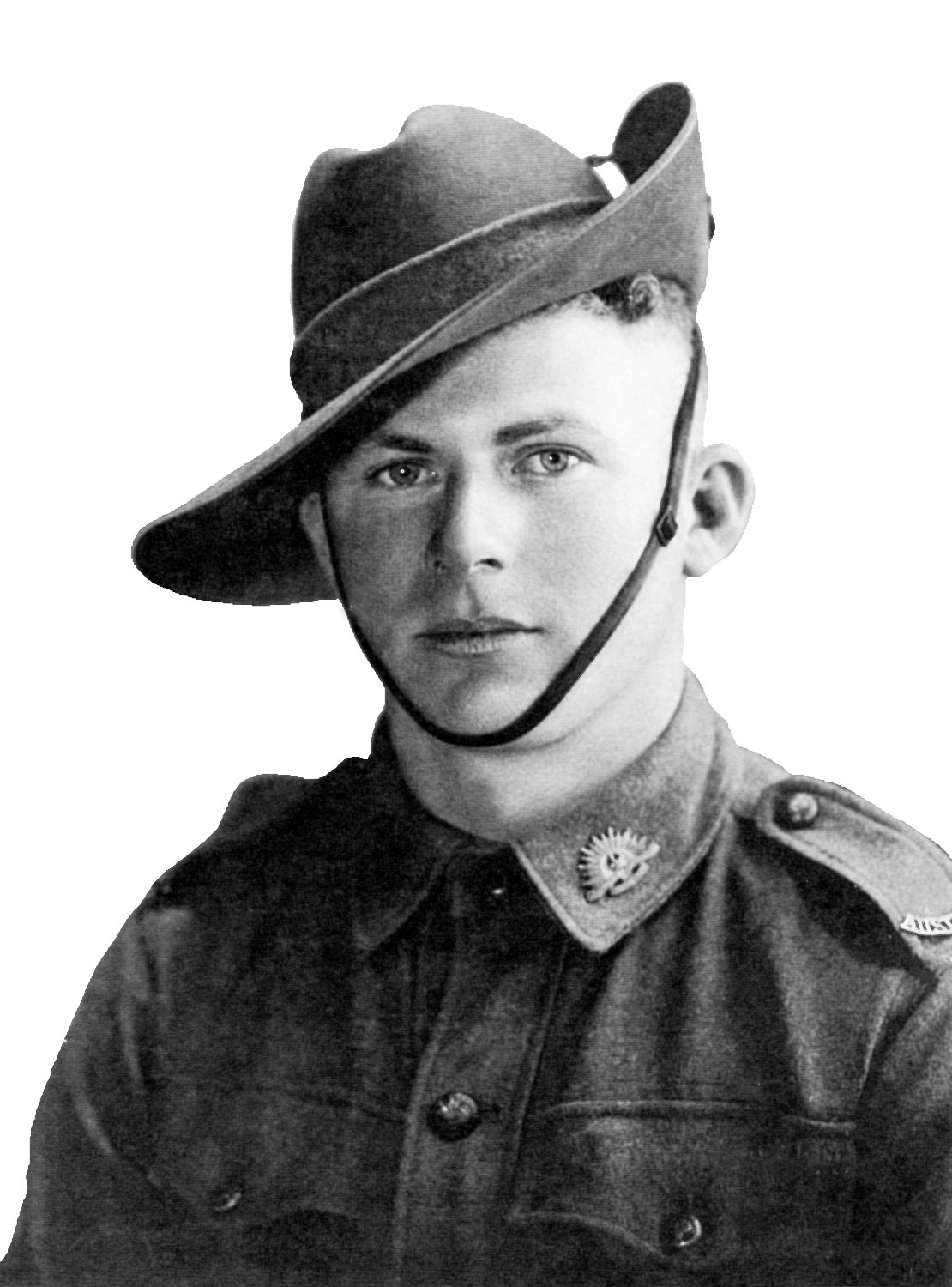
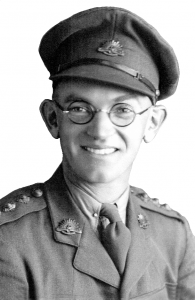
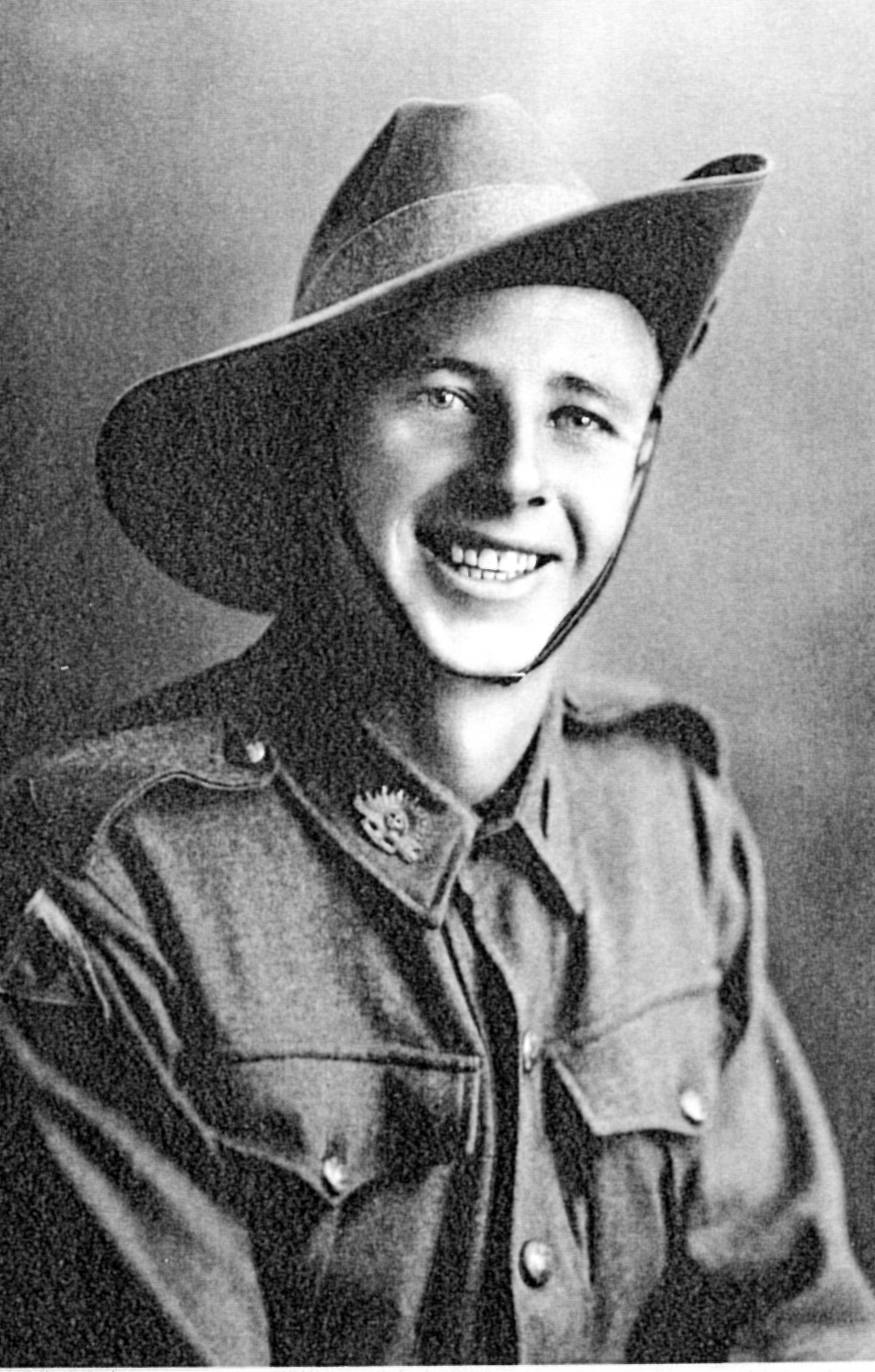
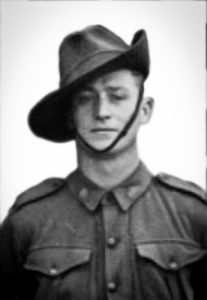
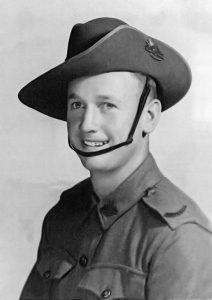
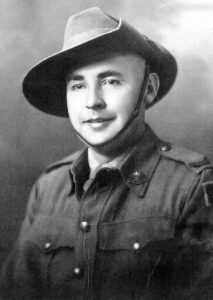
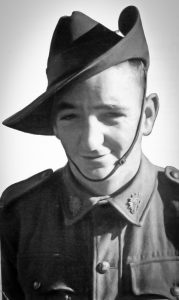
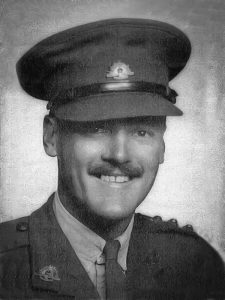
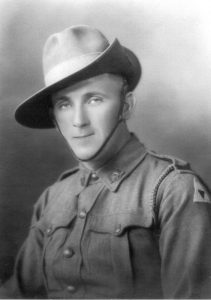
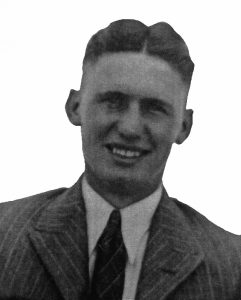
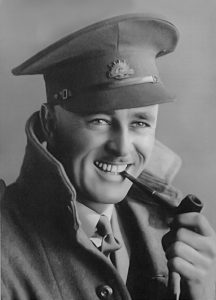
WX9312 John Leahy’s account of life at Osaka Camp No. 9, Notagawa, Japan.

The following is a typed edition of a copy of an affidavit

IN THE MATTER of War Crimes
                                                                                                And
                                                                        IN THE MATTER of Atrocities
                                                                        Committed at Osaka Camp No. 9.
                                                                        NOTAGAWA
                                                                        United Nations War Crimes
                                                                        Commission Reference …………
I, Michael John LEAHY, care of Bohemia Hotel, Murray Street, Perth, Medical Orderly, make oath and say as follows:
  1. I was a member of the 2/4 M.G. Bn. and was taken prisoner in Singapore in February 1942.
  1. My Army number was WX 9312.
  1. In 1943 I was moved to Japan and in June 1945 I was moved to OSAKA Camp No. 9, NOTAGAWA, where I remained until the end of the war.
  1. Food.  We were given three alleged meals per day, 90% of which during the whole period I was in the camp consisted of boiled rice moistened with boiled cucumbers. The quantity of rice for each meal was the equivalent of a breakfast cupful. Once per fortnight the meal was varied and we were given a similar amount of rice, but in lieu of the boiled cucumber we received approximately 1 oz. of boiled meat and part of the liquid in which the meat had been boiled.
  1. The camp had a fortnightly ration of tea which only lasted for one week. There was no milk or sugar supplied with the tea.
  1. Medicines. I know nothing concerning the medicines which were supplied as I was never in the R.A.P.
  1. Clothing. We were given an issue of clothing consisting of khaki coat, shirt and trousers. There were no underclothes or socks. Boots were issued to only a very few Prisoners-of-war and large numbers of them were compelled to go barefooted during summer and winter through the lack of boots.
  1. Quarters. These consisted of huts made from pine with bark roof. They were quite airy but when it rained the roofs leaked very badly.
  1. Red Cross parcels. During the three months I was in the camp I only received a quarter of one parcel. It was common knowledge that the Japanese had stated that they had a perfect right to take the Red Cross Parcels.
  1. Working conditions. The work to which I was engaged was the building of a causeway across a lake. It consisted of loading (rail) trucks and pushing them along a rail track and emptying them into the lake. Work commenced at 7 a.m., continuing until midday; recommenced at 1 p.m. and finished a 6 p.m. The work was very dirty and unpleasant as it was necessary to work in water for considerable periods at a time.
  1. Tortures and beatings. For breaches of discipline such as taking a rest, breaking tools, stealing vegetables or failing to salute, prisoners were subjected to tortures by the following methods:
(a) a man would be compelled to hold a bucket of water above his head. He could only do this for approximately ¼ hour and as soon as he made any attempt to put the bucket down he was thrashed and beaten with bamboos and compelled to keep the bucket of water above his head for a further period. This went on for periods up to three or four hours when a man could no longer stand. At the end of the torture, in some cases, they would collapse.
(b) beatings with bamboos was inflicted for minor breaches of discipline and consisted of four or five Japanese thrashing a prisoner with bamboos. The prisoners stood as long as they could for as soon as they fell to the ground they were attacked by the Japanese with their boots and then compelled to get up and take more beating until such time as they collapsed completely.
(c) On one occasion I was passing the guard tent and saw six or seven Japanese surrounding an English prisoner. One Japanese was pushing a bamboo stick up the Englishman’s nostrils. He would pull the stick out and push it up again. The Englishman was in front of the guard tent three or four hours and his torture went on periodically until he finally collapsed. I do not know the name of the Englishman or the name of the Japanese who perpetrated the crime.
  1. Once or twice a week we were compelled to run for the last half mile back to the camp from our work, and on reaching the camp would be made to do P.T. for approximately ¼ hour. This was done for no apparent reason and it was very hard on the prisoners after a hard day’s work, and also as they were all suffering from malnutrition.
  1. I know HIGHASHI JUORI who was the Camp Interpreter and was well-known to myself and all other prisoners. As he was the interpreter all negotiation had to be carried on through him, and it was the general opinion of all the prisoners in the camp that he did not interpret requests and explanations for breeches of discipline correctly. The result was that whereas other prisoners would on some occasions get additional rations in the way of rice, the Australian prisoners would not receive the ration and it was assumed that this was through the action of HIGHASHI.   On one occasion HIGHASHI asked Australian prisoners to donate their pay to buy a present for the Commandant. They refused and HIGHASHI informed us that we would be very sorry. From that time on all the unpleasant and very hard jobs were given to the Australian prisoners.
SWORN by the said Michael John LEAHY
at Perth in the State of Western Australia
this 23rd day of October 1946.
Before me:
A Commissioner for taking
Affidavit in the Supreme
Court of Western Australia


This document was signed by Leahy.
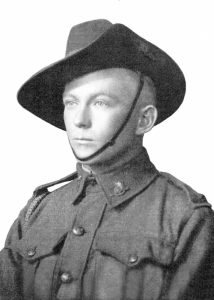
Leahy spent 2 months in    hospital  on his return.
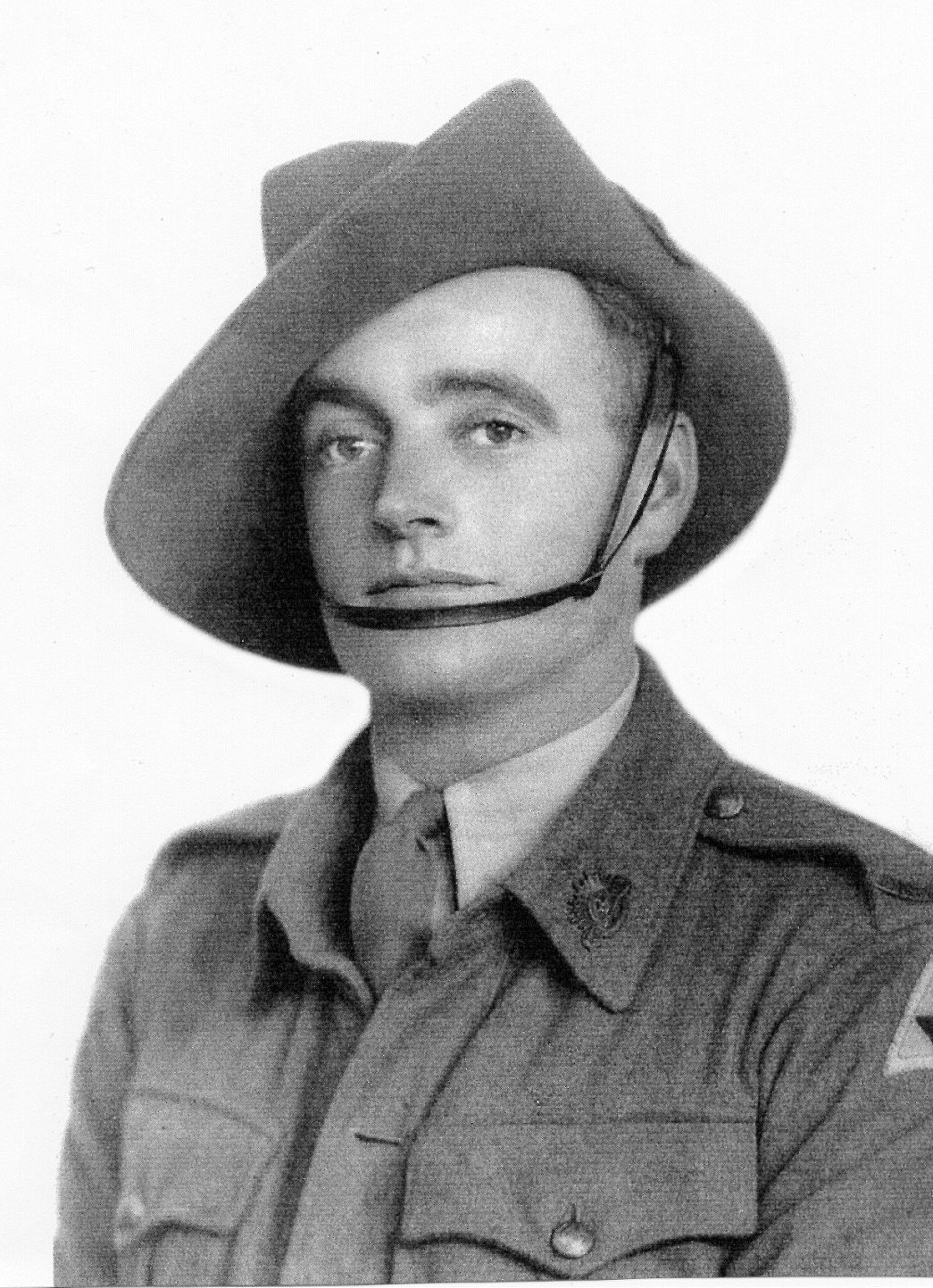
 

Alf Worth and Jim Elliott – 2010

Worth Alfred

Elliot James S

CRUEL YEARS BURIED IN SALVATION

by Malcolm Quekett, The West Australian Newspaper

Saturday 14 August 2010

It was 65 years ago but Alf Worth and Jim Elliott remember it clearly. Hope and Salvation fell from the sky as their days of hell as prisoners of war in work camps in Japan ended.

Then hope came in leaflets US bombers dropped. Some said the Japanese had surrendered and WWII was over. Others told the prisoners to paint red crosses on the camp roof to signal where they were. Then salvation came in 44-gallon drums which burst as they hit the ground, spilling food.

Mr. Worth, 95, remembers a mate telling him: “Alf when the war is over I am going to eat myself sick.” He tried and failed but slept that night with a full belly.

Mr. Elliott, 90, remembers how the US bombers flew over the camp with their bomb doors open. “They were very low,” he says. “We were out watching and then realized they wanted us out of the road.

“They dropped parachutes attached to 44-gallon drums which hit the ground and split open. There were all sorts of chocolates, cigarettes, tins of beef, vitamin pills.”

“The Doctor in our camp said ‘take it easy boys, you can’t eat too quickly’. He was shovelling in food.”

The pair were in the 2/4th Machine Gun Battalion, formed from men across WA in late 1940 who found themselves in Singapore in January 1942, days before the Japanese attacked the supposedly impregnable Allied Forces.

The battalion had heavy casualties before Singapore was surrendered on February 15 and the survivors fell into Japanese hands. What followed was 3 ½ years of deprivation and cruelty.

Mr. Worth and Mr. Elliot were assigned to the notorious Burma-Thai railway and then had a nightmare voyage to Japan and to separate work camps.

Mr. Worth found himself in a coal mine at Ohama, hauling box cars and remembers hearing the war ad ended as the Japanese guards listened to a radio.

“When we got down the mine they told us to sit down and told us the war was over,” Mr. Worth says. “We refused to go any further.”

After one-hour-stand-off, the captives were allowed back to the camp where they told the rest of the Allied prisoners.

Asked about the mood, he struggles for words: “You just could not describe it.”

Mr. Elliott was taken to Nihama as a carpenter and remembers being bitterly cold in one of Japan’s worst winters.

The prisoners began to realize the war was turning when they saw waves of US bombers on raids in the weeks before the surrender. Then about midday they were returned to camp and told the news which they greeted with elation and relief.

“Some of us would not have lasted much longer,” Mr. Elliott says.

Tomorrow, on the 65th anniversary of VP Day for Victory in the Pacific though some prefer VJ Day for Victory over Japan, the 2/4th Machine Gun Battalion will be honoured with a plaque dedicated at the PoW memorial in Kings Park.


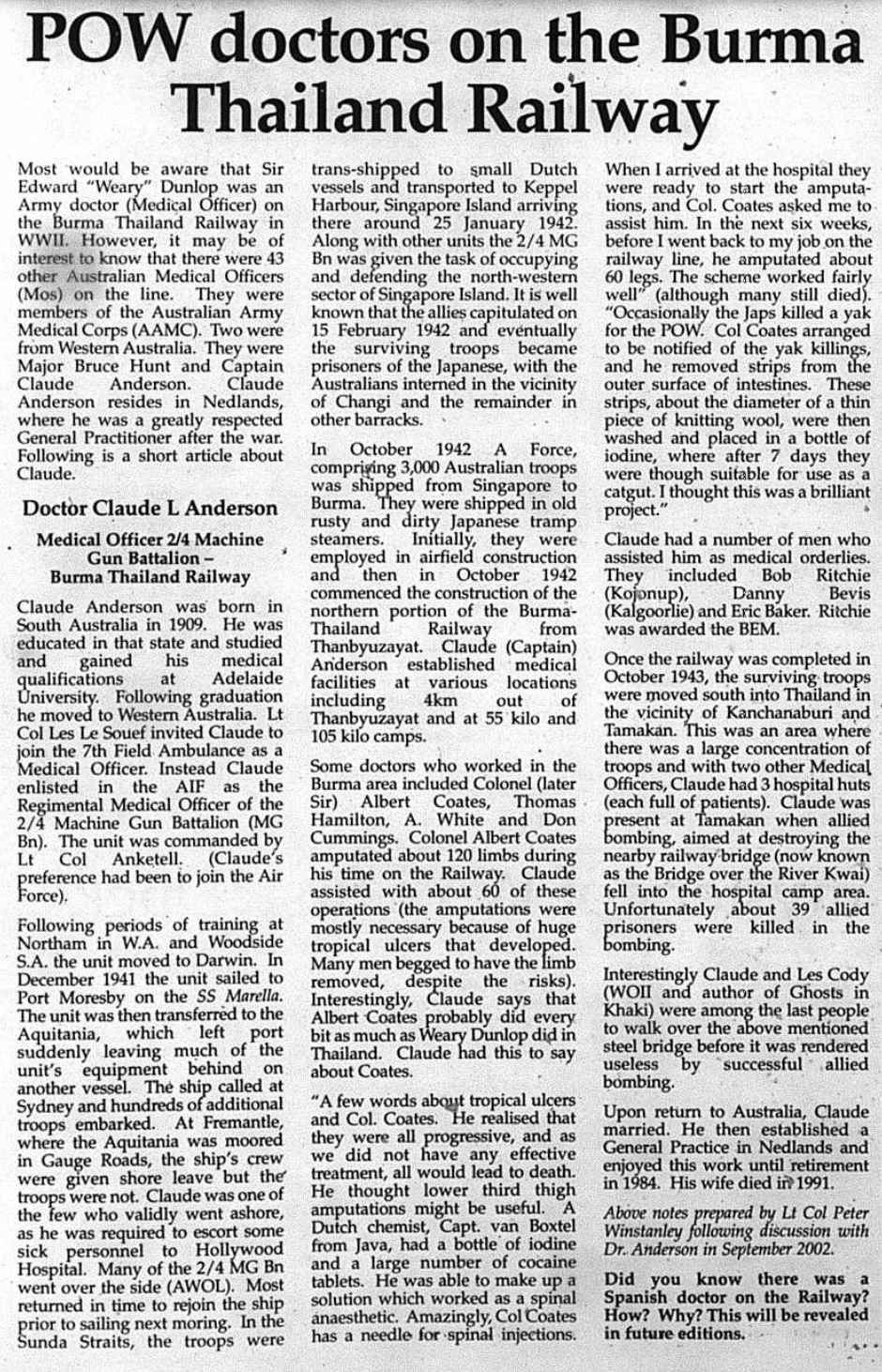
Captain Claude L Anderson WX3464

Captain (Doctor) Claude L Anderson WX3464

Medical Officer 2/4 Machine Gun Battalion – Burma Thailand Railway
Claude Anderson was born in South Australia in 1909. He was educated in that state and studied and gained his medical qualifications at Adelaide University. Following graduation he moved to Western Australia. Lt Col Les Le Souef invited Claude to join the 7th Field Ambulance as a Medical officer. Instead Claude enlisted in the AIF as the Regimental Medical Officer of the 2/4 Machine Gun Battalion (MGBn). The unit was commanded by Lt Col Anketell. ( Claude’s preference had been to join the Air Force).
Following training at Northam in W.A. and Woodside S.A. the unit moved to Darwin. In December 1941 the unit sailed to Port Moresby on the SS Marella. The unit was then transferred to the Aquitania, which left port suddenly leaving much of the unit’s equipment behind on another vessel. The ship called at Sydney and hundreds of additional troops embarked. At Fremantle, where the Aquatania was moored in Gauge Roads, the ships crew were given shore leave but the troops were not. Claude was one of the few who validly went ashore, as he was required to escort some sick personnel to Hollywood Hospital. Many of the 2/4 MGBn went over the side (AWOL). Most returned in time to rejoin the ship prior to sailing next morning. In the Sunda Straits, the troops were trans shipped to small Dutch vessels and transported to Keppel Harbour, Singapore Island arriving there around 25 January 1942. Along with other units the 2/4 MGBn was given the task of occupying and defending the northwestern sector of Singapore Island. Claude was mentioned in dispatches for his medical support of the soldiers during the battle for Singapore. It is well known that the allies capitulated on 15 February 1942 and eventually the surviving troops became prisoners of the Japanese, with the Australians interned in the vicinity of Changi and the remainder in other barracks.
In May 1942 A Force, comprising 3000 Australian troops was shipped from Singapore to Burma. They were shipped in old rusty and dirty Japanese tramp steamers. Initially, they were employed in airfield construction and then in October 1942 commenced the construction of the northern portion of the Burma-Thailand Railway from Thanbyuzayat. Claude (Captain) Anderson established medical facilities at various locations including 4km out of Thanbyuzayat and at 55 kilo and 105 kilo camps. Some of the doctors who worked in the Burma area included Lieutenant Colonel (later Sir) Albert Coates. Thomas Hamilton and Don Cummings. Colonel Albert Coates amputated about 120 limbs during his time on the Railway. Claude assisted with about 60 0f these operations (the amputations were mostly necessary because of huge tropical ulcers that developed. Many men begged to have the limb removed, despite the risks). Interestingly, Claude says that Albert Coates probably did every bit as much as Weary Dunlop did in Thailand. Claude had this to say about Coates.
“A few words about tropical ulcers and Col. Coates. He realised that they were all progressive, and as we did not have any effective treatment, all would lead to death. He thought lower third thigh amputations might be useful. A Dutch chemist, Capt. Van Boxtel from Java, had a bottle of iodine and a large number of cocaine tablets. He was able to make up a solution which worked as a spinal anaesthetic. Amazingly, Col Coates had a needle for spinal injections. When I arrived at the hospital they were ready to start the amputations and Col. Coates asked me to assist him. In the next six weeks, before I went back to my job on the railway line, he amputated about 60 legs. The scheme worked fairly well” (although many still died). “Occasionally the Japs killed a yak for the POW. Col Coates arranged to be notified of the yak killings, and he removed strips from the outer surface of intestines. These strips, about the diameter of a thin piece of knotting wool, were then washed and placed in a bottle of iodine, where after 7 days they were thought suitable for use as catgut. I thought this was a brilliant project”.
Claude had a number of men who assisted him as medical orderlies. They included Bob Ritchie (Kojonup), Danny Bevis (Kalgoorlie) and Eric Baker all from 2/4th MGBn. Ritchie was awarded the BEM.


 Ritchie, Bevis & Baker
Once the railway was completed in October 1943, the surviving troops were moved south into Thailand in the vicinity of Kanchanaburi and Tamakan. This was an area where there was a large concentration of troops and with two other Medical Officers, Claude had 3 hospital huts (each full of patients). Claude was present at Tamakan when allied bombing, aimed at destroying the nearby railway bridge(now known as the Bridge over the River Kwai) fell into the hospital camp area. Unfortunately about 39 allied prisoners were killed in the bombing.
amarkan, Thailand. 21 October 1945. The eleven span steel bridge spanning the Mae Klong river (renamed Kwai Yai river in 1960). Dismantled by the Japanese in Java and transported to the site in 1942, the bridge was rebuilt using prisoner of war (POW) labour, and opened in April 1943. One span of the bridge was destroyed by Allied aircraft in mid February 1945. Note the wooden scaffolding and form work constructed by the Japanese in an attempt to repair the damaged spans. Tamarkan is fifty five kilometres north of Nong Pladuk (also known as Non Pladuk), or five kilometres north of Kanchanaburi (Kanburi as the POWs called it). (Donor B. Leemon)
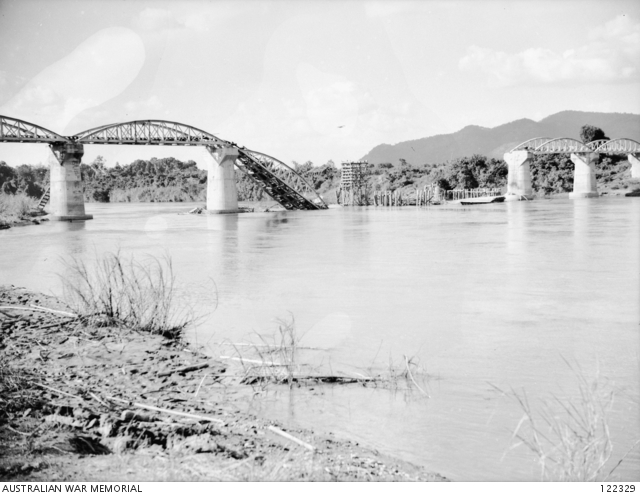
Tamarkan, Thailand. 21 October 1945. The eleven span steel bridge spanning the Mae Klong river (renamed Kwai Yai river in 1960). Dismantled by the Japanese in Java and transported to the site in 1942, the bridge was rebuilt using prisoner of war (POW) labour, and opened in April 1943. One span of the bridge was destroyed by Allied aircraft in mid February 1945. Note the wooden scaffolding and form work constructed by the Japanese in an attempt to repair the damaged spans. Tamarkan is fifty five kilometres north of Nong Pladuk (also known as Non Pladuk), or five kilometres north of Kanchanaburi (Kanburi as the POWs called it). (Donor B. Leemon)


Interestingly Claude and Les Cody (WOII and author of Ghosts in Khaki) were among the last people to walk over the above mentioned steel bridge before it was rendered useless by successful allied bombing.
Some facts about Claude:
He established his combined medical practice/house on Stirling Highway in Nedlands so that his patients had easy access with the ‘trolley buses;. Like all doctors in a solo practice, Claude was on call during the night for emergencies as well as completing his daily house calls and surgery appointments. It was a demanding life especially when he delivered babies during the night.
Claude’s family consisted of his wife Florence, their twins, Bruce and Margaret, and Florence’s son, Alister. When asked about Alister, Claude gave the following information. While working as a young doctor in Adelaide, he met Florence McGlip, a trainee nurse. However, as he was moving to Perth to accept a posting in medicine at the Royal Perth Hospital in 1935, he was not prepared to enter a binding relationship. They remained good friends.
Soon after finishing her training, Florence and her sister Mary, went on a world sight seeing trip to England and Europe. On board the ship, she met Alister Turner, an English naval doctor who was returning to England from the Middle East. This shipboard romance resulted in their marriage later in Adelaide. When returning to England, their ship arrived in Fremantle and they called on Claude. In England, Alister went into private practice with his father, also a doctor. The couple had a baby son, Neil Alister, born in September 1939.
When the War began, Alister was recalled to Royal Naval duties. Sadly, he lost his life in the evacuation of Dunkirk in 1940 when his ship, HMS Keith, was torpedoed and sunk. Florence returned to Adelaide with her baby on the last ship returning to Australia.
In Perth, Claude had already enlisted in the Australian Medical Corps and he became a Prisoner of War for three and a half years with the fall of Singapore. After the war ended, Claude remained in Thailand along with a number of other Medical Officers to tend to sick and frail soldiers.
When released from the prisoner of war camp, Claude corresponded with his family and learned that Florence had returned to Adelaide. As a result of this information he also corresponded with her. He got to know that Alister through pictures and letters about him. He returned to Adelaide on 5/11/1945 and married Florence two days later. Claude often chuckles when he recalls how Florence met him – ‘You’re getting married in two days!’ She reckoned that being widowed and he a POW for so long, the sooner the better. The couple with Alister, then 6 years old, returned to Perth as a family and lived in Nedlands.
Claude refused to change Alister’s surname to Anderson, saying that he should retain the Turner name in honour of his brave father.
Claude and Florence were happily married for 45 years until Florence’s death in 1991.
In 2006 Claude (aged 96) lived in Nedlands, Western Australia.
These notes were prepared by Lt Col Peter Winstanley OAM RFD JP following discussions with Dr Anderson, September 2002.


From The Listening Post – August 2003

Lawyers On The Notorious Burma Thailand Railway

LAWYERS ON THE NOTORIOUS BURMA THAILAND RAILWAY


Amongst the West Australians who laboured on the railway, were 3 men who were or became solicitors and one who became a magistrate. They were Captain George Gwynne, Ross Ambrose, James Wilson and Bernie O’Sullivan.
Another who embarked on a law degree was WX1126 Graeme Keats Cameron 
His name is recorded in the UWA Law Faculty, however we are not sure Cameron practiced.  Cameron was send to work on the Burma-Thai Railway with the ill-fated ‘D’ Force Thailand V Battalion which endured the harshest of conditions and endured large numbers of deaths.
On 17 October 2016, it marked 73 years since the completion of the infamous Burma Thailand Railway. This was a single-track railway 421 kms long, constructed by the Imperial Japanese Army, which connected the rail systems of Burma and Thailand. More than 60,00 Prisoners of War (POW) and a huge number of natives were used in the construction. It is assessed that around 13000 POWs died over a period of around 16 months. Around 90000 of the natives are estimated to have died. The deaths were caused by endemic diseases (malaria, dysentery, pellagra, cholera), starvation, exhaustion and beatings.


Captain George Gwynne 
enlisted into the 2/4 Machine Gun Battalion December 1940 having previously been in the 10th Light Horse or Militia unit. He was 36 years of age. He trained in Northam, Woodside and Darwin, sailed for Singapore from Darwin, via Pt Moresby, Sydney and Perth. Arrived Singapore 25 January 1942 and fought in the defence of Singapore. He became a POW upon capitulation on 15 February 1942.
George was sent to Thailand to work on the Railway April 1943 as part of F Force. This force was of 70000 being 3400 British and 3600 Australians. This group is regarded as having the worst experience of all the POWQs. They marched 300km over 18nughts from their arrival point in Thailand to their work station. This was in temperatures over 40C. The death rate within this group was 44% (59% British , 28% Australians). George worked closely with Major Bruce Hunt (a prominent Perth doctor specializing in diabetes and generally regarded as the outstanding medical Officer of F Force). He was at some stage working as the Ward Master in Hunt’s hospital facility, which was established at 50kilo camp in Burma. In an article written for “The West Australian” on 29 November 1945, Bruce Hunt made mention of the many volunteers, including George, who worked in the wards in Burma. Of approximately 2000 POW patients in this hospital facility, 750 died. Following completion of the Railway in October 1943, the bulk of the POWs were transported back to Singapore like cattle (the same as their move from Singapore to Thailand by rail around 12 months earlier). He spent some time, with Bernie O’Sullivan, employed on the Changi aerodrome. At all times George was prepared to place himself between the Japanese and the POWs and suffered bashings from the Japanese guards.
George served articles in the late 1920’s and became a partner in Parker and Parker in 1930. George and his wife Sheila had interest in the racing industry. The champion horse Raconteur was bred and raced by Sheila. At one stage pre war George was a leading amateur jockey. He was also a keen yachtsman and was Commodore of Royal Perth Yacht Club in mid 19030’s. George was an active member of Legacy for many years. He passed away in 1962.
T.R. (Ross) Ambrose
enlisted in the AIF. Ross was an older man. On enlistment he was aged 35. He was a reinforcement for the 2/4 Machine Gun Battalion. He too became a POW on 15 February 1942 in Singapore. As with Bernie O’Sullivan he was sent to Thailand as Part of H Force. This group labored on the southern end of the Railway. 25% of this force died in Thailand. This force left Thailand for Singapore in May 1943 and, like the others, was transported 30 POW to a steel railway truck 5.5m by 2.15m. They had to take turns to lie down. The journey lasted five days / 4 nights. The following are some anecdotes provided by Ross’ son David.
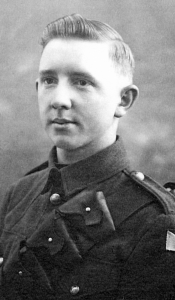
He usually referred to captivity as the time he spent ‘as the guest of Nippon’;
He spoke almost compassionately of the Japanese guards in the camps at the end of the war who, he said, were forgotten by their superiors and whose situation became as desperate as the prisoners – ‘in the end, it became a race between the prisoners and the guards for who would get the rats’ (as a source of food); and
  • He was enormously proud of his old slouch-hat and ‘to have been an Australian’ in captivity. He had little time for many of the British officer class, with the sole exception of a Catholic priest, because they left their soldiers in the jungle if they fell by the wayside before working parties returned to camp at night. He said that the Australians, having brought in their own inform, would then form up arties to go out and bring in any of the Brits they knew they had left behind.
His sister Mrs Deborah Carson was in Sydney when the POWs returned. They were reunited with relatives at the Sydney Show Grounds. She remembers that Ross was very wasted being only around 6 stone and he had dreadful sores (caused by 3 ½ years of malnutrition as a POW). Post war Ross became a Senior Partner in Jackson McDonald. He passed away in 1988.


James (Blue) Graham Wilson. enlisted in the 2/4 Machine Gun Battalion in November 1940 when he was twenty. He arrived in Singapore on 25 January 1942 and just three weeks later he became a POW. Blue was wounded in the defence of Singapore and it is said that he carried a bullet in his body to his death. Whilst incarcerated in the Changi are, Blue, who was a pianist, was required to play for the Japs. This occurred whilst he was in a work party on Johore Bahru.
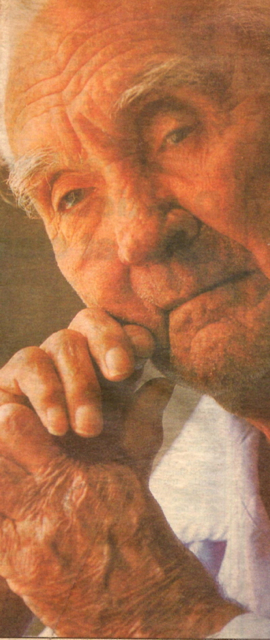
Blue labored on the Burma end of the line from mid 1942 to around January 1944. He was discharged from the army later than most in March 1946. There is an unconfirmed suggestion that he returned to Australia via England.
After the war he gained his matriculation in 1947 and graduated from University of Western Australia in 1953. Justice Robert Anderson had this to say about Blue, ‘He was a person who showed profound concern for his clients and displayed meticulous attention to detail’. Robert Meadows QC said, ‘ Blue was a marvelous chap who put new articled clerks at ease and made them most welcome’. Around 1963 he moved to Hong Kong where he became a magistrate and subsequently rose to higher judicial office. It is understood that he developed a deep interest in antiques. He was an extremely generous man and sponsored a number of Hong Kong students to study in Australia. He was a wonderful host to Western Australians passing through Hong Kong. Blue died around 1980 having never married.
 
Bernard (Bernie) O’Sullivan

was a Lieutenant in the 2/4th Machine Gun Battalion. (Pre-war he had enlisted in 28th Battalion as a member of the Militia). 2/4th Machine Gun Battalion landed in Singapore on 25 January 1942. On 8 February the Japanese commenced their attack on Singapore Island, General Percival capitulated on 15 February 1942. The Allied servicemen became Prisoners of War (POW) that day.
In May 1943 Bernie was sent to Thailand as part of H Force (3000 POW’s including 700 Australians). H Force was located at the southern end of the Railway and was involved, amongst other things, in the notorious Hellfire Pass. Bernie was in Malayan Hamlet with Major Bert Saggers (owner of Saggers Shoe Store in Perth) and the medical Officer was Kevin Fagen (who was highly regarded by the POW’s in this location). Work on Hellfire Pass commenced on ANZAC Day 1943. Hellfire Pass was a cutting which was 400m long and 18m in depth and was cut through solid rock by manual labour using a technique known as ‘hammer and tap’. The cutting was completed in twelve weeks at a cost of 400 lives. Bernie suffered from cerebral malaria whilst working on the line. On completion of the Railway Bernie spent some time in hospital and was transported back to Singapore.
Post war Bernie worked for a period as the Associate to Chief Justice Sir John Dwyer. He subsequently studied and passed the examinations for appointment as a magistrate. In 1953 he was appointed Magistrate at Cue. There followed time at Kalgoorlie, Narrogin, Northam and Perth. In 1967 he was appointed Chief Industrial Commissioner, retiring in 1981. For some 30 years he was President of the West Australian Football League Tribunal. Bernie, having been a Legacy Ward himself, was an active member of Legacy for many years. As a younger man he was involved in athletics and continued his association with the sport after the war. Bernie was awarded the Order of Australia in 1985. He passed away in 1997 aged 75.
Notes prepared by Lt Col Peter Winstanley RFD JP (Retired) E-mail pgwinstanley@cambraivillage.com.au Web Page: www.pows-of-japan.net

Carlyon, Bill – Changi Veteran recalls POW hell

See the past: Mr Carlyon remembers his days on the infamous Burma railway


CHANGI VETERAN RECALLS POW HELL

By Karen Brown

The West Australian Newspaper, April 1995

After 90 years, Billy Carlyon’s eyes are starting to dim, but the memories of the time he spent as a prisoner of war building the infamous Burma railway remain vivid.

The aboriginal bachelor, a member of the 2/4 Machine Gun Battalion, was captured by the Japanese in 1942, within weeks of landing in Singapore.

“My war was over before it had started. They captured the lot of us,” he said yesterday. For the next 3-½ years Mr Carlyon lived on his wits and his luck.

He survived internment at Changi and watched scores of his mates suffer at the hands of the Japanese army and fall victim to starvation and disease as they worked on the railway, which was to claim 2600 Australian lives.

Mr. Carlyon suffered severe bouts of malaria, dysentery and beri beri and his weight dropped to 44.5 kg during his internment.

Australia’s POEs were honoured at the National War Memorial in Canberra and Government House in Perth yesterday, the 53rd anniversary of the Fall of Singapore.

Mr Carlyon who lives in Onslow, is recovering from an eye operation in Hollywood Private Hospital.

Prime Minister Paul Keating said Australians Should never let the outrage of Would War II atrocities committed by the Japanese forces fade from memory.

Speaking as Canberra celebrated the opening of the Australia Remembers commemorative year, he said the 50th anniversary of the end of World War II was a time to pay tribute to the 27,000 soldiers who had died in it.

KILOMETRE CHART OF THE THAILAND-BURMA RAILWAY

KILOMETRE CHART OF THE THAILAND-BURMA RAILWAY


PoWs often gave English names to places. Japanese adapted Thai names to their own pronunciation. Several names are given to assist readers.


LOCATION ON RAILWAY 1942-1945 (distances from NONG PLADUK)


000 km           NONG PLADUK, Nonpuradukka


002                 Konma (transit camp)

005                 BanPong.Banponmai

013                 Rukke

026                 Taruanoi, To Reoa Noi, Talua

039                 The Muang, Tamuang, Tamoan, Ta Mueng

041                 Tung Tang

047                 Kao Din

048                 Pak Prage

049                 Tung Na Talea

051                 KANCHANABURI, Kanburi


055                 THA MAKHAM,Tamarkan

(Bridge over River Kwai Yai)


057                 Chunghai. Kao Poon, Kapon

069                 Wang Len, Wanran, Wun Lung

078                 Tapon, Won Yen, Wang Yen

088                 Bankao, Bangkao

098                 Takiren, Tarkilen, Ta Ki Len

108                 Arrowhill, Arruhiru, (Wang Sing)

110                 Lum Sum (for waterfall)

114                 Wang Po, Wanpo, Wampo (double viaduct)

121                 Chong Cab

125                 Wanyai, Wang Yai

130                 THA SOE, Tarso, Ta Soe


130                 NAMTOK (Railway ends 1973)


139                 Tonchan (spring camp)

147                 Tampi, Tampines

155                 HinTok, Hintoku

166                 Kanu, Kanyu (several camps)

168                 Sai Yoku, Kinsaiyok sub-camps

172                 Kinsaiyok Main (waterfalls)

181                 RinTin, Rinten, Lin Thin

190                 Kuei, Kui Ye, Kui Yong

198                 Hin Dat, Hindato (hot springs)

208                 Brankassi. Purankasi, Prang Kasi

218                 Takunun, Dha Khanun, Takanun

229                 Namajon, Namajo, Namuchonyai

237                 Tomajo, Tamajo, Tamazyo

244                 Tamuron Part, Tamuronpato

250                 Krian Kri, Kuriankurai, Kreung Krai

258                 Kurikonta

262                 Konkuita, Konkoita, Concreeta


262.87            MEETING POINT 17thOctober 1943


273                 Teimonta, Timontar

282                 Nikbe, Nikki, Nike

294                 Sinkurai, Songkla, Kenngkluay


THREE PAGODAS PASS

(Thailand /Burma border)


301km            Changaraya

311                 Anganan, Aungganaung

315                “100 kilo” Camp, Anganan 2

320                 Kyando, Kyondaw

332                 Aparon, Apalon

Steel Bridge

337                 Sparain

343                 Mezari, Mezali, Mesali

349                 Kami-Mezari, “Upper Mezali”

354                 Ronsi, Ronshii

358                 Tanzun, Taungzun

362                 Tanbaya, Tambaya (“Hospital ”)

369                 Anakuin, Anaqueen, Anankwin

375                 Bekitan, BekeTaung

385                 Repo, Retpu

391                 Konnokoi

396                 Rabao, Alepauk

401                 Tettoku

406                 Wegare, Wegale SIN‐TANBYUZAYA

“New Thanbyuzayat”


414.92km      THANBYUZAYAT

Burma Base Camp


421                 Kuwanra                              From Moulmein

429                 Karuoto, Kawawthut                        43km

433                 Kamae, Kamawet                 38

439                 Toku, Tawku                          32

453                 Mudon                                    24

453                 Menganen                              19

461                 Pau, Pa-Nuk                           11

466                 Kokani                                    6

471.3              MOULMEIN, Morumein        0


BRANCH LINE THANBYUZAYAT TO YE (going South)


THANBYUZAYAT                                           000 km

Banga                                                             9

Karotshue, Karokpi                                       14

Anke                                                               19

Tenyu                                                             26

Atsunein                                                         35

Nikkayin                                                         45

Ramayin                                                         55

Karunpe, Taugban                                        65

Painwan                                                         71

Paraenki                                                         78

YE                                                                   86.40


Hellfire Pass Memorial, Thailand-Burma Railway Fourth Edition Australian-Thai Chamber of Commerce 1997

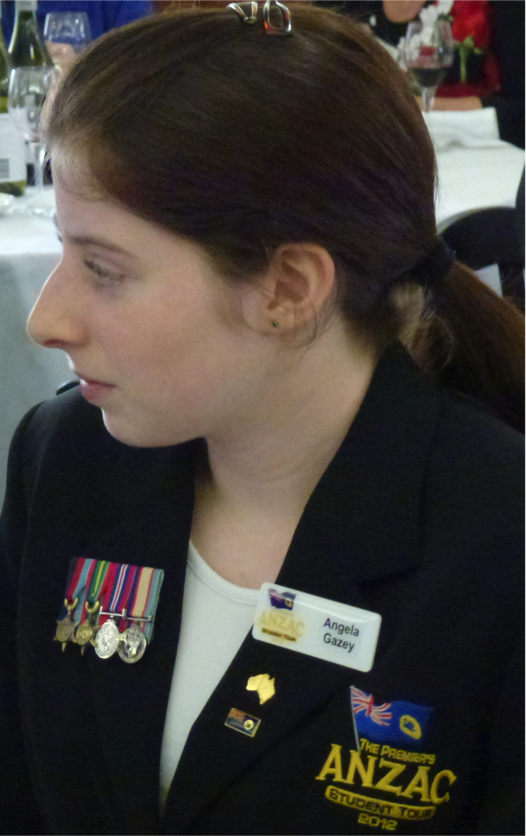
Angela Gazey – Premier’s Student Tour Group 2012

Holst Eric J

ANGELA GAZEY and the death of Eric Joseph HOLST WX8678 Private, ‘A’ Company, Born 1913 died 1945

Angela, former student of Kalamunda Senior High School and a selected member of the Premier’s Student Anzac Tour 2012 which focused on:

  • the fall of Malaysia and Singapore.
  • the tragic story of Sandakan.
  • honouring the 2/4th Machine Gun Btn.

With the main focus of the education program on the prisoner of war experience and Sandakan, the tour group visited States of Sarawak, Labuan and Sabah, attending ANZAC Day commemorations at Sandakan where a prisoner of war camp was first established in 1942. Angela’s great uncle, Private Eric Joseph Holst, 2/4th MG Btn, aged 31 years perished in 1945 on the wretched Sandakan march. His death records confirm he died of malaria on 20th March 1945

In 2012, Angela Gazey was a guest speaker at our annual luncheon. With the assistance of Student Tour Leader & Organiser Robyn Cleaver Angela spoke about the group’s experience and shared with us some of the tour photographs.

ANGELA who at the age of 18 years was the RSLWA’s 2013 Youth Ambassador and following the march, gave an address at the Anzac Day Service at the Perth Esplanade . 
 She spoke with confidence, and delivered a moving speech to the very large audience gathered. In particular, Angela urged her generation to study the experiences of their forebears.

Angela Gazey

“Our freedom came at a cost, and it is important we learn about this”


Joe & Daniel Pearce

Joe Pearce

By Daniel Pearce


The author Daniel Pearce is the grandson of Joe Pearce. He wrote this story for an English assignment while in year 7 at Dumbleyung District High School 1997.

Joe Pearce was born in Wagin in 1917. Joe’s mother was Emma Warren and his father, Thomas Pearce. They had a total of ten children, their names were Winifred, Dorothy, Tom, May, Joe Jack (who sadly died of a brain tumour at age 14), Jean, George, Caroline and Morna.

At the age of six in the year 1923, Joe went to school at Moulyinning, than at the age of twelve he went to North Moulyinning in 1929. He stayed there for years. A special memory is travelling to school each day in the horse and sulky travelling 6 miles in one hour.

Joe immediately started work on the farm, never considering being anything else other than a farmer.

Joe started playing football at Moulyinning at the age of 14 in 1932. There was no Moulyinnning team in 1933 so he played for Kukerin. The following year he played for Harrismith. Moulyinning Football Club reformed and their team won the first premiership ever. This was the year of 1935, following with four premierships in a row. Then he was selected into a carnival team and from here he was selected to play for Swan Districts. Joe played football for Swan Districts for a year, then Second World War broke out.

Joe Pearce joined the army in 1941 and stayed on the farm until he was called up for service. He entered the 2/4th Machine Gun Battalion and trained in Northam for about six months, he then transferred to the cold Mount Lofty Ranges in South Australia. They were then moved to Darwin to build gunposts and roads in Darwin and while there, the Japanese officially declared war.

Then the battalion was moved to Papua New Guinea by ship. When they got to Port Moresby their orders were changed, hence, they were transferred to another larger ship the ‘Aquatania’. Joe and his battalion sailed right around Australia past Sydney and around to Perth where they picked up reinforcements. The they sailed to Singapore and came into the Sundra and Sumatra Straights. There they were transferred into small Dutch boats.

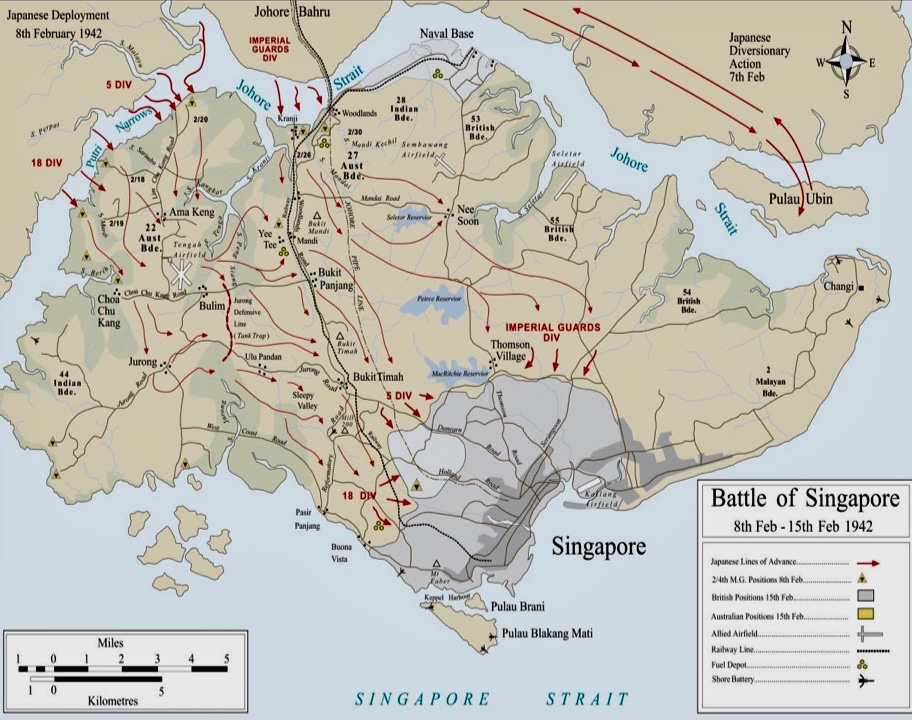
They landed on the coastline of Singapore in heavy rain, this was the 1st of February, the only day the Japanese didn’t raid Singapore so they had no trouble landing. The battalion took up their positions on the beach facing Malaya. They dug gun pits and readied their guns. On the 7th the Japanese started shelling the battalion, continuing for ten hours. The Australians lay low and waited for the major attack, which came on the 8th February. The Australians took a heavy toll on the Japanese numbers but the Japanese had cut them off from the other Australian forces so they had to fight their way out. Their battalion reformed and after heavy fighting for the rest of the week with consistent bombing and strafing from the Japanese Air Force, the Allied commanders decided to surrender to save the population of Singapore. They were told to lay down their weapons on the 15th February 1942 and they were taken prisoners of war.

Altogether the battalion lost 160 men and 340 were injured (there were 960 in the whole battalion). They were imprisoned in Changi Barracks and from there were sent out on working parties all around Singapore. After 10 months, they were sent to build a long railway line in Thailand. The party Joe was in was sent to a place called Banpong in Thailand. The men started the Thailand end of the railway and built it towards Burma. Joe worked on it for three and a half years. Finally, the allied forces over ran Japan and the Japanese were forced to surrender in August 1945. The war was finally over and the allies were free.

Very little had changed in farming while he was gone, but goods such as food, petrol and clothing were rationed and hard to get.

Joe returned very sick and with a weakened body and was determined to get back into football to regain his strength. Halfway through the 1948 season, he resumed his career with Swan Districts. Joe won the Fairest and Best for two years in a row and the club has an Honour Board titled ‘Joe Pearce – Award of Courage’. Joe’s love of football continued when he coached Moulyinning Football Club for twenty years – winning nine premierships in a row and thirteen overall.

Joe met Gwynneth Dow in Perth and married on the 22nd February 1946, the start of their life together. Joe has three children; their names ar Allison, Tracy and Tom who love him dearly. He also has seven grandchildren and four great grandchildren. He and Gwynneth have shared fifty one years of marriage together.

At the age of 82 he is still on the farm. Working on the land with his son.

Joe & Daniel Pearce

Borrow, Joseph WX8712 – Born 4/12/1916 Died of Wounds 15/2/1942, Singapore.

‘Joe Borrow shared the fate of so many of his generation.
Born during a war, grew up in a depression and killed in another war.
He did not know what it was like to have a secure job, home and family of his own.
And like so many other victims of war, his remains lie in foreign soil, far from his homeland.’

By Doreen Borrow.


Joe Borrow died of wounds aged 25 years received in action  Singapore, 15 February 1942.

Joe Borrow was born Newcastle-upn-Tyne, England 1916.  One in four of 2/4th soldiers were born England, Wales, Scotland etc.
The Borrow family arrived from London 15 October 1929 on ‘Otranto’ from London.  Joe’s father John Borrow had been a miner.  Joseph junior was about 12 years of age.  The family were living at Gosnells when Joe enlisted.
He enlisted AIF Oct 1940 – and like many others did so to have a secure job and income.

2002 Visit by Joe Pearce & John Morgan to Lim Chu Road (8 February 1942)

2002 Visit by Joe Pearce and John Morgan to Lim Chu Kang Road (8 February 1942)

On the 60th anniversary of ‘The Fall of Singapore’ Joe Pearce and John Morgan, both original members of No. 13 Platoon travelled to Singapore for the occasion. They made a return visit to the isolated end of Lim Chu Kang Road – to the place they were located 8th February 1942.
The following is the story Joe Pearce related to Murray Ewen, Author, ‘Colour Patch.’
‘My feelings on finding our old gun emplacement site on the Buloh Estate initially was one of excitement. Finally here we were at the same spot after all these years. The jetty, which had been enlarged was still there and is still used by the owners of a large residence which is there now but of course wasn’t in 1942. Back then, there was a two-storied house with an orchard and palm trees. This was where our slit trenches were but now this whole area is with jungle. Part of the wall where our guns were set up has been extended on one end. The middle section of this wall has been lowered to about half of its original height but nevertheless you still roughly work out where our three guns were sited.
I sat down quietly and my mind reflected back to that fateful day when the Japanese artillery barrage started and pounded us continually for seven hours.
First Bob Pratt, Bill Patterson and myself were knocked out. Later when the Japs tried to land, Eric Wankey, Jim Loller and Tom Beard were carted out. Lin MacDonald and Fred Tregenza were ambushed on the way out, never to be seen again. Later as POWs Edgar Hunt, Jack McCarthy in ‘D’ Force, Bill Patterson in ‘F’ Force, Ron Langdon in ‘H’ Force, Johny Browning and ‘Comet’ Shirley in Sandakan Borneo. There was also Harry Carter, Norm Venemore, Jim and Lacy Gibbs drowned going to Japan and Ken Lally killed in a mining accident, all never to see Australia again.
Then the fight to stay alive for three and a half years until war’s end and the joy of seeing Australia again and our family and friends. Our loves, lives and ambitions realized, children to raise, beautiful life. Now just John Morgan and myself from No. 13 Platoon back at the landing after 60 years. All these memories good and bad, of life I feel very lucky and humble for my life’s experience and say a prayer for our fifteen that never saw Australia again.’ Joe Pearce, 25 April 2002.

Below:  Joe Pearce

Above:  John Morgan

Hill 200, Ulu Pandan IV (Mapanyang) 12th February 1942

Hill 200, Ulu Pandan IV (Mapanyang) 12th February 1942


On 11/2/1942 Lt-Colonel M.J. Anketell, Commanding Officer of 2/4th MG Battalion was ordered to equip all machine gunners of his battalion he could possibly muster (many soldiers had been injured, were lost or whereabouts unknown and others had been killed  in action – Japanese invasion began 8 Feb 1942.) He was to send them forward to fight as infantry on the 22nd Australian and 44th Indian Brigade’s fronts.
During the day Australians and Indian soldiers had little respite from Japanese gun and mortar fire as well as enemy air attacks.
The first solid group to arrive at 22nd Brigade’s front was a mixed company of about 90 2/4th machine gunners. Progress had been slow due to enemy air activity, but they managed to occupy Hill 200, Ulu Pandan IV at 1700 hours.
At about the same time the Signals No. 1 and AA No. 2 Platoons under the command of Capt. McEwin CO of Company HQ took up positions approximately 300 yards south of feature Hill 200 atop a small hill. By 0930 hours on the morning of 12th February the 2/4th made up about half of the total Australian strength of 800 men.
During the nights of 11th-12th February Australian artillery did a good job keeping the enemy quiet. However the next day was a different story. The Japanese 18th Division succeeded in pushing between the Australian and Indian positions near Ulu Pandan-Holland Road junction. In an attempt to get behind  22nd Brigade’s position the Japanese began an infiltration movement around the northern flank of the machine gunners on Ulu Pandan IV.
In their attempt to outflank the Australians, the enemy had moved into a long gully between the Gordon Highlander’s position and those of the 2/4th on Ulu Pandan IV. Two detachments of machine gunners were sent to an area in the vicinity of a railway bridge on Holland Road. They moved in the gully and halted any further penetration by the enemy. All efforts by the Japanese to occupy this high feature had been thwarted and had to remain content to pour in machine gun, mortar and spasmodic artillery fire to little effect.
Just before midday 12th Feb, the enemy attempted to bring forward reinforcements from north by truck. This convoy ran into trouble in the shape of an armoured car detachment led by Cpl. Oliver Stanwell. Cpl. Stanwell’s crew destroyed the reconnaissance car and 13 trucks by the time they had finished their work.  This action had successfully blocked the road for the enemy for some time.
Cpl. Oliver Stanwell  later died with ‘E’ Force in Borneo.
By 1500 hours on 12th Feb the Japanese had broken through the Indians and captured Hill 150. This necessitated an adjustment to the 2/18th Battalion’s position to counter the enemy’s flanking manouvre. At about 1700 hours a patrol sighted some stationery Japanese transport vehicles – indicating the enemy had brought up fresh troops with the intention of moving in behind the left flank of 2/18th Battalion’s position. By 1800 hours heavy fire was being taken to the left rear of 2/18th Battalion however, the fire was heavier on the 2/4th MG Battalion’s position on Ulu Pandan IV.
By this time the Japanese had captured Hill 130 providing them excellent cover and the reason this feature would have been too costly in lives to regain. At dusk it was decided to reform the line by slightly withdrawing the left flank of 2/4th MG Battalion and filling the gap between 2/4th and 2/18th with another composite unit. Between 1700 and 2000 hours a great deal of action developed forward of 2/4th positions, the situation was becoming serious. The hills opposite the 2/4th on Hill 200, Ulu Pandan IV were literally infested with enemy who were too far away to harm with small arms and machine gun fire. A CDF (Call for Defensive Fire) from artillery was made but because of poor signal communications these guns could not be ranged in accurately on the enemy – an ideal opportunity to inflict heavy loss upon the Japanese was lost.
The Australians were now experiencing their first taste of the 150mm (5.9 inch) mortar nicknamed the ‘flying pig’. The pig was in fact the Model 93 (1933) smooth bore muzzle loaded mortar that had a range of 2,100 metres. The projectile for this weapon weighed 56lbs and contained 14lbs of explosives. The ‘flying pig’ is really renowned for the noise it made when its missile was airborne and for huge hole it made in the earth when it landed. It couldn’t be said this weapon ever inflicted any harm upon 2/4th men, but it certainly must have terrified many. It was about 2130 hours that Lt-Col Anketell was badly wounded.
Capt. Colin Cameron had accompanied the Colonel around his ‘C’ Company area. Because ‘C’ Company had lost hills L, K and H Lt-Col Anektell, Capt. Cameron and Major Robertson who was commanding a company from 2/20th Battalion, were on reconnaissance to define a new perimeter. Capt. Cameron reported to Major Cough, ‘D’ Company that the Colonel had been badly wounded by mortar or artillery shell burst. The R.M.O. Capt. Anderson dressed the Colonel’s wounds and sent him back to Alexander Hospital. Meanwhile the battle to hold Ulu Pandan had only just begun. The following is taken from Col. Thyer’s report provides a good description of events as they affected the 2/4th.


Neither the noise tactics nor the intensity of hostile fire perturbed the machine-gunners who waited patiently until the enemy came to within 150 yards and then opened up a steady and concentrated fire on the crowded enemy. Those who got through this barrage of rifle and machine –gun bullets were dealt with by hand grenades. One Japanese attack after another was thrown back with heavy losses. Shortly afterwards Brigade orders to withdraw were issued, but it was not until 2200 hours that the Bn. Received its instructions.
By this time the enemy had gained the lower slopes of Pandan IV and Hill 130 from which was pouring small arms fire into the rear of ‘C’ Company and on a smaller knoll 300 yards to the south. The battalion closed into a tighter perimeter stubbornly resisting the enemy’s attacks. In the heavy fighting this unit suffered heavily in killed and wounded, including in the latter was Lt-Col Anketell, the CO, who later died of wounds.
By this time the MG Bn was completely surrounded and because of its inability to organize a detachment to cover the withdrawal it was obvious the battalion was not yet out of danger. To relieve pressure a counter-attack with bayonet was put in and the Japanese put to fight. In every encounter with the A.I.F. they would not face the bayonet.’
Capt. McEwin had reformed his Signals (CO Lt Curnow with No. 1 Platoon) and AA Platoons (CO Lt Royce No. 2)  on the track near the road and led them up to a point opposite Hill 200 where he attacked with both platoons. The Japanese were holding the northeast slope of the hill and the attack pushed back to the crest. Some 2/4th were killed and there were many wounded in this attack. The wounded were sent back. Capt. McEwin pushed on again to take the crest of the hill with what is believed to have been about 20 men. On reaching the crest they attempted to consolidate their old pits, but the enemy came back strongly and only about 4 or 5 machine gunners came out.
Young and inexperienced officers McEwin, Curnow and Royce were all KIA. It is believed these three officers were responsible for the impetuous decision for a bayonet attack on Hill 200 being held by Japanese machine guns.   To attack a hill from the bottom with the enemy entrenched at the top can only be considered reckless. 
Lt Col Anketell had been seriously injured and taken to hospital – surely he would not have approved of such a decision.
‘With the aid of the damaged trucks placed across the road, 4 officers and 3 other ranks covered the withdrawal of 50 or more casualties to the Regimental Aid Post. By 0300 hours on the 13th Feb, the battalion now reduced to 250 all ranks was back on Cemetery Hill near Buona Vista Road triangle where it bivouacked for a well-earned respite. The West Australians had acquitted themselves magnificently. During the critical hours between 1700 hours and 2300 hours they had been supported by artillery, who despite the fact that their range was at times so short that the rounds fell among our troops, did invaluable work in relieving the pressure on Pandan IV.


About 43 2/4th Machine Gunners were KIA or died of Wounds received at Hill 200, Ulu Pandan on 10th, 11th, 12th February 1942
WX239 ABERLE, John Roughton – ‘C’ Coy 10 Platoon, KIA 12 Feb, Ulu Pandan
WX9828 ADAMS, Arthur Alfred – ‘C’ Coy 11 Platoon KIA 11 Feb, Ulu Pandan
WX3376 ANKETELL, Michael Joseph, Commanding Officer 2/4th M G Battalion.
Wounded 12 Feb Ulu Pandan – Anketell as was his habit (and not a safe one) had scoured ahead to try to sight the  Japanese. These were tense times, the troops fighting for survival.  Tragically Anketell was hit by one of his own men.  Dr. Anderson sought to dress his wounds, and Anketell was transported away. 
The facts of this were kept very quiet, with only a handful of 2/4th men aware of the facts.  We know the unnamed soldier involved lost his life in North Borneo at Sandakan – he had thought Anketell was enemy as they had been surrounded.
Anketell was evacuated to Alexandra Hospital where he died at 7.45pm on 13 Feb 1942 aged 51 years.
WX8650 BISHOP, Hector John – HQ No. 3 Platoon, KIA 12 Feb, Ulu Pandan
WX7947 BROWN, Allan Roy – HQ 3 Platoon, KIA 12 Feb,    Reformatory Road, Ulu Pandan
WX7469 BUTLER, Thomas Joseph HQ No. 3 Platoon        WIA 12 Feb.  Recd Chest wound (and possible throat wound) during bayonet charge at Hill 200, Ulu Pandan.  Evacuated to 2/13 AGH where he died in hospital of pneumonia 14 Feb 1942 aged 34 years.
WX17860 CAIN, Henry David
‘A’ Coy HQ, KIA 12 Feb, Hill 200, Ulu Pandan (Reinforcement)
Cain was son of Richard and Vera  Cain of Donnybrook.  He enlisted with AIF on 13 December 1941!  Barely trained when he was included in reinforcements taken to Fremantle to board ‘Aquitania’ on 15 Feb 1942 when he joined ‘A’ Coy HQ under CO Major Saggers (soon after transferred to ‘E’ Coy & SRB) & 2 I/ c Capt Thomas  & Lt. McCaffrey.


WX7479 CANNON, Reginald Francis – HQ No. 1 Signals, KIA  12 Feb Hill 200, Ulu Pandan
WX8192 CARLISLE, Robert James – ‘C’ Coy 10 Platoon KIA  11 Feb Reformatory Road, Ulu Pandan
WX11584 CASE, William Cecil – ‘C’ Coy HQ, KIA 12 Feb, Hill 200, Ulu Pandan
WX7163 CLARE, John – ‘C’ Coy 10 Platoon, KIA 11 Feb, Ulu Pandan
WX3446 Lt CURNOW, Francis Lyle C.O. HQ 1 Signals KIA 12 Feb, Hill 200, Ulu Pandan. Sgt, Ben Hansen was KIA and with Lt Royce, Phillips and Innes were KIA, CPL Rutherfod took over command of the Signals Platoon.  Rutherford died illness with V Battalion Oct 1943 aged 22 years at Chungkai Hospital. Rutherford promoted posthumously to Lieutenant.
WX9561 DAHLBERG, Albert Edward – Corporal of 88 LAD KIA 10 Feb Reformatory Road, Ulu Pandan aged 30 years.
Albert’s mother widowed Bertha Dahlberg was known to have premonitions and during her lifetime foretold many events.
She told her family during the early hours of the morning of the day Albert died, 10th February 1942, he came to say goodbye to her.  He called out to Bertha, “Mum” from the doorway of her bedroom.  Albert was dressed in white and she replied “Oh my son, you are home, thank God you are home.  I have prayed for this.”  As Bertha moved towards Albert his image receded and faded into the room behind.
In the family kitchen the following morning, a distressed Bertha told her family her story and of seeing Albert.   She knew he was dead.  The family believed her to be overwrought and said she had had a dream which appeared so vivid because she was worried.
Bertha and the Dahlberg family did not receive confirmation and news of Albert’s death until early 1946.
Albert had given his sweetheart Mary an engagement ring – known only to the immediate family.  They planned to announce their wedding plans when Albert returned.
WX10114 EASTWOOD, Harold – HQ 1 Pl Signals, KIA 10 Feb  Reformatory Road, Ulu Pandan
WX7620 EDWARDS, Thomas Henry ‘D’ 16 Ptn KIA 0500 hours 12 Feb Hill 200, Ulu Pandan– Wounded in trench by shell burst from enemy artillery fire at Hill 200, Ulu Pandan. Stretcher bearers carried him to RAP 100 yards away. Capt Anderson 2/4th, pronounced Edwards dead.
WX9039  Sgt FITZPATRICK, Richard Newell from  Transport No. 3  Platoon, KIA 12 Feb, Hill 200, Ulu Pandan.    
WX906 GOSSAGE, George JohnHQ No. 1 Signals, KIA 12 Feb, Hill 200, Ulu Pandan aged 26 years  (believed to have received gunshot wound to stomach during bayonet charge Hill 200).
Born Kalgoorlie to parents George Victor and Annie Elizabeth Gossage, his father was a Crane Driver with WAGR.  The family moved to Bridgetown where George spent his formative years. He was living with his widowed mother in East Perth before enlisting AIF 25 Oct 1940.
WX15872 GRAY, Lindsay Campbell – HQ No. 2 Anti Aircraft,  KIA 12 Feb, Reformatory Road, Ulu Pandan
WX10678 HANSEN, Benjamin Edwin Sgt, – HQ  No.1 Platoon, KIA 12 Feb, Reformatory Road, Ulu Pandan
WX11202 HAYES, Keith Thomas – ‘C’ Coy, 10 Platoon, KIA 12 Feb, Hill 200, Ulu Pandan
WX9755 HELLIWELL, Leonard – ‘C’ Coy HQ, KIA 12 Feb  Hill 200, Ulu Pandan aged 43 years.
WX5181 HOWELL, Kenneth Jack ‘C’ Coy, 10 Platoon KIA 11 Feb, West Ulu Pandan
WX9552 INNES, William Leonard Sgt, HQ  2 AA, KIA          12 Feb Hill 200, Ulu Pandan (replaced L/Sgt Phillips)
WX8484 Lt. MANNING, Herbert John CO ‘A’ Coy 4 Ptn, DOW 12 Feb Hill 200, Ulu Pandan (took command No. 4 Platoon originally shared with Lt. McCaffery)
WX3442 Capt McEWIN, Oswald Sydney CO Company HQ,  KIA 12 Feb, Hill 200, Ulu Pandan aged 31 years.    He died of a gunshot wound to his skull whilst leadin a bayonet charge up Hill 100. 
 
WX98787 MUSSMAN, Alfred Charles – ‘C’ Coy, 11 Platoon, KIA  11 Feb, Reformatory Road, Ulu Pandan aged 30 years having received wounds to his head.
Born Adelaide, SA in 1911, teenage Mussman showed promise as a football player before moving to League Competition.  He moved to WA to play with East Perth from Sturt Football Club.
WX12628 OLIVER, Stirling John, Acting
Corp – ‘C’ Coy HQ  WIA 11 Feb, Ulu Pandan, DOW 13 Feb aged 41 years.
WX9129 OVENS, Enest Jesse – HQ 1 Ptn Signals, KIA 12  Ulu Pandan (Signaller)
WX7458 PEAT, Leonard Oswald Coy HQ, KIA 12 Feb Ulu Pandan, Reformatory Road.
WX10389 Sgt PHILLIPS, Cecil Allen – HQ 2 Pln, AA  Sgt to Lt Royce,  KIA 12 Feb  Ulu Pandan, Reformatory Road 
WX6172 Harold Edward PROCTER, driver with ‘A’ Coy 4 Platoon WIA Hill 200 admitted to Field Ambulance with shrapnel wound to his back and left arm.  Admitted 2/13th AGH 16 Feb 42 and discharged to unit 21 Feb 1942.
WX15829 RADBURN, Harold ‘A’ Coy HQ, KIA 12 Feb                    Hill 200, Ulu Pandan (Reinforcement)
WX10793 ROWELL, Edward John Cpl, ‘C’ Coy 11 Ptn KIA  12 Feb Hill 200, Ulu Pandan
WX9383 Lt ROYCE, John Douglas CO of  HQ 2 Platoon  DOW    12 Feb, Hill 200, Ulu Pandan. Both his Sgts Phillips and Innes were also KIA.
WX8646 SPOUSE, Arthur Percival L/Corp – ‘C’ Coy 12 Pln KIA 12 Feb,  Possibly Hill 200, Ulu Pandan
WX9330 SQUIRE, Dudley Joseph ‘C’ Coy, 11 Platoon. KIA 12 Feb, Hill 200, Ulu Pandan
WX7563 SULLIVAN, Edmund Herbert HQ 3 Platoon, KIA 12 Feb, Hill 200 Ulu Pandan
WX7470 TODD, Richard Lloyd HQ  2 AA, KIA 12 Feb,        Reformatory Road, Ulu Pandan
WX1587 TOOVEY, Francis Andrew ‘D’ Coy, 12 Feb            Wounded Hill 200, Ulu Pandan.  Toovey remained hospitalised Singapore and returned to WA.  Sadly he d. 9 Nov 1945 Perth.
WX9224 WALKER, Harold Alexander HQ Signaller, KIA 12 Feb, Reformatory Road, Ulu Pandan
WX8626 WARNE, Neil – HQ 1 Platoon Signals, KIA 12 Feb,  Hill 200 Ulu Pandan (Signaller)
WX7166 WERRETT, Herbert Stanley ‘C’ Coy, 11 Platoon, DOW 14 Feb Alexander Hospital, WIA possibly Ulu Pandan
Those wounded included:
WX1587 TOOVEY, Francis Andrew ‘D’ Coy 15 Platoon.      Wounded Hill 200, Ulu Pandan.  Toovey remained hospitalised Singapore and returned to WA via hospital ship ‘Oranje’ to Sydney and by train to Perth.  Sadly he died 9 Nov 1945 in hospital Perth aged 27 years.
He was son of Henry Weir Toovey and Harriett Rosa Doust of Cranbrook.
___________________


On 29 May 1942 there was trouble at Adam Park when POWs who were working on the Japanese “Fallen Warriors”
Shrine at Bukit Batok when 60 POWs were fond outside the was found outside the wire by a Japanese guard.   With Joe Merredith and Lawrence Nybo, Joe had been out searching for 2/4th bodies at Hill 200.  They had successfuly located the unburied bodies of Len Heliwell,  Allan Brown, Keith ‘Bully’ Hayes, Frankk Curnow, Doug Royce and Ossie  McEwin.
They had all participated in the bayonet charge at Hill 200 on 12 Feb 1942.Please read further.
The Japanese had not allowed anybody from 2/4th out of captivity to look for, identify and bury their dead.
The Australians were devestated – the Japanese had gone to so much trouble to locate and bury their dead, working between the bodies of Australians.  They made no effort to bury them.
WX3444 Alfred John COUGH MAJOR,
Commanding Officer  ‘D’ Company.
Alf Cough composed the following poem whilst interned at Sime Road POW Camp, Singapore.  He included it in his diary dated 20 December 1942 – just a few days after he had finally been granted official permission to take a search party out to find bodies of men killed at Hill 200. 
HILL 200
Hill 200 – just one of so many
That were scenes of action and death
Raked and torn by screaming destruction
Which came with the War’s scorching breath
Deep wounds in the green of the hillside
Gaped wide where the red soil upturned
Ran like blood, thru the bracken that withered
Neath that breath which blistered and burned.
Hill 200 – now peaceful and quiet
Few signs of the battle remain.
The red wounds are covered by nature
With green; and the wind sighs again
Thru the bracken, its roots ever searching
For life in the red soil below,
Mingling there in the bones of our comrades
Who Sleep.  Never old will they grow.
A plain wooden cross on that hilltop –
Overlooking a peaceful terrain
The scene of the last gallant action
They fought and died for in vain –
Marks the last resting place of comrades
Who fell neath the beneath the foeman’s glaive
Death is their portion, with Glory
And honour – the reward of the brave.
Written at Syme Road POW Camp,  Singapore
20th December 1942
In mid December 1942, 10 months after capitulation,  Cough and Saggers who were both interned at Sime Road with large numbers of 2/4th men, were finally granted permission by the Japanese to locate and identify their men who had died in battle.  (Saggers to Bukit Timah area however the rapid jungle growth hampered his party’s effort to identify the locations).
Cough’s party were distressed to discovered the Japanese had long ago buried their dead, their graves lying amongst the Australian bodies.   The Japanese could have so easily moved them to a nearby slit trench instead they had worked amongst the Australian dead to dig their graves!  The tropical climate and wild animals had destroyed nearly all evidence. It was distressing for the men.
The party erected a wooden cross on top of Hill 200 and took back with them a few items of identity.
It was an unforgivable action by the Japanese.