
Archives: Stories
The remarkable Dr Phil Millard, Kanu No. 2 Camp – by Mick Wedge
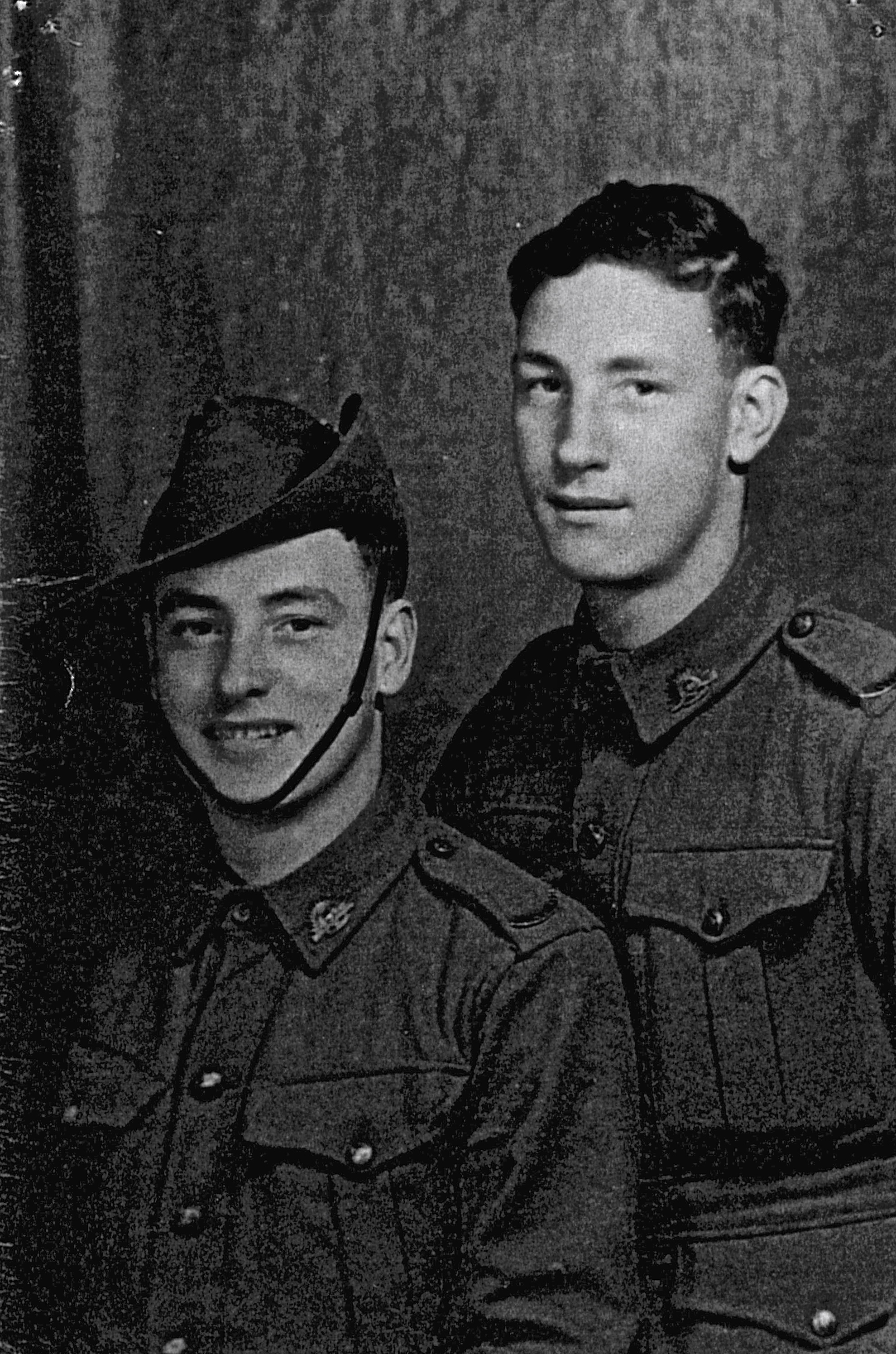
DR PHIL MILLARD Capt. 2/26th Battalion
‘D’ Force S Battalion
Commanding Officer: Major Schneider, 2/10th Field Artillery
5 Officers for 580 POWs
140 men from 2/4th MGB
Please read further about Konyu 2 Camp & ‘D’ Force Thailand S Battalion
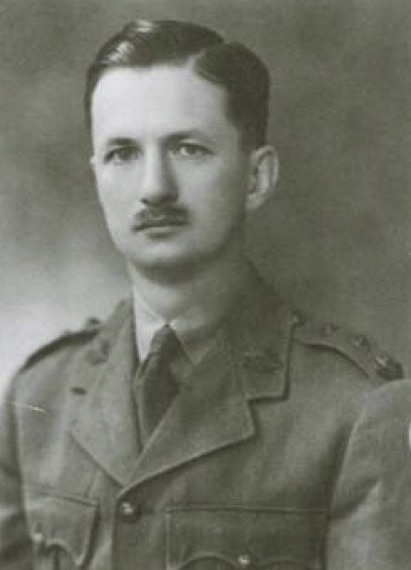
During five months at Kanu II, Hellfire Pass Cutting Phil Millard never failed to sit with his patients in the sickness hut and cholera compound, often through the night.
Toilet hygiene was the single most effective way to prevent cholera. Our doctor, Captain Millard, pulled no punches. ‘If you don’t make it to the latrine, you will infect some of your mates and they will surely die as a result of your carelessness and stupidity. If you get caught short on your mission you are the same as a murderer!’
Cholera hit this camp end of May 1943
12 POWs would die
By Mick Wedge:
“Throughout those dreadful days in 1943, on the Burma Railway, I was posted to KANU No. 2 Camp with one hundred and forty 2/4th Machine Gunners. The officer in charge of this camp was Major Schneider 2/10th Field Artillery. Other officers that were also there were Captain Bill Gaden 2/19th Battalion, Lieutenant Ken Schultz 2/10th Field Artillery and Captain Phil Millard, Medical Officer. A total of five officers and five hundred and eighty men.
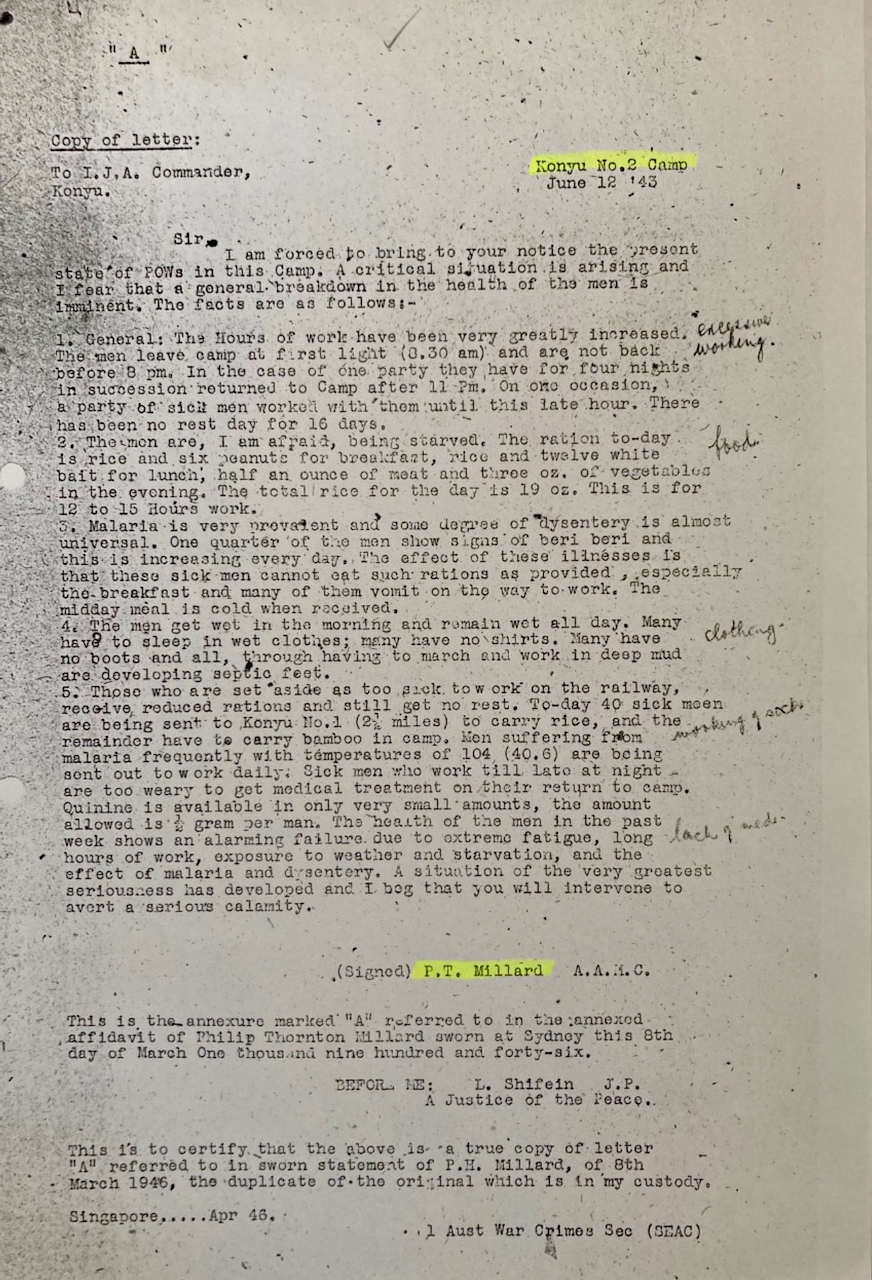
The camp didn’t exist, we had to hack it out of the jungle and erect tents that were full of holes. When the rains came, the camp became a complete quagmire. Phil Millard was concerned with the increase in the number of sick men, both with Malaria and Dysentery, and wondered if a hut could be built to keep these sick men off the ground. It was typical of Phil, he worked harder than anybody cutting bamboo and lashing it all together and putting on a roof of palm fronds. He had very little treatment for anything.
The men came to idolise him as he would always sit and talk to them. I slept next to Phil in our tent. At 2am and 3am, most nights, he would get up and I used to ask him “what was the matter?” He would reply “I have two or three men in the sick hut and they won’t live much longer so the least I can do is to sit with them and let them know that somebody cares.”
Cholera hit our camp at the end of May, 1943. Phil felt that a compound of two tents should be erected about 1 kilometre from the main camp to isolate Cholera patients. We soon had our first patients. Phil was so concerned because he had no treatment for them. He got permission from the Japanese Guard Commander of our camp to visit the main KANU camp to see if he could obtain some tubing and bottles for drip treatment for Cholera patients. He saw Colonel Dunlop but unfortunately he came back empty handed. Over the following two months, we lost twelve men to Cholera. Phil spent hours in the sickness hut and Cholera Compound.
One of my men was one of the worst cases with Cholera, Jim Gilmour, but he survived and only died recently (in 2008 at the age of eighty one). Jim always said he owed his life to Phil Millard. Phil was a tower of strength to all of those men who survived those dreadful five months in KANU 2 Camp.
After the War, Phil and I kept in touch with each other. He became a senior Surgeon at a large Public Hospital in Sydney. At all of our reunions since the War, the Machine Gunners always asked had I heard from Phil Millard and to convey their best wishes to him. Phil and his wife, Joan, came to Western Australia in early 1970. As I worked at Hollywood Hospital from 1945, until 1979, I had employed fifty one Machine Gunners at the Hospital. I asked Phil to come over to the Hospital and see some of the old faces. I could not move in my office after he arrived, they were so pleased to see him. ”
Phil Millard operated on Tom Hampton by oil lamp – a most difficult operation – a perforated gastic ulcer. It was Christmas 1944 Tom became seriously ill and was carried by stretcher from Linson Wood Camp (where there were no facilities for such an operation) to 201 km Camp, where earlier in the evening there had been a Christmas pantomine. Please read further about Linson Wood Camp
When Tom Hampton needed an emergency stomach operation, Bill Carlyon was among the prisoners who carried him 2km through thick Thai jungle to an Australian surgeon, Phil Millard. In the darkness of night Dr. Millard dressed in his Christmas concert costume with a dim oil lamp for lighting faced a most difficult operation – a perforated gastric ulcer. Hampton survived – another patient did not.
Tom Hampton’s Recollection to Dr, Phil Millard
‘I can clearly remember that night being carried to the Theatre ? (such as it was) there seemed to be some jungle mist or smoke about and it gave me an eerie feeling. I well remember the tins filled with oil and wicks – also I can recall you coming to see me from a concert, you seemed to be dressed in a striped top – something like an old time bathing costume. I also remember the other doctor but didn’t realise that he played such a vital part in urging you to operate – so to me he is the World’s greatest Urger. I can recall the other poor unfortunate chap who didn’t make it – thinking that after he had died that I might only have a few hours to go myself. I stayed a few days at your camp then was taken back to the timber camp’. (Linson Wood).
Toilet hygiene was the most effective way to prevent cholera.
Capt Millard pulled no punches and told the men.
‘If you don’t make it to the latrine, you will infect some of your mates and they will surely die as a result of your carelessness and stupidity. If you get caught short on your mission, you are the same as a murderer.’
New and very deep trenches were dug with four strong timber planks across it. A new pathway was cleared through the jungle scrub so those in need could reach it quickly.
The never ending rains filled the trenches to near the top and the area became muddy and worse the wooden planks became precariously slippery. One or two men slipped and had to be assisted out.
Phil Millard died in November, 2001.
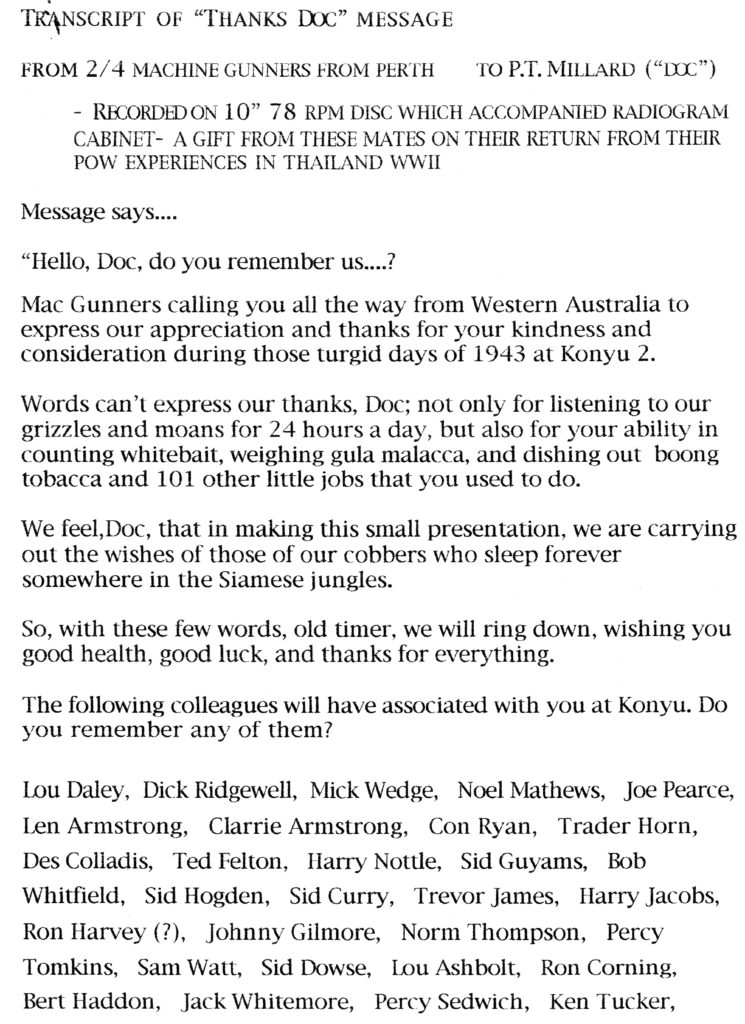
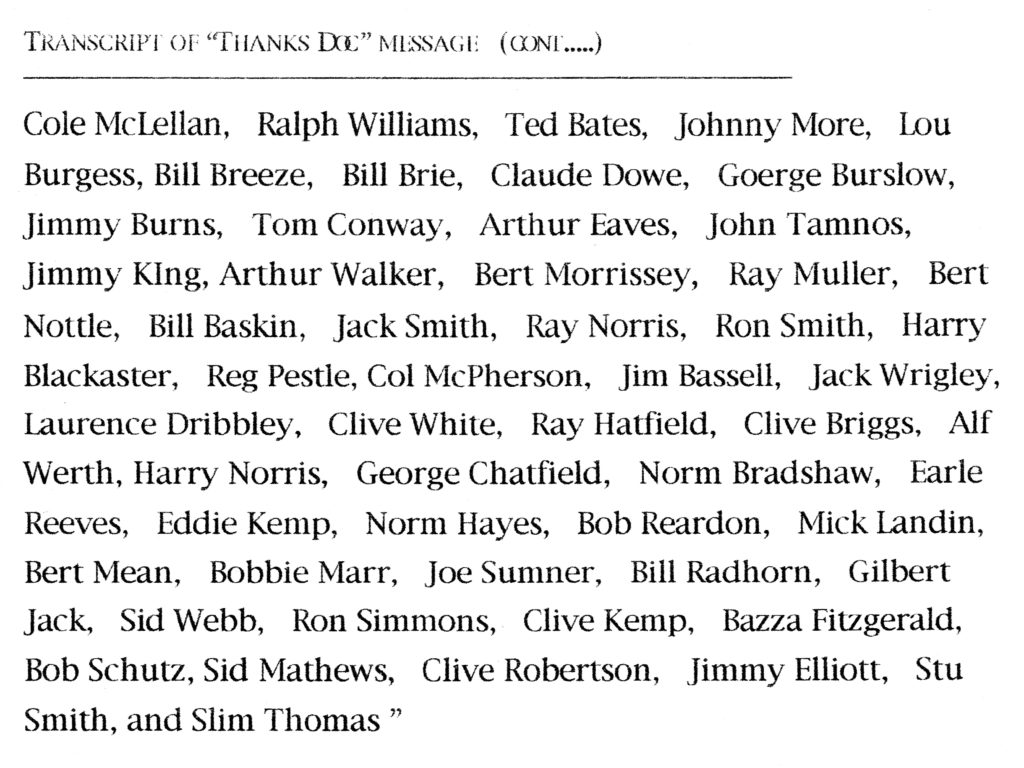
Please note:
1) not all of the above are 2/4th men
2) There are several names spelt incorrectly (such as Gilmore instead of Gilmour)
Capt Phill Millard………..from Borehole Dec 2001
Phil Millard who would best be remembered for his outstanding work at Konyu II, passed away 23 November 2001. Mick Wedge placed a notice in the West Australian which reads as follows:
Millard, Doctor Phil A sincere tribute to a wonderful Doctor and a terrific bloke. Always remembered by the 2/4th Machine Gun boys from Konyu II Camp on Burma Railway, 1943. Deepest sympathy to Joan and family.
You may wish to read more detail of Phil Millard’s Burma-Thai days from Peter Winstanley’s interview.
Please listen to Dr Phil Millard’s interview at AWM
https://www.pows-of-japan.net/articles/5.htm
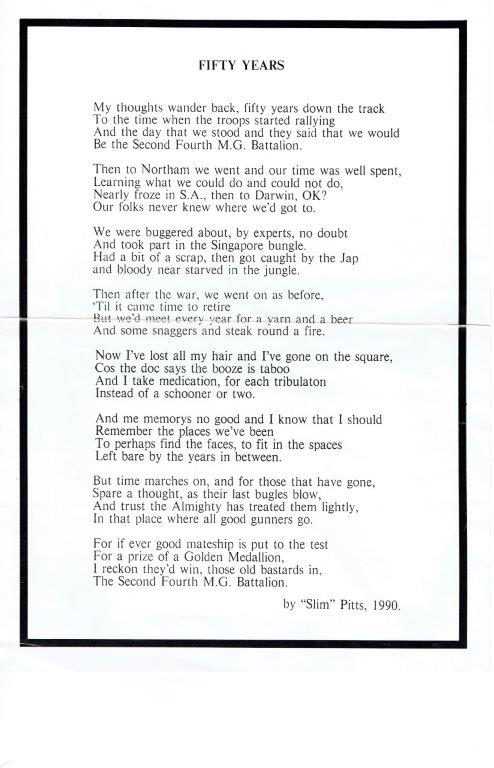
Poetry by Slim Pitts
WOODSIDE LAMENT
By
Slim Pitts WX7626
On arrival at Woodside Camp, SA
We come from the West where the beer is best, parlez vous
Our Camp was better than all the rest parlez vous
We came over here and God knows why
Unless they brought us here to die, inky pinky parlez vous.
God stiffen the crows we bloody near froze parlez vous
With a barking cough and a running nose parlez vous
If we stay much longer I’ll bet you’ll see
We’ll all end up in the R.A.P. inky pinky parlez vous.
They tell us its colder in months ahead parlez vous
If we don’t want to finish up all in bed parlez vous
We will be getting around in leather vests
With flannel protectors on our chests. inky pinky parlez vous
We were all so glad when we went away parlez vous
From Northam Camp in W.A., parlez vous
How one and all of our thousand men
Are wishing to God they were back again. Inky pinky parlous vous.
Digger’s remains found at last – 2001 story of Rolf Newling
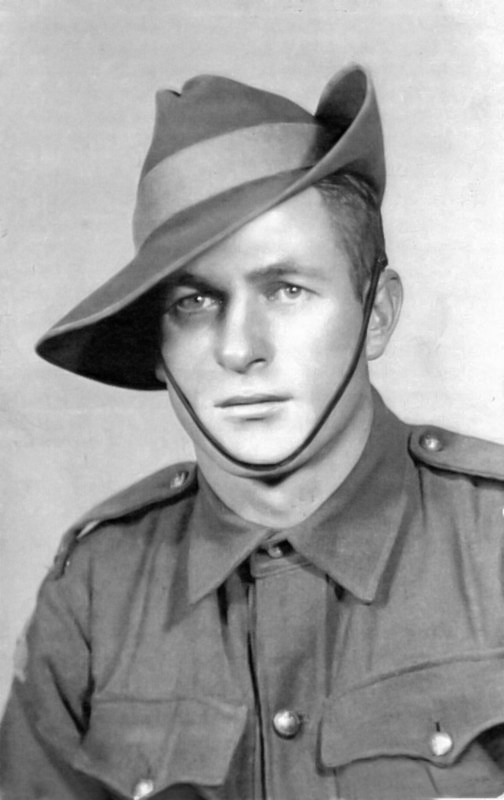
ROLF WALKER NEWLING WX8865
Died Ranau 13/6/1945 of malaria, aged 33 years.
The West Australian Newspaper, 13 February 2001
Report by Rod Moran
The Battle for Singapore ended 59 years ago on 15th February 1942 when Allied troops surrended to Japan. The remains of a WA soldier who died as a POW were only found recently.
Private Rolf Newling, 29 years old of Leederville was among 15,000 Australian 8th Division troops captured. He was a member of the all WA 2/4th Machine Gun Battalion.
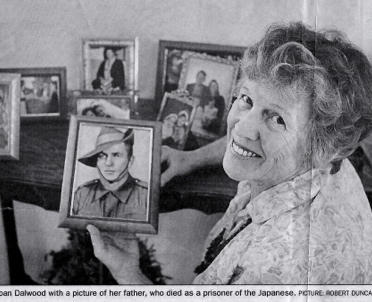
His daughter Joan Dalwood of Leeming, who was a child when he father went to war, was shocked to learn her father’s remains had been found.
“It was never spoken about” she said. “I didn’t realize he didn’t have a headstone. My grandmother always thought he was coming home”.
Like many of his mates, Private Newling was sent to the Sandakan camp in British North Borneo where he died on the notorious Death Marches ordered in mid 1945. Of about 2500 men at the camp before the marches, on six survived. They escaped.
Pte Newling’s remains seemed condemned to eternal anonymity somewhere in the fetid jungles of Borneo. But archival research by Sydney historian Lynette Silver, based on information from one of the escapees, Keith Botterill, has located them at the Commonwealth War Graves cemetery on Labuan Island, off Sarawak.
Pte Newling had been interred as an unknown soldier.
Sentences passed on Japanese Criminals
Sentences passed on Japanese War Criminals
The following represents a selection of some of the more widely known Japanese War Criminals involved in the Burma-Siam Railway construction who have been tried by the War Crimes Tribunal Committee. The author of the article, other than being a POW, is unknown.
Almost all of you who have worked on the construction of the Burma-Siam Railway are familiar with these infamous characters and their sadistic tendencies. Many more have been tried and subsequently sentenced, but space is insufficient to permit a full publication of all criminals, so if your special ‘hate’ is not listed below don’t be disappointed – he probably swung in the breeze just as nicely as the others!!
| Burma-Siam Railway Cases | Maj. Gen Isheda | 10 yrs IMP | |
| “ | Col. Nakamura | Death by Hanging | |
| “ | Col. Ishii | “ | |
| “ | L/Col Yanagita | 20 yrs IMP | |
| “ | Maj. Chida | 10 yrs IMP | |
| POW Camps Siam | Lt. Nobusawa | ‘Horse Doctor’ | Death by Hanging |
| “ | S/M. Eda | “ | |
| “ | Capt. Daimon | ‘Jack Diamond’ | 10 yrs IMP |
| “ | Sgt. Noro | ‘Baldy’ | 15 yrs IMP |
| Kilo Camps | Lt. Kokubo | Death by Hanging | |
| “ | Kor. Takavama | “ | |
| “ | Sgt. Terrakoshi | “ | |
| Nonpladuk, B’Kok | Kor. Takamine | ‘Efficiency’ | 9 yrs IMP |
| Kanburi Off. Camp | Sgt Shimdjo | 4 yrs IMP | |
| POW Camps, Siam | Lt. Wsuki | ‘Kanu Kid’ | Death by Hanging |
| “ | S/M Hiramatsu | ‘The Tiger’ | “ |
| “ | Kor. Motoyama | ‘Black Prince’ | “ |
| “ | “ Matsumoto | ‘Silver Bullet’ | Life IMP |
| “ | “ Tokuyama | ‘Donald Duck’ | Death by Hanging |
| “ | “ Iwaya | ‘Mad Mongrel’ | “ |
| “ | “ Tomotoma | 10 yrs IMP | |
| “ | “ Morimoto | ‘Mad Bugler’ | Life IMP |
| “ | “ Minaka | ‘Singing Master’ | “ |
| “ | “ Kumdieji | ‘Bombay Duck’ | 15 yrs IMP |
| Krian POW Camp | “ Fumimoto | Death by Hanging | |
| Chungkai | “ Takemoto | 2 yrs IMP | |
| Kanu, Hintock | Sgt. Okada | ‘Doctor Death’ | 10yrs IMP |
| Kanburi ‘Radio Case’ | Maj. Chida | 9 yrs IMP | |
| “ | Capt. Komai | Death by Hanging | |
| “ | S/M Iijima | “ | |
| “ | S/M Urikawa | Life IMP | |
| “ | Sgt. Watanaba | “ | |
| Tamakan, Kanburi | Lt. Takasaki | ‘The Frog’ | Death by Hanging |
| Nakon Nyok, Nonpladuk | Kor. Kaneshiro | ‘The Undertaker’ | “ |
| POW Camps, Siam | Maj. Mizutani | Com. No.5 | “ |
| “ | Maj. Noguchi | “ | |
| “ | Capt. Tarumoto | Life IMP | |
| Chungkia, Siam | Lt. Osato | 3 yrs IMP | |
| “ | Kor. Ozawa | 4 yrs IMP | |
| 131 Kilo Camp Siam | “ Hayashi | Death by Hanging | |
| Songkrai, Siam | “ Hosumi | “ | |
| “ | “ Okawa | “ | |
| “ | “ Otsuki | 18 yrs IMP | |
| Tonchan, Siam | Capt. Suzuki | Death by Hanging | |
| “ | Sgt. Yamamoto | “ | |
| “ | Kor. Chiba | “ | |
| POW Camps, Siam | Col. Sugasawa | 12 yrs IMP | |
| Chungkai | Kor. Takamoto | ‘The Admiral’ | 2 yrs IMP |
| “ | Sgt. Sakano | ‘White Slug’ | 5 yrs IMP |
Lesley William McCann WX17837 Escape From Death
ESCAPE FROM DEATH
By LW.McCann. WX17837 Ex 2/4th Machine Gun Battalion W.A.
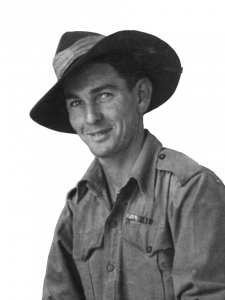
During Action in Singapore 1942 Jurong area West Singapore 11th Feb I 942. Troops made up of members of various units British, Indian and Australians were subject to an ambush by Japanese troops. The order to disperse was passed on. Being in a local village and a lot of dividing wire fences hampered the troops dispersal. This allowed the Japs to lift the sights of the mortars and a lot of troops were wounded during this action. Four of the wounded who were left behind as the troops moved east were two British Officers, Lieutenant Aldrich and a Captain Thomas of the Indian Brigade and myself and later Rupert Millhouse of the 2/4th Machine Gun Battalion WA an N.C.O. of our battalion *** and an Indian soldier not armed, they were not wounded. We found our refuge in a dugout under a large native Kampong.
*** Was this WX17293 Acting Platoon Sgt. Arthur John Charles ROWLAND E Coy, 1 Platoon?
Midday Wed 11th. 12th to 13th Feb
This dugout had been well prepared by the owners, being on side of a small rise. There was an angled path to an entrance door, large bench bunk cut into hard earth wall-ally way that led to steps and trap door into interior, plenty of water fruit, eggs and cloth. No occupants as they were more aware of where the Japs would be than our troops. They had gone from reports after the wars end. The reason we were not bothered by the Japs was they kept on advancing on to Singapore and thank the Lord for that. We had obtained a medium oil stove from upstairs used for boiling eggs all done in an empty fruit tin.
It was decided that so far we were in luck and we should move out after early dawn Friday morning. Our arms consisted of two serviceable rifles, two service pistols, three bayonets. One rifle was blocked with clay as it was used by Millhouse as a crutch before he was found wounded, glad it did not have to be fired.
Friday 13th Feb
We moved out of the dugout one at a time to the creek at the bottom of the slope under cover of the jungle growth. These creeks run all over the Island continually because of the rainfall and because of the growth, provided good cover of movement. Permission to go out and scout around the area several times by the officers allowing me to find Pte Millhouse who I did not know was out there wounded. On reaching the creek cover some way down, Pte Millhouse said he would have to rest, his leg was giving trouble. I suggested to the others to go on as the two officers knew their way to the coast- Millhouse and I would continue later. We wished them luck and they left. Not long after it started to rain, soaked to the skin we decided to make our way back to the dugout. Some thirty years later a patient in the hospital where I worked confirmed confidentially they had got off the island and made it home.
On arrival back at the dugout after a rest, more boiled water and some fruit and coconut. Cleansed Rupert’s wound and rebound same. There was not a sign of movement of anyone in the area, as a constant watch by me until dark was kept. We were both jumpy with nervous tension, there was no company to pass the time with, even the frogs stopped croaking. I thought to myself hopefully that the vibrations from the heavy sounds of guns and artillery fire which began in the distance may have been the cause. Friday the 13th had been a sad day, little sleep was had by us that night.
Day break Saturday 14th Feb
Awake and ready to get out of there, filled water bottles with boiled water, observed no movement and left back down through cover to the creek and headed south. Smoke from fires in Singapore City could be seen looking from high ground. Our progress was rather slow. Scouting ahead resting when required. We made head way. Oh for some mode of transport. Water was main part of diet apart from some coconut we had with us. Naturally the two of us had been trying to save our boiled water for as long as possible, well on one stretch of water we had been drinking after resting.
To our disgust, we found dead bodies of a number of Japs just around the bend, they had been shot and were bloated and swollen, loin cloths were the only things they had on, no uniforms, no boots. Not much further along was a small cluster of thatched villas several old females were walking around. Some carried small children around. They did not appear to notice us. Revenge had been carried out I thought. When the Japs went through the area they must have stolen the pigs that roam the villages, the bodies would not be there otherwise.
Early afternoon 14th Feb
Having passed this area, we followed the watercourse in a westerly direction for some way hoping to find clearer water to drink, sounds of gunfire and aircraft were still increasing but we did not know to whose advantage. It was hot and sticky and we were resting after refilling our water bottles when we heard the sound of motors from over the rise on our right. After getting the sound of direction, I said to Millhouse to stay put while I went up the rise to view the situation. For a long time I watched a convoy of Japanese troops and British vehicles go by on the road numbering 3 trucks, roughly three hundred troops marching along. No scouts. Not a care for anything. They must have used barges to land them from the Straits of Johore. We rejoined company and pondered the situation for a while. It was obvious that the Japs were heading easterly in the direction of Singapore. But, where were our forces. Sick of the rain, mud, and tired, we again headed south. About two hours later as it started to rain again we came across several Kampong huts. We chose the first one near us. After watching it for any signs of life we then entered. Where were all the people hiding. There were a few household goods, no food but some coconuts of which had been de-husked and was holed by my bayonet. The water tasted like lemonade from these nuts. The hut was dry and warm. I suggested Rupe take a sleep as I knew his leg was hurting like hell. It was hard to keep awake, so I dozed off and on during that night. The sound of the rain, thunder and artillery was strange music this night.
Sunday 15th Feb
This morning was bright. The area was viewed from the hut, not a soul, animal or bird, even a dog would have created some interest. We took the meat out of two coconuts with us, made our way to the cover of the nearby jungle growth.
Sunday all day 15th Feb
All Sunday we made our way in a south easterly direction according to the sun and the fires from Singapore, that way we must reach the coast before very long. We had past the Jurong east west area about midday this day but not know that. We had not seen a person or villager to ask.
Sometime after we knew, so about mid afternoon Rupe remarked to me that the gunfire was not so loud. But I thought it was a change of wind. We were resting in the outside area of a fenced village in a dugout opening in the ground. About an hour before full sunset, strangely quiet, no heavy gunfire. Sitting on two woven mats having a rare cigarette from a steel case I had found earlier. I heard voices outside. I went out with rifle. Two Japs were running through the gate area of the fence. I fired two shots in their direction yelling to Rupe to get out into the jungle growth ahead of us. I caught up with him helping him to hurry. Native women jumped up from amongst the bushes and quickly disappeared. I think they were hiding or praying as is their custom at sunset. Later when we stopped and got our breath I realised the Japs were only armed with bayonets. Just on dark we noticed some monks who were walking towards a building. We could not hear any gunfire. I approached one of the men and said we required help. He made it known to us that the British troops were agreeing to a surrender. He suggested we stay in another hut he pointed out and he would help us in the morning. This we did do and spent a very worrying night. It would appear the Japs were using the shelter for themselves as the matting in there was issued with their equipment.
Monday morning 16th Feb
Not long after daybreak two monks came to the hut, told us the news of surrender. Cleaned and dressed Rupert’s wound, we were offered some rice and fruit for which we were grateful. They told us Japs wanted all troops to go into Singapore quickly. It appeared to us they knew more about what bad been going on. Bush telegraph perhaps. We realised the danger we posed to these people as well as ourselves. We thanked them for help given to us. We were given directions to the coast road and their blessing, then left the area as quickly as possible. We had retained our weapons.
Rupe was able to go along a little better at this stage, and about two hours later on the west coast road, needed more stops. We were sitting in the shade at the side of the road when a person on a push bike came along riding in a westerly direction. This person was a lad about 12 or so old. The bike was in new condition. I requested he give us the bike so I could help my friend. He understood me. He looked back from the direction he came from and said Japanese gave me. No can have. With bad thoughts in my mind told him to go Pigi Lakas quick. We started walking east in the direction of Singapore. About a half mile further a man spoke to us from the side of the road. Can I help you. He was an Australian navy man, armed with a Thompson machine gun he had been issued with. He was actually going out in a western direction away from Singapore when he decided to rest. He offered to help us along. No gunfire had been beard since Sunday evening. He had heard the war was over also, so when we came to a bridge over a creek running towards the ocean we decided to dispose of our weapons. We dismantled them, and threw the parts in different directions into the creek and jungle reluctantly. Well sometimes luck is a fortune. The boy on the bike knew there was Japs down the road, for he had looked back in that direction. Around the next bend were Japs working on and over several Ford and Chev British service trucks, it appeared they had been driven into the ditches. The Japs just watched us go on past, no trouble there. Not long after we came into a village. This village was the junction of the then Reformatory Road, now renamed Clemently Road and West Coast Road. We could see two armed Jap sentries outside an arched gateway of a large building on the right hand side of the road. The guards beckoned us over and into the courtyard. One stayed with us the other hurried up the steps and inside the entrance. We heard voices talking then that guard returned. We had to empty our pockets out. They took two pocket knives, Rupe’s and the sailor’s watches. We were allowed to keep our water bottles, cigs and pay books. No aggression was shown at this time. We were taken to one of two barred window and door cells, and locked up. It was a long time later before I could find out we were in the Pasir Panjang Police post lock up. Later that afternoon we three were taken out of the cell and out onto the back of an Army truck with eleven Australian soldiers, one Australian driving and one Jap guard. The men on the truck had been selected from a mixed group of prisoners in Singapore earlier on Monday morning by the Japs to move trucks and bodies from around some roads. Two members of the 2/4th M/G Battalion W/O Airey (WX13977) and Pte Ockerby (WX7336-died 19 Feb 42) were amongst this group. W/O Airey was the senior officer in charge of this group. The driver was instructed by guard to proceed and turn north into Reformatory road. This road went past the Ford Motor Company at Bukit Timah. Some distance short of the Ford Company, the truck diverted left into an area by Jap troops, and stopped. Field ambulances, three Bren carriers, several were out of action. Opposite where we stopped, bodies were still sitting in positions in the Bren carriers. I hate to think what happened here. I mention the ambulances here for they had a lot to do with helping me to survive as a driver. The Japs that were in this area were a pretty angry mob and tried to pull some of the men and their packs and haversacks from the truck. Fred Airey resisted strongly. He had written records during action. The Japs backed off after some senior officer shouted an order. After some Japs conferred with our truck guard. We were returned back to where we started from. After we were returned to the Police post, the Jap guard had a confab with other guards then off the truck and all of us fifteen men were put in the one cell and locked in. We were given a bucket of water after some haggling. We started talking among ourselves after dark, discussing what the outcome would be. Well sometime later there was some action and lights outside the cell. The door was then opened. We had to move away from the door area, 15 men in a 12 by 10 cell is rather tight. A chair was put just to the right of the door inside. A Japanese came in and said, I am an interpreter our officer wishes to ask you some questions. The Officer that came into the cell, I have since recognised him from photographs, and seeing him later, with and without a moustache. Through his interpreter, he asked for information to the whereabouts of troops in Australia. How many Americans etc. As senior Officer W/O Airey became the spokesman for the rest of the group. Roughly an hour after the interrogation was over. No threats had been made to us and the Japs left the cell. Later that night we were given some blankets, we needed them as the cement floor was hard. Rupe Millhouse put up with his wound well that night.
(The last paragraph has been added by Wally. The account can be confirmed from Fred Airey’s book “The Time of the Soldier” P. 125.)
Jack George Kyros (Kyriakos) WX10715
CAZZIE MILITARY HERO – Jack George KYROS (KYRIAKOS) WX10715 2/4th Machine Gun Battalion: Castellorizo Family History
We often think of military heroes as those persons, who, for example, in a short period of about five minutes, are rushing an enemy machine gun post whilst throwing hand grenades and wiping out all the enemy in a moment of glory. Yes these type of soldiers are heroes indeed and they often get bravery medals to acknowledge their bravery. But there is another type of hero, who during these terrible war years, often endured both that five minutes rush of heroic action, but also another three and one half years of the most unimaginable and tormented existence. He is the Prisoner of War (POW) of the Imperial Japanese Army! These POW soldiers attempted to survive, despite the odds, with a desire to remain alive and to be reunited with their family again one day. Jack George Kyros WX10715 was to become one of those brave POW’s. This is his story.
Jack George Kyriakos (later Kyros) was born in Darwin Northern Territory on 2nd January 1921 to George and Christina Kyriakos (nee Kailis). His parents having married in Darwin some two years earlier. Jack had an elder sister, Mary, and five younger siblings (Michael, Evelyn, Evangelia, Agapitos (Herb) and John) who lived to adulthood. When Jack was a young boy the family moved to Perth, then later to Kalgoorlie.
After World War Two broke out and when Japan became a threat to South-East Asia Jack attempted to enlist in the army. But he was under twenty one years of age and his parents would not agree to him joining. On the third attempt to enlist he was successful. Jack had put his date of birth down as one year earlier, and on the 15th January 1941 he was now in the army. Jack was posted to the 2/4th Machine Gun Battalion and commenced training at Northam Army Camp. The battalion was receiving training for the Vickers machine gun. At Northam the battalion’s Colonel was a stickler for physical fitness and on one occasion they went on a sixty mile route march from Northam to Perth, ending with a march through the city to the welcoming cheers of family, shoppers and city workers. They were one of the fittest A.I.F. Battalions!
The battalion trained at Lancelin Island and Waterman’s Bay before moving to the Woodside Camp in the Adelaide Hills in July 1941. Three months later they moved to the Winnellie Camp in Darwin to commence training but when Japan entered the war in December 1941 the individual companies occupied battle stations on the beach areas of Darwin. In the meanwhile, Jack, when on leave, had married his sweetheart, Kathleen Mary Quinn. On New Years eve the battalion sailed to Port Morseby onboard the HMAS Westralia and whilst enroute Jack celebrated his 21st birthday. At Port Morseby they transferred to the HMT Aquitania which berthed at Sydney on January 8th 1942, where a further 2502 reinforcements for Singapore where taken on board.
The ship departed for Fremantle and Singapore on January 10th. On arriving at Fremantle many of the men, including Jack, proceeded to go ashore to see their families, without authority. Many were arrested and imprisoned but Jack and others managed to get back on board prior to departure. A total of eighty eight men had failed to reboard the ship before she sailed. Many had gone AWOL because they had not seen their families for many months and had expected shore leave at Fremantle. Many could not get back to the ship before she sailed.
On arrival in Singapore on January 24th 1942 they found that they were in the middle of a war. Jack thought the deafening noise was a mock air raid, but it was the real thing. They were to receive daily raids from Japanese bombers and strafing attacks by the Zero planes. The machine gun companies were allotted their various rolls and the serious business of the defence of Singapore began. The Causeway to the island was destroyed but the Japanese managed to cross by pontoons and barges and gain a foothold on Singapore. The 2/4th Machine Gun Battalion engaged the Imperial Japanese Army with the Vickers machine guns at various locations, and on the west coast hand to hand fighting broke out. The companies moved to new positions on February 9th and again
engaged the Japanese whilst coming under heavy bombing and shelling attacks. On the night of the 12th February 1942 Jack’s platoon was in a bayonet fight as were the rest of HQ Company. No officer or sergeant survived that attack.
As the Battle of Singapore drew to a close many 2/4th M.G. Battalion personnel were killed or wounded as the enemy attempted to force a surrender. Casualties were high, especially on the last day of fighting before the ceasefire order was issued. Jack and his mates dismayed that Singapore had fallen but were with some relief over not having to continue with the hell of the past twenty two days of fighting.
From the 8th to the 15th of February 1942 the 2/4th Machine Gun Battalion fought with other Allies to save Singapore. From 15th February 1942 until the 15th August 1945 (three and one half years) they would be fighting a very different battle. When the war came to an end in 1945 over four hundred of the one thousand men that formed the battalion would be dead. Many were to die as POWs!
After the fall of Singapore Jack was based at various camps around Singapore, including constructing a memorial in Johore Baru, then onto Adam Park to work on another memorial, then to Changi. Then he was sent on April 18th 1943 with ‘F’ Force to work on the Burma-Thailand rail link. It took six days travelling by truck, then train, to reach a place just outside of Bangkok. They then walked 315 kilometres on mainly rough roads and tracks through the jungle for about twenty five days.
Work commenced for them on the railway tracks of the infamous Burma-Thailand Railway. Here they had sickness; Cholera, Malaria, Dysentery, Beriberi, Typhoid, Scrub Typhus and many forms of skin diseases. Tinea, Tropical Ulcers, Body Lice and Bed Bugs were rife! With no proper footwear the men had to wrap their feet at night to prevent the rats eating at the skin on their feet. All Cholera deaths required cremating and on one day sixty men were cremated. But worse was to follow!
Because of all the sickness and deaths the schedule of finishing the railroad had gone backwards. They were forced to march to work in the dark of the morning and return on sunset to the camp. From the time they left camp until they returned at night, eighteen hours had transpired. Many of the men were sick and unfit to work but were forced to work, otherwise they did not receive any food.
The combined British, Australian and Dutch labour for ‘F’Force was made up of 10,270 Prisoners of War. Here conditions were terrible for the POWs with incessant rain, tropical diseases, starvation, beatings where many were die without sufficient food, without medical supplies and with ongoing brutal treatment by the Japanese. Of the 7000 British and Australians with ‘F’ Force 3097 were to die in Thailand representing a 44.75% death toll. This all occurred in a seven month period as in November 1943 ‘F’ Force began the train journey south via Kanchanaburi, back to Singapore. The railway line had been finished. Jack’s ‘F’ Force was fortunate as they were under the command of Singapore and had to return there. Other 2/4th MG Battalion members with other ‘Forces’ in Thailand and Burma were not so lucky. Many were to die on POW Ships sunk by US submarines whilst heading to Japan and Korea. Back in Australia Jack’s wife, Kathleen, had given birth to George Jack Kyros, whilst he was working on the railway line. It would be years before he was aware that he even had a son.
On return to Singapore, Jack was based initially at the Sime Road Camp for three months, then transferred to the Changi Gaol Camp for the rest of the war. Jack was at Changi for eighteen months where 12000 POWs were based. There was only meant to be 800 housed there. Every day working parties left Changi to work on the Singapore Airfield site where the earth was carved out by hand and removed in baskets. For the surviving POWs it was a relief to see the Allied planes over Singapore, then came the surrender by Japan on August 15th 1945.
Jack returned to Australia on the HMT Arawa to Sydney via Darwin, then transported to Melbourne by troop train. From Melbourne he travelled to Perth on the HMT Strathmore to be re-united with his family. For the first time he met his son, George, who was now aged three years of age. On December 7th 1945 Jack Kyros was discharged from service after completing nearly five years with the 2/4th Machine Gun Battalion.
Jack went on to continue living his life and raising a family but the torment of his suffering and that of his 2/4th mates in Malaya, Singapore, Java, Borneo, Japan, Korea and Thailand as POWs will be with him for the rest of his life. All 53 of his battalion mates who went to Sandakan in Borneo with ‘B’ and ‘E’ Force were to die.
When giving a speech in April 2001 at the Schools Commemorative Anzac Service Jack completed his speech with the following statement, “When will the world learn that war is useless, and only you, the young of today, and the future Government of Australia can stop it – Let there be no more war!”
Christina, Marjorie, George, Jacalyn Kyriakos
McGlinnn, Fank WX8478 his Diary written of final weeks as POW in Niihama, Japan
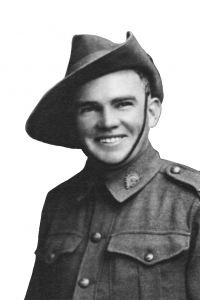
Prisoner of War of the Japanese 1942-1945
Taken Prisoner at Singapore 15 February 1942
Released 13 September 1945, Niihama, Japan.
Discharged AIF 30 January 1946
The following recollections Frank recorded at Niihama on Japanese signal paper which had acquired. He then completed the details while living in Bunbury with one of his three sisters. Frank had returned home to learn his mother had been murdered in 1943.
NB. Spelling has been left as written by Frank and edited by family member.
Personal Background
Frank McGlinn WX8478 was born in Northam 29 August 1909 (his parents were then living at Goomalling). After completing basic schooling in Perth, in his late teens he moved to Nungarin and worked on a farm for some years. Eventually he obtained and cleared some land of his own in the same district. He worked and improved his property until war was declared and Frank enlisted 18 October 1940.
He trained in Northam camp and was posted to 2/4th Machine Gun Battalion, AIF. In July 1941 the unit moved to Woodside in South Australia for further training and to Darwin in October 1941, where the battalion occupied beach positions.
The unit arrived in Singapore 24 January 1942 where they moved to take up positions at North West sector of the island (a very difficult area to defend).
In the eight days of defensive action the Battalion suffered 310 battle Casualties out of 850 men
A few days before the capitulation Frank was shot in the heel of one foot and was hospitalised, after treatment he was released and sent to Changi.
Following capitulation of Allies to Japan on 15 February 1942, the unit was broken up into small work parties for the remainder of war.
Notes: Anything in Italics is not in the original diary or is a guess on my part. BC
Frank used “Dinner time” for the Midday meal and “Tea time” for the evening meals.
DIARY
15 August 1945 – Niihama, Japan
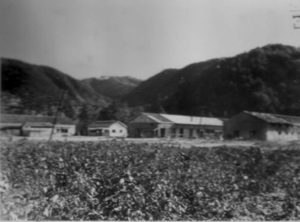
On rising at 5 o’clock went up and fixed the table for dishing out breakfast after “Tenko” (or roll call) at 5.30. Breakfast was under a pint (0.57 L’s) of rice with a Bringal (or egg fruit soup). We had to leave for work at 6.30, and it is a good half an hours walk to the copper factory where I work. In Nip we are the “Dai Echee Den Den” party.
On arriving at work I ate the rest of my dinner rice which was about 1 pint of rice which the cooks put in our dinner boxes during the night, this rice has a lot of beans in it. This left 1/3 of a pint of egg fruit soup for dinner.
On going round to start work there were no Nips there at 7.30 and at about 8 o’clock six strolled in as though they did not like work. There were no students at work that day. These students are lads of anything between 14 and 20 years, ours are generally about 16 to 17. They are actually conscripted youth labor and have “YCS” or “YMS” on their caps in English. This means Yatahama Commercial or Middle school, and there are about 25 of these lads that work in “Tamaboon” which is what our department is named. They are always trying to stand over us although without much success. They are nearly as strong as we are though, in our present condition.
Work was very slow all morning and there were only three of us left out of a total of sixteen. The rest were on light work as the work in the copper factory is very hard. One of the three left was in the black market, the other had nearly died and had been put in the cookhouse and had been fattened up.
At dinner time I was carrying some maize flour round the dining room which I had cooked up for Ralph Hadfield WX7246 who was sick, when “Mickey Mouse”, the dirty little bash artist who with “King Kong” and “Silent” are the company guards who take us back and forth to work, caught me with it. I said I had got it from a student as a present and he let me keep it and let me go without a bashing. They are down on the black market and this is the first time I ever saw this guard miss a chance to do anyone over.
Today has been a contrast to the previous days because since 6 o’clock there have been no air raid alarms. Yesterday there were planes over all the time.
The news was read out to us at Dinner time. On starting work again at 12.15 things were still quiet and work slack. At 1.15 the “Boss” came in and went to talk to the three Nips and two of them did a bit of a jig and then shook hands and then their faces lengthened.
Les Smith to said to me that something big had happened. After a while the other Nips clustered round and I said to Les that by the look on their faces we should be shaking hands not working, as the war was over.
About 15 minutes later the boys in the other departments were told to leave their jobs and go to the dressing room. We were told to clean up but the guards ordered us around so we left that for the Nips to do. Rumours flew then. One was that the Nip Prime Minister had made a speech, then the Dutch (“No Hopers” to the last) said that the Nip Captain “Murakami” always made a speech every year, but most of us were of the idea that the war was over.
Before we went back to camp we were told that we would not be going back to work here anymore. We were back in camp by 3 o’clock, to find that all the other work parties were straggling in with similar ideas to us.
We have had our monthly weighing tonight and I have held my weight for the last month. My weight is now 53 kilos which is 8 stone 3 lbs. I have lost a kilo a month in Nippon but still, happy days are now in store for us and we will be putting it back on.
l6th August
I had a poor night’s sleep last night as owing to no announcements, we were waiting for the nightly air raids to start at nine and continue through the night. Thank God they did not, but excitement, a warm night and plenty of fleas and lice kept us awake. I was also glad when they announced that there was no work, as evidence for the finish was mounting up.
The interpreter “H. Irea” when asked by the Dutch Captain (the “Silver Mare”) said that he could not say anything, but all of us were to rest the same as Sunday. The Nip doctor (the “Goonie”) said the war finished two days ago.
Bluey Phillips, after a long spell in hospital due to an accident, was due to go out to work today. The officers took rice off Reg Lucy which he had pinched from a Nip labor barracks close by. No one else is game to go out. I won a small tomato that was on issue, one to every eight men.
Some time ago we had had to buy a motor tricycle with a body on it, which are very popular for bringing in the rations but it was a dud. Our mechanic (and theirs) could not fix it. Rations are scarce anyhow. The price first asked for the tricycle was 7500 yen (which is about 465-00 pounds Frank’s estimate) to be paid by us and the camp Nips. But the price was finally brought down to 1500 yen (93 pounds about 18 weeks wages in Australia at the time) and this was paid. Today they returned the money.
It is good to think that we are no longer numbers, but are now names as well, the numbers I have had are; in Thailand 353, 444 and 8818, On the boat 78 of 57 party and in Japan 499 and 1669.
l7th August
It made us want to know officially what was going on, when an air raid siren went off as usual at 6 o’clock, not that I doubt the finish of the war but there are a lot that do.
They took our POW pay book off us this morning. It was only a stiff paper folder with a description of us, the date that we got to Japan and any crimes, or payments that we had got for being good workers.
It is only a week since Cyril Dilley fell down some stairs in the blackout and got concussion and died 12 hours later. It was his birthday today and it is tragic to think that after three and a half years during which he had had a lot of sickness and misery that he should go out so simply.
The huts are long, with the Dutch and mess tables in one half and 240 of us AIF in the other half 630 men are in the two huts. There are 3 rows of sleeping places, one down the centre as well as down the sides and there are two layers one about seven feet high. There is straw matting laid down on the floor and we have a little straw pillow six inches high and one foot long.
The sides of the barracks are made of interlaced bamboo and an earth mixture plastered about three inches thick with pine on the outside. The roof is pine with tar matting or pine bark on it.
There are plenty of double windows which have pine shutters for the winter. The latrines and the pig sty are on the end of the hut. The electric lights are left on and only dimmed at night (or put out when there are air raids). Our summer issue of blankets is three and the winter issue was five. All together a fairly comfortable hut.
What has bucked us up was the announcement that there was going to be no more Jap “Tenko’s” or roll calls. And, that in future roll calls would be in our own lingo with no Japs in attendance. The rations are still light, three pints of rice and beans and a few other vegetables, and we think that now it is over we should get twice as much.
I attended a thanksgiving service (Ray Denny gave it).
l8th August
The Dutch Captain asked us not to be so impatient about asking for food, he said that the population was very likely to do us damage etc, mostly boloney I thought. We also heard a few more details of the peace terms. The Emperors plea, the hara-kiri of “Obe” and some details of the “New Bomb” which I am thankful did not drop in this area.
The Nip guards are still inside but are closing their eyes. No saluting, no trouble about smoking anywhere, and you can walk around without your hat on.
I got my fountain pen back. We had had to hand over our valuables to our Officer, Lt Withercombe (not on unit roll) when we first came to Japan. Our badges were also given back but they were all mixed up so two men in seven got a set, I missed out.
The Dutch are digging up all sorts of things. Mess dixie’s, one dug up a tin of milk that he had had buried for 11 months and it was still okay. I dug up six packets of razor blades all rusty, some dug up tins of bully beef.
The work that I was on at the copper factory was not too good, as there was too much sulfuric acid, Bluestone, Tar and Kerosene around.
The refining process was, that they had big baths that were filled with Sulfuric acid and Bluestone with water running through them, in which they placed 22 plates of impure copper. Then they had 22 plates that were painted with kerosene and tarred around the edges. There was a weak electric current running through the tanks all the time. The copper used to leave the big plates and form a thin sheet on the back and front of the prepared plates and it was our job to strip (or chip) this sheet of copper from around the edges. Re-tar and re-kerro the plates. There were 36 of these baths and they had to be done every day.
Any cuts you got, formed a scab at the deepest point, then festered and owing to the acids did not heal easily. All together the job is not the best, as the acids dripping on your clothes eat them away, and we are nearly as naked as the day we are born. This “Lumitame” firm does not believe in re-clothing us, though they did give a few of us a pair of white cotton shorts a few days before the end.
l9th August
It is rather bad for us, mentally, this lying around doing nothing as we are very impatient and are expecting our relieving troops to arrive at any time. Our minds and bellies are very set on it. To us we are very important still. Rather selfish I suppose!
They killed the sow which went 50 lbs dressed. She was not “in pig” as was believed. The “Lolly Lopper” went mad, he said that he had not given permission, that the war was not over yet and that while we were in the camp we had to obey his orders. The Nip Orderly Sergeant had given his permission and it all blew over.
We were taken for a swim in the ocean. It is only one chain (20 metres) to the side of the camp and we found some small rock oysters.
There has been a remarkable decrease in the Beri-Beri (Vitamin deficiency disease with pain, paralysis and swelling of the extremities) in the camp in the last six weeks there being only a few cases now. By God some of the men are thin, some being 5 stone lighter than when they first came to Japan. All the men would average about three stone under weight.
About two weeks before we stopped work, the Nips gave instructions that we were not to wear our leather boots because they would have to last the winter out. We had to wear clogs or bare feet. I went to work in clogs but half way home gave it up and carried them. “Mickey Mouse” made us nearly run because there was an air raid. He carried a big stick to help us along. Aub Bond, pulling two sick men in the cart could not keep up and was nearly made a case for the cart himself. We used to keep in step with boots but clogs are hopeless, and after the first day I wore rubber boots (of which I have three old pair). Because of the fact that I was off with Beri-Beri when they issued the new boots I only got a second hand pair.
Some of the Nip families are bringing their gear back from the mountains after the general evacuations of July and August.
20th August
The “Lopper” read us a speech (using the civil interpreter from the mine) which was evidently ready on the l5th, and said that hostilities had ceased but might be resumed. In the meantime we were to stop work and must spend our time in straightening our gear and regaining our health. He said that we were still on working rations and that he would try to get extra rations if we were good boys and obeyed his orders because he was still in charge of the camp.
I am using salt that came from the factory before work finished. It contains a lot of bluestone.
Every morning before they start work, the Nips always salute the boss, bow to the east and clap their hands.
The cooks have spread the pig over three meals and you could not taste it in any of them, so we were disappointed in today’s meals.
2lst August
There have been a lot of Nip planes flying over, all going in the same direction. There are not to many good ones, mainly they are old. We think that they might be going to some air field ready to be handed over. Some have the red dot painted out.
We are actually losing weight lying around, evidently the reaction has set in. We heard that 2,000,000 allied troops are going to occupy the Jap Empire from the 25th, and that Prince Kanaye is back in a responsible job.
22nd August
Things are looking up as our cooks, after a week of arguing with the Dutch cooks (who are in charge of the cookhouse) who had said that if anything was pinched, it could not be cooked in the cookhouse. Our boys pinched three bags of rice and some sugar. The sweets are wasted on the average chap as we are gluttons not “epicurean’s” now.
Had a swim and a few oysters.
In the RAP (Regimental Aid Post) rubbish box among some Red Cross packets I found, one bottle Atropine tablets, one bottle of Sulfur tablets and one bottle of Nip vitamin tablets. I handed the first two in and ate the last. Sheer carelessness to throw things like this away.
The 15th and 20th (Battalions) got enough energy to play a short game of soccer which the 20th won 2 -1
23rd August
Reg Suez, Ron Metz and Basil Jones were sentenced to five days detention by our Officers and are doing it in the other hut. The first two were convicted of breaking out of camp and entering a Jap store, Jones was cited as accomplice, but I don’t think he had much to do with it. They got some salt and a few eggs but were caught by Dutch officers coming back in. There are three Dutchmen also in detention for taking rice from the cookhouse. The rations are not too bad at present with the extra rice the cooks took.
The Nips purchased a hundred odd cigarettes per game and dammed near provided the yen needed. They brought to light 1600 yen from Red Cross fund that nothing was known about and 1400 yen from canteen profits which, as we have hardly ever used the canteen is astounding. We had to pay 150 yen but this is being held in reserve.
On lst August most of the AIF units in this camp ran a sweep to see what day in August the war would finish. 31 of the 2/4th were in one (£1 in each) and each drew a day from a hat. If the war did not finish in August the sweep was to be carried on in September with another £l in. The day announced by the “West Australian” to be the winner. Nick Lambie (believed to be WX9528) drew the l5th, mine was the 26th.
The weather is the best since we have been in Nippon and this month has been just nice and warm. All we need is our floral cotton shorts, most of the boys are sleeping out at nights owing to the fleas.
We consider that it was lucky that we did not have to do another winter in Japan, as we were dreading it and wondering how many would live through it. We had an English potato pumpkin mash with our rice tonight. It was glorious. Excepting when we were coming to Yamane in the train, this is the first time that we have had English spuds.
They have given some of the worst cases of debility, a Plasma transfusion, which is American dried blood from the Red Cross.
24th August
We went to the hill store and got some new clothes. We got some outsize clothes, an English coat after the style of our tropical uniform and there were three kinds of pants, nip khaki, light brown or kit bag tan. I was stiff and got the kit bag tan. We also got a pair of Nip white cotton socks.
They made a nice drop of soup from the chicken fowls and five rabbits but unfortunately had no vegetables to go with it.
The Nip doctor told the Nips that tomorrow a Yank plane would come over and drop some food to us and half an hour later they started to put POW with white cloth on the ground and on the roof of the other hut.
Another rumour is that we will get two bottles of beer and lemonade tomorrow. If it is true it should be a good day. We got issued with a cake of soap about the size of a cake of “Velvet” which is the third issue in twelve months, but the other two were not as big.
Played Housy-Housy that Aubrey Collins and Horn WX9418 started, and won about 20 cigarettes
25th August
Four months to go to Xmas and we are hoping that we are old members of the RSL by then.
Lt Sanderson (not from 2/4th) said on parade that in case anything was dropped from the air that everyone was to stay away from it except 10 strong, reliable and honest men who were going to be detailed for it, and there was to be no scrounging.
Had a lucky draw with those kit bag tan trousers, had a few pairs of nip army trousers issued between them. Won the first pair and got a Nip coat as well. And, was allowed to keep the tan trousers.
While nothing was dropped from the air, a truck of beer came in and one bottle per man was issued. It is a light beer called “Asaki”.
26th August
Got 2/5 of a bottle of beer each which is the rest of it. I swapped the bottle I got yesterday for a notebook (a Japanese Signal Pad about 15 cm by 15 cm) and a bottle of ink.
A truckload of cider came in and after the beer, we are ready to believe that anything can happen. There was an issue of 12 tins of chicken oil, which is equal to five years supply, and eight bags of White Bait which is equal to one years supply in the cookhouse.
Had a big storm last night.
27th August
Got issued with a bottle of Mituza cider, the trading price of beer is 40 yen or cigarettes and cider is up to 15 cigarettes. It is a small bottle, and I bought one for 10 cigarettes. It is like a sweet Cream and Soda back home. Some say that it is not like cider at all. The meals are not too bad at present. We had a melon, cucumber “mesau sembol” for breakfast, fried whitebait for dinner and egg fruit stew for tea.
28th August
Spent the morning sewing and altering the new clothes to fit me. Rumours are quieter now than they have been after dinner.
The Nips ordered the two pigs to be killed. The Dutch Captain was against it, I think he wanted to keep them for their Queen’s birthday on the 3lst of August but the Nips were determined about it.
About half an hour after the pigs were killed, a big four engined plane appeared and we could see it was not a Nip plane. Naturally there were a lot of wise cracks, while it was circling, about the store dropping. We were all pleased to see one of our own planes on a peaceful job and did a lot of waving as it circled. Then another one appeared and we could see a big “T” painted on the tail. One of them came down to about 500 feet and headed straight for the camp.
We just had time to read POW supplies written on the wings, when they let the parachutes go six at a time. One dropped about 15 yards in the ocean, one dropped in the barrack wash room (missing the latrine trench by the thickness of a pine partition). One dropped on the cook house (this one was medical supplies and had a yellow parachute). The three parachutes dropped in 45 yards where there were 240 AIF men and never hit anyone. Another one went through the waiting room of the Nip guardhouse.
We had to go through the gate to get to the one in the water and we were bashing the gate down and a Nip was on the other side trying to get the bar out. We got out and I was one of the three who went in for a swim to get it out.
Everything was carted in, and put in a heap. There were two kero drums (welded together) to a parachute and they had a box or bags in the centre of the drums and loose tins around the sides. The pace that they hit the ground used to double up the sides of the drums and the waste was terrible. It damn near made us cry, to see fruit salads, meats, etc, flowing round in the mud. There was more food wasted there, than we had seen for three and a half years. They must have made about ten drops and it was done between 1330 to 1630.
They used to circle round once with the doors shut, signal something to us, then next time they would drop it. Evidently, we did not give them enough room. We were trying to catch them as they came down, because after the first drop, they dropped the rest of them outside the camp and we had a great time collecting them.
They went through Nip houses. One knocked a complete house down and killed a woman and two children. Some knocked down telegraph wires etc and burst a water main.
Some of the boys were on the scrounge, but most of them played the game. The parachutes were all cut up for souvenirs and I cannot see all of it getting home because some have got nearly a full chute. I saw where one drum hit the ground and a big cloud of cocoa went up in the air, and there was cocoa coloured water running over an acre of ground. Pamphlets describing the contents of the drop were dropped and I gave a packet of cigarettes to get one. We got two packets of cigarettes, a chocolate issue, a fruit salad and a cup of cocoa. It has been the best day of our life and anyone who could not say that he was happy or not moved in some way, should have died. I think even the crews of the planes get a big kick out of it, as they were hanging out and waving like mad.
Young Bob Whitfield WX10561 dropped one Javanese “Fred Scrum” who was doing a bit of scrounging. (translated we believe McGlinn is referring a POW from Dutch East Indies!)
They sound the air raid sirens as time signals at the works and the boys cannot resist the old saying “Bore it up them” or “Roll on the Yanks”
29th August
I am glad that I am a free man for the 36th year of my birth. The Dutch captain gave us all a speech in the morning, saying that we were free and that the gate would be open and we could go for a swim, but could not get away from the camp. Also, now it was now our turn, and not to forget to be hard on those who had been hard on us.
Lt Withercombe said that we would be in units in future, and Blue Philips would be a (Lt).
I read one of the papers that was dropped yesterday, the “Honolulu Times” of the l5th, in which it described the news of the capitulation and terms of it. The paper had “Hirohita’s” speech in it, permitting the surrender of his people, and saying the surrender was caused by the Atomic Bomb, which had destroyed 31% of Nagasaki the llth biggest city in Japan and 60% of Hiroshima the 7th biggest. And had caused 150,000 casualties and demolished 4.1 square miles.
The paper said that the Nips had 150,000 Americans, 64,000 English, Australian and Canadians, and 24,000 Dutch and described the bad condition of them. How they had had to live on 500 calories per day. It showed some photo’s starting with a photo of Pearl Harbour saying “It started here” and showed some of the places that had been fought over, and then it showed the fires of Nagasaki and saying “It finished like this”.
The guards have left the camp. Two Spanish priests came in, they have been here for six years and have not been allowed to go out anywhere. They held a service and seemed glad to see us.
Four fighters came over to see us and did a bit of roof shaving. They had a big “V” on one wing and certainly moved fast. They seemed to be able to turn on one wing tip. Later some twin fuselage planes (Lockheed Lightning’s?) came over to say “hello”.
On the mud flat outside the camp they put a white spot with an arrow and the word “Here”. On top of the hut alongside the POW letters they put in large letters the word “Thanks”. Then a yellow parachute and in the middle of it the Union Jack and the Dutch flag and it looked bloody good.
A couple of days later they sent a telegram to say the red cross was asking for war news and saying that they wanted definite news as the position was intolerable. Today they got word saying that we would be evacuated as soon as possible. In the meantime, to be patient and obey orders. We would be evacuated from Wakayama on the main land and would be sent with (the POW’s from) nine other camps from the Osaka area and some internees. They would try and get word to us as soon as possible.
We were issued with a complete issue of Yanks clothes that were dropped yesterday. We also had a carton of cigarettes issued, matches, chocolates, food, toilet gear, etc. and I was particular fortunate in the draw and have a good collection of gear.
It is the custom in this camp to give you an extra bowl of rice for your birthday. But, after eating all day I had no desire for rice and put it on the cooks for stew instead. I had the satisfaction getting a bowl of pork stew and tonight, for the first time in Japan had the pleasure of giving half a bowl of rice away.
Altogether a wonderful birthday, it only needs to be able to send or to receive word from home to complete it.
30th August
The Spanish priest gave early morning mass at 6 o’clock. They came in clogs and went away in good boots, smoking Yank cigarettes and I think had food given to them which they deserved. Well, the US air drop got on the job early and two planes must have dropped about 60 parachutes. Today they had tinned and other stuff in cardboard boxes, five to the chute and well wired together. They mostly fell on the mud flat, and there was only a box or two that burst and very little was wasted.
The Aussies are keen hunters and some of the Dutch lag a bit, though a few do their bit, but at present the Dutch appear to be trying, and doing, the running of everything in the camp to suit themselves. It looked as though a riot was going to develop when they tried to take the parachutes off us and they got called some very nasty names.
It is quite nice watching the parachutes come down. There was quite a good colour scheme, red, blue, yellow, and green. One packet went through the Nip office which is now in our hands.
The priests brought in some newspapers printed in English and we found that the occupation troops did not move in until the 28th so they did not waste any time looking us up.
We had a particular good day as far as food was concerned and we ate that much chocolate that we were sick of it, which has been a dream of ours since becoming a POW. For the first time in Nippon we could put the rice bucket on the table and say help yourself. This was another dream come true, and a small bucket of rice from 16 men was thrown out. Two of the boys went for a ramble and came back drunk. A cow was brought into camp to be killed. There were a lot of records played over the loud speaker, and a wireless set was brought into the camp but it does not work.
We learnt that 32,000 POW’s are to be sent to Manila as soon as possible.
The days are simply flying by at present, and we never seem to have time to do anything. There was food dropped over in the factory area.
One Dutch officer said to a Nip “I have been a prisoner for three and a half years” and laid him out cold. There have been a few punches given by our chaps to the Nips because they are looking to help themselves if they get a chance. A lot of chewing gum and a few cigarettes are being given to the kids.
3lst August
It is the Dutch Queen’s birthday and they are issuing the Yank Breakfast and Dinner rations. These are in tins and well got up. They are slightly different, but contain sugar, biscuits, porridge, lollies and coffee, and are well packed. Supper has cheese in it.
There were two fighters over early and they dropped a couple of packets containing a carton of cigarettes, and wishing us the best, and a speedy evacuation. The pilot gave his name (a flight Lieutenant) and said he was off the aircraft carrier “Ticonderoga”.
There were quite a few cases of sickness from the chocolate etc. The hygiene man said “Good god it is not chocolate it is ”—–“. The Japanese papers (printed in English) were read out, and we are glad to think that we will soon be seeing plenty of papers again. It is said that we are going to be strict with these people.
We got a further issue of chocolate, chewing gum, cigarettes and various other things. We wish that the Yanks gave that chewing gum habit away as we all have about 50 packets of it. Slim Simpson got two days in detention for trading with the nips. We have now been issued with 28 packets of smokes. I hear that our names have been sent to the Red Cross for transmitting home on 1st September.
There is a report that the “Lolly Lopper” applied to the “Sumitome Company” for a job as clerk, but got knocked back. The way that Murakano got the name of “Lolly Lopper” was, when we first came to Japan he lined us all up and gave us a speech and finally pulled out his sword and said that it had cut off many of the heads of our comrades in the Philippines and Malaya, and if we were not good boys and did not work hard or tried to escape, it would also cut ours off.
They say that the “Loppers” face was worth looking at when he was asked for Nip newspapers. He said that they would not be of any use to us, and was then told that we had been reading them for nearly 2 years. They used to get the papers from picking them up at working parties but mainly they used to sneak them from the Nip office during the early hours of the morning, translate and return them.
There are two translators in camp. Voss Asn a Dutch Lieutenant is one. Voss learnt to translate by having the Nip students at work show him what their alphabet characters were in English and memorising them until he had a chance to write them out. Afterward, a German-to-Japanese book was found.
2nd September
The rice is being badly cooked now that the heat is off. The cooks do not seem to be worrying.
The boys put up on our roof the words “Thanks Yanks”, “Aussies” and the roofs are now looking like a carnival day turnout.
One of the “Sumitome Compay’s” heads called today and promised us two cows, onions, potatoes, a piano, and a radio which came but did not work too well. He said that we would have plenty to eat while here. I believe that it was mentioned at the signing of peace that POW’s would be sent to a place of safety.
The officers sent some of the Nips guards on their way when they came on the scrounge. “Happy” (Oaka San) was given the most ragged pair of trousers that could be found and told to get out.
I have got a dose of Flu.
3rd September
Wishing Alma (his youngest sister) a happy birthday today and I am glad that after six years, peace has come again. I suppose that of all the allied forces ours has been the most bitter experience but we will hope that we will forget a lot, and have good times to come.
Went for a two hour route march along the sea shore. We looked fairly smart in our new clothes, and we passed the “Lopper” near camp clad in underpants looking like a coolie and laughed at the changed places. The Dutch captain said to the guard house as we went passed “There will be no roll call today”. A Jap MP and a civil policeman went with us.
The Sumitome’s promises of yesterday came good.
They have got all the ashes of the men who have died in Japan in the guard hut and have two of our men standing at attention with them.
4th September
Well the grocer called again and dropped all his stores all over the countryside and we had hill climbs etc collecting the stores. I heard that the reason is that there have been POW’s killed by the drops in other camps. There was a nip women slightly hurt when a load of food dropped into the wrong cookhouse and went into the students cookhouse. There was more smashed up than last time.
On the heels of the grocers, there came about six fighters who did a bit of low flying. They also did a bit of parachute dropping, which turned out to contain some books, cigarettes, cigars, pocket knives, a few convalescent bags of comforts and odd and ends, which were raffled amongst us. The men of the 34th air squadron had had a tarpaulin muster for these, in a letter they apologised for not finishing the show before, and that they were sorry the stuff was not more, but hoped that now we would soon be back with our wives, friends and relations.
Please read information about Niihama (and Yamane) Camps, Japan
____________
COPY OF LETTER DROPPED Sunday 2nd September
Hi Fellers,
The men of our Group 34 decided to get together and give you a little something from us personally. It isn’t much but the best we could do on short notice. We hope that with this token will come early “State Side Duty” for all of you. We are only sorry that we could not get this damn mess over sooner.
So with best wishes, good luck and a speedy trip home to your wives, friends, and sweethearts and,
God bless you all.
We remain, V.T. & V.F.H. Grumman Avenger T.T G.F –1
_____________
The ashes of the men, Dutch and AIF in the guard hut have been decorated with flowers and wreaths from the “Niihama” Police Chief, the Niiihama Camp Captain and the Sumitome Besshi Mine Company Ltd.
Two Red Cross officials came into the camp today, one Swedish and one Swiss. Sweden is going to arrange the Dutch evacuation and the Swiss ours. It was pleasant to see a white man carrying a camera again, he took a couple of photos of the boys cutting up parachutes for souvenirs.
The Swiss man said that he did not know when we would be evacuated, but would let us know in a few days, and that our names had gone on from Tokyo. He said we were lucky to be here, as the big cities were flattened and the people hungry. He told us he was one of the first whites to visit Hiroshima and see the result of the atom bomb, and that it was terrible. He was glad (or seemed to be) that we had won the war but emphasized that we should let bygones be bygones.
A camp of 40 civilians have just been found on the mainland not too far from here. Women and men off a hospital ship captured near Java. They are supposed to be in poor condition. The Red Cross have not been notified about them at any time and we sent supplies from here to them.
5th September
Last night the Officers sprung a roll call on us at 8.30 pm and there were 29 Dutch OR’s and one Officer missing. Our men all came in when they heard the bugle. The Dutch chap in charge of the cookhouse was one of them, so he got the sack and Jack Prescott was put in charge of it. Certainly the cookhouse did better today.
I bandicooted a few sweet spuds, and got an egg for some cigarettes. Had a Yank ration No. 5 which is one days supply, and with what we get from the cookhouse, am as full tonight as I ever was as a kid at Xmas.
They took us down to the Niihama picture show and put on a picture for us. The picture was one of Nip family life and portrayed all the cringing, bowing and slapping that goes on with these blighters, a poor picture that seemed to have no finish. There were lewd drawings on the walls of the latrines.
The Nips are sending in bread to us and we get about 8 ozs (226 grams) each every 3rd day and does it taste good. I’ll say!
6th September
Still the issue of stuff goes on. Cigarettes, food, toilet gear, clothes, etc and if we leave here suddenly I can see a lot getting dumped. The big thing is, we wrote home today and Lt Withercombe, who is going to the mainland headquarters tomorrow, takes the letters with him. We would have liked to receive word from home first, to know that they are OK and are at the same addresses.
We get one of the Yank’s cartons of foodstuffs “10 men for one day” every day now and with the extra stuff from the cookhouse it is making me grunt to keep up with the supply. Especially as I bought some small fresh fish and a Chinese apple for cigarettes.
The Nips are bringing their stuff from their evacuation residences. I suppose it is a convenient time at present while the Factories are not working. All through July and August they took all their furniture and valuables up into the hills, also the spare population went. Sometimes they took the furniture into the hills of a night and brought it back for use during the day.
7th September
Well, the grocer called again and dropped another three days supply of food. A good drop very little busted. They are getting about ? gallons of fresh milk from the Nips for the sick, and ice for the camp too. There were six of the twin fuselage fighters playing around and there is no doubt that they are beautiful, fast jobs.
We had to get out and do half an hours squad drill, as they say that we have now to forget all our Nip drill and straighten ourselves up for our return to civilisation. But, they put that much kid talk over, that it bored us even though we know that we need a bit of simple stuff before we get home.
We get an issue one quart bottle of Saki to 13 men, some reckoned it was like a 5th grade brandy.
The 2/4th played the 20th basketball and it was a draw. Two each and quite a fast game. We got amongst the issue of stuff five nip fans, so we are getting quite a bit of stuff together.
8th September
Well, it is the lst anniversary of our landing on Japan. The grocer called again this morning and we were saying “Go away we don’t want anything”, as we have got stores mounting up on us”. Each man has his own little box of extras, and food is around him all the time. Then this afternoon, blowed if they did not come again and we had another good drop, landing on the mud flat, with little damage. The rations are done up now in cartons of five different menus. They have cut out cigarettes, etc now and only send rations.
A Nip photographer came to the camp to take unit or group photos. In our unit only five got their pictures taken. I would not minded having a unit photo, but was not fussy about a group one.
Lt. Withercombe came back with news of Newtons party, four dead, not bad. 7,000 POW’s already shifted and a message to us that we were not to roam, but to stay where we were. He had also heard of atrocities that had been committed in other camps.
9th September
In our nightly stroll up the road, we now see the Nip as the beggar. He is like all the boongs, far worse than our chaps ever were. They are getting annoying with their “Give me chewing gum, give me cigarettes and chocolates”.
We heard that 3,000 POW’s have been shifted out by aeroplanes in the last two days. 11,000 being shifted to date, or 1/3rd of them. We hope that we are going by air as we have been that far behind the times that we would like a ride in a modern plane.
While on a march Bob Whitfield WX10561 stopped near his old job on the wharf and took his officer and showed him the places where the work party used to hide the stuff they pinched. This party ( No 4) had a fairly good job and got a bit of a scrounge in the shape of sweet spuds and maize flour.
They say that when the Nips who are cleaning the septic tanks out get splashed they lick their fingers it is that rich!!
l0th September
Well, on the first anniversary on this island of Shikoku we went out in two’s and threes and wandered around where we liked. Ted Bunce (WX9278) and I went out for a ramble and walked right around the outskirts of Niihama. We walked alongside houses and were disgusted with the filth and squalor of them. Each house has its own private rubbish tip, close up to its back door. It is nothing to look in a house and see the mother holding a baby so it can pass its motions on the floor. The insides of the houses are generally tidy for the simple reason that there is very little inside them.
The Nip kids annoyed us by walking alongside us asking for chewing gum etc. They followed us for a long distance, and we were wishing that we were occupation troops, so we could send them on their way. The Nips have certainly changed a lot from their old overbearing style although they have always cringed to the top dog. Of course, I don’t like them.
We did see two or three restaurants and a couple of radio shops open, the rest had nothing in them and nothing to sell. There appeared to be a few Nip soldiers around as though they had just been sent home. Some of the boys got lifts home in cars and trucks. In one place on the way to work there are pictures of our King and Queen hanging on the wall.
The walk made the Beri-Beri come up in my legs a bit.
Bought a fishing line off a kid for ten cigarettes.
A couple of lads had shirts and pyjamas made out of parachutes.
The only complaint that came in, is that some men went to the bake house and asked for bread as they say that they are flat out supplying the extra for the camp and have none to spare.
llth September
Wishing Pearl (his younger sister) a happy birthday.
Some of the men went around to the next town and had a fair day. I had a quiet day and raided the garden for pumpkin and sweet spuds and bought some cockles. A few of the good dealers are coming in with chickens, spuds, eggs and onions and I even saw three crabs being cooked.
The cooks brought a couple of Nips into camp that had been treating them to booze and a good time, and to who they owed 100 yen. They gave them 50 yen and nearly had a fight with another chap who objected to Nips sitting on his bed.
The officers know the timetable for our trip from Japan but don’t know which day. The yarn goes that Major Newton put the Nip officer in charge of his camp in jail as soon as he heard the war was over.
l2th September
Last night at about 11.30 we were woken up by a voice saying that we would be shifting on the l3th and that there were eight Yanks at the office. A little later, a couple of them came across for a yarn. One of them was a member of the Turkish Embassy and could speak Nip the other was a Yank with a nice little automatic rifle.
We have been waiting for three and a half years for a yarn with our relieving force and the Yank knew how to blow his bags. He made us grin by referring to how the Yanks and the British defeated the German invasion of Britain by burning oil on the water. Still, he was very obliging and answered a lot of silly questions for a long time, even though he was sleepy. He said this camp was a dead one as over on the mainland the boys had taken the Nip’s swords and rifles from them and belted a few of them.
We had to go through the Yanks hands and first fill out two identical forms. Then another one mainly about ourselves and next of kin. A message of ten words could be included which they say will be home in five days. Then we had to fill in a medical form and it was finished.
We leave tomorrow and are going to be evacuated by the navy, the first they have done.
There were two nurses and a photographer who took photos of the sick, thin and everything.
The boys went out in the afternoon for their parachute shirts, and sake. They are now good hitch hikers.
There were more drunks around than we have seen for a long time. They smashed the clock, some windows and played with the fire extinguishers. Then they got a Nip flag, burnt it and stood around and sang “God Save The King”.
I am now within lbs of the weight I was when I hit Japan. I have put on 15 1b (6.8 Kg) in four days.
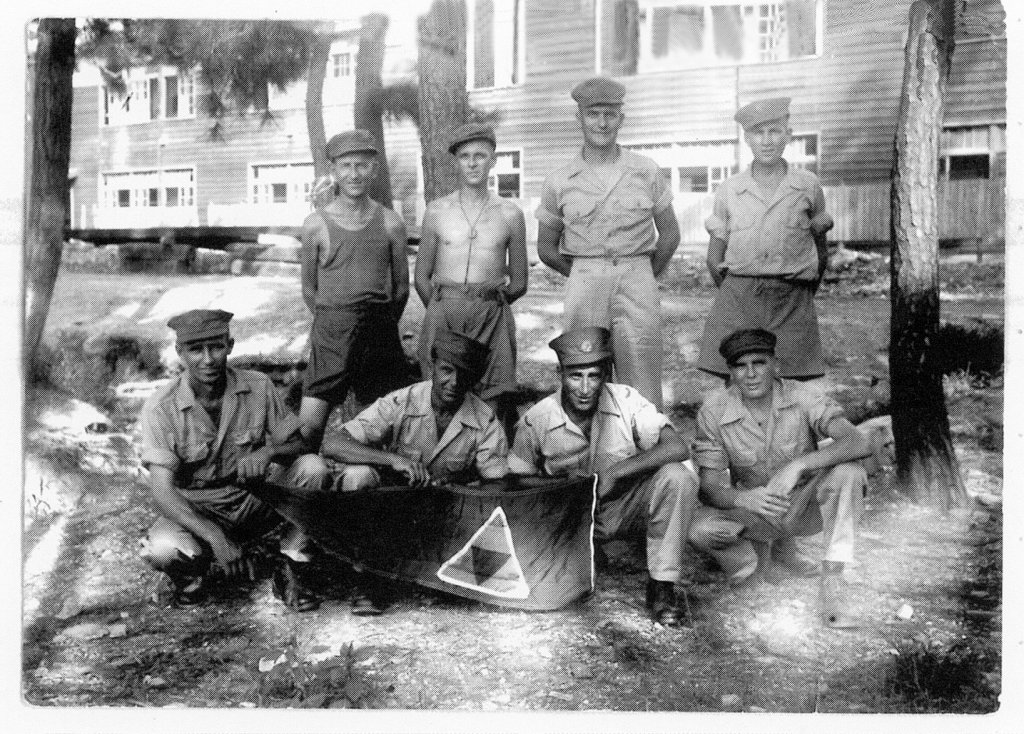
L-R Back Row: Thomas Gibson, Albert Norton, “Cowboy” Matthews, Ralph Hadfield
Front Row: George Chatfield, Norm Thompson, Claude Dow, Andrew “Mick” Lambie.
Some of the POWs at Niihama 1945.
l3th September
We rose at the usual time and when I had had breakfast I went over and packed for Strawb, (Aubrey Hosking WX10097) who only had his first walk without crutches a few days ago. He has been a cot case since early Feb, nearly going west. His legs got jammed between a truck and a wall and went septic. He had a temperature of over 100 degrees (37o C) for over 70 days. He and quite a few others will go on a hospital ship at Wakayama. The sick party went off by truck at 8 o’clock and we had to be ready to get out by 9. The amount of stuff being thrown away would have made our fortune in Thailand, and some of the Nips were given a lot of stuff.
The priests were on the spot again and had three hand carts filled high with goods.
At 9 o’clock we had to clean the place up and after this there was hardly a window left intact.
About 10.15 we started to walk to the station to catch the train from Niihama.
At the station most of the Nips who had been working with the boys were there, a couple with presents. Our chaps gave cigarettes, matches and chewing gum to everyone. The boys were in a very happy mood laughing, singing and poking dirt at the Nips.
At Niihama there were several of the mine heads “Harold Loyd” who always liked his (indecipherable) but this time he stood to attention.
We left Niihama at 12 o’clock in a train with a red cross coach for the sick. The seats in our carriage were nice and soft.
The country is looking very well at present, the rice is coming into ear, and it has a border of Soya beans round it. The sweet potatoes and (indecipherable) are looking well and there are fresh plots of radishes and spinach. The figs are just getting ripe and persimmons are a nice size.
The railway follows the coast and there is workable ground for about half a mile to the hills, which look well with a fleecy cloud about halfway up them.
In the matter of building un-cemented stonework the Nips would be hard to beat. The hills are terraced and ravines build up.
At “Zentuzie”? we saw some Yanks on a train and they were hooked up in front of us. They were from Guam and Wake Islands and had been camped here. There were Electric coaches.
The kids like a good scramble for the chewing gum.
We went on to Takamatsu getting there at 4.15 and going on to a ferry for the mainland. The Yank sick & us on one, and the Dutch on the other. They are very good ferry’s and we saw some big paddle type transport ferry’s with railway engines and three trucks of coal on them.
We landed at Uno and on the railway station found 200 Poms some of whom had been in Thailand and they were now attached to the party. As we left Uno one of the Yanks fired 2 shots at a Nip for something and there were several doing a hundred yards sprint.
The train we had got into was quite a good one, with padded seats. We had to carry three meals from the camp in the shape of Yank rations. At one place we stopped a kid had some grapes for sale, and we dived on them. I took two bunches for a packet of chewing gum. Some just took them.
The way they cram their people into trains make us feel we have plenty of room.
l4th September
I would have liked to have seen Kobe, but it was dark when we went through there.
After a fairly sleepless night we came to Osaka just at daybreak and there were a network of rails going everywhere with electric trains in plenty. We saw plenty of crowded areas. We also saw where the bombs had destroyed areas as big as a suburb in Perth with only the stone buildings and chimneys standing. We thanked God that Aussie had never known anything like this. It has a big factory area spread over miles.
We passed through some patches of grape trees (?) and saw several glass hot houses.
The country has a lot of trains, and they have subways under the main one (line). We have passed quite a few rivers and their bridges are fairly well built.
We arrived at Wakayama at l0 am. At Wakayama there was what I consider the biggest half of the town, equal to Perth and suburbs, completely burnt out with only a few stone buildings left and only the shells of them. An English band was at the station and it struck up with the tune of ”Happy Days Are Here Again”. Cameras clicked and we were rushed over to a electric train and were taken about three miles to the port.
About 80 of us Aussies went first and we were taken a little way round in a landing barge into what was once a big rest hotel. There we had a number painted on us. Mine was 33 and then we were told to put our personal gear in one bag and clothes in another, and with the rest of our gear had to hand them all in to get disinfected. Then we had a lifebuoy shower, and were sprayed with disinfectant.
Then we had to go through a ring of doctors, who took particulars from us and tested our teeth, ears, eyes, heart, blood pressure, Beri-Beri, etc. Two of them were at you at a time. One of the would be looking at your ears and the other would be testing your legs for Beri-Beri.
After that, we were given a suit of blue Yank sailors clothes and given dinner and a packet of cigarettes from the Red Cross. Then we had to fill in two forms similar to the Niihama ones. Then we had to fill in a form of atrocities we had personally seen. While we could write a book on them, they only gave us three lines to write on and we could not express ourselves. Still, we put in a couple of the worst men. After this we had to collect our gear and go back to the landing barge and be taken out to the mother ship of the landing barges.
The USS Cabilde (LSD l6) can carry 35 landing barges beside her own three and can be used as a dry dock for small ships. It has one 5.5 gun, twin 20 mm’s, four Bofors and a cruising speed of 15 knots. We had a good tea on board, soup, meat and vegetables (including beetroot) and pie with ice cream. Bread and jam were available. All this was given to us on a tray with five holders in it. We also had Lime juice to drink.
l5th September
There were about 22 warships in the harbour without counting and about 50 mine sweepers. There was one Aussie boat the “Canberra”. Some of the boys spoke to a couple of the Officers from it yesterday.
Well, at 10 o’clock we did what we have been longing to do, sailed from Japan and we were very glad to see the back of it.
As we were moving out the “New Jersey” came in. It is the flagship of the 5th fleet, a 45,000 ton effort with 9 x 16 inch guns. She sits very low in the water and our crew all stood to attention as she passed. Her band was playing, and she had an aircraft carrier and cruiser with her. Later on, we passed 12 more warships.
The meals are very good with real American coffee instead of tea.
The sea is getting rougher as we go along and the boat seems to roll easily. We saw our first picture last night, Deanna Durbin was in it and she looked a lot older to us. We see “The Adventures of Mark Twain” to night.
We are going to Okinawa and expect to be there in two days or less.
l6th September
The storm has got worse. They gave us turkey for dinner but I fed the fishes with it, and had no tea. They say we are going out to sea to go around the storm so it is a fair size one.
There is a crew of 350 men and the Yanks are treating us to everything and are very fond of hearing of our treatment by the Nips, and we are doing our best to satisfy them.
The only other ship sailing with us is the hospital ship “Sanctuary”. She has the sick and the rest of our boys on her. She does not appear to be rolling half as much as us.
l7th September
At 4.30 this morning they came and told us that anyone who had gear down in the well (hold?) had to shift it as the waves were coming aboard. Some of the crew are seasick and at Dinner and Tea time we only had sandwiches owing to the fact that it was too rough to do any cooking. They say we are going round the storm, but we think we are bobbing up and down on the same spot.
l8th September
Spent the morning reading some Aussie papers that they got at Wakayama, from the Aussie reclamation party. I was glad to see that they made whoopee back home on hearing that the war was finished. There were even bits from the “Sunday Times”.
The sea has smoothed out a bit although the ship still tosses a lot.
You can buy a carton of 200 cigarettes for half a dollar American. Some of the boys have swapped souvenirs they were going to take home, for coins, caps, photos, etc.
l9th September
Well we got to Okinawa at 9 o’clock this morning after going 500 miles out of our way and being two days late arriving. We passed one bay and there must have been at least three Battleships, three aircraft carriers (big ones) and anything up to 100 warships. There were a couple of ships that had been beached in the recent storm. We sailed past this bay and stopped in a bay which must have had 300 odd ships of all kinds. There were planes of all sizes flying round.
We signed a letter of appreciation to our captain and crew. The grub had been good throughout with pork chops and ice cream for Dinner.
We should have got off but did not.
An aircraft carrier with more of our boys on her pulled in this afternoon. There were a couple of autogiro’s (helicopters?) flying round. There was considerable traffic and it looked good at night with the lights on the ships and ashore. The Yanks are very proud of all the ships, planes, etc here. The ships of the victory type have no portholes and are all welded, no rivets.
It is quite a pretty place and I would not mind having a look on shore. The boat, the LSD l6, is only six months old.
20th September
After two good meals, in which the boys doubled up as usual (the last meal was turkey). Word was given out that we were to go to another ship. At a little after one o’clock we were taken in a landing barge to the new ship, PA 225. We found the rest of our party already there, except Strawb Dyson & Bill Nottle, (Wilfred Harold Nottle WX9181) who had been taken ashore. A little later the landing barge brought more men from the aircraft carrier (which had brought them from Nagasaki) making a total of 1,900 odd passengers and 500 crew. We were rather crowded but were pleased to see some of the boys who had come with us from Thailand. Some others had come late from Non Pladuk and some of those had been with the Burma force.
There were 24 more 2/4th making a total of 64 on board. Two or three had gone to Nagasaki and got a lifted out by aero plane.
One death by accident was reported, and 45 out of 49 of our chaps went missing when a convoy of 23 ships was attacked off the China coast on Sept 1944 and 21 of them were sunk by allied submarines. There were 550 English and 60 AIF survivors out of a total of 2,000. The survivors were in the water 36 to 55 hours before being picked up. The nips panicked every where. The survivors were attacked again before reaching Japan.
There were a lot of Nip swords, revolvers, wristlet watches, etc amongst these lads.
2lst September
We shifted along a couple of miles and stopped again. This ship is named the “Bingham” and is a troop carrier. We are in berths 5 high and it is poorly air conditioned. Also the cookhouse does not seem to have the capacity for handling this amount of men, and we only got two meals today. We have been issued with a meal ticket which is punched, so you cannot double up and one has to spend nearly all day in the meal queue. The men who were shipwrecked had only had chopsticks for nearly four months in Japan.
Jim Unsworth WX9385 had to kneel down for three days for pinching a radish from the Nip Q store and in one camp one Aussie had to kneel for 17 days and because it destroyed the circulation in his legs, killed him.
We get a packet of cigarettes issued to us.
A torpedo boat manoeuvred past us and she was certainly a good piece of work.
Told that Bert Fidge (Hurtle Stanley Fidge WX7663) had been left in Singapore (originally selected with ‘Rakuyo Maru’ Party and was left behind with serious eye complaint – the ship was torpedoed – most POWs lost their lives) and and might lose his eyesight. I believe that a few of the Yank officers have given good prices for swords, some giving up to 60 pounds and I heard of one going at 500 dollars.
A picture show to night.
22nd September
Well, after a quiet day during which some stores came aboard, we sailed at about 5.30 pm, and we are hoping that we have seen the last of the Japanese group of islands.
There are supposed to be 8,000 ex POW’s waiting to get away ashore, these are men who flew here from Japan.
Only two meals again today.
The Yank sailors get around with a big knife on one hip, and hooked to their trousers or belt by a big spring hook, is their dog tags, keys, etc.
23rd September
Heading for home at about 15 to 17 knots and are keeping away from the land. There are two ships and a corvette. The corvette goes first, and the others follow in its wake. We were issued with a lifebelt of the blowup type, looks like a horse collar. They put on three light meals.
There are plenty of books aboard and everyone who wants one has got one.
24th September
Had a quiet day, we are catching up a bit on the world by reading different magazines etc and have a few discussions on progress. The sea is reasonably smooth and the boat rides well, a couple of small bits of land seen, but mostly just sea and we are getting sick of that.
The boat has got plenty of landing barges as lifeboats and there is no doubts that they are a good idea. It has enough Ack Ack to give planes a headache and has radar installed. She is 10,000 tons and last December’s model, but we will be glad to get off it, as the tucker is not plentiful and the organisation is not the best.
25th September
We passed the fortress island of Corregidor at about 10 am, and it looks the same as before. We anchored in the bay at about 1 o’clock. The two big wireless masts have disappeared and also a big camp where the sea plane base used to be.
There are over 200 ocean going ships in the harbour, and there are five or six fresh sunken ones since we were here before. From where we are the town looks about the same but the Yanks tell us that it is destroyed.
There was a British aircraft carrier “Indomitable” in here loading troops, but she went out this afternoon. There was also a large submarine going on a tour of the bay.
26th September
We moved into the harbour at about 1 o’clock, and the Yanks and Dutch disembarked first and I did not get off until about 4 o’clock. There was a Yank band playing most of the time.
Going into berth I counted 25 ships sunk in the harbour inside the breakwater. It looks like a grave yard for ships, and they say that they have dragged a lot out and blown them up. The wharf buildings have been demolished.
We were loaded 14 to a three ton truck and driven about 20 miles to the camp. All the concrete buildings have been gutted and only the outsides are left, pitted with bullets and shrapnel holes.
There were camps, stores etc all the way out to the camp, with the usual native café’s, shops, and liquor shops.
Every Yank seems to own a jeep.
There was a nigger working battalion and Philipino’s working fairly hard. The natives are most like Malays, they are certainly dressed better, and look better fed than when we went through here last year. The men are dressed in a lot of army clothes, and the women have new dresses.
We got a packet of cigarettes coming off the boat. At the camp we met some more of our boys there are 24 more 2/4th. We had Tea and 12 men were allotted to a big tent with a wooden floor, electric lights, stretchers, mosquito nets, blankets and sheets. They give us a daily issue of two packets of cigarettes, four cigars, l chocolate, l packet of biscuits and three 12 oz tins of beer.
Went to the pictures, they are on every night.
27th September
It seemed funny in the truck yesterday. The Yanks kept a close convoy, and they had good brakes. To us it seemed good driving but actually it was only because we had not been in cars or trucks since March 1943.
At first the Yanks appeared to us to be real big chaps, but as our boys got fatter they are looking more the same size.
There are Japs working in this camp. They have new clothes with the letters PW on them, and they have a armed guard over them. They eat and sleep on sheets like we do. It’s too good for them.
The meals are good but light, so we go through twice and then we are full. Bert Wall (Herbert John Wall WX12989) who is a survivor of the sinking (Rakuyo Maru) came in today and had jotted down the names of those who had gone down. We had a good day talking to the other men.
We went to a concert at night and there were three men and three women and the jokes were that tough that we blushed.
28th September
Well they started by giving us another rough medical examination, testing urine, teeth, height, weight, sight, a general exam, and two needles, T.A.B. and a vaccination for Cholera. These needles were given to us by Aussie nurses. We also had to put in a stool (specimen) and I believe that there has been the odd case of leprosy found.
After that, we were issued with clothes. They gave us as issue similar to when we first became soldiers, so we will have a lot to lug back. We did not get any “Australians” and they do not possess any of our colour patches although they do have most of their units.
Went to a concert which was put on by a Filipino band, five women and a half breed Chinese girl born in Aussie. They had been interned in Malaya and they had taught the child to sing, dance, play the piano and do acrobatics during that time and to do it well.
Saw a list of some of the men who were released in Thailand and there were a lot whose names were not mentioned.
29th September
My weight yesterday was l0 stone 11 lb (68 Kg), so I have got rid of most of the Beri-Beri and put on a lb a day for the last month. I have lost 3/4 of an inch (2 cm) in height since I joined up which is about the average, some have lost up to 2 1/4″ (5.7 cm).
We got our new pay book today and handed our old one in. I got paid 40 pesos which is worth £6.3.4d. I bought some biscuits and chocolates and now that we have some money the canteen is closing down.
The Yanks MP’s get round here with tin hats on and a good hefty wooden baton.
They called for occupation troops for Japan. The conditions are, that after two years service they get six months leave in Aussie but none now. I believe that they got a few. Not for me.
30th September
They interrogated us to see if we know anyone who is dead. They have a list and photos compiled in 1944 that they thought were still POW’s in Jap hands. Three of us spent the day checking the names on my list and typing them out. I was astonished to find that very few of the men that had been killed in action had been taken off, so evidently they knew nothing of them up to this time.
We got issued with the Pacific colours.
1st October
We finished the list of the dead and our interrogations, in which we had to state what camps we were in, what conditions were like in them, how we were treated, our methods of traveling between camps. Also whether we had seen any men do anything worthy of recognition and any brutal things we had seen done and by whom.
There have been about 700 men told to stand by for traveling home on an aircraft carrier, and another 500 for the aircraft carrier ‘Speaker’. There have been a few men detailed from each tent.
The Yanks wired down all the buildings as a typhoon was supposed to be coming, but only a torrential downpour got here.
2nd October
We went into Manila and I think that every shop here sells photos of Manila and other souvenirs. I priced cameras and they ranged from 40 to 400 pesos (a peso is worth 3/-). The rot gut liquor is about five pesos and the better class of whiskey is about 25 pesos. There have been 37 deaths through rot gut whiskey.
Every second place is a cafe and dance hall combined and the charges are hot. Jazz music is played while eating and they have girls singing, doing shows, or for you to dance with. A spoonful of ice cream costs a peso, and to have a normal day here you have to be a millionaire. The prices of everything are too high, but considering the amount of troops, it seems a fairly orderly town. The Red Cross provide tea and scones.
The MP’s will pull up a truck for you to get a lift home, and the Yank drivers don’t mind stopping. It took us six different trucks to get home, and I had a good day.
The 700 men who went this morning have returned owing to the fact that the sea was to rough for loading them. A couple of us had a chat with one of the AIF nurses for a couple of hours at the canteen, a very nice woman.
At 2.30 pm four of us decided to go to Manila, and hitch hiked in. One truck took us all the way in. There were, of course, the wrecked places on the way in. The town has been badly knocked about. No electricity has been restored yet and the shops are lit by carbide or petrol lamps.
The boongs trading instincts are wide open, and they cater for souvenir hunters, the thirsty, dancing and dates etc.
3rd October
There was a plane flying very low over the camp spraying with DDT. Ted and I went into Manila the MP’s on the gate would not let us out without a pass, so we went through the fence. We got a lift but then the driver took a turn and we went out in another direction about 12 miles. We passed Ordnance repair camps and the main hospital. There must have been a lot of sick or wounded because it was a big camp. We went past an aerodrome that must have had 200 wrecked Nip planes on it, they were scattered round in a fashion to suggest “nose dives” for some.
We got a lift back into Manila easily. Had a quiet time in town looking at souvenirs but they were all so cheap looking and the prices were too dear, so we did not buy anything except a few snaps and some of the Jap occupation money. I gave a peso for an Aussie pound, I saw a 10/- red Aussie note but did not buy it. Later I bought a bundle of notes in which there was a 1 pound and a 10 shilling note for a peso.
The mob who was supposed to go on the ‘Speaker’ did not go owing to it being too rough. Bob & Mick went by plane today.
4th October
About 1,200 AIF went on the aircraft carriers today. Ted Bunce (Edward William Henry Bunce WX9278) was a reserve and they came round to get him, but he understood them to say “wait in the tent”. He did and missed the boat, but will be on the next draft by air.
The rumour is that only air trips will now be available to Aussie. We went in to Manila on an organised picture show party, and it seemed almost like home, lounging back in decent seats.
The harbour looked beaut, like a carnival, with red and green lights on all the small boats.
A draft of Yanks just in from America came in and as soon as they got into camp, before they had a rest they had to put up a tent for themselves, dig drains, pick up butts and papers round our tents and pick up stones on the road. The Nip POW’s should have done these tasks.
5th October
I went on a organised party to Corregidor (island fortress in Manila harbour). Ten men from each Company were allowed to go. Ten put in to go but only four went, and we still had ten men’s rations for dinner. We had two loaves of bread, one tin meat, one big tin of tomato juice, one tin jam, ten apples, two tins of pears and two tins of plum pudding (which was beautiful).
The truck picked us up in camp and ran us to the wharf. We were loaded on to a nice big launch, about 20 of us, and we hardly filled one corner of it. On the 25 mile run out to Corregidor the engineer of our boat was on deck talking and the captain rang for reduced speed too late and we rammed a loading barge at full speed. There was a mob of Philippino’s on the barge and it knocked five into the water. One of them kept singing out “Help me, I cannot swim”. A couple of Yanks looked as though they were going to jump in and help him until I pointed out that he must be standing on the bottom then, as he was treading water as good as I could and he kept himself afloat for ten minutes. It only put some scratches on the boongs and a dent in each craft.
We were only allowed two hours on the island. After dinner I went through the big tunnel where General Wainwright and his men had held out. The tunnel was littered with stone, shells and machinery that had been blown up. There were no lights, so we could not go down the small tunnels that ran up to a quarter of a mile in all directions. At the place where General Wainwright surrendered there were the bones of about 12 Nips that had been dug up in the tunnel and still smelt. I also saw several Nip skeletons in the scrub on the island. All the guns were in the caves and the machine gun nests were well hidden. The barracks were only ruins. Nips were working at cleaning up the mess. It looked like Rottnest.
Other launches had brought many women across. These Yank women look on the hard side and do not pay as much attention to their appearance as they could. The Yanks on the staff here do not keep their personal appearance as well as our Aussie boys. The Yanks cuddle up to all sorts of native women and the truck drivers all seem to have some sort of female in front with them. Big black niggers go a courting too and it is nothing to see women and kids going into tents with these niggers.
6th October
These Yank drivers are good drivers but reckless. I have not been with one yet but that we have not narrowly missed an accident.
Lady Louis Mountbatten paid us a visit and made a speech telling us how glad she was to see us, and that her hubby was doing everything to get POW’s home in his command. For us to be patient as we would soon be home. She also said that she had seen Aussies in Singapore and Thailand and that she was going to make her second trip to Aussie when things quietened down.
7th October
A lot of men have gone by air, and the rest are now going by air. I am on the No. 6 draft so should go in a couple of days. Spent a quiet day reading, got four letters.
8th October
A few more went out of the tent. We are drawing 14 men’s rations for nine men and I got another ration card for 12 men from one of the staff, we give him half of our beer.
I have got approx 1,100 cigarettes and eight packets of tobacco. I have been selling my cigars because they are too bulky to carry.
One West Aussie on the staff here gave us a lot of “Mirrors”, “Kalgoorlie Miners”, and “Sunday Times”.
I am on the draft to go tomorrow.
9th October
The orderly room Sergeant came round and woke us up at 2.30 this morning and checked the names in the tent of those who were to go. Mine was not on the list, I questioned it, and he told me my name had never been on the list, so I went back to bed and at 4 o’clock, after the boys had had breakfast and were on parade, he called out the names and mine was about 8th on the list of 98 men so I had to get out of bed, grab my gear, put it aboard a truck, and then go over and get three fried eggs between bread for breakfast.
This orderly room is a proper Aussie one. They don’t know where anything is and don’t know how to handle men.
We drove about 20 miles to the airport. The drivers were AIF drivers, and their truck driving and convoy work was good compared to the Yanks.
We must have passed over nine bridges that had been blown up and were repaired with iron trellis sections. We were taken out of the trucks and put 20 men to a Catalina flying boat. At about 8 o’clock we moved off. We circled for about 20 minutes on the water then rose up smoothly. It was a bit jerky on the water owing to the waves.
The landscape of the Philippines looked better from the air than it did from the ground and there were some fertile areas growing bananas, coconuts, rice, etc. with water plentiful.
I can see it should be easy for a bomb crew to drop bombs on a target. The flying boat rode like a champion and it reminded me of a diesel coach with a bit more noise. I went to sleep for some of the way. Except for a couple of small holes, the only place to look out from was the gun blister in the middle of the ship (only five at a time were allowed).
Except for when we went through a couple of clouds and struck air pockets and dropped a bit it was a good trip to Morotai (Indonesia) where we arrived at 3.30 pm and landed on the water without a bump. We had a hot Dinner and Tea on the plane.
We got scones and cocoa as soon as we arrived at the camp, and were then taken to the Q store and issued with anything we liked. I did not get much as I have all I can carry and had left a pair of Yank boots back in Manila. We got a good kit bag, and also got lots of stuff from the Red Cross. One pair pyjamas and a lot of small things including two packets of Capstans (cigarettes)
A good Tea and picture show at night.
l0th October
Up at 4.30. There are Dutch civilians here, men, women and children. Released Indians, Yanks and Nip prisoners.
We left at 8 o’clock and had a bit of bumpy weather for a start. Then in a clear sky she did the worst pitching, but we had good flying at 9,000 feet until we hit Melville Island. Our plane cruised at about 108 miles (173 KPH) an hour and had a crew of seven.
The Coral Sea looked quite nice from the air. The water was greenish, with reefs and little green islands. The sea was very calm and at this height with fluffy clouds between us, looked like the sky. At one place there was a lot of islands but we followed the open sea most of the way.
Then we came over Melville Island. What a desolate, God forsaken country it looked, with large salt patches, mangroves and the trees on the ground so thin and scattered. The mission looked neat. The tide was going out in the old usual style.
Darwin, the rear part of Aussie was good to see, knowing it was Aussie. It did not look much improved except that there were some bigger camps. I could see one ship that had been sunk and there were about 13 Catalina’s in the bay.
We landed 3.30 pm and were put into a bus and taken back to Winellie Camp (where they had been based in 1941).
When we pulled up they said “you cannot go into the huts, the women (AWAS) are just making the beds”, we said “this is not our army”. The women are camped in Larrakea.
We camped in the old 2lst Bn lines and except for a few new buildings it is the same camp we left in 1941.
The boys who have been here two days, leave tonight and tomorrow morning. At Tea that night it was that good that we nearly decided to stay in the army. Crockery, men waiting on us, fruit and cream etc.
We changed our Philipine money into Aussie.
llth October
We got a pay of £2.10.0 and this morning I sent a couple of telegrams that the girls will go crook at, telling them not to meet the plane.
We went to the Q store, and got two pairs of shorts, shirts, long trousers, socks, tops, and were told that we could either get our Service Dress here or in Perth. I’ll get mine there. We could have got more clothes but we can’t carry any more. The chap tried to tell us that we might get any surplus taken off us in Perth.
We were tested for blood pressure and were taken into Darwin to be X-rayed.
Camps run practically from here to Darwin. The aerodrome has grown into a big one, and there is a fresh one nearer Darwin.
We went to the naval hospital and after the X Ray we got driven round the town. There were more of the European houses left standing than I had expected after reading Nip accounts of their bombing.
The new Darwin hotel had only had one wing hit and the old Darwin (The Chinatown) had disappeared. All of which is to the good.
I was a bit astonished to see the amount of Abo’s working, they looked good.
We got a bottle of Fosters beer for 1-8 d.
l2th October
One of the boys had a friend up here and was lent a jeep, so five of us were taken around Darwin. To some it might have seemed as though Darwin had got a bit of bombing, and although the pub Chinatown, was gone and what had been the Yank H.Q. had had a bomb dropped in the middle of it, and the good oil tanks had gone up, Darwin to me was only scarred.
What surprised me most was the fact that there were no civilians here, for although every building was taken over by the fighting forces surely there would have been good opportunities for business.
We were taken around Fanny Bay and East Point and it can be understood how they can give us fresh fish because there are fish traps all the way around. Had Dinner at the Survey Sergeants mess and had peaches and rice. Got back to camp at four, we had left at nine.
In the evening we went down to the hospital for an evening with the nurses and had a good yarn with them, drank lolly water and finished up the night by doing the Hokey-Pokey dance. “Ye Gods”, and we thought we were going to return to civilisation and not to be Tropic Happy.
The names of all the other starters from our party are up. Some are going in the morning and Smokey Hayes (Norman Patrick Hayes (WX8374) is going to SA but no planes are going to the West.
l3th October
Doug Tanner (WX16324) had to go to hospital. They found something wrong with his lungs on the X ray, there is one in about 20 get it even though they look healthy.
I was having a drink of orange juice at the Red Cross when a “Red Cap” blew in and asked me how I was, and how I liked being back. I did not salute or anything and it turned out to be General Murray who is in charge of the NT forces.
Got word at 11 o’clock tonight that we are due to go out in the morning.
l4th October
Got woken up at 3.15 am and what with packing and not being able to sleep, did not get much more than a couple of hours sleep all night.
We had breakfast and moved out to the aerodrome, then had to wait while they mucked around, then they took us for a run around the drome looking for the plane. It is certainly a big drome with strips going all ways. We found the Liberator (No 358) in the end, there were 19 of us going, plus the crew and our luggage.
We left at 6.15 am and for a while we passed over mangroves, swamps and rivers, then ran in hilly country and dry rivers, red flats and ant hills and it looked a good scene for a Technicolor film.
We passed into the sand drift and there were long lanes of drift hills, then followed the salt lake country. We were flying at 6,000 ft and could not see any stock or anything moving on the ground.
We hit the wheat belt somewhere near Wongan Hills and could see a few abandoned farms for a while. It looks like a big jigsaw puzzle. The crops look very thin from the air, and later we could see whole paddocks that looked as though they had been washed away. The jam country on the other side of the Darling Ranges looked pretty.
We landed at two o’clock and we were not expected at Guildford (the WA Personnel Depot until the 1950’s) until three and there was no one to meet us. Some had to wait for relations but some of us went straight to Hollywood hospital, and were admitted and examined and in spite of kicking up a row, will not be let out until tomorrow.
We nicked off into town, then went visiting and did not get back till 1.30 am and got roared up for not taking our boots off before coming in.
This is the end of Frank’s diary except for the lists of places, dates and ships etc included in the appendix.
Frank was able to reunite with his three sisters while on recuperation leave but unfortunately, his mother had been murdered while he was a POW.
After being discharged in January 1946 he moved to Bunbury to live with Jean, his oldest sister and her family where he transcribed this diary from the notes he had taken on the Japanese signal pad.
He suffered bouts of malaria (not mentioned in the diary) which gradually diminished and after getting back into regular work, regained most of his health and strength. Although not mentioned in the diary and rarely talked about, he had been tortured by the Japanese on several occasions in Thailand and beaten while in Japan and had the scars on his hands and back to prove it.
He never returned to his farm at Nungarin and was killed in a work accident about 2 1/2 years after his return in 1948 aged 39 years.
Appendix 1.
Significant Places and Dates
| Enlisted | 18 June 1940 |
| Claremont | 18 October 1940 |
| Ascot | 21 October 1940 |
| Left Northam | 21 July 1941 |
| Woodside | 25 July 1941 |
| Left Woodside | 13 October 1941 |
| Darwin | 22 October 1941 |
| Left Darwin | 30 December 1941 |
| Port Moresby | 4 January 1942 |
| Sydney | 8 January 1942 |
| Left Sydney | 10 January 1942 |
| Perth | 15 January 1942 |
| Left Perth | 16 January 1942 |
| Sunda Straits | 20 January 1942 |
| Left Sunda Straits | 21 January 1942 |
| Woodlands, Singapore | 24 January 1942 |
| Thas | 31 January 1942 |
| Left Thas | 9 February 1942 |
| Alexander Hospital | 11 February 1942 |
| Capitulation | 15 February 1942 |
| Left Hospital | 26 February 1942 |
| Left Changi | 5 May 1942 |
| Left Callecott Estate (Thompson Rd) | 20 November 1942 |
| Left River Valley Rd | 23 December 1942 |
| Left Changi | 14 March 1943 |
| Kanbury (Kanchanabury) | 18 March 1943 |
| Tarsoa | 27 March 1943 |
| Left Tarsoa | 24 April 1943 |
| Konyu No 2 | 25 April 1943 |
| Lower Konyu | 10 July 1943 |
| Tarsau | 19 July 1943 |
| Chungkai | 23 August 1943 |
| Tamuan | 23 May 1944 |
| Left Tamuan | 22 June 1944 |
| River Valley Rd | 27 June 1944 |
| Left River Valley Rd | 1 July 1944 |
| Left Singapore | 4 July 1944 |
| Mire (Borneo) | 8 July 1944 |
| Left Mire | 10 July 1944 |
| Manilla | 16 July 1944 |
| Left Manilla | 9 August 1944 |
| Luzon | 10 August 1944 |
| Left Luzon | 12 August 1944 |
| Keelung | 16 August 1944 |
| Left Keelung | 27 (or 28) August 1944 |
| Okinawa 1 | 30 August 1944 |
| Okinawa 2 | 1 September 1944 |
| Kowasame | 3 September 1944 |
| Left Kowasame | 5 September 1944 |
| Moji | 7 September 1944 |
| Got Off Boat | 8 September 1944 |
| Moji | 9 September 1944 |
| Yamani | 10 September 1944 |
| Niihama | 18 May 1945 |
| Left Niihama | 13 September 1945 |
| Wakayama | 14 September 1945 |
| Left Japan | 15 September 1945 |
| Okinawa | 19 September 1945 |
| Left Okinawa | 22 September 1945 |
| Manilla | 25 September 1945 |
| Got Off Boat | 26 September 1945 |
| Left Manilla | 9 October 1945 |
| Left Morotai | 10 October 1945 |
| Darwin | 10 October 1945 |
| Perth | 14 October 1945 |
| Discharged | 30 January 1946 |
Ships Traveled In
Duntroon 1939 / 45 Star
Marella Pacific Star
Aquitane War Medal 1939 / 45
Van Der Lyn Australian Service Medal 1945 / 75
Rashin Maru with Clasp SW Pacific
USS Cabilde-LSD 16 (Landing Ship)
USS Bingham-PA 225
Aircraft
PBY Catalina A24-354 to Darwin and B24 Liberator to Perth.
Korea – JAPAN ‘B’ FORCE – Destination for Ted Roots, Jack Taylor, Jim Clancy, Bill Gray and Hubert ‘Dutchy’ Holland
KOREA with Japan ‘B’ Force
There were only five men from the 2/4th MG Battalion who managed to see the sights of Korea. Ted Roots, Jack Taylor, Jim Clancy, Bill Gray and Hubert ‘Dutchy’ Holland. They boarded the 3,829-ton passenger-cargo ship ‘Fukai Maru’ 16 August 1942. The Australian contingent of 115 men was part of a 1,000 strong work party. The remainder of this party was made up of 885 British prisoners which was designated Japan ‘B’ Party.
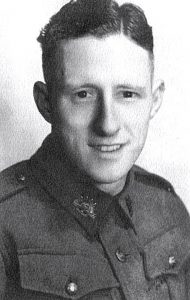
Below: Ted Roots
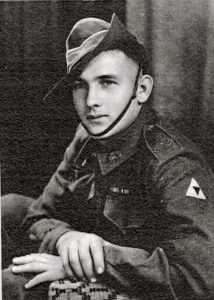
Below: Jim Clancy
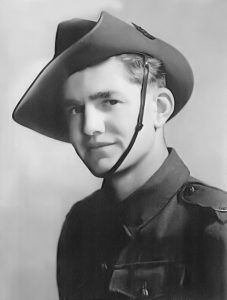
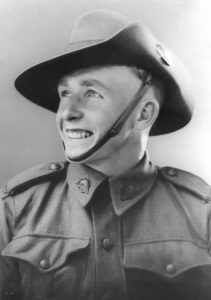
Below: Bill Gray & Right: Dutchy Holland
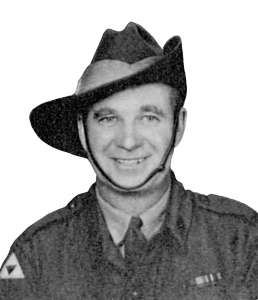 .
.
Please read further about Fukai Maru
These 1000 men were ‘the icing on the cake’ as the real prize was the 47 man Senior Officer’s Party. There was not an officer in this Group under the rank of full Colonel. Included were Lt-Gen A.E. Percival, the former G.O.C. Malaya, Singapore’s former Governor Sir Shenton Thomas.
This Officer Party designated simply as the ‘Special Party’ was made up to a compliment of 400 men by the inclusion of engineers and technicians. At first it was the Japanese intention that all 1400 men would be loaded aboard the ‘Fukai Maru’ but because Lt-Gen Percival had protested against the cramped accommodation the working party remained and officers, engineers and technicians embarked aboard another transport the 17,526 ton ‘England Maru’.
‘The AIF were assigned No. 4 or D hold with 108 Loyals. They occupied a space of 20 x 15 yards [60’ x 45’] on two tiers covered with thin straw matting giving a space of 6′ x 2’ per man in which they could not stand or kneel but only sit, lie or crawl. The crowded, vermin-infested conditions endured by the prisoners on the Fukkai Maru were typical of other Japanese prisoner of war transports and made a mockery of the elaborate disinfection procedures prior to boarding. For many in the “B” Party prisoner of wars the 40-day voyage would be their worst memory of captivity.‘ From AWM
Cape St. Jacques, Indo China – 22 August 1942
The ‘Fukai’ Maru was fitted with wooden platforms constructed around the bulkheads of its four holds. Nevertheless this was the best accommodation available under the circumstances. The 2 ships sailed in convoy under armed escort via Cape St. Jacques (Vung Tau) then anchored in the estuary of the Riviere de Saigon in French Indo-China.
This wide estuary was a regular assembly point for Japanese ships to form up before continuing their onward voyages. That was until U.S. Navy submarines transformed this estuary into a virtual elephant’s graveyard of Japanese shipping. The ‘Fukkai Maru’ and ‘Kamakura Maru’ fortunately for the prisoners, managed to depart unscathed and arrived at Takao in Formosa (Taiwan) on 29th August 1942.
Takao Harbour, Formosa – 29 August 1942
Below: Also from AWM
‘The Fukkai Maru sailed from Singapore on 18 August, reaching Cap St Jacques in French Indo-China, on 22 August. On 29 August they tied up in Takao Harbour in Formosa where the “A” or “Special” Party who disembarked there the next day were paraded as war booty to the local population. The Japan “B” party spent the next two weeks unloading the Fukkai Maru’s 4,000-ton cargo of Malayan bauxite, reloading her with rice and carrying out various war-related tasks on shore including moving stores in the Naval depot, chipping the bottoms of armoured launches and coal-heaving. By now, diphtheria and other diseases had broken out among the prisoners and several were taken ashore for treatment. Meanwhile, the corrupt purser misappropriated the M &V ration and substituted emerald-green contaminated pork to flavour the daily soup, exacerbating the spread of gastric disease.
On 15 September the ship at last sailed up the west coast of Formosa, joined a convoy at the Pescadores, made a false start north, doubled back, apparently because American submarines were in the vicinity, then on 17 September headed off into the China Sea on the tail of a typhoon. Several of the inadequate outrigger-style latrine-shacks were washed overboard and conditions in the four over-crowded “holds” worsened considerably as sea; sickness competed with diarrhoea and dysentery to befoul the floors and tatami bed-shelves in the prisoners’ “tween-decks” accommodation. Despite these miseries, shipboard race relations were relatively genial and when the seas calmed, the Japanese crew hosted a farewell “concert” in No. 3 hold, which included musical items and wrestling matches between captors and captives, with food rewards for all participants.
By 22 September, when the Fukkai Maru anchored in Fusan Bay, most of the prisoners were suffering from diarrhoea and beri-beri. More than twenty had contracted dysentery. Frantic Japanese medical teams took the serious dysentery cases ashore to the local military hospital. The Japanese guard now split the prisoners into two groups, assigning the Loyals, the AIF and all field officers to Keijo prisoner of war camp, and the 122nd Field Regiment and personnel from other corps to Jinsen camp. A further day’s delay on board ensured that the disembarkation of the prisoners coincided with the Japanese autumn equinox festival on 24 September. As in Takao, the entire local population, clad in their holiday finery had been commandeered to line the streets as compulsory spectators of the victory parade.’
Fusan and Keijo POW Camp 24 September 1942

Above: FUKKAI AT FUSAN – prior to unloading POWs.
The convoy travelled via Saigon before arriving at Takao, Formosa (Taiwan) on 29 Aug 1942. While the POWs on England Maru were transferred to POW camps, the men aboard Fukkai Maru were forced to work as stevedores unloading bauxite until they reboarded Fukkai Maru which departed Takao for Korea on 8 Sep 1942. On 22 Sep 1942 she arrived at Pusan, Korea where the POWs disembarked and were sent to prison camps.
‘Fusan Victory Parade
No sooner had the Fukkai Maru tied up at Fusan dock than Japanese journalists and photographers swarmed aboard to interview selected prisoners about the Malayan campaign. As the captives filed down the gangplanks, their boots and hands were sprayed with disinfectant. On the dock, Kempeitai officers and customs officials subjected them to a double search, confiscating gold rings, packs of cards and cameras but sometimes missing more incriminating items, like Capt Des Brennan’s Malay kris and a British prisoner’s compass and makeshift brass knife. (Another British prisoner of war managed to discard a large handgun prior to being searched.)

FUSAN, KOREA. 1942-10-24. from AWM
OFFICERS AND SENIOR NCOS IN A PARTY OF ENGLISH AND AUSTRALIAN PRISONERS OF WAR CAPTURED BY THE JAPANESE AT THE FALL OF SINGAPORE AND NOW TRANSPORTED TO KOREA IN THE PRISON SHIP “FUKKAI MARU” LEADING A GRUELLING FIVE MILE MARCH, CARRYING HEAVY KIT, THROUGH THE STREETS OF FUSAN. A NUMBER OF MEN COLLAPSED THROUGH SHEER FATIGUE, AFTER SIX WEEKS AT SEA IN CROWDED CONDITIONS.

Like several of his mates, Bill Gray from the 2/4th Machine Gun Battalion had filled his pack with unlabelled tins of M&V “liberated” from the hold under the ‘tween-decks planking’ where the purser had stashed them for sale later in Japan. His booty exposed, he anxiously awaited punishment for theft. Instead, the Kempeitai NCO who found them accused him of hiding “bombs” in his kit. To Bill’s amazement and relief, he was permitted to keep them after proving that the tins contained food by opening one. His delight soon turned to woe, however, when he and his fellows were formed up into lines of four abreast and forced to march with full kit for three and a half hours around the streets of Fusan.’
‘The victory parade was supervised by scores of red-capped, red-booted Japanese Kempeitai officers and followed closely by the press corps who “snapped every wilting or fainting soldier”. Lieutenant Terada, adjutant at Keijo, and the detested “mad major” Okuda from Jinsen camp accompanied the parade. Okuda was on horseback during the march and, according to AIF Lt Hugh Frazer, “appeared to derive great enjoyment from stepping his horse almost on the heels of the rear men and having the animal snort and slaver over their shoulders.” Many prisoners noted that the festively clad Korean population appeared cowed, sullen and apathetic if momentarily curious about the tartan kilts of the few Highlanders in the column and the slouch hats and colour patches of the AIF. The Japanese in the crowd, recognisable among the Koreans by their distinctive dress, were more inclined to jeer. In response to the jeering, the British sang “There’ll always be an England”. The larrikin Australians jeered back, most notably 2/18th Battalion Cpl Vince Mahboub and 2/19th Battalion Sgt Bill Pyke, who heartened fellow marchers at the rear of the parade (and annoyed the Japanese) by exaggeratedly mimicking the sneering onlookers and commenting coarsely about their appearance.
Only one spell was permitted – at a school where giggling women and children gawped or spat at the prisoners using the open-air urinal. Several men collapsed en route and were taken by truck to the local military hospital, joining the other serious dysentery cases removed from the Fukkai Maru. Among them was the ill-fated young Australian Pay Corps corporal, Reginald Hayter, who the previous day had been made to stand for several hours with arms outstretched clutching the onions he had stolen from a stockpile outside the Fukkai Maru’s cookhouse – onions he was later permitted to keep. (Hayter later died at Konan camp in May 1945, the sole AIF casualty in Japan Party “B”.) Six British prisoner of wars died at Fusan. During their convalescence in the local military hospital, the survivors, including Hayter, were required by their captors to write an essay on “Japan and the Japanese people”. This combination of cruel incompetence and neglect, belated and ineffective concern for prisoner welfare and an unusually pointed interest in the attitudes of the prisoners towards Japan and the Pacific War on the part of their captors characterised the captivity experience of Japan Party “B”.
Eventually at 4.30pm, the parade halted at Fusan railway station where bento boxes containing the best food the prisoners had encountered since the fall of Singapore were issued for the overnight journey to camps at Keijo [Seoul] and Jinsen [Inchon]. Guarded by armed sentries and still accompanied by press representatives who continued to ask questions and take photographs, the party was ushered aboard surprisingly modern and comfortable third class rail carriages. The next day when the two roughly equal groups reached their separate destinations, they were again paraded publicly en route to their camps, the first party through the streets of the capital Keijo [Seoul]; the second through Jinsen [Inchon], Keijo’s important west-coast port some thirty miles distant on the mouth of the Han River.
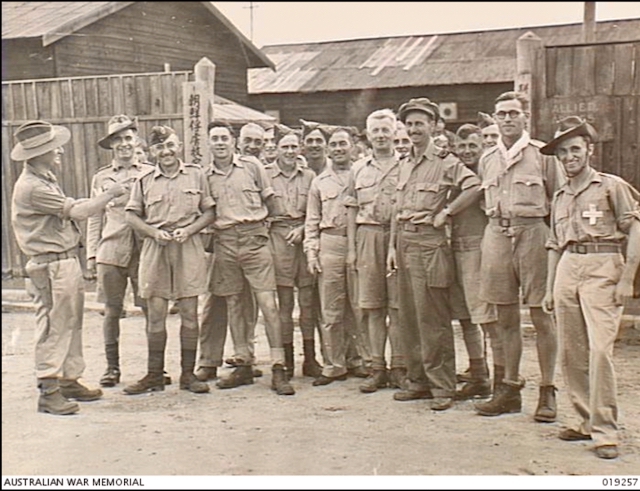
Jinsen Camp, Korea. c. 1945.
Australian and English prisoners of war (POWs) outside the gates of Jinsen Camp in Korea, where they had been for more than three and a half years. There were fifteen Australians, captured at Singapore, in the camp which consisted of a series of low wooden huts so cold in winter that water froze on the floors inside.
A Kempeitai report of the Fusan parade’s impact on the audience of 120,000 Koreans and 57,000 Japanese lining the streets noted approvingly that “many of the onlookers sneered at the bad manners and indifference displayed openly by the captured British troops and thought it quite natural that an army so lacking in national spirit should be defeated”. The spectacle, moreover, of Caucasian captives accompanied by Korean guards allegedly made the local population “realize afresh the magnitude of the victory gained by the Imperial Army” and more vividly appreciate their own direct participation in “the war for Great East Asia”. Bystanders were quoted commenting on the slovenliness and lack of patriotism displayed by the “frail and unsteady” prisoners who went along “whistling indifferently”: “No wonder they lost to the Japanese forces.” At the same time, however, the “most common Japanese reaction” was apparently one of “sober anxiety”: “They have no shame, but some arrogance still, so they must be treated firmly.” “The appearance of the prisoners made me realise that we can never afford to be defeated.”
FORMOSA
Takao is located on the southwest coast of Formosa (Taiwan) island. The senior officers, engineers and technicians disembarked from their transport whilst the 1,000 prisoners onboard the ‘Fukkai Maru’ were put to work over the next 2 weeks unloading bauxite from the holds of ‘Fukkai Maru’ for the nearby aluminium plant.
Bill Gray, who was suffering from oedema of the ankles, was ferried ashore for medical treatment and was later returned to ‘Fukkai Maru’. Leaving Formosa behind them ‘Fukkai Maru’ sailed in convoy towards Korea arriving at the port of Fusan (Pusan) on the south coast on 22nd September 1942.
On the morning of 24th September 1942 the 1,000 strong work party disembarked and were marched through Fusan.
This was the Imperial Japanese Army’s way of showing off their white slaves before the people of this fair city before they entrained for their first camp, Keijo.
The prisoners were than split into 2 groups, with 4 of the 5 machine gunners remaining at Keijo whilst Jim Clancy travelled another 20 miles to (Inch’on) or Jinsen with the second group. Jim would later move to the Hoten Camp Manchuria.
Read in-depth accounts about Hoten POW Camp Manchuria, from Nigel Mansell’s website”
http://www.mansell.com/pow_resources/camplists/china_hk/mukden/hoten_main.htm
The new Divisional Camp at the port town of Jinsen in Keikido Prefecture was located in the southwest part of the city on the road leading to Keijo. Since the (Sino) Chinese-Japanese War Keijo and Jinsen and 8 towns along the 24-mile railroad connection had mushroomed industrially with most of this development serving Japan’s military needs.
The POW camp and Jinsen had originally been an Imperial Japanese Army Barracks. It consisted of 3 black barracks buildings and 5 huts making up an area of about 16,000 square metres, surrounded by a wooden fence.
Returning now to Keijo and the four other machine gunners, this camp was surrounded by local mud brick homes with thatched or iron roofs. The main building in which the prisoners were quartered was a four-storeyed brick structure with wooden floors and staircases. This building, prior to being converted into a POW camp, was a spinning mill. The only barrier between the camp and local residents was a high barbed wire topped fence that encircled the camp.
Work at Keijo was a mix of chores from stoking furnaces, working on a shrine, loading and unloading railroad trucks stacked with rice, iron, flour and timber.
Konan POW Camp, Korea – 12 September 1943


Above: Konan POW Camp photo taken Oct 1945. You can see roof has PW to warn allied pilots.

On 13th September 1943 Jack Taylor, Ted Roots and Bill Gray were transferred to their next camp at Konan, located on the northeast coast of Korea approx. 200 miles from Keijo. We believe the POWs were transferred via Seoul on 25 Sept 1945 where conditions were severe.
It was bitterly cold, particularly as no heating was provided in the huts until a month after the first snow. But from February to August 1943 Red Cross parcels were supplied regularly and the men were allowed to write letters home.
Below is from DVA Anzac Portal
‘Around ninety Australians in the working party that had accompanied the senior officers to Formosa were In September 1943 a group of POWs, including one Australian officer and 50 men, were transferred to Konan in North Korea. There they were employed on hard manual labour: factory work, breaking up stone, stoking furnaces and so on. Like all prisoners of the Japanese they were subjected to gratuitous violence and there were few medical facilities for treating those POWs who fell sick. However, by standards elsewhere in Asia the Japanese discipline was relaxed and food rations satisfactory, at least in quantity. Heating was provided throughout the winter and this, together with the Red Cross parcels, made the experience of the prisoners a little less intolerable.’
POWs were also brought into Konan from Jinsen in September 1943. Altogether there were about 330 men from Jinsen and Keijo at Konan of which 51 were Australians, including the 3 machine gunners. These 3 men were to now remain at Konan until the end of the war pending their release by the Russian Army on 21st September 1945.
This camp was constructed on reclaimed land adjacent to a swamp. The men were accommodated 40 to a room in which they slept, lived and ate. These huts were about 50 feet long by 25 feet wide and arranged in such a way that they formed the letter H. Work at Konan consisted of either working in warehouses, shifting limestone or stoking furnaces at the carbide factory. It was here that a 3-man team would stoke one of the four electric furnaces operated at a temperature of 3,000 degrees Fahrenheit. In each 8-hour shift, each POW would stoke the furnace 8 times bringing his total time at the heat face to 2 hours and 20 minutes. The shifts on the limestone kilns were also on 3 X 8 hour shifts.
Whereas a man on the Burma-Thailand Railway had to endure tropical heat and monsoonal rains, these men in Korea and for that matter Japan had to endure extremes of cold. In an effort to keep worm, men huddled around stoves in theirs huts or barracks where temperatures were frequently just a few degrees above freezing point. As many as 6 blankets were issued to help men stay warm during winter. On 1st June 1945 Ted Roots developed pneumonia and did not return to Konan camp until end of July 1945.
FUKUOKA SUB-CAMP NO. 13 SAGANOSEKI, JAPAN
When the 3 men had departed for Konan ‘Dutchy’ Holland remained at Keijo suffering from dysentery, unable to travel. On 10th October 1944 ‘Dutchy’ departed Korea for Japan where he met up with Clarrie Henderson at Fukuoka sub-Camp No. 13 Saganoseki. Clarrie had been included in ‘Rashin (Byoki) Maru’ Party which had been split up at Moji.
Below: Clarrie Henderson

A number of 2/4th were sent to Fukuoka No. 13 Camp, but when the camp closed down, Clarrie and ‘Dutchy’ remained together and moved to Omine No. 6 Camp. The 2 remaining 2/4th members, Joe Beattie and Fred Ward were moved to Fukuoka sub-Camp No. 17 Omuta. Fukuoka sub-Camp No. 13 Saganoeski was on northeast coast of Kyushu Island. Living conditions were quite reasonable but the food although regular, was quite inadequate. The prisoners worked at a copper refinery in 3 shifts, either tending furnaces or loading trucks with copper ore. Between September 1944 and May 1945 these 4 men worked at a copper smelter before moving on to Omine Divisional Camp No. 6 or Fukuoka sub-Camp No. 17 Omuta.

Below: Beattie and Right Fred Ward
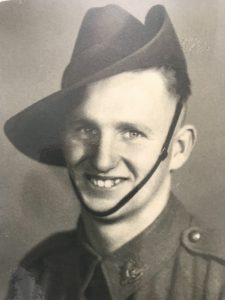
Please read about the incident at Keijo POW Camp.
affidavit regarding Clarke & Terada
OMINE DIVISIONAL CAMP NO. 6, JAPAN
Omine was a coal mining town located on the west side of Honshu Island. The Ormine coal mine had been closed down before the war because it had proven unproductive, hence uneconomic. The mine was brought back to production to help meet wartime demands for coal using POW labour which was both cheap and expendable. Its full designation was Detachment 6, Yamaguchi, Konoda-Shi. Motoyama Coal Mine (Motoyama Tanako).
The camp itself was situated near a railroad in the vicinity of Higashi in the Prefecture of Mamaguchi. The prisoner’s accommodation was a 2-storeyed barracks that had been constructed using a bamboo framework covered with mud to form the external walls.
From May 1945 until his release 19th September 1945 ‘Dutchy’ Holland worked as a powder monkey in this mine. When it was time to return home he moved by train to Nagasaki on 22nd September 1945. At Nagasaki he boarded a U.S.N. aircraft carrier to Hong Kong then proceeded to Manila. On 12th October he was reunited with Bill, Ted and Jack joining them for the remainder of the journey home to Australia.
KONAN CAMP – KOREA
On 12th July 1945 code breakers intercepted a message from the Japanese Foreign Minister to the Japanese Ambassador in Moscow, ordering him to pass onto the Russians an urgent request from the Japanese Emperor Hirohito to plead for peace. This was just 2 days before Marshal Joseph Stalin was to met President Harry Truman and Prime Minister Winston Churchill at the Potsdam Conference.
On 6th August 1945 the first atomic bomb exploded over Hiroshima. Three days later a second bomb was exploded over the port city of Nagasaki. This was same day Russia began its advance against the Japanese in Manchuria.
On 10th August 1945 following the explosion of the 2nd atomic bomb over Japan, President Truman ordered a cease fire of military action to allow Emperor Hirohito time to either accept or refuse his terms for ‘unconditional surrender’. At 1200 hours on 15th August 1945 the Japanese listened to a pre-recorded radio announcement by Emperor Hirohito that Japan had accepted the terms of an ‘unconditional surrender’ and so ended war in the Pacific. However, it would transpire that Japan would not be a signatory to the instrument of surrender until 2nd September 1945. The US and Russia, the only powers who were in a position to supply troops, agreed to divide Korea between them for the purpose of disarming Japan. The dividing line as agreed by these two great military powers was to be taken as being the 38th parallel. However the Russians had entered North Korea before the Japanese surrender on 15th August. They defeated the Japanese in the north, removed the Japanese Military Administration and replaced it was an organised Korean Communist Administration.
FREED BY THE RUSSIANS
Konan POW camp in Korea was liberated by the Russians in 1945. Following the Soviet occupation of the area, they disarmed the guards and essentially allowed the prisoners to manage the camp themselves, granting them a degree of freedom and autonomy. The Russians did not actively assist or interfere with the prisoners, leaving them to their own devices for the most part.
They did allow the POWs to move around Konan and Hamhung freely, and even brought in some livestock. The prisoners were initially allowed to manage the camp’s security and organisation, but there were reports that they received little support from the Russians in terms of supplies, according to www.mansell.com.
Following their recovery, the 3 machine gunners left Konan by train for Jinsen. Here they were taken aboard American hospital ship USS Mercy (II) for a long overdue medical check up and sample some western food before being sent on their way to Manila aboard aircraft carrier HMS Colossus. At Manila they were reunited with Jim Clancy whom they had left behind at Keijo. All 4 men boarded RAAF Catalina flying boat No. A24-377 on 12th October 1945. Flying via Morotai and Darwin they finally landed at Crawley Bay on the Swan River, Perth on 17th October 1945.
REPATRIATION SHIPS FROM KOREA 1945
Below: USS Mercy. One of four Hospital ships to sail out of America WW2.
She arrived Manila on 23 June 1945 for two month’s’ duty as station hospital ship. On 19 Aug 1945 Mercy embarked the 227th Station Hospital which had been assigned to the Korean Occupation Forces, and three days later departed for Korea via Okinawa. She arrived Jinsen 9 September 1945. On 19 Oct 1945 Mercy departed for Manila.
Bill Gray, Jack Taylor and Ted Roots records show they were on Mercy for two weeks at Pusan, then transferred to Collosus Pusan-Manila.
USS Mercy history states she never repatriated POWs from Korea to Phillipines only taking Americans home to US. This American hospital ship was the first stop for 2/4th POWs who remained on board for about two weeks, before being transferred to British HMS Collosus Aircraft Carrier to sail to Manila.
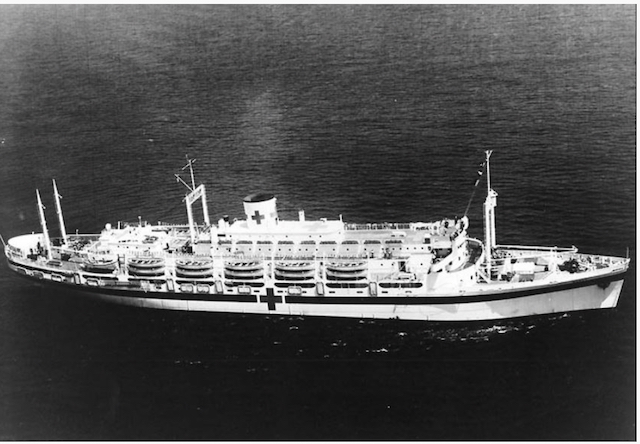

HMS COLLOSUS. You can view amazing video clips of this repatriation ship 1945 Korea at IWM
https://www.iwm.org.uk/collections/item/object/1060020398
Below is from DVA Anzac Portal
‘Around ninety Australians in the working party that had accompanied the senior officers to Formosa were In September 1943 a group of POWs, including one Australian officer and 50 men, were transferred to Konan in North Korea. There they were employed on hard manual labour: factory work, breaking up stone, stoking furnaces and so on. Like all prisoners of the Japanese they were subjected to gratuitous violence and there were few medical facilities for treating those POWs who fell sick. However, by standards elsewhere in Asia the Japanese discipline was relaxed and food rations satisfactory, at least in quantity. Heating was provided throughout the winter and this, together with the Red Cross parcels, made the experience of the prisoners a little less intolerable.’
Jim Elliott obituary, March 2011
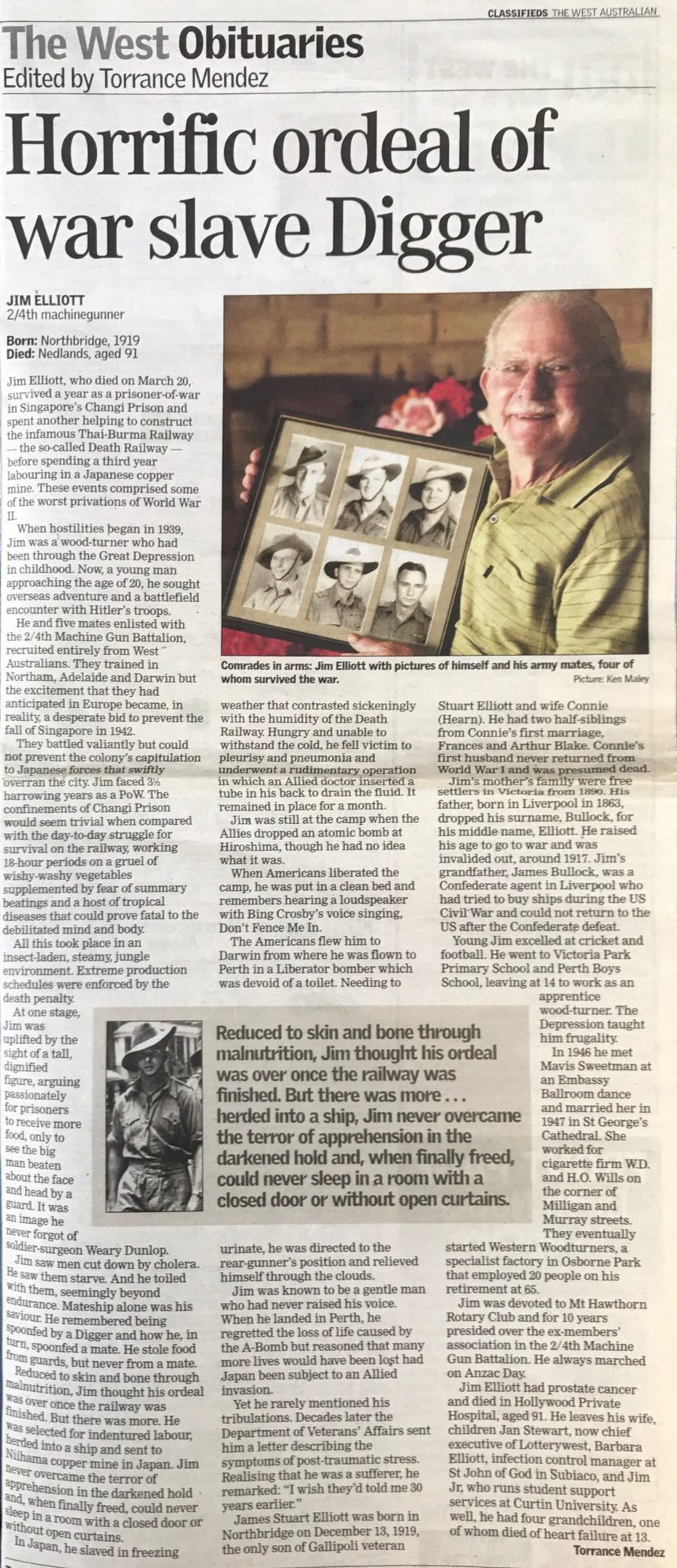
Heppingston, Ian – obituary 1999

Wally (Walter George) Worth WX10012 – Message from POW Camp
The following was printed in the Daily News, Western Australia 21st September, 1943.

Wally never returned to his wife and Western Australia. He died of cholera at Kami Sonkarai on 28 September 1943.
Worth enlisted AIF 13 Dec 1940 and later joined 2/4th’s HQ Coy No. 1 Platoon Signals under CO Lt. Curnow.
As a POW at Singapore, Wally left by train with ‘F’ Force to work on the Burma-Thai Railway. Please read further
Wally died 28 Aug 1943 of cholera aged 31 years at Kami Sonkurai Camp, Thailand with ‘F’ Force Thailand.