TSMV DUNTROON – MELBOURNE STEAMSHIP LINE 1941

T.S.M.V. ‘DUNTROON’  PASENGER SHIP – MELBOURNE STEAMSHIP LINE


Above:  DUNTROON – possibly maiden voyage.  This ship sailed the Australian coastlines.


Above: postcard Danny Bevis sent to his wife

Below:  Duntroon crew listed with Commander I.L. Lloyd

Below: Dinner Menu  – From Danny Bevis


Below:  The postcard which Danny Bevis posted to his wife 1941.


Below:  1935 typical newspaper listing for coastal shipping Australia.

SHIPS BRINGING HOME 8TH DIVISION BOYS from SINGAPORE, MANILA

THE FIRST WERE HOSPITAL SHIPS

SINGAPORE TO AUSTRALIA

The hospital ship, Manunda, arrived in Singapore on 10/9/1945. She was joined by another hospital ship, Oranje, which arrived in Singapore on 11/9/1945. Some of the medical staff on board, including over 40 nurses from 2/14 AGH were taken to Changi to care for the ex-prisoners. While the ships were in port, the most seriously ill ex-POWs were transferred to the ships for further treatment.
Manunda departed Singapore at 1100 hours on 13/9/1945, carrying 423 ex-POW patients, and headed for Labuan, arriving on 20/9/1945. All patients were disembarked by the next day, 21/9/1945. Most of the sick were then transferred to hospital for treatment. They were eventually flown home, or embarked on Manoora on 3/10/1945 for return to Australia. At Labuan, Manunda embarked 428 British ex-POWs and civilian ex-internees, then returned to Singapore.
Departed Labuan 27/9/1945
Arrived Singapore 30/9/1945
Manunda arrived Singapore 30/9/1945 and all passengers disembarked by 2/10/1945.  She remained in Singapore to continue treating sick until early October,1945.  Before leaving Singapore, 437 recovered ex-POWs began embarking Manunda on 5/101945 before departing for Australia on 8/10/1945.
Manunda arrived Fremantle 18/10/1945 then continued onto Melbourne and berthed Sydney on 27/10/1945.


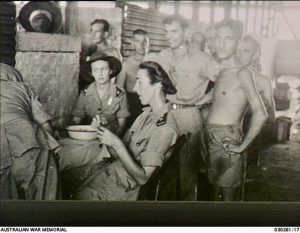
SINGAPORE. 1945-09-13. PRISONERS OF WAR RELEASED FROM CHANGI PRISON CAMP WERE EVACUATED FROM SINGAPORE BY THE AUSTRALIAN HOSPITAL SHIP MANUNDA, THE FIRST AUSTRALIAN SHIP TO ARRIVE AT SINGAPORE AFTER THE SURRENDER OF THE JAPANESE. SHOWN, A GENERAL VIEW OF AUSTRALIAN RED CROSS SOCIETY WORKERS SERVING TEA TO THE EX-PRISONERS OF WAR WHILE THEY WAIT FOR ORDERS TO EMBARK ABOARD THE MANUNDA.


Above:  Hospital ship Oranje
The modern 20,166-ton liner Oranje was completed in early 1939 for the Nederland Line, and began its maiden voyage to Batavia in September of the same year. The outbreak of war between the Netherlands and Nazi Germany found the Oranje at Surabaya, where it remained for over a year, owing to the uncertain world situation. In early 1941, the Dutch government-in-exile offered the ship to the Australian and New Zealand governments as a hospital ship, an offer that was quickly accepted. Initial conversion of the vessel for its new role took place at Batavia, and the work was completed at Sydney.
Capable of 26 knots, Oranje was at the time the fastest hospital ship in the world, and represented a valuable addition to the Allies’ medical capability. Originally staffed and operated by a Dutch crew, with a small complement of New Zealand and Australian staff, it later carried a largely Australian, and eventually a largely New Zealand medical staff. The Oranje completed 41 war voyages, covering over 382,000 nautical miles and carrying some 32,461 patients. It was then used to repatriate many Dutch internees from the NEI to the Netherlands.


YOKOHAMA, JAPAN 1945

Above:  Three hospital ships docked at Yokohama: TJITJALENGKA (British), MARIGOLD (U.S. Army), and BENEVOLENCE (U.S. Navy). Part of the effort processing prisoners of war held by the Japanese. Image National Museum of Health and Medicine MAMAS D45-456-3-9


The recovered 8th Division members were eventually repatriated to Australia, often by ship or by air using Catalina flying boats. 


RESCUE TEAMS WERE REQUIRED TO FIRST LOCATE POWS TO ARRANGE EVACUATION FROM VARIOUS LOCATIOPNS AND COUNTRIES. THE HEALTH OF  POWS OFTEN VARIED WITH  SOME SERIOUSLY SERIOUSLY ILL , REQUIRING URGENT HEALTH ATTENTION AND OTHERS UNABLE TO WALK.
THE RESCUE OF POWS IN JAPAN WAS UNDERTAKEN BY USA.   ALL POWS WERE EVACUATED TO MANILA WHERE AUSTRALIAN AIF TOOK RESPONSIBILITY.


5,000 EX POWS RETURNING TO AUSTRALIA
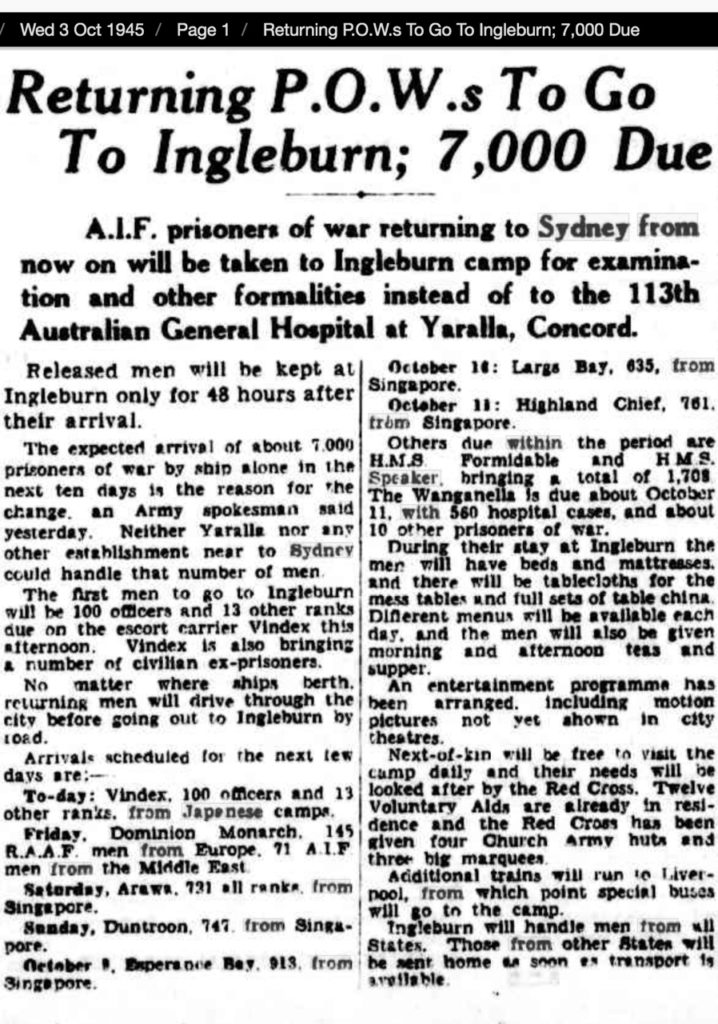
6 October 1945, within 10 days 5,00 EX POWs were returning to Australia on five ships.  Two other British ships Speaker and Formidable are on their way from Manila – with details of numbers of POWs and arrival date unknown as yet.
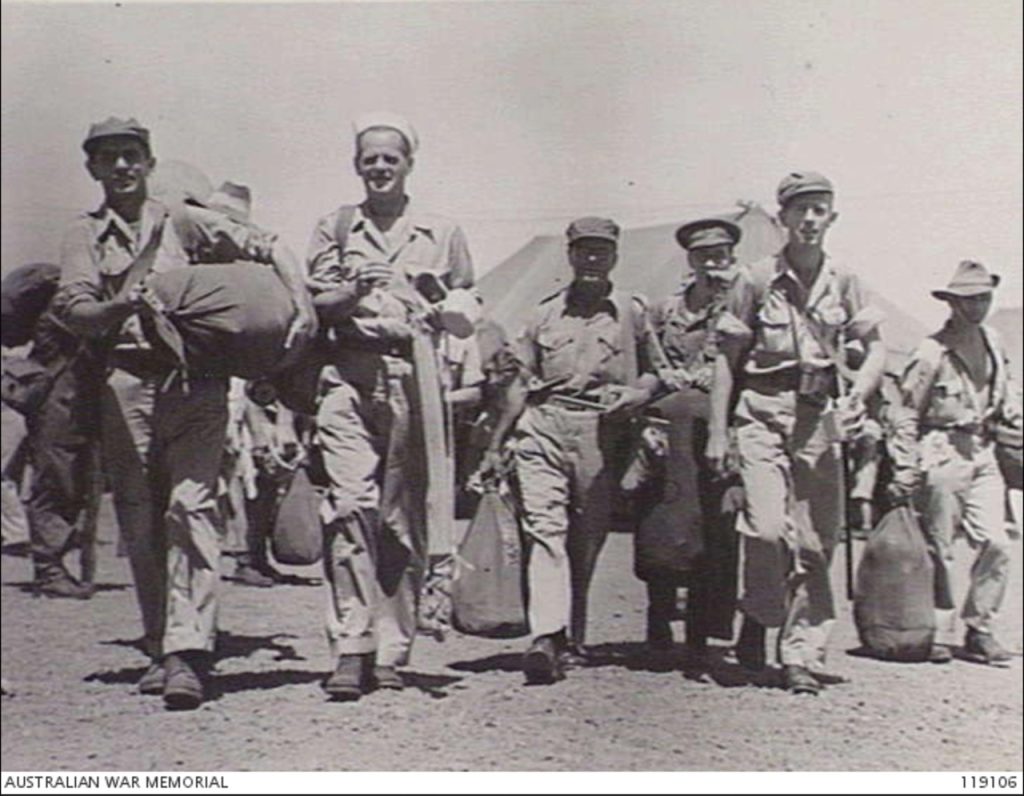
Sydney: 6 Oct ‘Awara’ (721), Oct 7 ‘Duntroon’  (747) ex Singapore, ‘Tjitjalenka’  (9) transferred from ‘Maunganui’, 8 Oct ‘Esperance Bay’ (913) and HMAS ‘Quiberon’ (60) ex Manila.
Fremantle:  9 Oct ‘Tamaroa (646) AIF including 225 civilian internees ex Singapore.  ‘Tamaroa’ expected 15 or 16 Oct Melbourne.
Sydney: 10 Oct ‘Largs Bay’ (635) ex Singapore, 11 Oct ‘Highland Chieftain’ (761) ex Singapore, 13 Oct ‘Wanganella’ (560) ex Morotai and Balikpapan.


SYDNEY

Below: ‘ARAWA’

Darwin, NT. 1945-09. Repatriated prisoners of war (POWs) waving from a life boat as the ship Arawa berths at the wharf with other POWs formerly held by the Japanese.

Below:  ‘Arawa’ arriving Darwin.


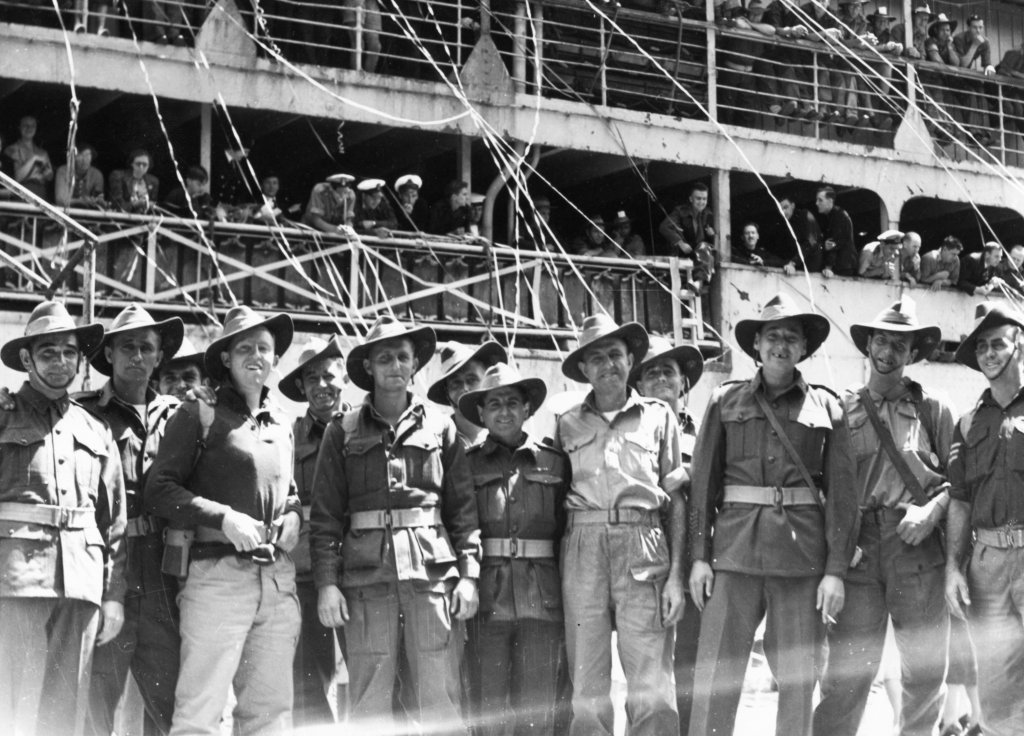
SYDNEY, NSW. 1945-10-08. SOME 8TH DIVISION EX PRISONERS OF WAR RETURNED HOME TO AUSTRALIA ABOARD THE TRANSPORT VESSEL ARAWA. WAITING TO GREET THEM AT NO. 9 WHARF WOOLLOOMOOLOO ARE LEFT TO RIGHT: MAJOR GENERAL E. C. P. PLANT, GENERAL OFFICER COMMANDING NSW LINES OF COMMUNICATION AREA; MR FRANK. FORDE, MINISTER FOR THE ARMY; MR R. R. COOK OF THE MALAYAN RELIEF BUREAU AND LIEUTENANT GENERAL GORDON BENNETT WHO COMMANDED THE DIVISION UNTIL THE FALL OF SINGAPORE.


DARLING HARBOUR, SYDNEY, NSW 1945-09-28. LIEUTENANT GENERAL GORDON BENNETT, FORMER GENERAL OFFICER COMMANDING THE 8TH DIVISION AND MRS ASHETON FROM THE 8TH DIVISION WOMENS AUXILIARY TALKING TO EX PRISONERS OF WAR. LEFT TO RIGHT: LIEUTENANT MCLEAN, 2/20TH BATTALION; LIEUTENANT WANKE, 2/4TH MOTOR AMBULANCE CONVOY; LIEUTENANT GENERAL GORDON BENNETT; MRS ASHETON; LIEUTENANT ROSE 2/20TH BATTALION; LIEUTENANT BARNES, 2/18TH BATTALION AND CAPTAIN LANNERCRAFT, 2/30TH BATTALION. (PHOTOGRAPHER L/CPL E. MCQUILLAN)


Above:  HMT ‘Duntroon’

Above:  ‘Quiberon’


FREMANTLE

Below:  Property of Harry Hammer – ‘TAMAROA’ sails into Fremantle before sailing to Melbourne.


SYDNEY


Above:  ‘Largs Bay’

Below:  ‘Highland Chieftan’


Below:  AHS Wanganella


SYDNEY, NSW 1945-11-23. THE HOSPITAL SHIP WANGANELLA (45) ARRIVED AT CIRCULAR QUAY FROM NEW GUINEA WITH LONG SERVICE MEN AND WOMEN RETURNING HOME TO AUSTRALIA. TROOPS LINE THE SIDES OF THE VESSEL AND PATIENTS LEAN FROM THE LOWER PORT HOLES AS THE SHIP BERTHS. (PHOTOGRAPHER L. CPL E. MCQUILLAN)


To read about HMAS Speaker 13 Oct 1945

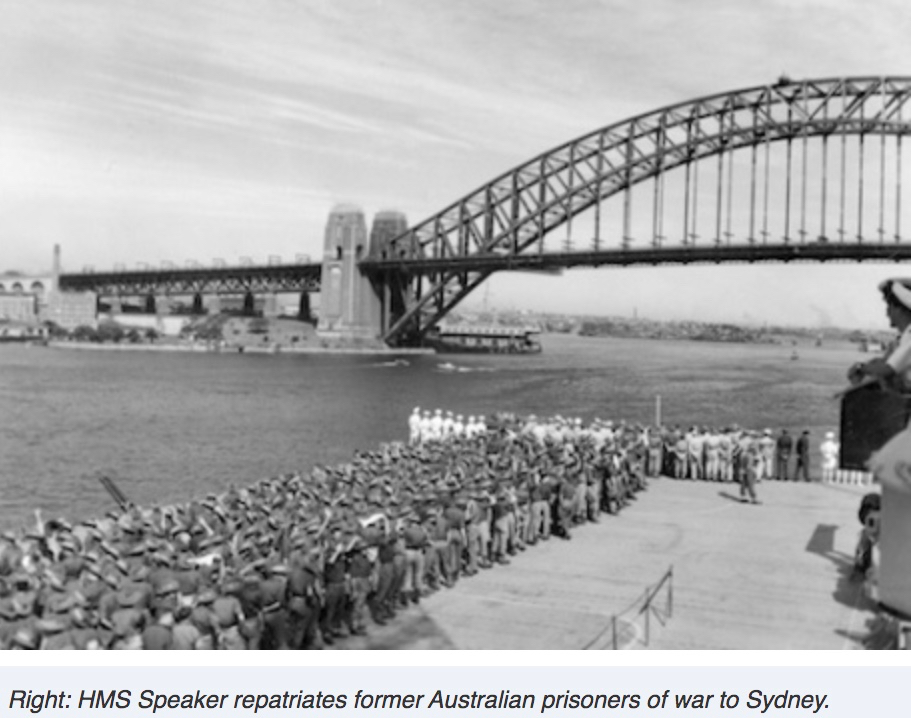
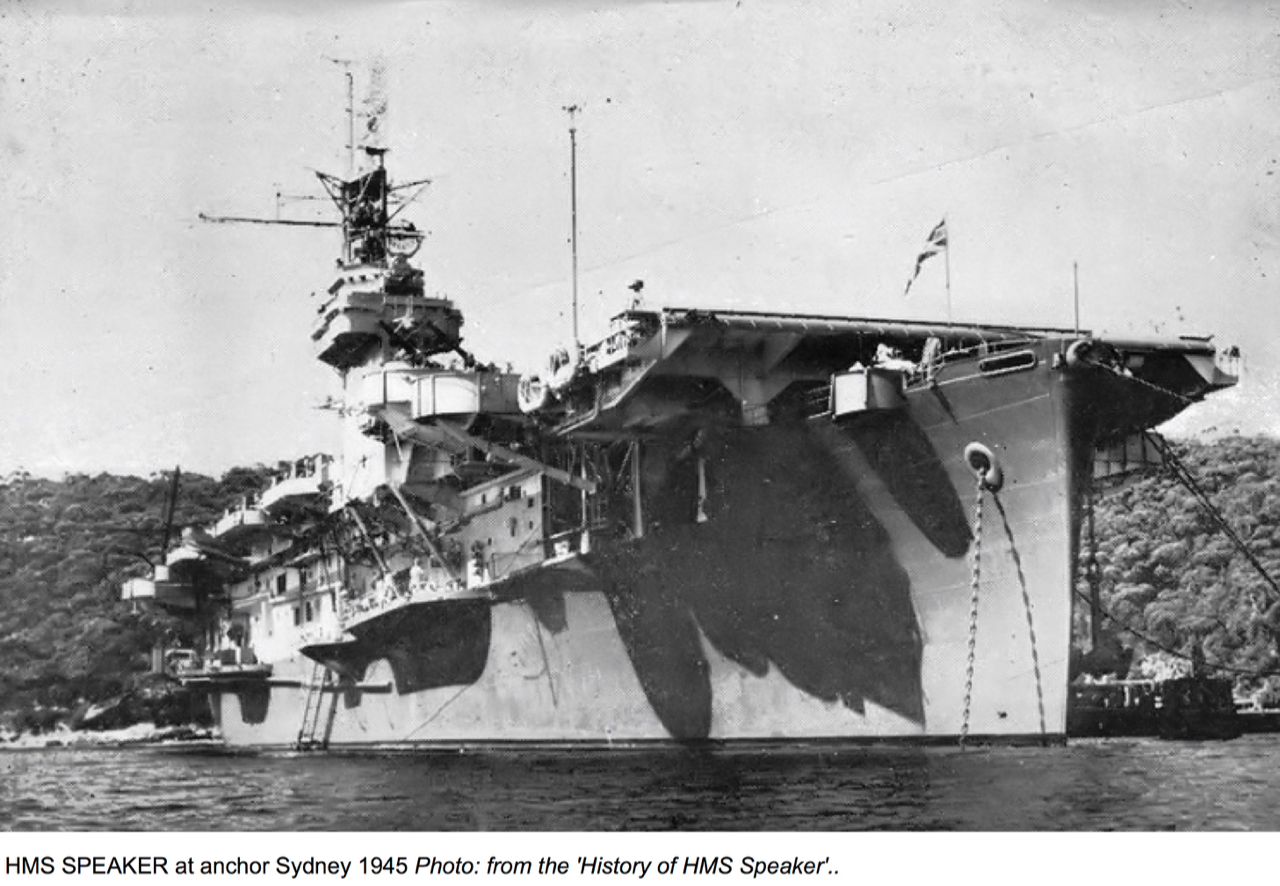
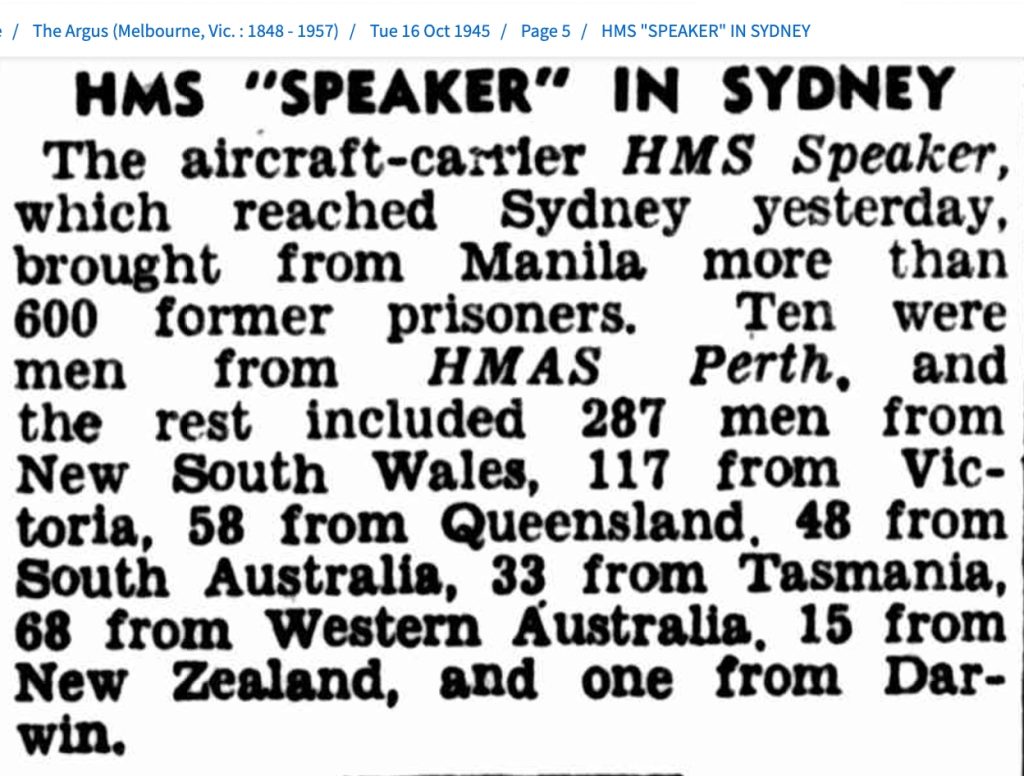
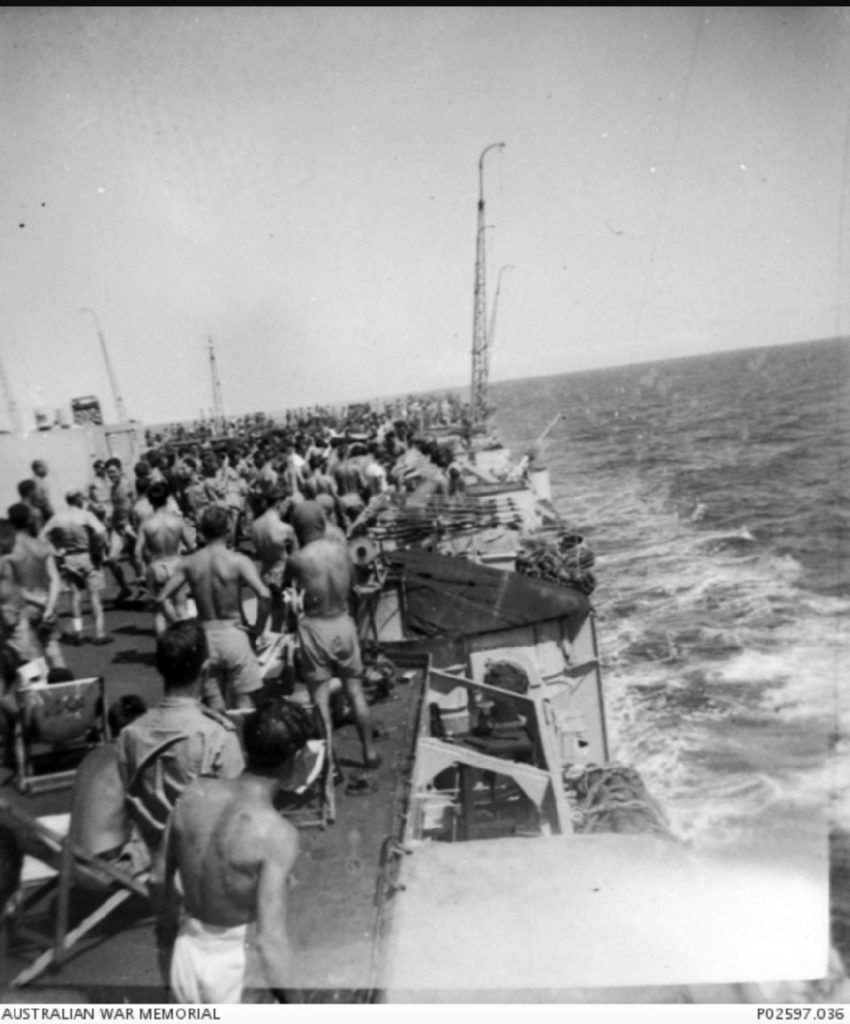
HMS ‘Speaker’ carried about 500 ex-POWs from Manila to Sydney.
HMS Speaker


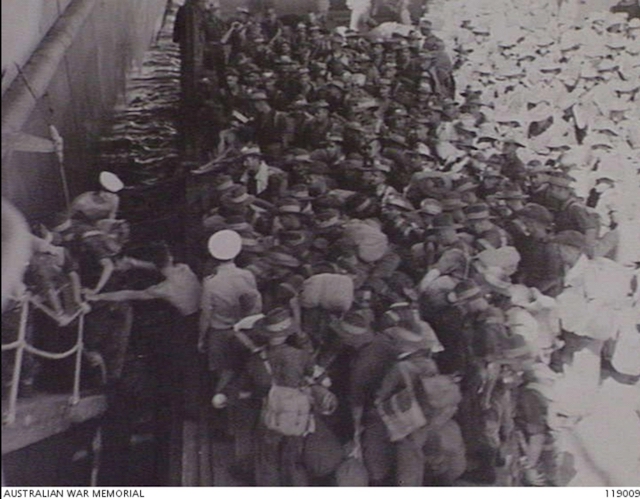
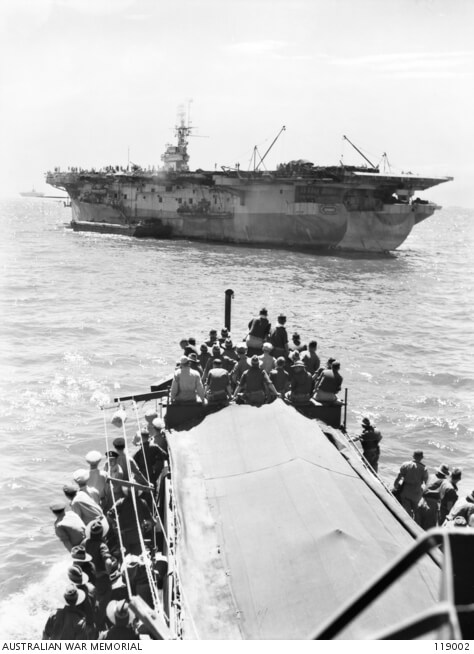
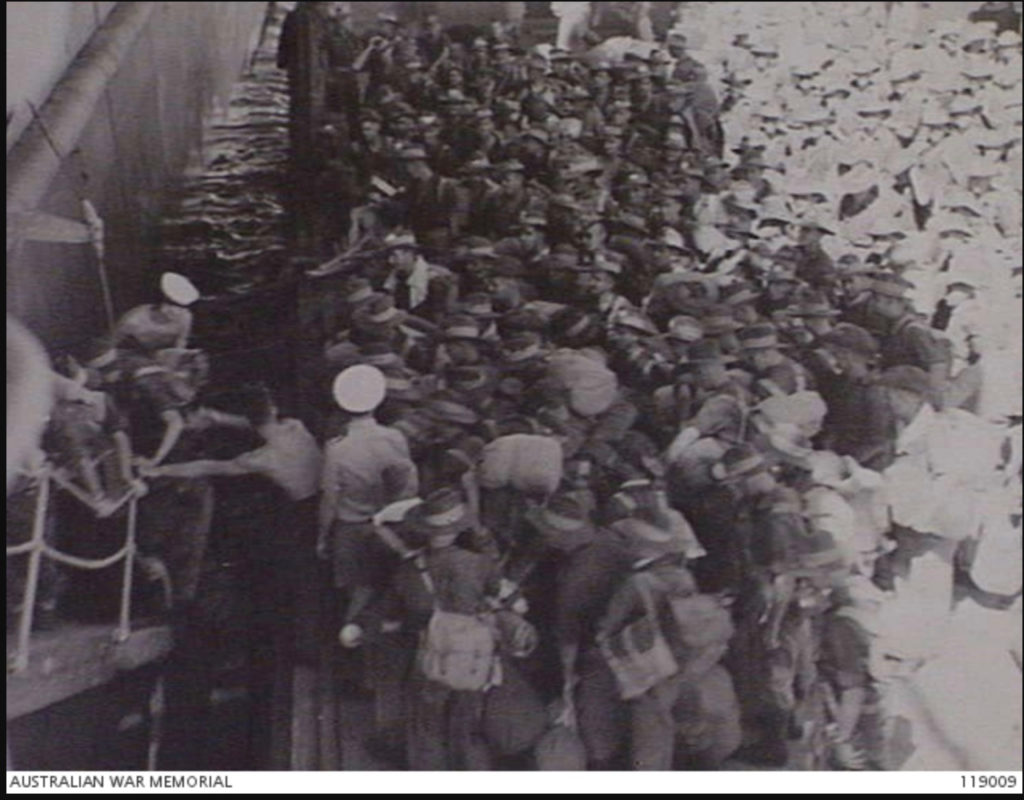
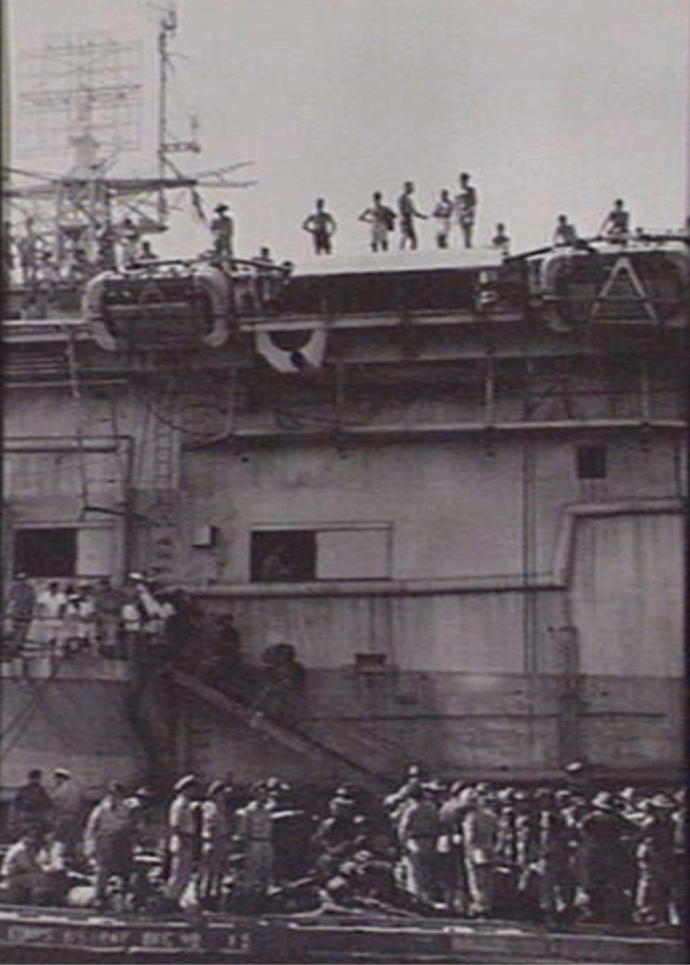
MANILA, PHILIPPINES. 1945-10-04. AUSTRALIAN EX- PRISONERS OF WAR EN-ROUTE FROM JAPAN AT THE 3RD AUSTRALIAN PRISONER OF WAR RECEPTION GROUP CAMP AT MANILA. TROOPS BOARDING HMS FORMIDABLE FROM LIGHTER IN MANILA HARBOUR. THE AIRCRAFT CARRIER WILL CONVEY THEM BACK TO AUSTRALIA. (PHOTOGRAPHER LIEUTENANT N. B. STUCKEY)

Below:  ‘Formidable’ carrying 1300 ex-POWs from Manila


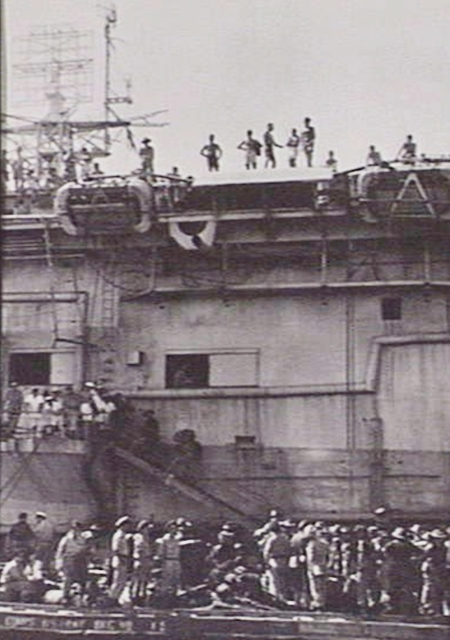
HMS, “FORMIDABLE”, SYDNEY. 1945-10-13. RELATIVES AND FRIENDS WAVE AS THE CONVOY OF BUSES LEAVE CIRCULAR QUAY WITH PW LATELY DISEMBARKED FROM THE “FORMIDABLE” ON WHICH THEY RETURNED FROM MANILA. THE AIRCRAFT CARRIER CAN BE SEEN IN THE BACKGROUND.


HMAS PERTH & USS HOUSTON – SUNK SUNDRA STRAIT 1 MARCH 1942


HMAS PERTH (1) MEMORIAL

Dedicated To
The memorial will acknowledge and honour the members of the ship’s company who:
1. Perished in the Battle of Sunda Strait
2. Survived the battle and attempted to avoid capture
3. Were captured, Imprisoned and enslaved Java,
4. Died as prisoners of war
5. Finally returned to Australia or the United Kingdom
The memorial will also acknowledge the families whose lives were forever changed by the loss of HMAS Perth on 1 March 1942.
The memorial will also acknowledge the USS Houston which was also lost in the Battle of Sundra Strait.
Please read about the Memorial, you can read names of all crew on HMAS Perth 1


There was a strong and lasting friendship between 2/4th and WA survivors of HMAS Perth, including: 
BANCROFT, Arthur ‘Blood’  – Ordinary Seaman
BEE, William ‘Bill’  Arthur – Ordinary Signalman Author of ‘All men back, all one big mistake’
FULLER, Norman Frederick – Able Seaman
HARPER, Sydney ‘Syd’ James  –  Stoker 2nd Class
SKEELS, Frederick ‘Fred’ Gordon  -Able Seaman Author ‘Java Rabble:  A story of a ship, slavery and survival’

Well known to many was author Ray Parkin who wrote several books about POW life as well as historical books.  He was was also talented illustrator.
PARKIN, Raymond Edward – Petty Officer

Please read more about Parkin’s life

The Memorial was opened in March 2025.


The Battle in Sundra Strait

and sinking of  HMAS PERTH & USS HOUSTON

1 MARCH 1942 OFF COAST OF JAVA

HMAS PERTH

Crew

Below:  HMAS Perth on earlier service Mediterranean

HMAS PERTH – AWM

HMAS Perth


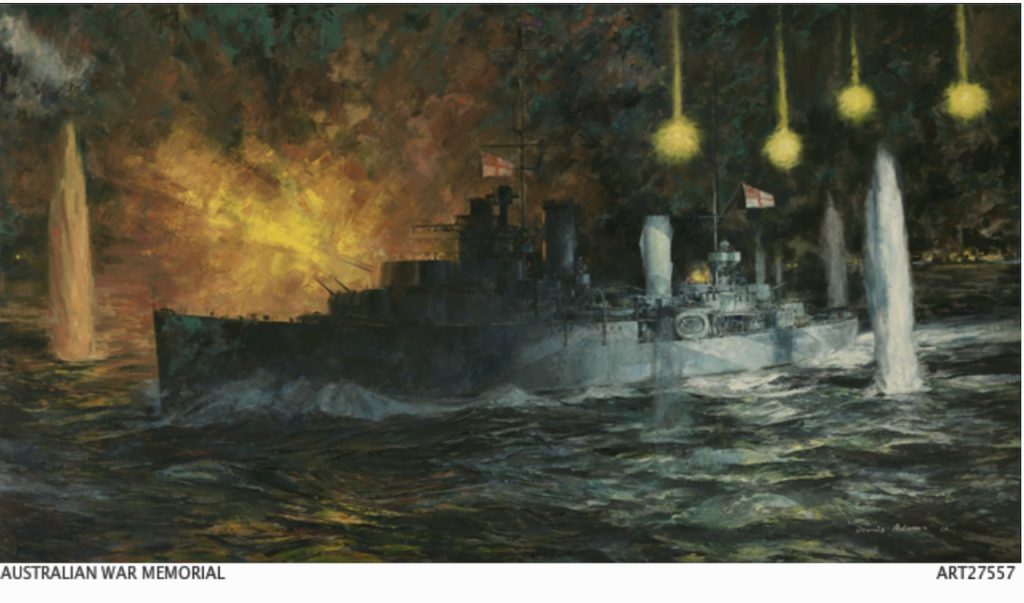
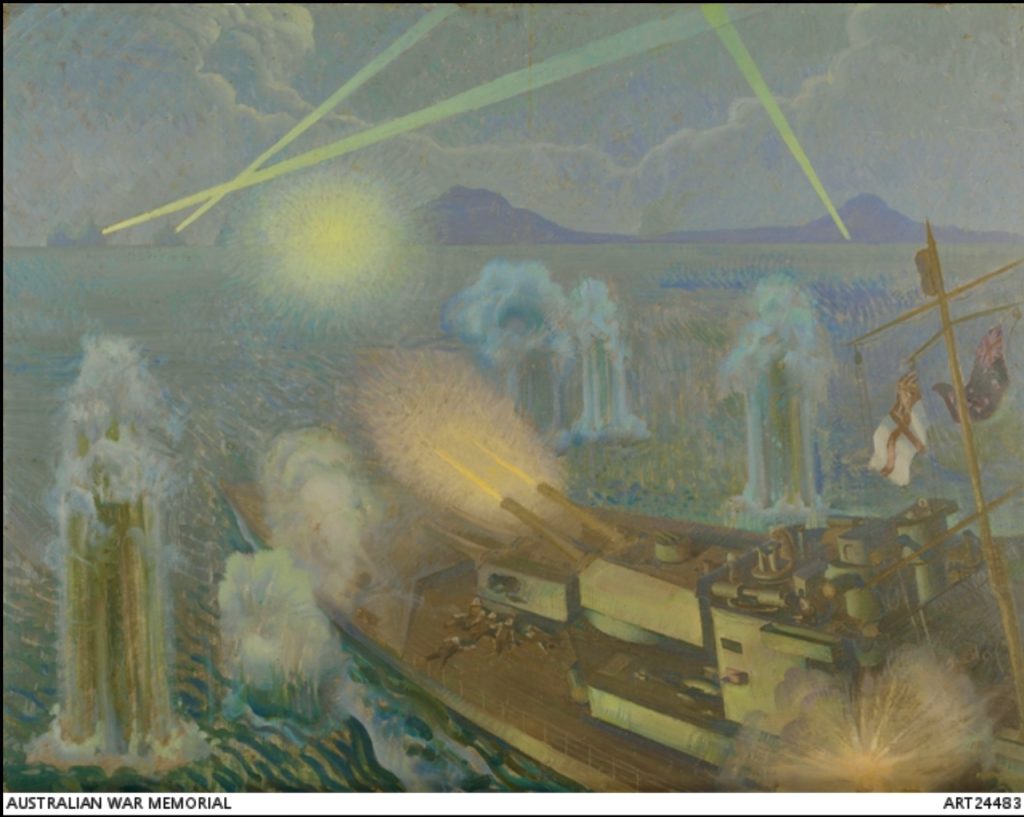
Above:  HMAS Perth during Battle at Sundra Straits when HMAS Perth was sunk.


THE SINKING OF

HMAS PERTH & USS HOUSTON IN SUNDRA STRAIT 1942

‘On the night of 27 February 1942, an Allied force of 14 ships, including Perth, engaged Japanese naval forces in the disastrous Battle of the Java Sea. Attempting to prevent the Japanese invasion of Java, 5 Allied ships (3 Dutch and 2 British) were lost in the engagement. Perth and USS Houston were lucky to survive. The Japanese invasion of Java went ahead on the 28th, delayed by just one day.
After surviving the battle, Perth and Houston proceeded to Tanjong Priok. They received orders to continue on to Tjilatjap via the Sunda Strait. Air intelligence had identified a large enemy invasion force north-east of Batavia (Jakarta). however, it was thought that the convoy escort would be unlikely to interfere with the passage of Perth and Houston through the Sunda Strait.
The two Allied cruisers were already low on fuel and ammunition. They encountered the Japanese escort late on 28 February, north of Banten Bay, Java, and immediately engaged.
Perth received its first hit at 11:26pm, followed by 2 more hits in quick succession. Ammunition was reduced to a few 6-inch practice shells and some star shells. Perth’s commanding officer, Captain Hector ‘Hec’ Waller, decided to attempt to force a passage through the strait. He ordered full speed and altered course for Toppers Island.
Perth had barely steadied on course when it was struck on the starboard side by a torpedo at 5 minutes after midnight. A second torpedo hit, prompting Captain Waller to give the order to abandon ship. Perth sank at approximately 00:25am having received two further torpedo hits.
Houston was also struck by several torpedos and sunk shortly after Perth. Of its complement of 1,061, only 368 survived the sinking. A further 77 later died in captivity.
The above information has been copied from Australian Navy for which we thank and acknowledge.
Most of the POWs on Java were sent to work on the Burma-Thai Railway. Please read about Java Parties 4 and 3 


HMAS PERTH CREW TAKEN POWS OF JAPAN IN JAVA

Of the 681 personnel aboard, 353, including Captain Waller, did not survive the sinking. Four later died having managed to reach shore on Java, and 106 died in captivity. Just 218 survived to be repatriated to Australia.
In October 1942 survivors from the HMAS Perth were shipped to Singapore, and then to Burma. In October 1942, 385 Australians, commanded by Major L.J. Robertson, left Java on board the Moji Maru; they joined up with A Force on 17 January 1943.
HMAS PERTH men well known to 2/4th include:

Ordinary Seaman  ARTHUR BANCROFT

Able Seaman Norman Frederick FULLER

Stoker 2nd Class SYDNEY JAMES HARPER

Able Seaman   Frederick Gordon SKEELS

Please read about Java Force 3 and 4.

Please read further the battle of these two ships in the Sundra Strait 1942 at the Warfare History Newtwork


USS HOUSTON


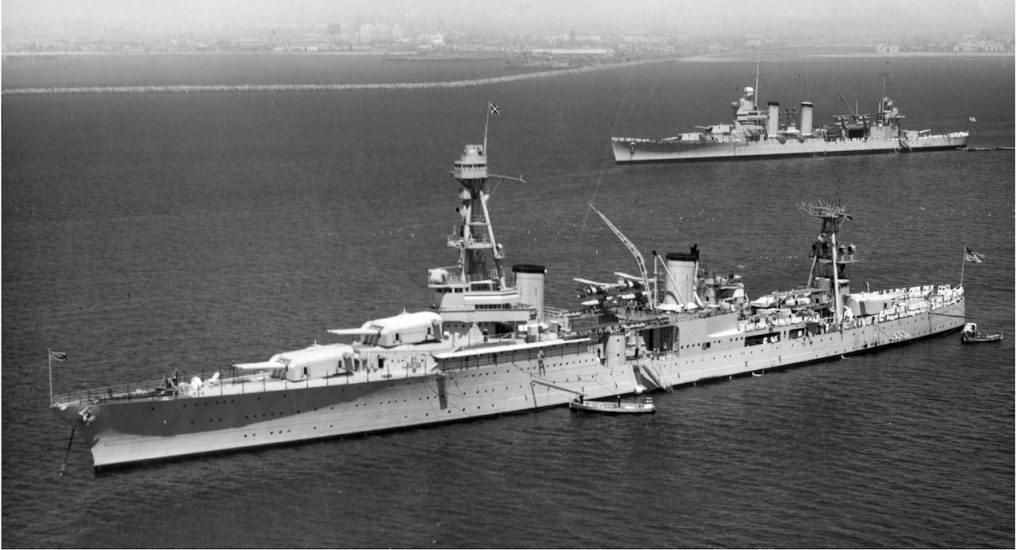
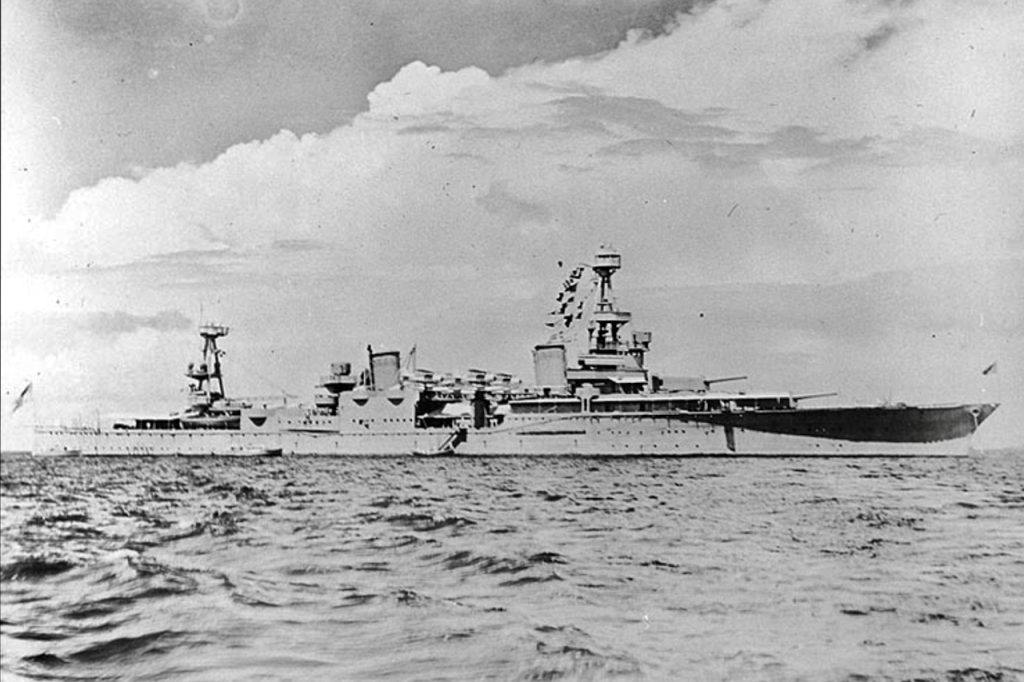
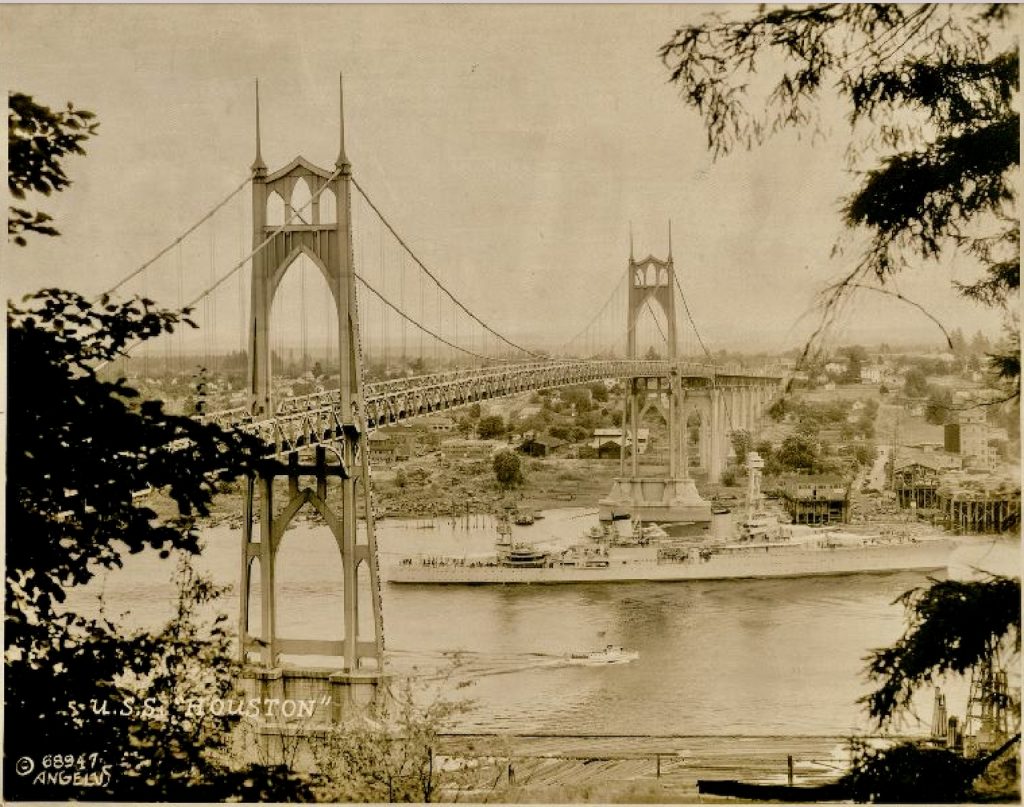
Above:  USS Houston 1934


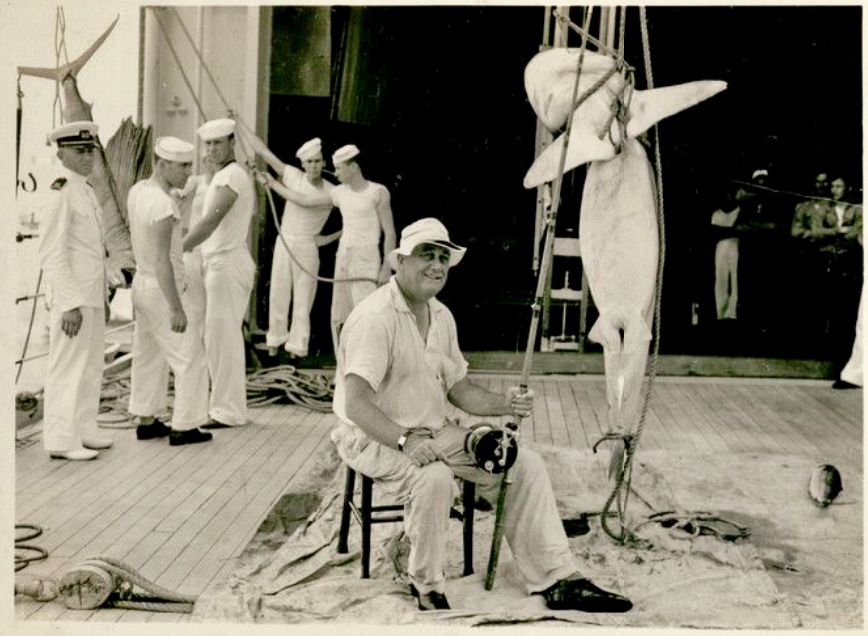
Below:  Franklin D. Roosevelt, deep sea fishing on USS Houston.

Below:  USS Houston Manila Bay 1940-41

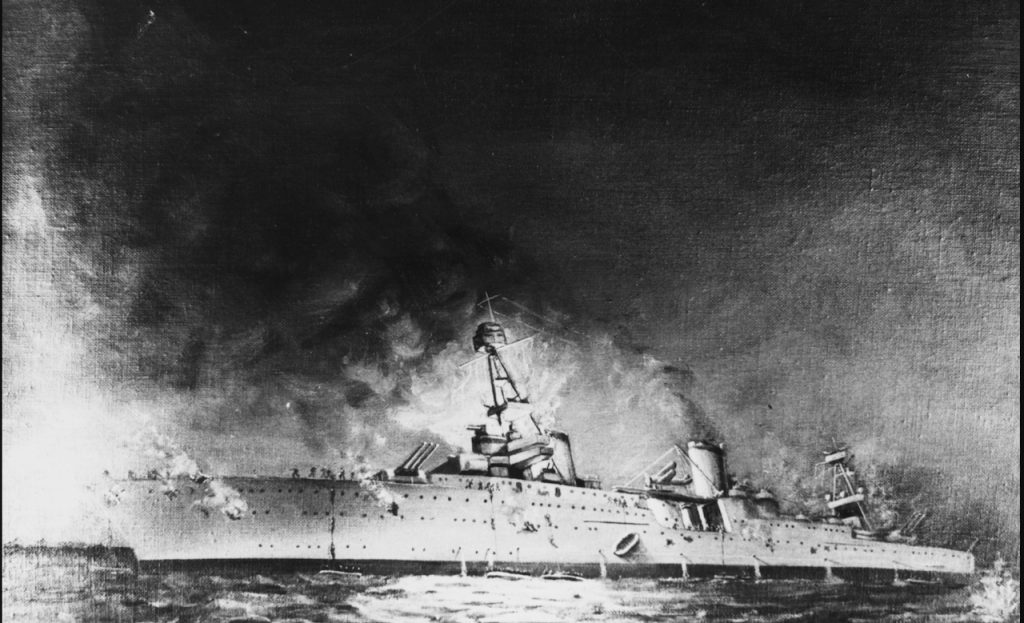
Above:  USS Houston – Sundra Strait 1942

Please read further about Tanjong Priok Port, Java 1942


USS SANCTUARY HOSPITAL SHIP 1945 JAPAN TO OKINAWA

The Hospital ships were a taste of heaven for POWs in Japan.  Boarding these ships provided the most memorable moments of the war, well at least the best moments!   These young men talked of wonderful nurses and their gentle treatment.
The luxurious feeling of being clean.  Memories of excessive amounts of food and simply feeling like a human being have been repeated over and over again.
The former POWs had spent 3 1/2 years incarcerated – their spirits and bodies well spent.  Most had been taken from working on the Burma-Thai Railway – there were few illnesses they had not endured.  The very thought of another Japanese winter for these young starved, underweight and usually weak, overworked POWs was overwhelming.
Could they contemplate another Japanese winter?
Walking more often than not, long distances, in the wind, sleet and cold weather conditions to and from work every day usually in the dark.  Often in bare feet without warm clothing for another day in the mines.
The Japanese population who treated them with contempt, was starving.  POWs received less rations and food.  How would they survive another winter?  How much longer could they endure Japanese brutality?


Proceeding via Okinawa, Sanctuary arrived off Wakayama in Task Group 56.5 on 11 September; then waited as minecraft cleared the channels. On the afternoon of the 13th, she commenced taking on sick, injured, and ambulatory cases. By 03:00 on the 14th, she had exceeded her rated bed capacity of 786.
By three hours into the mid watch (0300) on the 14th, she had exceeded her rated bed capacity of 786. A call went out to the fleet requesting cots. The request was answered, and, seven hours later, she sailed for Okinawa with 1,139 liberated POWs, primarily British, Australian, and Javanese, embarked for the first leg of their journey home.
At that time, USS Consolation was one of six new hospital ships of the US Navy, all commissioned in the previous six months before the war ended.  These six ships were all of the similar design and similarily equipped and staffed.  They each had a displacement of 18,000 tons, an overall length of 520 feet and a beam of 71 feet and 6″.  The speed is 17 1/2 knots and a cruising radius of 12,000 miles.
In addition to the ship’s crew were 19 Doctors, 3 Dental Officers, 30 Nurses, 5 Hospital Corps OffIcers, 2 American Red Cross Workers and 254 Hospital corpsmen.
The hospital staff realised the nervous numbness of the POWs led to their indifference and lack of emotional response. Their adjustment to everyday life would take some time.
The men were already hearing the world news, but there was so much more they had missed and not known about.   And what about the new wonder drug called penicillen!
It was a two day journey to Manila.  The former POWs disembarked and were taken by truck to a recovery camp  just outside Manila where they were allowed to send a telegram.  They met many other Australians they had no idea whether alive or dead for sometimes years.
It was first to a kit store to be given Australian clothes to replace the American uniforms they received days earlier.  Then further medical examination, weighed, measured, vaccinated, innoculated for cholera and typhus and given worm pills.  The men were given a pay book each with a credit of 6 Pounds and five shillings in it and one Pound in Canteen Coupons.
They were waiting for British aircraft carriers to take them to Australia which had been delayed by four days with bad weather.
The men went to the open air picture theatre at at night, sitting in the rain refusing to miss a minutes of ‘The Battle of Britain’, ‘Battle of the Western Desert’,  ‘The Eastern Blitz’ and ‘Stalingrad’.


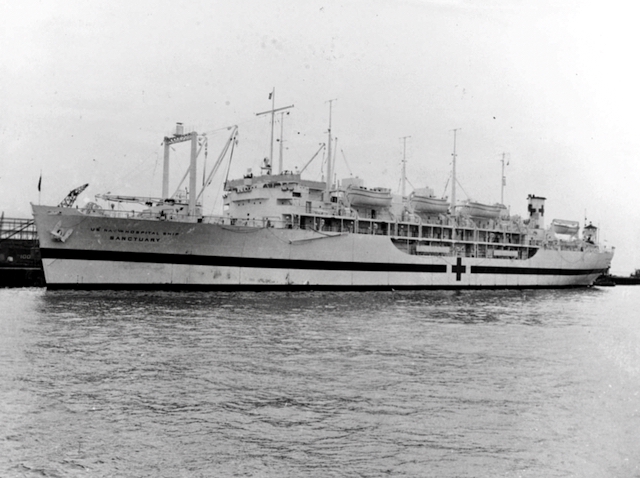
Above: U.S. Navy hospital ship USS Sanctuary (AH-17) at Wakayama, Japan, in September 1945

Below:  Ex-POWs on board Sanctuary.


The US had  29 Hospital Ships authorised for the Army during WW2, but only 24 were in service when the war ended. They represented a total accommodation for 16,755 hospital patients.

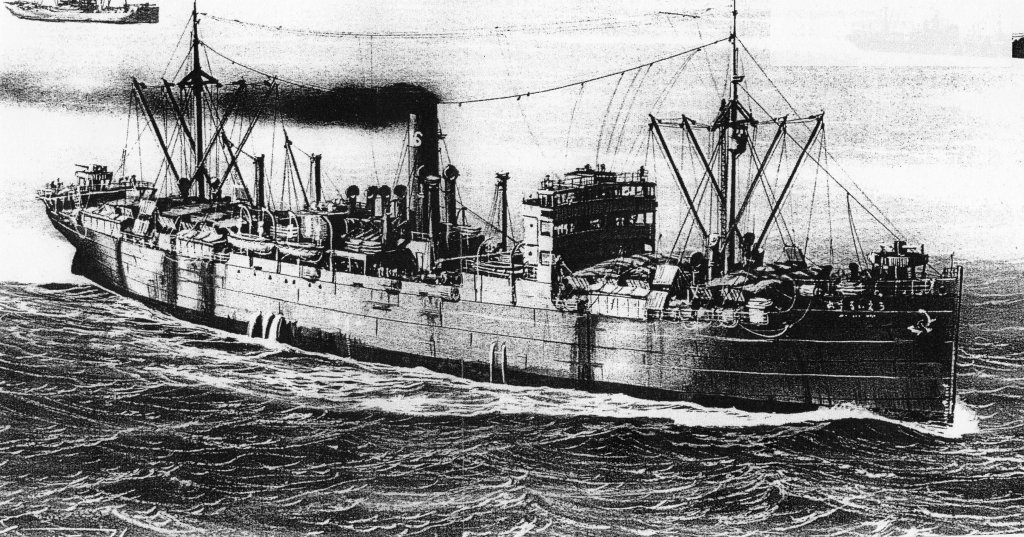
JAVA PARTY 20 – SINKING OF TAMAHOKO NEAR NAGASAKI 24 JUNE ’44

Java Party 20 & Sinking of Tamahoko Maru near Nagasaki 24 June 1944


19 May 1944 800 POWs departed Java on Kiska Maru to Singapore arriving 21 May 1944.  POW group consisted of 194 British, 258 Australian, 42 American, 306 Dutch.
POWs were glass rod tested at Havelock Road Camp.  One Australian and four Dutchmen were removed from Party.  795 POWs embarked on Miyu Maru.  
The Australian was 2/4th soldier removed from the Party was WX8261 Pte Robert Ramsay MCASKIL, who then was sent to work on the Sumatran Railway.  McAskil died 28 March 1945 of cardiac beri beri aged 44 years at Kampoeng 106km near Kota Baroe, Sumatra.  After the war his body was taken to Djakarta War Cemetery.
Japan 1 formed a convoy of 12 ships and four escorts known as H0-02 as well as Bauxite Convoy. 4 cargo ships carried POWs:
Miyo Maru (795 POWs from Java Party 20)
Hozan Maru (451 POWs as well as carrying bauxite)
Hiyoki Maru (450  POWs and bauxite)
Kokusei Maru (456 POWs and Bauxite)
3 June 1944 H0-02 convoy sailed Singapore to Japan via Philippines.
6 June 1944 160 miles E.S.E. Cape St Jacques, French Indo-China, USS Raton (SS 250) attacked the convoy. At 2225 hours an escort was sunk and USS Raton received damage.
11 June 1944 Arrived Manila, staying two days where Tamahoko Maru loaded 7,500 tons copper ore into her holds and joined the convoy.
14 June 1944 sailed from Manila in a convoy of ten ships escorted by 3 corvettes, a minelayer and a whaling ship.
15 June 1944  the convoy ran into a typhoon, causing damage to Miyo Maru.
18 June 1944 Convoy reaches Takao, Taiwan.
(TAKAO (or Takow/Takau) is the historical Japanese and older local name for KAOHSUING, Taiwan’s major southern port city.The name was officially changed during Japanese rule but remains in place names and historical contexts for the modern metropolis.  Kaohsuing is Taiwan’s third largest city today.)
20 June 1944 Convoy H0-02 sailed out of Takao, Taiwan accompanied by escorts.
21 June 1944 Stopped over at Keelung, northern Taiwan, the convoy then headed for Japan.
24 June 1944 three US submarines Tang, Tinosa and Shark II attacked the convoy off the Japanese coast, 40 miles S.W. Nagasaki.  The POWs were woken by the sound of an explosion of another transport ship being hit, moments later Tamahoko was hit on the starboard side instantly killing large numbers of men. It sank within two minutes with the loss of 560 POWs out of 772 POWs on board.  Most of those who lost their lives were below deck whereas on dec had a higher surival rate.
Survivors found themselves in the water with Japanese survivors, all seeking to find debri to cling to.   It was extremely cold with sleet and rain.  The POWs were dressed in very little.
Fortunately no depth chargers were dropped.
A corvette picked up the Japanese survivors only.
At 7 am a Japanese whaling ship came by and lowered rope ladders for the surviving POWs.
12.30pm the whaling ship with 221 POW passengers arrived at Nagaski.  The POWs waiting in the bitterly cold weather until they were landed at 6pm.  A Japanese doctor with two nurses arrived, but they cared little for the prisoners.
25 June 1944 200 survivors of the sinking were taken by  lorries to Fukuoka 14B Camp at the Mitlsubishi factories. A hot meal, clothing and sleep mats were provided.  For six weeks the POWs lived in crowded conditions before being moved to the 14B Camp.  They were now slave labour for the Mitsubishi foundaries.
Survivors from Western Australia, most of whom were with 2/3rd MGB, included:
WX5300 JOHNSTON, Gervase Clifford – Omine Camp
WX1033 LECKIE, Stuart James (brother to John Henshaw Leckie who perished)
WX9911 McDONALD, Gordon Stanley John – Omine Camp
WX18552 MONTEFIORE, Arthur Eric – Omine Camp
WX2844 PARKIN, Charles Owen – Omine Camp
WX11771 ROSS, Gordon – Omine Camp
WX9943 TICKLE, Horace James  (later died illness)
 
Western Australians who Perished:
WX10551 DORAN, Edward John
WX12070 GLEADALL, John Alfred
WX3336 HAMILTON, Richard
WX5300 LECKIE, John Henshaw
WX6228 NORMAN, William George
WX14456 McCURDY, David Vincent


Below:  Tamahoko Maru – sank within two minutes.


Below:  Submarine USS Tang which sank Tamahoko.


Below:  Australian POWs at Camp 14B – West Australians include; Montefiore, Parkin, Ross.


West Australians included in above:
WX7642 Henderson, Harry G.
WX7997 Holland, Herbert Mervyn
WX5300 Johnston, Gervase C
WX9911 McDonald, Gordon S J

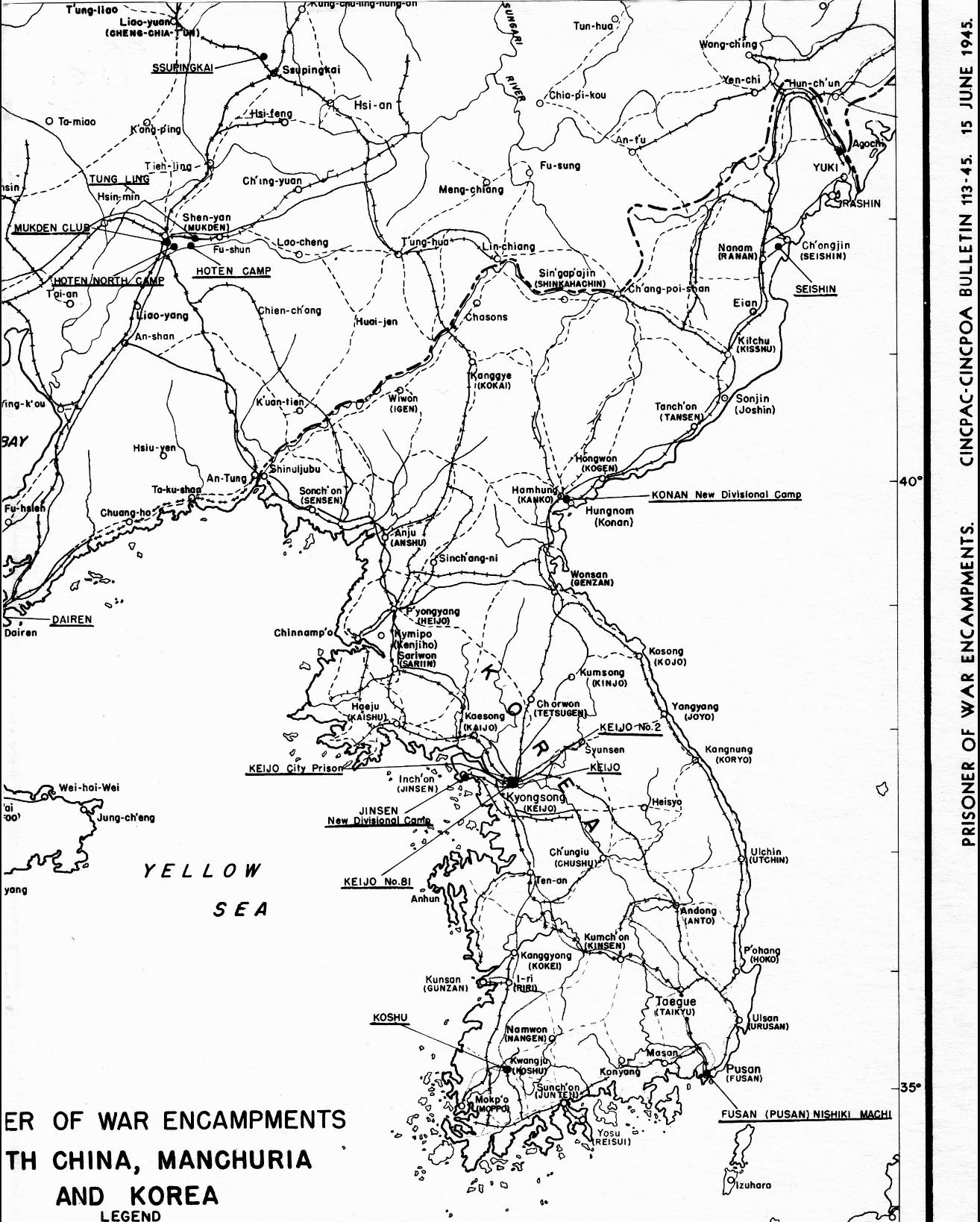
‘FUKAI’ MARU – Singapore to Keijo, (Chosen) Korea 1942 – Jack Taylor, Jim Clancy, Bill Gray, Ted Roots & ‘Dutchy’ Holland

KOREA ‘A’ & ‘B’ PARTIES – Fukai Maru Singapore to Korea.

‘Fukai’ Maru’s journey in 1942 to Keijo, Korea or Chosen as the Japanese had renamed the country.
At Singapore on 16 August 1942 Korea A and B parties  were trucked to Keppell Harbour where they boarded ‘Elistor’ Maru and made to walk naked through a hot chemical bath (likened to a sheep dip).
It was intended both Parties to depart on ‘Fukai’ Maru for a journey of five weeks – a run down, rusty and dirty converted cargo ship of 3800 tons.   Fukai’s decks were adorned with various ramshackle deckhouses.  Around the two after hatches lay piles of sacks and wooden tubs.  There were only four holds divided into two tiers above a cargo of were Malayan bauxite. Space on ‘Fukai’ for this large number of men was impossible.  The Officers and technicians were ordered off onto another ship leaving 1100 British and Australian POWs on board.  Jack Taylor, with Jim Clancy, Bill Gray, Ted Roots and ‘Dutchy’ Holland were assigned to No. 4  or D Hold with about 100 others.
The POW’s space was 20 yards long by 15 yards wide and infested with the usual vermin.
The double-tiered bunks built around  the hatchway were covered with thin straw matting providing each man and his kit a space of 6 feet by 2 feet.  The men could only sit in their bunks and unable to stand because the space between their bunks and overhead was between  3 1/2 feet to 4 feet.
The POWs were allowed on deck for 6 hours daily.
These conditions were rather luxurious compared to many later transport ships. Two meals daily were served at 9am and 5pm and always the same –  a plateful of boiled rice over which was poured a thin stew (about size of coffee cup).  The rice was of far better quality than the men had had at Changi.
Every other day the men were served an issue of sugar, either in the form of sweetened tea/two desert spoons of granulated sugar/or small bag of sweets.  The men were used to minimal rations from Singapore and barely noticed the small rations –  but far superior to rations on most transport ships.


Please read the following personal description

By midday Saturday 22 August 1942 Fukai anchored a mile offshore from Cape St Jacques which was close to the mouth of the Mekong River – a short distance inland lay the city of Saigon.  Scrub covered hills surrounded a sandy bay with a nearby village which during the day seemed deserted but became a line of twinkling lights at night.
Leaving St Jacques the weather deteriorated with wind and rain making it necessary to keep the hatches closed.  The atmosphere below decks was miserable to say the least.  There were two motor driven ventilators which were frequently out of order or switched off by the Japanese just when they were needed most.  They would also switch off the lights when most needed – such as the arrival of a meal – leaving the POWs in total darkness.
The men sleeping directly below the hatches would find their quarters and bedding soaking wet during this weather.
During the nights the ship’s rats caused pandemonium running across the men and sometimes biting them.  However, by the end of the voyage all had adjusted.
On the morning of 29 August at 11.30 Fukai dropped anchor outside the entrance to the port of Taikao on the west side of Formosa.  During the afternoon the ship steamed into harbour. Fukai was soon surrounded by a fleet of lighters into which its cargo of bauxite was discharged for the use of a large aluminium plant which lay at the eastern end of the harbour.
They would not leave Taikao until 14 Sept.  Wild wind and rains swept through the harbour delaying them by at least three days.   Everybody on board felt relieved to be out of the breakwater and the crew were able to commence cleaning the filth from the decks, ashes from the stokehold and garbage from the galley. Lastly the toilets were thoroughly cleaned.
In the afternoon Fukai joined a convoy waiting off Taimen, heading northwards through what was known to be the busiest area for American submarines – POWs well aware their lives were now at high risk.
Fukai was obliged to seek shelter for 12 hours off Pescardores Islands from a threatening typhoon. That night they became part of a 11 ship convoy and the next morning they could see the last of the northern most point of Formosa before heading into very heavy weather towards Korea.  The hatches were closed and everything on deck tied down.  After four days the men were thankful at dawn on 22nd Sep to see land 4 or 5 miles distant.
Fukai finally entered a wide bay and dropped anchor outside the breakwater of Fusan harbour.
Later that same evening Japanese medical staff came on board for inspection of the ship and the POWs.  There were a number of dysentery cases.  The POWs were subjected to testing for dysentery – the old glass rod!  The next day 28 cases were sent ashore to a local hospital (7 subsequently died).
Two days later on 24th the POWs breakfasted and prepared to disembark amidst a vast array of armed military police with fixed bayonets and a cinematographer.  The men began a 3 km walk to the station.  The locals watched in silence the first batch of prisoners with their characteristic mongol faces from the road side sprinkled with the odd European face (Russian) – these people had lived under Japanese rule since 1910.  Their eyes were expressionless as were their faces.
(Remember the Japanese had annexed Korea in 1910 and remained such until 1945.  The Koreans despised the Japanese who subjected the locals to a lesser quality of life.)
The POWs soon realised their march was not a direct route, they were in fact touring the town for the benefit of the locals.  The newsreel man arrived to ensure records were taken.
The men were very exhausted after their two-hour march and were happy to remove their packs and sit on them at the station.  To their utter surprise when their train arrived they were to sit in carriages and not open trucks.  All captured on film of course.  They also enjoyed the best meal since becoming POWs before spending a sleepless night on the train.  In the morning the train traversed hilly country with paddy fields and reached Keijo,the capital city at 1 o’clock.
Here the train was split in two, Senior Officers, AIF and 2nd Battalion of the Loyals remained at Keijo and 535 men proceeded to Jensen.
Shortly after 2pm on 25th, the train arrived at Jensen.  The POWs set out with the local population witnessing their arrival and marching a mile and a half through squalid streets with empty shops until they reached their camp.

Please read further about 2/4th men who sailed Fukai


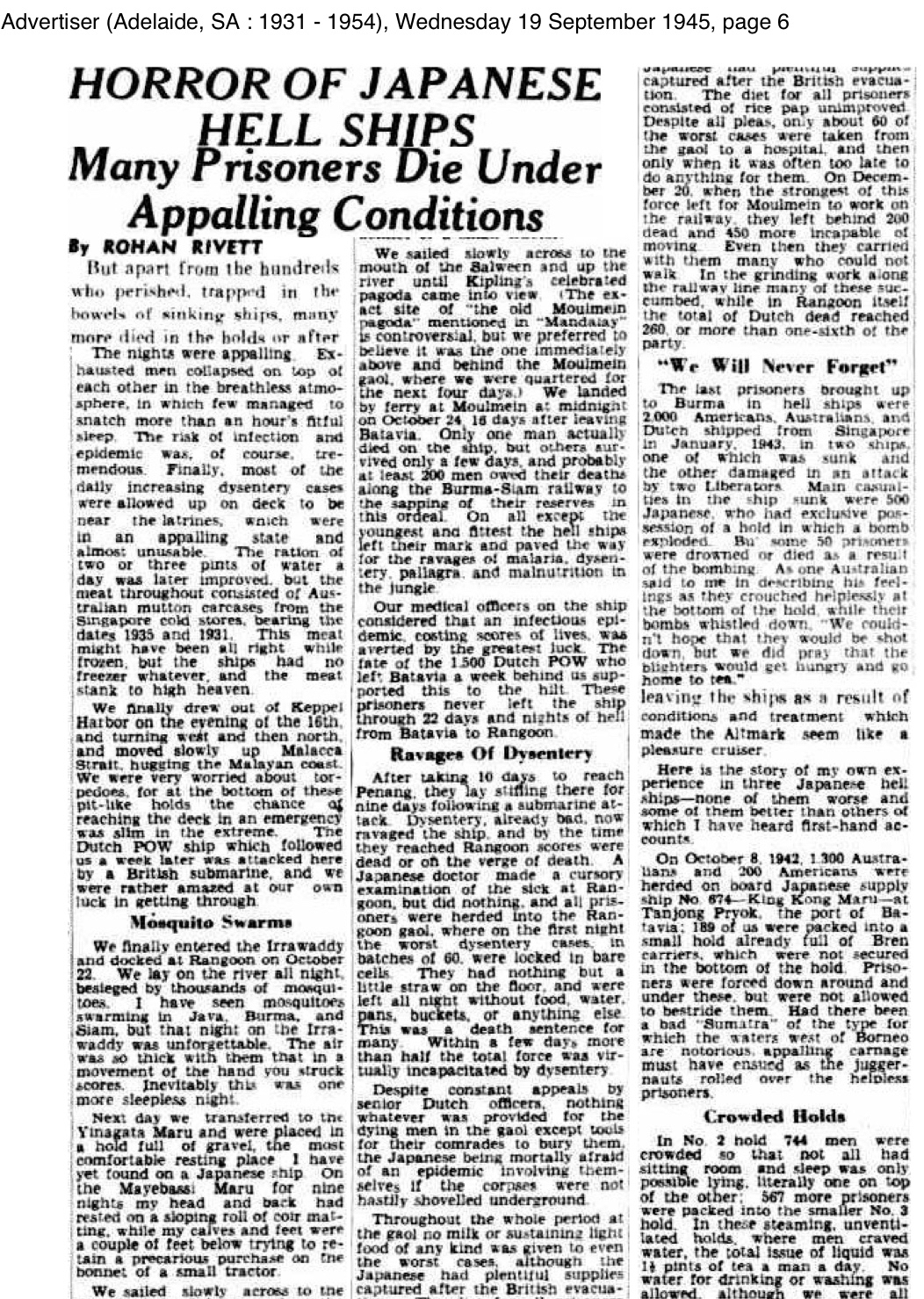
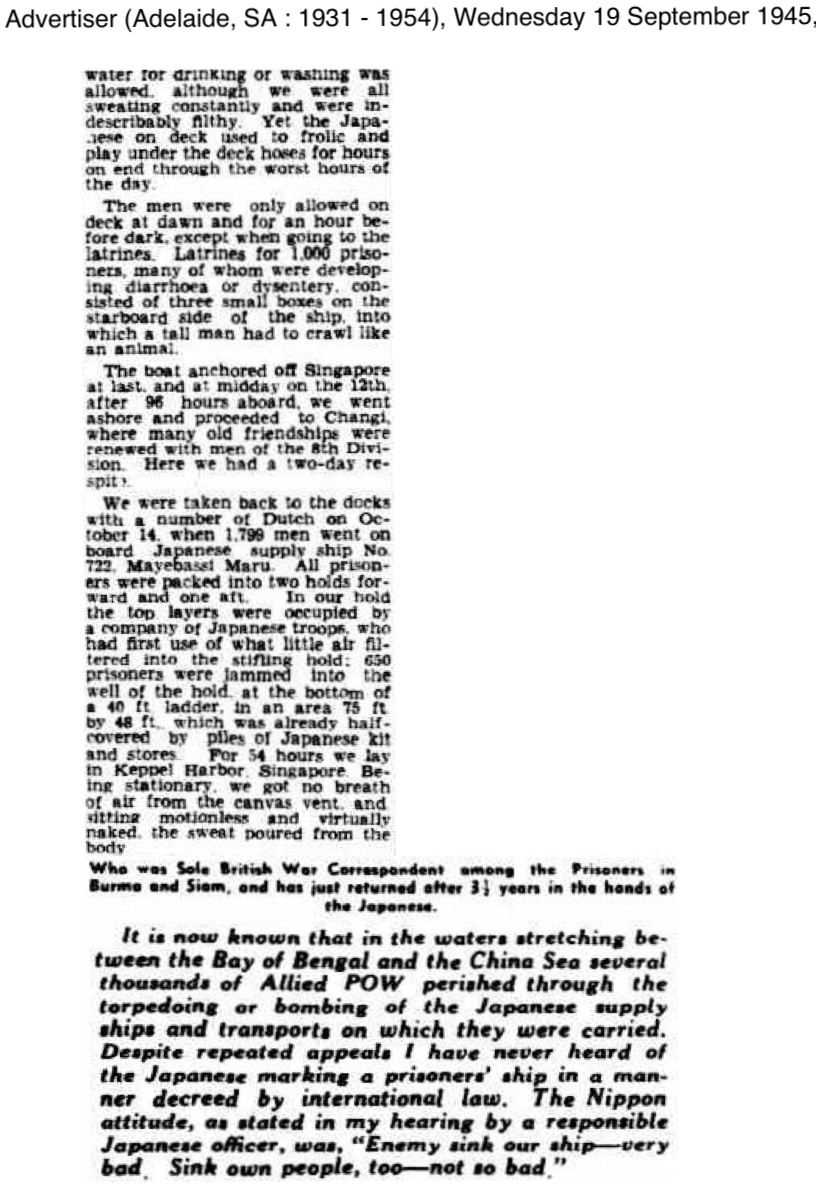
‘WALES’ MARU with ‘J’ Force – Their Journey to Japan 1943

‘WALES’  MARU SAILS FROM SINGAPORE 16 MAY 1943 TO SAIGON – CAPE ST JACQUES – TAIWAN – MOJI, JAPAN – ARRIVING 7 JUNE 1943.


Wales Maru


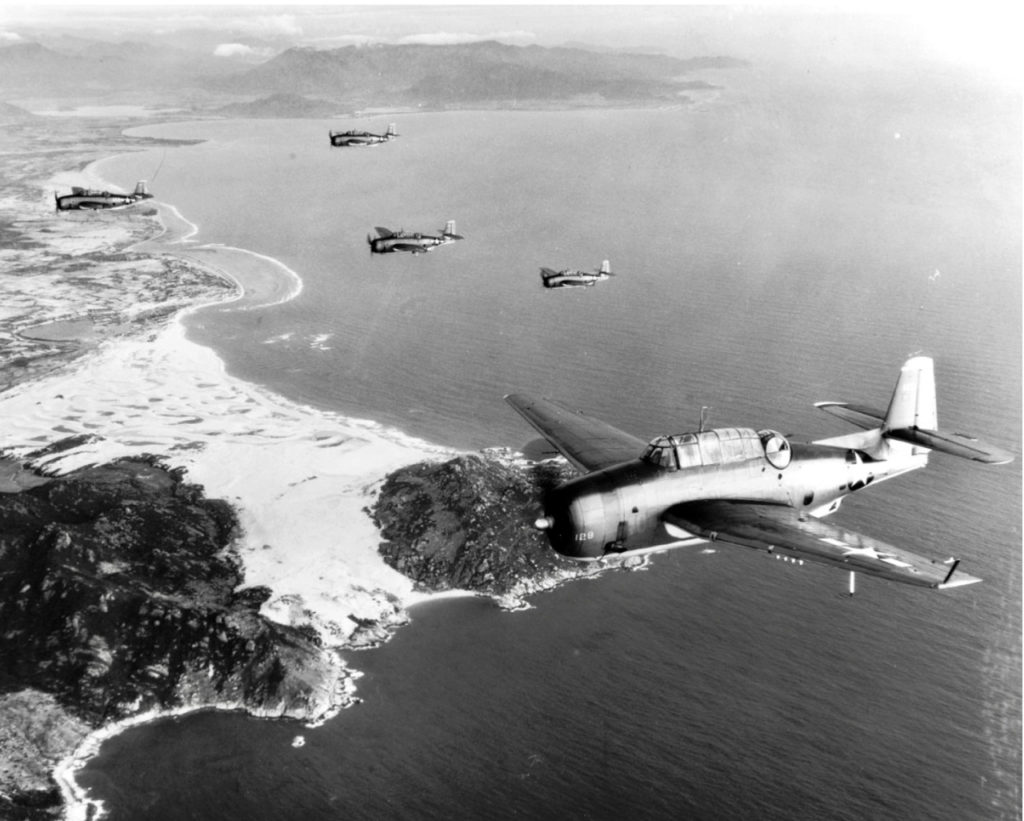
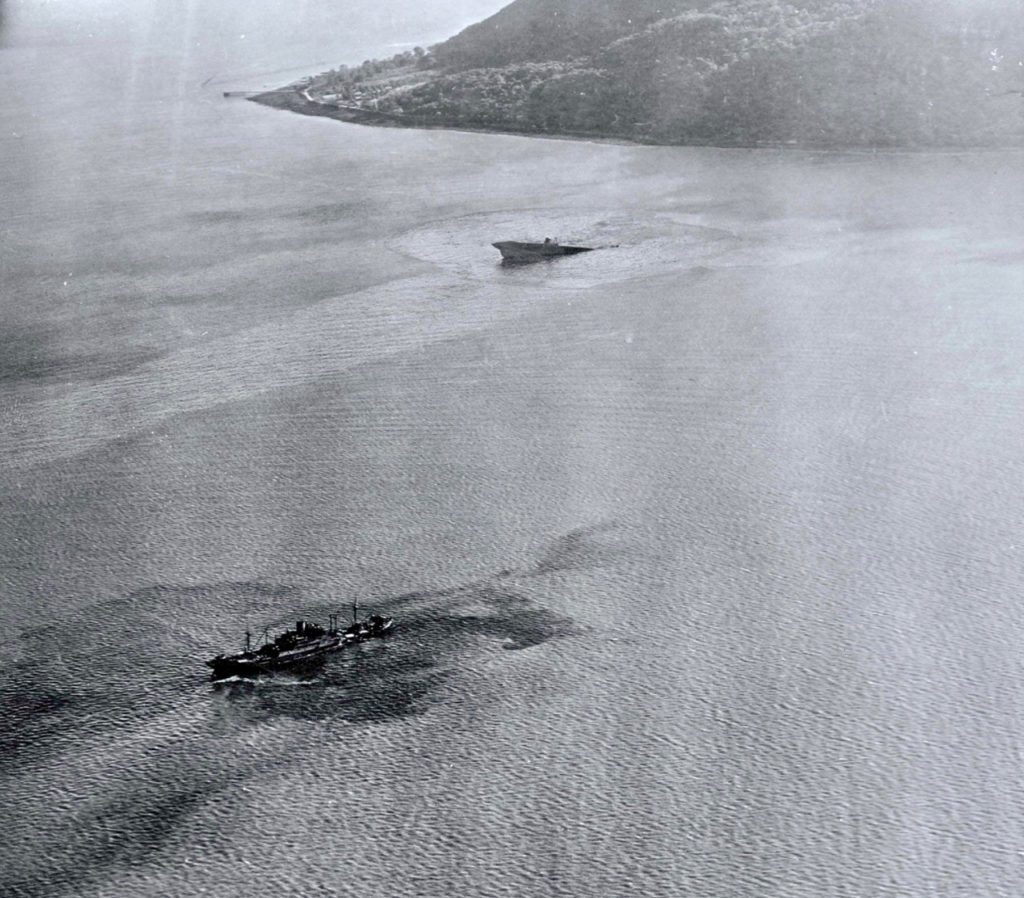
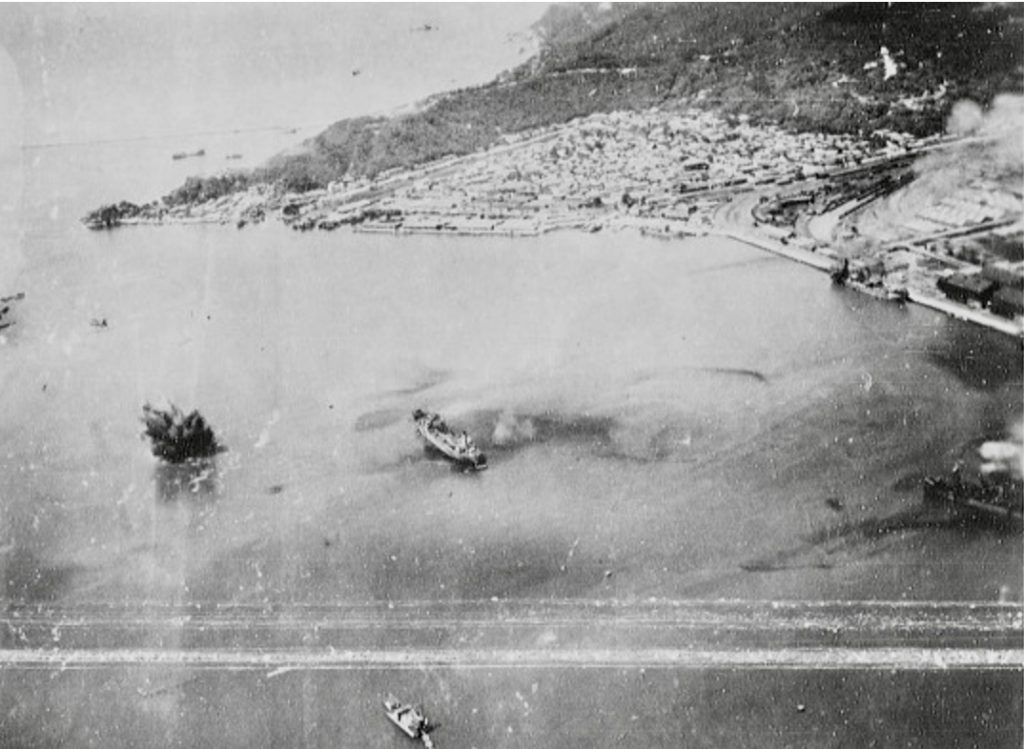
The following photographs were taken during US Bombing raid over Saigon 12 Jan 1945.  They have been selected to show the coastline and Cape St Jacques.

The above photo shows Japanese ships sinking following bombing raid. Some of Cape St. Jacques coastline is evident.
The 900 members ‘J’ Force onboard ‘Wales’ Maru heading to Japan in a small convoy which sailed from Singapore 16 May 1943 had its first stop and a three day wait at Cape St. Jacques, French Indo-China for the purpose of allowing seven more vessels to join the convoy. During those three days the men witnessed many ships. Convoys were arriving, breaking up and reformed with other vessels and moving on.
Apparently four of those seven ships were laden with Japanese troops – according to NX34875 Lt. John Fuller, 2/18th Btn on board the Wales Maru.
The heat in the holds was terrific particularly during daytime with the sun beating down on the iron deck.   To make matters worse, the hatch covers were usually closed – just in case the POWs decided to mutiny! The men in the upper platforms in the holds felt the heat more because of their proximity to the deck above their heads. The lower shelf wasn’t quite as hot but the men suffered from the more humid atmosphere and wore the drips of perspiration from those above them.
The food now comprised of soggy rice and weak cabbage soup was poor in quality and quantity. Meals were limited to two daily.   As the voyage continued the meals became more revolting with the rice showing signs of mildew.
The ‘Wales’ Maru sailed from Cape St. Jacques on 15.40 on 23 May 1943. Their naval escort left the convoy on 25 May 1943.   The convoy was unescorted until 28 May 1945 when a destroyer joined it.
The ‘Wales’ Maru lay in the lee of Cape St. Jacques opposite a pretty watering place. The foreshore itself was deserted however French colonial style homes looked entrancing across the blue water and they could see the odd Vichy flag.
At night the promenade lights made for a pretty sight and the odd vehicle lights could be seen.
The air below decks on the Wales Maru was torrid.
NX29116 Pte. Ray J.T. Brown from 2/30th wrote:
“From a house set back from the beach front, strains of French dance music drifted across the quiet waters. It looked like fairyland in comparison to our drab surroundings. Then it was time to turn around and go down the metal ladder to the nauseous hold with its stench of unwashed bodies, fetid air and the usual smell of dysenteric faeces – the degree of nausea grew stronger as the voyage continued.”
Brown continued:
“On one of the three nights whilst anchored in the bay a concert was held in that hold. I will never forget the Irish tenor who sang ‘Mother McCree’, ‘Little Gray Home in the West’ and other Irish songs, the names of which I have long forgotten and finished with ‘Danny Boy’. There wasn’t a dry eye in the hold. The beauty of his voice stays with me to this day.”
Fresh water was at a premium throughout the 23-day voyage and limited to one cup with ’breakfast’ and another with evening meal.
Rain fell whilst anchored off Cape St Jacques on 21 May 1943. Men in small groups were allowed on deck to enjoy and benefit from it.   It also rained the following day – cooling the temperatures in the holds.
Tobacco was in short supply amongst the POWs by 22 May. Smokers traded surplus clothing with the Japanese – some even down to only having a pair of shorts left.
The few men with books soon read and finished them. They exchanged with others. Yarning away with mates was a general means of whiling away the tedious hours. Some played cards or other games.
 The run to Formosa (Taiwan) was uneventful, the waters were calm and ‘Wales’ Maru dropped anchor at Taikoa (Takao or Takow now known as Kaohsiung – the port established by the Russians when they controlled the island before the Japanese/Russian War of 1904) on south west corner of the rugged island a week after leaving Indo-China on 29 May 1943. The port was full of shipping – an assembly point for Japanese convoys – transports, hospital ships, naval craft and merchant vessels.
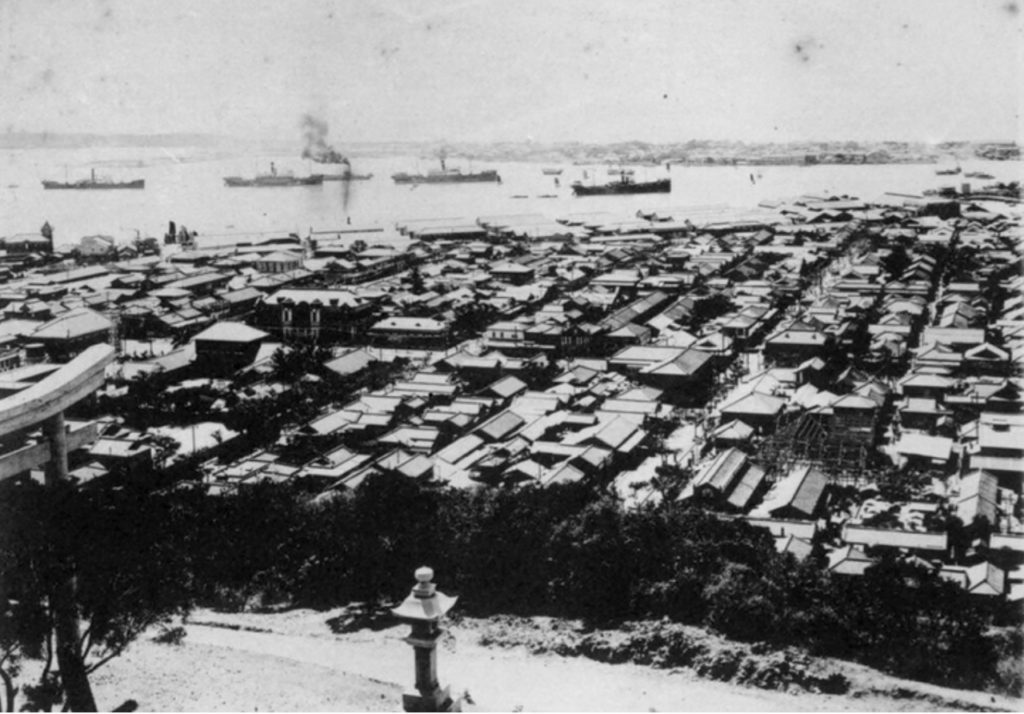
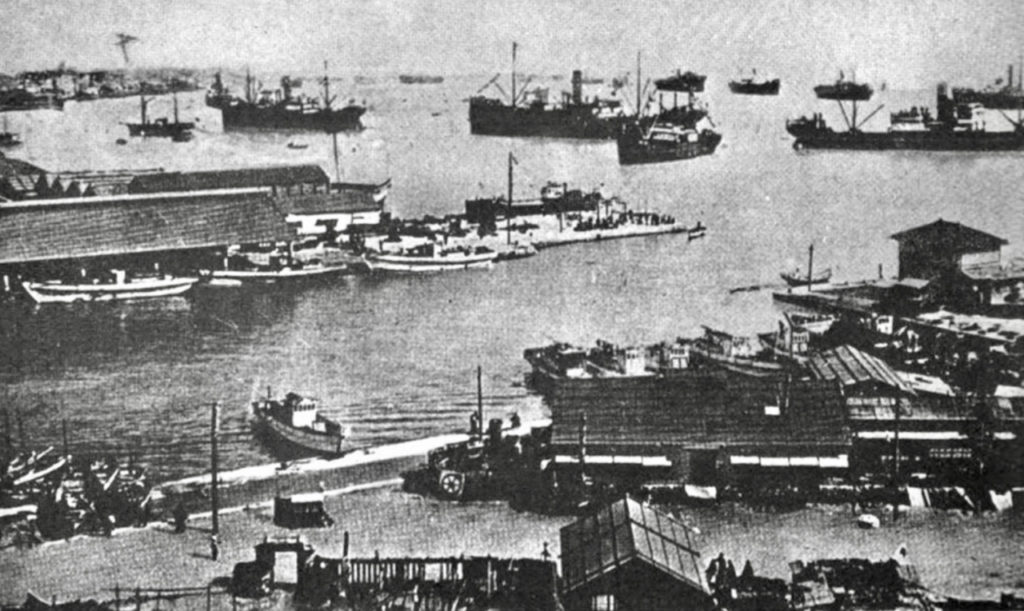
Photographs below provide some idea of what Takao looked like when ‘Wales’ Maru anchored in 1943 and number of ships in harbour.

Below:  Takao Harbour 1930

Below:  Takao harbour 1944 with Japanese shipping

Below:  Takao Harbour 1944 taken by American from air.

A Japanese Officer addressed the POWs informing them their destination was Japan.   He warned of possible submarine attacks.
Takao was described as a city of single story houses with a large number of high chimneystacks.
On the second day the men received an issue of two bananas per man.
On 31 May 1943 ‘Wales’ Maru sailed at 0800 hours, but returned. They later joined a convoy of ships with an escort and sailed north.
2 June saw rain. The weather was cold and windy providing relief to the conditions in the holds.
5 June was three weeks since leaving Changi. At 0900 hours two torpedoes were fired into the convoy from the port (left) side probably aimed at the escort naval ship.
Lt. John Fuller was on deck and saw one torpedo about 100 yards north of ‘Wales’ Maru.  A great commotion broke out amongst the Japanese crew and guards. The guns on the bow and over the last hold fired off rounds. The convoy scattered. POWS on deck were hustled below and the hatch cover secured.
John Fuller somehow remained on deck and during the Japanese panic loosened the hatch ropes in order to allow POWs a chance to exit the hold should their ship be torpedoed. A number of men rushed for the ladder until there was no remaining standing room – the ladder was the one and only exit from the hold.
Most men, although anxious and terribly frightened remained in their bed spaces.
Each man alone, huddled close to the next man with their deepest fears and sense of hopelessness during this terrifying incident.  Their thoughts with their loved ones and families back home.
Meanwhile on deck, John Fuller reported a periscope was sighted about 150 years to starboard (right) – excited and frightened gun crews fired round after round. Fuller was surprised no convoy ships were hit by them!
Each freighter carried a gun crew, fore and aft and between them had a collection of field pieces described by author Graeme McCabe in his book ‘Pacific Sunset’  ‘they would not be out of place in a municipal park Boer War Memorial.’
 The escort was one small sloop (which apparently did not possess radar or any submarine detecting apparatus) dropped depth charges and after a while the convoy regrouped.
 The submarine was completely safe.
The ‘Wales’ Maru had depth charges lashed to the deck, sitting on slides for delivery into the sea. The forty-four gallon drums containing explosives were dropped however with the ship’s slow speed they exploded beneath the ship resulting in the main shaft being unseated (or possibly other damage). The result was the ‘Wales’ Maru lost speed. The convoy sailed ahead and they were left all alone.
The hatch covers were lifted three hours after the first firing shot.
J Force men offered several versions of this incident.
John Gilmour said “I was led to believe that Capt. Boyce our M.O. was up on the forward part of the ship attending a sick Nip. He had his slouch hat on and saw the wake of a torpedo miss the ship’s bow. I always like to think his slouch hat was seen by the sub crew. I think that was Capt. Boyce’s opinion too.”
 Capt. Boyce although not senior M.O. of ‘J’ Force was appointed by the Japanese to be M.O. for ‘Wales’ Maru.
Johnny Byrnes, 13th AGH said
“Boyce paid visits to various holds to give treatment both to our boys and the Nips. Boyce took sick parades first on the deck, on the hatch way really, with Les Bond, 10th AGH and Harold Shannon, 2/9th Field Ambulance as his helpers. Then down the hold with Reg Kavanagh 10th AGH and myself on hand.”
The ‘Wales’ Maru chugged along solitarily for the next and last three days of the voyage. Each day a Naval reconnaissance aircraft flew around us for half an hour, usually in the afternoon.
Suddenly at 1000 hours on the next day, 6 June the 2 guns on the ship began firing rounds assisted by small arms fire from the decks by the Japanese guards.
Battened down into hold again, the men were more terrified than during the convoy attack – they knew this time the ‘Wales’ Maru was the one and only target.
John Fuller was again on deck during the incident. He was able to report to the men below who naturally thought it was another submarine attack:
 “The Japs were shooting at fishing buoys thinking they were part of some undersea weapon from a submarine.”
 “The Jap soldiers and crew were pitiful in their terror, while the men who had every reason to panic, remained outwardly unstirred, accepting what must be, must be.”
John Gilmour wrote “I was on deck cutting hair both times we had the sub scares.

I recall I had cut a ‘V’ forVictory on the hair of one of the Nips. After the incident he returned and wanted his remaining hair cut off. He really did his ‘Nana’ when everybody made a joke of it.
I remained in the hold. Another POW and trained barber finished him.”
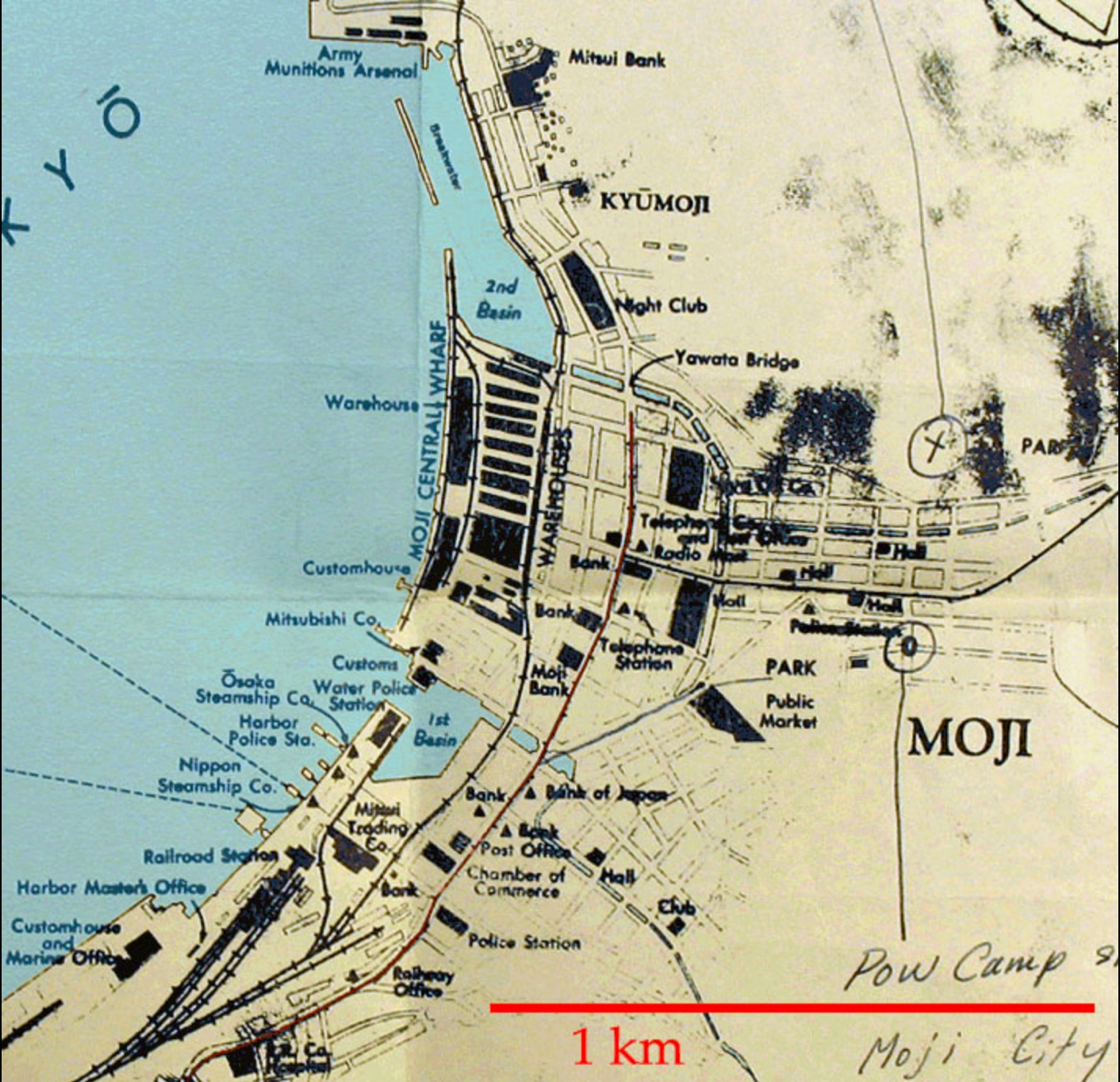
On 7 June 1943 they reached the port of Moji located on the northern most tip of the Island of Kyushu. The 900 men of ‘J’ Force, to their great relief had arrived in Japan. There had been no physical casualties but mental casualties would be numerous.
Please read about the 20 men from 2/4th included in J Force
 
 
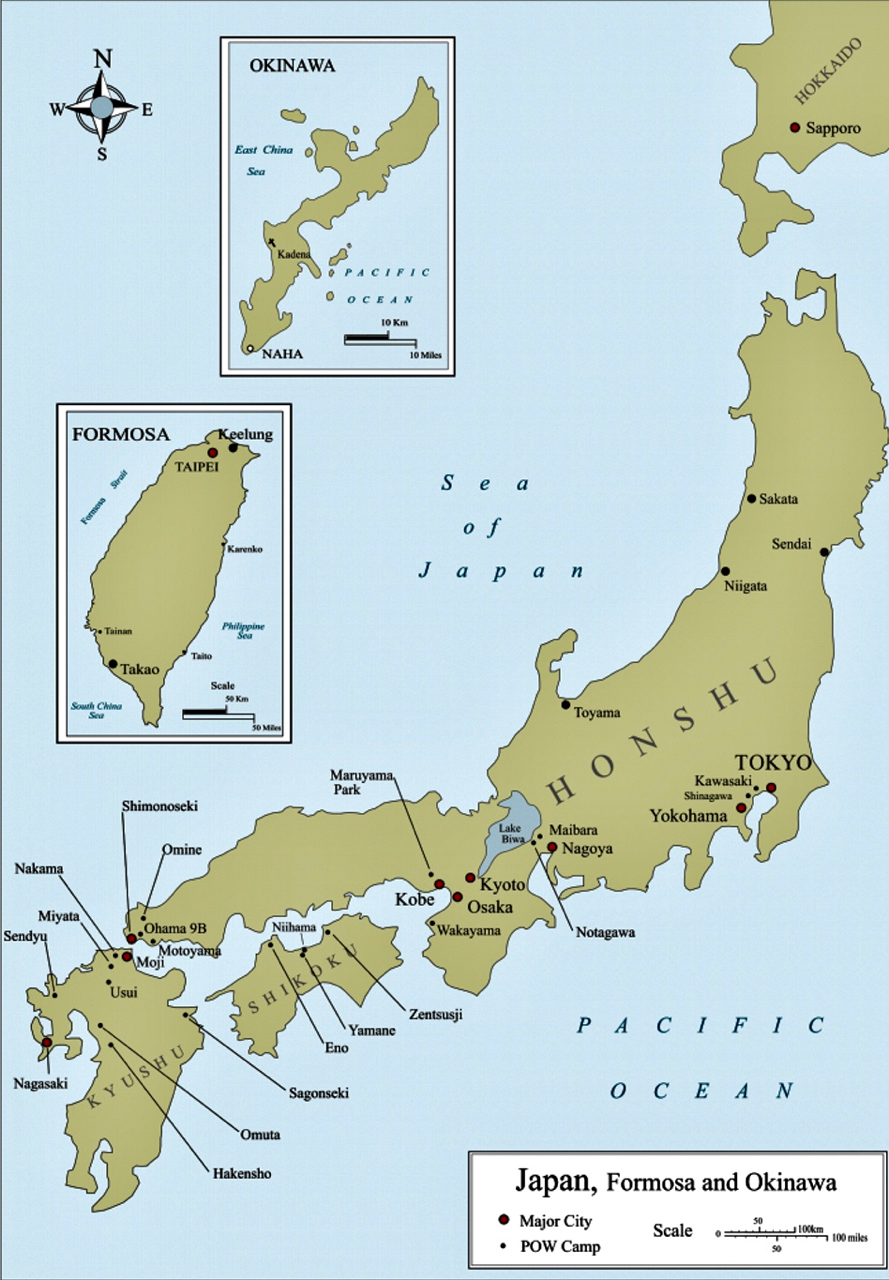
The above WW2 map of Moji is from Nigel Mansell’s website about Moji’s three hospitals.  We highly recommend visiting

https://sites.google.com/site/powsofthejapanese/Home/pow-camps/the-three-moji-hospitals

Rashin (Byoki) Maru Party to Japan-a death defying voyage of 70 days


Rashin (Byoki) Maru

The POW transport ‘Junk’ Ship which took 70 days sailing from Singapore to Japan – surviving Allied submarine attacks and a typhoon
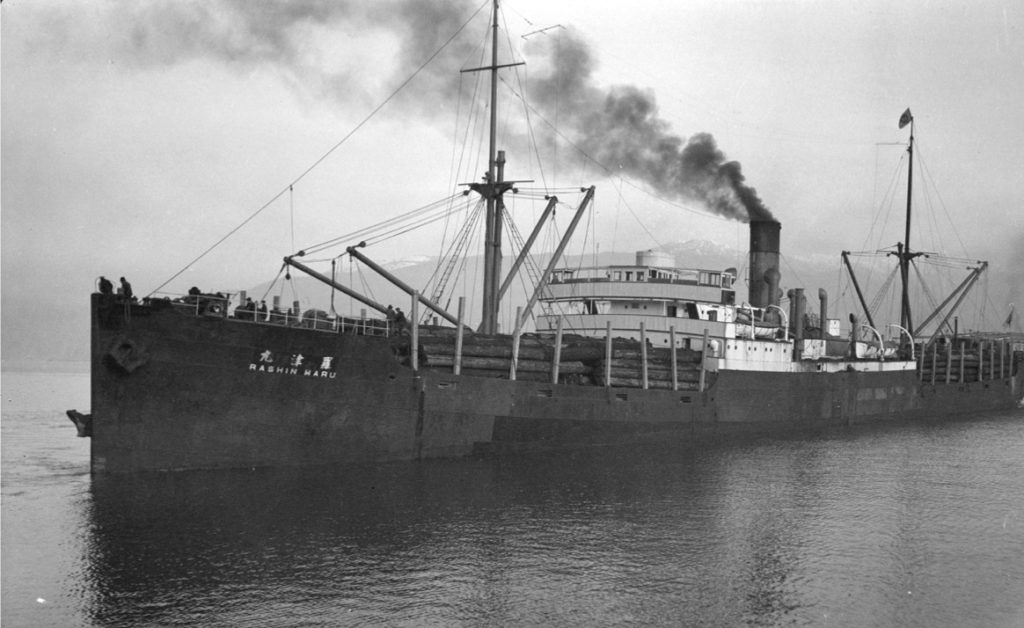


Having survived the horrors of labouring on the Burma Thai railway, since January 1943, members of D Force that were deemed fit enough were drafted into Japan Party. Again to advance the Japanese war machine, this time as labourers in Nippon. Amongst them were seven members of the 2/4th machine gun battalion including Doug Carter WX8240, Alex Oag WX8481, Bert Poulton WX9764, Aub Schuts WX8562, Arthur Walker WX16370, Alf Worth WX7440 and Bob Whitelaw WX9076.
In fact there were many more machine gunners with ‘D’ Force Thailand who sailed with ‘Rashin’ Maru to Japan.
The train journey from Tamuang, Thailand 21st June 1944 to Singapore, 26th June was slow. In the iron trucks they broiled by day and shivered by night, crowded thirty to a truck. Only half of them could stretch out at a time.
For the next week the men were part of working parties around River Valley Transit Camp, Changi where they were accommodated.  One day some of the men came back with a tall story of a ship being loaded with bales of rubber.
‘Her forward holds had been burnt out. The decks were littered with wreckage. She couldn’t last a day at sea’,
they said. They joked about it being the ship they would travel to Japan on.
The first Japan Party had already left from Saigon. But the Allied submarine offensive forced the Japanese to send this and subsequent convoys from Singapore to sneak across to Borneo along the coasts of the island chains.
On the 1st July POWs left the Transit camp and marched to the harbour from Changi. There lay the ship that was to take them to Japan.
‘It’s the bloody ship we were kidding about.’
There was no bridge to speak of, bombed and burnt out, a transitory wooden hut had been built aft on the poop.
The deck had dropped about  15″ .
The two forward holds had no hatch covers –  approx 600 POWs would be exposed to the weather.  
The toilets were four wooden boxes lashed to the ship’s side with a gap in the centre of the floor – allowing the POWs to squat above the ocean!
This was to be the men’s home for the next 70 days – ONLY THEY HADN’T KNOWN THAT as they boarded.

‘I wonder what her name is?’

She’ll be something Maru now you can bet.’

‘There’s only one name they can give her…’

‘What?’

‘The BYOKI Maru!’ 
Byoki being the Japanese word for ‘sick’
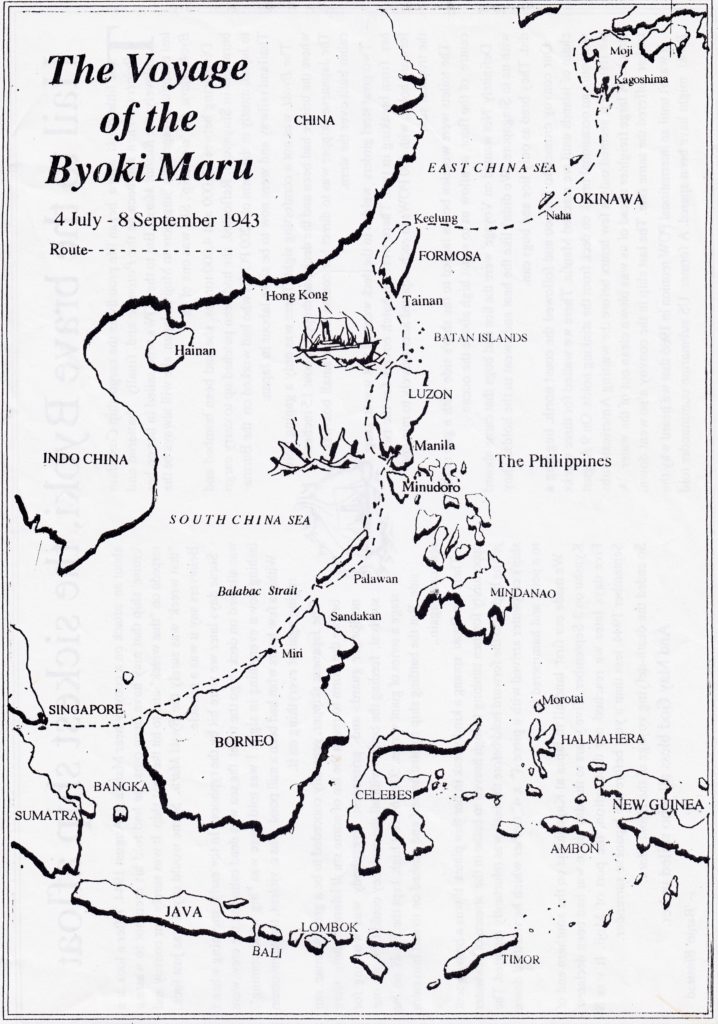
Below:  Sailing Route of Byoki Maru – from Beattie Collection from a ‘Rashin’  Maru POW Reunion.
 

Ray Parkin noted the ship was riding high in the water with the top of one of the propeller blades showing in the rudder’s recess like a shark fin. Every joint and corner bled from neglect.
They were herded up the gangway with shouts and pushes. On the way they had to go through a low cargo shed where each man had to pick up two bales of sheet rubber weighing around 75lbs. The guards told them that they could be used as lifebelts, the bales floated but only just. Struggling aboard the men deposited them using the bales as a seat with the bulkhead as a backrest. With hard feet and knees in their backs and elbows in their ribs they sat around an open hold twenty feet below them with nothing but a four-inch coaming  to stop them falling over the edge. Six hundred men had been squeezed into the forward open hatches.
Serving out the meagre meal of rice for was all confusion and complaint, they were afraid of being missed out.
Meals were served out on the decks.
It was almost impossible to put a foot between the men.
Each man brought his own supply of lice  and bugs which would multiply with very cramped conditions in the heat.
There was one wooden ladder to the deck.  The sailors found rope and made up climbing ropes for the men to get to the deck, showing them how best to do so without falling 30ft.
Their officer spoke with the Tiger who eventually agreed for the POWs to practice exiting with the ropes if it became necessary to abandon ship-especially if a torpedo should hit them.  With the large open holds with no hatch covers, the ship would sink immediately.
Initially the Japanese wanted each man to bring up a bale of rubber.  But there was no way the men could do this while climbing the ropes, particularly when they had to climb over the coaming with a 30 ft drop below them.
A naval petty officer yelled out instructions:
“For christ’s sake move quickly, but don’t rush and don’t panic…….take your turn……….and take your finger out when you are on a rope-think of your next astern ………..I know you’re only soldiers, but you’re too hairy-arsed to act like sheilas ………so dont be like a pack of girl-guides!”
They also roped off the open hold to a drop of 20ft below their quarters, hopefully to prevent deaths if the ship began rolling.
The POWs managed to get rid of many of the bales of rubber, taking them upstairs when going to the banjo tat night time – they would be dropped overboard.  The guards never noticed – they didn’t bother to keep an eye on the men at night .
Initially only men going to the latrine were allowed on deck. There were only four latrines (for 1250 men), wooden structures built out over the side.
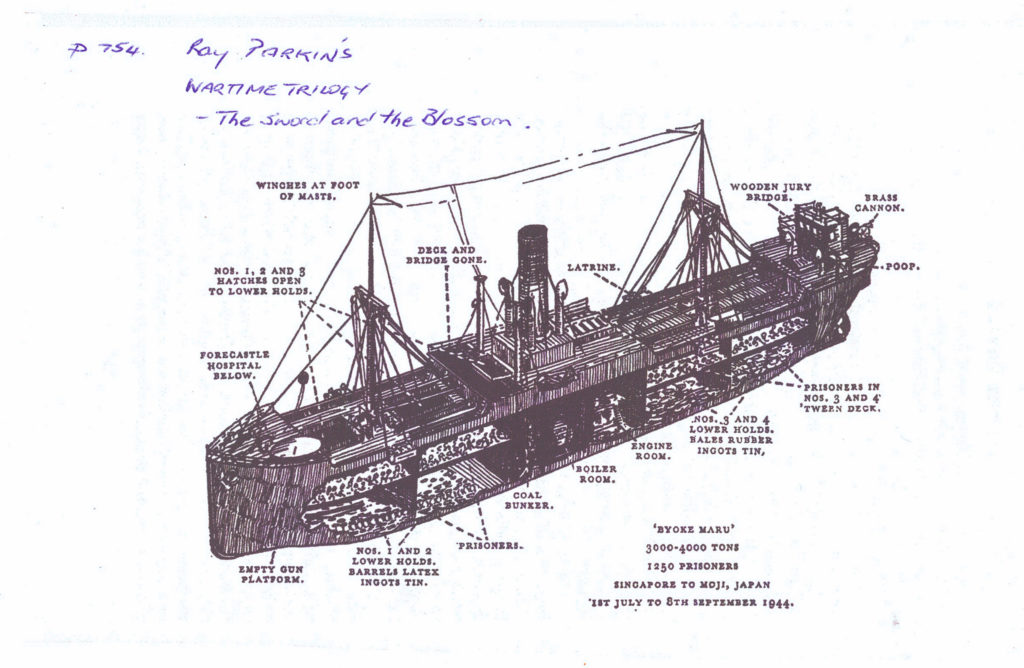
 

The transport took place in a convoy of 10 ships (with 4 other ships transporting POW’s:
Asaka Maru 1, Haku­shika Maru, Hofuku Maru and Sekiho Maru).
With the convoy being persistently challenged by allied submarine forces, the convoy zig zagged past Borneo and the Phillipines taking shelter in quieter waters after other ships in the convoy had been sunk.
On 8-7-1944 the convoy arrived in Miri (halfway up the north-coast of Borneo); here the composition of the convoy was changed (the Hofuku Maru remained in Miri).
On 26-7-1944 the ship arrived in Manila; here ‘Rashin’ Maru  must wait for a new convoy.
on 9-8-1944 (after a stay of 22 days at anchor in Manila Bay) the ship sailed in a convoy of seventeen other ships  including Asaka Maru 1 for Formosa (via Takao in the south to Keelung in the north, navigating close to the coast).  
Suddenly the prisoners realised the convoy was under attack. The convoy broke up in the chaos and ‘Rashin’ Maru  put into Lingayen Gulf at the opposite side of the landmass that juts out on the west coast of Luzon Island.    After leaving Manila the ship immediately in front and the ship behind had been torpedoed.
With minimal space, disease such as malaria and dysentery, the fetid atmosphere became a breeding ground for bugs. To relieve this the men managed to surreptitiously dispose of as many of the bales of rubber over the side at night time, one breeding source of bugs removed. The guards would never come into the hold and therefore were none the wiser. Then the Japanese decided to get rid of the flies, each man had to catch 100 flies a day. These were counted by the ‘Tiger’ and an officer with slapping and much unpleasantness for a short tally.
On August 13th  the little Rashin Maru nosed out of the Lingayen Gulf under a threatening overcast sky with an even more insidious threat, a typhoon. It was if only the age-old sea knew how to defeat these men after the jungle, disease and the Japanese had failed.
That night the wind became gusty, howling over the ship and then dropping away. Heavy rain-squalls swept over them. Those on that section of hatches in the square were half-drowned. They tried to crowd into another shelter under the coamings). 
It was impossible, they were beyond complaining.
The ship flung them, sweat streaming and rain streaming, against each other. It was too dangerous for the men to go on deck now. The seasick added their groans and substance to the thick pungency.
The ship seemed as if she were driving straight at the bottom when an overtaking sea lifted her stern high and ran forward with her as if to fling her down and stick her stern in the bottom of the sea like a dart. The crew raced about, threatening the shaft bearings until the throttle was cut.
For six hours the men fell into helpless paroxysms of sickness. And total fear.  Stomachs contracted, rock-hard. It was a miracle that the prisoners were not thrown from the ‘tween deck into the lower hold. All at once the ship gave five violent rolls that surpassed anything that had been experienced before. The elements catching her throwing her on her side right down to the lee bulwarks and beyond, with her high free-board it meant that her decks were almost vertical. Little spurts of water were forced through the plates of the hull as it twisted. Large girders on the deck were carried away giving the appearance that she was breaking up.
The storm drove them northwards in the vicinity of the island of Mavudis where finally the winds abated and they were able to take anchorage.
Thankfully the Japanese Captain was a cautious man, indicated by the manner in which he had steered the ship abeam of any landform in sight. Again realising that the ship would be in danger from a typhoon, he put into the leeward side of Mabudi Island.  This haven offered a sheltered anchorage formed by the triangle of the three Bataan Islands.
For the next 25 days the Rashin Maru, now only one of two ships, without an escort, island hopped from island to island expecting to get to Japan by stealth.
14 Aug 1944 ‘Rashin’ Maru set sail again arriving at Takao on the southern end of Formosa on 15th Aug 1944.
The next port of call was Keelung only to be forced back again by US Navy submarines, the ‘Rashin’ Maru made Naha on the island of Okinawa on 30 Aug 1944.    Finally after sailing from Kagoshima on the southern end of Kyushi Island and along the west coast of Kyushu, the ‘Rashin’ Maru after 70 long days and nights finally put into the Japanese port of Moji on 7th September 19444.
5 men of the 2/4th MGB and many of the 2/3rd MGB were to be transported to Ohama on Honshu to work in the coal mine for the next year until they were liberated in August 1945.  The remainder of 2/4th’s D Force on board were sent to Yamane and Niihama mines.  
Reference: PARKIN Ray, Wartime Trilogy, The Sword and the Blossom.
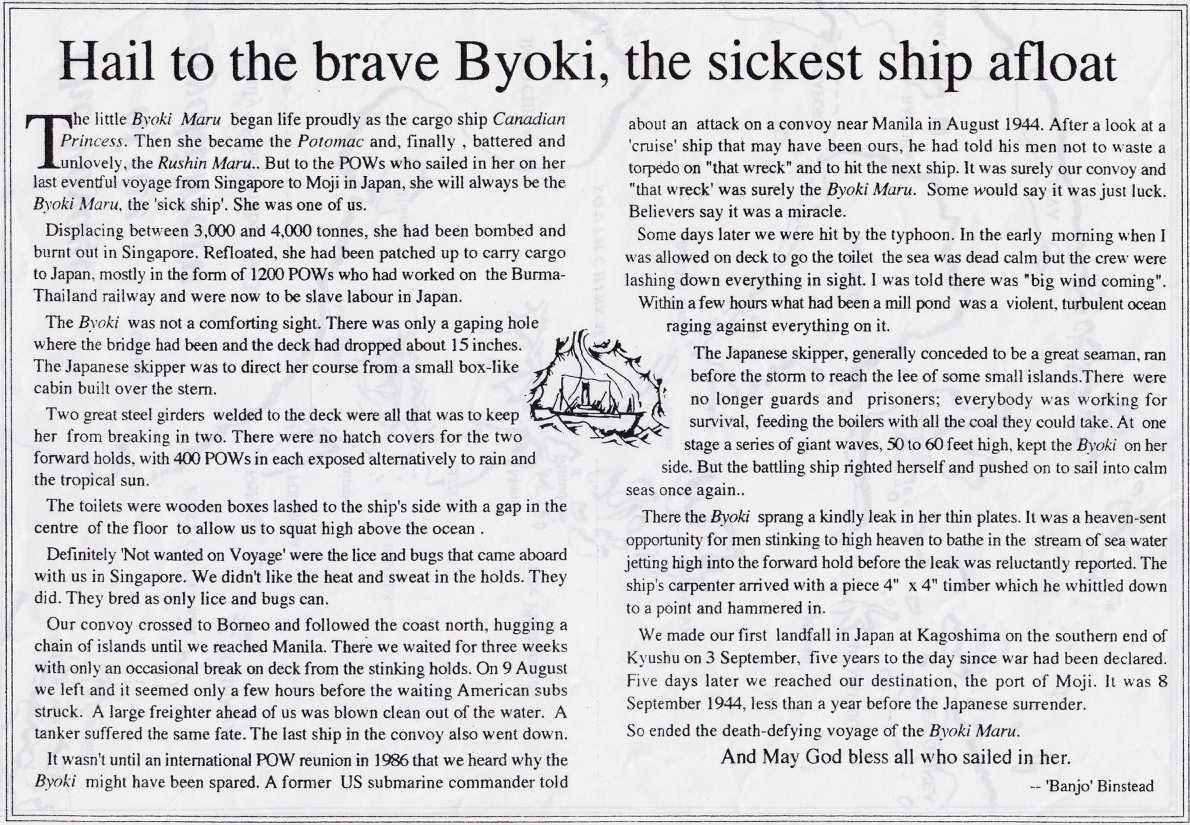


Banjo Binstead was a fellow traveller and POW on the ‘Rashin’ Maru.  This information was provided by the family of Joe Beattie, who attended the 50th Anniversary of the 70 day sea voyage on Byoki Maru from Singapore to Moji Japan in 1944.

I was a miracle as there were no deaths on this 70 day journey.

There were about  57 Machine Gunners on board ‘Rashin’ Maru with most sent to Yamane and Niihama;
however few were sent to Ohama 9B; Fukuoka sub-Camp 17 Omuta and Fukuoka sub-Camp No. 13 Saganoeski. 
Five of following (highlighted in Green) are ‘D’ Force Thailand, Java Party 6 O & P Btns


WX8245 ADAMS, Edwin Thomas – Java Party No. 6 P Btn sent to Ohama 9B Camp.

WX10787 ARBERY, Ronald Edward

WX73470 ARMSTRONG, Charles William

WX8963 ARMSTRONG, Leonard (Len)

WX17251 ASHBOLT, Lloyd George

WX9342 ATKINSON, Herbert

WX10791 BEATTIE, Alan Robert (Bob) – Java Party No. 6 P Btn. sent to Ohama 9B Camp.

WX9278 BUNCE, Edward William Henry

WX8240 CARTER, Douglas Newington Hunter (Doug) Java Party No. 6 O Btn – sent Ohama 9B Camp, Japan

WX11279  CHATFIELD, George Keith

WX210609 COLEVAS, John Verdun (Des)

WX4912 CONWAY,  Thomas James

WX8778 DAILY, Louis Jordan (Lou)

WX9328 DICKIE, Gordon Thomas

WX17591 DOW, Claude

WX7599 DYSON, ‘Arch’ Archiband Henry

WX8619 ELLIOTT, James Stuart (Jim)

WX7886 FINLAY, Thomas Albert

WX8900 GIBSON, Thomas Crosby

WX7246 HADFIELD, Ralph William

WX8374 HAYES, Norman Patrick

WX7642 HENDERSON, Clarence Gordon – Java Party No. 6 P Btn – Sent Fukuoka sub-Camps No. 13 Saganoeski (copper smelter) & No. 6 (Coal mining)
WX8869 HINDLE, Herbert Roy – aged 40 years, killed by rock fall Sumitomo Beshi copper mine Yamane 30 Sep 1944

WX8984 HOGBEN, Sydney Mervyn

WX9418 HORN, Douglas Radcliffe (Doug)

WX10804 JACOBS, Harold

WX8610 JAMES, Trevor Ernest James

WX16236 KING, Alfred Victor – aged 26, KIA Korea 8 Nov1950

WX9528 LAMBIE, Andrew

WX5175 MANN, Eric Horsley

WX17000 MATTHEWS, Frederick Noel

WX8478 MCGLINN, Francis Thomas (Frank)

WX7608 McLENNAN, Chris

WX7241 MEAKINS, Eric

WX9339 MOIR, George

WX15751 MORRISSEY, Albert Edward (Bert)

WX4941 MULLER, Raymond

WX12599 MURDOCH, Arthur Reginald

WX9849 NEWELL, Archie Gerald

WX8493 NORTON, Albert William

WX9181 NOTTLE, Wilfred Harold

WX8481 OAG, Alexander Sutherland

WX12326 PASCALL, Reginald (Reg)

WX9764 POULTON, Bertram Frederick – Sent Ohama Camp 9B.

WX8562 SCHUTS, Aubrey Vincent – sent Ohama Camp 9B.

WX6841 SMITH, John Stewart

WX10927 Thompson, Norman Harding Edward

WX10927 TOMPKINS, Percy Reeve

WX8357 TUCKER, Kenneth Dudley (Ken)

WX16370 WALKER, Arthur Lewis – sent Ohama Camp 9B, Japan.

WX7466 WALSH, Bernard James – Java Party 6, O Btn – sent Fukuoka sub-Camp 17 Omuta.
WX7913 WARD, Frederick Thomas – sent Fukuoka sub-Camp No. 13 Saganoeski and  Fukuoka sub-Camp No. 17 Omuta.
WX7502 WAYMAN, Thomas Sylvester – Java Party No. 6 P Btn – Yamane & Niihama
WX9076 WHITELAW, Robert Greigson (Bob) – sent Ohama Camp 9B, Japan

WX10561 WHITFIELD, Robert George (Bob)

WX7440 WORTH, Alfred (Alf) – Ohama Camp 9B, Japan


Left:  Hindle died in a rock fall and Right:  King KIA Korea 1950


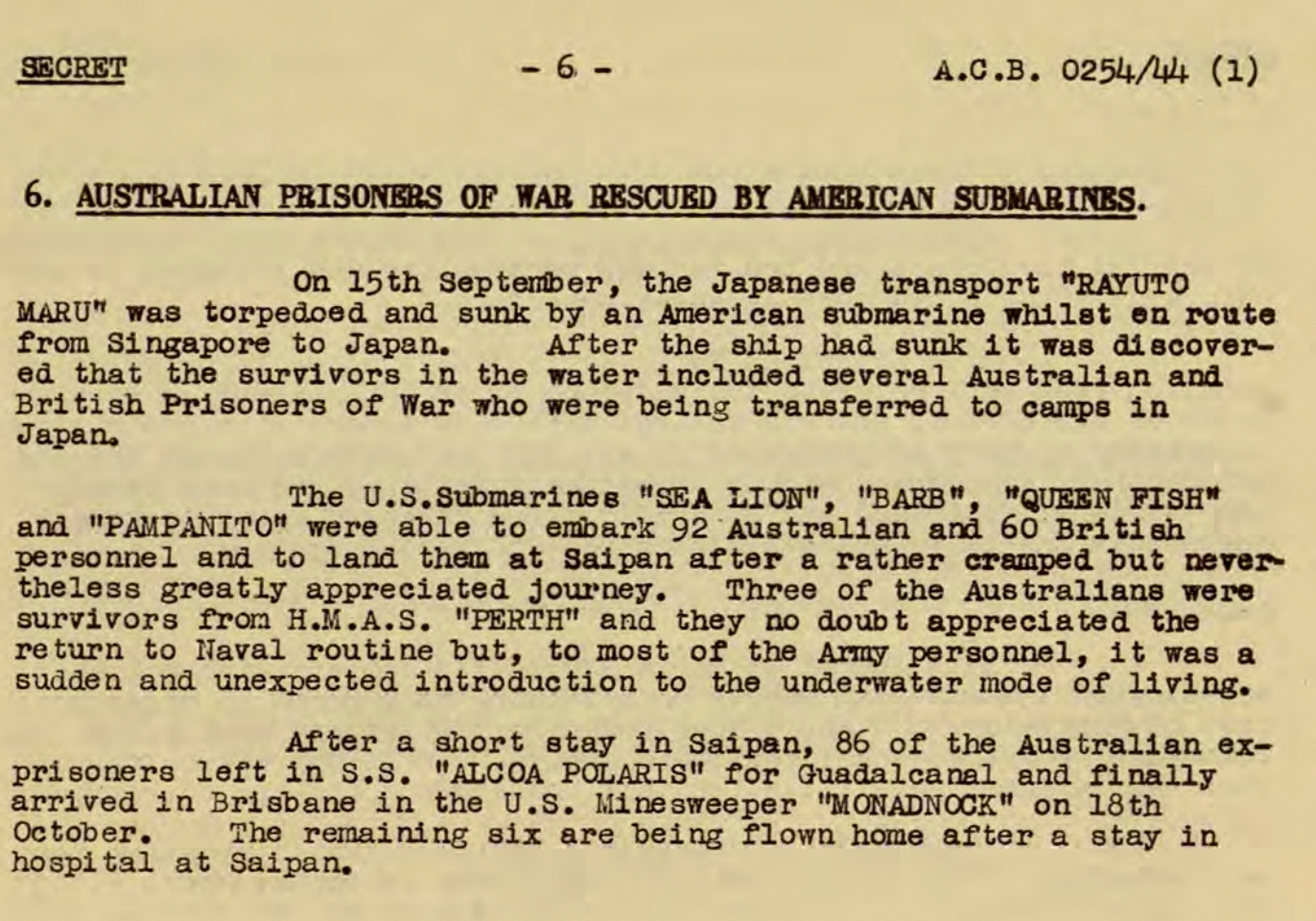
Rescue by Pampanito, Queenfish, Barb, Growler & Sealion – ‘Rakuyo’ Maru sinking Sept 1944. (Central Story)

THE THIRD WAR PATROL AUGUST 17 – SEPTEMBER 28,1944

AND THE MIRACULOUS RESCUE OF POWS FOUR DAYS AFTER US SUBMARINES ATTACKED AND SANK ‘RAKURO MARU’ 12 SEPT 1944 

11 Men from 2/4th were picked up in South China Sea 

by  same US Submarines which had eatlier attacked the Japanese Convoy including ‘Rakuyo’ Maru 12 September 1944

3 POWs from 2/4th were picked by Japanese Naval Corvette, taken to Japan

38 men from 2/4th perished when ‘Rakuyo’ Maru was sunk

In September 1944 USS Pamanito, USS Growler and USS Sealion were part of a ‘wolfpack’ heading for Luzon Strait north of the Phlippine Islands  – the area was code-named ‘Convoy College’ by the Allies.  Large numbers of Imperial Japanese Convoys converged here on their journey north to Japan.
Previously submarines had patrolled the seas singularly.  Now it was found wolf-packs were better organised, protected and more efficient.  They rarely used radio contact and would rendezvous at pre-arranged times, then communicating with signal lights and megaphones.
On the night of 9 September 1944 the wolfpack known as ‘Busters’ was notified of a message from Japan intercepted and decoded by Fleet Radio Unit Pacific with route details of the Convoy and provided the next day’s noon position.   The ‘Busters’ were ordered to rendezvous on the night of 11th September at the given position.  Another wolfpack in the region known as the ‘Eradicators’ included USS Barb and USS Queenfish was ordered to be a backstop to ‘Busters’ and to also move in on the convoy.
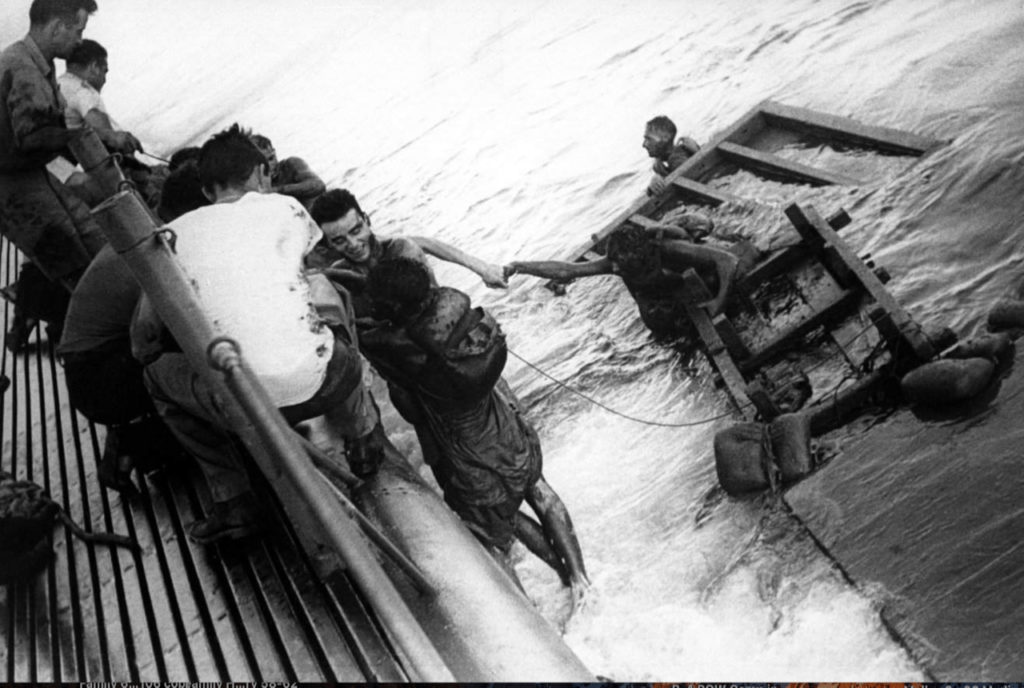
The next day, on 12th September 1944 two of Sealion‘s torpedoes hit ‘Rakuyo Maru’ – one amidships and one in the bow. The POW ship took 12 hours to sink.  This allowed the POWs some time to seek food and water from the sinking ship and make rafts.  The Japanese guards had immediately left the ship using most of the lifeboats.  When the surviving Japanese were rescued it was made very clear to the POWs their lives would not be.
Additional reading about ‘Rakuyo Maru’
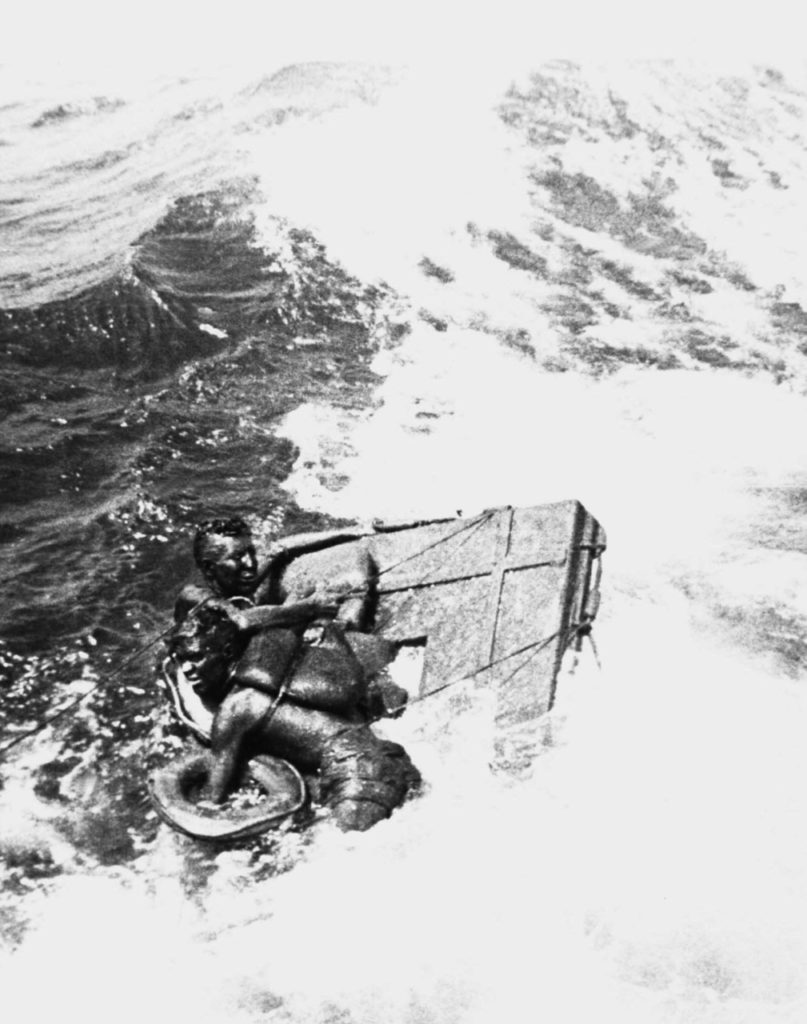
The survivors looked for floating devices; sometimes lashing pieces together for makeshift rafts sometimes they found rafts deserted by Japanese.   Covered with oil  men gradually succumbed to the sea elements – salt, wind and mostly thirst.  The nights were worse with the fatigued POWs, some with injuries drifted into sleep and silently slipped away from their rafts.
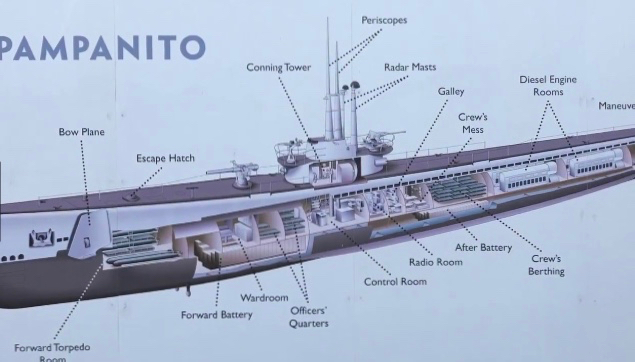
How to keep their spirits up?  Who would rescue them?  It was not difficult to lose faith.  The worst was when the men succumbed to thirst and drank salt water. The results were hallucinations and sometimes behaviour which threatened those living. It was the fourth day following the sinking of ‘Rakuyo Maru’ when a miracle occurred –  the ‘Pampanito‘ returned to the area of the attack just to look around.   Just by chance floating amongst the debris their observer discovered there were survivors!  It was not until the submarine got within verbal exchange distance did the crew of ‘Pampanito’ realise there were Australian and British POWs in the water ‘who had to be rescued’.  They had no idea how many.
The urgency was so great – these men had been in the ocean three nights and it was now the fourth day!
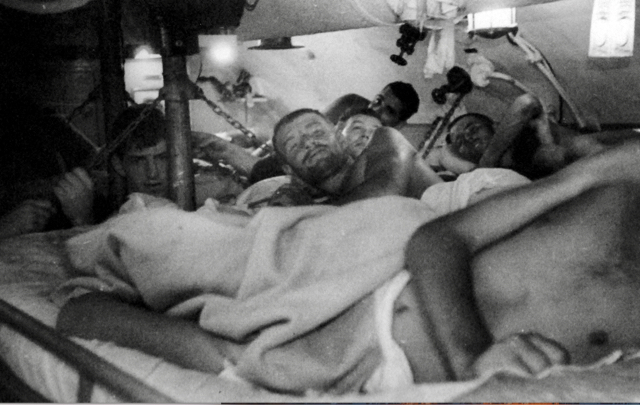
‘Pampanito’  broke their rules and absolute code of silence and messaged to other submarines in the vicinity. Three other submarines returned to the scene to pick up survivors. The four submarines rescued 159 survivors of the ‘Rakuyo Maru’ and 73 men were pulled aboard the –Pampanito.’
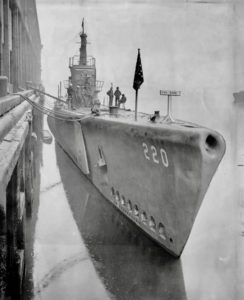
USS Pampanito, San Francisco – a museum attracting large numbers of visitors.
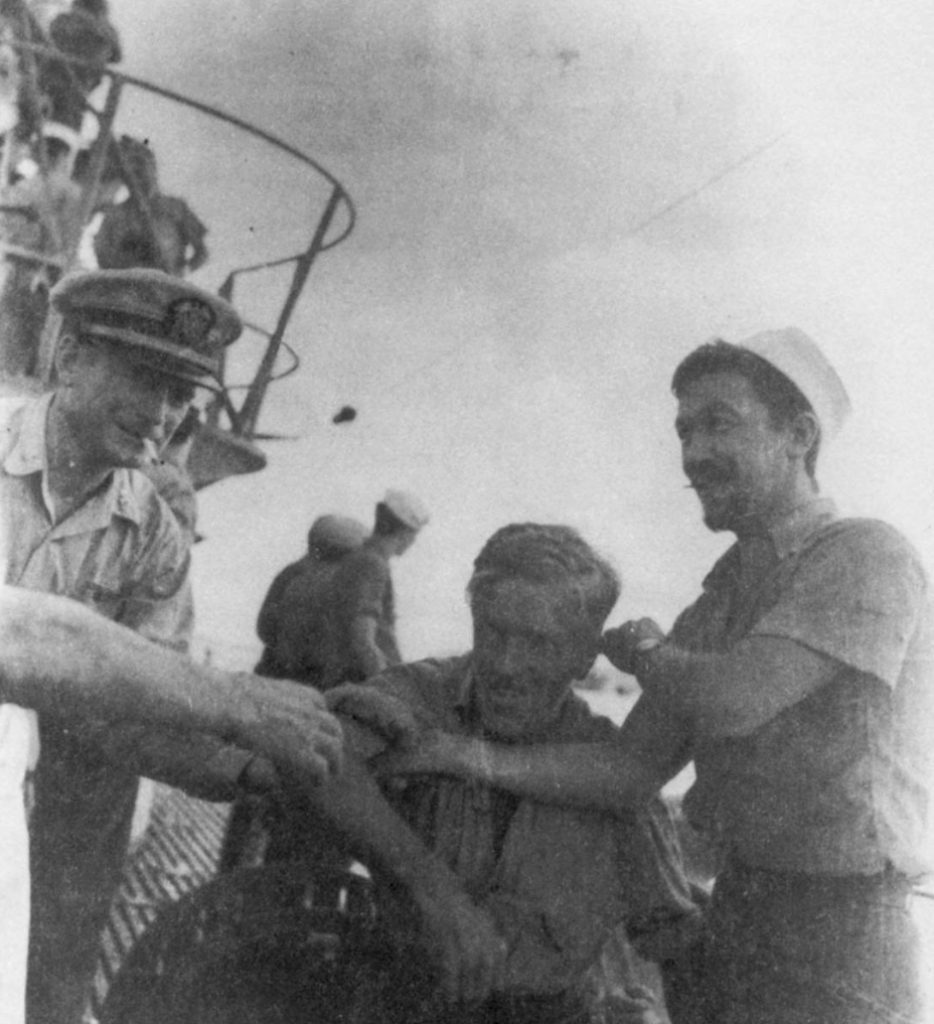
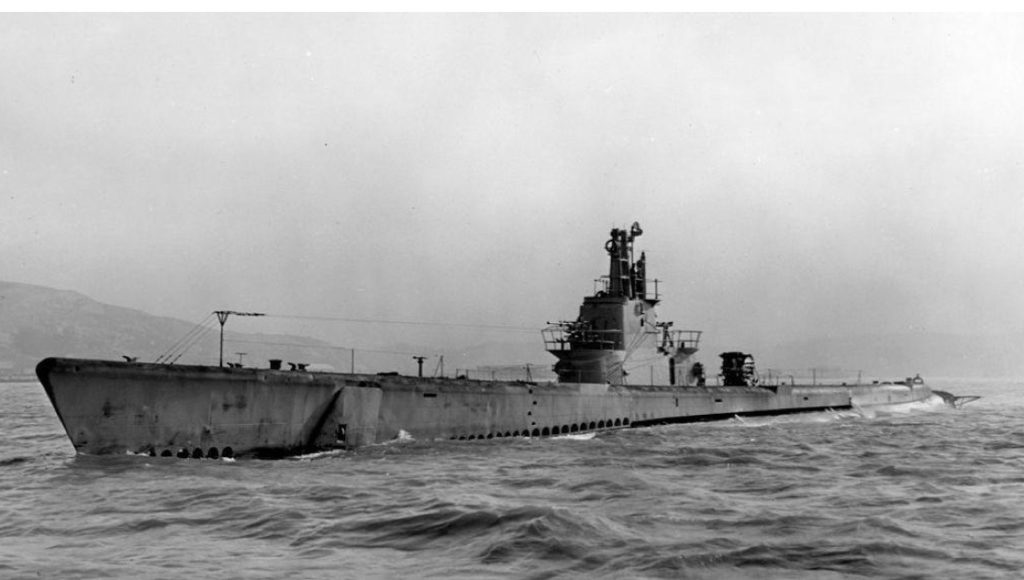
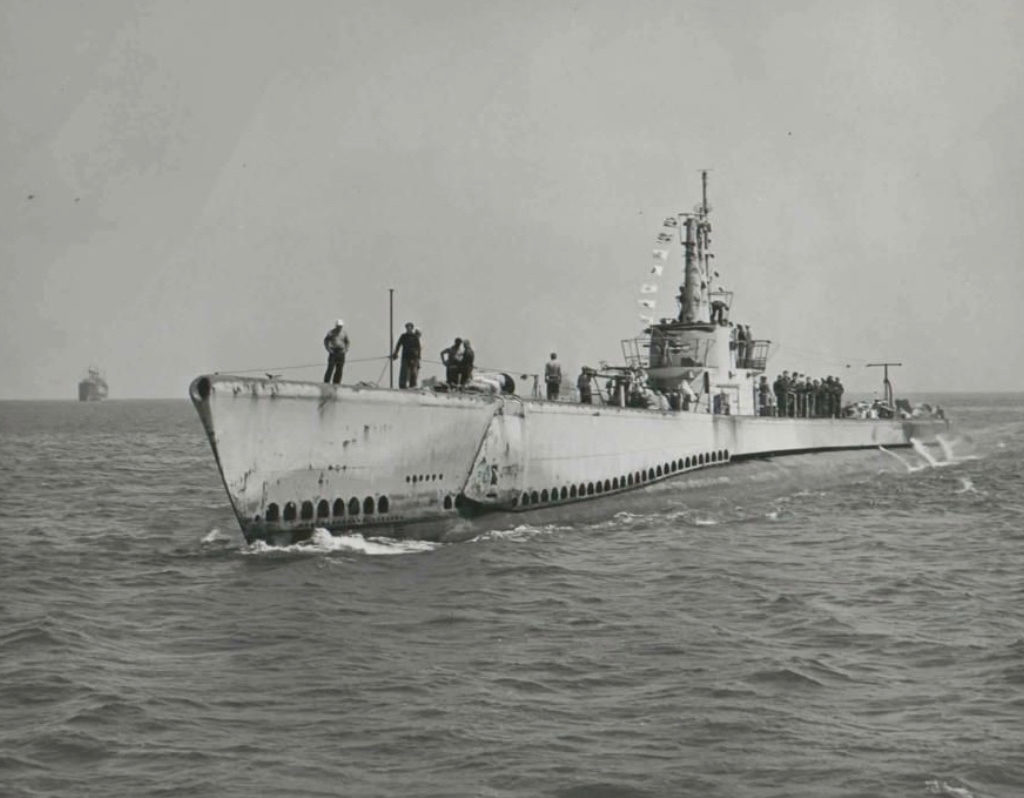
USS Pampanito with rescued POWs onboard.
Pampanito picked up 73 survivors from South China Sea, including 5 men from 2/4th.  It called in three other submarines to pick up as many POWs as possible.
COCKING, Alfred John ‘Jack’  WX16369

Please read his story

PASCOE, Thomas Anthony ‘Tom’  WX7409
PICKETT, Harry WX9095
WINTER, Alfred Daly ‘Alf’ WX8110
WINTER, Walter Victor ‘Wally’ WX10373 (not related to above)
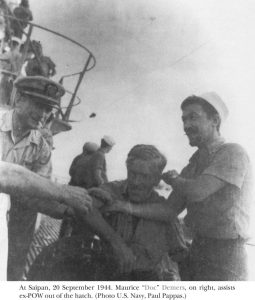
Saipan –  20 Sept 1944 Maurice ‘Doc’ Demers on right assists ex-POW out of hatch.


Rescued by USS ‘Queenfish’ from South China Sea, after Rakuyo Maru sank: 
BUNKER, Harold Thomas (Harry) WX9223 
CROSS, Frederick Victor ‘Vic’ WX7268
BEILBY, Philip James ‘Phil’ WX12765.  Please read Beilby’s story.

USS Barb
USS Barb picked up a group of POWs which included ‘Doug’ Hampton.  Please read further.
Rescued by USS ‘Barb’ from South China Sea, after Rakuyo Maru sank:
HAMPSON, Robert Douglas ‘Doug’ WX7123
Rescued by USS ‘Sealion’ from South China Sea, after Rakuyo Maru sank:
 KEARNEY, Laurance Daniel “Laurie’ WX17452
SING, Alfred ‘Alf’ WX16424
Below: survivors aboard USS ‘Sealion’

Above:  USS Growler


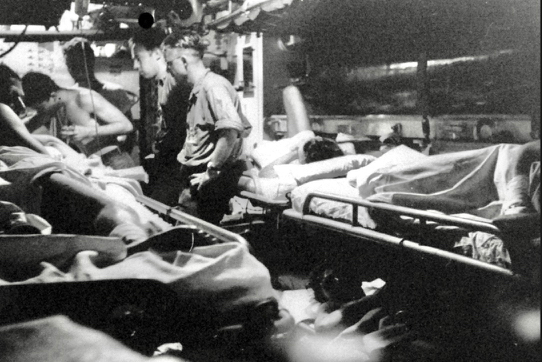
Once the rescued POWs were on taken onto the submarines – so began another emergency.  The crew gave up their sleeping areas – these submarines were sleek without any room for guests – and so began the crews’ efforts to not just to keep these men alive but ensure they had the best chance to recover.  The submarines did not have extensively trained medical crew.


POWs PICKED UP BY JAPANESE NAVAL CORVETTE

Those Picked up by Japanese Corvette and taken to Japan included three 2/4th men: Bert Wall, Climie and Clayden.
On morning 12 September 1944 when the convoy was attacked ‘Rakuyo Maru’ carrying 1,159 British and Australian POWs was sunk by USS ‘Sea Lion and another POW Transport Ship in the convoy ‘Kachidoki Maru’ was sunk by USS ‘Pamanito’ carrying 400 British POWs. 
The Kachidoki Maru was hit by a torpedoes from the US submarine Pampanito.Three torpedoes were fired at  Kachidoki Maru at 22.40, the target was 3,700  away, two hitting the ship, one at the stern and the other amidships. Both blew holes in the hull plates, flooding the entire aft end of the ship.
Most of those rescued from the Kachidoki Maru were picked up by Japanese trawlers and continued their journey to Japan on the Kibitsu Maru.
‘In total 157 POWs from Rakuyo Maru, 520 POWs from Kachidoki Maru, and about 1,000 survivors of the HI-72 convoy were put aboard Kibitsu Maru. They departed Yulin on the evening of 16 September.


‘Bert Wall was one of three rafts tied together with POWs  and were picked up by a Japanese Corvette. The men numbering about 80 or 82 had to climb up the side of the moving corvette on a wire rope ladder which the crew had dropped over the side.  All the POWs’ managed to climb aboard which was a miracle in itself considering their health and what they had been through.  Most POWs were naked or next to naked and were were made to sit on deck up the front.  They were given nothing to drink or eat.
Climie, Syd Clayden and Bert Wall were with this above group. Wall went to Sakata where Rowley Richards was the only Australian Doctor amongst about 40 Australians and 200 British – there were some British doctors. Rowley Richards was regarded very highly as a doctor.
Climie and Clayden were sent to Kawasaki Camp 14D – within the Tokyo military jurisdiction.’

The above information is from Bert Wall’s recollections.

Below:  Wall, Climie and Clayden


In total 543 Australian POWs lost their lives.  500 from AIF, 33 RAN and 7 RAAF.


We wish to acknowledge the following 38 men of the 2/4th who did not survive to return home to families and loved ones. ** not including Aussie Climie who is listed here.

WX7905  ANNESLEY, Frederick John (28 years)

WX9864  BAGGS, Royal James (34 years)

WX8720  BAKER, Arthur Joseph (30 years)

WX8682 BAKER, William Robert Samuel 25 years)

WX16389 BELL, Robert Joseph (24 years)

WX9326 CARTER, Alfred Henry (24 years)

**WX4927 CLIMIE, Austin Newman (37 years) picked up by Japanese vessel with Bert Wall.  Tragically died in Allied air raid in Japanese camp, 13 July 1945.

WX9109 COLQUHOUN, Alexander John (38 years)

WX9092 COUSINS, Arnold Vivian (30 years)

WX15783 CRIPPS, David Charles (22 years)

Please read further about Cripps & Randall from Northampton.

WX8011 DELAPORTE, Harry Thomas (30 years)

WX8830 DRUMMOND, Alexander McDougal Donald (33 years)

WX16407 GIBBS, Lacey Gordon (27 years)

WX8958 GIBBS, William Herbert (28 years)

WX10822 HARVEY, Laurence John (24 years)

WX8408 HAYES, Albert George (33 years)

WX10095 HELSIN, John Frederick (25 years)

WX16446 HOBSON, Clifford (38 years)

NX73270 HOWARD, Bernard James (29 years)

WX10795 HUGHES, Ronald Edward (28 years)

WX7646 HUTCHISON, Robert Bamford (32 years)

Read the story of Hutchison and some of his mates

WX5584 MCCRACKEN, Ronald Duncan (24 years)

WX8760 MCMAHON, Thomas Membury (24 years)

WX7662 MINCHIN, Alec Randolph (30 years)

WX8076 MOORE, Frank Clifford (33 years)

WX7181 MUTTON, Charles (31 years)

WX7940 NICHOLSON, Walter George (36 years)

WX7659 NOLAN, Edwin Leslie (34 years)

WX8856 PEARCE, Harry Walter (30 years)

WX16356 RANDALL, Ernest Edward (36 years)

WX9282 SKINNER, Francis Kenneth Herbert (40 years)

WX7337 SPOONER, Alec (33 years)

WX6623 THOMAS, David William (23 years)

WX7664 TOMS, Frederick William (40 years)

WX17863 TRIGWELL, Vernon Chapman (24 years)

Please read the story of Mrs Trigwell and her search for news of her son

WX7484 TUCKER, William John (38 years)

WX9292 VENEMORE, Norman James (28 years)

WX8776 WALSH, Leo Patrick (36 years)

WX9829 WEBB, Frederick William (22 years)

Davey Cripps and Fred Webb were the youngest at 22 years.  There were married men with children, some who married before departing Australian and saddest of all, young West Australian men in the prime of their lives who had survived working on Burma end of Thai-Burma Railway with ‘A’ Force, Green Force No. 3 Battalion.
The men of ‘Rakuyo Maru’ party were initially sent to Saigon, French Indo-China where they worked at the wharves, go-downs and nearby airfield.   On several occasions the party prepared to leave Saigon – then sent back to their accommodation and work.   Finally, their Japanese captors came to the conclusion that no further Japanese shipping departing Saigon would be able to avoid the marauding American submarines.  Japan had lost the freedom and use of Saigon Harbour, a valuable shipping port to exit and enter from Japan.
The POWs were then returned by train via Bangkok to Singapore and accommodated at the Transit Camp.  Returning to work in Singapore they finally boarded the ‘Rakuyo Maru’ about 4th September 1944.
_________________
Please read story about 75th Anniversary of sinking of Rakuyo Maru and rescue of POWs.
You may wish to read this website Submarine Sailor


Below:  Now Released RAN Secret Document

HMS ‘Speaker’ sails into Sydney from Manila with returning former POWs of Japan – Australia’s dark war history with Waterside Workers

POWs AT MANILA

We wish to thank and acknowledge AWM for the majority of photographs featured below.

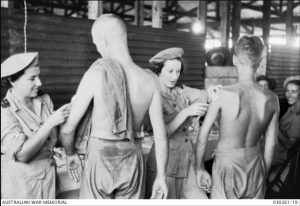
Manila, Philippine Islands. 4 September 1945. Recovery of Australian prisoners of war (POWs) from Japan. The inevitable inoculations and needles being given by a member of the Australian Army Nursing Service (AANS).


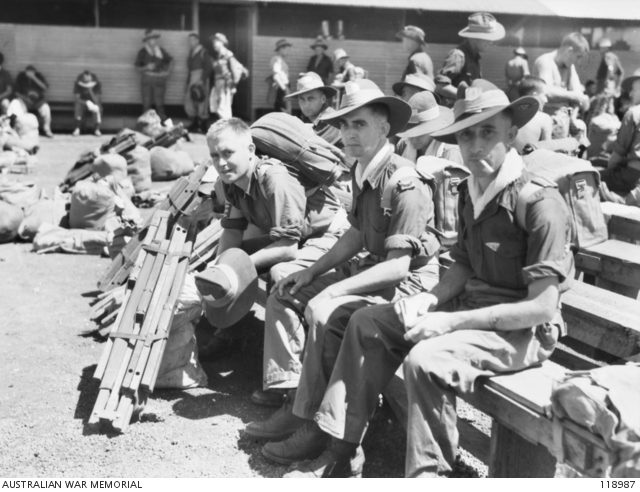
MANILA, PHILIPPINES. 1945-10-05. AUSTRALIAN EX PRISONERS OF WAR EN-ROUTE FROM JAPAN AT THE 3RD AUSTRALIAN PRISONER OF WAR RECEPTION GROUP CAMP AT MANILA. AUSTRALIAN EX PRISONERS OF WAR ARRIVING FROM KOREA WHERE THEY HAD BEEN RELEASED BY THE RUSSIANS. (PHOTOGRAPHER LT N. B. STUCKEY)


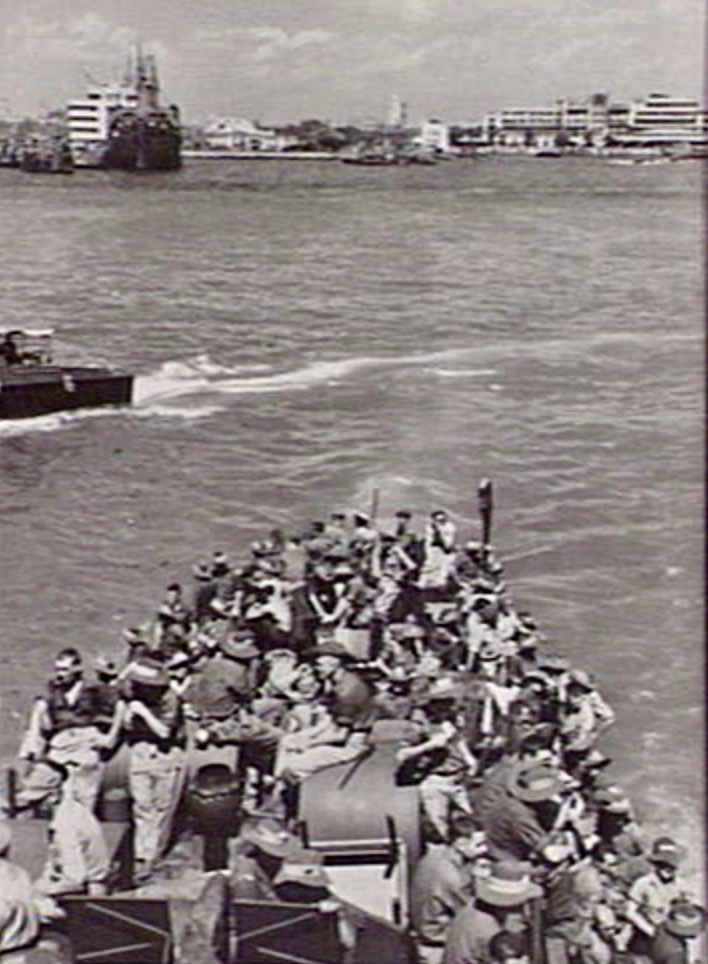
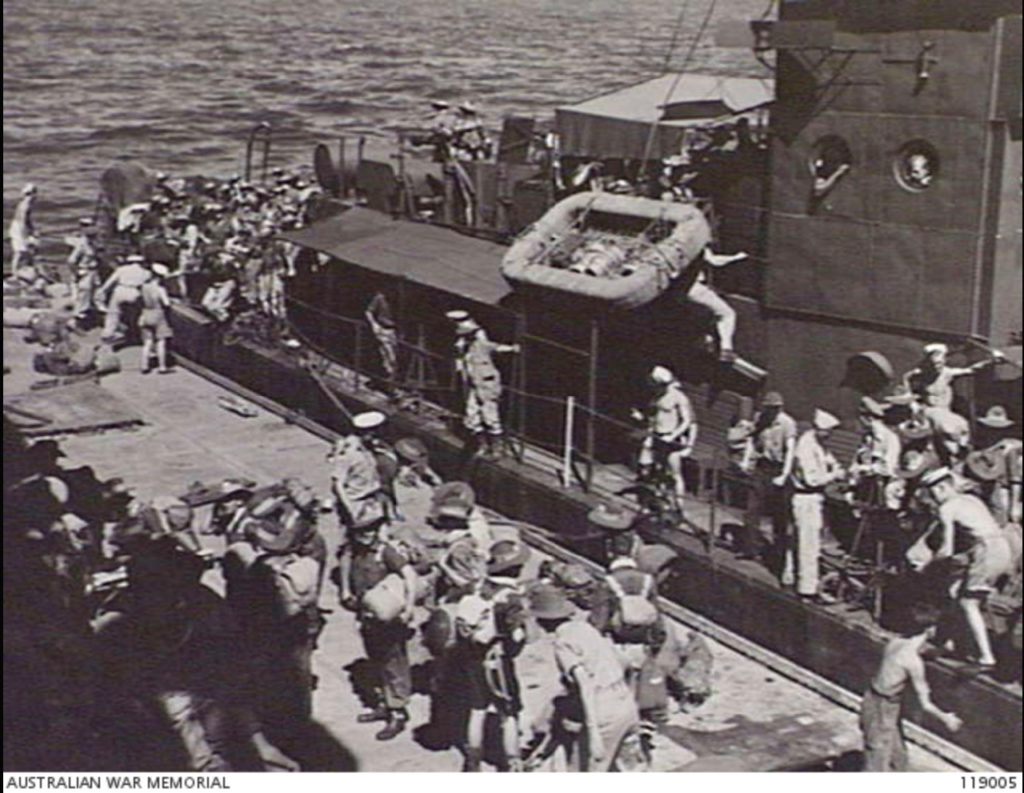
MANILA, PHILIPPINES. 1945-10-04. AUSTRALIAN EX- PRISONERS OF WAR EN-ROUTE FROM JAPAN AT THE 3RD AUSTRALIAN PRISONER OF WAR RECEPTION GROUP CAMP AT MANILA. TROOPS BOARDING AIRCRAFT CARRIER HMS SPEAKER FROM LIGHTER AT MANILA. (PHOTOGRAPHER LIEUTENANT N. B. STUCKEY)


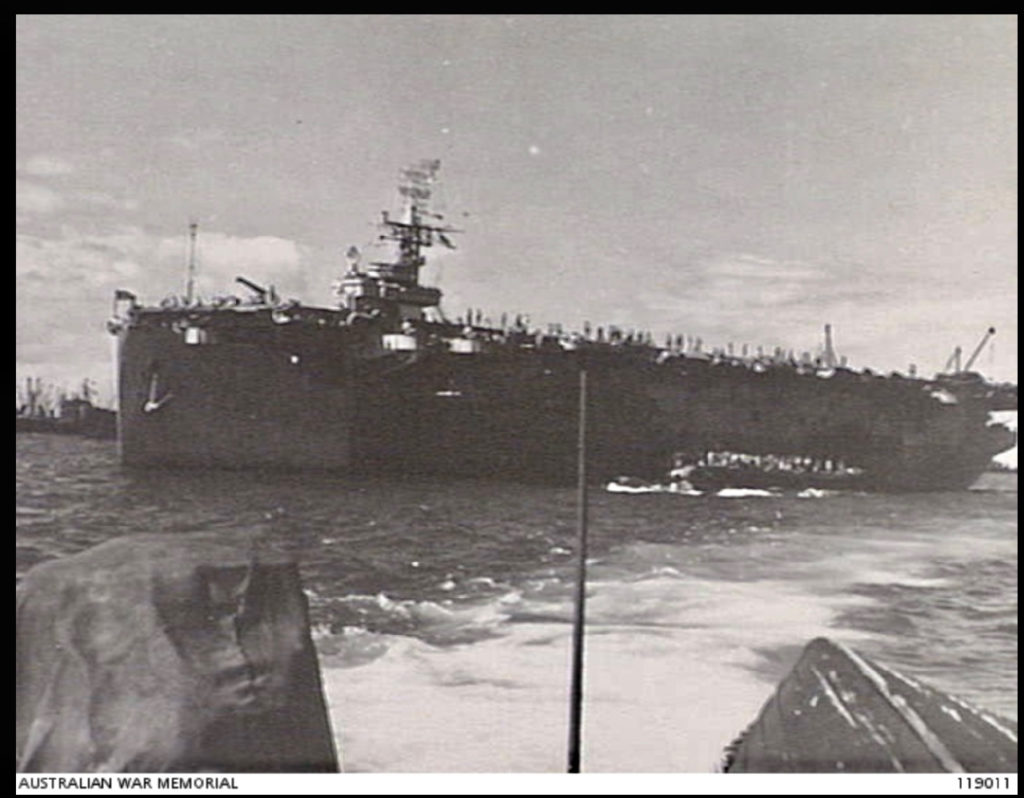
15 October 1945. HMS Speaker (D90) returning to Sydney from Manila with over 500 Australian ex-Prisoners of War. ‘Speaker’ berthed at No. 14 Pyrmont at 8.45am. Once unloaded the ship moved to a mooring in mid-stream off Bradleys Head to begin a planned three week period of defect rectification during which time seven days’ leave was granted to each watch.


Australian ex-prisoners of war en route from Japan at the 3rd Australian Prisoner of War Reception Group Camp. Identified, left to right: WX10104 Sergeant H. Jacobs (Perth WA), 2/4th Machine Gun Battalion; SX8679 Private (Pte) Harold William Nilson (Adelaide SA), 2/3rd Machine Gun Battalion; VX38230 Pte James Arthur Newman, 2/3rd Machine Gun Battalion waiting to embuss at No 8 Camp for embarkation on HMAS Speaker.


2nd from Right:  ‘Cowboy’ Matthews.
2/4th boys at Sydney Wharf.  Do you recognise anybody?  Please let us know (email: 2nd4thmgb@gmail.com).


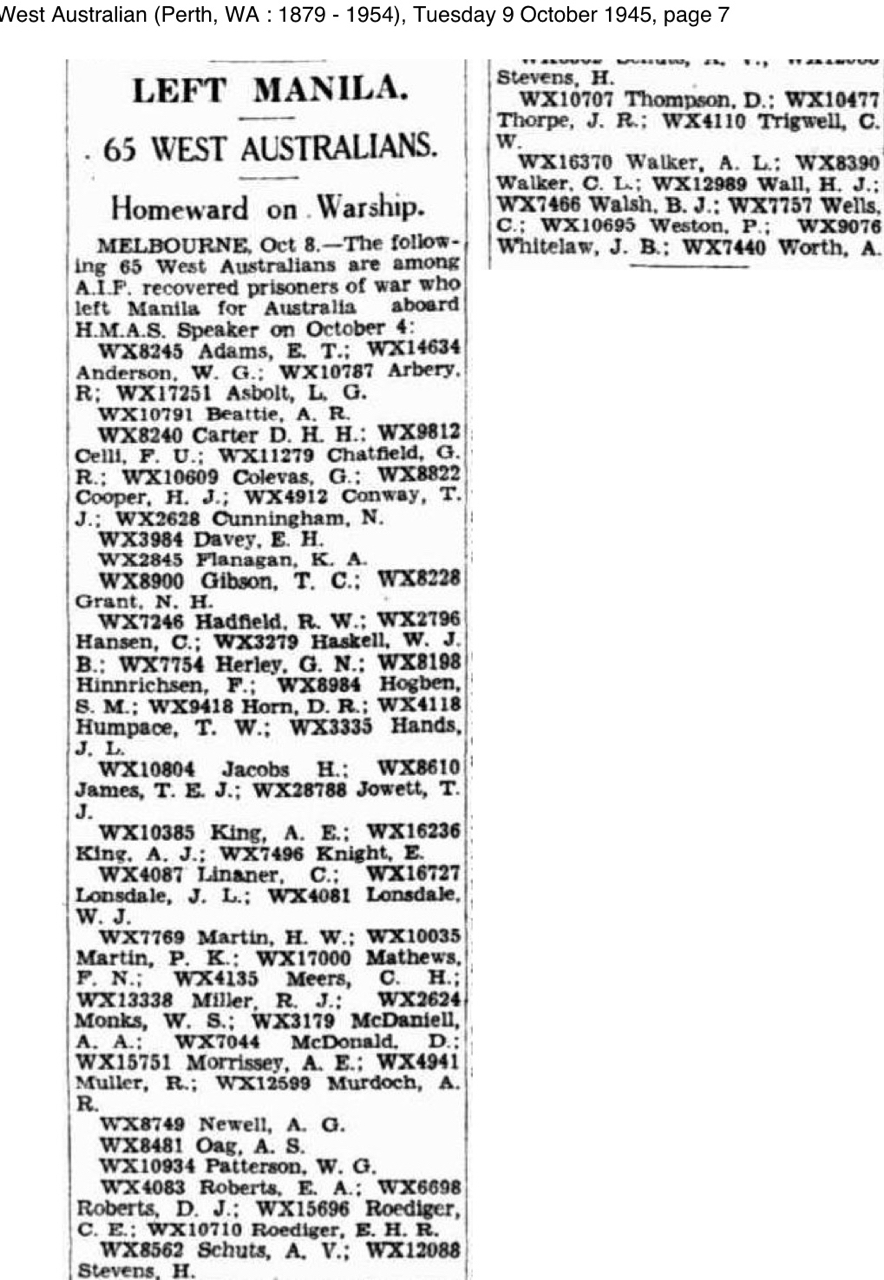
33 of the above 65 West Australians were from 2/4th:

WX8245 ADAMS E.T.

WX14634 ANDERSON W.G.H.

WX10787 ARBERY R.E.

WX17251 ASHBOLT L.G.

WX10797 BEATTIE A.R.

WX8240 CARTER D.H.

WX11279 CHATFIELD G.K.

WX10609 COLEVAS J.V.

WX8822 COOPER H.J.

WX4912 CONWAY T.J.

WX8900 GIBSON T.C.

WX8228  GRANT N.H.

WX7246 HADFIELD R.W.

WX8198 HINNRICHSEN F.

WX8984 HOGBEN S.M.

WX9418 HORN D.R.

WX10804 JACOBS H.

WX8610 JAMES T.E.J.

WX16236 KING A.V.

WX16727 LONSDALE J.L.

WX17000 MATTHEWS F.N.

WX13338 MILLER R.J.

WX159751 MORRISSEY A.E.

WX4941 MULLER R.

WX12599 MURDOCH A.R.

WX8749 NEWELL A.G.

WX8481 OAG A.S.

WX8562  SCHUTS A.V.

WX16370 WALKER A.L.

WX12989 WALL H.J.

WX7466  B.J. WALSH

WX7557 WELLS H.C.

WX7440 WORTH A.

Many POWs from Japan travelled home to Australia by other means and routes from Manila.


Due to rough weather, the small British aircraft carrier HMS ‘Speaker’ departed Manila on 4th October 1945, a day or so later than scheduled with 556 former POWs from Japan onboard and arrived Sydney 14 October 1945.

Little-known is about the Australian Waterside Workers Union who went on 36 hours strike ensuring HMS ‘Speaker’ anchored outside Sydney Heads waiting to dock. The news was kept quiet, especially from the returning former POWs onboard ‘Speaker’ and for those waiting to meet them – authorities  were desperate to avoid a huge confrontation.  One can well imagine how the former POWs would have dealt with the wharfies – they had not seen Australia and their families for more than three and a half years – most were suffering ill-effects from their ordeal and some were very ill.  The former POWs were only too aware they would not have survived another winter in Japan.   Their ordeal and brutal incarceration had lasted far too long and many were at their wits end.  The thought of another Japanese winter was too terrifying to contemplate.

Instead HMS ‘Speaker’s’ captain announced to his crew and the former POWs ‘Sydney was not yet ready for them, they had arrived ahead of their estimated schedule –  the ship would undergo maintenance – the crew painting various areas of the ship!’
This was not the first time wharf strikes had taken place during Australia’s war.  Official records show there were 4123 strikes in Australia, with 3662 in NSW resulting in 5,824,439 working days lost directly through strikes.  Greed and corruption was rife.
Aside from days lost, there was reported pilfering/theft of food and essential parts going overseas for war equipment, go-slows and sabotage.  This extraordinary history frustrated and angered not only the Australian Navy, the British and Americans had threatened to move their main port of supplies elsewhere (including New Zealand).  There had been instances of naval crew loading their own goods from wharves.   Also instances of confrontation between wharfies and seamen.
Many believed this saga proved such additional pressure for Australia’s wartime Prime Minister John Curtin, that it may well have been a factor in his premature death.
Interesting is the fact that the former POWs onboard, certainly from 2/4th, (and probably across Australia) remained unaware of this incident.  It has been rarely referred to in personal histories.  Once back in Australia, the men simply wanted to see family and friends and go home.  West Australians who landed in Sydney were desperate to make their way home, seeking the fastest way available.  The Government and Unions successfully  ‘put away’ this part of Australia’s war-time history.
For further detailed reading we suggest Australia’s Secret War: How Unionists Sabotaged Our Troops in World War II’ by Hal Colebatch, published by Quadrant Books.
Below:  68 former POWs from West Australia were onboard Speaker.


“There were the radio valves pilfered by waterside workers in Townsville which prevented a new radar station at Green Island from operating.
So when American dive bombers returning from a raid on a Japanese base were caught in an electrical storm and lost their bearings, there was no radio station to guide them to safety. Lost, they ran out of fuel and crashed, killing all 32 airmen.
Colebatch quotes RAAF serviceman James Ahearn, who served at Green Island, where the Australians had to listen impotently to the doomed Americans’ radio calls:
“The grief was compounded by the fact that had it not been for the greed and corruption on the Australian waterfront such lives would not have been needlessly lost.”  Read this review of Colebatch’s book.  
https://www.dailytelegraph.com.au/news/opinion/unions-exposed-as-war-saboteurs/news-story/b0536e441fefb1d8327e251a2


below;  Speaker loading POWs Nagasaki taking to manila.


Below: Speaker at Manila


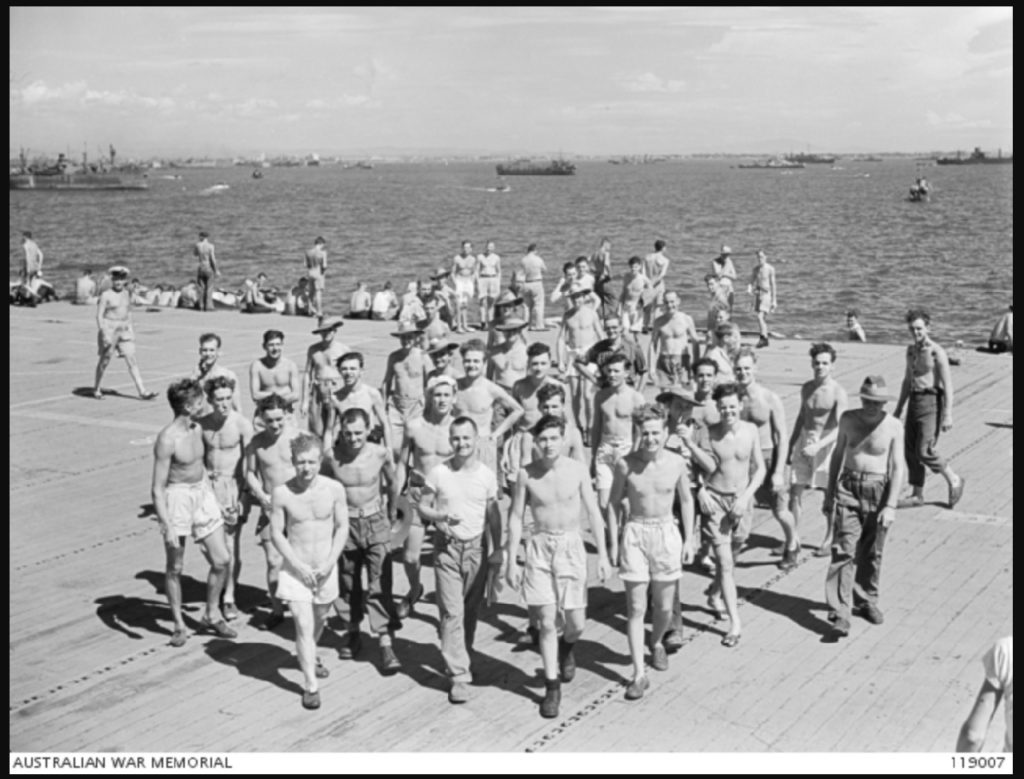
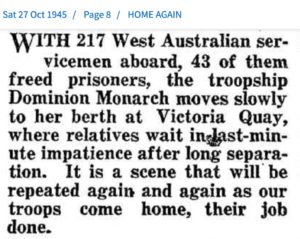
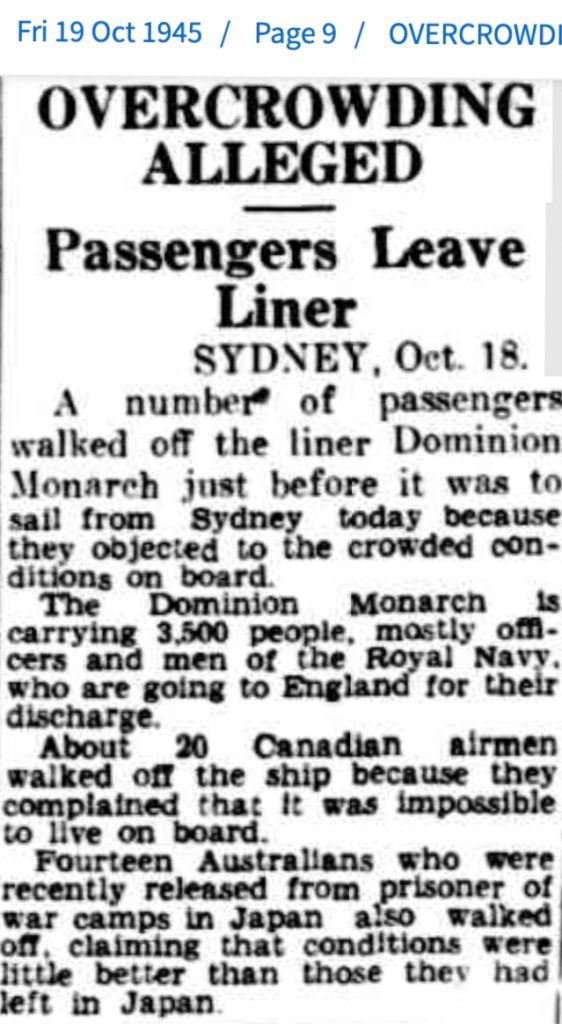
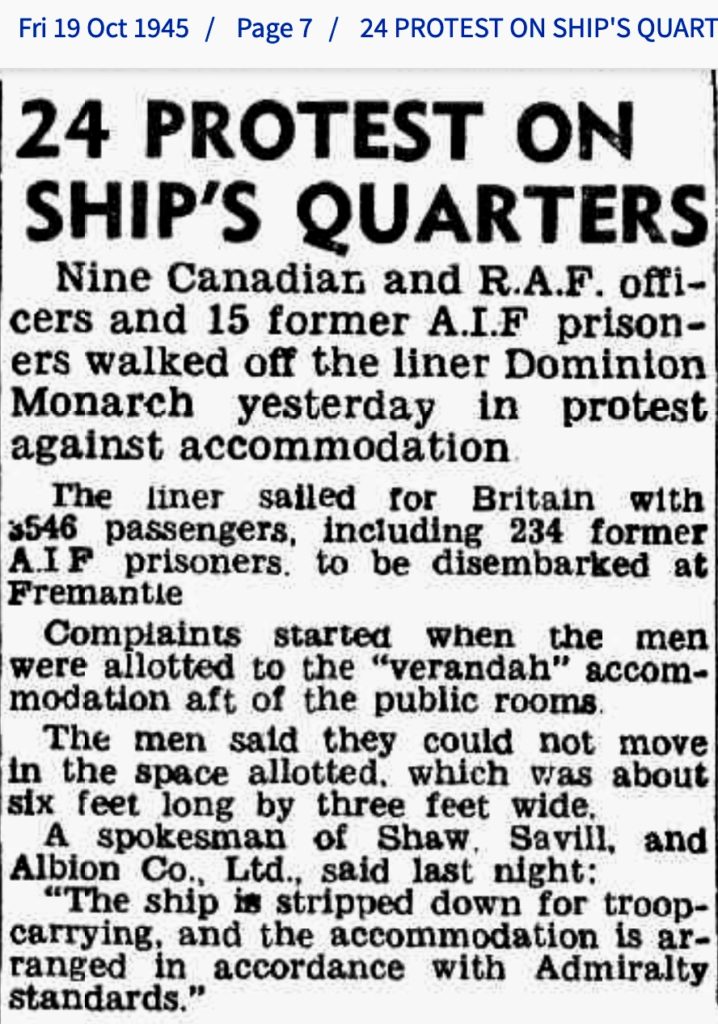
‘Dominion Monarch ex Sydney


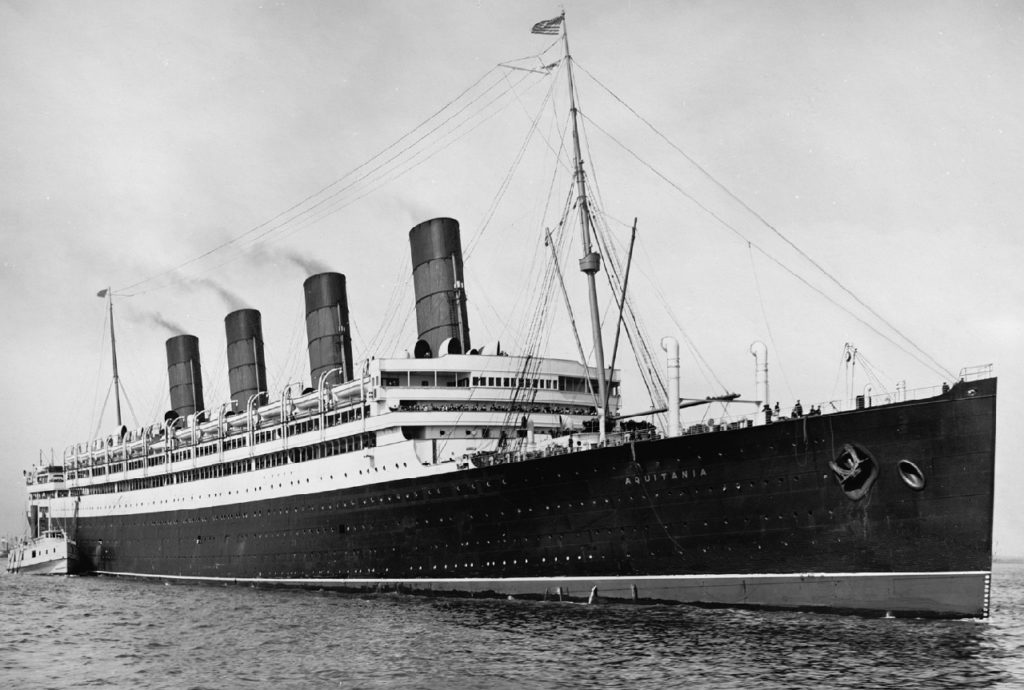
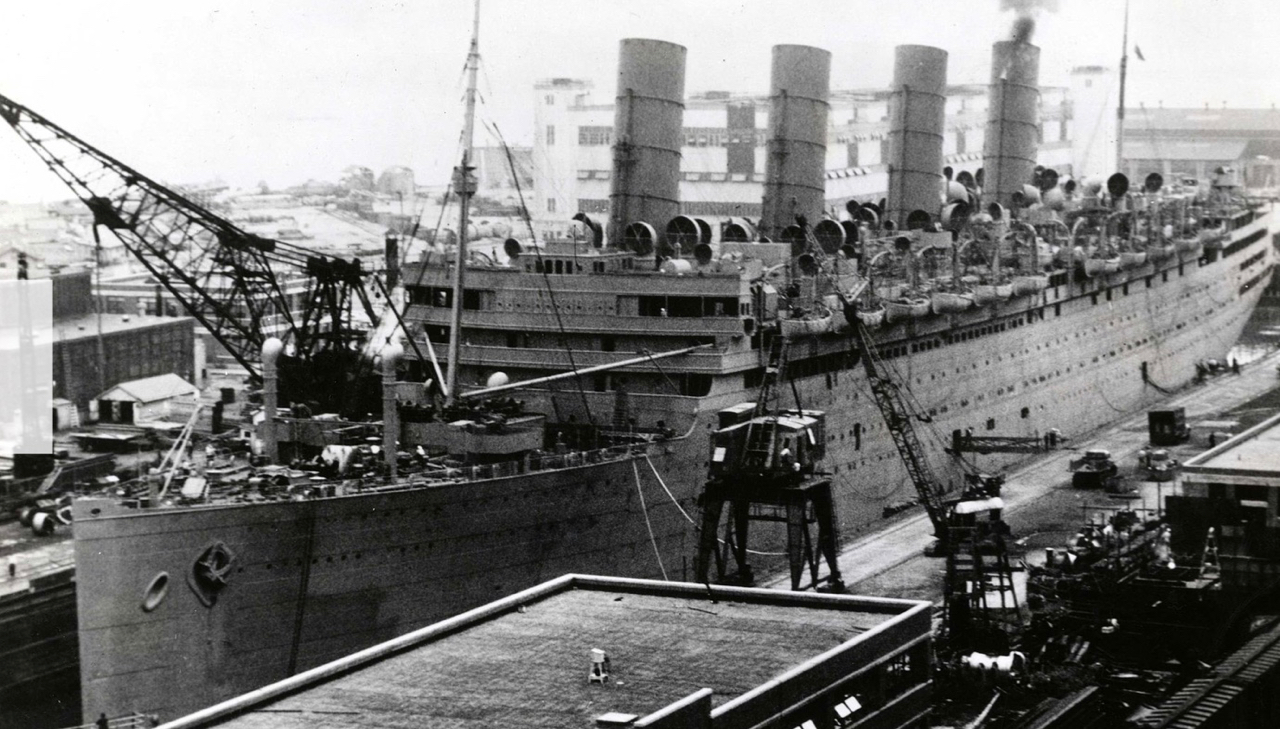
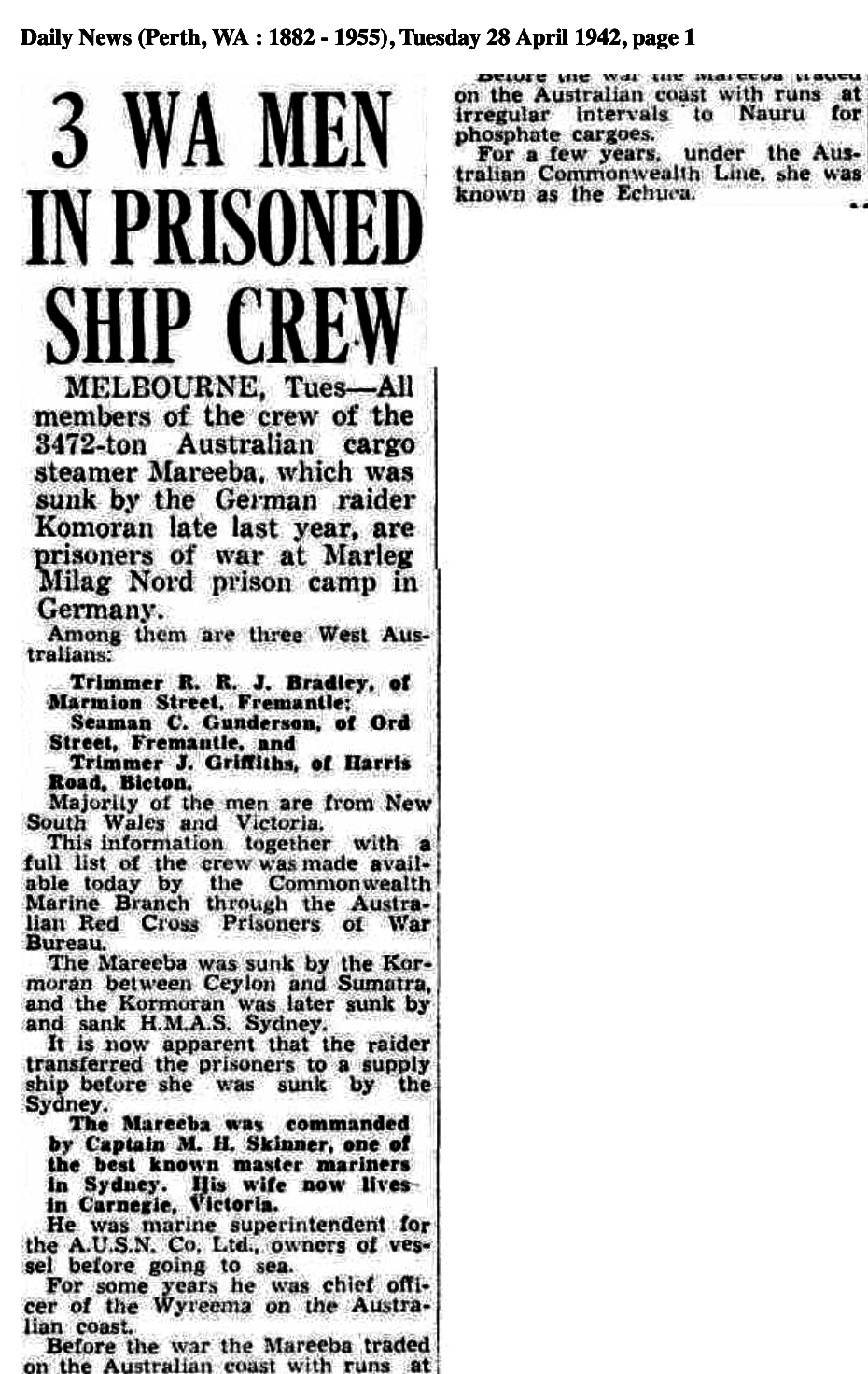
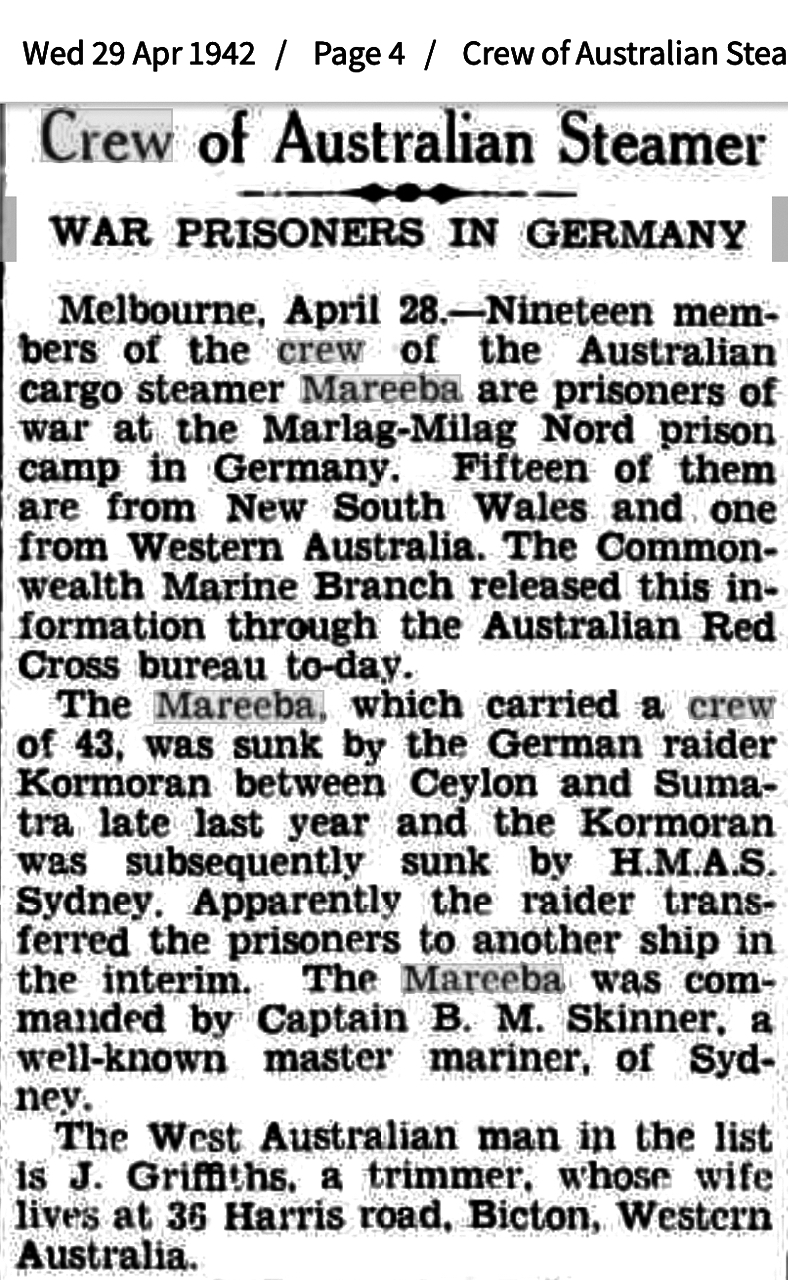
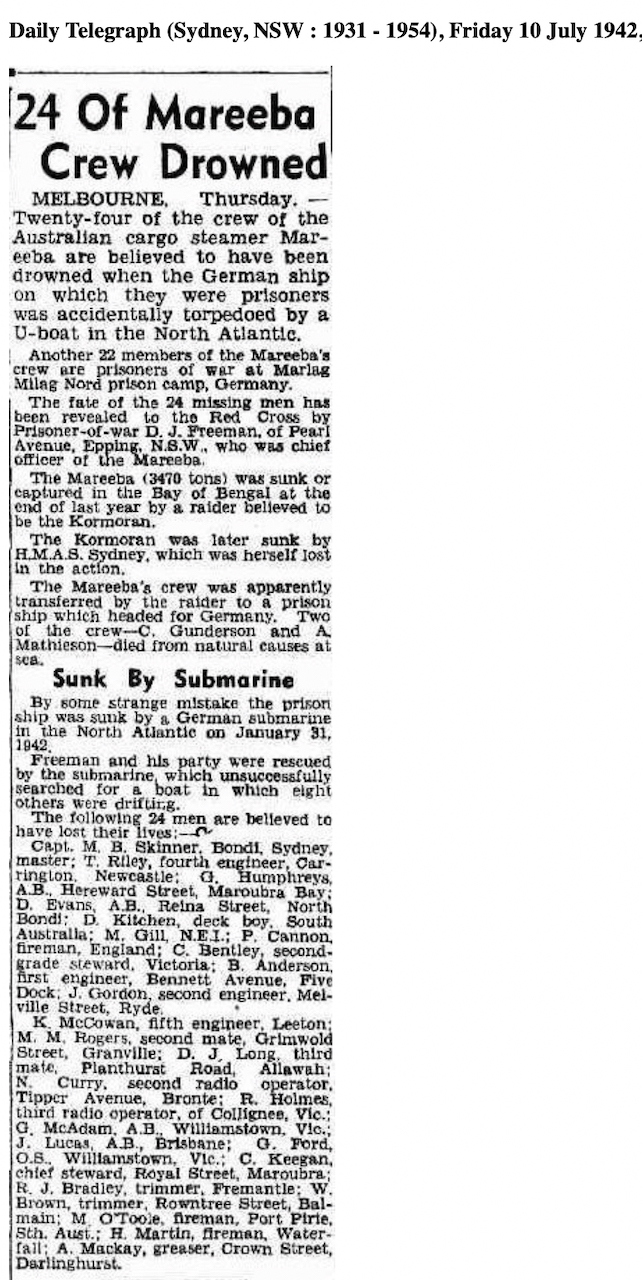
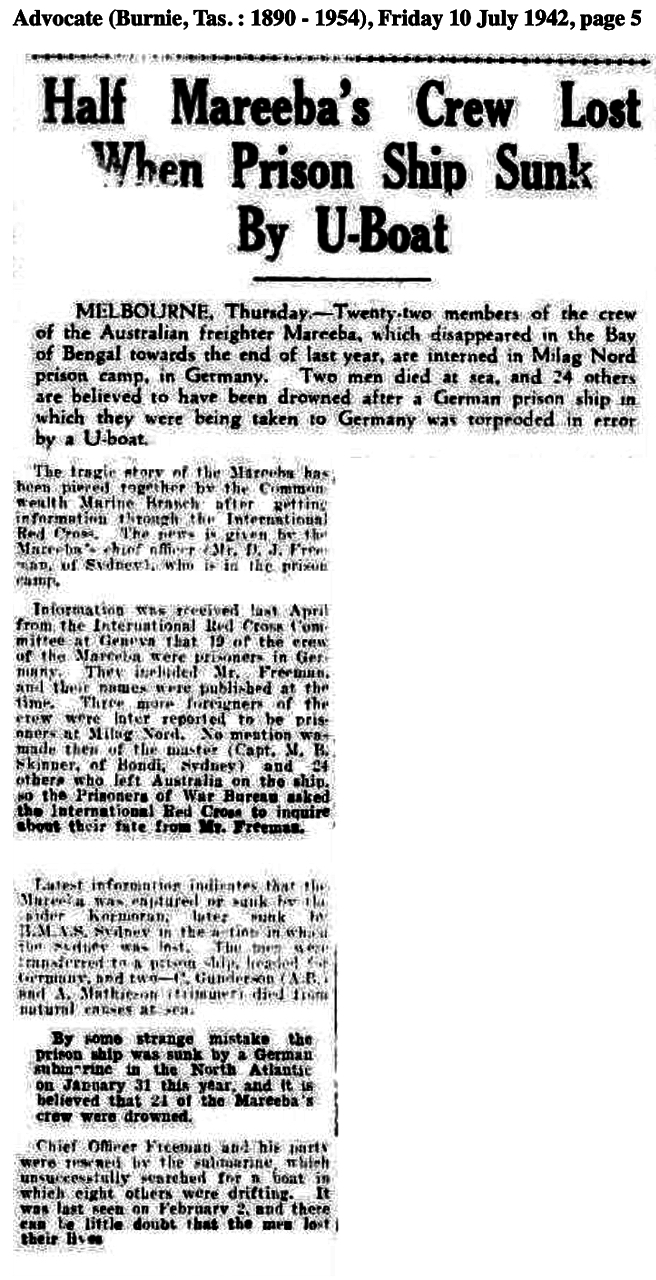
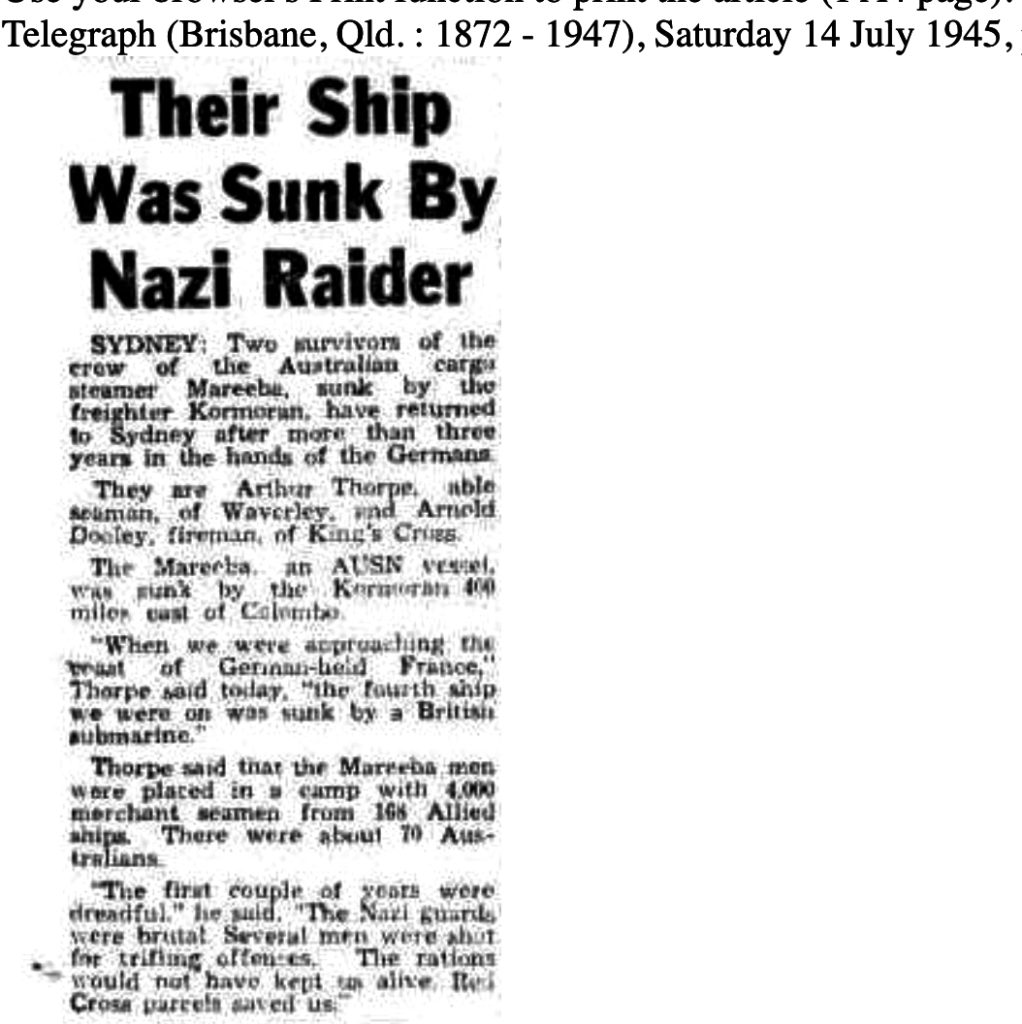
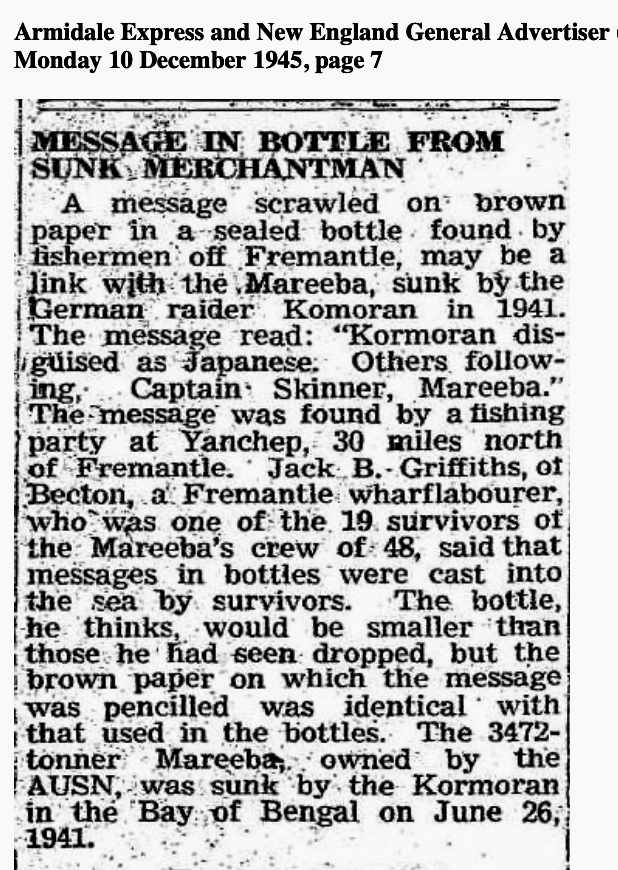
RMS ‘Aquitania’ (& German Raider KOMORAN)

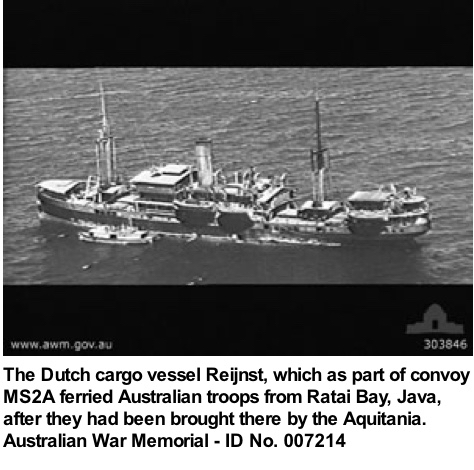
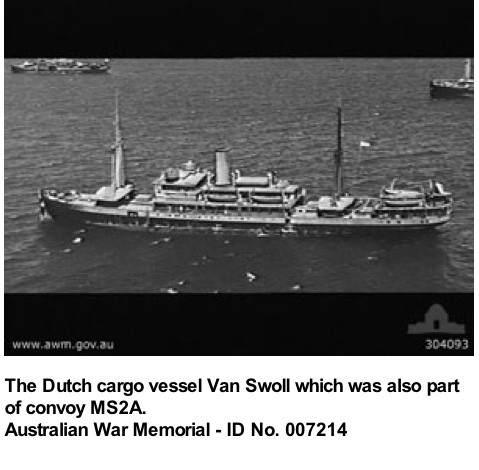
RMS ‘Aquitania’ transported nearly 4,000 Australian troops from 8th Division including the 2/4th Machine Gun Battalion to Ratai Bay in the Sundra Straits where it anchored on 20th and 21st January 1942 to allow the men to be transported to Singapore onboard Convoy MS2A which included Dutch ships  Reijnst, Van Swoll, Both, Real, Sloet van der Beele, Van der Lijn and Taishan with naval escorts and arrived at Singapore on 24th January at 1030 hours.
It was considered too dangerous for such a large ship like ‘Aquitania’ to enter Singapore harbour.


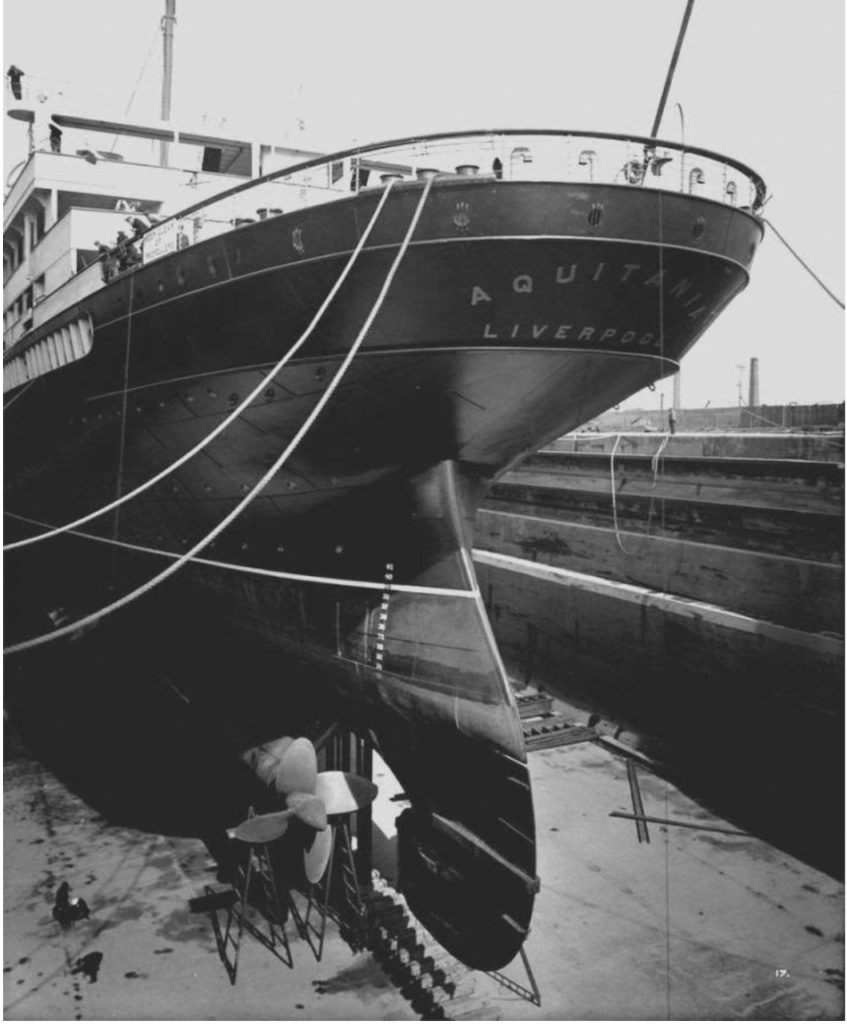
RMS ‘Aquitania’ was a British ocean liner from the Cunard fleet serving from 1914 to 1950 and was the last surviving 4-funnelled ocean liner.  She was the third in a line of Cunard’s trio of luxury express liners.
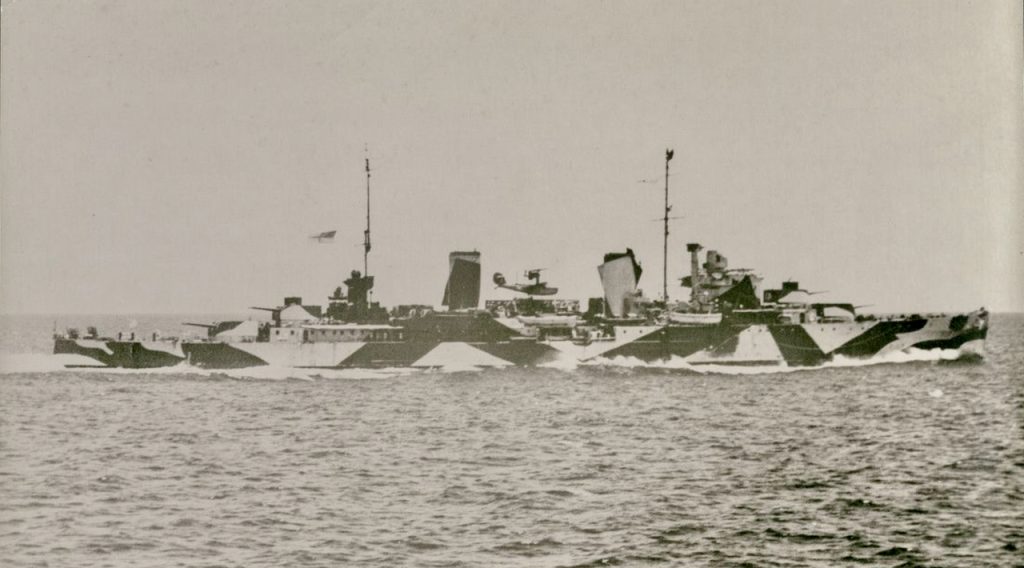
Unlike other liners with four funnels, ‘Aquitania’ did not have a dummy funnel; every funnel was utilised in venting steam from boilers.  ‘Aquitania’ was built larger and wider than her sister-ships ‘Lusitania’ and ‘Mauretania’.
The ship displaced approximately 49,430 tons of which the hull accounted for 29,150 tons, machinery 9,000 and bunkers 6,000 tons. She was under construction when ‘Titanic’ of the White Star line sank.   White Star and Cunard were rivals and ‘Aquitania’ was built in response to ‘Titanic’.
She served in WW1 as a troop carrier and hospital ship and returned to the transatlantic route in 1920. She earned the nickname of “Ship Beautiful” by her passengers. She was also known as the ‘Lucky Ship’ and enjoyed a long life compared to ‘Titanic’.
She was about to be retired in 1940 when WW2 broke out and she served as a troop carrier until 1947, transporting Canadian, Australian and New Zealand troops.
‘Aquitania’ was retired in 1949 having serving 36 years as a passenger liner. She was scrapped in Scotland in 1950.


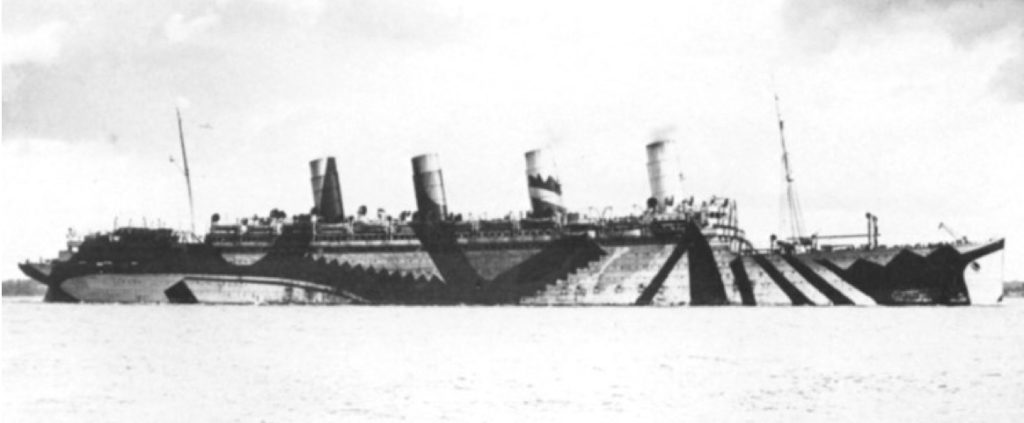
Above ‘Aquitania’ prepared for WW1


‘Aquitania’ 1942 in Boston

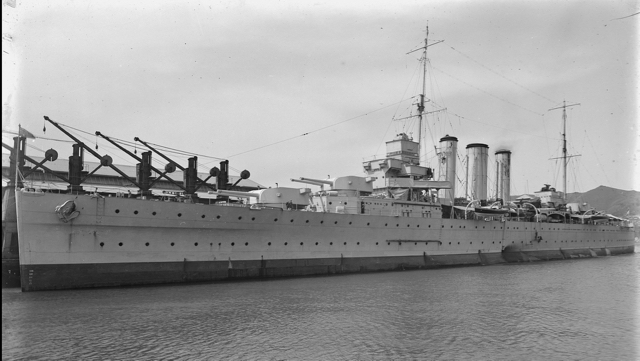
Above HMAS ‘Canberra’ the naval escort to ‘Aquitania’ sailing from Fremantle 16th January 1942 to Ratai Bay, Sundra Straits.


Please read about the Incident at Fremantle’s Gage Roads when Aquitania anchored for one night on her journey to Singapore and the 2/4th men who were AWL


Also the stowaway found on Aquitania on route to Singapore


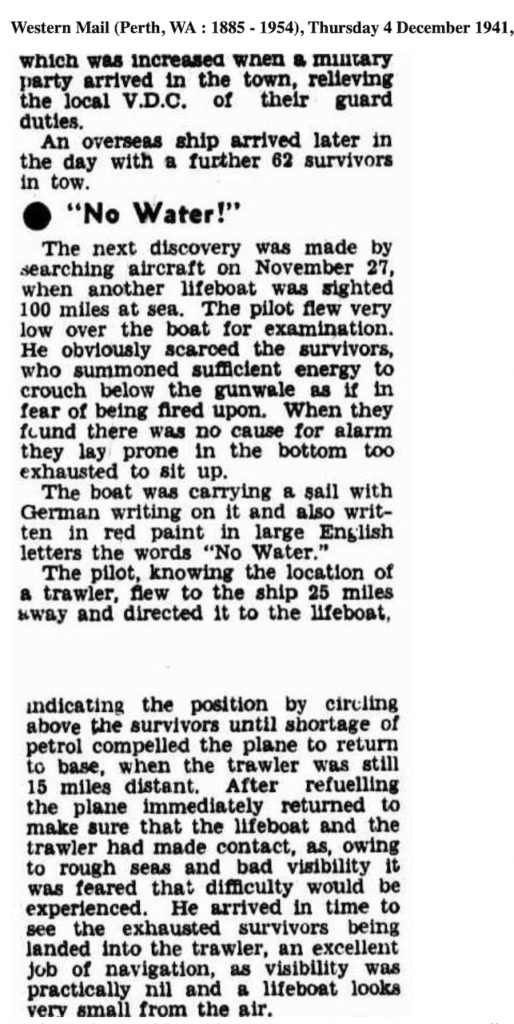
‘AQUITANIA’ PICKS UP 26 KOMORAN SURVIVORS 26 NOVEMBER 1941

On 19 November 1941 HMAS Sydney and German Ship Komoran encountered each other by sheer chance, approximately 106 nautical miles (196 km; 122 miles) off Dirk Hartog Island. The single-ship action lasted half an hour, with both ships destroyed.
HMAS Sydney was quickly disabled and all 645 Australian crew were lost.
Disguised as a Dutch merchant vessel, Komoran used the advantage of surprise to have Sydney close and enable Kormoran to bring maximum firepower to bear on Sydney

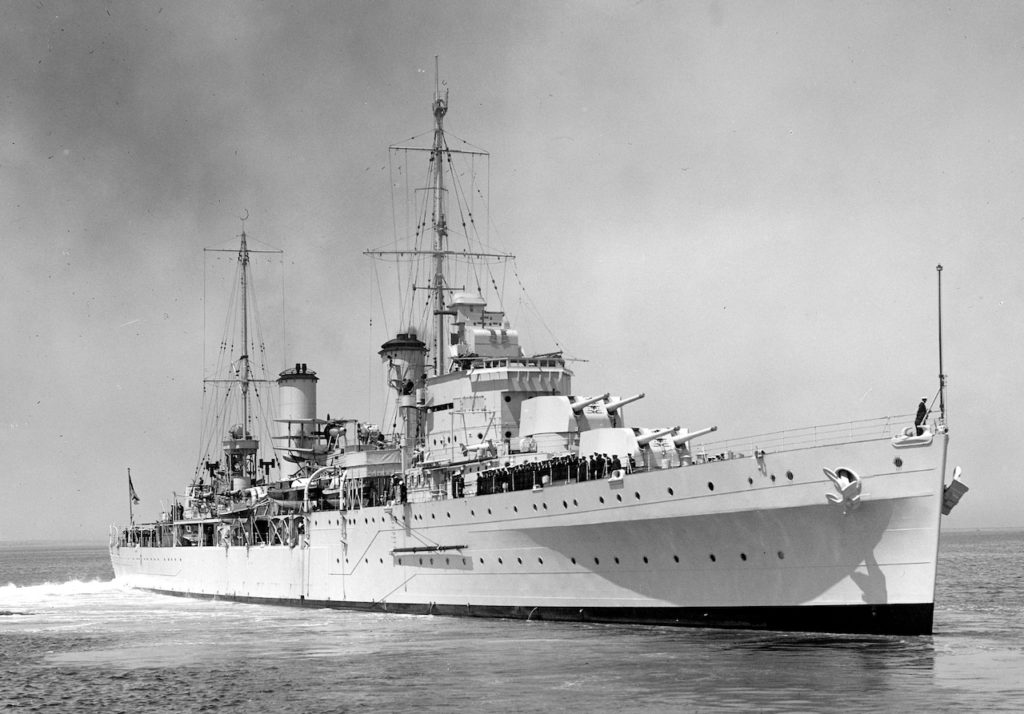
Below:  Sydney


Just before 0600 on Sunday 23 November, a cabin boy on  ‘Aquitania’ saw a low-lying raft bobbing on the pearly morning sea. The 26 men on the poorly equipped raft had seen her long ago, and were waiting anxiously for a sign that they had been noticed.   (Komoran’s Captain, Detmers saw the troopship from another raft but did not make their boat’s presence known, as he hoped to be recovered by a neutral ship.) 
The ‘Aquitania’ picked up these Kormoran survivors at 24°35’S, 110°57’E,4 200 kilometres off the coast of Western Australia.  ‘Aquitania’ maintained radio silence continued her journey and did not report the discovery until her arrival off Wilson’s Promontory on 27 November.
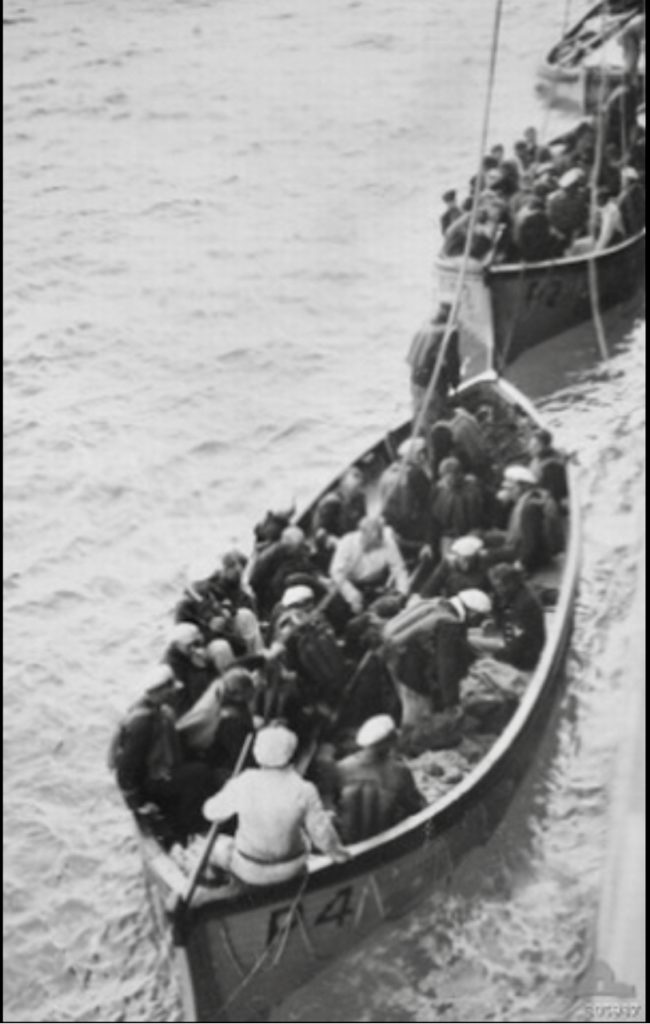
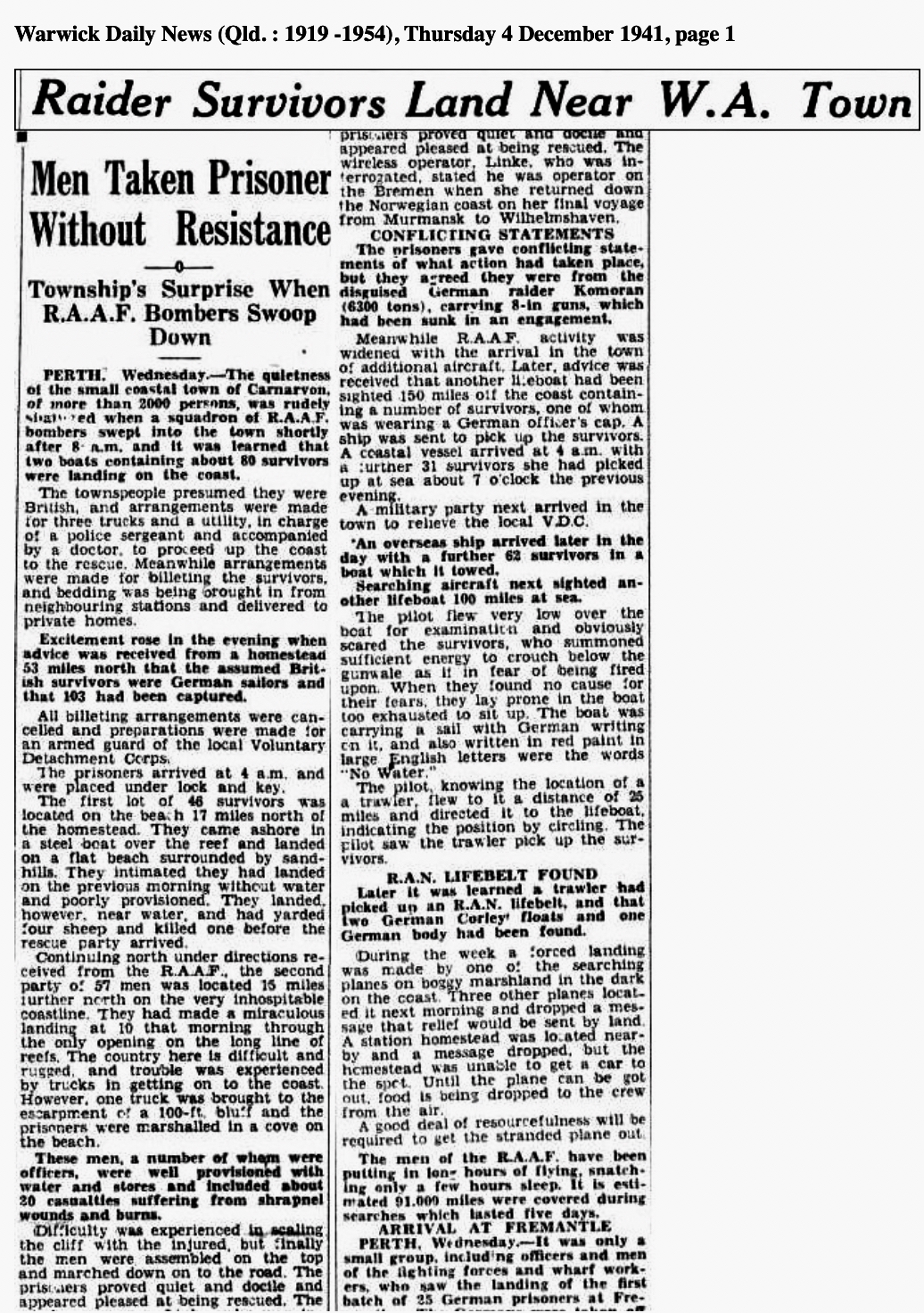
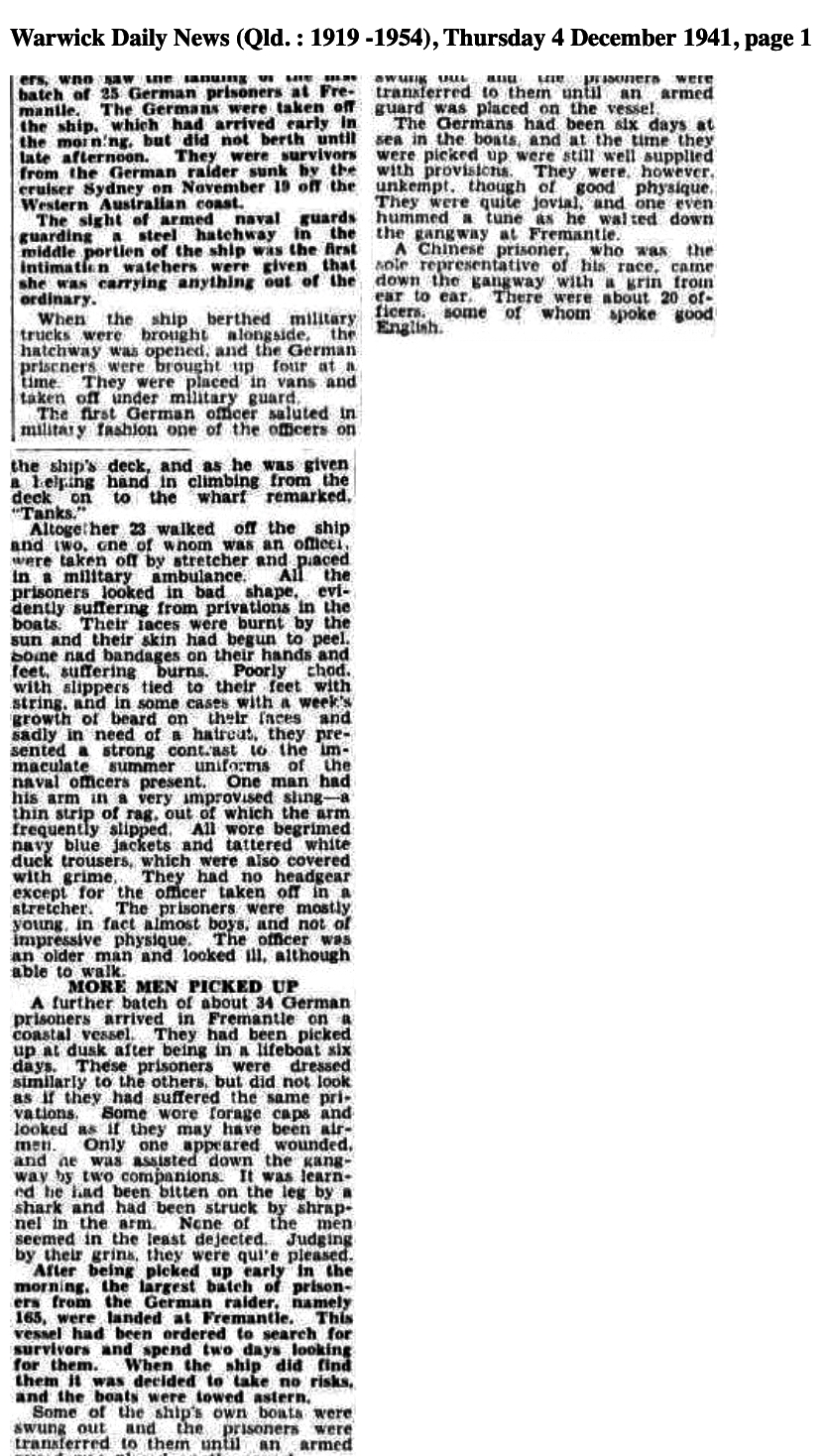
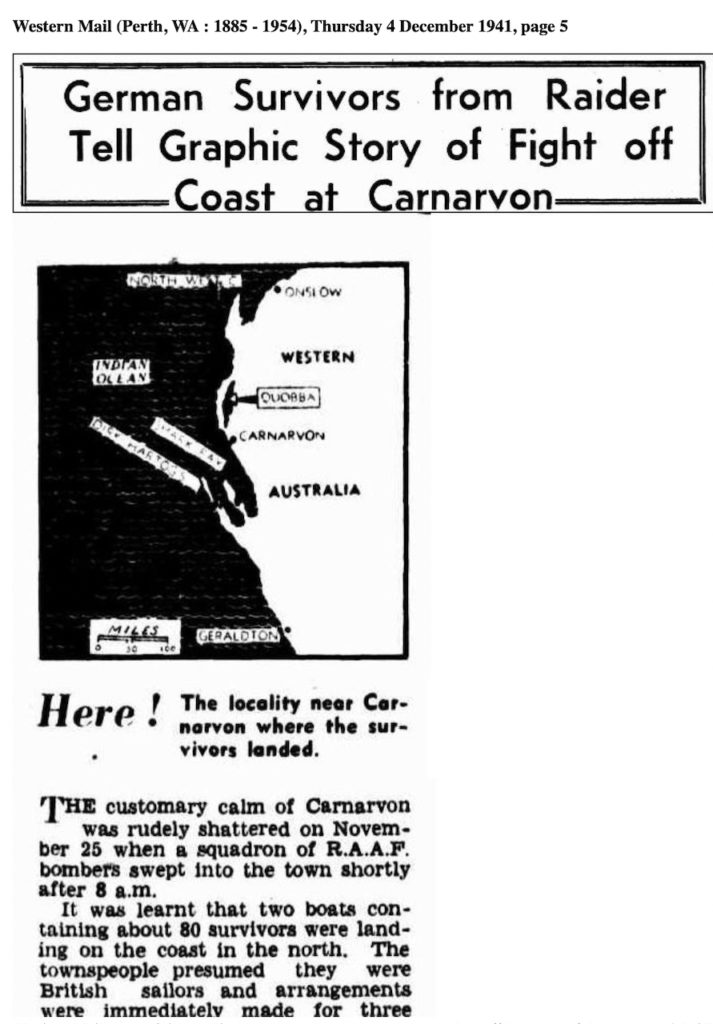
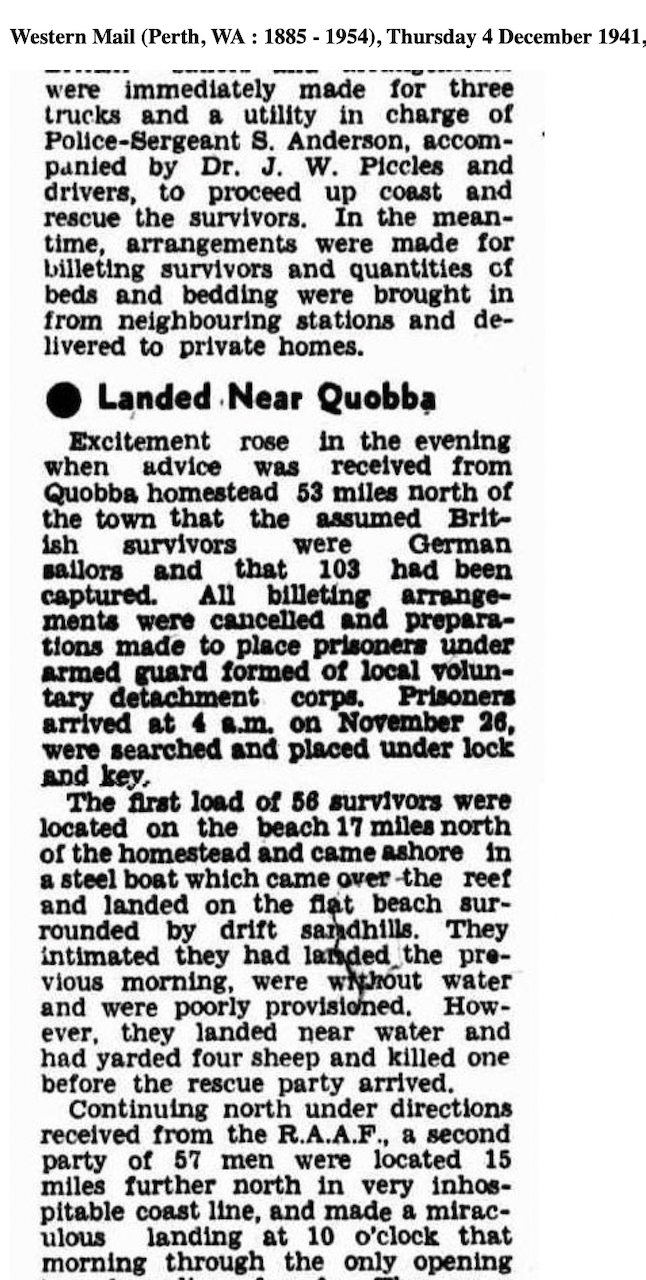
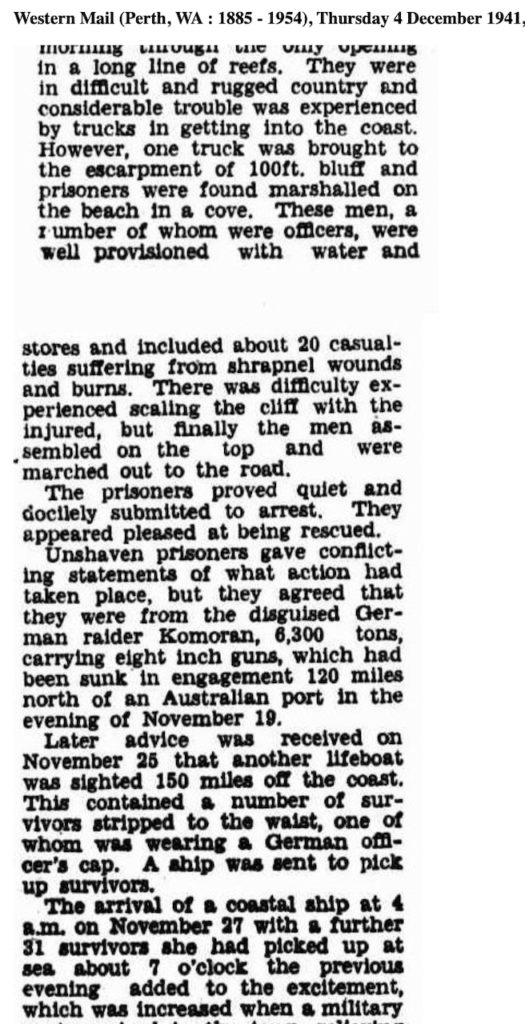
Soon after, on 24 November British Tanker MV Trocas picked up 25 Germans in another life raft, and sent a coded signal to this effect to Navy Office.   Later, another lifeboat landed, with 46 men, at Quobba Station, north of Cape Cuvier. This boat was one of two which were found along the coast north of Carnarvon, the other with 57 men.
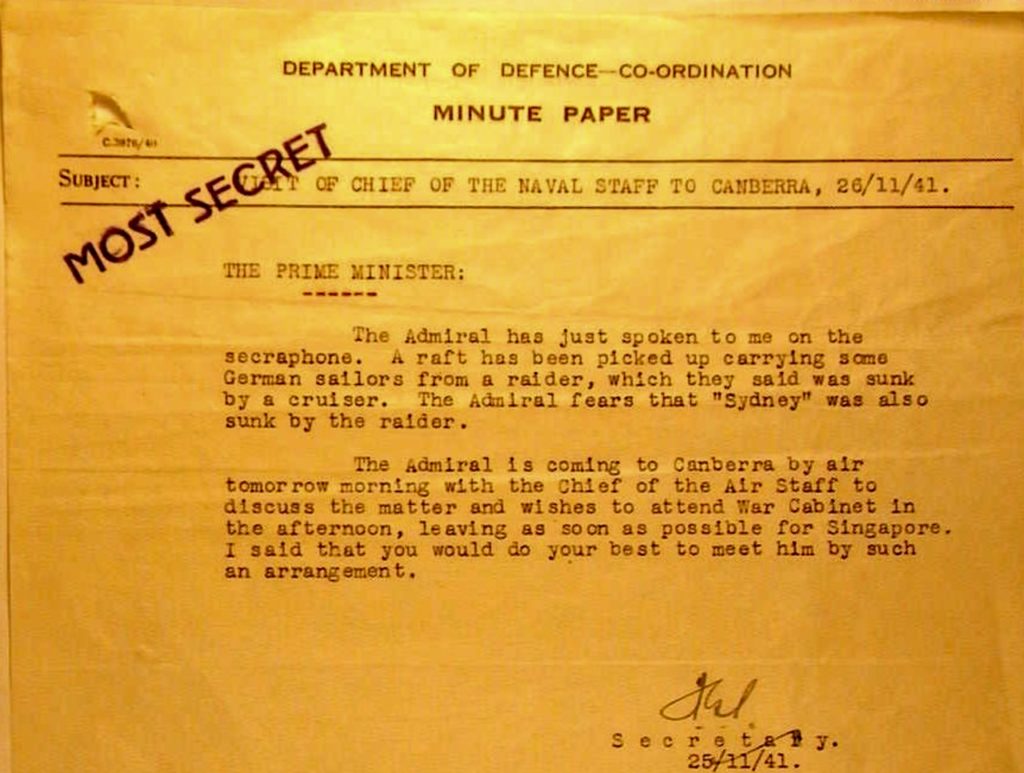
 Once the Navy Office had received news from Trocas that she had rescued survivors from a ship, it is believed this was the first time they learnt about Sydney and  a full scale search was mounted, which included ‘every available aircraft in Western Australia’.
The search for Sydney began 24 November 1941. The search was coordinated by Captain Farquhar-Smith, District Naval Officer, Western Australia, who had ‘operational control over Sydney when she was working out of Perth or Fremantle … He was the one who initialled the search action so he obviously had some operational control responsibility of the ship. He initiated search action once [Sydney] was missing and he also reported back to the Chief of Naval Staff and to the navy office.
Sydney departed Fremantle 11 Nov 1941 for Singapore with transport SS Zealandia sailing to Sunda Strait, where the troopship was handed over on 17 November to HMS Durban.   Sydney then turned for home and was scheduled to arrive in Fremantle late on 20 November. When she had not returned by 23 November, the concerned Naval board signalled her. There was no reply.
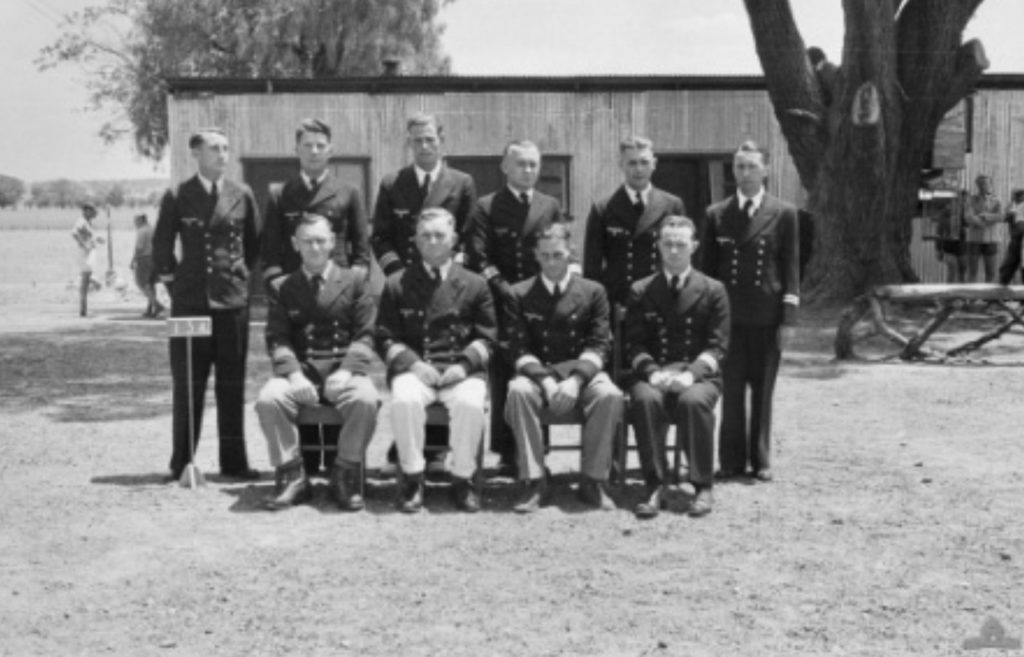
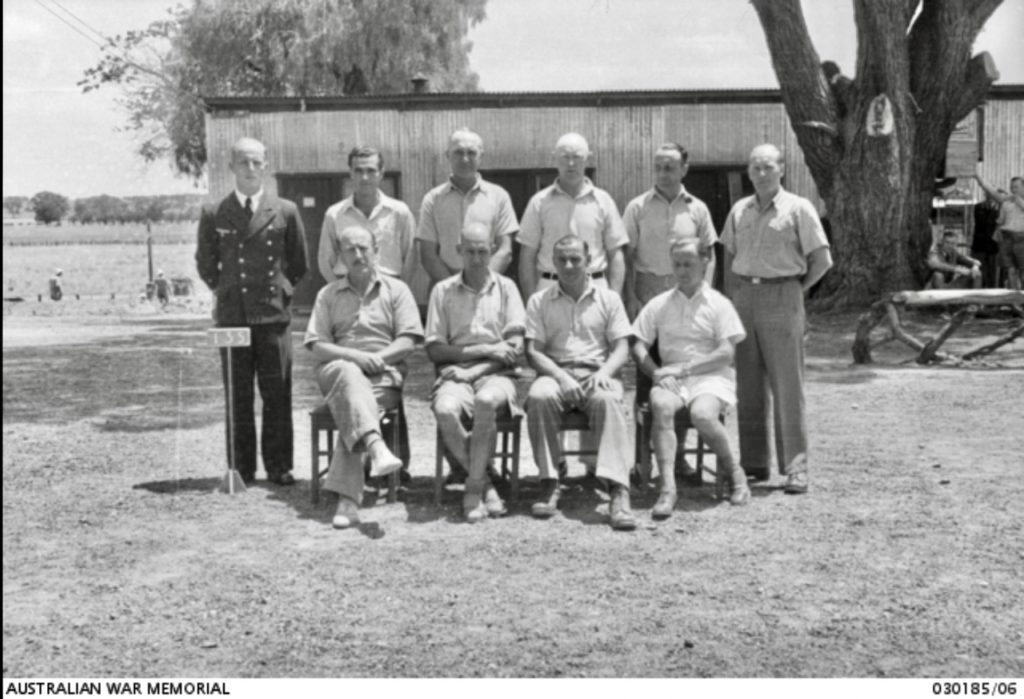
318 of the 399 crew aboard the German ship were rescued and placed in prisoner of war camps.
The raider Komoran had been operating in the Atlantic during which time she sank seven merchant ships and captured an eighth.  Komoran sailed to the Indian Ocean in late April 1941.  Only three merchantmen were intercepted during the next six months, and Kormoran was diverted several times to refuel German support ships. 
The raider was carrying several hundred sea mines and was expected to deploy some of these before returning home in early 1942.  The captain planned to mine shipping routes near Cape Leeuwin and Fremantle, but he postponed this after detecting wireless signals from a warship (Australian heavy cruiser HMAS Canberra) in the area.  Instead, he decided to sail north and investigate Shark Bay.  
At the time of the battle, the raider was disguised as the Dutch merchantman Straat Malakka and carried 399 personnel: 36 officers, 359 sailors, and 4 Chinese sailors hired from the crew of a captured merchantman to run the ship’s laundry.
Shortly before 16:00 on 19 Nov 1941 Kormoran was 150 nautical miles (280 km; 170 mi) southwest of Carnarvon.  The raider was sailing northwards (heading 025°) at 11 knots (20 km/h; 13 mph). At 15:55, what was initially thought to be a tall ship sail was sighted off the port bow, although it was quickly determined to be the mast of a warship (HMAS Sydney).  Captain Detmers ordered Kormoran to alter course into the sun (heading 260°) at maximum achievable speed (which quickly dropped from 15 to 14 knots (28 to 26 km/h; 17 to 16 mph) because of problems in one of her diesel engines) while setting the ship to action stationsSydney spotted the German ship around the same time, and she altered from her southward heading to intercept at 25 knots (46 km/h; 29 mph).
Closing the gap, Sydney requested Kormoran identify herself.

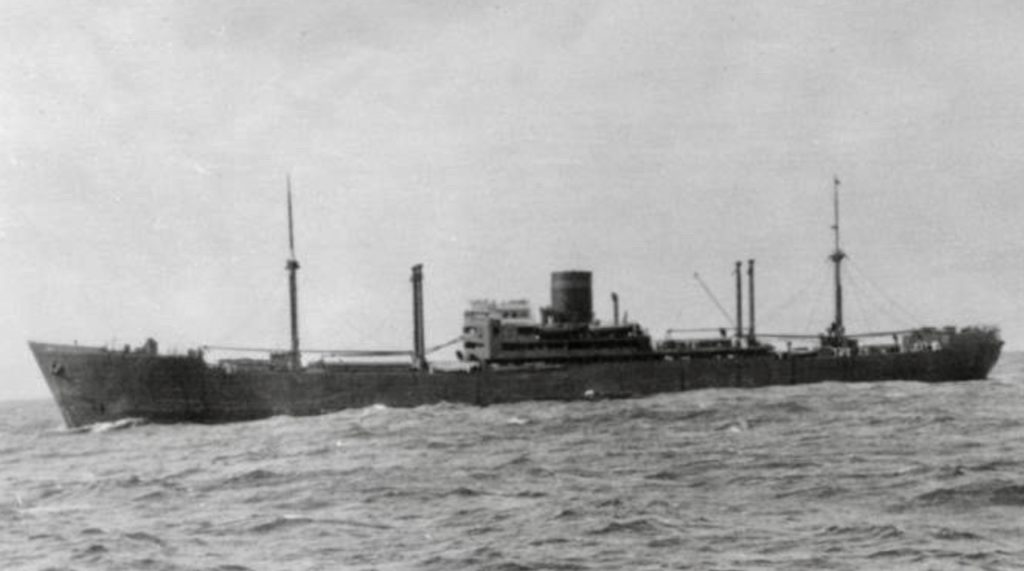
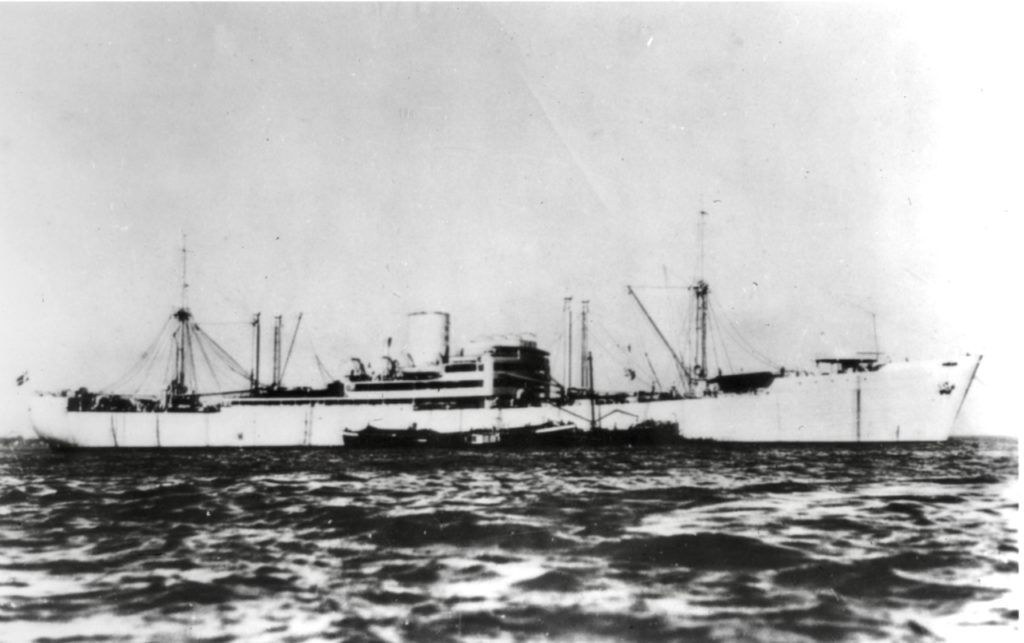
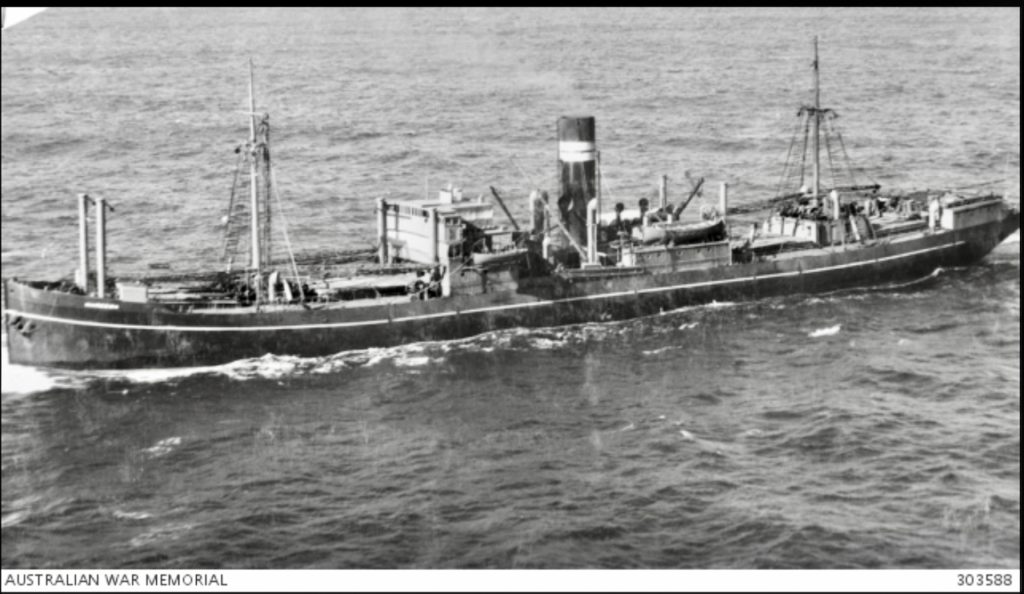
Below:  Komoran

Above:  Komoran – largest of Germany’s auxuillary cruisers.

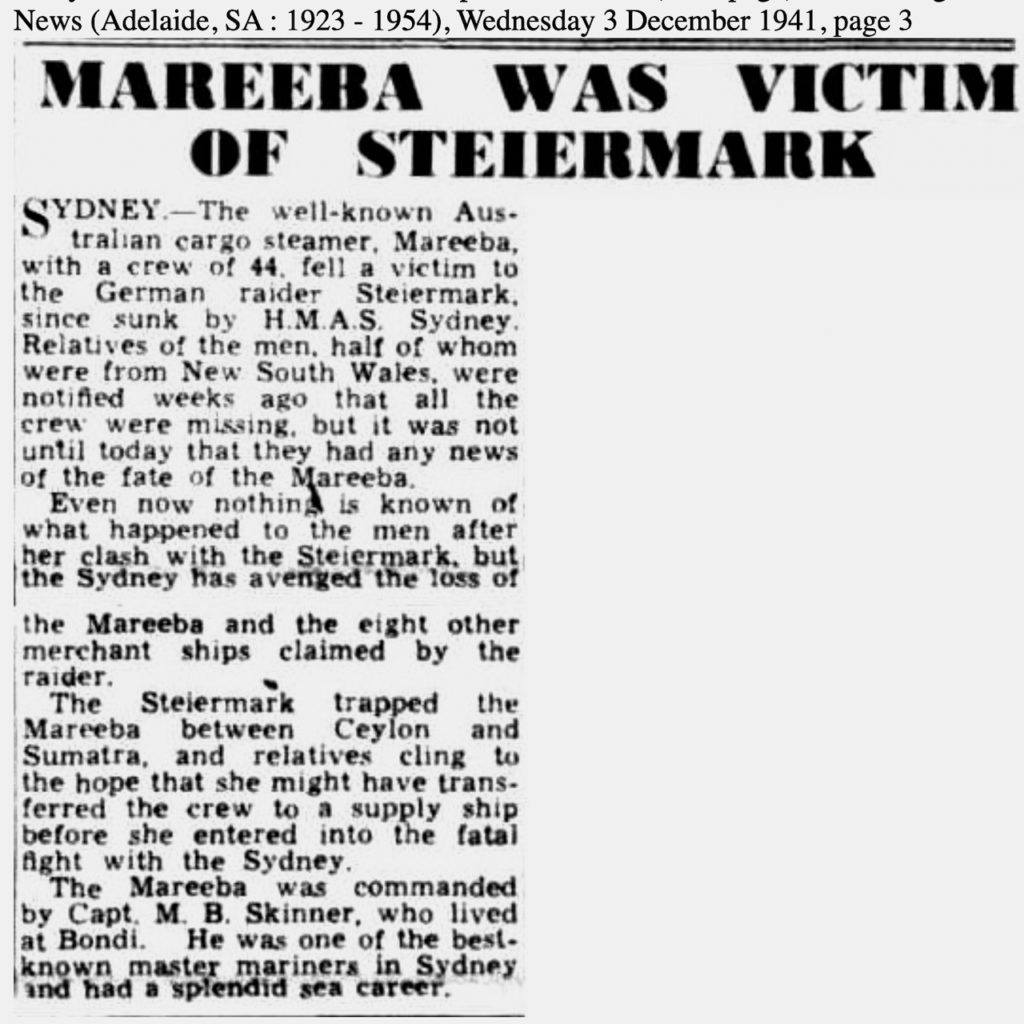
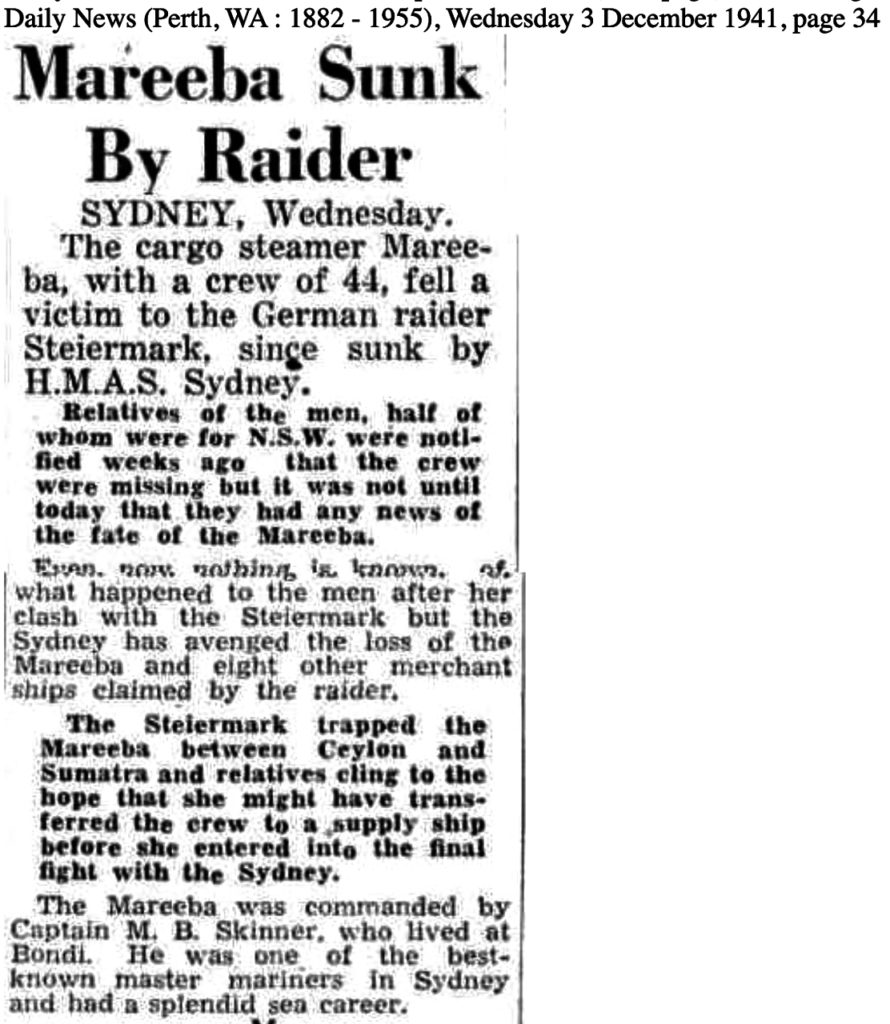
‘Kormoran was originally built as the German freighter Steiermark. Following the outbreak of World War II, the Kriegsmarine requisitioned the vessel converting it to a Handelsstörkreuzer (commerce raider). Named Kormoran, and placed under the command of Fregattenkapitän Theodor Detmers, she was the largest of these well-armed, disguised auxiliary cruisers. By November 1941 Kormoran, had sunk ten unsuspecting merchant ships and taken another as a prize.’     Please read further 


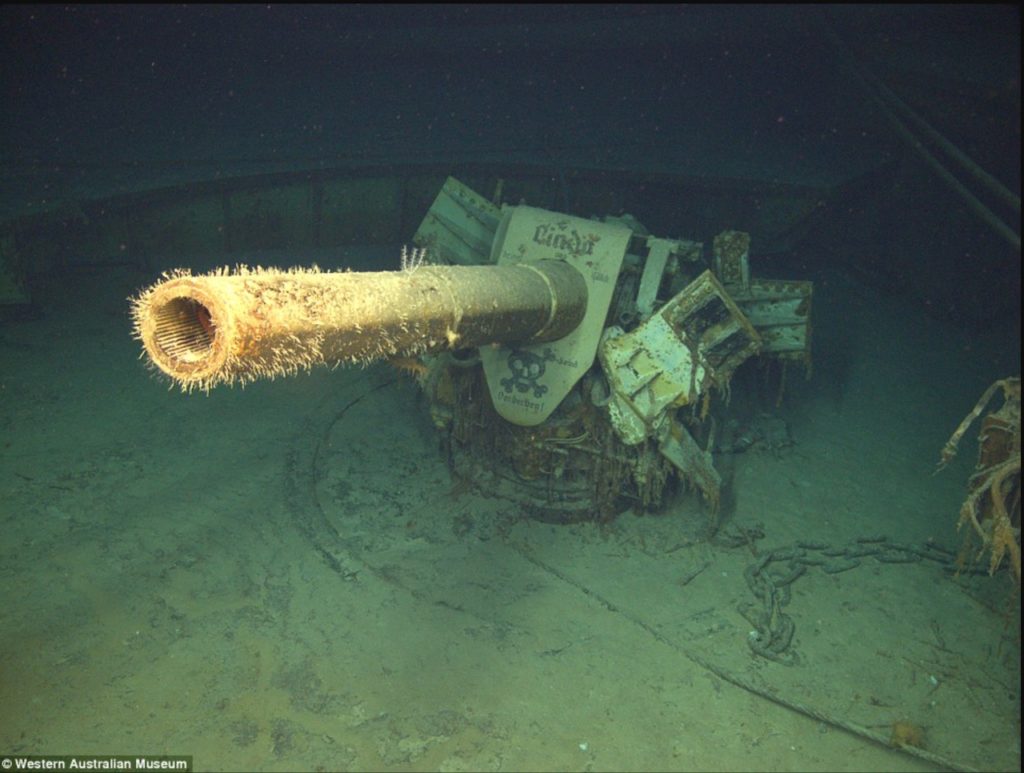
Above:  In 2008 a successful search located Komoran.  This  photo is of one of her guns, ‘Linda’ with painted with skull and crossbones.
Please read further about the communications and conflict between these two ships from WA Museum

Also read the AWM’s description

Thereafter a battle raged between Sydney and Komoran for half an hour.
The main phase of the engagement ended around 17:35, with Sydney heading south and slowing while Kormoran maintained her course and speed. Sydneys main armament was completely disabled (the forward turrets were damaged or destroyed, while the aft turrets were jammed facing port, away from Kormoran), and her secondary weapons were out of range. The cruiser was wreathed in smoke from fires burning in the engine room, forward superstructure, and around the aircraft catapult.  Kormoran discontinued salvo firing, but the individually firing aft guns scored hits as Sydney crossed the raider’s stern.
By the end of the 30-minute battle, the ships were about 10,000 metres (33,000 ft) apart. Both were heavily damaged and on fire.
Sydney was proceeding on a south-southeast bearing, apparently not under control.  The burning ship consistently lit the horizon until 22:00 with some German survivors stating that the light was visible consistently or occasionally until midnight. Sydney sank during the night; it was originally thought the cruiser exploded when fires reached the shell magazines or torpedo launchers, or took on water through the shell holes on her port side and capsized.   
However, after the wrecks were located, it was determined that Sydney was under limited control after the battle, maintaining a course of 130–140 degrees true at speeds of 1.5 knots (2.8 km/h; 1.7 mph). The ship remained afloat for up to four hours before the bow tore off and dropped almost vertically under the weight of the anchors and chains.   The rest of the ship sank shortly afterwards and glided upright for 500 metres (1,600 ft) underwater until it hit the seabed stern-first.
Kormoran was stationary, and at 18:25, Detmers ordered the ship to be abandoned, as damage to the raider’s engine room had knocked out the fire-fighting systems, and there was no way to control or contain the oil fire before it reached the magazines or the mine hold.  All boats and life rafts were launched by 21:00, and all but one filled. A skeleton crew manned the weapons while the officers prepared to scuttle the ship. 
Kormoran was abandoned at midnight; the ship sank slowly until the mine hold exploded 30 minutes later. The German survivors were in five boats and two rafts: one cutter carrying 46 men, two damaged steel life rafts with 57 and 62 aboard (the latter carrying Detmers and towing several small floats), one workboat carrying 72 people, one boat with 31 men aboard, and two rafts, each bearing 26 sailors.  During the evacuation, a rubber life raft carrying 60 people, mostly wounded, sank without warning, drowning all but three aboard. 
Total German casualties were six officers, 75 sailors, and one Chinese laundryman.

Read about Komoran’s route from 1940 to 1941

Please go to Sea Museum Sydney to read about the discovery of the wrecks 


80 years later the RAN with available DNA were able to name the lone sailor whose body was discovered having sailed in a lifeboat for about 3 months in the ocean before perishing.  
He was Thomas Welsby Clark aged 21 years


Below:  Komoran survivors


SURVIVORS FROM GERMAN RAIDER ARRIVE IN AUSTRALIA

The information has been copied from an archive copy of the Morning Bulletin (Rockhampton) Thursday 4 December 1941.
At least two groups of Komoran crew were brought to Fremantle early December.  The first batch of 25 arrived in the early morning on a ship, but did not disembark until late afternoon.  An armed naval guard was guarding the steel hatchway in the middle of the ship. Military trucks were brought along side and the Germans were brought up on deck four at a time.  23 of the 25 walked off the ship and two were stretchered off to military ambulances.
The newspaper reported this group ‘looked in bad shape and evidently suffered privation in the boat’.  Their faces were sunburned and had begun peeling, some had bandages on hands and feet ‘as if suffering burning’.  Only the officer who had been removed in a stretcher had a hat and head protection. They were poorly shod with string tied about their slippers on their feet and with a week’s growth of beard on their faces. ‘All wore begrimed navy blue jackets and tattered white duck trousers which also were covered with grime.  The men were mostly young boys and not of very strong physique.  The officer was older and of impressive physique, he looked ill but was able to walk.’
A further group of 34 crew arrived at Fremantle on a coastal vessel having been picked up at dusk and were in the lifeboat for six days.  They wore the same clothes as the earlier group however did not appear to have suffered the same privations.  Some wore forage caps as if they may have been airmen.  One appeared wounded and was assisted down the gangway by two companions.  It was learnt he had been bitten by a shark on the leg and was also suffering shrapnel wounds to his arm.
‘None of the men seemed dejected, in fact judging by their grins they were quite pleased.’
LARGEST GROUP
The largest group of 165 men had been picked up in the early morning. The vessel which found them was ordered to look for survivors and had spent two days doing do.
When the ship did so it was decided to take no risks and the lifeboats were towed astern, the wash from the vessel swamped the lifeboats but still the Germans were not taken on board.  Some of the ship’s own boats were swung out and the prisoners transferred to them  until an armed guard was placed with them.  When picked up the prisoners still had provisions with them.  Although unkempt, the men were of good physique and appeared jovial with one even humming a tune as he walked down the gangway at Fremantle.
There were about 20 officers who spoke good English.  There was one lone Chinese who exited down the gangway with a grin from ear to ear.
‘The small coastal town of Carnarvon with a population of less than 2,000 was excited when a squadron of RAAF bombers swept into town just before 6.00 am and it was learnt that two boats with about 80 survivors had landed on the coast. The locals assumed they were British.   Excitement increased when Carnarvon received confirmation from a station 53 miles away probably (probably Quobba) that in fact the men were German and 103 had been captured.  All billeting plans were discarded and preparations made for armed guards from the local Volunteer Defence Corps.  The prisoners arrived at 4.00am and placed under lock and key.
The first load of 46 survivors arrived 17 miles north of the Station and came in a steel boat over a reef and landed on a flat section of beach with surrounded by sand hills.  The men intimated that had landed without water and were poorly provisioned.  They had in fact landed near water and had yarded four sheep and eaten one before the search party arrived.
MIRACULOUS LANDING
Continuing north under the directions of the RAAF the second party of 57 men was located 15 miles further north on an inhospitable coastline.  They had made a miraculous landing that morning at 10.00 o’clock through the only opening in a long line of reefs.
With the rugged and difficult terrain the rescuers with their trucks were challenged to get to the men.  One truck however was brought to the escarpment of a 100 foot bluff and the prisoners marshalled in a cove on the beach.  These men, some of whom were officers were well provisioned with water and food.  About 20 men were injured with shrapnel and burns.  Although there was difficulty bringing these injured men to the top of the cliff the rescuers succeeded and the Germans assembled at the top of the cliff to begin marching to the road and other trucks.
The prisoners appeared quiet and docile and seemed pleased at being rescued.
They gave conflicting reports about what had taken place but all agreed their ship was the disguised German raider Komoran of 6300 tons, carrying 8 inch guns and had sunk.

RAAF

Additional aircraft arrived in Carnarvon.  There had been another sighting of craft 150 miles off the coast with crew, one with a Commander’s cap.  A ship was sent to pick them up.  A coastal vessel had arrived about 4.00am with 32 survivors who had been picked up about 7pm the previous evening.
A military party arrived in Carnarvon to relieve the local V.D.C.
An overseas ship meanwhile arrived in Carnarvon with another 62 prisoners in lifeboats which it towed.  Searching aircraft next found another boat 100 miles out to sea. This boat had a sail with words written in German as well as in English “No Water”.  The pilot returned to the trawler guiding them back to the ‘sail’ boat who picked up the prisoners.
It was later learnt a trawler had picked up a RAN life belt, two German Carley floats and one German body had been found.
It was estimated the RAAF covered 91,000 miles during the five-day search.  The crew only getting snatches of sleep had worked long hours.  
Lucky Germans! 
The Japanese didn’t undertake rescue of the POWs when ‘Rakuyo’ Maru sank in South China Sea Sept 1944. They did not need to organise rescue craft, and could have picked up the POWs when they collected their own men from the water.


Group portrait of German Officer prisoners of war (POWs) from the Kormoran interned in No. 13 POW Group at Dhurringile near Murchison. Back row, left to right: Leutnant zur See Rudolph Jansen (Prize Officer); Oberleutnant Heinrich Ahl (Sea Plane Pilot); Leutnant zur See Bruno Kube (Prize Officer); Leutnant zur See Wilhelm Bunjes (Prize Officer); Leutnant Dr Fritz List (Goebbels Propaganda Officer); Leutnant Walter Hrich (UFA Cameraman). Front row: Leutnant zur See Johannes Diebitsch (Prize Officer); Regierungsrat Dr Herman Wagner (Meterologist); Kapitanleutnant Herbert Bretschneider (Executive Officer); Dr Lienhoop.
Above:  Komoran Captain and Officers, Dhurringile – POWs of Australia.
If you are interested in where the Komoran crew were interned please go to Tatura WW2 Camps
‘WORLD WAR 2 CAMPS  
The Tatura group of 7 internment camps were established in this area because of the distance from a sea port and availability of adequate food and water. Holding between 4 and 8,000 people at any one time, these camps were located at Tatura (camps 1 and 2), Rushworth (camps 3 and 4), Dhurringile Mansion, Murchison (camp 13) and Graytown (camp 6).’
Newspapers across Australia reported stories of the Komoran Crew.  Below are just a few copies of these many reports, below chosen for easier reading and quality of print.


Please read the WA Museum story of Komoran


Below:  SS Mareeba

AUSTRALIAN MERCHANT SHIP SS ‘MAREEBA’

Komoran had in June 1941 attacked Australian merchant ship SS ‘Mareeba’  with 48 crew in the Bay of Bengal.  The Komoron crew then boarded ‘Mareeba’  removing her crew to Komoran before scuttling  ‘Mareeba’ You can read further details

SS ‘Mareeba’ was built 1921 in Australia, named after the Queensland town.  She was carrying 5000 tons of sugar from Batavia to Colombia.  She received 9 shots to her hull, several of which hit the engine room.  ‘Mareeba’ had received distress signals from Yugoslav ship SS ‘Velebit’ but  instead of immediately stopping she  made a run for it radioing her position
She was slowing sinking when several crew from Komoran boarded ‘Mareeba’ to place demolition to sink her quickly.  All 48 crew of ‘Mareeba’ were captured and spirited away on the Komoran which travelled at top speed through the night and most of the following day to avoid retaliation for the sinking.
The ‘Mareeba’ was one of 8 ships attacked and sunk by Kormoran.


Below:  From Kalgoorlie Miner.