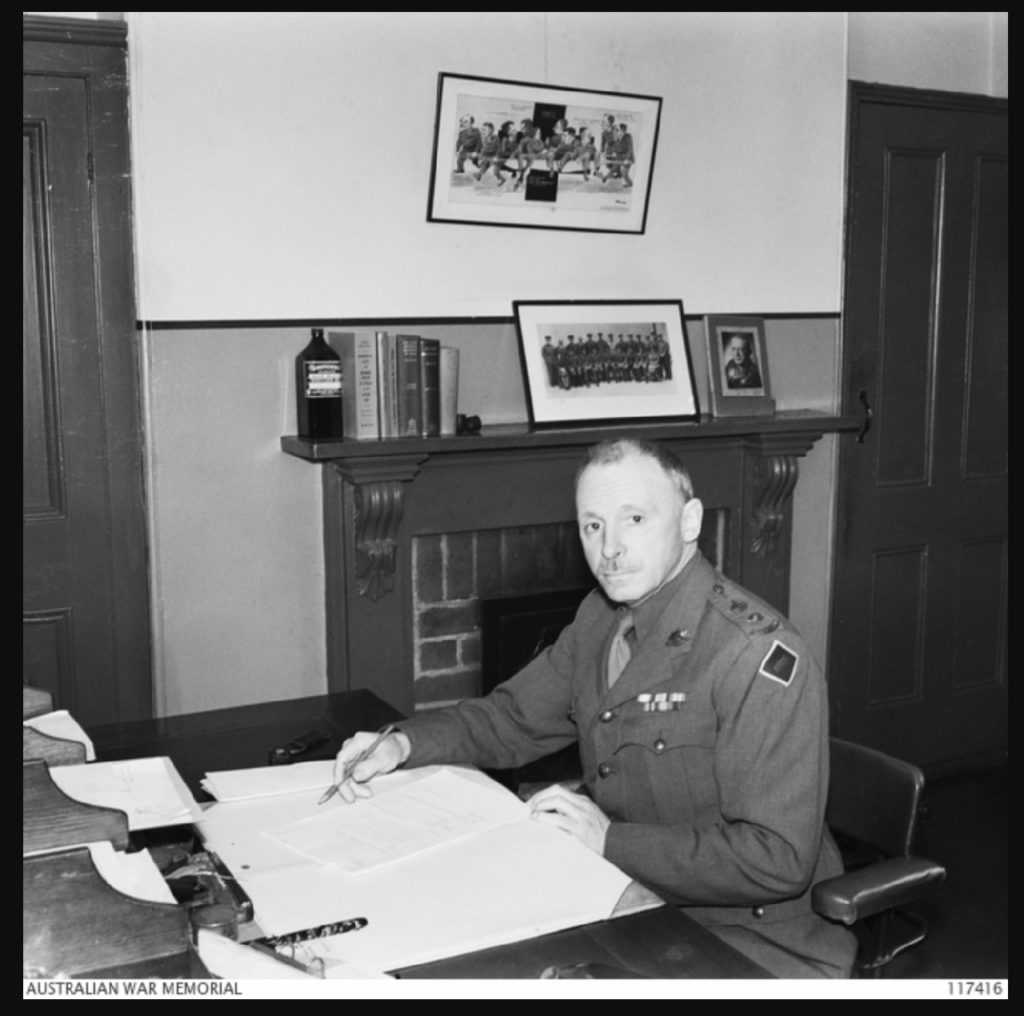
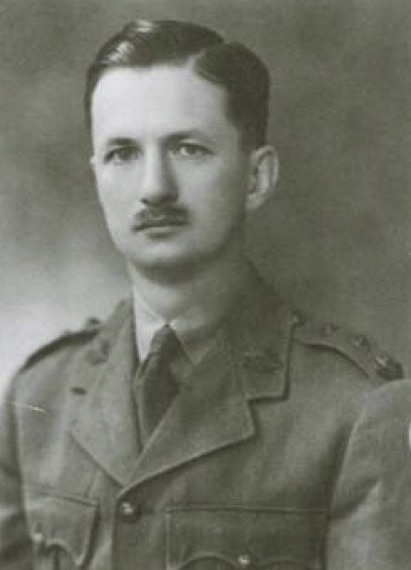
Dr Phil Millard saves Tom Hampton’s life

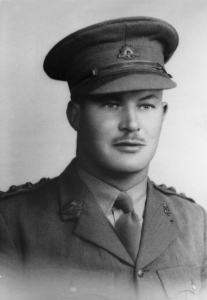
Dr Phil Millard saves W.O. WX8409 Tom Hampton’s life with an emergency operation lit by oil lamps in the darkness of night, It was Christmas 1943 on Burma-Thai  Railway

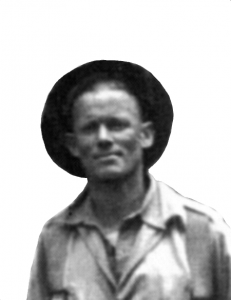
Phil Millard was dressed in his Christmas Pantomine costume for his role in the Concert


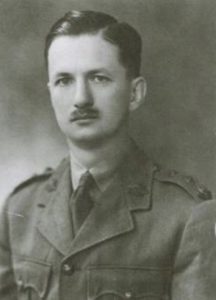
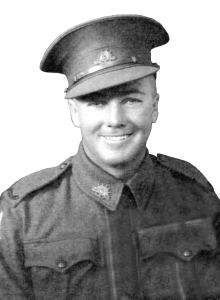
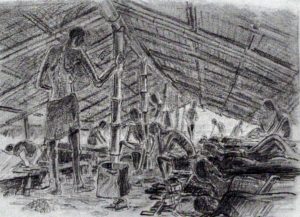
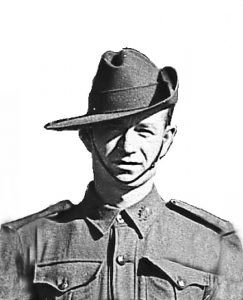
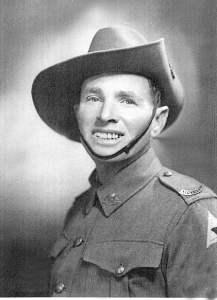
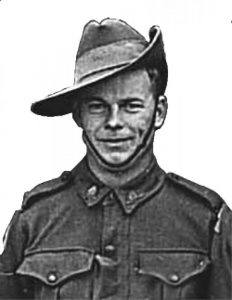
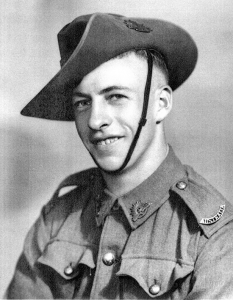
When Tom Hampton needed an emergency stomach operation, Bill Carlyon was among the prisoners who carried him 2km through thick Thai jungle from Linson Wood Camp  to an Australian surgeon, Phil Millard.  In the darkness of night Dr. Millard dressed in his Christmas concert costume with a dim oil lamp for lighting faced a most difficult operation – a perforated gastric ulcer. Hampton survived – another patient did not.

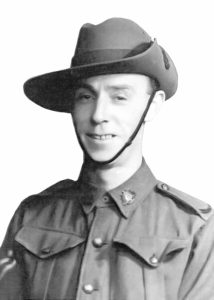
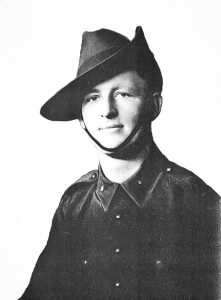
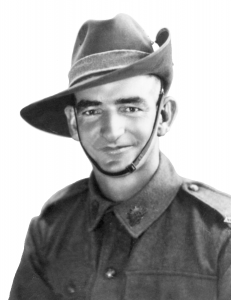
Above:  WX15785 Bill Carlyon
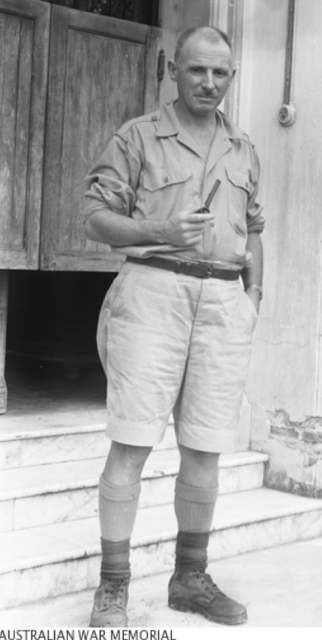
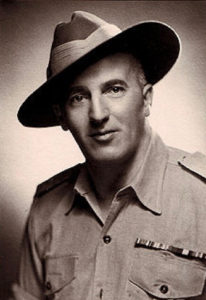
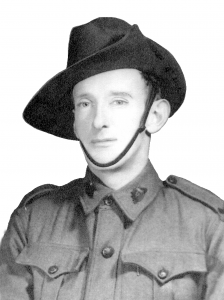
Dr. Phil Millard


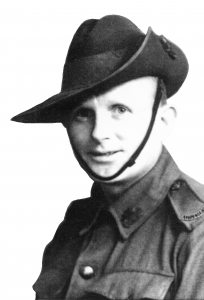
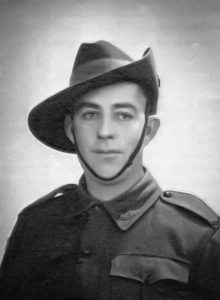
Below:  WX9405 W.O. Tom Hampton


Tom Hampton’s Recollection to Dr, Phil Millard

‘I can clearly remember that night being carried to the Theatre ? (such as it was) there seemed to be some jungle mist or smoke about and it gave me an eerie feeling.  I well remember the tins filled with oil and wicks – also I can recall you coming to see me from a concert, you seemed to be dressed in a striped top – something like an old time bathing costume.  I also remember the other doctor but didn’t realise that he played such a vital part in urging you to operate  – so to me he is the World’s greatest Urger.  I can recall the other poor unfortunate chap who didn’t make it – thinking that after he had died that I might only have a few hours to go myself.  I stayed a few days at your camp then was taken back to the timber camp’. (Linson Wood).
Tom with ‘A’ Force Burma Green Force No. 3 Battalion had been evacuated from Meiloe 75km Camp in 1943 with Malaria to Thanbyuzayat Hospital Camp for six months. He was recovered from Tamuang Camp when the war ended, to Bangkok to fly to Singapore.

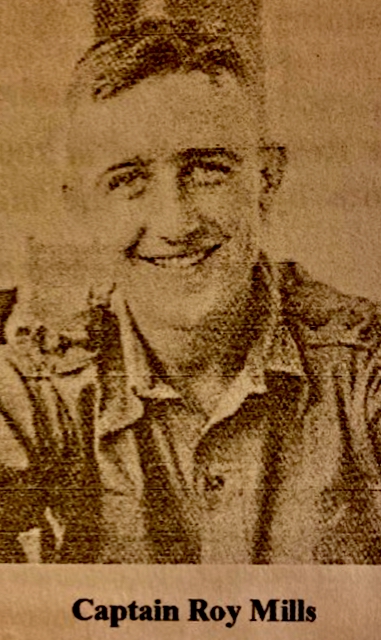
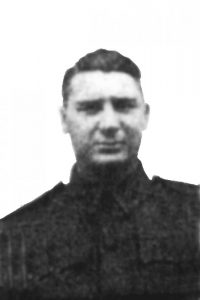
MILLS, Dr Roy – Pond’s Party, ‘F’ Force Thailand

MILLS, Dr Roy ‘F’ Force Thailand – Pond’s Party


Four-four (44)  Australian doctors were sent to the Burma-Thai Railway.  Always highly regarded by the POWs some of the most known names included Albert Coates, Bruce Hunt (who after the war settled in Perth) Rowley Richards who wrote of his experiences, Kevin Fagan and Roy Mills who were attached to ‘F’ Force. And not to forget for 2/4th families – our own Battalion doctor Claude Anderson and the large number of 2/4th who worked on rail with D Force S Battalion Dr. Phil Millard was their hero.
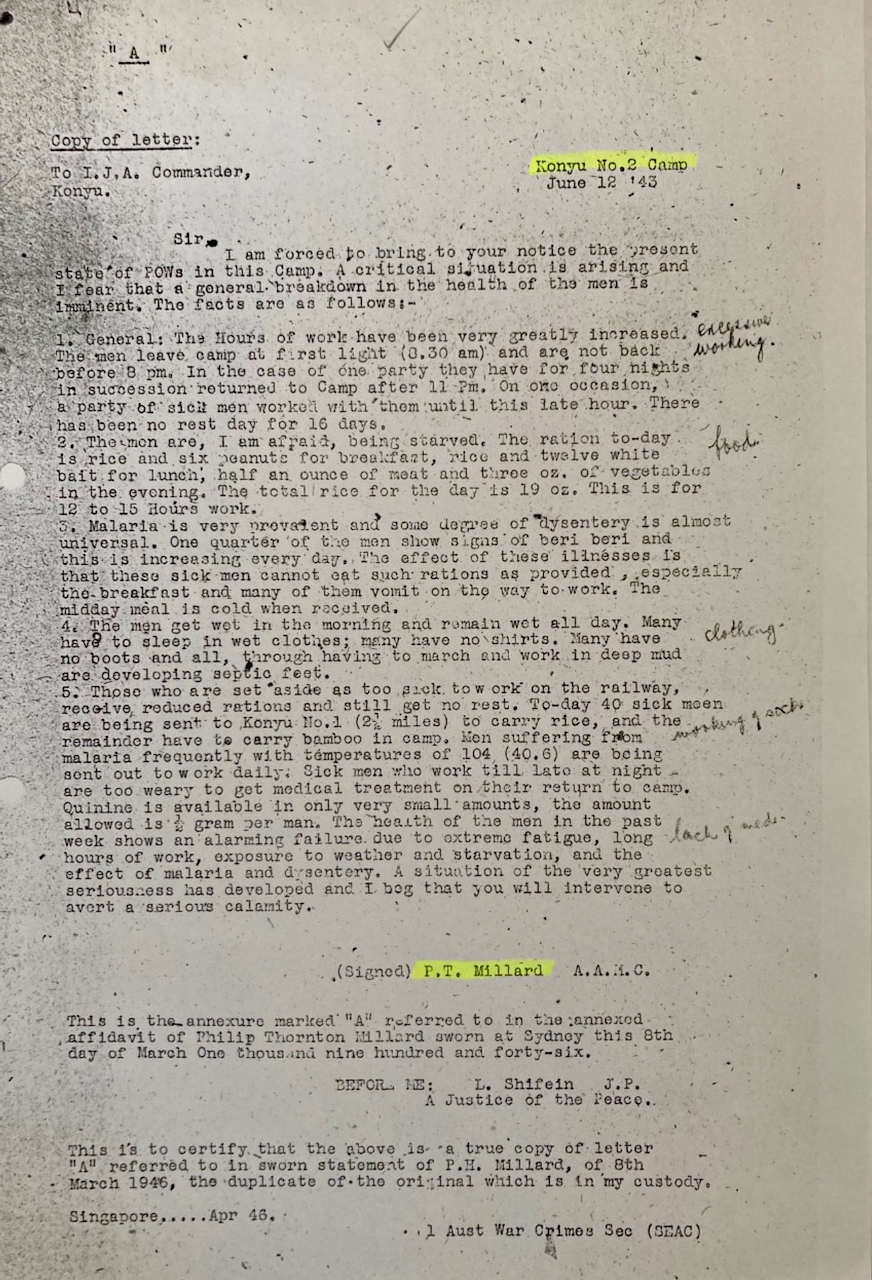
It was Phil Millard who looked after the many 2/4th boys at Konyu 2 – at a time when ‘speedo’ was hellish to work under.
In the jungle POW Camps this number of doctors equated to one doctor to about 100 POWs.  At 55km Camp, Burma there were 3 doctors to 2,000 sick POWs – an appalling ratio.
At Thailand’s Base Hospital Camps such as Tarsau and Chungkai the number rose to 4 doctors to 100 sick men – hardly sufficient considering the depths of illness suffered by POWs by the end of 1943.
The doctors were more than ably aided by several hundreds of Medical Orderlies from Australian Army medical units.  Insufficient numbers meant many were volunteers from amongst the prisoners who often worked whilst they were sick as did the doctors.
Medical orderlies also played a vital role in caring for the sick, although their role has been overshadowed by doctors. Some of these men, of whom there were several hundreds, came from Australian Army medical units.  Many were volunteers from among the sick prisoners – emptying bedpans, cleaned POWs and huts, ensuring men ate their food, cremated the dead but most importantly provided the sick and dying with companionship.
The doctors often protected the POWs and received punishment from the Japanese, sometimes severe.
The doctors ranged from experienced surgeons such as Coates to general practitioners in their twenties scarcely out of medical school.  Their knowledge and experience with tropical illnesses was minimal as were the medicines and equipment provided for treatment supplied by the Japanese.
Please read about Col. Pond’s Party
During action 2/10 Field Ambulance served mainly troops of 27 Australian Infantry Brigade.

_________________


During 1943 Mills was often the only doctor working with 100s of sick with ‘F’ Force – Pond’s Party  (700 POWs) – their jungle camps more remote than most.  Mills kept a diary of his work with details of the appalling camp conditions with their tents and camp awash with mud during the monsoon season, less than meagre food supplies and near starvation because supplies were not able to be delivered.
Roy Mills stood between the men and Japanese demands for more men to work longer and faster.  He was often the only defence POWs had against death by disease because the Japanese would send the sick out of their hospital beds to work.
Originally from Newcastle, Roy Mills then aged 26 years kept his secret diary whilst he was the only doctor with Pond’s Party of 713 men.
During the fighting in Singapore Mills was hit in the chest by shrapnel from an artillery shell and had to be evacuated to the AGH.  Later, during intense bombing, a large abscess ruptured in Mills’ chest wall as a result of the shrapnel entry.  Mills was one of many injured troops who had to then march to Changi POW camp. His wound required dressing twice a day but it gradually healed and he resumed duties with the shrapnel still in his chest. By October, 1943, the shrapnel began to move near his shoulder and he had it cut out by a medical officer
During six months 40 per cent of “F” Force’s 7000 men died from starvation, malnutrition, malaria, dysentery, cholera and tropical ulcers.
Lt Pond’s party was moved five times, carrying the sick and the dying on improvised stretchers and struggling with cooking gear, Japanese tools and wet tents. After the completion of the railway, men continued to die at a base camp at Kanchanaburi in southern Thailand and they died after returning to Changi.
With no drugs or medical equipment except a stethoscope, Mills’ improvisation and organisation saved hundreds of lives. With no distilled water, he was forced to produce a saline solution from kitchen salt and rain water. But there was no way to create saline drips for men dying from dysentery and cholera. Mills improvised by using the rubber tubing of his stethoscope and bamboo shoots to create cannulas and they worked.  Cholera hit them hard.
On his return to Australia Roy Mills spent 13 months in hospital.
After the war Roy Mills at the request of submitting diaries he mailed his diary to Captain Thomas W. Mitchell, a scholar, who had served as an intelligence officer of 8th Division HQ AIF. Mitchell’s role was to compile the history of the 8th Division in conjunction with War historian Gavin Long.
In 1947 Dr Alan S. Walker, the editor of ‘Australia in the War of 1939-45, Medical Series’ contacted Roy asking for a copy of his diary.
“I told him the diary had been sent to Captain Walker as requested and had the information he needed,” Mills said in the preface to his book.
There began the 40 year mystery and search for Roy Mills’ Diary.  Searches by medical historians, the War Crimes Commission, Army Records and a visit by Mills to Mitchell’s widow, Elyne, herself a well known historian all failed to find the diary.
Mills gave up hope of ever seeing it again.
On 28 December 1987 a belated Christmas present in the form of a certified mail package was delivered to Roy’s retirement home at Stroud.  In the parcel was a letter
Dear Dr Mills,
Your diary was found by my daughter in a totally unexpected place and I am sending it immediately – priority paid, as I have found that the safest method.
I am very glad this has been found. With all the best for 1988.
Yours sincerely, Elyne Mitchell.
The original Diary of Dr Roy Mills now lives safely at the AWM.
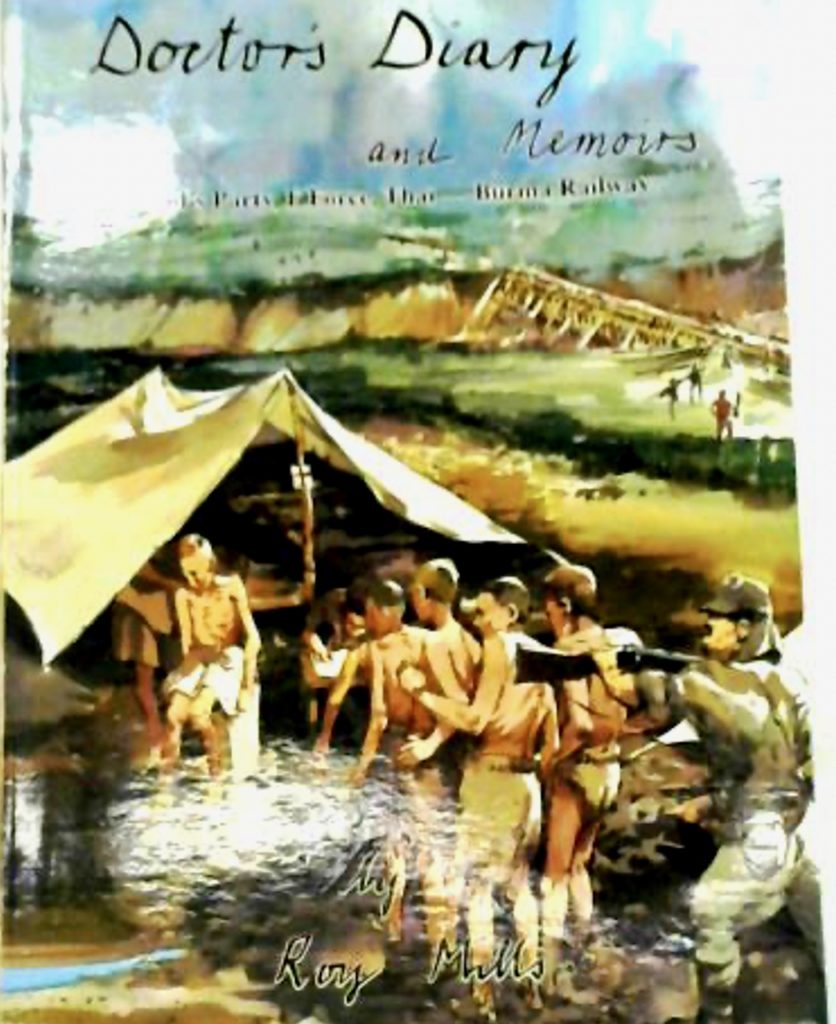
Roy Mill’s book ‘Doctor’s Diary’ and Memoirs’ was printed in 1994.
Above:  Colleagues and former POWs Burma-Thai Railway, doctors Roy Mills and Peter Hendry holding copy of printed book. Peter Hendry, pathologist and former deputy chancellor of the University of Newcastle died aged 102 years in 2017. Peter Hendry was also a POW with ‘F’ Force.
Please read further about Dr Roy Mills
Mills was a conservative doctor on the rail – he did not amputate and preferred to monitor, encourage and intervene as gently the available primitive equipment and limited medicines allowed.
‘Captain Mills’ became ‘Roy’ of the 2/10 Field Ambulance.  He reminded the men of the fact that the 8th Division had fought a tough campaign and they were ex-soldiers as well as POWs.
Mills knew he had tuberculosis before leaving Changi for home.  He required some time to recover before returning to work.
Mills had graduated in 1939 – when war had broken out in Europe.  He married Win (Plumbe) in 1941 at Parramatta – he was then training as  Captain Roy Mills of 2/10 Field Ambulance before embarking at Bathurst.
He became the only doctor with over 700 POWs with ‘F’ Force in 1943 – he was 26 years old.  His only experience as a civilian doctor was limited to his time as a final year student and a few months as Resident Medical Officer at Royal Prince Alfred Hospital, Sydney.  He had never encountered cholera.
In time he was treating men often older than himself and many had become close friends throughout  their shared training, fighting and as POWs.
Mills maintained he did not work alone, and praised his team of medical orderlies.  He also received a beating and punishment from the Japanese when attempting to protect sick men working on the rail.
His diary written on the rail is the only diary he maintained throughout his life.


Also you may read an Oral History Recording from Roy Mills.
He described in his book the two types of Cuttings on the Rail.
  1.  Where the railway and to cut through a ridge
  2. The other was when a L-shape cutting was made into near vertical cliff face usually high above the Menan Kwai Noi River, and the future rail would follow the horizontal part of the L.
Pond’s Party had to work on a L cutting at Takunun.
Please read history of ‘F’ Force Thailand

13TH AUSTRALIAN GENERAL HOSPITAL, 8TH DIVISION

13TH (AGH) AUSTRALIAN GENERAL HOSPITAL, 8TH DIVISION, SINGAPORE

Commanding Officer: VX39275

Col. Douglas Clelland Pigdon

Born Melbourne 6 December 1891
Died illness as POW,  Mukden POW Camp, Manchuria 
6 July 1945 aged 53 years
Buried or commemorated:
On departure from Australia 2/13th comprised 18 officers, 44 nurses, 3 masseuses and 146 other ranks –  equipped to treat 600 patients.
They arrived Singapore 15 Sep 1941 and firstly set themselves up at St. Patrick’s Boys School, south coast of Singapore,  initially treating few patients. Many of its nursing staff were attached to other units or establishments, including the Singapore General Hospital, while those that remained spent much of their time training in the treatment of tropical diseases and modern military surgical practices.


Hospital ward of the 2/13th Australian General Hospital (AGH) during the evacuation of Singapore. The building was subject to bombing, sustaining hits to both its kitchen and a ward, and had to operate under complete blackout conditions at night. Mounting casualties soon outstripped the hospital’s ability to accommodate and treat them and patients had to lie on the lawns around the hospital. As the Japanese forces advanced, the nursing sisters of the 2/13th AGH were progressively evacuated on three ships.


Between 21 and 23 November 1941
 The 13th relocated to the Malayan mainland and occupied  newly-built, but not quite finished, mental hospital at Tampoi, six and a half kilometres from Johore Bahru.
The 13th was still at Tampoi when the Japanese launched their invasion of Malaya on 8 December. Their rapid advance soon forced the withdrawal of the 10th Australian General hospital from Malacca to Singapore, leaving the 13th as the only Australian hospital in Malaya.
As a result, it was ordered on 11 December to double its patient capacity to 1,200. At the time it only had 359 beds open; but by 18 December, 945 were in operation
12 Dec 1941 
A Secret Memo was received ordering the 13th General Hospital to expand from 600 to 1200 beds.  The current number was 359. 
Staff set up two further wards and by 15 Dec the bed  number had increased to 643.
17 Dec 1941
Major Gordon Bennett visited and inspected 13th AGH.  There were now 945 beds.
Christmas Day:  First away from Australia and home.
On New Year’s Day 1942  
20 Nursing staff  from 10th AGH, located at Malacca were attached for duty.  Patients moved from Malacca because of the Japanese forces moving south.
4 Jan 1942 
Hospital staff were given a warning re breach of Security. The message read “Information from patients admitted from the fighting Zone gained by Hospital personnel must not be passed on by recipients. Any infringement of the law in this respect renders the culprit liable to prosecution under the Security Act”

The Japanese were north of Slim River between Trolak and Bidor

6 Jan 1941
10th Australian General Hospital and 2 Con Depot left Malacca, moving to Singapore.  76 patients from the 10th AGH were admitted to 13th AGH.     Within two days Lt. Col. A. E. Coates, Lt. Col. W. Harvey and 6 Officers, including Majors Farmer and Fagan, plus 15 N.C.Os and 39 O.Rs were attached for duty from the 10th Australian General Hospital. On their heels followed, from the same hospital, 16 Sisters, 5 Masseuses, 4 Officers, 2 Chaplains, 4 N.C.Os including S/Sgt. C. Weir and 28 O.Rs. 
Being bombed daily.
13 Jan 1942:
The first Australian troops went into combat with the Japanese
15 Jan 1942
13th AGH now had 1165 beds prepared for occupancy with 880 patients – few of which were battle casualties.
The operating theatres worked day and night to prepare for the expected casualties.


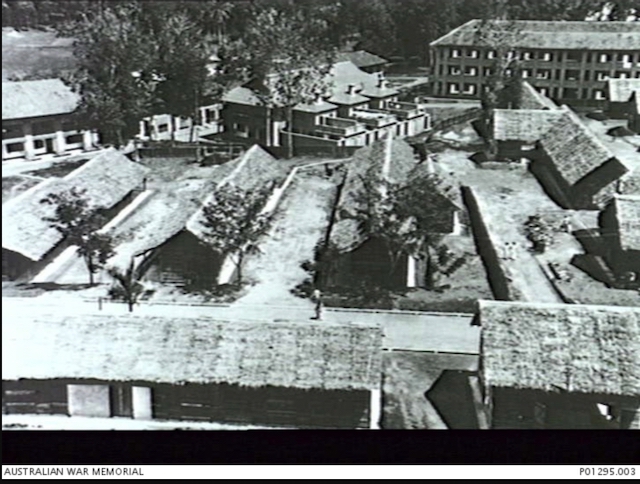
Ward G of  2/13th Australia General Hospital (AGH). The Hospital was situated in an unfinished mental hospital near Johore Bahru before evacuating to Singapore due to the advancing Japanese forces in December 1941.


TAMPOI, MALAYA. 1941. THE COOK HOUSE IN AN ATTAP HUT AT THE 2/13TH AUSTRALIAN GENERAL HOSPITAL. THE HOSPITAL WAS LOCATED IN AN UNFINISHED MENTAL HOSPITAL ABOUT SEVEN MILES NORTH OF JOHORE BAHRU. (DONOR L. ARTHURSON).


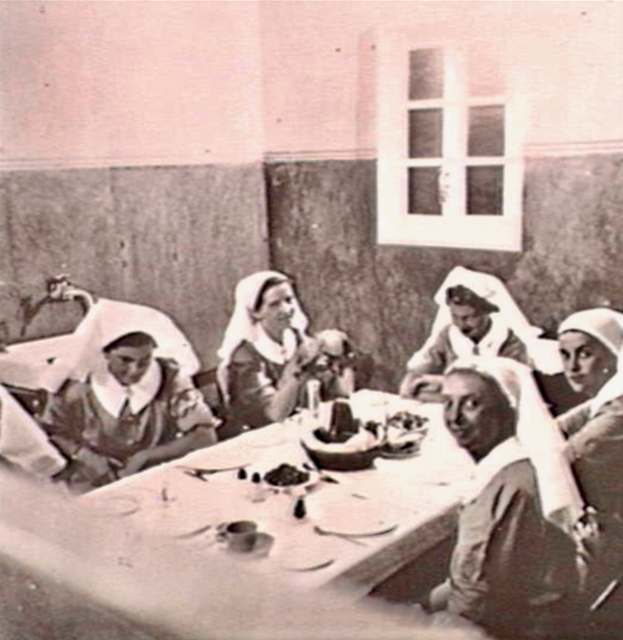
Above & Below:  Nurses quarters Tampoi.

2/13 Australian General Hospital nurses mess and sleeping quarters. The Hospital was situated in an unfinished mental hospital near Johore Bahru before evacuating to Singapore due to the advancing Japanese forces in December 1941.


‘The 13th treated most of the casualties that resulted from the AIF’s battles in Johore, and, as the fighting got closer, it effectively became a large-scale casualty clearing station – the most forward surgical unit in the army’s medical organisation. Eventually, the approach of the Japanese also forced the 13th to withdraw to Singapore, commencing on 23 January. Thirty-eight hours later it was re-established as a 700-bed hospital back at St. Patrick’s.’      (AWM)
16 Jan 1942
Suddenly the war arrived.
Patients were delivered in rapid succession in all forms of transport carried in on stretchers with tickets pinned to them identifying the most urgent injuries
An admission room quickly established identity, rank and injury and from here the stretcher bearers ran the casualties to either ward or theatre.
Most casualties arrived at night.  Little sleep was available with air raid alarms going day and night.
The Japanese controlled radio station told the 13th AGH to be out of their buildings by 26th January  – they were needed by the Japanese!
Between 16 – 21 January – with increasing numbers of casualties arriving  200 medical and minor surgical cases were transferred to 10th AGH, Oldham Hall, Singapore.
(The Japanese at this time were at Muar on the west coast and the situation was looking grim. The Australian 2/29th are now in constant contact with the enemy)
21 Jan 1942 
13th  AGH was instructed to reduce its capacity to 250 beds and move to Singapore Island – following much discussion – to St. Patrick’s School at Katong.
23 Jan 1942  
31 O.R.s and 40 patients went to the 10th Australian General Hospital.
24 & 25 Jan 1942 
Evacuation of patients began on the morning of 24th.  Evacuating and moving a whole hospital is no simple task.
Medical staff from ‘Aquitania’ arrived to reinforce.
Patients had been moved by early evening, with numbers transferred elsewhere.  By 2300 hours 25 January the patients had been moved. Dismantling the wards was hard work.
Hospital equipment was moved by convoys of 20-30 trucks driven by Indians and Malays.   An enormous exercise.
Drivers got lost, didn’t follow closely enough and/or were re-routed as roads disappeared all the while Singapore was being bombed by the Japanese.  Some drivers left their uniforms and trucks  and returned to their families.


28 Jan 1942 – Return to St Patricks School, Singapore

The patient number, mainly battle casualties was nearly 700. More wards were found and opened.
31 Jan 1942
The causeway was blown up as soon as the remnants  of the Commonwealth Forces crossed over.
The Japanese army had advanced 600 miles in 6 weeks.
The last of the hospital equipment from Tampoi crossed the causeway on the day before the big explosion. No further retreat was possible.
The 13th General Hospital displayed a large Red Cross to alert enemy bombers that this was a non-combatant area. The problem was the proximity to the Civil Airport and oil installation just north of us in Geylang. Japanese bombers were always attacking these spots and also aiming at anti-aircraft batteries.
Staff and sometimes patients often headed for the slit trenches.
At 2300 hours on the last day in January a lone bomber flew around the hospital for 30 minutes causing the alarms to go off.  Suddenly all was quiet when a lone plane was heard approaching from the sea.   It dropped a stick of five bombs on the hospital.
Two landed in the sea, the third hit the top of one of the main buildings another went off on the vacant land next door and luckily the fifth, was the only one hit the hospital.
The explosion noise was tremendous.  Patients could be heard screaming – especially those 113 men in the ward hit.
In the darkness the damage seemed to be the blowing out of water pipes at the end of the building – flooding occurred and the kitchen damaged.
Fortunately there were no patients in bombed area of the ward – however many received cuts and bruises.
As battle casualty numbers increased a small nearby convent was put to use to increase the hospital bed numbers to 760.
4 Feb 1942
Shelling commenced from the south of Johore. An invasion was imminent.
If the south of the Island was attacked/invaded the hospital would be in the front line.  The sea front was heavily mined with barbed wire covering the beaches and machine guns in position.
From the hospital Keppel and the docks could be seen burning.
Next the oil installations on nearby islands were blown up leaving fires burning for weeks.  At night the red glow made the black-outs superfluous.
Through all this the hospital staff continued their work.
When the 15inch guns at Changi were fired towards the Japanese the hospital buildings could be felt shaking.
6 Feb 1942 
Word came through that all nurses were to be evacuated from the island as soon as possible.   Of course the sister wanted to stay.  The men wanting to leave while they could.
8 Feb 1942 
During the night the Japanese landed in the north crossing the Johore Strait and rapidly gained a foothold although strongly opposed by Australian 2/20th Battalion and 2/4th MGB.   The battle for survival had commenced.
Casualties became very heavy.  Men were  pouring into the hospital mostly with gun shot and shrapnel wounds.   Surgeons were now operating non-stop.  The hospital staff performed calmly under battle conditions.

9 Feb 1942.

Major General G. Bennett visited the hospital and confirmed various initiatives planned by the Hospital Command.

10 Feb 1942

80 patients were repatriated from Victoria Dock where the casualty situation was causing concern.   Soldiers were endeavouring to board the few ships available at the expense of women, children and the sick.
Military Police attempted to restore some sanity on the wharves. One fit soldier tied a bandage on to his leg, limped on board and was repatriated.
All 13th AGH 57 Sisters left to board ships for home. Thirty were able to board the Hospital Ship ‘Wah Sui ‘
There was not sufficient room on the boats to get all on board, 27 nurses returned and restarted work immediately at 13th AGH.
A never ending stream of casualties arrived by ambulance or trucks while 10-20 bombers flew overhead.
Awaiting surgery for the removal of bullets, a young Machine Gunner from 2/4th  asked for a cigarette. It was lit and placed between his lips.
“Thanks mate”, he gasped and then, as he inhaled, three streams of smoke emitted from his bullet-ridden chest.
11 Feb 1945 
Singapore Volunteer Force retired from the Changi area leaving no fighting troops between the hospital and the enemy.

12 Feb 1942 

At 1700 hours the remaining 27 nurses reluctantly and sadly bid farewell and were transported to the Singapore docks where they squeezed on the steamship ‘Vyner Brooke’. There they were joined by nurses from 10th Australian General Hospital and 2/4 Casualty Clearing Station.
The ‘Vyner Brooke’ left behind a hopeless and crippled Singapore to sail to  Australia carrying 65 nursing staff.
Tragically ‘Vyner Brooke’ was doomed.
Of these 27 nurses, only 10 survived the war and returned home. On 16th February, 1942, 11 were shot and killed, 4 drowned two days before and 2 died whilst P.O.W. Vivian Bullwinkel was the sole survivor of a barbaric slaughter of 21 nurses off the island of Banka.
By now it was not only the wounded who were arriving at the hospital – men arrived looking for food and shelter having lost contact with their battalions and companies.
2/4 C.C.S. came to give a hand. Red Cross officials, Y.M.C.A. men, padres, Dental Officers and their staffs and many claiming they had become separated from their own Units.  Some of the latter were sent away as there was still time to rejoin their outfits.
The only fighting troops near us were the Singapore Volunteer Force which had set up a machine gun post nearby and one even in the hospital area.
This created a hazard for the hospital and its 1,300 patients so Col. Pigdon drove to Malaya Command and arranged for an immediate withdrawal of the Volunteers. This was completed and the hospital was then outside the perimeter and therefore unprotected.
“The Orders of the G.O.C. Malaya Command, given to Brigadier Stringer in the presence of Brigadier Lucas on the evening of the 12th February, were that the 13th Australian General Hospital was to remain in its present position and was not to move when the line shortened. These orders were passed on to Commander 13th Australian General Hospital by Brigadier Stevens the same night”
From Lt. Col. White D.A.D.M.S. A.I.F.
“G.O.C. Malaya Command and G.O.C. A.I.F. Malaya do not want the 13th Australian General Hospital to shift. It is quite possible that before enemy action starts in that area the perimeter will be withdrawn a couple of miles. I am sending as many medical supplies and rations as I can get to you”.


OF THE AUSTRALIAN NURSES IN SINGAPORE six were evacuated with their patients aboard the Wah Sui, a further 63 plus 3 physiotherapists boarded the Empire Star which, after a hair-raising journey, finally made it back to Australia and 65 nurses boarded the ill-fated Vyner Brooke, which was sunk by the Japanese off the coast of Sumatra.
The Nurses who left Singapore on the non-naval vessel Wah Sui were left at Java on 14 Feb 1942.  They had with them 450 severely wounded British and Australian patients.  These Australian nurses had survived the evacuation of Malacca  (Malaysia) then Singapore and here they were again in the direct path of advancing Japanese forces.
Please read the story of the Wu Sui


Below:  Vivian Bullwinkel of 13th AGH – the sole Survivor of the Japanese Masaacre at Banka Island.

Studio portrait of Staff Nurse Vivian Bullwinkel, Australian Army Nursing Service (AANS), in service dress uniform. Bullwinkel is well known as the sole survivor of the infamous Banka Island massacre in which 21 of her AANS colleagues were killed by Japanese troops. Bullwinkel was born on 18 December 1915 at Kapunda, SA, and enlisted in the AANS in 1941. In September 1941 she embarked for Singapore as a staff nurse with the 2/13th Australian General Hospital (2/13th AGH). On 12 February 1942, three days before the fall of Singapore, Bullwinkel, along with 65 other Australian Army nursing sisters, was evacuated from Singapore on board the SS Vyner Brooke. On the 14 February, while on route to Sumatra via Banka Strait, the ship was sunk by Japanese aircraft. Twenty-two nurses, including Bullwinkel, and a large group of British soldiers, men, women, and children made it ashore at Radji Beach on Banka Island. The group decided to surrender and a group comprising of the civilian women and children, accompanied by some of the men, went to find Japanese troops while the rest of the group waited. When Japanese soldiers arrived, the men were executed and the 22 sisters were ordered to walk into the sea and were machine gunned from behind. Bullwinkel, struck by a bullet, pretended to be dead. She and the only other survivor of the massacre, a wounded British soldier, 7654688 Private (Pte) Cecil Gordon Kinsley, hid for 12 days before surrendering. Both were taken into captivity, but Pte Kinsley died soon after. Bullwinkel spent three and half years in captivity and was one of just 24 of the 65 nurses who had been on the SS Vyner Brooke to survive the war. Her courage while a prisoner of the Japanese exemplified the bravery of Australian women in war, and her distinguished post-war career was marked by many humanitarian and career achievements. Vivian Statham (nee Bullwinkel) died on 3 July 2000.
13 Feb 1945
Singapore was almost in the hands of the Japanese.. The crack Imperial Guards had by-passed us leaving observers and rear-guard troops to keep a discreet eye on the hospital. One corporal, who ventured out the front gate, must have been deemed to be out of bounds and a bullet whistled past his head. One attempt to send some patients back into Singapore proved risky. Some were caught a little way down the road from the hospital by Jap snipers and some were shot – some escaped to the beach and returned to the hospital – all these men had no arms.
The convent area was shelled and mortared. Fortunately nobody was hurt although many had lucky escapes. The sound of artillery, mortar and small-arm fire did not allow any sleep. Doctors worked ceaselessly in the operating rooms. L. Col. C. Osborn didn’t have time to straighten up. One patient whisked away – another on the table. Operations continued day and night and the hospital staff deserve great credit for their devotion to duty. Our silent thoughts turned to ourselves often now. Do the Japs take prisoners? If not, how and when will the worst happen?
‘In the final days of the fighting, the 13th found itself in a problematic position at the edge of the British Commonwealth perimeter around Singapore City. A nearby canal was the only anti-tank obstacle for some distance, requiring infantry and artillery to be positioned around the hospital, thereby placing its protected status in jeopardy. Repeated requests had to be made to combatant troops not to establish their positions in the hospital area. On the night of 13 February the perimeter was pulled back, leaving the hospital in no man’s land until the Commonwealth forces capitulated on the night of 15 February. By 19 February the 13th was treating 1,273 patients, its maximum effort during its short history, and had absorbed the staff of the 4th Casualty Clearing Station, the 2nd Mobile Bacteriological Laboratory, and the 2/10th Field Ambulance.’   (AWM)


If we had known about the massacre at the Alexandra Military Hospital in Singapore in the afternoon of the 13th February, we would have been more apprehensive.
The Japanese took no notice of a white flag and Lt. Watson holding it was bayoneted to death. Then the Japanese troops ran amok. Patients and staff in the operating theatre died when also bayoneted. Patients and nursing orderlies in wards suffered the same fate. Others, very ill, were marched into rooms 3×3 metres crammed so tightly arms couldn’t be raised above heads. The men died during the night from thirst in the suffocating atmosphere.
The Imperial Japanese Army G.O.C. called at the hospital and expressed his regret. But the damage was done and the Geneva Convention surely broken.
Our sagacious C.O. made sure that all arms were collected and dumped outside the hospital’s boundary – a sure sign of a non-military establishment.
Sunday 15 Feb 1942   
Mid-afternoon an uncanny silence was noticed. The sounds of war had ceased. 
15,000 Australian soldiers were now P.O.Ws.
Lights were now allowed on at night – helping the nursing orderlies as they attended 1,273 patients (maximum intake so far). Staff strength was for the original 600 bed hospital but, less 67 nurses – so work was solid and really tested the spirit of the Unit.
Imagine a ward full of men, more or less in a critical condition, with beds inches apart, asking for relief from pain and suffering. One poor fellow, cheerful to the last, enjoyed a cigarette before death and was amused to see smoke coming out from his chest.
Another sad case was the Chinese civilian, who dragged himself to the A & D room, his calf shot away by dum-dum bullets. He joined the line-up to the theatre and eventually lost his leg.
Blood was two inches deep in the operating theatres and stretcher bearers, all volunteers, stood by waiting to remove the patient from the table to the ward or to the mortuary.
Until 12th February, 1942 we buried our dead at Reformatory Road, but when this became the front line we made a new cemetery in Martia Road. Twenty-one men were buried there during the last few days of the Japanese push.
The first Japanese soldiers to visit the hospital appeared more curious than hostile.  Their appearance showed the effects of a tough campaign.
What was most noticeable and different from us was their canvas footwear with an unusual toe arrangement. One fellow indicated very clearly by signs he wished to exchange canvas for leather boots. He got his wish pronto.
Another took a watch from one of our men rather arrogantly too – give me or else! An enterprising member of the Unit had somehow gained possession of a brand new 1942 Hudson of black duco. Next to no time a Japanese Staff car – Officer and driver – drove into the grounds. Very politely, but indicating no option, the Japanese Officer drove out in the new and left the old dirty camouflaged object.

17 Feb 1942

AnotherJapanese Officer entered the grounds sticky-beaking and quite proud of the accomplished victory.  He was turned out superbly. Sporting clean, new clothing, magnificent soft-leather long boots, he removed his sword from its scabbard and demonstrated his skill on a branch of a large hibiscus tree. Holding the sword in two hands, he raised it high above his head, and, with an almighty yell and downward sweep off came the 2” thick branch and damn near his big toe.  Too bad he only cut the tip of his boot!  He rapidly made his departure counting his Japanese blessings.

18 Feb 1942 

An Officer of the Japanese Medical Forces visited the hospital and enquired the number of patients and the position of the medical supplies. Certainly a few white lies were told re the medical supplies in the hope of gaining some more. This Japanese Officer was told, by using signs, that a pair of boots and a wristlet watch had been stolen. To his credit, and as an indication of the strict discipline within the Imperial Guards, next day both items were returned. The new car he said would probably not be needed by the hospital.
13th AGH staff Changi Gaol had been opened.  It was no surprise to see looting from houses around the hospital and they strengthened their picquets to make sure their fairly good stock of food wasn’t stolen by marauders.
There were many unplanned meetings of inquisitive Japanese Officers and their underlings with our Unit members. We had been advised to give very guarded answers or to crack “silly Willy.
At this time 2/10 Field Ambulance moved in from Singapore and camped in our grounds and all battle casualties not at 10th AGH were transferred to 13th  AGH. Most of the surgical cases had received initial treatment but some were in a shocking state especially those from Alexandra and Civil Hospitals. 13th AGH staff were shocked to learn the G.O.C. Major General Gordon Bennett had cleared out.
20 Feb 1942
Lt. General Yamashita, Imperial Japanese Commander ordered all captured men to Changi.


‘Between 22 and 23 February the 13th re-established itself in buildings at Selerang Barracks, part of the sprawling prisoner-of-war complex on the Changi Peninsula. On 6 March the Japanese authorities directed that only one prisoner-of-war hospital would be maintained in Changi and the bulk of the Australian medical units, including the 13th General Hospital, were merged with the British hospital at Roberts Barracks.’
22 Feb 1945

To Changi

1270 patients and 650 personnel with few trucks and ambulances with the help of 2/10 Field Ambulance and 2/4 C.C.S. began the move.  Those who could walk did so – 7kms, completed by midday 23 Feb.

End Feb & early March 1942

The IJA became concerned at the ever increasing number of dysentery patients.   Following an inspection by a group of Japanese medicos a decision was announced – AGH units in Selarang to move immediately to Roberts Barracks area, two miles away, and combine with the British General Hospital to form the Roberts Hospital area.
All Australian units to be under the control of Col. D. C. Pigdon,13th AGH.
The Australian hospital was to retain its identity but to become simply an annex of the English Hospital. Certain medical officers of the two Australian General Hospitals were instructed to remain in the Selarang area to carry out specialist and other medical duties.

A view of the buildings that made up Roberts Barracks, part of Changi Prisoner of War (POW) camp. After the fall of Singapore, Allied POWs were moved into Roberts and Selarang Barracks. Within two weeks Roberts Barracks was designated as a hospital in order to cope with the hundreds of wounded who were being moved from Military Hospitals in Singapore into the POW camp. One block was the operating theatre, another was the isolation ward and Blocks 144 and 151 became dysentery wards. The area between Roberts Barracks and Selarang Barracks quickly became a cemetery. In October 1942, five murals were painted on the walls of Block 151 by dysentery patient, Stanley Warren, a bombardier in the 15th Field Regiment, Royal Artillery. Despite his illness and lack of materials, he used brown camouflage paint, crushed blue billiard chalk and paintbrushes made of human hair, he completed the murals. The murals were rediscovered in 1958 and four of them were restored by Warren during three trips back to Singapore in 1963, 1982 and 1988. This image was secretly taken by Major John Rosson and the camera and negatives were kept hidden from the Japanese throughout his internment.


Allied Prisoners of War (POWs) moving around the grounds near the buildings that made up Roberts Barracks, part of Changi Prisoner of War (POW) camp. After the fall of Singapore, Allied POWs were moved into Roberts and Selarang Barracks. Within two weeks Roberts Barracks was designated as a hospital in order to cope with the hundreds of wounded who were being moved from Military Hospitals in Singapore into the POW camp. One block was the operating theatre, another was the isolation ward and Blocks 144 and 151 became dysentery wards. The area between Roberts Barracks and Selarang Barracks quickly became a cemetery. In October 1942, five murals were painted on the walls of Block 151 by dysentery patient, Stanley Warren, a bombardier in the 15th Field Regiment, Royal Artillery. Despite his illness and lack of materials, he used brown camouflage paint, crushed blue billiard chalk and paintbrushes made of human hair, he completed the murals. The murals were rediscovered in 1958 and four of them were restored by Warren during three trips back to Singapore in 1963, 1982 and 1988. This image was secretly taken by Major John Rosson and the camera and negatives were kept hidden from the Japanese throughout his internment.


8th March 1942
ROBERTS BARRACKS
The 13th AGH moved by 1500 hours.   The move by trailers, trucks, etc. was completed by the hard working members of the unit.
To ensure that the British would control the Australians, Lt. Col. Craven was suddenly promoted to a full Colonel, back-dated to 30/4/41 so that he would be senior to Col. Pigdon, the C.O. of the 13th AGH!
The AGH was set up with1050 beds available and 956 patients including 283 cases of dysentery and 325 battle casualties. Space was limited and hardships a’plenty. Men slept on concrete floors with bugs as their bed companions. These pests were already in cracks and grooves and this infestation gradually but surely spread to beds and mattresses. All bedding had to be checked daily, mostly in the 4 corners.
AGH Staff will always remember the early days of Roberts Hospital:
limited accommodation, shortage of water, shocking sanitary arrangements, swarms of flies, improvised cooking facilities, limited transport and insufficient lamps for night duty.
Patients were accommodated in N Block which had been hit by a bomb and the habitable part of the top floor was used as staff quarters.
Three floors in O Block and the ground floor in L Block made up the hospital. The small area was wired-in with picquets on the three gateways.
The whole hospital gradually increased to 2830 beds with 2372 occupied on 1st May, 1942. Deaths in the British section were numerous but, in comparison, we were very happy with our small death rate, again due to much team-work and common sense!
From our entry to Robert Barracks the supply of water rations and wood was the responsibility of the hospital so the Changi trailer was invented. This contraption was a motor chassis, no engine, only wheels, brake and a steering wheel. The trailers went down hills very well but had to be pulled and pushed up hill. This task was no fun and there were many accidents. Barry Smith, young and bright, a talented artist from the 10th Australian General Hospital was thrown from a trailer on a bend and had his whole chest removed on contact with the road. This young man, with only pencils, decorated concrete walls with complete murals – really beautiful. Sadly, Barry died later in Thailand. Water, being so important for a hospital, was eventually provided by the R.A.E., courtesy of Lt. Col. O’Donnell, who arranged for the hospital to be connected to the Singapore main supply. From then on a good supply of water for cooking, washing and showers was available and this was quite a relief. The sewerage system had not been restored as the mains had been bombed. The laundry situation was most serious. All dirty linen had to be carted to Selarang, washed and then dragged back via Changi trailers. The hospital was now completely dependent on the Japanese for its food as the A.A.S.C. supply had been exhausted. The hospital’s cooks had to use whatever they could get as no supplementary rations could be obtained. Our food was not up to the standard of many other units. The reason was that other units were buying freely from the “Black Market” food with which to flavour the rice. By the time the hospital had a chance to buy, the prices became too steep through having the food passing through so many hands. The units also had more cookhouses and less mouths to feed. A dollar was worth 2/11 and the following prices were being asked – 1 tin condensed milk 8/9; tin marmite 14/7 rising to 2pounds/18/4 when Beri-Beri was first diagnosed. Tin golden syrup 19/-; bully beef, herrings, cheese, jam, meat and vegetables all 8/9 tin; 2oz tobacco 14/7 to 17/6; cigarette papers 2/11 packet. These goods had been stolen by the natives and they were now selling them back to us. “BlackMarket” trading was illegal and was more than frowned on by the Japanese.
Division H.Q. asked us to give up all our dollars so that a canteen could be set up at the hospital. This we did, but we are still waiting for the canteen. Unfortunately, now, our pockets were as empty as our paybooks – we were sure conned!!!!
Discipline in the camp was strict – no attempting to escape – guards and sentries had to be saluted on passing. Two 10th Australian General Hospital personnel were caught attempting to escape and were immediately executed. The natives were offered a bag of rice if they turned an escapee over to the Japanese. It was said that Lt. Col. Percival, G.O.C. was put into solitary confinement because he was late with his office returns. Anyone caught outside the wire was either shot, bashed, thrashed, goods and money being confiscated. Often, too, rations would be cut to the unit concerned. The Australian Officers also used to impose penalties – really there was a gaol within a gaol.
Indian Sikhs turned traitors and went over to the Japanese side after the capitulation. The Japanese used them as guards and they insisted on a most correct and polite salute. It irked our men to show them the expected respect.

14 May 1942

the first of many groups of men left Singapore. Designated “A” force, 2999 A.I.F. personnel, which included 15 Officers and 127 O.Rs Medical staff, embarked by ship for Burma. The rationale submitted by the Japanese Command was to relieve the food pressure on Singapore Island. “Plenty good food up north – relaxation a plenty”. Our A.G.H. was concerned with this movement of A.I.F. forces as the 2/4 C.C.S. was instructed to leave us and join the exit group. Major Krantz was thus lost to us. This man, a brilliant surgeon, could, in the words of some, “Cut my head off and sew it on again”.

End of May 1942

The number of patients dropped to 600.

8 July 1942

A second work force of Australians “B Force Borneo of 1,496 strong” left Changi and were transported to Sandakan on the N.E. coast of British North Borneo.


16 Aug 1942

The Senior Officers’ Party, including General Percival and General Callaghan, embarked from Singapore for Formosa and Japan. That was the last the 13th Australian General Hospital saw of Col. Pigdon who was to die in captivity on the island of Formosa. From this loss of its commanding officer the 13th Australian General Hospital never recovered. The Unit became fragmented and disjointed and members who were sent away with different working parties lost contact with others of the Unit. Many other units, particularly the 2/9th and 2/10th Field Ambulances, which retained their Commanding Officers appeared, by comparison, to be “looked after”.


August 1942

The AGH became very busy.   The number of patients grew alarmingly and by the end of June   there were 347 patients but 825 admissions during July, due to increases of dysentery, malaria, dengue fever and beri-beri, kept the staff on their toes. Staff Sgt. Frank Cooper was in charge of a ward of 120 patients – quite a contract for him and his ward staff. The restoration of both electric light and fans was significant. Hurricane lamps were set aside. The nights became more cheerful for both patients and staff.

24 Aug 1942

A soldier in our surgical ward died from gangrene of the skin of the scrotum. Rather than a spreading gangrenous dermatitis of the streptococcal type the pathologist, Major Davies, found it was a diphtheric infection. At this time there was an epidemic of throat and nasal diphtheria among the working parties in Singapore. The hospitals, both British and Australian, had no stocks of anti-toxin and only limited supplies were allowed to us by the Japanese. Lately, many cases of scrotal dermatitis and body tropical ulcers had shown the presence of a super-added infection with a diphtheria bacillus.


Below:  Pigdon, WW1

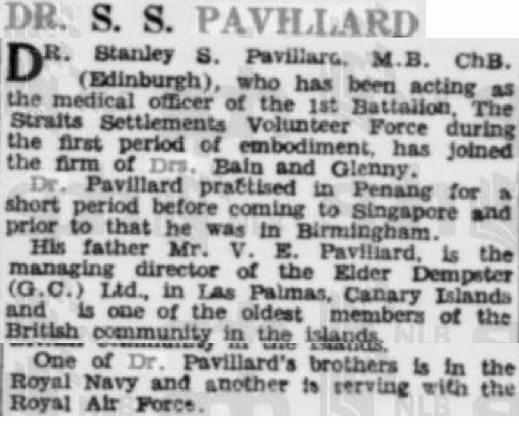
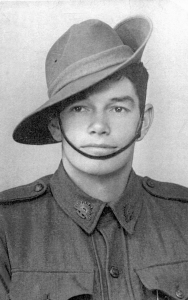
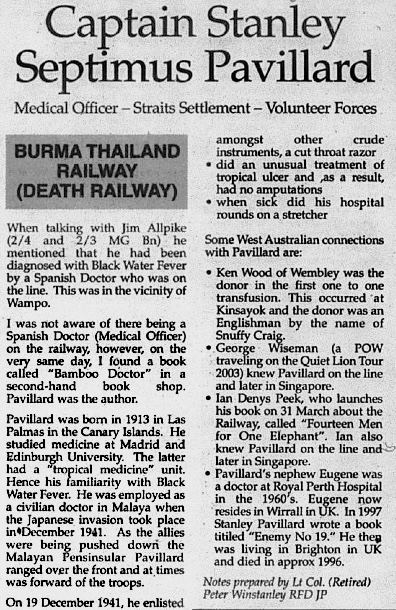
PAVILLARD, Capt. Stanley Septimus (Medical Officer, Straits Settlement Volunteer Forces)

CAPT. STANLEY S. PAVILLARD, MEDICAL OFFICER
STRAITS SETTLEMENT VOLUNTEER FORCES


Please read about the Malay & Singapore Volunteer Forces
  • Stanley Pavillard was born 19 Jan 1913 – Las Palmas, Canary Islands, Spain.  He studied medicine in Spain and Edinburgh, Scotland from where he qualified in 1939.  He took up a Medical position in Singapore prior to war breaking out.
  • He died 24 July 1997 – Brighton, England, aged 84 years.
Pavillard enlisted with the local Straits Settlement Volunteer Forces and was taken POW of Japan at Singapore.  Following a short time imprisoned at Changi, the men from Malaya and Singapore Volunteer forces housed at River Valley Road POW Camp, Singapore.   During 1942 they were entrained to Wampo to work on the Railway known as ‘D’ Battalion under command of Major Clark,  SSVF and MO  Captain Pavilaard.   There were two  further Battalions:  ‘B’ Battalion under command Lt Col Lilly, Sherwood Foresters with  MO Captain Richardson RAMC  and ‘F’ Battalion under command of Major Brodie & MO Major Bennett RAMC.
Pavillard was at Tarsao, Wampo, South Tonchan and Tamuang Camps on the Burma-Thai Railway.
Pavillard described  group ‘D’ Btn’s construction of the railway was building a section of the railway line about 12 miles long with a viaduct at one end and a bridge a the other.  They called the viaduct Wampo South and the Bridge Wampo North while HQ was located in between at Wampo Central.  The Wampo work force totalled about 1500 POWs.
The Japanese Camp Commandant was Hattori.  He spoke perfect English, loved playing bridge and recalled a number of politcal speeches by Lloyd George. Hattori was a lawyer and tought at the University of Tokyo.
Pavillard wrote ‘they were fed very badly’.    A small amount of plain rice three times daily with nothing else.    The numbers of sick with malaria and dysentery scalated quickly
Tamuang was his final camp, and it was here ‘Pav’ came down with typhus.  Seriously ill he ranted and raved deliriously for four days and his lips were black.  Even the Japanese were concerned about him, a Japanese guard known as  ‘Red Balls’ was so concerned he fetched the Japanese Camp Commandant who came and saw Pav ranting for ‘soda water and milk’.   He sent a lorry 20km every day to Kanachanburi to get them.  He had been ill for in the tented hospital for 14 days and it was a slow recovery.  ‘Pinky’ his batman and several others stole food from the Japanese to assist with his recovery.  Not only did he had typhus, but beri beri and malaria.
Pavillard requested to look after dysentery patients and was given two tents capable of holding 250 men each.
It was at Tamuang Pavillard experienced his first case of blackwater fever – a very serious complication of malaria.  The mortality rate was 50%.  The treatment was absolute rest, repeated blood transfusions and intravenous salines.  They had found an improved technique for blood transfusions.  From this time until and end of the war, Pavillard treated 16 cases of blackwater fever with no loss of life.
It was evident the war was nearing the end.  The Japanese were jumpy and had the POWs construct slit trenches all around the camp which some indicated if the Allies arrived, the POWs would be forced to enter and machine gunned.  The air raids were more frequent and the Japanese built a watchtower which was manned at all times to keep a watch out for enemy planes.  Most raids took place in the late night and the POWs could watch as the allied planes attacked Kanchanaburi aiming for the bridge.
In Sept 1944 the Japanese announced 2000 of the fittest men were to be sent to Japan to work.  This was alarming news as the POWs knew any shipping was subjected to attack from sea and air.  With no other option available, each unit supplied a number of men to form the work force.
He is well known for his book Bamboo Doctor, published in 1960 McMillan & Co. Ltd. and Printed in Great Britain by Robert MacLerose & Co. Ltd, The University Press, Glasgow.
Dr. Stan Pavillard was mentioned with high regard by Australian doctors on the Burma-Thai Railway.   Following the end of the war, Pavillard married and resided in Singapore for some years.
He also attended the War Trials as a witness.
Stanley Pavillard was awarded MBE.


The following is from the IWM where Pavilard’s book of camp Medical Records’ from the Railway, private papers and some belongings have been donated.’
Dr. Stanley Pavillard MBE was born in Las Palmas in the Canary Islands on 19 January 1913. He was educated at Liverpool Institute and Ellesmere College, Shropshire and read medicine at Edinburgh University. He volunteered for war service in 1940 and was appointed to a civilian medical post in Penang, Malaysia. He was transferred to Singapore and was captured on 15 February 1942. He assisted in the aftermath of the Alexandra Hospital massacre of Allied medical staff and patients. In October 1942 he accompanied a battalion of 650 prisoners to the jungle camps of the Burma-Thailand Railway and later was in the base camp hospitals where he improvised medical care though he had minimal medical supplies and equipment. He also sent the British Government the first account of conditions on the Railway. For further information see his book ‘Bamboo Doctor’ held in the Department of Printed Books and a book of Camp Medical Records from Thailand held in the Department of Documents.


Below:  Just two of several items belonging to Pavillard are held at the IWM.  We wish to acknowledge and thank IWM for the use of these photographs.


White leather case with a Red Cross emblem in the centre of the lid, inscribed above the cross on the top of the lid CAPT PAVILLARD M.O., there is a leather carrying handle on the top of the case fixed with metal securing rings, on either side of the handle are metal snap-shut locks, the inside of the case is lined with paper and fabric, the fabric inside the base is partially detached and the paper underneath damaged, there is a separate bag of numerous detached paper fragments.


Book of camp medical records (120 p) kept during his time as Medical Officer of 1st Battalion Straits Settlements Volunteer Force, attached to No 5 (POW) Labour Battalion, Group IV, as a far east prisoner of war of the Japanese in Thailand during the Second World War following the surrender of Fortress Singapore, containing lists of patients kept alphabetically, with number, rank, and unit, the majority of men coming from 2nd Battalion Gordon Highlanders, Straits Settlements Volunteer Force, Federated Malay States Volunteer Forces Line of Communication Brigade, 7th Coast Regiment Royal Artillery, 9th Coast Regiment RA, 16th Defence Regiment RA, 1st Battalion Leicestershire Regiment, RAMC, and RAOC, as well as details of illnesses, sickness, or injuries, with further details of where they had the illness, Changi, Singapore, or Thailand. There are also sketch plans of a hospital near the rear of the book. Together with: a record (1p) written by a Major in 2nd Selangor Battalion, FMSVF, and former 2nd in command of No 5 (POW) Labour Battalion, Group IV, recommending Captain S S Pavillard for a DSO for his devotion to helping the sick on the march from Ban Pong to Tarsao POW camps, and his dedication to his duties at Wampo camp, and Tonchan South where a cholera epidemic broke out, and where he ran the Cholera Isolation Camp; a pencil sketch of a Medical Officer [Pavillard?] with a stethoscope and Red Cross armband; and a watercolour painting, dated “Tamuang 24 May 1944”, of an unnamed man with a blue cap’.   
We wish to acknowledge the above description held IWM, London.


At Wampo Camp WX7064 Bert Winfield James ‘Jim’ Allpike who enlisted with 2/4th MGB was diagnosed by Pavillard as having Black Water Fever (we believe at Tamuang).
Jim Allpike was originally a member of 2/4 MGB and later with 2/3 MGB. He missed boarding ‘Aquitania’ when the ship sailed for Sinaqpore 16 Jan 1942.  He was one of about 90 2/4th left behind who sailed from Fremantle a few weeks later.  However instead of landing in Singapore as was originally planned, they landed in Java where they were taken POWs of Japan about 8 Mar 1942.
He sailed with a work party from Java to Singapore then entrained from there with ‘D’ Force Java Party No. 6 O Battalion to Bam Pong Thailand and travelled to  the Thai-Biurma Railway.
Jim becomes a water-carrier from Hintock Mountain to Hintock River Camp
Jim was with Weary Dunlop at Hintock Mountain Camp. Due to the initiative of a Major Clarke (a Dentist) and others they established a still at the camp to produce distilled water. The still was operated up to 24 hours a day, staffed by the officers, and could produce 120 pints of saline. The distilled water could have salt added later to produce saline fluid. Amongst other things, this could be infused to improve fluid levels of dysentery and cholera patients. Jim used to carry four 1 gallon demi-johns of distilled water from Hintock Mountain Camp to Hintock River Camp, a return journey of over 8km, several times a day. Jim had no boots and walked/ran the path in all weathers by day or night. It is reported that Jim was seen doing a delivery at 2 am on one occasion. One would need to see the terrain to appreciate the difficulty.
Article prepared by Lt. Col. Peter Winstanley OAM RFD (Retired) JP 2003 E-mail peterwinstanley@bigpond.com


Obituary notice written by Professor Ronald Girdwood in the British Medical Journal Founder and director of the British American Clinics Las Palmas 1956-89 (b Las Palmas 1913; qualified at Edinburgh 1939; FRCPE; MBE).
Just after he qualified he was appointed medical officer to an army unit in Penang, being subsequently transferred to Singapore. In 1942 he was captured by the Japanese and sent with the men working on the Burma-Thailand railway, a project which led to many thousands of deaths from malnutrition and ill treatment. He described his experiences in Bamboo Doctor, a title chosen because he employed bamboo in the apparatus he made to produce saline for treating cholera; even the needles were made of bamboo. He was awarded the MBE in recognition of his work among the prisoners of war. Later, like too many of his fellow prisoners, he developed a degree of blindness from the malnutrition during his prisoner of war days.’


  • Obituary notice in “The Times” newspaper on 5 August 1997
    Stanley Septimus Pavillard, MBE, Medical officer on the Burma-Thailand Railway, 1942-45, died in Brighton on July 24 aged 84. He was born in Las Palmas in the Canary Islands on January 19, 1913.
    The contribution Stanley Pavillard made to the welfare of his fellow prisoners of war in Japanese captivity was two-fold. First, he skilfully improvised medical care, though he had only the most primitive instruments and the minimum of medical supplies. The men in his camp were suffering from cholera, dysentery, tropical ulcers and the deficiency diseases which resulted from the Japanese decision to keep them on rations that sustained life but no health.
    Secondly, at great personal risk, he sent the British Government an account of the desperate circumstances in which the prisoners on the Burma-Thailand Railway found themselves in June 1943, when the monsoon had broken. His appeal for help was the first intimation the Allied government had of the conditions in which the prisoners were held; in disbelief, the Dutch government-in-exile asked for assurance that the information was genuine.
    The men of Pavillard’s battalion in Thailand were of mixed origin – European, Commonwealth and Eurasian – but with his expansive personality and good humour, he transcended divisions of race and rank, and helped to bind the unit together. In the preface to Pavillard’s account of his experiences, Bamboo Doctor (1960), Sir William Goode, was shared much of the captivity and was later Governor of Singapore, described the respect in which Pavillard was held: “In his book he tells much of the story of those days. But he had not brought out the faith we all had in him, our confidence that if he was there, thing would be all right”.
    Stanley Septimus Pavillard was the seventh son of Victor Eugene Pavillard, a British subject of Swiss descent, and his Spanish wife Susana. He was educated at Liverpool Institute and Ellesmere College, Shropshire. In 1939 he qualified in general medicine at the University of Edinburgh.
    Pavillard volunteered for war service in 1940, and was  appointed to a civilian medical post in Penang, Malaysia, which carried with it the position of medical officer of the local volunteer force. He soon transferred to Singapore, where he became a full-time medical officer. A secondment to the Bedong Group Hospital was cut short after a matter of days when the Japanese arrived, and Pavillard was captured in Singapore on February 15, 1942. His earliest task as a prisoner of war was to assist at the Alexandra Hospital in the aftermath of the massacre by the Japanese of Allied medical staff and patients. In October 1942 he accompanied a battalion of 650 prisoners of war to Thailand, spending 12 months in the jungle camps on the Burma-Thailand Railway, and then working in the hospitals in the base camps until his release in 1945.
    Between 1946 and 1955 he was in private practice in Singapore, where many of his first patients were men who had endured captivity alongside him in Thailand. Later, in 1956, he received from the University of Madrid the medical qualifications that enabled him to practise in Las Palmas until his retirement in 1989. In 1993 he came to live in England, latterly at St. Dunstan’s, Brighton. He was a familiar figure at reunions of prisoners of war, and he was much fêted in 1995 at the commemorations of the 50th anniversary of the end of the war with Japan.In 1947 he was appointed MBE for his services as a prisoner of war and in the following year he received the Territorial Decoration.
    He was married in 1950 to Irene Templeton, who died in 1992. He is survived by their three daughters.
Pavillard published his personal account in ‘Bamboo Doctor’ by Stanley S. Pavillard’ published in 1961 and published by MacMillan & Co. Ltd. The book was first published in 1960.
‘The Straits Settlements Volunteer Force (SSVF) was a military reserve force in the Straits Settlements, while they were under British rule. While the majority of the personnel were from Singapore, some lived in other parts of the Settlements, including PenangProvince WellesleyMalacca and Labuan.’


‘FMSVF: FEDERATED MALAY STATES VOLUNTEER FORCES
Mixed Races, given as numbering 4,784, (CO820/50/9) Or as 5,200 in Post War Volunteer Force Records (CO820/67)
A “Compulsory Service (Volunteer Force) Ordinance 1940” was passed in June 1940 in Singapore and almost immediately thereafter in FMS and Johore, Kedah and Kelantan, covering ages 19 – 55, in a potentially large sweep of nationalities. An Ordinance immediately following it was for “Volunteer Training”, empowering widespread call-up for training purposes.
But on 2nd July 1940, the Governor Sir Shenton, responsible to Secretary of State for the Colonies, (and who had been ordered to maintain high output earnings for the dollar-short UK), used his powers to proclaim that the Compulsory Ordinance would apply only to every male British subject and British protected person. He reduced the age range to 18 – 41.

‘In practice, only Europeans were called up.’


Please go to Malayan Volunteer Forces for more details.
https://www.malayanvolunteersgroup.org.uk/volunteer-forces-summary.html

Dr Rowley Richards -one of 42 Australian Doctor POWs on Burma-Thai Railway.

Dr C.R.B. ‘Rowley’ Richard, was appointed Regimental Medical Officer of the 2/15 Field Regiment (2/15 Field Regiment) in 1940.
Dr Rowley Richards was one of 42 Australian Doctor POWs on the Burma-Thai Railway, selected with ‘A’ Force, made up of 3,000 POWs including many 2/4th men under the command of Green.  They sailed on three ships from Singapore mid May 1942 to south west coast of Burma. ‘A’ Force spent several months at Victoria Point, Tavoy and Ye repairing and enlarging aerodromes left damaged during the retreating British Forces. By 1st October Green Force commenced work on the northern Burma end of the railway, the first Australians to do so.
Richards was a young man, known as ‘Baby’.  He never failed to remind the commanding
officers and men of the principles and adherence of hygiene, prevention of illness and first aid. He believed this to be the reason that no man under his care ever lost a limb.
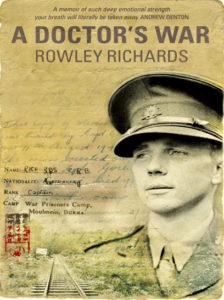
This is one of Richards’ books,  ‘The Survival Factor’ .  He was the Force Doctor for Williams No.1 Mobile Force which came into being at 26 kilo camp, KunKnitway working through to the joining of the two rail ends in October 1943.   They worked right through the wet season laying sleepers and rails as well as ballasting – hard and demanding work which took its toll on the POWs.
After the war Richards was one of those Doctors who was never interested in self-promotion. He focused his efforts on preserving and honouring the veteran’s memories. In particular Dr Richards wanted recognition for the volunteer medical orderlies – men he described as friends and colleagues who served alongside him and whose services were absolutely invaluable to the hospitals up and down the railway.
During an interview he was asked what were the attributes he believed made for survival:
1) Mateship – he believed it was an Australian characteristic looked upon with wonder by British, Americans and Dutch.
2) Courage – in particular the courage of medical orderlies. Those who volunteered to care for cholera patients and risked their lives to look after mates. The men who volunteered to remain behind with the dying when the work forces moved on.
Those who risked their lives to go outside the wire seeking urgent food and medicine for their mates.
3) Innovation – a quarter of the Australian Force “were ‘bushies’ to whom you could give a pair of pliers and a piece of fence wire to solve so many problems” said Richards.  Richards also included their city cousins who had survived the great depression and learnt self-reliance through hardship.
4) Sense of humour – during the darkest of moments, there would always be a witty remark or sometimes a voice from the back row.
The Rakuyo Maru Party was made up from ‘A’ Force men who had survived working on the railway from October 1942 to end of 1943. They were taken to Saigon to be shipped to Japan. This did not happen as the American submarines had successfully blockaded Japanese shipping sailing from this area.
There was a large group of British POWs who had been in Saigon for some time. Their circumstances were luxurious compared to conditions on the railway line.
Their wooden huts even had electricity! Some senior officers came to Rowley and other senior officers asked them to stop the Australians from spreading stories and fear to the Brits.   The Brits obviously did not believe the stories of survival told by the Australians.
It was at this point Rowley Richards realized that if these British POWs did not believe them, how would they ever be able to share their lives and experiences when they got home?
He knew then, they could only ever share their feelings and thoughts with those who had been there. Nobody else would ever completely or fully understand.
The ‘Rakuyo Maru’ Party had to return by rail via Bangkok to Singapore to sail to Japan. On 12 September 1944, ‘Rakuyo Maru’ was attacked by American Submarines in the South China Sea. The ship took 12 hours to sink, but it took days and days of total despair for most of the survivors now covered in oil, clinging to debri, lifeboats deserted by the Japanese and temporary rafts without food and water to tire, go mad or slip away with fatigue and drown.   Only a few were saved by the same submarine crew that attacked them days earlier.
Rowley Richards was one of a group who were picked up by the Japanese Navy including 2/4th’s Bert Wall.  Richards  spent the remainder of the war at Sakata,Yamagata Prefecture, in Japan’s cold northwest.
‘On morning September 13, Nissho Maru, Kasuga Maru, CDV No. 11 and sub-chaser No. 19 were dispatched from Hainan and rescued the survivors of Kachidoki Maru. The three vessels which had been relieved from MANO-03 escort were also ordered to rush to the waters where HI-72 had been attacked. Of the survivors of Rakuyo Maru, the Medical Officer, Captain Roland Richards was on one of a group of four boats, and another group of seven boats on which Brigadier Varley and Colonel Melton were drifting, remaining within the sight of each other. On the morning of 14 September, a Japanese CDV appeared, and to the great surprise of the survivors, this CDV No. 10 rescued 157 POWs of Dr. Richards’ group. According to his statement, before they were rescued, they had heard gunfire. The survivors aboard those seven boats, including Brigadier Varley and Colonel Melton, were never seen or heard from again.’
‘On morning of 14 September, a Japanese CDV appeared, and to the great surprise of the survivors, this CDV No. 10 rescued 157 POWs of Dr. Richards’ group. According to his statement, before they were rescued, they had heard gunfire.’
Arrival Sydney
Richards returned to Sydney on an aircraft carrier with 1,000 former Australian POWs many of whom had survived the privations of Burma-Thai Railway.  Gordon Bennett came down to the ship to welcome us and launched into a tirade about what a hard time they’s given him when he got back (Feb 1942).  That was the type of fellow he was.  Most of the fellows just walked away from the parade!
Dr Richards returned to NSW and practising as a doctor.

He died in 2015.

__________


ROWLEY RICHARDS 1916-2015

‘As a POW and medical officer on the Burma-Siam Railway during World War II, Dr Rowley Richards witnessed an unimaginable catalogue of misery, horror, sickness and death and saved countless Australian lives through his heroic efforts tending to men severely weakened by starvation, tropical disease and the systematic brutality of their Japanese captors.’
Throughout this ordeal, he reminded his men, and the officers commanding them, of the importance of hygiene, prevention of illness and first aid. His strict adherence to these principles saved many lives and ensured that no man under his care ever lost a limb to tropical disease.
After the war, despite his considerable achievements, Richards was never interested in self-promotion. Rather he focused his efforts on preserving and honouring veterans’ memories. He was particularly concerned with recognising the volunteer medical orderlies – men he described as friends as well as colleagues – who served alongside him.
Rowley Richards' war efforts and contribution to medicine were acknowledged at the highest levels.
Rowley Richards’ war efforts and contribution to medicine were acknowledged at the highest levels.
The starvation, frequent beatings and other cruelties inflicted on him by the Japanese could have led to hatred and bitterness, but Richards proved he could rise above that, making friends with some of the Japanese civilians who helped him during his time as a POW and keeping in contact with them and their families after the war.
Charles Rowland Bromley Richards was born in Summer Hill on June 8, 1916, the son of Charles Richards and his wife, Clive (nee Bromley). Charles was a draughtsman at Sydney’s leading cartographer, H. E. C. Robinson, who drew much of the original Sydney street directory, now known as Gregory’s. Clive was a teacher at the Deaf and Dumb School in Sydney and later a lay preacher at the Adult Deaf and Dumb Society.
Charles and Clive were both profoundly deaf, although they could speak clearly. They raised Rowley and his brother Frank in a strict but loving household and taught them to: “Trust in God and fear no man”.
Rowley’s holidays were spent with his Aunt Linda and her husband Dr Arthur Lewis in Kyogle, on the north coast. As a teenager, Rowley spent much of his free time accompanying Arthur on his rounds at the local hospital. The importance of hygiene and practical first aid were drilled into him.
Rowley attended Summer Hill Intermediate High School and Fort Street Boys High School then entered medical school at the University of Sydney in 1933. Alongside his studies, he served in the 1st Artillery Survey Company in the regular militia, working his way up to become a commissioned artillery officer. After his residency at the Mater Hospital in North Sydney, he was appointed Regimental Medical Officer of the 2/15 Field Regiment (2/15 Field Regiment) in 1940.
In July 1941, he was shipped to Malaya. As various elements of the 2/15 were deployed to challenge the advance of the Japanese Imperial Army down the Malay Peninsula, Richards co-ordinated medical care and supervised his orderlies.
After Malaya fell in February 1942, Richards, aged 25, was incarcerated in Changi camp for three months. He was then deployed to various camps along the Burma-Siam Railway for the next two years. Throughout this time, he kept a secret diary, in the hope it might one day be used in war crimes proceedings.
Writing in tiny script on tissue-thin paper, he meticulously recorded statistical information and medical details from the Malayan Campaign, and from the primitive and brutal prison camps in Singapore and along the Burma-Siam Railway.
In September 1944, after he heard rumours he was to be shipped to Japan as part of a slave labour force, Richards hid a summary of the diary in a bottle and buried it in the grave of a colleague, Corporal Sydney Gorlick. He gave the full version to his friend and mentor, Major John Shaw, who stayed in Tamarkan Camp, in Thailand. Shaw hid it in the false bottom of a billy can and kept it safely until the war ended.
The ship carrying Richards to Japan was torpedoed in the South China Sea and he spent three days lost at sea before his rescue by a Japanese warship. He then spent a further eight months in captivity in bitterly cold Sakata, northwest Japan.
During his time in captivity, Richards endured malnutrition, dysentery, malaria, smallpox and starvation. His ordeal finally came to an end in August 1945, when the Japanese surrendered. He returned to Sydney in October 1945.
Major Shaw returned his diary to him later that year, and the Directorate of War Graves Services found and returned the buried summary to him in 1947. His diaries and records were used in war crimes prosecutions and also formed the basis for his two books, The Survival Factor (1998) and A Doctor’s War (2005). The diaries are now in the Australian War Museum.
In July 1946, Richards was working as a resident medical officer at St Vincent’s Hospital, Darlinghurst, when he met Beth McNab, a registered nurse. She knew her own mind and was independent and spirited. Richards, who could also be stubborn, knew he had met his match. They married in 1947 and built a house in Balgowlah. Also in 1947, Richards was Mentioned in Dispatches for his war service.
Richards, a firm believer that the most effective committee should have a membership of one, was active in the ex-service community for the rest of his life. He was president of 2/15 Field Regiment Association and the 8th Australian Division Association.
He built a successful and varied post-war medical career, practicing privately in Seaforth as a GP-obstetrician. He was chairman of the St Johns Ambulance Association in 1981, and was medical adviser to the Australian Olympic Rowing teams for the 1968 Mexico Games and 1972 Munich Games. He was honorary medical director of the City to Surf from 1977 to 1998 and honorary medical consultant after that.
In 1969, Richards was awarded an MBE and in 1993 an Order of Australia Medal. In 2003, he received the Australian Centenary Medal. He later was awarded an honorary doctor of medicine degree by the University of Sydney.
He was a foundation fellow of Australian College of Occupational Medicine and Australian Sports Medicine Federation and a fellow of the Royal Australian College of General Practitioners, the American College of Sports Medicine, and the Australian Institute of Management.
In 1972, with Beth as his assistant, he began his practice in Executive Health in North Sydney. He finally retired in 2000, aged 83.
He and Beth both loved entertaining and cooking. Richards was a keen horticulturalist and his garden was filled with native and exotic plants and flowers. He kept a glasshouse full of exquisite orchids and would always present one to Beth on special occasions.
He and Beth also travelled widely. In recent years he revisited Singapore, Malaya, Thailand, Burma and Japan. In 2011 he revisited Sakata, where he met several descendants of the Japanese civilians who had assisted him and his fellow POWs during the war.
Journalist Andrew Denton provided the foreword to A Doctor’s War, and wrote recently: “Rowley was as good a man as this country has produced”.
Rowley Richards is survived by his son David, daughters-in-law Maria and Lois, and their extended families. Beth died in 2005 and their younger son, Ian, in 2008.
We wish to thank and acknowledge journalist Amy Ripley – Sydney Morning Herald, 27 March 2015 for this fine obituary of Rowley Richards, a doctor held in high esteem by Australian POWs.


Japan says sorry to former Australian POWs

AM / North Asia correspondent Mark Willacy
Posted Fri 4 Mar 2011 at 5:04am, updated Fri 4 Mar 2011 at 7:54am
Former Australian prisoner of war Norman Anderton shook hands with Japanese foreign minister Seiji Maehara in Tokyo. (Yoshikazu Tsuno: AFP)
Japan has apologised to a group of Australian former prisoners of war for the pain and suffering they endured as captives during World War II.
The apology was offered to the five old diggers in person in Tokyo by Japanese foreign minister Seiji Maehara, who told them he was sorry from the bottom of his heart for their treatment.
They came with walking sticks and in wheelchairs, five men the Japanese Imperial Army could not break – not in Changi nor on the Thai-Burma railway.
Once inside the Foreign Ministry in Tokyo, the group’s oldest member, Rowley Richards, 94, sat across the big table from Mr Maehara and he did not flinch.
“The important thing to our members, there are many of them as you know, are looking for an official apology,” he said.
After a 20-minute meeting with the foreign minister the old diggers emerged with something many POWs have been seeking for 66 years – a sincere apology for their suffering and pain.
“As I understood it, it was deep and expressed great remorse for the suffering that was inflicted on us and it was a very moving experience,” said 89-year-old Norm Anderton, who was used as slave labour on the Thai-Burma railway.
“He said to consider it a formal apology from the government.”
Standing next to Mr Anderton was 90-year-old Harold Ramsey. He said before the meeting that an apology would be worthless because it would come from a generation of Japanese who were not the ones who beat and humiliated him.
But after his meeting with the foreign minister, Mr Ramsay’s scepticism had melted somewhat.
“We waited a long time but it was sincere and much better time than when I was here before in 1944 … this is really good, very sincere,” he said.
Of the 22,000 Australian prisoners of the Japanese more than a third died in captivity.
The Japanese government realises time is quickly taking those Australians who survived the horrors of their captivity, so it is vowing to bring more former POWs to Japan to try to reconcile and offer remorse.
“I think we know that to have better future, it is very important to put right what was wrong in the past,” said ruling party member Yukihisa Fujita.
For Mr Richards, who as a doctor treated thousands of his comrades on the Thai-Burma railway, the time has come to forgive.
“I believe very firmly if any individuals hold bitterness, there is only one person who suffers – that’s the person who is being bitter and I’ve often said that if I feel bitter towards the Japanese country, they are not going to fall down on their knees and worry about it.”
Last year the Japanese government offered a similar apology to a visiting group of American former POWs.
Records returned
Foreign Minister Kevin Rudd has welcomed the apology and also thanked the Japanese government for their offer to return historical records of Australian former POWs held by Japan during World War II.
“I welcome their offer which is made in the spirit of cooperation,” he said.
“These index cards were originally offered to Australia by the Japanese government in 1953, but the Australian Government of the time chose not to take up the offer, believing that they would not contain any new information,” Mr Rudd said.
Veterans’ Affairs Minister Warren Snowdon says the Japanese records may shed light on the fate of the members of Lark Force, many of whom were lost when the Japanese transport Montevideo Maru was sunk by a US submarine in 1942.
“The Government recognises that there are families who remain uncertain about the fate of those captured by the Japanese during World War II,” Mr Snowdon said.
“In recent years, the Rabaul and Montevideo Maru Society have maintained interest in the fate of Australian prisoners of war and have pressed the Australian Government to seek access to the card system.”
The records are expected to be housed in the Australian War Memorial.


Captain David Clive Critchley HINDER NX76302 2/19th Battalion – Medical Officer Thailand & Japan

HINDER, DR. DAVID NX76302 2/19th Battalion, Medical Officer Thailand  & Niihama, Japan.

Hinder was born 4 August 1910 Summer Hill, Sydney.  His secondary education was at Shore Grammar School 1926-1928.  He left school at 16 years intending to go on the land.  Some years later he decided to study medicine.  He graduated Medical School in 1939.

Hinder was a big-framed man and a good tennis player.

In November 1940 after a year of residency at Royal Prince Alfred Hospital he enlisted into AIF and was allocated to Australian Army Medical Corps.  In Sept 1941 Hinder moved to Singapore with 2/12th AGH and later was attached to 2/19th Battalion.  He was with 2/19th when capitulation took place Singapore 15 February 1942.

The following information is from Peter Winstanley’s ‘Articles about POWs of the Japanese Including Burma Thailand Railway 1941-1945’

In March 1943 Capt. Hinder was one of six Australian Medical Officers who were sent to Thailand with ‘D’ Force.   (Dr. Phil Millard was one of the six –  highly regarded by  2/4th POWs who worked at Konyu II.)

‘D’ Force totalled 5,000 POWS – 2,800 British and 2,300 Australians.

Hinder was allocated to U Battalion commanded by Capt. (Roaring Reg) Newton. The low mortality rate of U battalion was attributed to the strong leadership of Newton and medical care provided by Hinder.

Jim Elliott 2/4th POW in Japan recalled ‘David Hinder managed to convince a Jap medical officer that I had pneumonia – he told him ‘this man will die if his chest is not drained’. Two days later I was taken to a civilian hospital where a tube was inserted into my back by a Japanese surgeon. Dr. Hinder stood at the head of the operating table and comforted me. There was no anesthetic. Back at camp, he visited me every day and examined my wound. He was on the same ship as me on the way home after the war and went out of his way to look me up and see if I had recovered.

Charles Edward 2/19th Btn was a POW with ‘D’ Force U Battalion in Thailand wrote Hinder was a very good doctor. Everybody admired him and attributed to low death rate of U Battalion to the Newton/Hinder team. He further wrote:

‘The Jap in charge of their detail was Hiromatsu Sojo known as ‘Tiger’ by the POWs. Doc had displeased Tiger over a trivial incident so Tiger demoted Doc to Sergeant, banishing him to work in the camp kitchen and promoted medical Sergeant Frank Baker to Captain medical officer. This went on for about a week, when Tiger went to the Doc for a bit of minor surgery. Doc Hinder told him sergeants were not permitted to operate, and told him to go and see Captain Baker. The ranks were immediately reversed.”

David Hinder quoted

 “I am a fourth generation Australian and I have never been so proud of being one, before and since, as I was when a POW of the Japanese, for as you know, our boys were on their own”.


The following information is from Peter Winstanley’s ‘Articles about POWs of the Japanese Including Burma Thailand Railway 1941-1945’

In Ray Denny’s book “The Long Way Home’ he mentions Captains
David Hinder and Dick Parker were on Byoki Maru for its dreadful 70-day journey to Japan. He wrote, “Doc Hinder with whom I had worked, was so thin he could hardly get around the ship”. Denny also wrote that while at Niihama he worked with Hinder and Bert Adams (captured Timor February 1942 – who was in civilian life, a train driver on the Sydney to Melbourne line). At war’s end supplies were parachuted into the camp. Included was a bottle labeled ‘Penicillin Sodium’ – unfamiliar and completely new to us. Doc Hinder decided top give it to a very sick patient. He soon improved.”

After the war Hinder resumed general practice then went into ophthalmology. He maintained his work with POWs and had filing cabinets at home filled with correspondence with Veteran Affairs.

Hinder died 2 January 1989 aged 78 years.

The following extract is from Hinder’s eulogy:

“His absolute disregard for his personal welfare, comfort and physical safety; his unbelievable patience, his evenness of balance, perseverance and capacity for clear thought, logic, reasoning and self sacrifice made him a by-word of never being at a loss nor becoming flustered despite beatings and bashings.  An entertainer and mimic went to War but a quieter, more reflective and private man came home”.


Dr. David Hinder wrote a letter in 1981 about the Atom Bomb. Following is most of what he wrote (excluding only his personal references to family and birthdays!)

Dear Sir,

When the atom bomb fell on Hiroshima 36 years ago, I was in a POW Camp at Niihama on the island of Shikoku.

August 6th – was a calm sunny day. Across the Inland Sea the mainland was peaceful and quiet and it was difficult to believe that the country was at war for there was neither sight nor sound of American planes overhead nor the distant thump, thump of exploding bombs and their rumbling echoes through the hills.

In my cubicle my back was to the window, which faced the mainland. There was a flicker of light like sunlight reflected from the windscreen of a passing car, but no cars went past our camp. Minutes passed.

A thunderclap seemed to split the very heavens with a tearing sound as though a huge sheet was being torn apart. The window rattled, the mud walls shook and little flakes of dirt fell to the ground. A rumbling echo faded into the distance. Silence and stillness prevailed as before.

I went outside and looked across the Inland Sea to the mainland; the scene was unchanged, no fires, no smoke, calm and peaceful as before. I knew something dramatic had happened but I had no idea what it was.

In the distance there was a curious, toadstool shaped cloud.

There were no more deaths in our camp.

The Japanese dug foxholes around their guardhouse and office. Whenever a Flying Fortress flew over, very high, with its long vapour trails betraying it, they waited in their foxholes until it had gone, morosely staring at us as we walked about the camp wondering what made them so jittery.

At that time, we were at the end of the road through starvation, untreated diseases, and overwork and very few would have survived the approaching winter. We hoped for an American invasion and expected it, but we knew that such an invasion would provoke the Japanese into fury, fear and hatred and we could expect a violent death. For us there was no way out.

A month after the end of the war a small party of Americans arrived in camp. They had all been in the tropics for some time and on the anti-malarial drug Atebrin, which stains the skin yellow and they were far yellower than any Japanese we ever saw.

They told us about the bomb and in Manila some weeks later I saw photographs, which confirmed my suspicious about the mighty bang and the unusual cloud formation of 6 August.

The atom bomb saved our lives and it saved the lives of hundreds thousands of other POWs. It saved the lives of thousands of Americans and the lives of more Japanese than it took, for if the Americans had invaded Japan and the Emperor had gone on the air and told his people that they were to die defending their homes, every man, woman and child would have done so, without questions and without exception.

The Japanese (at that time)

had One religion – Japan

One faith – the Japanese people

One God – the Emperor

The atom bomb has kept the peace between the major powers, the longest period of world peace this century, and it may well be an illustration of Emerson’s statement “the first lesson of history is the good in evil.”

Pacifists demonstrating against uranium and nuclear bombs may be preparing the world to accept a non-nuclear war as a lesser evil, when either would be disastrous.

Professor Toynbee writes ‘the divine irony of human affairs; the most tremendous of all the lessons of history.’

“The atom bomb has done more to keep world peace between major powers than all the pacifists demonstrations combined.”


David Hinder


Arnold Joseph Toynbee, CH, FBA was a British historian, philosopher of historyauthor of numerous books and research professor of international history at the London School of Economics and King’s College in the University of London. Toynbee in the 1918–1950 period was a leading specialist on international affairs. … …Examining the rise and fall of 26 civilizations. 

We wish to acknowledge and thank Peter Winstanley for access to his research.


The Borehole Bulletin October 1991

Dr David Hinder another POW Medico.  Following is an extract from his letter.

“To me it has always been surprising NOT that so many died but that so many survived.Very few in our camp would have lived through another winter and we were undoubtedly saved by the Atomic Bomb.
If this period of our lives did us no harm, it seems that we are wasting a lot of time and money on our Health Service.  If this is right, surely we could do away with drugs, close the  hospitals and treat the sick and starving with work and perhaps the survivors will suffer no ill effects.”
He went on to say that in 1963 hew had a coronary occlusion and that he had had an undiagnosed one earlier.  He described his experience for a Disability Pension and this is attached as Annexure ‘D’.
Dr Hinder also had an article printed in  Medical Journal of Australia, May 1981 – describing conditions particularly in Japan, including particulars of diet, working conditions.
“To me the treatment of ex-prisoners of war of the Japanese is a scandal and disgrace.”

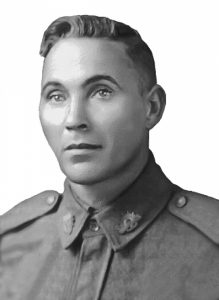
Khonkan Hospital Camp 55km, Burma – William (Bill) Hood WX7471, Tom Davison WX7909, Allan Bamford WX8485 –

Sir Albert ‘Bertie’ Coates was the most modest of men. ………

words written by author Patsy Adam- Smith ‘Australian Prisoners of War’ ISBN:9781760062781


Please read fabout Albert Coates from AMAVIC


KHONKAN 55 KM  HOSPITAL CAMP, BURMA 1943

Known to all who were there as 55 KM

Please read further about Albert Coates, 55km Camp

Corporal Bill Hood WX7471 of 2/4th:
“The great doctor, Col. Albert Coates was one of the finest men I have known in my life. All the men who came into contact with him believed that. He not only saved lives but saved reason. I had a tropical ulcer on my instep and it was thought the foot would have to be amputated. Dr. Coates told me he’d go on trying for a little while longer to see if he could arrest the gangrene, and nine days later I had begun to recover.”


Bill worked for a time at Khonkan 55km ‘Hospital’ Camp theatre where Coates was operating “I held men during the operations. They were laid down on the table and injected in the spine with diluted novocaine the chemist had to make do with what he had to go around. It did not completely deaden but it eased the pain. I remember when Alan Bamford WX8485 from 2/4th had his leg off, we took the piece of rubber from inside the crown of a soldier’s tin helmet and gave it to him to bite on, and another bloke and I each gave Alan our hand to hold. I couldn’t hold my hand properly for days after.”
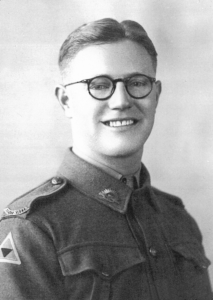
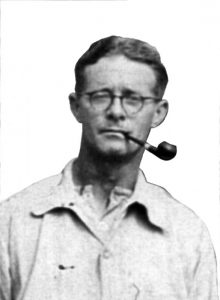
Below:  Bamford
“I will never forget the burial of Tom Davison WX7804 from Marble Bar, WA. He had an ulcer in the foot, similar to mine. He struggled with it and Dr. Coates fought for him but eventually it had to come off; but he was too low (suffering chronic diarrhoea and malnutrition) he died. Tom had got a fixation about what little use it would be for him to go home to Marble Bar without a leg. ‘You couldn’t even kick anything’ said Tom.”
 “The men were sorry for  Coates because he had to work with a butcher’s saw,  chisels and that sort of thing for major operations. We could put ourselves in this position, day after day, knowing how he felt about his patients. I often thought what it must have done to Col. Coates, on top of his surgical and medical roles he had all his administrative work to do. He was the senior man. He looked like an old farmer with rosy cheeks. But he couldn’t save everyone and Tom Davison knew that. So, we put a rice bag over Tom‘s head and another over his remaining leg and dug a hole and he was buried.”
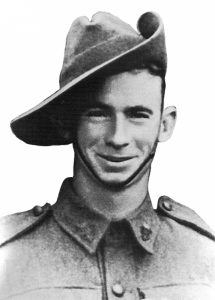
Bill Hood went to the funeral on bamboo crutches.
Tom Davison died at Khonkan 25 October 1943 aged 34 years.  He had a 3 inch by 2 inch tropical ulcer.  Coates had no other option and was forced to amputate the left leg above the knee.
Bamford’s successful operation to remove his right leg at mid-thigh because of tropical ulcer, took place 22 November 1943.


Another 2/4th soldier who had his leg amputated at Khonkan was Eric Ryan WX16767 of HQ Coy.
His amputation took place on 21 Oct 1943 he was 22 years old at that time and had been evacuated from Aungganaung 105 Km Camp.
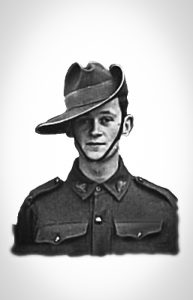
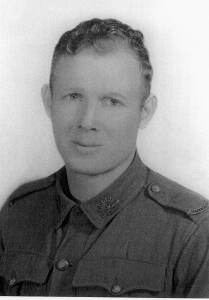
Ryan was evacuated to Tamarkan Hospital 25 Dec 1943 and later sent  to Nacompaton where he was a medical orderly and from where he was recovered at the end of the war.


Death of WX9231 HODGSON, Leonard Sydney (Tim)
 d. 24 Sep 1943 aged 24 years
following re-amputation above his knee. Due to tropical ulcers Tim’s first amputation was below the knee.
Hodgson had grown up at Denmark where his parents were Group Settlement farmers.  He had two brothers one of whom gave Tim a watch as a farewell gift.
Hodgson’s watch returned to WA with Capt Phelps, 2/4th who was at Khonkan and believed to be working as an orderly.  Sadly Phelps did not return Hodgson’s watch to his parents who were alive at the end of the war.  A son of Phelps found the watch amongst his late mother’s belongings.  It had obviously become mislaid.  It was returned to Hodgson’s family about 2010.


WX7724 PARKE Albert Sydney (known as ‘Major)
‘A’ Force Burma.  He was a medical orderly at 55 km from 7 July – 19 Oct 1943. He was previously  at Meiloe 75 Km at the RAP 28 March 1943.
He was evacuated from 55km to Tamakan by train January 1944. Later sent to Nacompaton Hospital Camp 30 Aug 1945 until the end of war.
The Major’s brother WX7738 Charlie Parke worked the Thailand end of the Railway with ‘D’  Force Thailand V Battalion which suffered a terrible death rate under appalling Conditions.  He was then selected to work in Japan at the Omuta Coal Mining Camp which again was judged to a terrible camp.  He survived to return home.


WX9145 Alfred Joseph McGhee known as ‘Tubby’ was another ‘A’ Force Green Force POW who was evacuated to Khonkan 55km with leg ulcers on 6 November 1943. He had his leg amputated 4 January 1944, was evacuated to Tamarkan Hospital Camp  and discharged 27 April 1944 to Bangkok.  He was recovered from Nacompaton at the end of August 1945.


Others to die at Khonkan Hospital Camp:
WX7625 Pte James Sydney CLARKE – died 13 Aug 1943 of pellagra and cardiac failure Khonkan Hospital Camp, Burma aged 25 years.  From Picton Junction, Bunbury Jim Clarke’s body was after the end of the war moved to rest  at Thanbyuzyat War Cemetery, Myanmar.

Jim Clarke had been evacuated sick from the Burma-Thai Railway Aungganaung Camp  to Khonkan Hospital Camp, Burma.
WX10797 Corporal Frank McPhail TOWNSEND – died 16 August 1943 chronic diarrhoea, pellagra and tropical ulcers aged 22 years.  Kalgoorlie boy Townsend enlisted Jan 1941 became Corporal to CO Lt John Morrison of A Coy 6 Platoon.

WX8798 Guy Percival Biggs – died at Khonkan on 21 August 1943 of cardiac beri beri, dysentery and tropical ulcers.  Guy was 39 years of age.  Read further about Biggs.
WX5050 John Arthur Briggs – was evacuated with a tropical ulcer to his ankle, to Khonkan from Aungganaung 105km Camp. He died the same day as Des Chapman on 11 September 1943, aged 29 years.
John’s younger brother Roy Briggs WX7329  also enlisted with 2/4th and joined ‘B’ Company.  Roy Briggs was with ‘D’ Force S Battalion and was recovered from Thailand at the end of the war.


WX7504 Desmond Bruce Chapman
Already ill with tropical ulcers  and dysentery, Des was unable to recover from his amputation and died on 11 September 1943.  He was 27 years old.
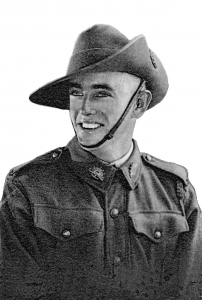
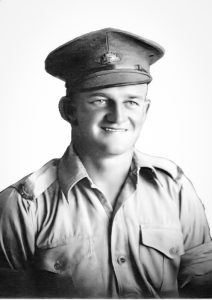
Soldier evacuated to 55km Camp from Aungganaung 105km Camp on 1.7.1943 due to an irregularly large 8 inch by 8 inch tropical ulcer that exposed  bones and tendons on his right foot. Soldier’s right leg was amputated below his knee. The surgical re-amputation of stump was conducted due to gangrene.
He left behind a young wife and daughter in Western Australia.


WX7022 Hope Edwin James (Eddie) -died 8 August 1943 of beri beri aged 23 years.  Eddie enlisted end of July 1940 and joined ‘D’ Company.  He was wounded during short Battle for Singapore – received GSW to his left elbow during action at Hill 200, Ulu Pandan where a large number of 2/4th lost their lives.  He was admitted to Alexandra Hospital 12 February 1942 and returned to his unit on 24 February 1942.


WX8137 NEEDHAM, John Wiliam Haynes, Lance Corporal

Born Broome 1913.  He enlisted AIF 16 Aug 1940.  He joined 2/4th’s ‘C’ Coy HQ as a driver/mechanic.
Needham was evacuated to Khonkan with tropical ulcers on his right foot.
In a weakened state of health, John Needham succumbed to pneumonia on 5 Dec 1943 aged 30 years.


WX9358 ROBERTS, William Charles d. 16 Aug 1943 cardiac failure following bacillary dysentery.
Aged 35 years, he was evacuated from Aungganaung 105 KM Camp, Burma, 1 June 1943 to Khonkan Hospital Camp, Burma.
Roberts had been farming at Williams and was engaged to be married.  William Charles Roberts was born Ravensthorpe 1907.
WX17737 MOHER, Kenneth died 24 July 1943 of amoebic dysentery.  He was 28 years old.
Presumed to be evacuated from Aungganaug 105 km camp to Khonkan. Moher was another Goldfields ‘Boy’ born Gwalia.  Ken had a bakery with his brother. He enlisted 15 Dec 1941and joined 2/4th as reinforcement.  


Please read further about Albert Coates and Claude Anderson from 2/4th.
Also please read about Khonkan 55km Camp.
WX7224 Albert (Bert) Parke worked as medical orderly at Khonkan 55km between 7 July 1943 and 19 October 1943.
WX11629 Keith Bedford Mitchell worked as M/O arriving 1 July 1943.  We believe he remained here until the Japanese began moving POWs working Burma end of rail link south to Thailand about end of 1943 and railway was completed.


WX9157 Albert ‘Snow’ TAPPER was evacuated from 105km camp with an injured arm to 55km Camp.
Snow became a medical orderly for ‘Bertie’ Coates.
Snow was recovered from Nacopaton Camp, Thailand at the end of the war.


Above:  Coates was a principal witness at the Tokyo War Trials.  He found it difficult to accept the brutality of the Japanese.
I believe the POWs would have appreciated ‘Bertie’s’ evidence.
Interesting, Weary Dunlop chose not to give evidence at any War Trials.

TANBAYA HOSPITAL CAMP – 50 KILO CAMP, Burma 1943 & MAJOR BRUCE HUNT, MEDICAL OFFICER (MO) ‘F’ FORCE

Dr Bruce Hunt, 'F' Force
Dr Bruce Hunt, ‘F’ ForMajor Bruce Hunt A.A.M.C. served in WW1, studied medicine on return to Australia. He was a tall, well built man with a personality to matcMajor Hunt left Changi with ‘F’ Force, travelled by train to Bampong in Thailand.Hunt with his medical team marched with ‘F’ Force on the 300 kilometre march from Bampong to Shimo Sonkuri, Burma.   They marched at the rear to ensure stragglers were assisted to the next transition camp. Hunt also ensured  POWs were taken care of and did not hesitate to stand between the Japanese guards and their well-being. Many of ‘F’ Force were unwell before leaving Changi and not fit for a working party.  It was a tortuous journey.
The POWs soon learnt of or experienced the dedication of Hunt and Hunt quickly earned the admiration of the marching POWs and of those at camps which ‘F’ Force passed through on their journey north.
Although several dedicated and committed M.O.s assisted Major Bruce Hunt, he was the most respected by the men of F Force.  He outshone other senior service officers and was an excellent Camp Commander.  The Japs also respected Bruce Hunt.   Hunt’s services and commitment to Australian and British POWs was nothing short of remarkable.
Much of the following is taken from the report by Bruce Hunt. Major A.A.M.C., Commanding Officer, Burma Hospital.
On 29 June 1943 IJA first intimated their intention to construct a hospital in Burma to receive ‘F’ Force men incapable of work for at least two months. Rolls were prepared for 2,000 men.  On 8 July plans were cancelled. On 21 July fresh orders were issued to prepare rolls for a 1250 bed hospital. Lt.Col Harris, commanding ‘F’ Force appointed Bruce Hunt O.C, Hospital on 1 July and Hunt was taken to Burma by the IJA in company with Lieut. Saito to examine the hospital site.
Bruce Hunt returned on 2 July and left on 30th July with the advance party for Burma.
Later when evacuation of sick to Tanbaya took place, several camps were closed down and POWs were concentrated at 2 main camps at Kami Sonkurai and Sonkurai with the new HQ Camp being established at Nikhe.
When Changaraya, Nikhe and Shimo Nikhe were about to close an order came through on 2nd August to regroup at Sonkurai and Kami Sonkurai so each camp could supply the same number of POWs for the Japanese engineers on the line.
Patients too ill to be transferred to the newly established Tanbaya Hospital Camp and expected to die were ordered to remain with their carers until told otherwise.
Four diseases dominated Tanbaya Hospital Camp.   In the order of mortality, they were Dysentery, Tropical Ulcers, Beri Beri and Malaria.
Major Hunt, as O.C. of the Hospital was responsible for all medical treatment and  administrative control of all medical personnel whether professional or amateur and of all patients. Lt. Col. Hutchinson as Administrative Commandant of the camp was responsible for such services as cooking, securing of wood and water, hygiene and pay. Tanbaya ran smoothly and efficiently as was possible under the circumstances.
Patients were segregated as far as was possible to assist in facilitating treatment and prevent cross infection.
There were seven wards and each held about 190 men under the control of a Wardmaster who was a combatant officer who had  several assistants. The Wardmaster was responsible for nominal rolls, discipline, hut cleanliness, messing, canteen supplies and generally everything taking place in the ward except those matters which involved technical medical knowledge or skill. Additionally the Wardmaster through the medical officer or senior nursing N.C.O. had supervisory control over activities of the nursing orderlies in regard to their non-technical functions.
This system with the wardmaster was first devised in Shimo Sonkurai Camp and was further used in camps in Burma. The system was found to be of the greatest possible assistance in running hospitals. Discipline and general ward efficiency were better than they usual under N.C.O. control
Bruce Hunt wrote  “I was particularly fortunate in having a very able body of Wardmasters; they worked, ate and slept in their wards and were completely devoted to their duties and to the interests of their patients. I should like here to express my appreciation of their valuable services”.
Hunt referred to the seven wardmasters including Captain George W. Gwyne, WX3450 from 2/4th who was also with ‘F’ Force.  Other wardmasters were Lt. I. Perry (2/1 Heavy Bty A.I.F.), Capt. H. Walker (2/26 Bn A.I.F.). Major R. Hodgkinson (R.A.S.C.), Major W. Auld ( M.A.O.C.), Capt. B. Berry (2/10 Fd. Rgt. A.I.F.) and Lt. Col. Ferguson (18 Div H.Q.)
A Wardmasters’ conference, attended also by O.C. hospital, Registrar and Messing Officer, was held at 1530 daily, and this proved a most satisfactory means of keeping the wards in close touch with camp policy.
A daily check took place at 1500 hours where all drug requisitions were checked and counter signed by O.C. – thus providing a fair distribution to wards and to assist in conservation of supplies.
As the health of patients improved and they became fit for camp duties they were sent to the ”‘labour exchange” to be vetted by the O.C. Hospital and then assigned to various sections of the hospital to assist.
The  R.A.M.C. and A. A. M. C. staff numbered 142 at the most – many of these men arrived as patients, died at Tanbaya or remained as patients throughout their time in Burma. Nine members of R.A.M.C. and eight members of A. A. M. C died at Tanbaya. Five R.A.M.C. members and nine from A.A.M.C. remained behind as seriously ill patients when the bulk of Tanbaya Camp was moved in November 1943.
The maximum number of medical corps personnel available for work at any one time was 62 however was generally between 40 and 50.
With such low numbers it was necessary for volunteers from non-medical units to attend to the ongoing and constant needs of patients. The devotion and tireless effort of these volunteers is not only praised by the medical teams but the patients. They gave their time throughout the night and day.
Some volunteers were as good as and sometimes better than the professionals.
Many patients were in such advanced state of illness on arrival at Tanbaya, in particular the patients from Sonkurai No. 2 Camp where it was believed all very sick patients were evacuated. This wasn’t the case with other Camps who did not transfer their most sick men.
DYSENTERY
The dysentery wards were the most depressing. The patients fought bravely forcing down rice day after day and week after weeks hoping for medical supplies to arrive.
There were 114 deaths from dysentery and a total of 334 deaths with dysentery playing a part with other illness(es). An attack or recurrence of dysentery often brought on sudden death for patients suffering from beri beri or ulcers.
Tanbaya received the first and only supply of Etemine sufficient for 5 patients in November.
BERI BERI AT TANBAYA 1943
68 patients died of beri beri and a further 260 cases died with beri beri as one of the causes of death.
Kanyu Riverside Camp Dysentery Ward 1943 (by Stanley Gimson) Dysentery killed more men on railway than any other disease. Emetine was only effectiive medicine, but was in short supply even on Black Market.
Beri beri was widespread throughout the camp and at its worst there were more 600 patients showing clinical manifestations. The disease seemed more severe at Tanbaya with oedematous and cardiac types predominant.   Cardiac berri beri was common and severe. It was not uncommon for a sudden death to occur in the middle of the night.
TROPICAL ULCERS
 Ninety-two patients died of ulcers alone at Tanbaya and 105 of ulcers complicated by other diseases. 60 amputations were performed. Because of the very poor general health of a patient undergoing an amputation many died of complications.
The lower extremities of the body were more prone to ulcers, in particular the region of the tibia. However ulcers could and did occur in any area of the body – lower spine, groin, elbows, wrists and fingers. An ulcer could follow a small scratch or small cut.   Huge areas of skin and flesh were eaten away.   In some cases bone was eaten away.
In the absence of Sulphanilamide and lodoform the only options included cleansing with Eusol or Saline 2-3 times days with often disappointing results.
MALARIA AT TANBAYA
 As was the case in all railway camps malaria was universal throughout Tanbaya. During August and September malaria was recurrent and was the worst owing to a shortage of quinine supplies. At that time, 7 days was the maximum treatment period. After September when supplies were more readily available the time for treatment was 24 grams daily for 7 days and 32 grams daily for 12 days accompanied by .02 Plasmoquin daily.
One of the concerning features of  malaria at Tanbaya was the high degree of resistance to quinine with some cases taking as long as 6,7, or 8 days for the fever to come under control.
Beginning in September 1934 strong representations were made to IJA that hundreds of patients would not survive a long railway journey south. As a result leniency was allowed in selection of patients chosen to travel. The careful choice of 900 patients who left Tanbaya for Kanchanaburi resulted in only 2 deaths from the arduous 5-6 day journey.
218 patients remained behind at Tanbaya with approximately 85 suffering from dysentery, 65 from ulcers and majority of the remainder had beri beri.
102 staff remained behind to look after them.
No drugs were delivered by IJA until 5th November. The pitifully small supply was totally inadequate.
The survivors from Tambaya left in March and spent around one month in Kanchanaburi where they met up again with Major Hunt.  They were taken by train to Singapore some time in April, 1944, arriving approximately one year after their departure.
Bruce Hunt wrote in his report at Kanchanaburi 23 December 1943 in which he acknowledged the dedication of the following medical staff Major W. J. E. Phillips (R.A.M.C.), Capt. Emery (R. A. m. C.), Capt. F. J. Cahill (A. A. M. C.), and Assistant Surgeon Wolfe (I. M. D.). Outstanding nursing work was performed by Sgt. G. Nichol (A. A. M. C.). and by Cpl. Skippen and Cpl. Sutton (R. A. M. C.).
The following  has been taken from “The Albert Coates Story” by Albert Coates & Newman Rosenthal”
Towards the end of 1943, the Japanese brought a number (nearly two thousand) of the worst cases of tropical ulcers, gangrene of the legs and avitaminosis from the Thailand side of the railway to a camp at the 50 Kilo mark.
 Major Bruce Hunt of Perth, WA was in charge of the party and on his way passed through 55 Kilo. camp, where he was detained by the Japanese guards. I was informed of his presence in the guardhouse and was able to talk for a while with my old friend of student days who had been an honoured staff member of the 13th AGH.
 Some time later I was instructed by the Japanese to proceed to 50 Kilo camp and inspect the sick there.”
“Captain Frank Cahill, a younger surgeon who had been with me in the 10th AGH and had visited our 55 Kilo camp was in charge of the leg ulcer patients. They were in a shocking condition and mortality was very high. Most of them were already past help by amputation. Of the 1924 patients, 660 died. The conditions in that camp were even worse than those in the 55 Kilo. Camp. There were no facilities for operations. The camp was the usual abandoned working camp now called a ‘hospital’. It was nothing but a dirty depot for depositing the dying. Hunt and his colleagues had put up a gallant fight against hopeless odds”.

Please read about Tanbaya Hospital Camp


Bruce Hunt was repatriated in 1945 he was awarded MBE in 1947 and testified before war crimes tribunals.
He was a devoted physician, beaten several times by his Japanese captors for standing up for his men.
Bruce Atlee Hunt died 29th October 1964 at Applecross, Western Australia


Men of 2/4th who died at Tanbaya Hospital camp included:
WX9131 Goodwin, Reuben ‘F’ Force d. 6 Nov 1943 beri beri and dysentery, 27 years (former Fairbridge student)

Born 1916 England he was sent to Fairbridge Farm School, Pinjarra.   Goodwin had been working at Konnonggorring, WA’s wheatbelt area for several years before enlisting 30 Oct 1940.  He later joined 2/4th’s ‘B’ Coy.
He left Singapore mid April 1943 with ‘F’ Force Thailand by rail for Burma-Thai Railway
Please read further about ” Force Thailand


WX7801 Hackshaw, Albert ‘F’ Force d. 2 Nov 1943 tropical ulcers aged 43 years just two days prior to Goodwin.  Together their funeral was conducted by British Army Chaplain Duckworth on 15 November 1943 although Hackshaw was buried on 2 November.
Hackshaw born England 1900 came to Australia with his parents and large family of siblings.  His younger brother enlisted the same day as Albert.  Reginald Hackshaw WX7800 died in New Guinea.
Prior to enlisting August 1940, Hackshaw had been working at Roebourne, employed as a foreman to Main Roads Department.
WX9320 Heal, Herbert William
‘F’ Force d. 22 Dec 1943 beri beri and dysentery aged 33 years.
Like many young men, Bertie had never married or possibly held a permanent job because of the depression.  He had moved to Toodyay working as a yardman prior to enlisting.
After the war his body as well as those of all who perished at Tanbaya, were moved to Thanbyuzyat War Cemetery, then Burma (now  Myanmar).
WX9849 McIntosh, Archibald James L. (Archie) ‘F’ Force d. 10 Nov 1943 beri beri and dysentery aged 23 years.
Archie’s funeral was included Goodwin and Hackshaw on 15 November held by Chaplain Duckwith.

Archie was one of a number of 2/4th boys from Bassendean.

Please read further details of Archie McIntosh

WX9143 SMITH, Montaque Joseph of Mukinbudin died 13 November 1943 of dysentery and tropical ulcers aged 27 years.
Montague Smith WX9143


WX8699 Thackrah, Cyril Bernard 

‘F’ Force d. 19 September 1943  of dysentery and malaria.  He was 40 years old.
Known as Barney, Thackrah came to WA as a young man with his brother.  Barney’s brother Dudley died at Katanning.
Barney’s older brother was KIA Flanders, WW1.
Barney was one of the earliest deaths of 2/4th men sent to Tanbaya.


Further reading about the feats of Dr, Bruce Hunt

Dr Albert Coates & Dr Claude Anderson

Dr Albert Coates WX503645 was one of 43 Australian doctors, 6 dentists and 458 medical orderlies who became POWs and worked on the Burma-Thai Railway, WWII.

He was a remarkable man. He was also an idealistic, highly experienced and dedicated surgeon when he enlisted for service in WW2. His experience included service in WW1. His life story is an inspiration for every Australian.

‘Albert Coates was extraordinary from the start. Born in 1895, he was the first of 7 children. His grandfather arrived from England during the Victorian goldrushes, and they settled in the Ballarat area. As the family was of modest means, when young Albert completed his primary school, he was sent to work, initially apprenticed at 12 years old to a butcher, then to a book-binder, the latter giving him access to books to read. He was noted to be bright, and his primary school teacher, Mr Leslie Morshead , later Lt-Gen Sir Leslie Morshead, CO 9th Div AIF, offered to teach Albert at night school. He studied languages and sciences, and at 18 years sat the matriculation equivalent, receiving 5 distinctions. He left his apprenticeship and obtained work at the Melbourne and subsequently Wangaratta PO while he studied pre-med subjects to facilitate his enrollment in the University of Melbourne medical school.
In 1914 world war broke out, and shortly after young Albert enlisted in the AIF. He was considered too short for combat and so was eventually given the role of medical orderly. He was sent to Egypt in the first convoy from Albany, and he continued to learn various languages from the troops and civilians he met. His French and German became fluent. He was present at Gallipoli landing but the horses and wagons of the medical teams were not landed, and he watched from the ships for 18 long days before returning to Alexandria. When he eventually got onto the peninsular he served there for many months, until the final Australian evacuation in 1915. He continued service in Ypres and on the Somme. As a medical orderly in WWI he witnessed first-hand the horror that war brings. He taught himself Dutch and as his language skills became prominent, he was drafted for intelligence work. The British Army subsequently offered him a commission in the Intelligence section, after nearly executing him themselves in error.
The young Sgt Coates returned however to Australia late 1918, enrolled at University, worked at the Post Office at night to put himself through medical school. He married in 1921 while a medical student. He graduated in 1924 with 1st class Hons in all subjects. He became a RMO at the Melbourne Hospital, and soon showed aptitude for anatomy and surgery. He was given the position of Stewart Lecturer in Anatomy in 1926. He subsequently became a specialist surgeon, joined the honorary staff at Melbourne Hospital, both working and teaching. . One of his students, and later staff colleagues, was ‘Weary’ Dunlop. His professional life blossomed, the only shadow in his life occuring in 1934 when his wife died after an operation. It was some time later that he remarried.
In 1939 war was declared again, and despite being nearly 45 years old, with 5 children to support, he enlisted in the 2nd AIF. The 8th Division sailed for Singapore in 1941, and Lt-Col Coates aboard the Queen Mary was Senior Surgeon of the 10th AGH in Malacca.
In Malacca, he learned about tropical medicine first hand. Under Col E R White, clinical meetings were begun and the staff studied tropical ulcers, amoebic dysentery, malaria and other tropical syndromes in depth. Coates got permission, after much official resistance, to train a number of medical orderlies here. They eventually proved to be a great asset when the invasion came as most of the nurses were evacuated.
During his time there, Coates was called to Singapore to perform emergency surgery on Australia’s Ambassador to Japan, Sir John Latham. He subsequently accompanied him to Melbourne to conduct definitive surgery for him. They became great friends. Coates managed three short weeks with his family before being urgently recalled to Malaya.
By January 1942, the Japanese were advancing quickly on Singapore, and the 10th AGH in Malacca was broken up. Coates was sent to 13th AGH in Singapore and he operated there on the troops returning from the advancing war front. The hospital filled rapidly, patients even being nursed on the lawns. Unfortunately for the hospital, a battery unit was setup at one end of the garden and soon air- raids were occurring daily. Bombing around the hospital more than once meant pieces of roof would descend into the middle of the operating theatre. They often operated in total blackouts.
One case Coates recalled of that time was a soldier with a sword cut from neck to buttock. While he was being sewn up he told Coates that he had, despite his fearsome wound, successfully dispatched his samurai assailant.
In the four weeks before the British surrender and the Australians were ordered to lay down arms, 1789 Australians were killed in action in Malaya and another 1306 wounded.
When Singapore fell Coates was evacuated under mortar fire aboard the ship Sui Kwong with a large body of mainly British troops on a ship towards Java. The ship was bombed en-route and sunk, the majority of the troops being landed by life-raft on Sumatra.
On arrival at Tembilahan, he operated on the worst 15 casualties and put them in native huts. Much of the party then left for Australia, but Coates stayed to tend to the sick and injured. He performed over 100 operations in the next week in a small Indonesian hospital. As more casualties began arriving, they moved up-river and operated at a mission hospital at Rengat. They then began a journey toward Padang, across country. Many of them had only the clothes in which they stood,  no boots, and they had to sleep out. Like many of them, Coates not surprisingly, got his first bout of dengue fever here. He was one of two doctors, and the only surgeon, for the 1500 troops, with about 50 serious cases. He was required to operate at various places at which they stopped through this journey, using local Dutch facilities. Another case he noted at this time was a woman with a large shrapnel wound of the buttock, which had severed her sciatic nerve, and associated pelvic abscess. Coates drained the abscess, and repaired the nerve as best he could in the village hospital. He met the woman after the war and was pleased to note she had only a slight drag of her toe. He had through this time, several chances to be evacuated but chose to continue to support and care for the troops in his immediate care, who otherwise would be left without any surgical care.
Unfortunately by the time they reached Padang, the Japanese had captured Sumatra, and they were surrendered to the Japanese there. It was here that Coates received his first beating from the Japanese soldiers.
In May 1942, Coates with 500 British and 1000 Dutch POW, were sent to Medan and loaded onto a small coastal steamer and sent to Burma to join the 3000 Aussie POW of ‘A’ Force who had been sent from Changi.
‘In Burma, Coates was responsible for major and some minor camps. He worked with Lt Col Hamilton, SMO, as well as Majors Ted Fisher from Sydney, Allan Hobbs and Sydney Krantz from Adelaide and W E Harris, a Brit. Fisher treated Coates for amoebic dysentery in Tavoy, luckily when some of the small supply of emetine was still available. He became a close companion and physician in the latter days of captivity. A large proportion of the Sumatra prisoners developed acute fulminant amoebic disease and many died. Two Dutch doctors Coates later recalled there were Maj Neileson and Capt Slaghter. Initially in Mergui, then in Tavoy, where camp base-hospitals were located, Coates performed a large number of operations. At one point it included finishing a botched appendix operation that the Japanese doctor was doing on one of their own men. He was stuck, and Coates finished the operation, allowing for some face-saving. The embarrassed Japanese doctor later gave him a tin of condensed milk and a pack of cigarettes, and an Aussie wag commented that it was probably his lowest fee ever.
An innovation at this time was the use of an ileostomy for amoebic dysentery. A Dutch soldier had developed peritonitis from a bowel perforation, and Coates performed this life-saving operation which was still somewhat experimental at that time. A flattened water bottle was adapted to cover the stoma. Coates was pleased to close the stoma on the same man two years later in Nakhon Pathom. This operation and the appendicostomy favoured by ‘Weary’ Dunlop became the standard treatments for toxic amoebic disease in the absence of specific medical therapy.
In February 1943, as the plans for the railway progressed, he was moved to Thanbyuzayat and first met the infamous Korean guards who would become such a torment for the POW. On the night before leaving with the last POW, mostly sick or incapacitated, with no equipment, Coates performed a successful appendicectomy on a POW using only a razor blade. An improvised stretcher was made for the patient to be carried on. They were then sent up the track, initially to Reptu at 30 kilo, where the “light sick” were housed. These were men who the Japanese considered not too sick for work, having only malaria, and malnutrition, although many could hardly stand. He reported the death rate amongst the native labourers was very high already here, bodies lay around commonly. At the 75 kilo camp conditions were the same and at one point of 1300 very sick men, the Japanese ordered 1000 to work.
While at 75 Kilo camp, and working as solo doctor, Coates was incapacitated with scrub-typhus and many of the men thought he would die. Although he could not stand, the Japanese sent him to run a new hospital camp 55 kilo at Kohn Kuhn where the main body of sick and injured would be taken. He was so sick, he had to be carried around the site while construction was completed and he examined the sick. He was forever grateful to two men who looked after him during his illness, Harold Buckley, who was suffering from malaria himself, and a Dutchman, Capt C J Van Bentinck who also provided great care.
This 55 kilo camp was to become a 1800 bed hospital camp for men too sick to work from up the line. Bamboo huts were constructed and a small operating theatre added, covered over with palm thatch, dirt floors, and bamboo table for surgery. There was no equipment, no supplies, as the Japanese refused to allow any, and no beds. They had no proper instruments, only a few artery forceps, a scalpel or two, sharpened table knives for amputations, bent forks for retractors, some darning needles, a kitchen saw and a curette which the Japanese had given as a joke. Coates had a spinal needle, which became the method for giving anaesthesia. There was no general anaesthesia and for minor procedures, like removing a gangrenous toe, no anaesthetic was available at all. Cleaning a leg ulcer meant three men holding down the patient. Saline irrigation was generally used to help clean the ulcers although the Dutch doctors favoured the use of maggots, and in Thailand by the Kwai Noi, patients immersed their limbs so the fish could clean the wounds. There was an initial small supply of quinine, no other drugs, just some meagre supplies that had been carried by POW. They began to make sutures from the lining of the gut of the water buffalo that were occasionally killed to make the meagre gruel. Thin strips were cut and washed, and soaked in iodine solution for a week before use.
When Coates recovered enough from the scrub-typhus he commenced surgery immediately and performed a wide range of operations here. Strangulated hernia reduction, tracheostomy for diphtheria, and ileostomy for toxic amoebic dysentery were all done here. The complications of tropical ulcers was ever present, one orderly who scratched his hand during a night-round of the patients developed gas gangrene and required an amputation. Coates performed 120 amputations for gangrenous lower limbs here. The judicial use of the curette probably saved many more limbs. Sometimes more than 50 men would have ulcers curetted in a day.
There were twelve Australian doctors and two dentists already with this force. Initially there were rumours of road construction but it then became apparent that the Japanese wanted to build a railway from Thailand to Burma and intended to use POW labourr to do it in contravention to international conventions on POW. Little did they know then that the Japanese had no interest in the well being of the POW, in fact quite the contrary. The Japanese officers viewed the starvation, torture and neglect were justified in the service of their Emperor.
Brigadier Varley was in charge of ‘A’ Force, and they were joined by more POWs by Jan 1943. At the Thai end, 600 British POW under Major Sykes arrived in June 1942, and were soon joined by 3000 more British POW by August. The first teams had to build large camps at the ends of the line, smaller working camps in the jungle, and commence preparations for the work on the railway.
Albert Coates was the senior surgeon at the Burma end, working under Lt-Col Thomas Hamilton, SMO. ‘Weary’ Dunlop, was a senior surgeon and CO for the first group of Australian POW to reach the southern end in Thailand in January 1943, the force pushed forward and later known as ‘Weary’s 1000’. In all, about 13,000 Australians worked on the railway, among some 60,000 POW and about 200,000 conscripted native labourers from various Asia countries.
Some 2646 Aussie POW died among the 13,000 POW deaths in total, and at least 80,000 Asian labourers. The lower rate of deaths amongst POWs can be attributed to the presence of about 150 doctors, including British, 43 Australian, with some Dutch and one or two Americans, and the many medical orderlies, mostly volunteers, who worked on the railway, spread from Thailand to Burma, and who treated the injured and sick, and gradually developed systems for minimising infectious disease.
We wish to acknowledge the above information has been taken from ‘Prisoners of War of the Japanese 1942-1945’
Researched by Lt. Col Peter Winstanley OAM RFD (Retired)’
We acknowledge and thank Lt Winstanley for the above informing which we have taken directly from his webpage.
We recommend reading Biography of Sir Albert Coates (1895-1977)
https://adb.anu.edu.au/biography/coates-sir-albert-ernest-9772


Coates, Albert


WW2 Aged 47 years Coates was appointed Senior Surgeon, 8th Division, Australian Army Medical Corps with the rank of Lt. Colonel on 1 January 1941. He was posted to 2/10th Australian General Hospital stationed at Malacca, Malaya.


Below:  Australian Nursing staff of 2/10th AGH, Malacca.

The above map shows Malaca (Melaka) and the distances from Penang and Johore.


The jungles of Malaya were supposed to act as a deterrent to the invading Japanese.
However the Commonwealth Forces (made up of British, Australian and Indian troops) were soon forced to retreat.  2/10th AGH was quickly evacuated south, and finally to Singapore.


‘Coates saved more POW’s lives than any of the other doctors in the prison camps, through his use of improvised techniques and amputations. Many more were saved by his leadership, encouragement and example. To the brutalised POW’s he was simply known as ‘Bertie.’
‘Albert Coates reflected that his greatest work was done in the appalling conditions of the Prisoner-of War camps on the Thai-Burma Railway.’
As a young child Albert finished school at 11 years of age and apprenticed to a butcher for whom he had already worked weekends and before school. This job lasted until Albert accidently damaged the butcher’s cart. Albert was one of seven children brought up at Mt Pleasant, Ballarat. He was a gifted student and developed an ambition for a career in medicine. To get into university at that time you had to study in church schools or through independent teachers.
Albert was fortunate to join the Ballarat Litho and Printing Company and indentured as a book binder at six shillings a week. This allowed him to attend night school and for a very low fee engage a former teacher to coach him, eventually gaining five distinctions in the 1913 Junior Public Examination. This qualified him for enrolment at Melbourne University.
As he could not afford to take his place at university, Albert moved to Wangaratta, working in the Postal Department and studying in his spare time.
By 1914 Coates was in a position to start medical school. His plans however were put aside when WW1 broke out and the idealistic 19 year old enlisted as a medical orderly attached to 7th Battalion 1st A.I.F., spending his time on-board ship heading to Europe assisting the doctor inoculating men against typhoid.
His first destination was Egypt. Encamped at Mena, Cario. Albert’s main task was transporting medical supplies and wounded in a horse drawn cart. He was also able to continue his love of languages and enrolled at the Berlitz School. He began studying and learning German on the ship’s voyage from Australia. In Egypt he included Arabic.   He studied Latin and French at school.
In April 1915 Coates was on board one of the ships at Gallipoli and watched horrified as the men in the first landings were cut down. He was later at the Somme performing his medical duties in the gas warfare and trenches. It was here his linguistic ability was recognised and was soon transferred to Army intelligence as the Battalion’s interpreter.
He took leave from France and travelled to Australia returning to Europe soon after with other Anzacs in October 1918. The war ended a few weeks later on November 11.
Following the end of WW1 Coates returned to Victoria, finally enrolling to study medicine between 1919 and 1924. However it was necessary to continue employment with the Post Office working at Spencer Street from 10pm to 6.00am!
In 1924 he was offered the Stewart Lectureship in anatomy, an opportunity for further study and develop his teaching ability.
Albert gained his Doctor of Medicine degree in 1926 and Master of Surgery in 1927 and was appointed Honorary Surgeon to Outpatients at the Melbourne Hospital the same year.
Throughout the depression years his work load in outpatients and emergency surgery was extraordinarily heavy and Coates earned recognition for his work and teaching.
His interest in neurosurgery took him overseas in the mid 1930’s. On his return Coates assisted to set up a neurosurgical unit. By 1940 a group of surgeons and Albert established the Neurosurgical Society of Australia.
Albert Coates was one of Australia’s earliest neurosurgeons, based in Melbourne.


Above:  Lt Col Albert Coates giving evidence at Tokyo War Trials.

In his war crimes statement, Lieutenant Colonel Albert Coates reported that until early 1943 he saw his captors’ attitude as “easy-going neglect”. He then stated, “but nothing compared with [1943]: Deliberate neglect, deprivation, starvation, denial of drugs, denial of all equipment, and denial of facilities.’


Dr Claude Anderson WX3464 of the 2/4th, fondly known as ‘Pills’  assisted Albert Coates with about 60 amputations, some of which were 2/4th men.  (Basil William James Clarke WX9136).
Anderson Claude L
The Japanese sent trained Surgeon Dr. Albert Coates from 105 kilo to 55 kilo camp to Kohnkan to establish a 1800 bed hospital camp for men up the line who were too sick to work.
Coates was very ill a the time with scrub-typhus and had to be assisted to stand.
Bamboo huts were constructed. A small operating theatre was built to the side furnished with a bamboo table for surgery. The floors were dirt and the roof made of thatched palm.
There was no equipment, supplies nor beds. With no proper instruments Coates and his team improvised with a few artery forceps, scalpels and sharpened table knives for amputations. They used bent forks for retractors, a kitchen saw and darning needles. The Japanese jokingly gave them a curette. Coates had a spinal needle which he used to give anaesthetics. There was no general anaesthesia for small procedures such as small amputations (toes) nor cleaning of ulcers (3 men would hold down the patient to clean the wound with spoon, knife, etc).
As soon as Coates was sufficiently well he commenced work; performing a wide range of surgery including tracheostomy for diphtheria, ileostomy for toxic amoebic dysentery, strangulated hernia reduction and complications of the ever present tropical ulcer. Coates performed 120 amputations for gangrenous lower limbs and sometimes more than 50 men a day would have ulcers curetted.
Dr John Gibbon was initially the only doctor to assist Coates until Claude Anderson arrived. 
Please read further from 2/4th men

Coates could always be heard saying to the sick

“Your ticket home is in the bottom of your dixie”

“Every time it is filled with rice – eat it.  If you vomit it up again, eat some more; even if it comes up again some good will remain.  If you get a bad egg, eat it no matter how bad it may appear.  An egg is only bad when the stomach won’t hold it.”

Please read about Khonkan 55km Hospital Camp
Albert Coates.
Known to the men of ‘A’ Force as ‘Bertie’ – Coates was greatly admired and highly respected by all POWs.  After the war had ended and he returned to civilian life, Coates never sought the media or limelight.  Like most doctors who gave their all for the sick and dying POWS  on the Burma-Thai Railway – he was a strong advocate for former POWs.

The remarkable Dr Phil Millard, Kanu No. 2 Camp – by Mick Wedge

DR PHIL MILLARD Capt. 2/26th Battalion

‘D’ Force S Battalion

Commanding Officer: Major Schneider, 2/10th Field Artillery

5 Officers for 580 POWs

140 men from 2/4th MGB

Please read further about Konyu 2 Camp & ‘D’ Force Thailand S Battalion 


Dr. Phil Milliard
Dr. Phil Milliard


During five months at Kanu II, Hellfire Pass Cutting Phil Millard never failed to sit with his patients in the sickness hut  and cholera compound, often through the night.
Toilet hygiene was the single most effective way to prevent cholera. Our doctor, Captain Millard, pulled no punches. ‘If you don’t make it to the latrine, you will infect some of your mates and they will surely die as a result of your carelessness and stupidity. If you get caught short on your mission you are the same as a murderer!’
Cholera hit this camp end of May 1943
12 POWs would die

By Mick Wedge:


“Throughout those dreadful days in 1943, on the Burma Railway, I was posted to KANU No. 2 Camp with one hundred and forty 2/4th Machine Gunners.  The officer in charge of this camp was Major Schneider 2/10th Field Artillery.  Other officers that were also there were Captain Bill Gaden 2/19th Battalion, Lieutenant Ken Schultz 2/10th Field Artillery and Captain Phil Millard, Medical Officer.  A total of five officers and five hundred and eighty men.
The camp didn’t exist, we had to hack it out of the jungle and erect tents that were full of holes.  When the rains came, the camp became a complete quagmire.  Phil Millard was concerned with the increase in the number of sick men, both with Malaria and Dysentery, and wondered if a hut could be built to keep these sick men off the ground.  It was typical of Phil, he worked harder than anybody cutting bamboo and lashing it all together and putting on a roof of palm fronds.  He had very little treatment for anything. 
The men came to idolise him as he would always sit and talk to them.  I slept next to Phil in our tent.  At 2am and 3am, most nights, he would get up and I used to ask him “what was the matter?”  He would reply “I have two or three men in the sick hut and they won’t live much longer so the least I can do is to sit with them and let them know that somebody cares.”
Cholera hit our camp at the end of May, 1943.  Phil felt that a compound of two tents should be erected about 1 kilometre from the main camp to isolate Cholera patients.  We soon had our first patients.  Phil was so concerned because he had no treatment for them.  He got permission from the Japanese Guard Commander of our camp to visit the main KANU camp to see if he could obtain some tubing and bottles for drip treatment for Cholera patients.  He saw Colonel Dunlop but unfortunately he came back empty handed.  Over the following two months, we lost twelve men to Cholera.  Phil spent hours in the sickness hut and Cholera Compound. 
One of my men was one of the worst cases with Cholera, Jim Gilmour, but he survived and only died recently (in 2008 at the age of eighty one).  Jim always said he owed his life to Phil Millard.  Phil was a tower of strength to all of those men who survived those dreadful five months in KANU 2 Camp.
After the War, Phil and I kept in touch with each other.  He became a senior Surgeon at a large Public Hospital in Sydney.
  At all of our reunions since the War, the Machine Gunners always asked had I heard from Phil Millard and to convey their best wishes to him.
  Phil and his wife, Joan, came to Western Australia in early 1970.  As I worked at Hollywood Hospital from 1945, until 1979, I had employed fifty one Machine Gunners at the Hospital.  I asked Phil to come over to the Hospital and see some of the old faces.  I could not move in my office after he arrived, they were so pleased to see him.
”
Phil Millard operated on Tom Hampton by oil lamp – a most difficult operation – a perforated gastic ulcer.  It was Christmas 1944 Tom became seriously ill and was carried by stretcher from Linson Wood Camp (where there were no facilities for such an operation)  to 201 km Camp, where earlier in the evening there had been a Christmas pantomine.  Please read further about Linson Wood Camp

And Tom Hampton

When Tom Hampton needed an emergency stomach operation, Bill Carlyon was among the prisoners who carried him 2km through thick Thai jungle to an Australian surgeon, Phil Millard.  In the darkness of night Dr. Millard dressed in his Christmas concert costume with a dim oil lamp for lighting faced a most difficult operation – a perforated gastric ulcer. Hampton survived – another patient did not.

Tom Hampton’s Recollection to Dr, Phil Millard

‘I can clearly remember that night being carried to the Theatre ? (such as it was) there seemed to be some jungle mist or smoke about and it gave me an eerie feeling.  I well remember the tins filled with oil and wicks – also I can recall you coming to see me from a concert, you seemed to be dressed in a striped top – something like an old time bathing costume.  I also remember the other doctor but didn’t realise that he played such a vital part in urging you to operate  – so to me he is the World’s greatest Urger.  I can recall the other poor unfortunate chap who didn’t make it – thinking that after he had died that I might only have a few hours to go myself.  I stayed a few days at your camp then was taken back to the timber camp’. (Linson Wood).


Toilet hygiene was the most effective way to prevent cholera.
Capt Millard pulled no punches and told the men.
‘If you don’t make it to the latrine, you will infect some of your mates and they will surely die as a result of your carelessness and stupidity.  If you get caught short on your mission, you are the same as a murderer.’ 
New and very deep trenches were dug with four strong timber planks across it.  A new pathway was cleared through the jungle scrub so those in need could reach it quickly.
The never ending rains filled the trenches to near the top and the area became muddy and worse the wooden planks became precariously slippery.  One or two men slipped and had to be assisted out.


Phil Millard died in November, 2001.
Millard Radiogram P 4
Millard Radiogram P3
Millard radiogram P1

Millard radiogram P2

Please note:

1) not all of the above are 2/4th men
2) There are several names spelt incorrectly (such as Gilmore instead of Gilmour)

Capt Phill Millard………..from Borehole Dec 2001

Phil Millard who would best be remembered for his outstanding work at Konyu II, passed away 23 November 2001.  Mick Wedge placed a notice in the West Australian which reads as follows:
Millard, Doctor Phil   A sincere tribute to a wonderful Doctor and a terrific bloke.  Always remembered by the 2/4th Machine Gun boys from Konyu II Camp on Burma Railway, 1943.  Deepest sympathy to Joan and family.
You may wish to read more detail of Phil Millard’s Burma-Thai days from Peter Winstanley’s interview.

Please listen to Dr Phil Millard’s interview at AWM

https://www.pows-of-japan.net/articles/5.htm

Captain Claude L Anderson WX3464

Captain (Doctor) Claude L Anderson WX3464

Medical Officer 2/4 Machine Gun Battalion – Burma Thailand Railway
Claude Anderson was born in South Australia in 1909. He was educated in that state and studied and gained his medical qualifications at Adelaide University. Following graduation he moved to Western Australia. Lt Col Les Le Souef invited Claude to join the 7th Field Ambulance as a Medical officer. Instead Claude enlisted in the AIF as the Regimental Medical Officer of the 2/4 Machine Gun Battalion (MGBn). The unit was commanded by Lt Col Anketell. ( Claude’s preference had been to join the Air Force).
Following training at Northam in W.A. and Woodside S.A. the unit moved to Darwin. In December 1941 the unit sailed to Port Moresby on the SS Marella. The unit was then transferred to the Aquitania, which left port suddenly leaving much of the unit’s equipment behind on another vessel. The ship called at Sydney and hundreds of additional troops embarked. At Fremantle, where the Aquatania was moored in Gauge Roads, the ships crew were given shore leave but the troops were not. Claude was one of the few who validly went ashore, as he was required to escort some sick personnel to Hollywood Hospital. Many of the 2/4 MGBn went over the side (AWOL). Most returned in time to rejoin the ship prior to sailing next morning. In the Sunda Straits, the troops were trans shipped to small Dutch vessels and transported to Keppel Harbour, Singapore Island arriving there around 25 January 1942. Along with other units the 2/4 MGBn was given the task of occupying and defending the northwestern sector of Singapore Island. Claude was mentioned in dispatches for his medical support of the soldiers during the battle for Singapore. It is well known that the allies capitulated on 15 February 1942 and eventually the surviving troops became prisoners of the Japanese, with the Australians interned in the vicinity of Changi and the remainder in other barracks.
In May 1942 A Force, comprising 3000 Australian troops was shipped from Singapore to Burma. They were shipped in old rusty and dirty Japanese tramp steamers. Initially, they were employed in airfield construction and then in October 1942 commenced the construction of the northern portion of the Burma-Thailand Railway from Thanbyuzayat. Claude (Captain) Anderson established medical facilities at various locations including 4km out of Thanbyuzayat and at 55 kilo and 105 kilo camps. Some of the doctors who worked in the Burma area included Lieutenant Colonel (later Sir) Albert Coates. Thomas Hamilton and Don Cummings. Colonel Albert Coates amputated about 120 limbs during his time on the Railway. Claude assisted with about 60 0f these operations (the amputations were mostly necessary because of huge tropical ulcers that developed. Many men begged to have the limb removed, despite the risks). Interestingly, Claude says that Albert Coates probably did every bit as much as Weary Dunlop did in Thailand. Claude had this to say about Coates.
“A few words about tropical ulcers and Col. Coates. He realised that they were all progressive, and as we did not have any effective treatment, all would lead to death. He thought lower third thigh amputations might be useful. A Dutch chemist, Capt. Van Boxtel from Java, had a bottle of iodine and a large number of cocaine tablets. He was able to make up a solution which worked as a spinal anaesthetic. Amazingly, Col Coates had a needle for spinal injections. When I arrived at the hospital they were ready to start the amputations and Col. Coates asked me to assist him. In the next six weeks, before I went back to my job on the railway line, he amputated about 60 legs. The scheme worked fairly well” (although many still died). “Occasionally the Japs killed a yak for the POW. Col Coates arranged to be notified of the yak killings, and he removed strips from the outer surface of intestines. These strips, about the diameter of a thin piece of knotting wool, were then washed and placed in a bottle of iodine, where after 7 days they were thought suitable for use as catgut. I thought this was a brilliant project”.
Claude had a number of men who assisted him as medical orderlies. They included Bob Ritchie (Kojonup), Danny Bevis (Kalgoorlie) and Eric Baker all from 2/4th MGBn. Ritchie was awarded the BEM.


 Ritchie, Bevis & Baker
Once the railway was completed in October 1943, the surviving troops were moved south into Thailand in the vicinity of Kanchanaburi and Tamakan. This was an area where there was a large concentration of troops and with two other Medical Officers, Claude had 3 hospital huts (each full of patients). Claude was present at Tamakan when allied bombing, aimed at destroying the nearby railway bridge(now known as the Bridge over the River Kwai) fell into the hospital camp area. Unfortunately about 39 allied prisoners were killed in the bombing.
amarkan, Thailand. 21 October 1945. The eleven span steel bridge spanning the Mae Klong river (renamed Kwai Yai river in 1960). Dismantled by the Japanese in Java and transported to the site in 1942, the bridge was rebuilt using prisoner of war (POW) labour, and opened in April 1943. One span of the bridge was destroyed by Allied aircraft in mid February 1945. Note the wooden scaffolding and form work constructed by the Japanese in an attempt to repair the damaged spans. Tamarkan is fifty five kilometres north of Nong Pladuk (also known as Non Pladuk), or five kilometres north of Kanchanaburi (Kanburi as the POWs called it). (Donor B. Leemon)
Tamarkan, Thailand. 21 October 1945. The eleven span steel bridge spanning the Mae Klong river (renamed Kwai Yai river in 1960). Dismantled by the Japanese in Java and transported to the site in 1942, the bridge was rebuilt using prisoner of war (POW) labour, and opened in April 1943. One span of the bridge was destroyed by Allied aircraft in mid February 1945. Note the wooden scaffolding and form work constructed by the Japanese in an attempt to repair the damaged spans. Tamarkan is fifty five kilometres north of Nong Pladuk (also known as Non Pladuk), or five kilometres north of Kanchanaburi (Kanburi as the POWs called it). (Donor B. Leemon)


Interestingly Claude and Les Cody (WOII and author of Ghosts in Khaki) were among the last people to walk over the above mentioned steel bridge before it was rendered useless by successful allied bombing.
Some facts about Claude:
He established his combined medical practice/house on Stirling Highway in Nedlands so that his patients had easy access with the ‘trolley buses;. Like all doctors in a solo practice, Claude was on call during the night for emergencies as well as completing his daily house calls and surgery appointments. It was a demanding life especially when he delivered babies during the night.
Claude’s family consisted of his wife Florence, their twins, Bruce and Margaret, and Florence’s son, Alister. When asked about Alister, Claude gave the following information. While working as a young doctor in Adelaide, he met Florence McGlip, a trainee nurse. However, as he was moving to Perth to accept a posting in medicine at the Royal Perth Hospital in 1935, he was not prepared to enter a binding relationship. They remained good friends.
Soon after finishing her training, Florence and her sister Mary, went on a world sight seeing trip to England and Europe. On board the ship, she met Alister Turner, an English naval doctor who was returning to England from the Middle East. This shipboard romance resulted in their marriage later in Adelaide. When returning to England, their ship arrived in Fremantle and they called on Claude. In England, Alister went into private practice with his father, also a doctor. The couple had a baby son, Neil Alister, born in September 1939.
When the War began, Alister was recalled to Royal Naval duties. Sadly, he lost his life in the evacuation of Dunkirk in 1940 when his ship, HMS Keith, was torpedoed and sunk. Florence returned to Adelaide with her baby on the last ship returning to Australia.
In Perth, Claude had already enlisted in the Australian Medical Corps and he became a Prisoner of War for three and a half years with the fall of Singapore. After the war ended, Claude remained in Thailand along with a number of other Medical Officers to tend to sick and frail soldiers.
When released from the prisoner of war camp, Claude corresponded with his family and learned that Florence had returned to Adelaide. As a result of this information he also corresponded with her. He got to know that Alister through pictures and letters about him. He returned to Adelaide on 5/11/1945 and married Florence two days later. Claude often chuckles when he recalls how Florence met him – ‘You’re getting married in two days!’ She reckoned that being widowed and he a POW for so long, the sooner the better. The couple with Alister, then 6 years old, returned to Perth as a family and lived in Nedlands.
Claude refused to change Alister’s surname to Anderson, saying that he should retain the Turner name in honour of his brave father.
Claude and Florence were happily married for 45 years until Florence’s death in 1991.
In 2006 Claude (aged 96) lived in Nedlands, Western Australia.
These notes were prepared by Lt Col Peter Winstanley OAM RFD JP following discussions with Dr Anderson, September 2002.


From The Listening Post – August 2003