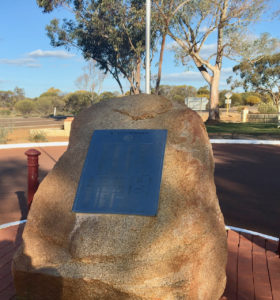
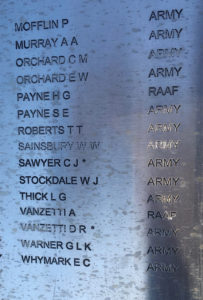
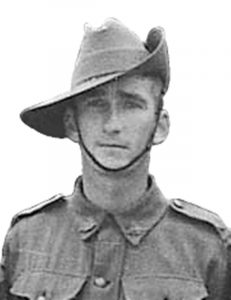
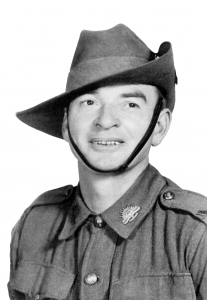
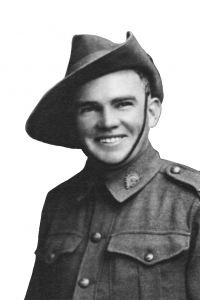
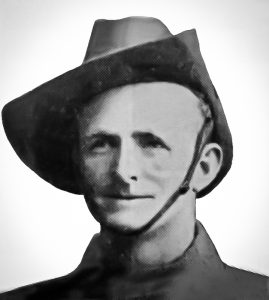
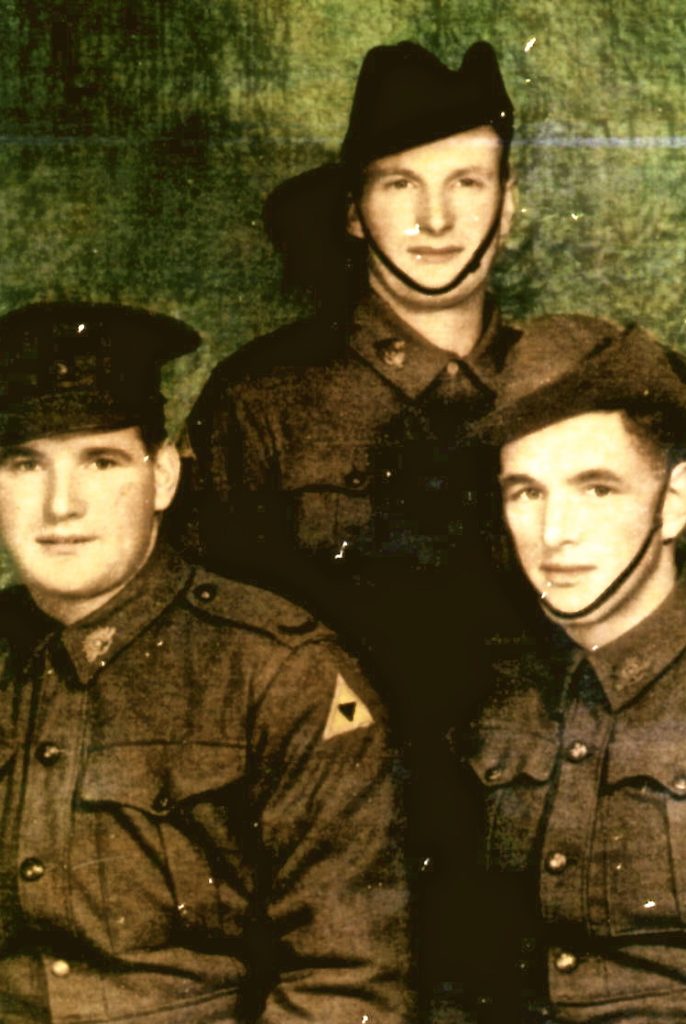
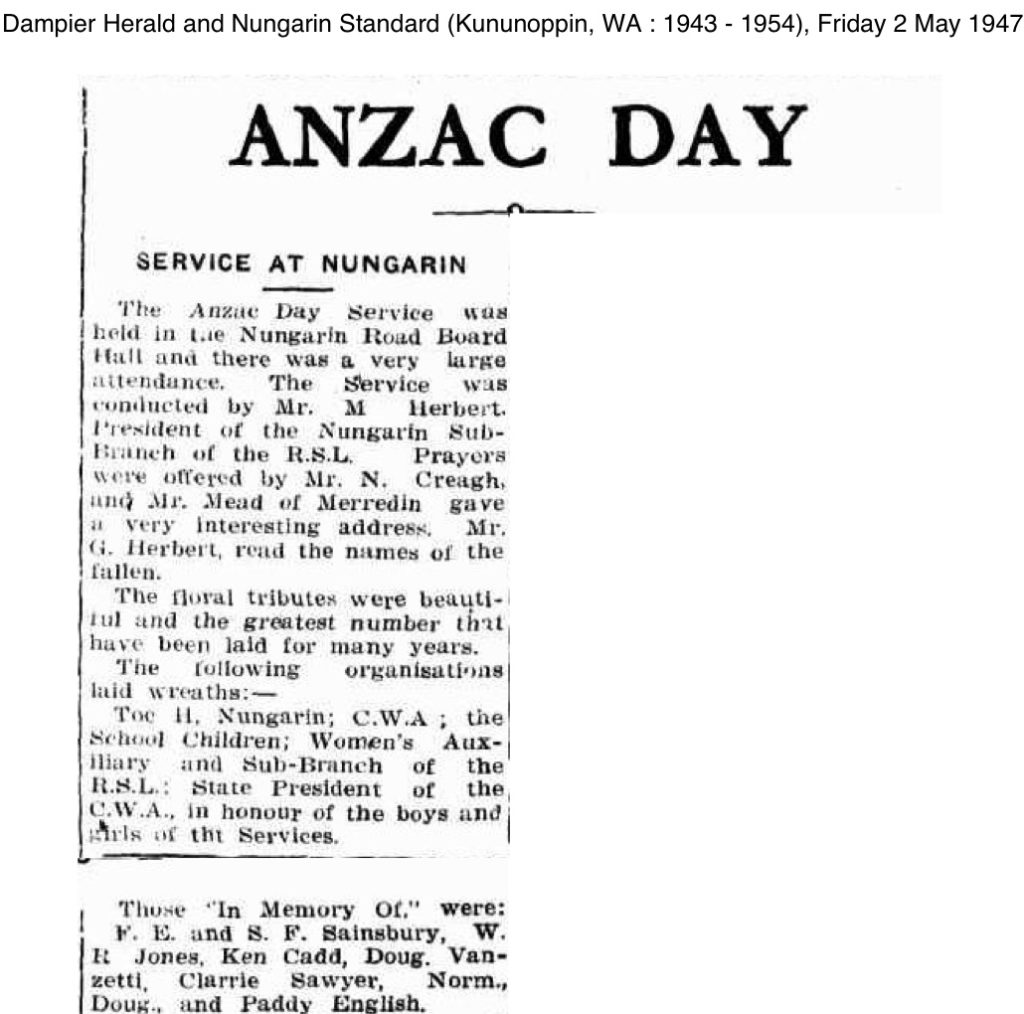
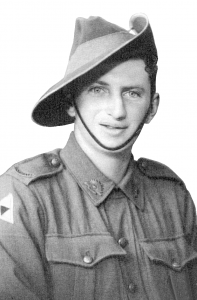
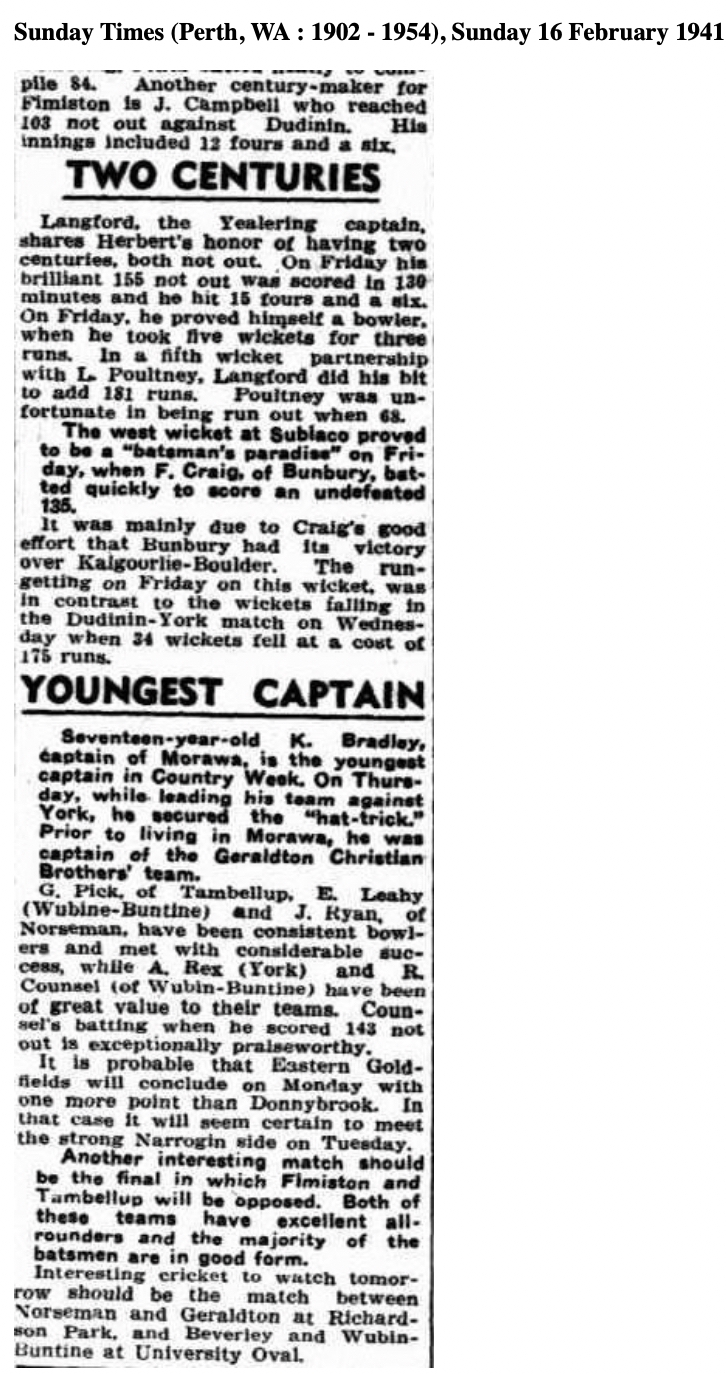
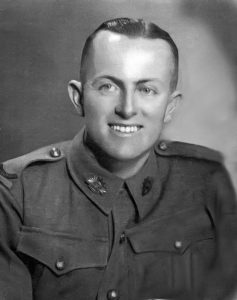
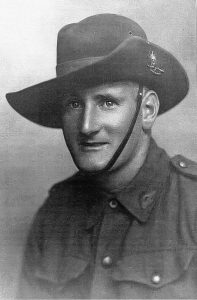
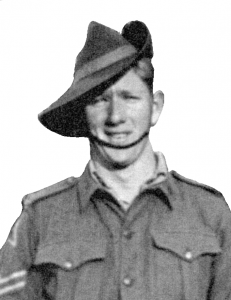
Nungarin War Memorial

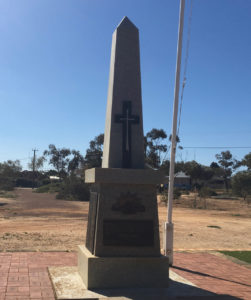
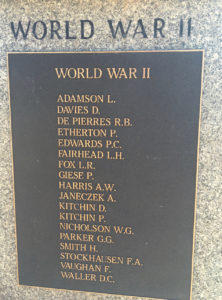
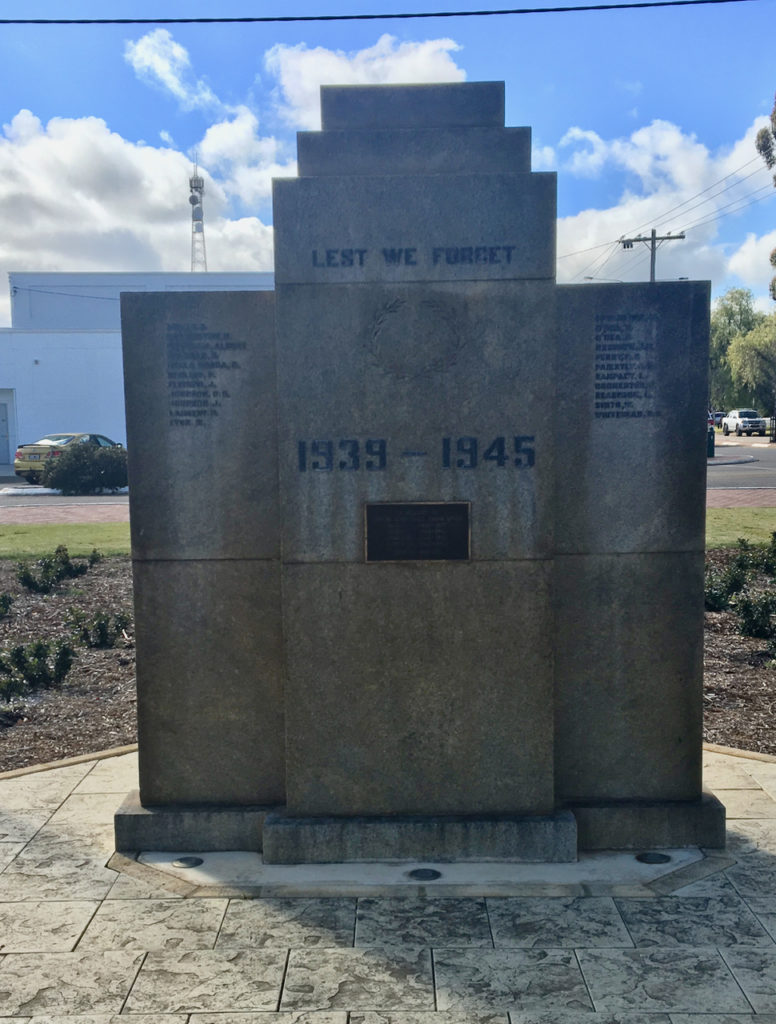
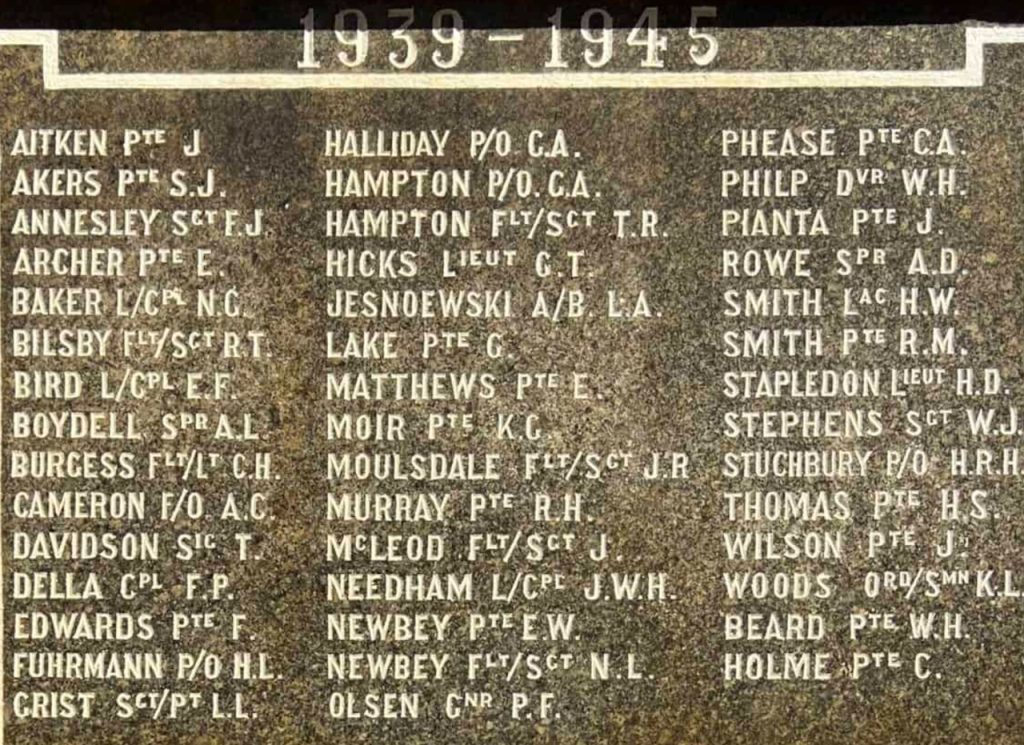
NUNGARIN WORLD WAR II MEMORIAL


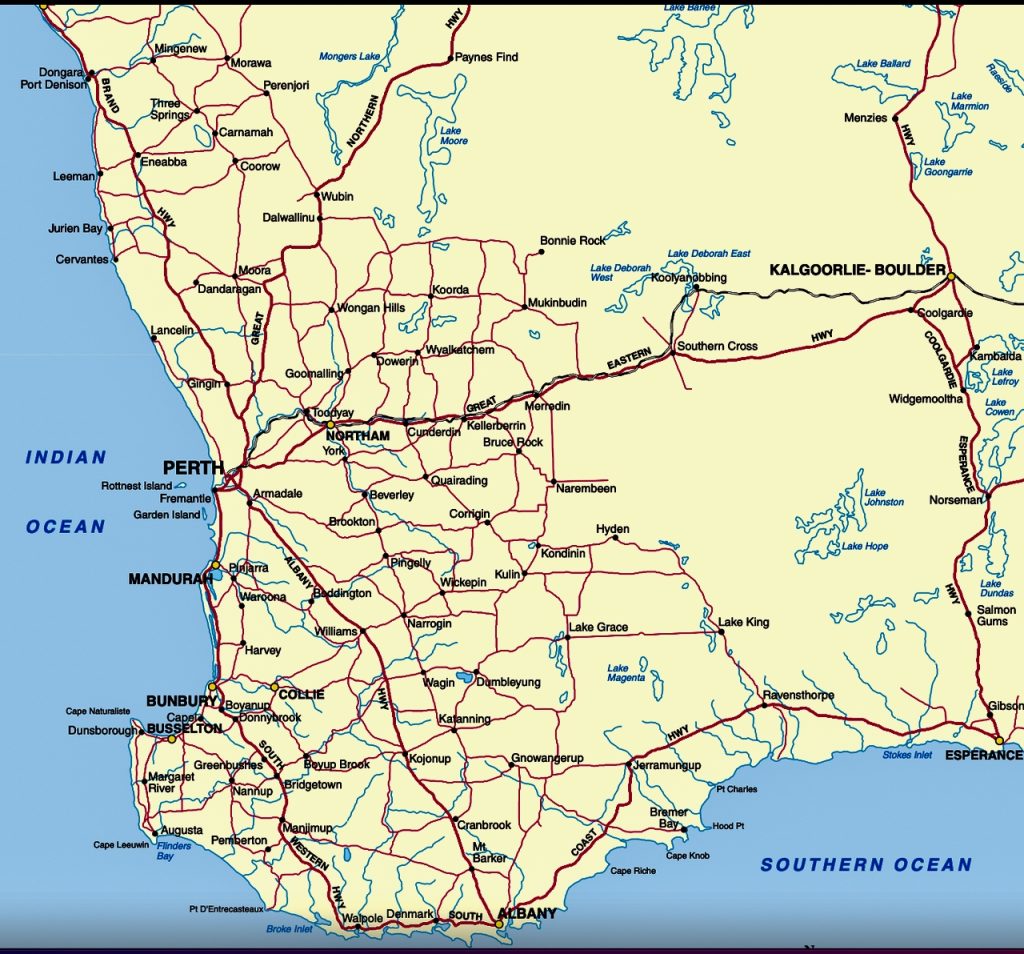
The Shire of Nungarin is in WA’s wheatbelt region with an approx. population of  230. It is situated 40 km north of Merredin and 300 km east of Perth.
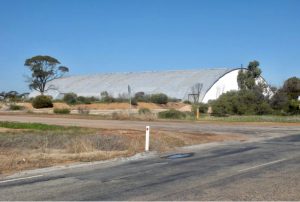
Nungarin and Merredin were set up during WW2 as bases for military storage.  Both towns accessible by rail but a safe distance from the coast.  Even today you can see the huge containers.


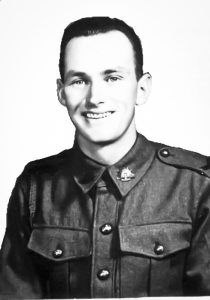
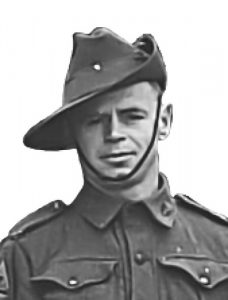
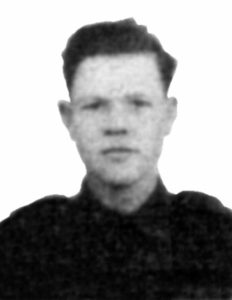
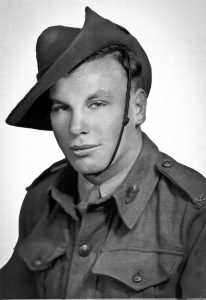
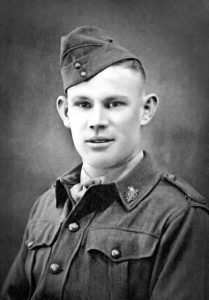
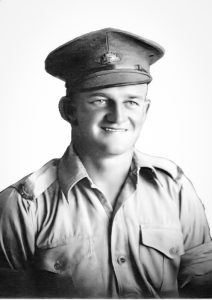
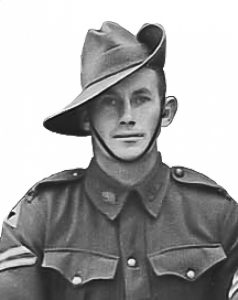
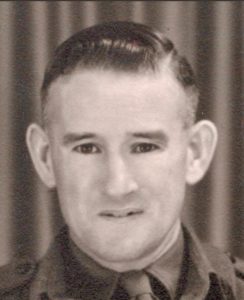
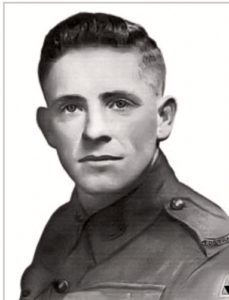
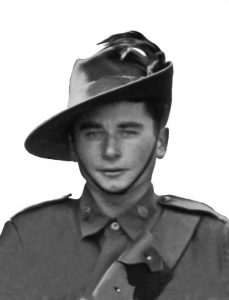
WX8245 ADAMS, EDWIN THOMAS
Born 1914 Kellerberrin. Enlisted 16 August 1940 ‘C’ Company. AWOL ‘Aquitania’ Fremantle, sailed to Java, joined ‘Blackforce’.   POW at Bandeong, Bicycle Camp Batavia, Makasura Camps Java. Sailed Singapore with ‘D’ Force Thailand, Java Party No. 6, P Battalion to work on Burma-Thai Railway. Survived then selected fit to work Japan.  Sailed ‘Rashin Maru’ to Japan (as did McGlinn) worked Yamane (Carpenter’s shop), Niihama copper mine. Returned to Australia.
You can read further about Eddy Adams
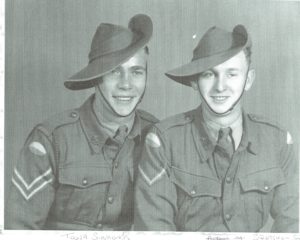
Eddy and his two brothers enlisted.
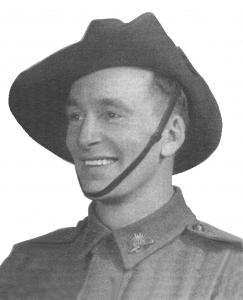
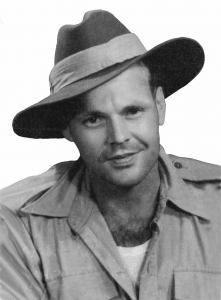
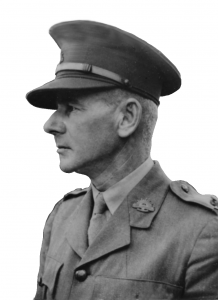
WX7541 KEITEL, CLEMENT CHARLES
Born Adelaide, SA 1899. Enlisted 6 August 1940.
Joined HQ Company, No 3 Platoon however remained a POW throughout war at Singapore. Keital had a history of bronchitis.
Returned to Australia.
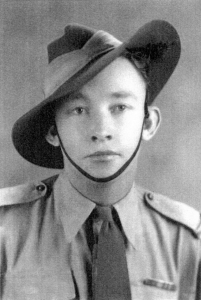
WX8478 McGLINN, FRANCIS THOMAS
Born 1909 Northam.   Enlisted 18 October 1940, ‘C’ Company, wounded in action Hill 200, Ulu Pandan 11 February 1942 admitted AGH with shrapnel wound to left foot and discharged 26 February 1942.  POW Singapore, worked Burma-Thai Railway with ‘D’ Force S Battalion around Hellfire Pass area, sailed to Japan ‘Rashin Maru’  as did Eddy Adams, worked Yamane and Niihama Copper Mines, Japan. Returned to Australia.  You can read further about Frank McGlinn
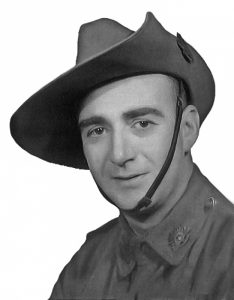
WX79439 SAWYER, CLARENCE JOHN
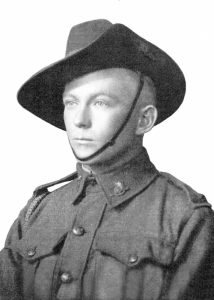
Born 1914 Ashington, England. HQ Company. AWOL Fremantle ‘Aquitania’ sailed Java joined ‘Blackforce’.  Please read further.   Taken POW. Died illness Allied General Hospital Bandeong, Java 1 April 1942 aged 34 years.  Initiallly buried Bandeong.  After the war interred Djakarta War Cemetery Plot 3, Row H, and Gave 14.
Clarence  ‘Clarrie’ and his wife Elsie share-farmed a property at Kwelkan west of Nungarin prior to enlisting with AIF 13 Oct 1940.  Clarrie’s death left his young wife Elsie widowed and his daughter Margaret without a father.
Clarrie is also first cousin to WX7256 Thomas ‘Keith’ Sawyer of Menzies.
THE DORIZZI CONNECTION TO NUNGARIN
Tom, Gordon and Bert moved to Nungarin to work with their trucks after their father moved to the district to take up one of the earliest school bus contacts. The three boys all died at Borneo – at Sandakan, or on the Sandakan-Ranau March.
Dorizzi Brothers


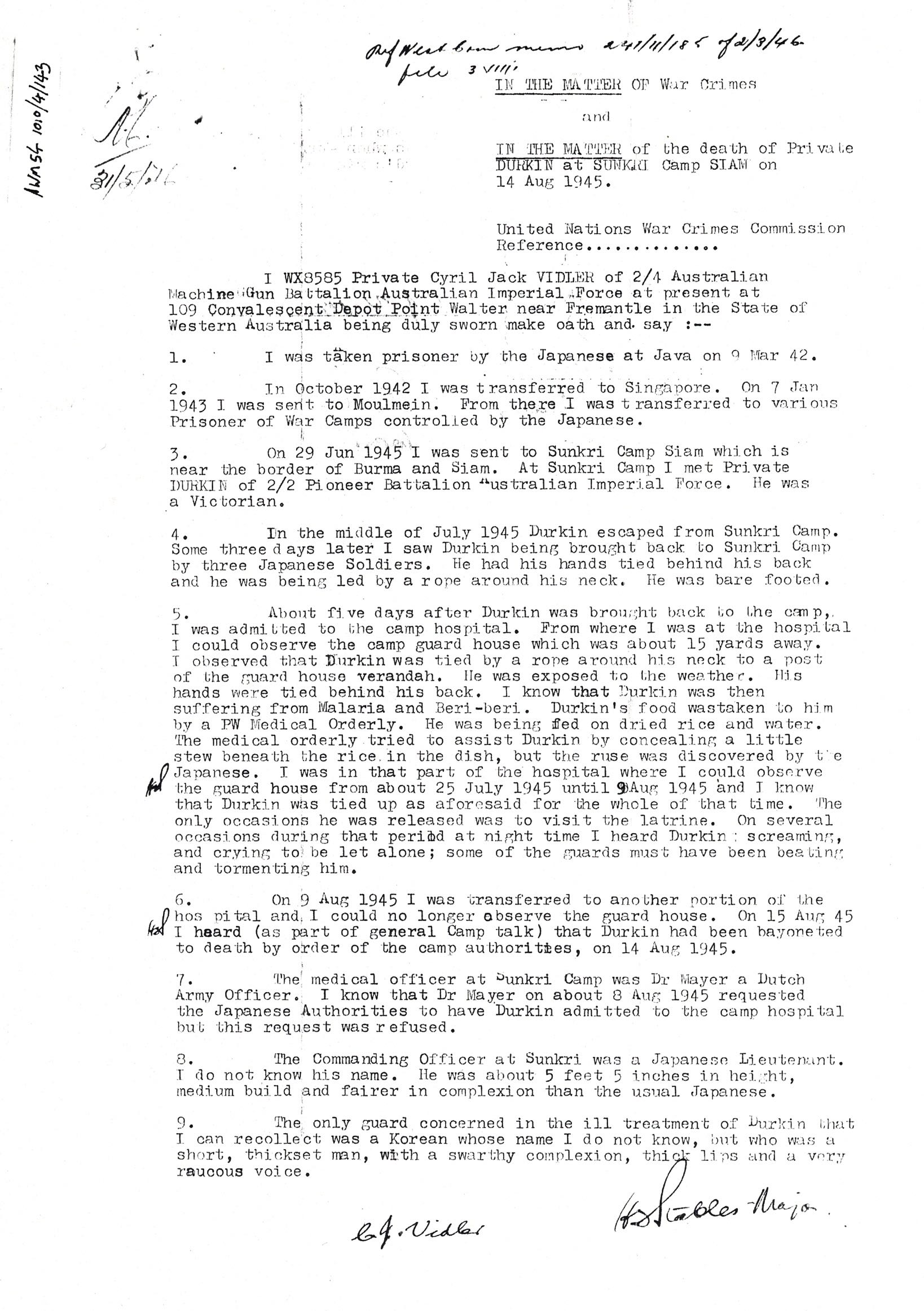
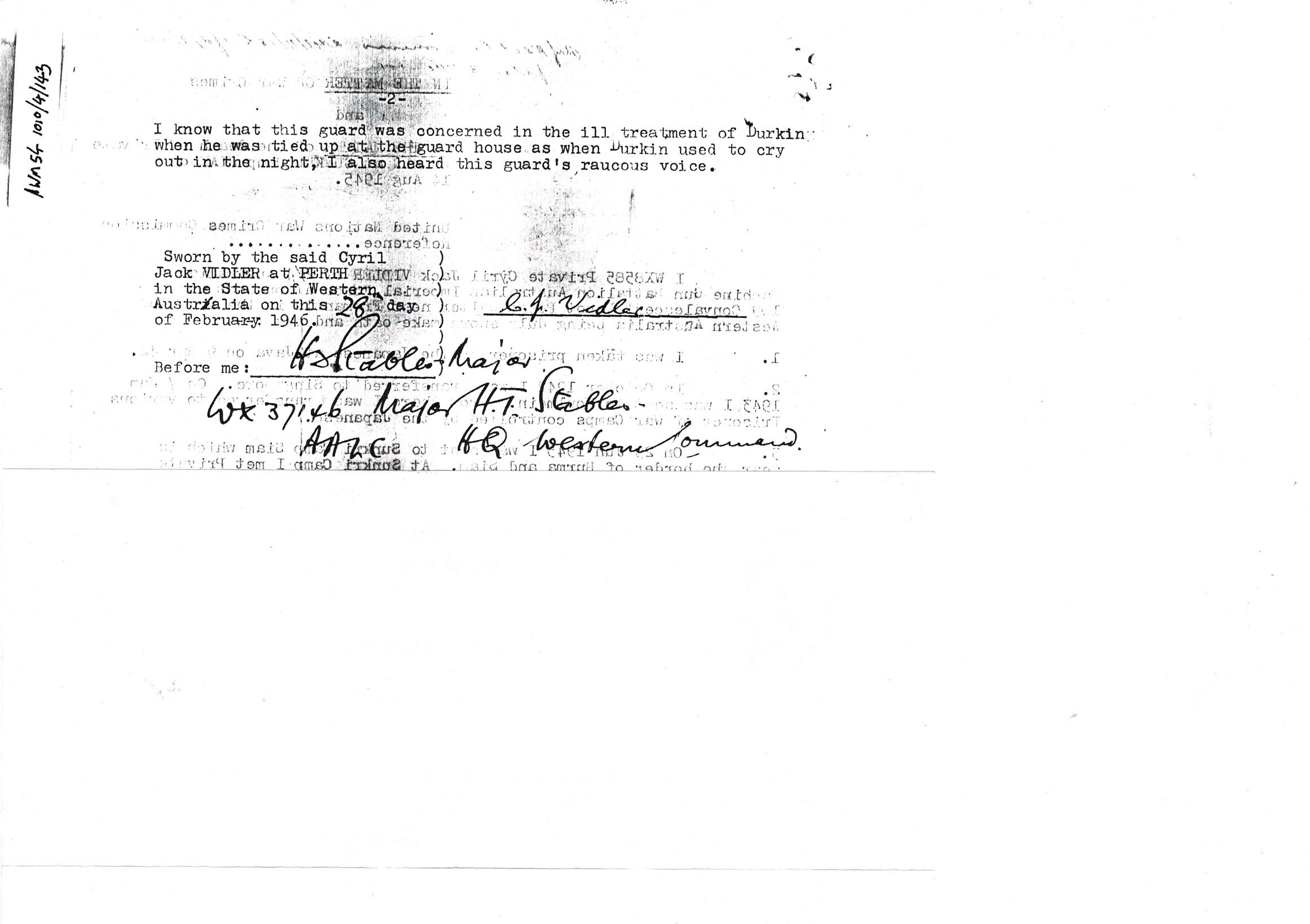
WX8585 Cyril Vidler’s Affidavit

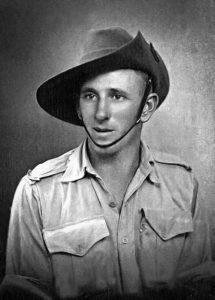
WX8585 Cyril ‘Jack’ VIDLER –  Jack Vidler, a popular young man and sportsman tragically died 9th June 1947 at Hollywood Hospital unable to recover from the ravages of being a prisoner of Japanese for three and a half years.  He grew up in the Canning area played Soccer, belonged to Darts team and was a member of a Dance Studio.
Vidler enlisted AIF 18 Oct 1940, later joining 2/4th’s ‘A’ Coy 5 Platoon under Commanding Officers Lt Walton and Lt. Learmonth.
Please read about Java and Blackforce  and how Jack became a POW in Java.

Sailed from Java to Singapore and worked on Burma Thai Railway with Java Party 5A, Robertson Force


2/4th Hockey Team

WX7499 Ralph Thomas Williams was the author of the above.


Unfortunately we unable to find further information however talented hockey players known to be in the 2/4th include Harry Scaddan, Jack Rochester and Eric Teasdale (Rochester and Teasdale lived in the Merredin district).

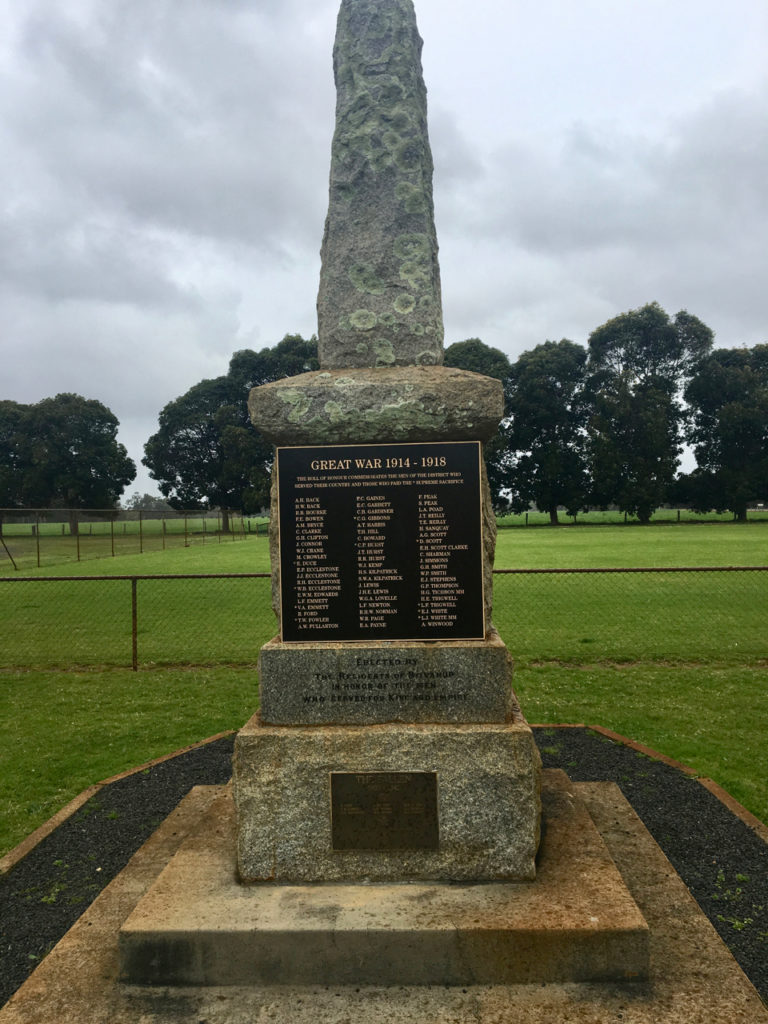
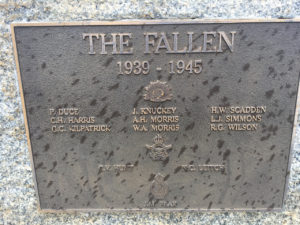
Boyanup War Memorial


The above photograph was taken just before rain.


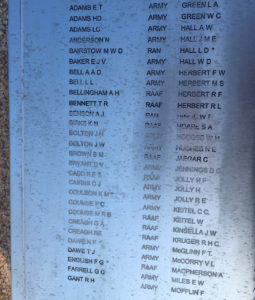
WX7851 HARRIS, CHARLES
was selected in Singapore with the ill-fated ‘B’ Force to sail to Sandakan, Sabah.  He died on 27 May 1945 aged 31 years, however his Japanese records do not state how/why he died.  We do know there were orders to ensure no POWs survived.  All except 6 men who escaped managed to escape survive the appalling Sandakan incident.
Please read further about Sandakan, Borneo – Australia’s worst WW2 history – the death of more than 2,000 Australian POWs.


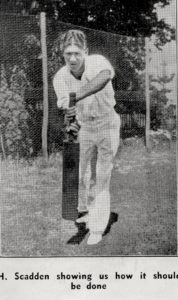
WX7617 SCADDEN, HARRY (Fairbridge Farm schoolboy)
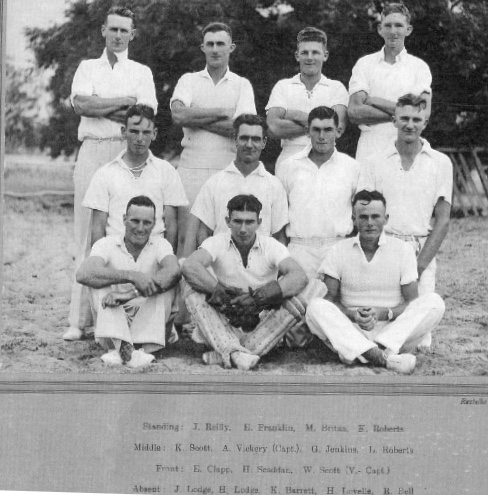
Harry lived several years in Boyanup where he made his mark as a sportsman playing tennis, cricket and hockey.
As a POW was selected Singapore  to work on Burma-Thai Railway from the Burma end with ‘A’ Force, Green Force No. 3 Battalion. 
At the end of ‘Speedo’ Harry was evacuated to Tamarkan Hospital Camp in Thailand and died on 22 April 1944 of cerebral malaria aged 29 years.


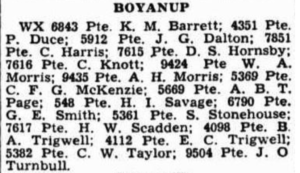
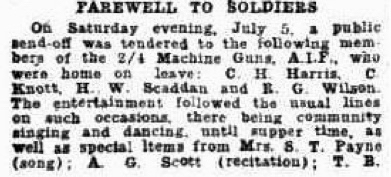
Above:  men from Boyanup who enlisted.  Of the three men who were with 2/4th, Claude Knott was the only one to survive.


WX7616 KNOTT, CLAUDE (Fairbridge Farm schoolboy)
was selected in Singapore to work on the Burma end of the Railway with ‘A’ Force Green Force No. 3 Battalion (as was Harry Scadden).  On his return from Burma to Thailand at the completion of the railway, Claude was selected as being fit to sail to Japan to work.  He sailed with ‘Awa Maru’ and sent to the notorious No 17 Omuta Camp.  Claude survived to return to Western Australia.
Please read about Omuta Camp, Japan.

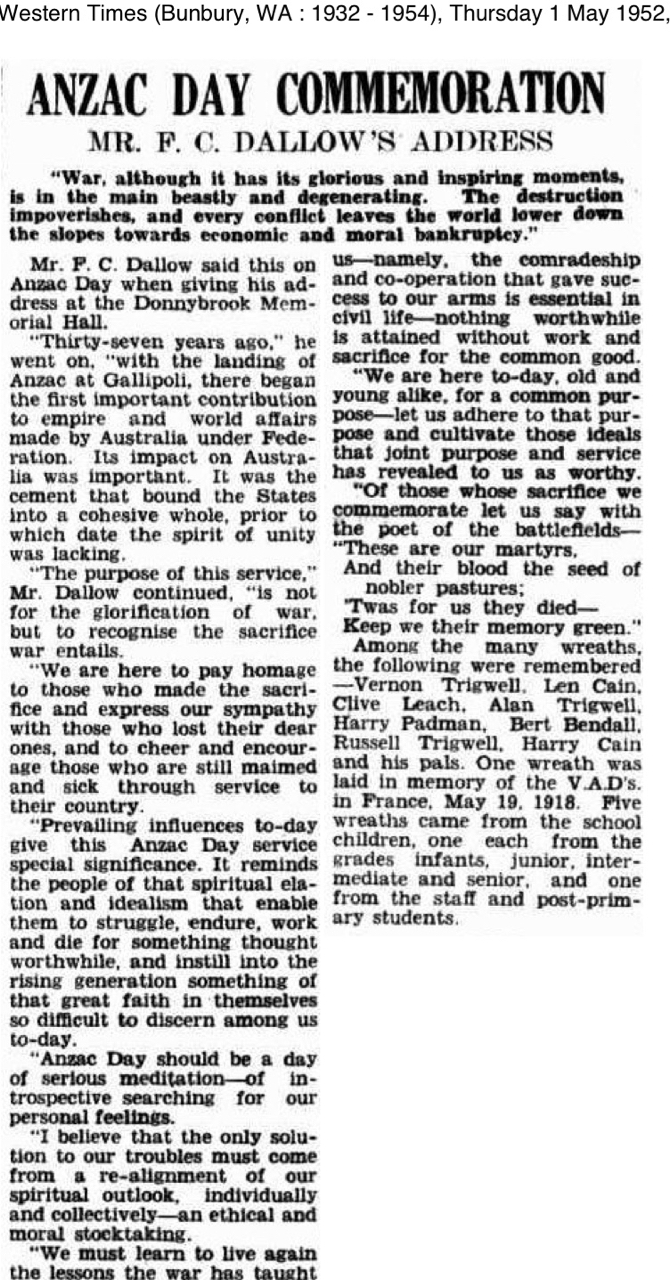
Wyalkatchem WW2 War Memorial

Wyalkatchem


Men of 2/4th from Wyalkatchem area who did not return home:


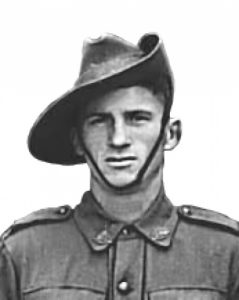
WX7998 GIESE, PHILIP ARTHUR Corporal (Promoted on 24 January 1942).  Enlisted 13 August 1940.  As a POW was selected in Singapore to work on Burma Thai Railway with ‘D’ Force V Battalion.  He died at Brankassi Camp, Thailand on 28 September 1943 of Dysentery.  Philip was 25 years old. The Giese family learnt of Phil’s death about May 1945.  His father had died April 1945 and probably did not know of his son’s death.


WX7940 NICHOLSON, WALTER GEORGE as a POW was selected in Singapore as a POW to work on the Burma-Thai Railway and sailed to Burma with A’ Force, Green Force No. 3 Battalion.  He survived this challenge and was then selected to go to Japan to work.

His ship ‘Rakuyo Maru’ was sunk in September 1944 by American submarines and he lost his life in the South China Sea aged 36 years.  George was born in Norwich, England and had been working as a farmhand at Yorkrakine, south-east of Wyalchatchem prior to enlisting in August 1940.


WX5932 VAUGHAN, FRANK as a POW was selected in Singapore to sail to Burma  to work on the Burma-Thai Railway with ‘A’ Force Green Force No. 3 Battalion.  Frank died of illness 1 April 1944 at Tamarkan Hospital Camp aged 33 years.  He had been evacuated sick from Burma to Thailand.  Frank Vaughan had been working as a farmhand at Wyalkatchem prior to enlisting in June 1940.  He was born in Surrey, England in 1910.

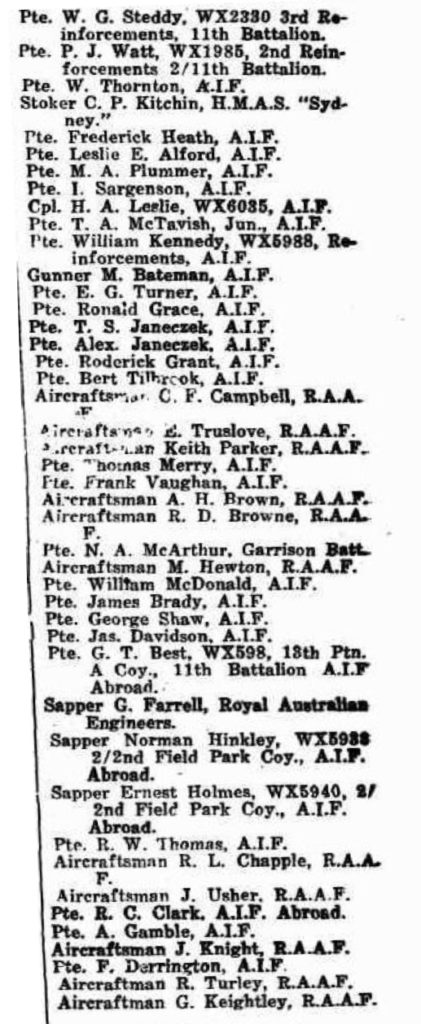
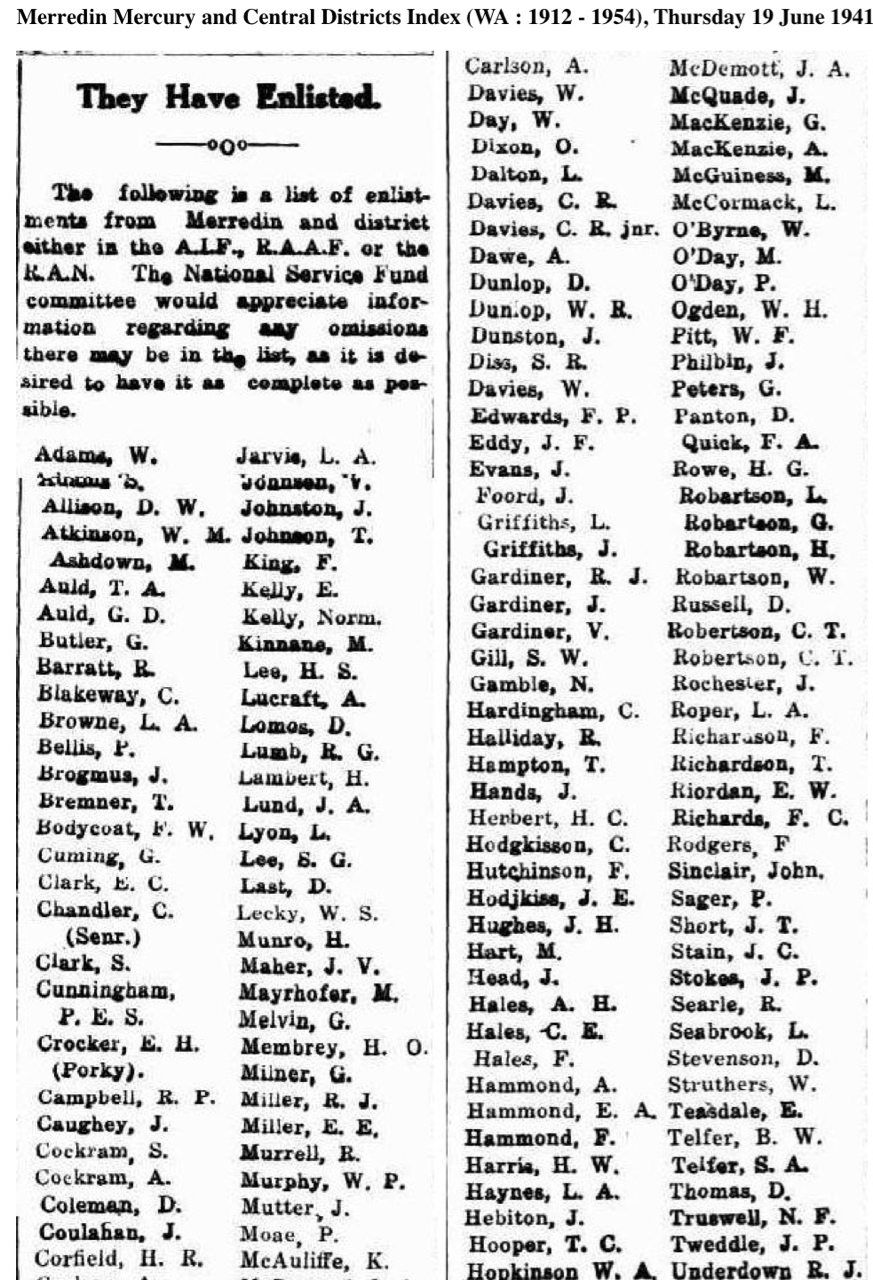
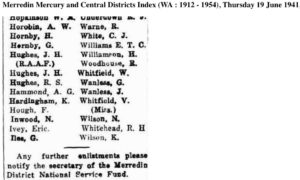
Above:  Enlistments for Wyalkatchem area as at September 1941.


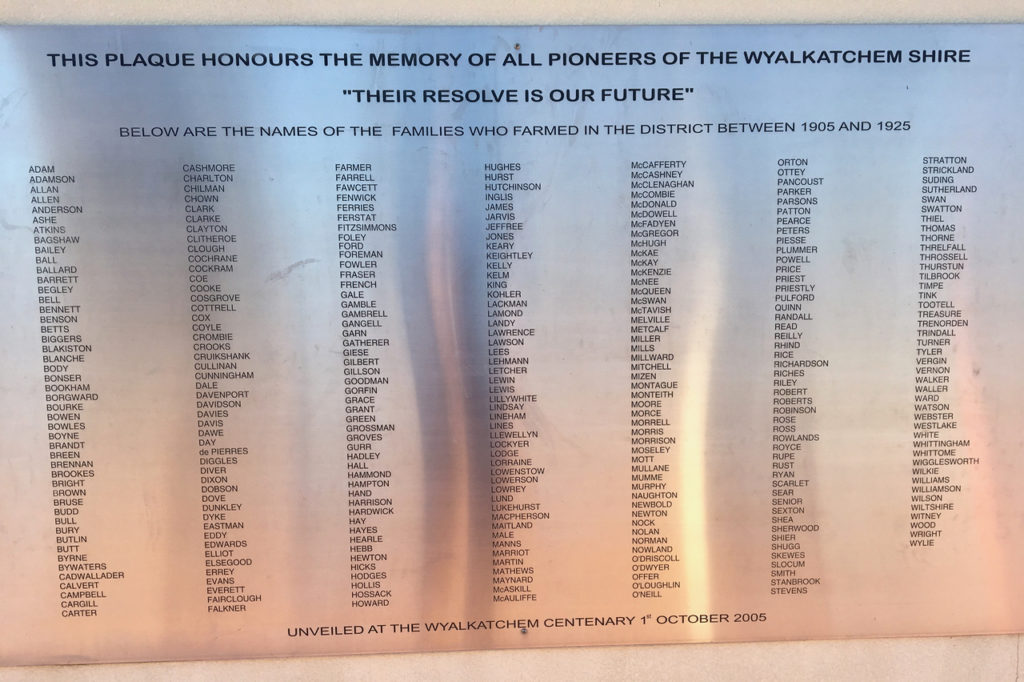
Above:  A community list of all the pioneers of the region.

BOYS FROM MERREDIN, WW2 MEMORIAL & WAR TIME MERREDIN


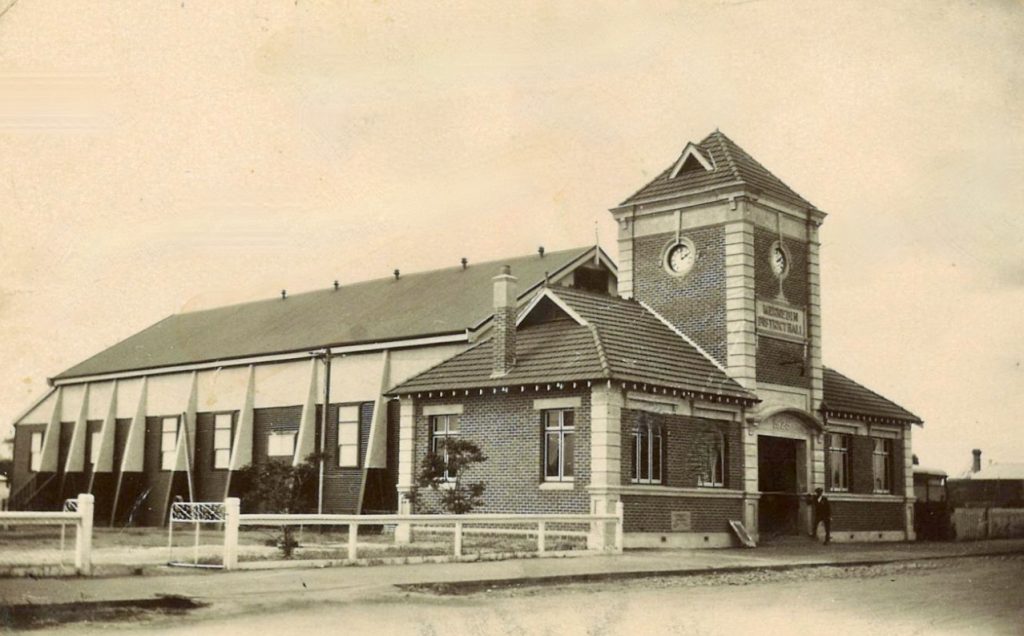
Above:  Merredin Town Hall 1932

The Clock Tower is approximately 0.75 m square and 2.0 m high, with a square clock on, three faces (not the side facing away from the street) at the top. At the base, or on the north side, is a rectangular split block containing a time capsule.

The Merredin district hall was built in 1925 with a clock placed in the tower in memory of all the men of the district who died in WW1.


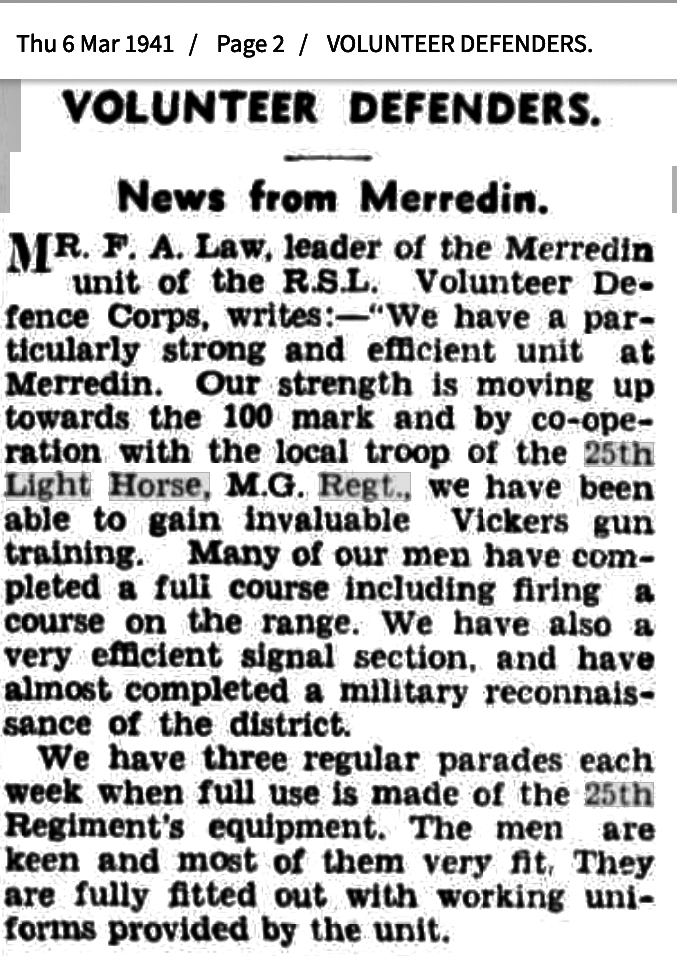
Merredin district shared in the formation of the 25th Machine Gun Regiment with a platoon established in the town on 9 March 1939, with the unit taking over the Agricultural Hall at the Recreation Ground as a drill hall.  An Annex was built on the north end as an orderly room and weapon store.  Commanding Officer was Capt. R. Loder.  The Merredin Platoon of the 25th M.G. Regt had attained considerable efficiency by the time war had broken out.
Of the 39 original members wasTom Hampton of 2/4th.
By mid May 1940 Australia seemed to stand in considerable danger.  Merredin became a garrison town with a hive of military activity and many military units based in the town.  There was a large Air Force establishment, the No. 10 Stores Depot was built at the north-west quarter of the town – camouflaged to look like part of the town.  The Depot had a complimentary explosives stores at Nokaning and 100s of air force men and a large number of W.R.A.A.F.s were stationed at the two establishments.
Other units included a Details Issuing Depot between Merredin and Collgar with another one north of Nokaning siding.
There was a large ammunition dump covering many acres of land at Booran, and headquarters of a detachment of the Royal Australian Engineers was quartered in Merredin.  There was a signal unit and other Lines of Communication troops.
When Australian troops serving overseas began returning home the 1st Australian General Hospital from the Middle East was accommodated in a semi-permanent hospital of elaborate structure and proportions east of the town under the lee of Merredin Peak.
For the next few years and for some years after until the end of the war, the streets of Merredin echoed from day to day with marching feet. There was the constant rattle of rifle and machine gun fire at the rifle range and explosions in the  areas out of town.
Huge underground tanks for storing emergency fuel were constructed.  The Merredin Road’s Board and it’s engineer was called upon to assist with various military establishments.  Work was carried out to improve the trans-Australian highway east of Norseman, the Air Training School at Cunderdin at the Works and Supply Depot at Nungarin.
In May 1940 the Secretary of State for War called upon the  Volunteer Defence Corps, previously known as the Home Guard, into being.  When supplies became available the men were supplied with uniforms and weapons.  A battalion of the Corps was established with its HQ in Merredin.  In command was Lt Col Scott DSO, late of the Cameron Highlanders.
Prior to weapons being available, the Machine Gun Platoon of the Merredin 15th Battalion took the old German guns,  souvenirs of 1914-18 war from display on the the walls of the District Hall and adapted them to use standard .303 Ammunition.
When standard machine guns and mortars were issued the old guns were recalled.  Merredin lost its 1914-18 memorabilia.
With the Fall of Singapore the threat to Australia increased,  air raid precautions were instituted.  Air Raid Wardens were appointed and citizen volunteers constructed air raid shelters at the hospital and schools.  General instructions were given for Merredin’s population to construct air raid shelters at their homes, which most people did.
A census was taken of all buildings, including churches and any building not being used by the military – should civilians evacuated from Perth.
A huge emergency food store was established and placed under the control of the Secretary of the Roads Board.  Fuel, rubber, optor vehicles and machinery were rationed and placed under the control of the Roads Board.
There were nightly patrols by the VDC mounted guard of fuel stores,  railway station, No. 4 Pump and all vulnerable points.
At weekends the officers and men of the 15th V.D.C. Btn would leave their civilian jobs for intensive training and exercises in the country side outside of Merredin. They would sometimes have exercises with regular forces in the area and planes from Cunderdin.

The VDC Btn was equipped with Bren Gun Carriers.

Merredin was a busy town.

(We wish to aknowledge theabove information is from “The History of the Merredin District of Western Australia” by F.A. Law published 1961.)


MERREDIN BOYS IN 2/4TH MGB


Smaller town sites and localities that are included in the Merredin Shire are: Hines Hill, Burracoppin, South Burracoppin, Goomarin, Korbel, Muntadgin, Nangeenan, Nokanning, Tangedin, Nukarni and Norpa
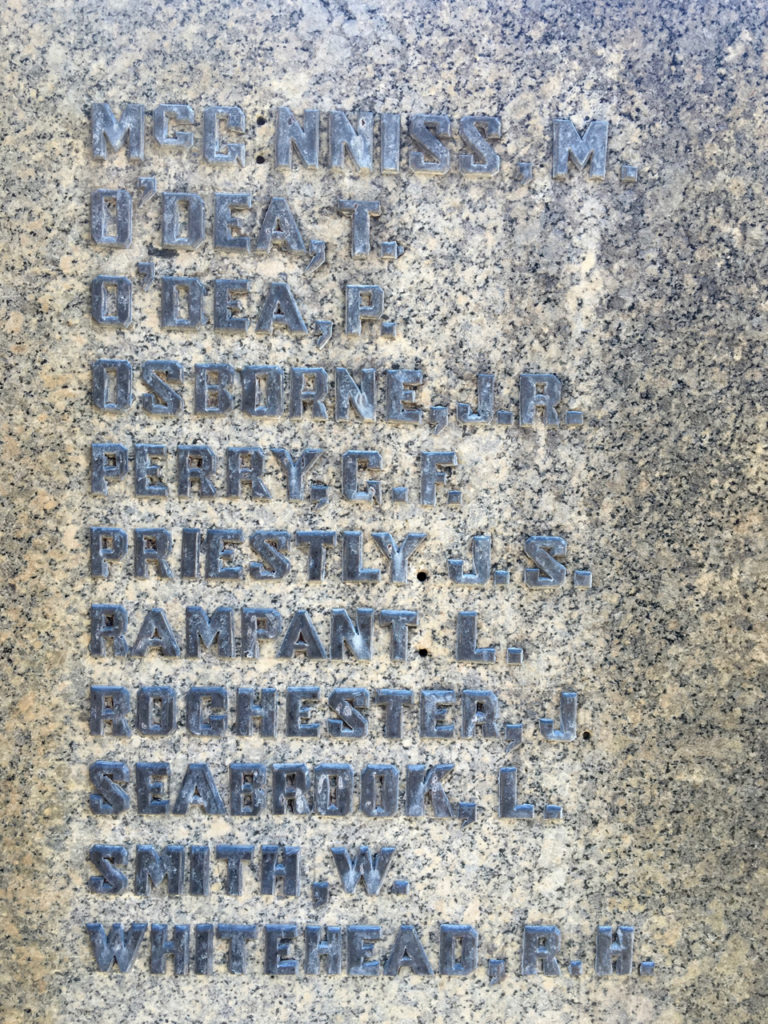
There were two men from 2/4th who lost their lives included on the Merredin WW2 War Memorial:


WX9287 OSBORNE, JOHN ROBERT enlisted 30 Oct 1940 and later joined 2/4th’s ‘D’ Coy No. 15 Platoon under Commanding Officer Lt. Meiklejohn.  Please read further
As a POW was selected in Singapore with ‘F’ Force to work on Burma-Thai Railway and died of illness aged 28 years at Kami Sonkurai Camp, Thailand.


He was born 1915 to parents John and Alice Osbone at Bruce Rock and farmed at  Korbel, near Merredin.
Please read further about ‘F’ Force Thailand.
KORBEL is located 222 km from east from Perth and is a distance of 22km to Merredin. It is within the Shire of Merredin.

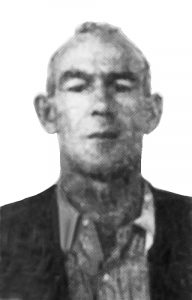
WX10808 ROCHESTER John (known as Jack)


b. 1905 England to Edward Anderson and Jane Rochester.
John (known as Jack) Rochester sailed to Fremantle from London on ‘Esperance Bay‘ on 14 June 1927 leaving behind his siblings and widowed mother.  He was 21 years old, and his occupation recorded as farm labourer.
In the Western Australian Electoral Rolls for 1931, 1936, 1937 up to 1943 Jack was recorded farming and residing at Burracoppin South.
He enlisted AIF 15 Jan 1941 and later joined 2/4th Company No. 6 Platoon. John Rochester was at Woodside Camp South Australia when he contracted meningitis and was returned to WA on 25.11.1941. He was transferred to the 2/4th Machine Gun Battalion reinforcements ‘E’  Coy on 9.1.1942.
Rochester was KIA at South West Bukit Timah on 11 Feb 1942 aged 36 years.  ‘E’ Coy ran into a Japanese ambush and suffered  a terrible almost 50% death loss.  Please read further.


WX7495 BALL, Leo Patrick born Bendigo 1905 to Patrick and Ellen Ball.  Patrick Ball was a ganger for WAGR and permanently located in Merredin, he died in 1941 aged 73 years.  Mr Ball was well known in Merredin and was much involved with local football, as was his son Leo who played throughout 1928-late 1930’s.
Leo was also a member of Merredin Fire Brigade,  competing in regional competitions.
His only sibling, sister Annie married Roy Elleffson who played football and competitive cycling with Leo.

Leo enlisted Aug 1940 and later joined 2/4th’s HQ No. 3 Platoon.
As a POW in Singapore he was sent to work on the Burma-Thai Railway with ‘D’ Force V Battalion which suffered terrible work and living conditions with a very heavy death rate.  Please read about ‘D’ Force V Battalion.
Leo Ball was a butcher by trade, and probably worked in Merredin or nearby.  We cannot confirm he enlisted from Merredin.
After the war he he lived in the city and died in Belmont 1980 aged 75 years.
WX9061 BEVIS, Daniel Edmund ‘Danny’ born 1909 to Daniel (Snr) and Mary Bevis.  He enlisted AIF 25 October 1940, later joining 2/4th MGB’s ‘C’ Company as a Corporal of No. 10 Platoon.
He departed Singapore with A’ Force Burma, Green force No. 3 Battalion to work on the Burma end of the railway.
Dan and Thelma Bevis with their children.
Danny was recovered from Thailand at the end of the war.  He worked tirelessly in hospitals assisting doctors as an orderly.
He tragically died four years after returning home at the young age of 40.  He was father to seven children.


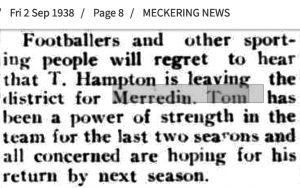
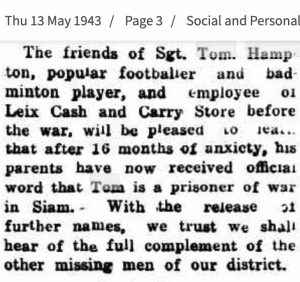
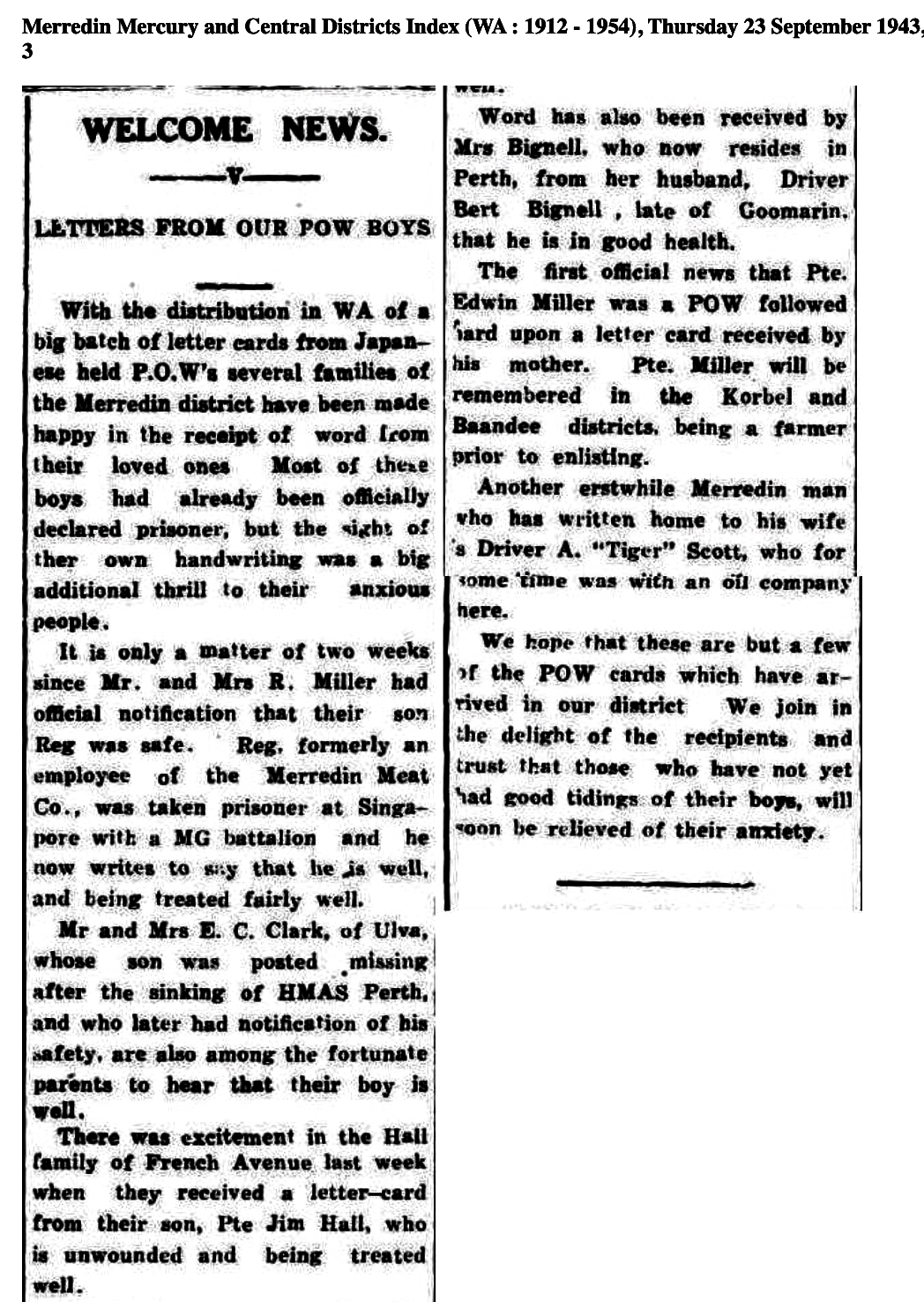
WX9405 HAMPTON,TOM – we know was working at Merredin prior to enlisting Nov 1940 – his name is included on the Newspaper list below.  He joined 2/4th’s ‘C’ Coy Headquarters.
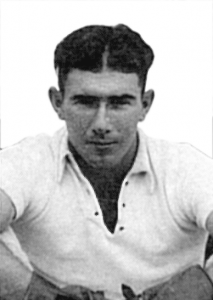
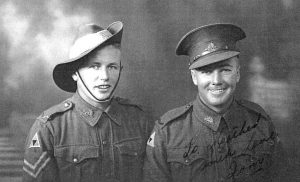
Below:  mates Eric Teasdale and Tom Hampton.  Tom was best man at Eric’s wedding.


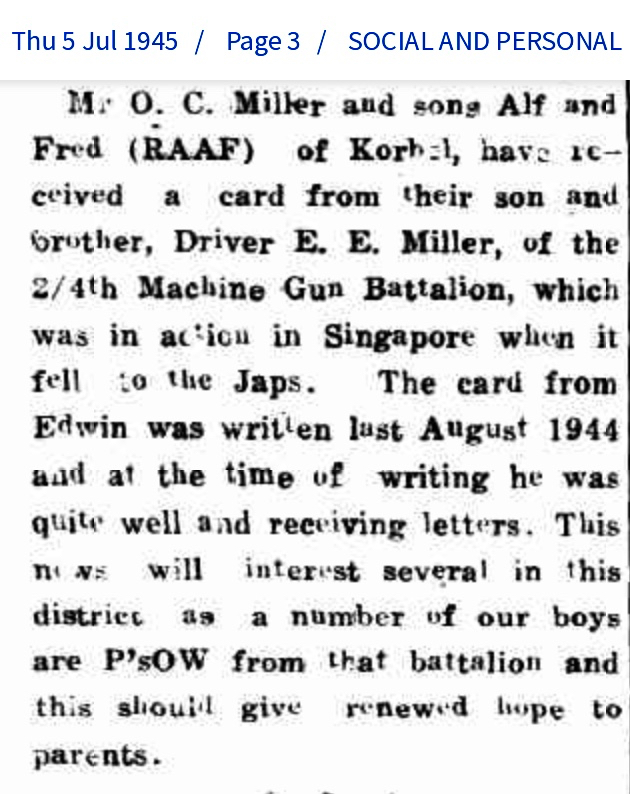
WX8031 MILLER, EDWIN ERNEST (TED) enlisted AIF August 1940, later joined 2/4th MGB’s ‘B’ Coy 9 Platoon under Commanding Officer Lt C D Lee.

Miller worked on Burma-Thai Railway with ‘F’ Force – who also suffered terribly with work loads, insufficient food and illness.
He survived and returned to Singapore where he worked with different parties and was recovered from here at the end of the war.
Again please read about F Force.


WX1338 MILLER, Reginald James (Reg) enlisted 25 May 1941and joined ‘A’ Coy 4 Platoon, was Lance Corporal to  CO Lt McCaffery.
Reg worked on Burma-Thai Railway with Captain Fred Harris Party, having set out from Singapore with ‘D’ Force Thailand.  When the rail link was completed at end of 1943,  the Japanese began moving all POWs south to one of several large POW camps in Thailand.  Reg was selected as being fit by the Japanese – fit to work in Japan.  He was railed to Singapore then boarded ‘Aramis’ to sail to Japan.  It was here that Reg was sent to work at No. 17 Omuta POW Camp.
Omuta was a ‘hell hole’ – the camp itself was run by a group of US who likened themselves to the American Mafia.  The working conditions in Omuta mines were just as notorious. By the time of the atomic Bombs and end of war, the POWs were existng only nervous energy.


The Japanese population was starving and so were the POWs.

Please read about Omuta.

Miller was returned to Manila then to Sydney on board HMS Speaker.

WX13562 MOATE, Peter Joseph although not included in the lists above, we know Peter Moate worked with WAGR at Merredin and joined several local sporting teams.
He also returned to Merredin after the war.
Moate was originally with 25th Light Horse at Merredin prior to enlisting AIF.  He was selected as reinforcement to 2/4th and TOS to Woodside, SA on 5 October 1941 to join the Battalion’s ‘C’ Coy Headquarters under CO Capt Colin Cameron.
He was AWOL when their ship ‘Aquitania’ left for Singapore 16 January 1942 and instead sailed with about 100 men from  2/4th soldiers to Java. Please read further

He was taken POW of Japan in Java in March 1942.  He later sailed to Singapore and would work on the Burma-Thailand  with ‘D’ Force Thailand, Java Party No. 6, O Battalion.  Please read further
You may wish to read the War
Affidavits written by Peter Moate 


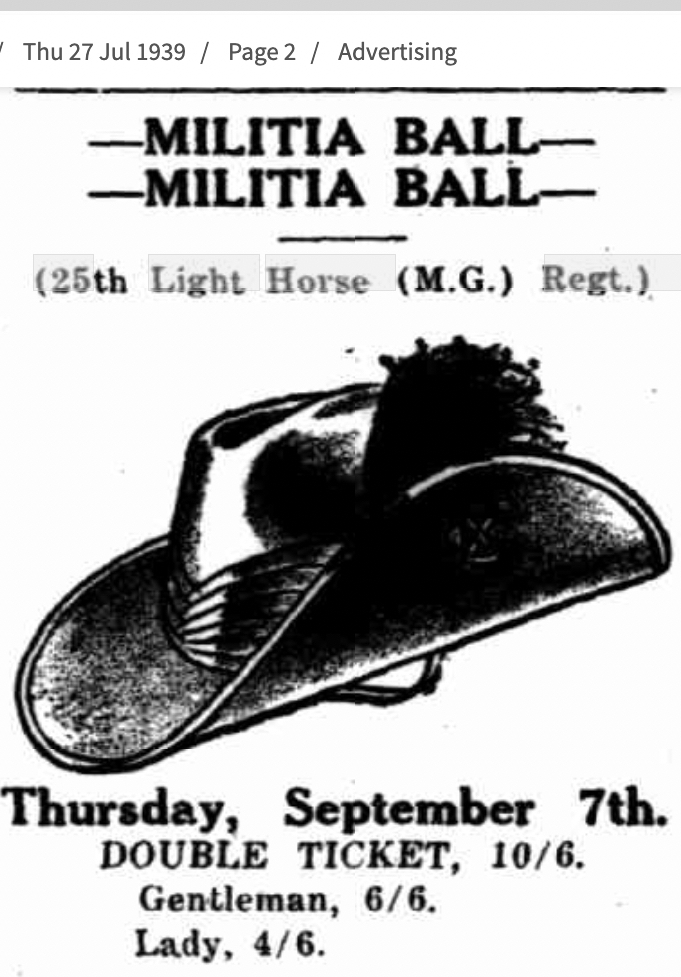
Please read about 25th Light Horse Militia of which Moate and Hampton were members of the Merredin Branch.


Above:  2/4th men on the above list include Reg Miller, Ted Miller, Tom Hampton, Peter Moate, John Osborne, Bill Struthers, M J Smith, Eric Teasdale.  (there may well be additional names.)


WX8738 STRUTHERS, William  (known as Bullets) enlisted 23 Oct 1940 joined HQ Coy as a Driver.  Struthers was born at Leslie, Scotland.  He sailed to Australia in 1924 as a 17 year old with his 18 year old sister. Prior to enlisting he recorded his occupation as farmhand and miner.
He worked on Burma-Thai Railway around Hellfire Pass Cutting with ‘D’ Force Thailand, S Battalion and was recovered from Ubon at war’s end.
Please read about ‘D’ Force V Battalion which suffered a tragically high death rate.
You can read further about Ubon
And Bill’s handwritten diary.
WX10865 TEASDALE, Thomas ‘Eric’  born 1919 to Herbert William and Mary Elizabeth Teasdale of Merredin.  Eric enlisted AIF 12 April 1941 and later joined 2/4th MGB’s ‘B’ Company, as Acting Sergeant to No. 9 Platoon under C.O. Lt. Don Lee.  He was promoted (24 January 1942) to Corporal.  
Eric was sent to Burma-Thai Railway with ‘D’ Force Thailand, S Battalion, working around the Hellfire Pass Cutting.
Teasdale was recovered from Nacompaton Hospital Camp, Thailand when the war ended, returning to Merredin.
Eric was a talented sportsman and very much involved with Merredin’s sporting clubs.


Below:  The pre war Light Horse was popular in the Merredin District.  Advertising a Militia Ball.

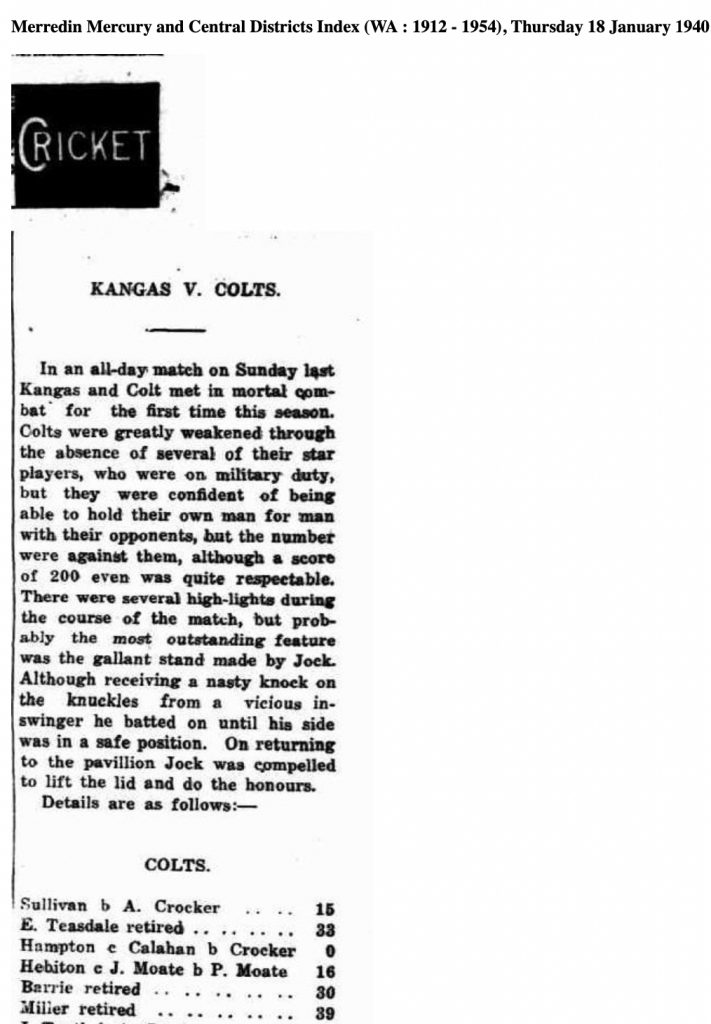
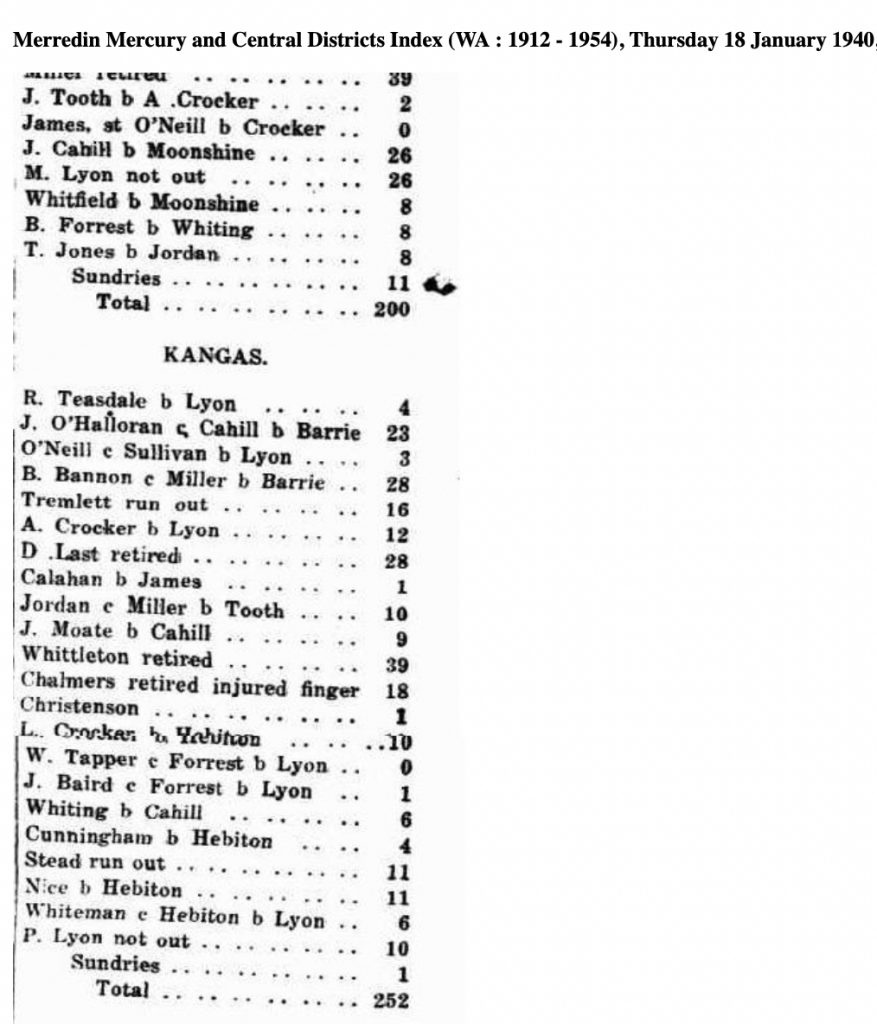
Below: Playing cricket Merredin – Tom Hampton, Peter Moate, Eric Teasedale and possibly Miller (cannot be certain)


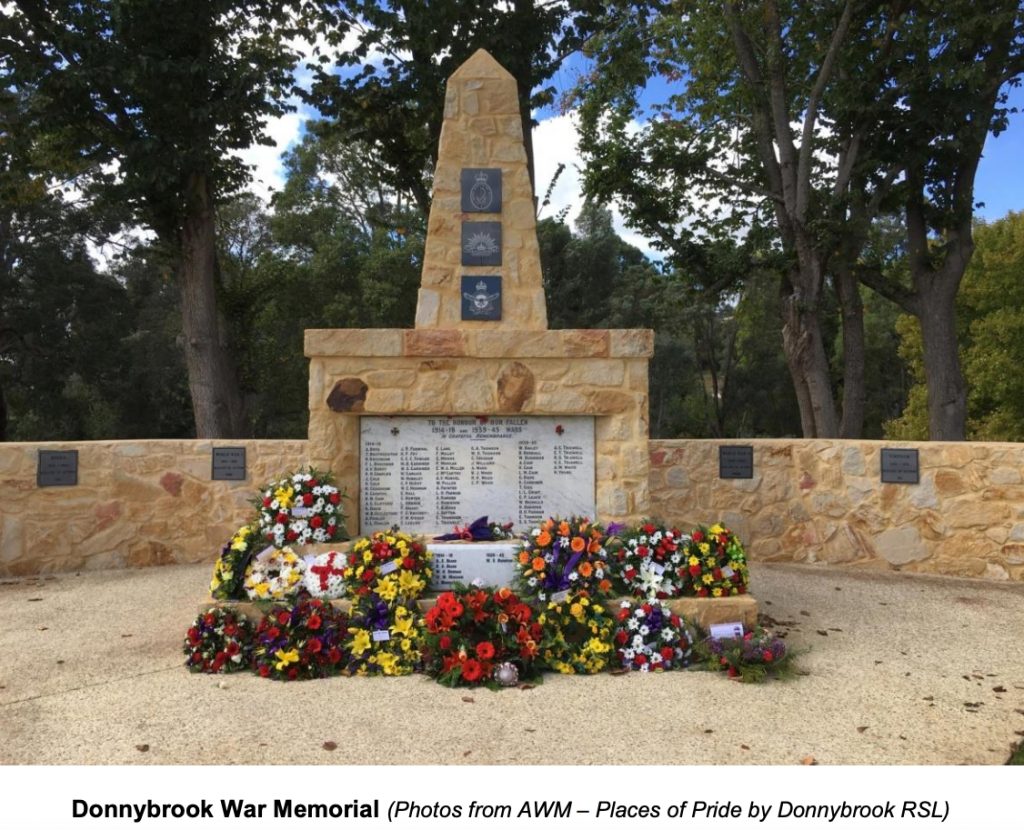
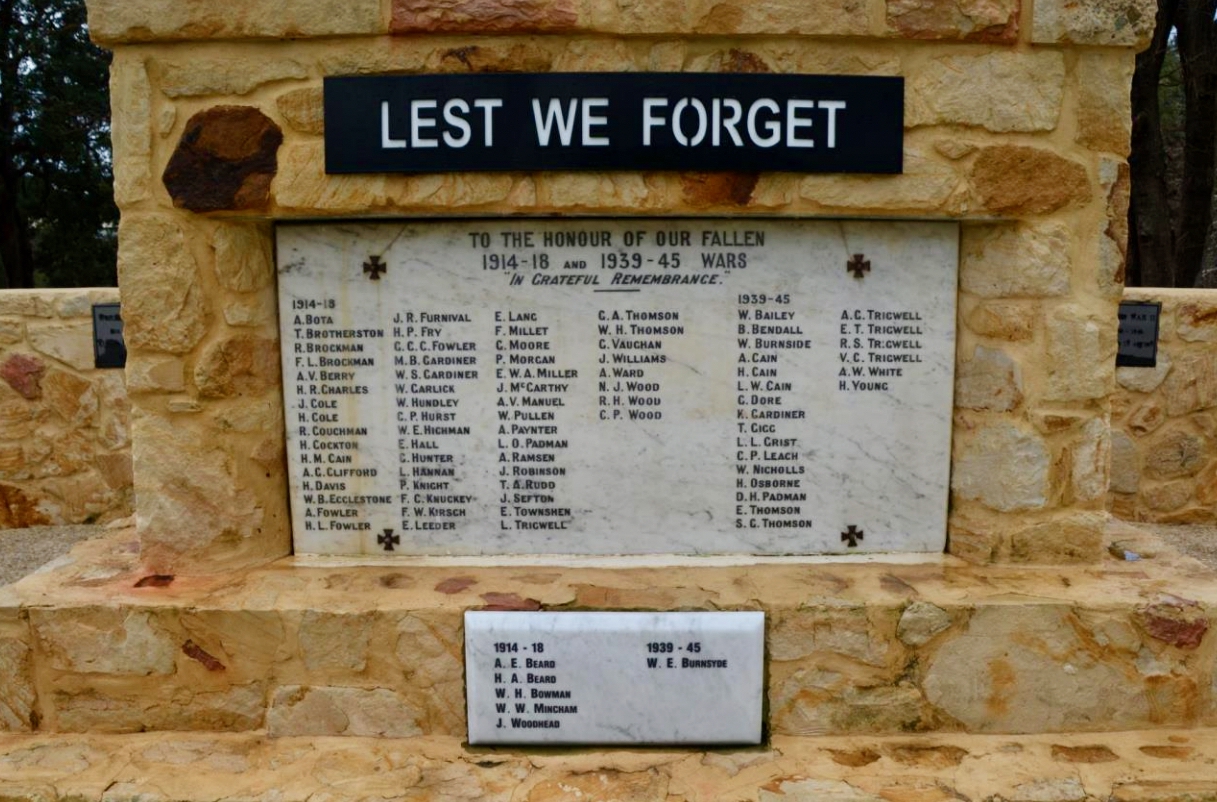
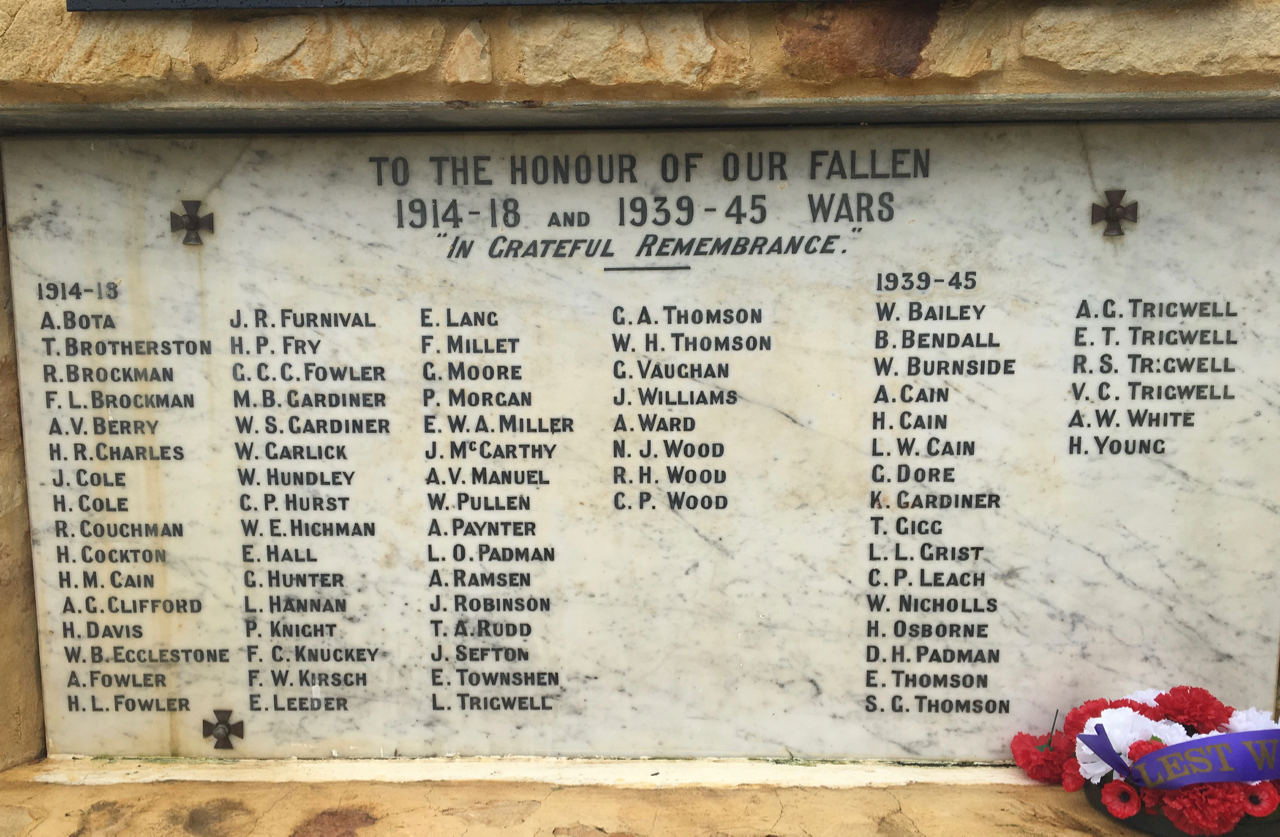
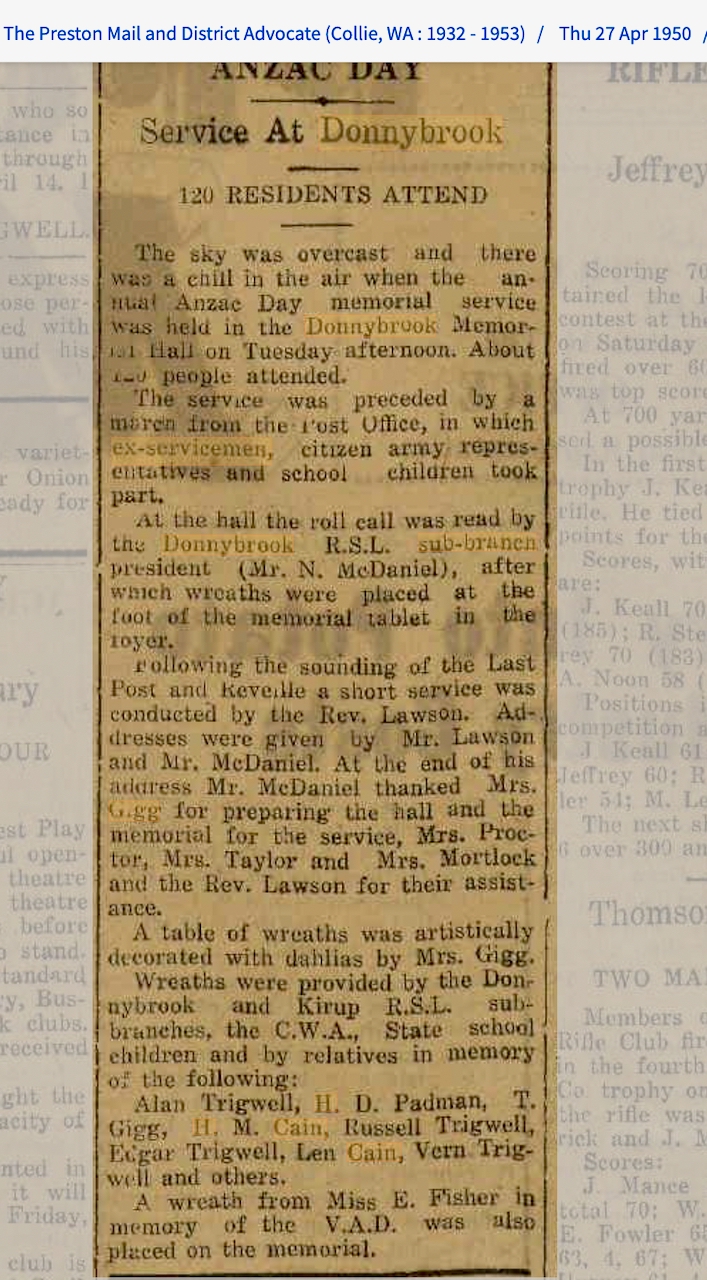
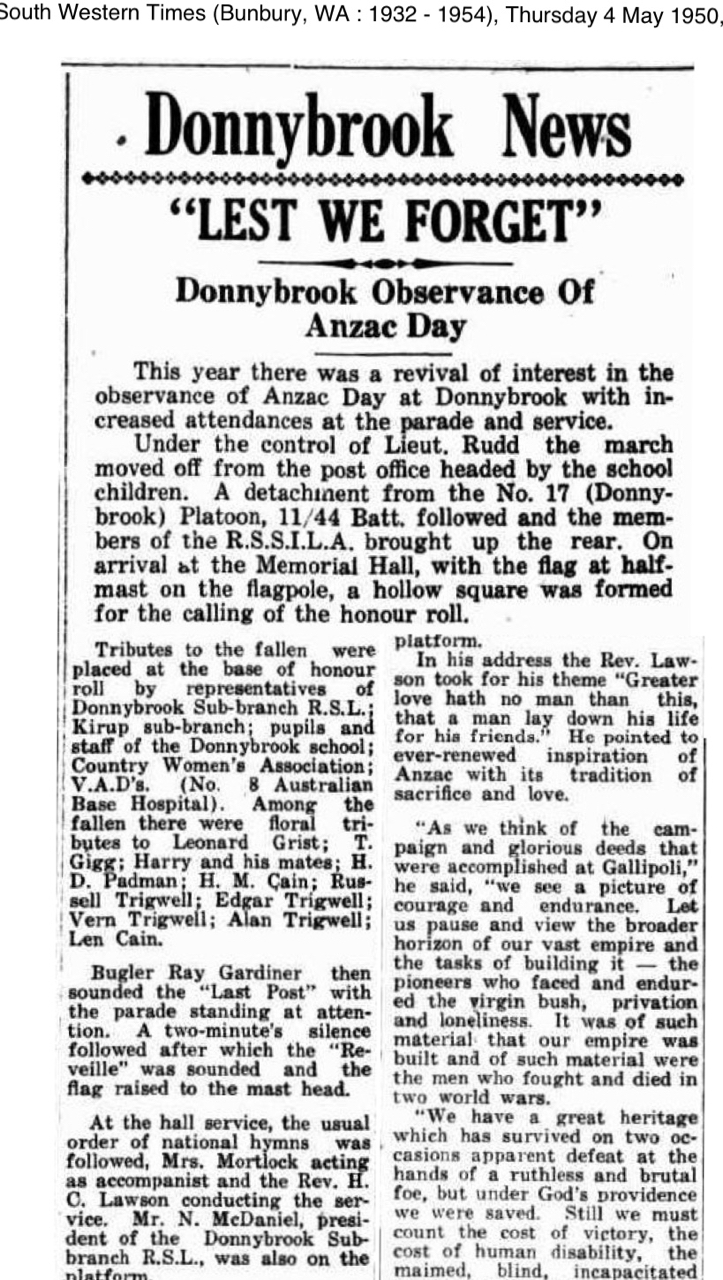
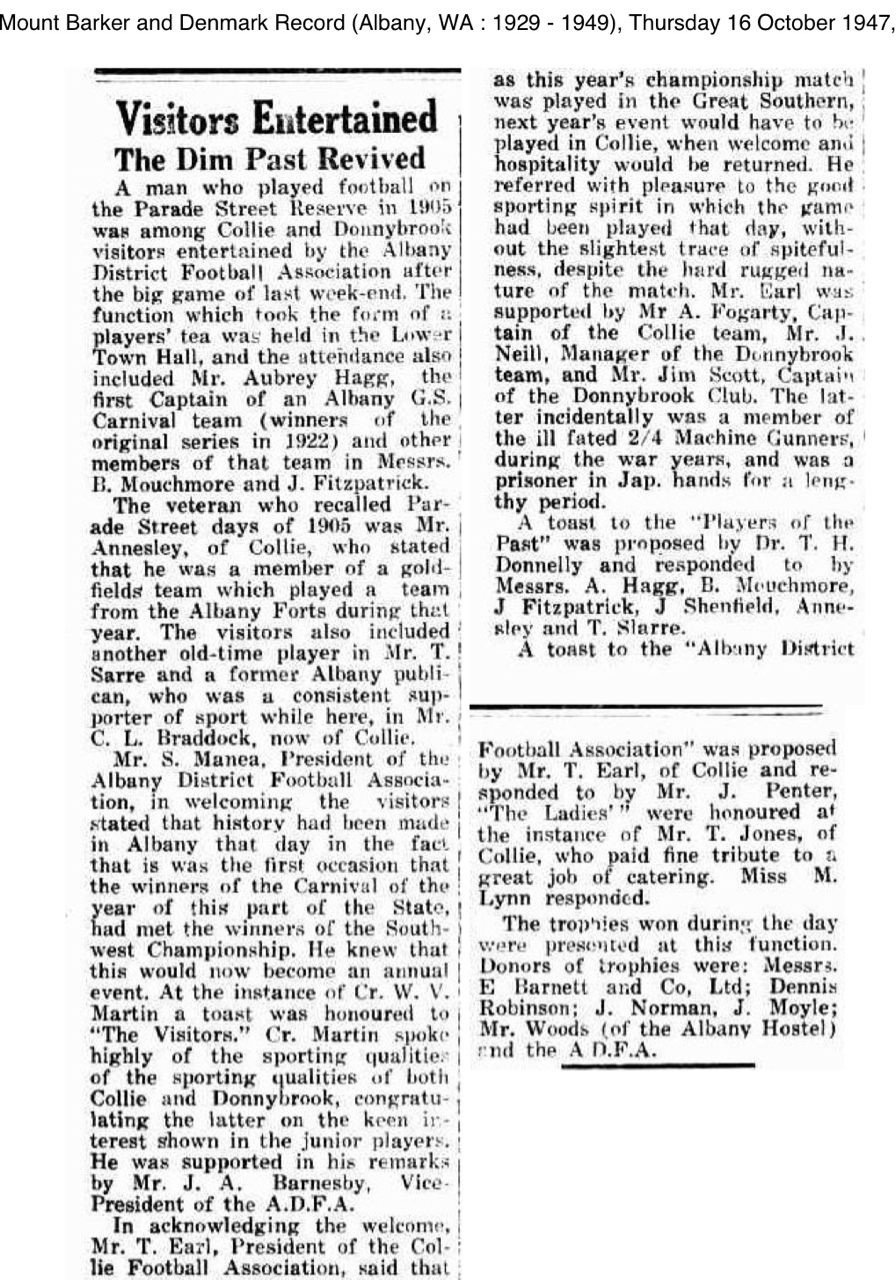
Donnybrook War Memorial – 2/4th Machine Gun Battalion AIF WW2

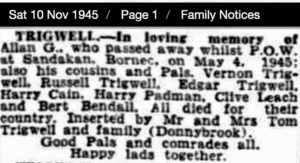
Bendall – Cain – Nicholls – Allan Trigwell – Vern Trigwell


WX17864 BENDALL, Bertram ‘Bert’ Alfred POW, died Sandakan 12 February 1945 of cardiac beri beri aged 30 years.


Bert’s parents married  England in 1908 after which they sailed to Australia, eventually settling to farm at Donnybrook where they grew apples and other fruits.
Bert was the second of three children, he had an older brother Will and younger sister Margery.  The children would have attended school at Donnybrook.
When Bert enlisted 3 December 1941 he joined 2/4th Machine Gun Battalion reinforcements – sailing 6 weeks later on ‘Aquitania’ for Singapore on 16 January, 1942.  Bert had spent the previous 12 months with 25th Light Horse (Machine Gun) Brigade Militia.


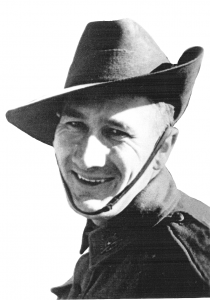
WX17860 CAIN, Henry ‘Harry’ David KIA Hill 200, Ulu Pandan, Singapore 12 February 1942 aged 21 years.  Harry was born 1920 at Donnybrook to Richard Cain and Vera Hildegarde Trigwell who married about 1917.

Cain enlisted 3 December, 1941- same day as Bendall (above).  Harry or Cobber as he was known to his mates, had been with the 25th Light Horse Militia before transferring to AIF.
Harry’s mate Vern Trigwell was also his cousin.
WX7645 NICHOLLS, William James POW, died illness Batavia 13 October 1942 aged 32 years.  Bill enlisted 10 August 1940 and joined 2/4th MGB as a Signaller with Headquarters Company.  He was employed as a butcher prior to enlisting.


As ‘Aquitania’ headed for Fremantle from Sydney with 2/4th MGB and other reinforcements on board – the West Australians believed they would have shore leave to visit their families before heading to an unknown destination (they had not been informed they were bound for Singapore).  They had been away from WA for six months training in SA and NT.  The men couldn’t believe their latest order ‘There would be no shore leave for anybody’.
When Aquintania’ anchored at Gauge Roads on 15 January 1942, hundreds of 2/4th men disobeyed orders and ‘jumped ship’ scrambling onto the supply pontoons tied alongside.  Many got back before ‘Aquitania’ sailed the following day, however more than 90 well-trained machine gunners were left behind. Some had been imprisoned by local police and were unable to be freed.
This group was to sail several weeks later with a smaller convoy.  As they neared Singapore, their scheduled destination, it was apparent the island would soon fall to Japan – they were diverted to Java.  Most joined ‘Blackforce’ and with other Allied Forces and the Dutch East Indies, they prepared to fight the Japanese. Their freedom was short-lived and within weeks, Nicholls was a POW of Japan!  The Australian, British and American POWs were held at several camp locations, as were the Dutch East Indies.
Nicholls became sick on 30 September 1942 and entered Bicycle Camp Hospital, Batavia.  He died from bacillary dysentery on 13th October 1942, aged 32 years.
Bill Nicholls was born Donnybrook July 1910 to Albert Edward and Elizabeth Ann Nicholls, of Donnybrook.  By 1942 his mother was a widow.

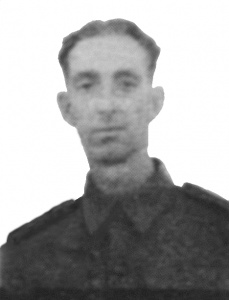
WX17882 TRIGWELL, Allan George POW, died from malaria at Sandakan No. 1 Camp on 4 May 1945 aged 23 years.  Allan enlisted AIF 4 December 1940 and joined the 2/4th reinforcements.  He had previously served with the 10th Light Horse Militia.
While a POW in Singapore, he was selected with ‘E Force Borneo.   You can read about ‘E’ Force Borneo.

Please see Sandakan Map.


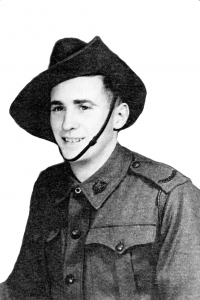
WX17863 TRIGWELL, Vernon Chapman POW ‘Rakuyo Maru’ Lost South China Sea, 14 September 1944 aged 24 years.
Vern Trigwell, Allan Trigwell and Harry Cain served with 25th Light Horse Militia prior to enlisting with AIF 3rd and 4th  December 1941.  Vern joined reinforcements, 2/4th MGB ‘C’ Company.  As a POW in Singapore he joined ‘A’ Force Burma, Green Force No. 3 Battalion to work on the Burma-Thai Railway.
Please read further about the movements of this Force.
(Green Force included the largest number of 2/4th’s men as did ‘D’ Force Thailand, S Battalion.)


‘A’ Force was made up of 3,000 POWs, sailing from Singapore May 1942 to south-west coast of Burma.  When the railway was completed at the end of December 1943 – the Japanese began moving all POWs in Burma, south into Thailand into one of 4 or 5 very large camps.  Vern was probably sent to Tamarkan where after a month or so he was considered to be ‘fit’ by the Japanese and selected to work in Japan.  Vern was in good company, a few mates from Donnybrook and others from ‘C’ Force and those he had been working with for the past 18 months in Burma.  The ‘Rakuyo Maru’ were first sent by train via Bangkok to French Indo- China (included Laos, Cambodia and Vietnam0  and where it was intended to send them by ship to Japan from the port at Saigon.
The POWs were put to work at the wharves and around the city.  Several times they were prepared to leave Saigon, but after hours and hours of waiting, they were returned to Camp.  Eventually the Japanese decided it was futile to attempt any shipping departures –  the American submarine blockade had been successful in sinking too many of their ships.
The ‘Rakuyo Maru’ party was prepared to travel by train to Singapore, where it was intended they would leave for Japan.
Following a few false starts, the POWs finally boarded the ‘Rakuyo Maru’ and headed out to sea.  It was about 3 days later they were torpedoed.


Please read about Trigwell/Bunker and the Rakuyo Maru
Also, please read about the Donnybrook boys

Below:  25th Light Horse Militia


Below:  Jim Scott returned safely from war.


DONNYBROOK BOYS WHO RETURNED TO AUSTRALIA INCLUDED:

WX17879  WADE, Gabriel John (Jack) ‘B’ Company.
Was fortunate to remain Singapore throughout war.  He was recovered from Changi.

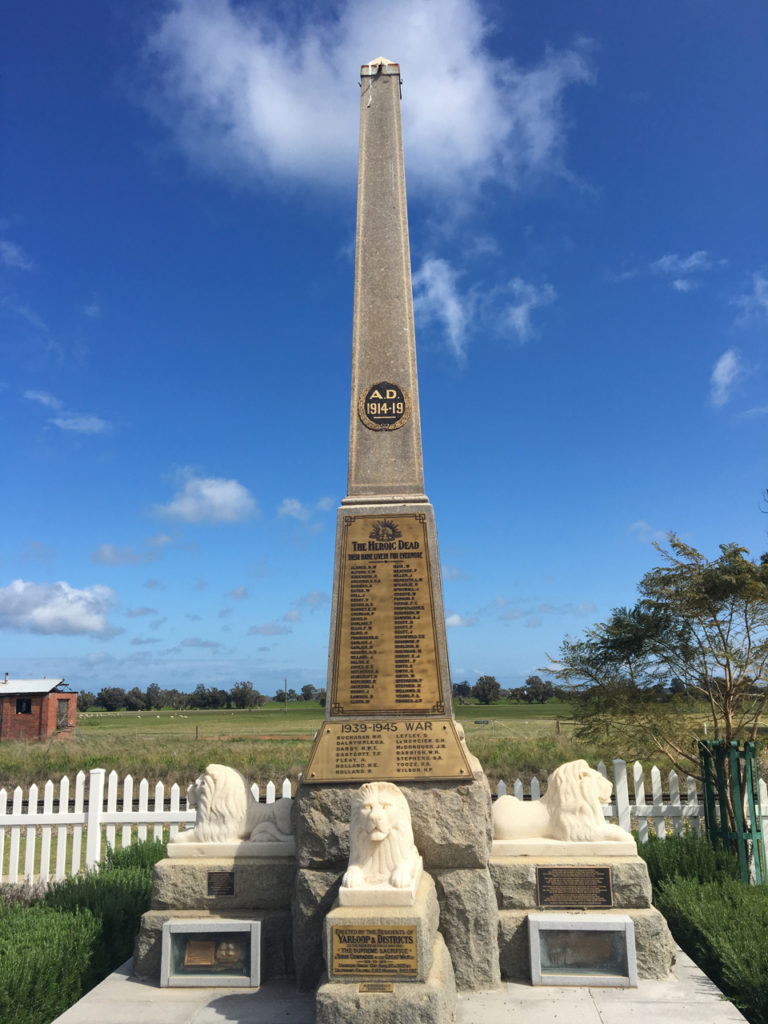
Yarloop War Memorial


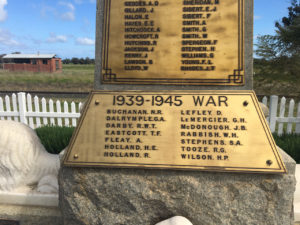
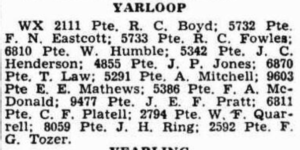
WX14068  Dalrymple, Gordon Alexander was KIA  Bald Hill, Bukit Timah 11 February 1942, Singapore aged 20 years.  He enlisted June 1941.


WX16323 Tooze, Reginald Gerald a former Fairbridge Farm school boy (one of 21) was KIA south west Bukit Timah 11 February 1942 aged 21 years.

Reg had been working in the area of Yarloop when he enlisted 3 September 1941.  A reinforcement who really only had 3 months training at Northam.

Both Dalrymple and Tooze were part of ‘E’ Company, Special Reserve Btn.  Please read further about their battle.

The Battalion suffered huge losses during the battle for Singapore, many were reinforcements with little training.


When the January 2016 Waroona fire burned 65,000 ha through the South West and Yarloop – the above War memorial was one of the few survivors – much of the town and surrounding area was razed to the ground.  160 homes were lost and tragically there were two fatalities.

A special Anzac Day service was held in April.

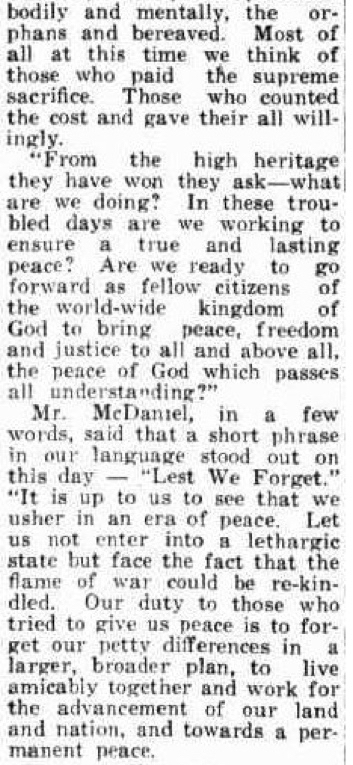
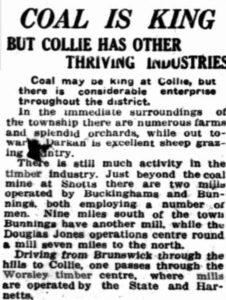
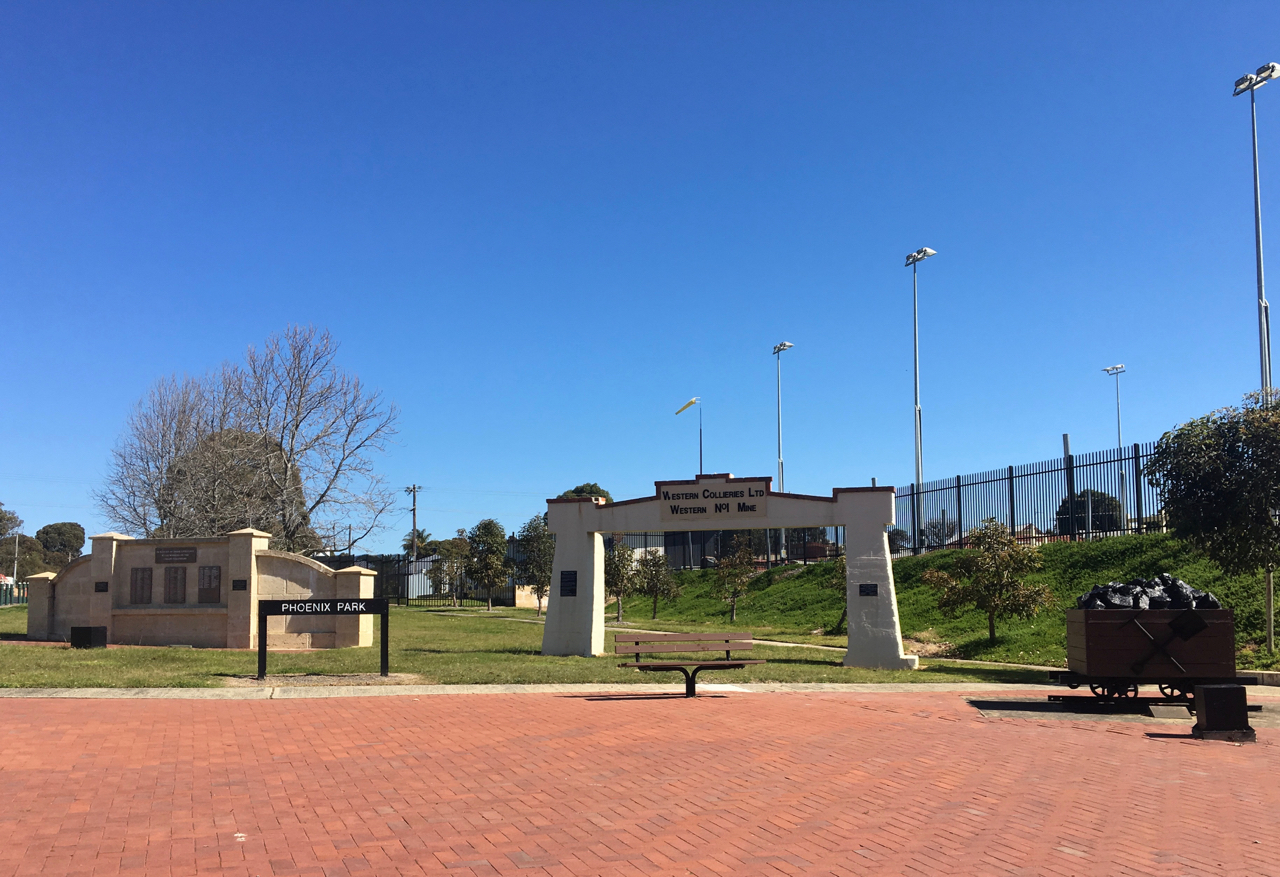
Collie & Worsley & COLLIE WW2 MEMORIAL – Timber & Mining Country

2/4th men from Collie, Worsley region who did not return to their families and their homes.


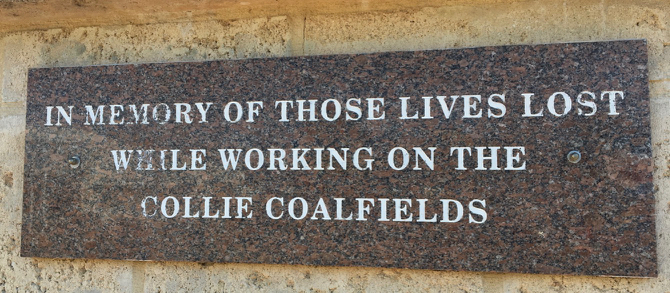
45 ‘Collie Boys’ died during World War II, many of whom were part of the ill-fated 2/4th Machine Gun Battalion. The Collie-Cardiff RSL Sub Branch diligently preserves records of these servicemen, including their service histories and locations of their deaths, according to the Collie-Cardiff RSL website. 
As well as 2/4th Machine Gun Battalion there was  2/28th and 2/11th Infantry Battalions and 460 Squadron RAAF


133 Boys from Collie lost their lives in WW1

2/4th men included on the above Collie War Memorial include three men who died at Sandakan.


Above:  From an 1903 Government Mining Report.


20 Collie Boys were taken POWs of Germany in WW2.  These men generally received better treatment.  One soldier died in Captivity. 

30 ‘Collie Boys’ were held POW of the Japanese during WW2; The majority of these were members of the ill – fated 2/4th Machine Gun Battalion captured in the disastrous fall of Singapore in February 1942.  Sadly 13 of the ‘Collie Boys’ died whilst in captivity. One in three Australian prisoners of war of the Japanese died in captivity.


13 Boys from Collie died as POWs of Japan – 10 from 2/4th MGB


WX7905 Annesley Frederick John – Acting Corporal (promoted 14 Feb 1942) b. Collie 1916.  He enlisted 13 Aug 1940 and later joined Headquarters Company No. 2 Platoon Anti Aircraft.  He missed boarding ‘Aquitania’ when she sailed on 16 January 1942 for Singapore and consequently  landed in Java (one of 90 2/4th men) where he was taken POW about 8 March 1942.
Fred perished in South China Sea, 12 September 1944 following sinking of ‘Rakuyo Maru’ whilst sailing from Singapore to Japan, aged 28 years.
He was selected to work on Burma end of railway with ‘A’ Force Burma, Java Party No. 4 Black Force from Java (he did not sail to Singapore) where he had been captured by the Japanese.     They continued working on the rail until end of 1943 after which all POWs working in Burma were brought south to Thailand.   Several months later Fred was considered fit by the Japanese and selected to work in Japan with what would become ‘Rakuyo’ Maru Party.
Read further Rakuyo Maru
WX7883 Beard, William Herbert ‘Bill’ was b. Subiaco 1911.  He left Singapore with ‘B’ Force Borneo.  Beard died malaria 10 July 1945 aged 34 years  Sandakan No. 1 Camp.

His body was recovered from Sandakan No. 3  Cemetery – slit trenches in No. 2 Compound – the burial site of all those who died after 29 May 1944 and simply too ill and  unable to   ‘march’.  
Read further about
Sandakan


WX7909 Davidson Tom  – Tom died of illness Thailand at Kuii Camp, Burma -Thai Railway September 1943, aged 33 years.    Tom was selected to work on railway with D’ Force V Battalion  which departed Singapore Railway Station March 1943.          
Others in this work Force included Kevin Moir, Bill Philp and Jack Wilson.
Read about Kuii Camp


RAF Fuhrmann, Herbert Leonard ‘Bert’ Pilot/Officer DFM  (brother of 2/4th’s Harry Fuhrmann WX7852) killed over Germany 29 July 1943


WX16416 Holme Charles  b. Harvey 1922 Known as ‘Bubbles’ died Sandakan-Ranau track Second March 7 June 1945 aged 22 years.
                                                  
Holme enlisted 10 Sep 1941, became reinforcement for 2/4th.  He left Singapore with ‘E’ Force Borneo.
He was one of four 2/4th        men who were part of a group of about 35 Australian POWs who together were tortured and massacred on the Sandakan to Ranau Track on the Second March.


WX17582 Lake George b.  Collie 1921, enlisted 6 Nov 1941 and became reinforcement joined 2/4th’s  ‘E’ Company left Singapore with ‘E’ Force Borneo George perished at Sandakan 8 April 1945, aged 23 years No. 1 Camp.  His body was recovered after the war at No. 2 Camp.
Please Read further 


WX8012 Moir Kevin George  b. Donnybrook 1911.  Died of cholera Thailand at Hintok River Camp, Burma-Thai Railway,  August 1943 aged 24 years.  He was selected in Singapore to work on the railway with ‘D’ Force Thailand V Battalion – with Jack Wilson, Tom Davidson and Doug Tanner.  He was father to three children.


WX8137 Needham John William Hayes  b. Broome 1913.  He left Singapore with ‘A’ Force Burma Green Force No. 3 Battalion to work on the Burma end of the Railway.  John died pneumonia December 1943 Burma at Khonkan Camp, Burma-Thai Railway aged 30 years. Read further about Khonkan Hospital Camp
He was possibly evacuated sick from Aungganaung Camp to Khonkan Hospital Camp, Burma.
‘A’ Force Burma, Green Force No. 3 Battalion.  This Force departed by ship from Singapore to sail to south-west Burma coast to Victoria Point for several months before journeying to northern end of rail in Burma.  They commenced work on the railway  1 October 1942 and continued until end of 1943.


WX7902 Philp, William Hawksley –    b. Mt Barker 1907. Bill died Thailand of illness at Kuii Camp, Burma-Thai Railway aged 35 years.
He was selected in Singapore to work on rail link with ‘D’ Force Thailand V Battalion which left Singapore Railway Station mid March 1943.  Others in V Battalion included Tom Davidson, Jack Wilson and Kevin Moir.
Sadlly Philp is one of only two men from 2/4th without a photo.
WX7904 Smith Raymond Matthew ‘Blue’ b. Perth 1906, an  son of a large family to Matthew and Gertrude Smith of Collie. Prior to enlisting, he worked as a mine clerk.  Blue died  of illness at Changi 19 April 1942, a little more than a month following surrender aged 26 years.
He was admitted to 2/10th AGH with an infected cyst on 1 Feb 1942 and was operated on the same day and discharged to his unit 13 Feb1942.  Blue Smith was again admitted to AGH on 9 April 1942.  Tragically he died ten days later of dysentery and toxemia (probably blood poisoning/septicemia).  He was buried on 29 April with the funeral service being conducted by 2/4th’s Chaplain F.X. Corry.

A Further Tragedy
The Smith family learn their son Leading Aircraftman, Harold William 80136, 14 Squadron RAAF aged 31 years, who was married and brother to Blue, had died Oct 1943.

WX17973 Wilson John ‘Jack’
died Thailand of illness at Brankassi Camp, Burma-Thai Railway August 1943 aged 36 years.  He was selected to work on Burma-Thai Railway with ‘D’ Force Thailand, V Battalion.
John (Jack) Wilson – Photo taken UK.


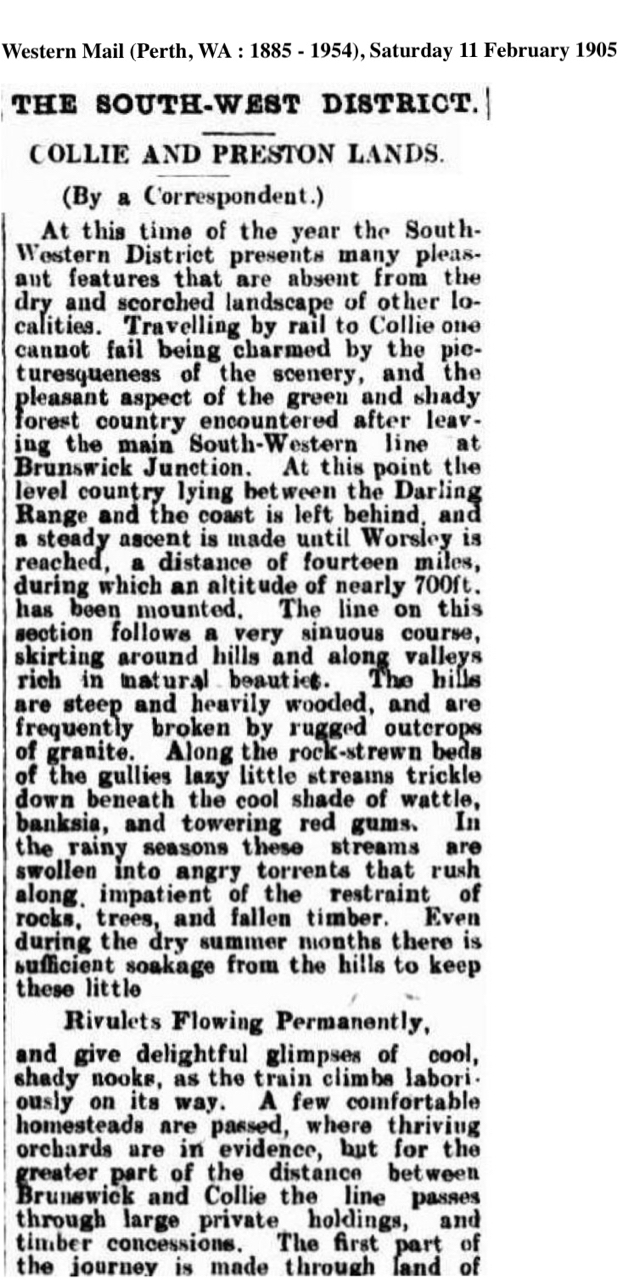
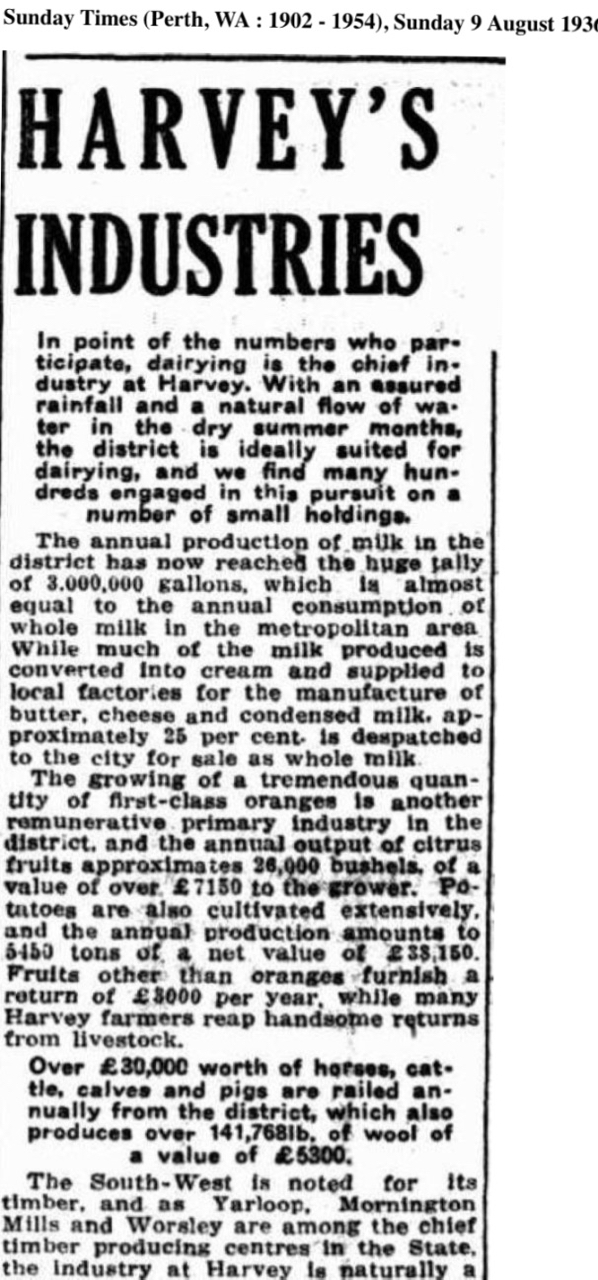
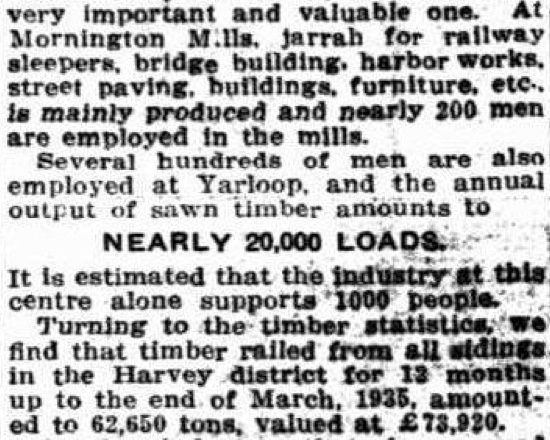
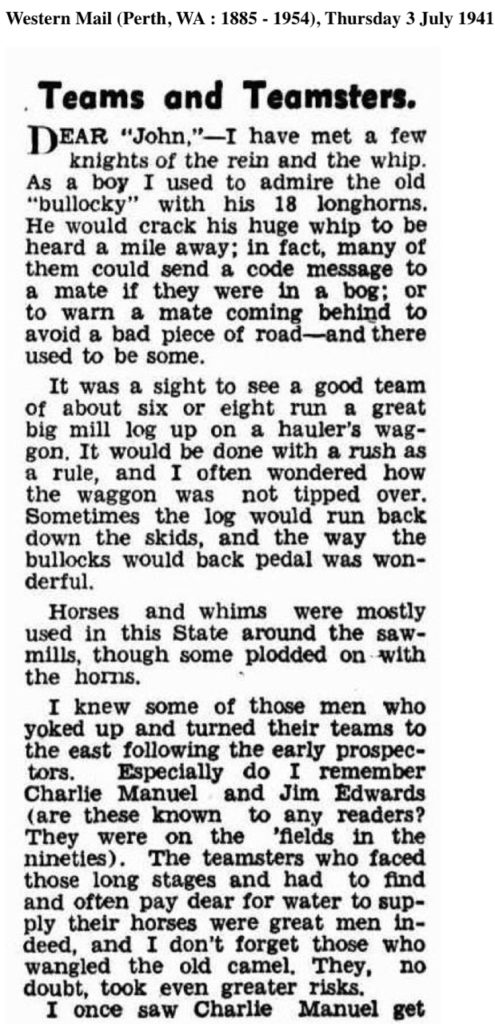
Collie was large catchment area for enlistment; mining, agriculture and timber.   The area included Worsley and several of above worked in the timber industry including Holme and Beard. Worsley did not become a bauxite mining town until the 1960s and the mill was about 9 miles from Collie.
As a timber town Worsley Mill had been in existence since the very early 1900s.  Worsley peaked in 1902 with a population of 1600 people.  It was one of many mills in the area.  Life was challenging for families with poor and sub-standard housing.  The men worked for low wages and limited safety checks in place.   Men suffered terrible injuries, loss of limbs and deaths.  There were numerous strikes and confrontations. There were moments during the years when the workers had no income due to closure of mills for varying reasons.
Lyalls Mill was also in the Collie region and supported a small population until the mid 1950s.
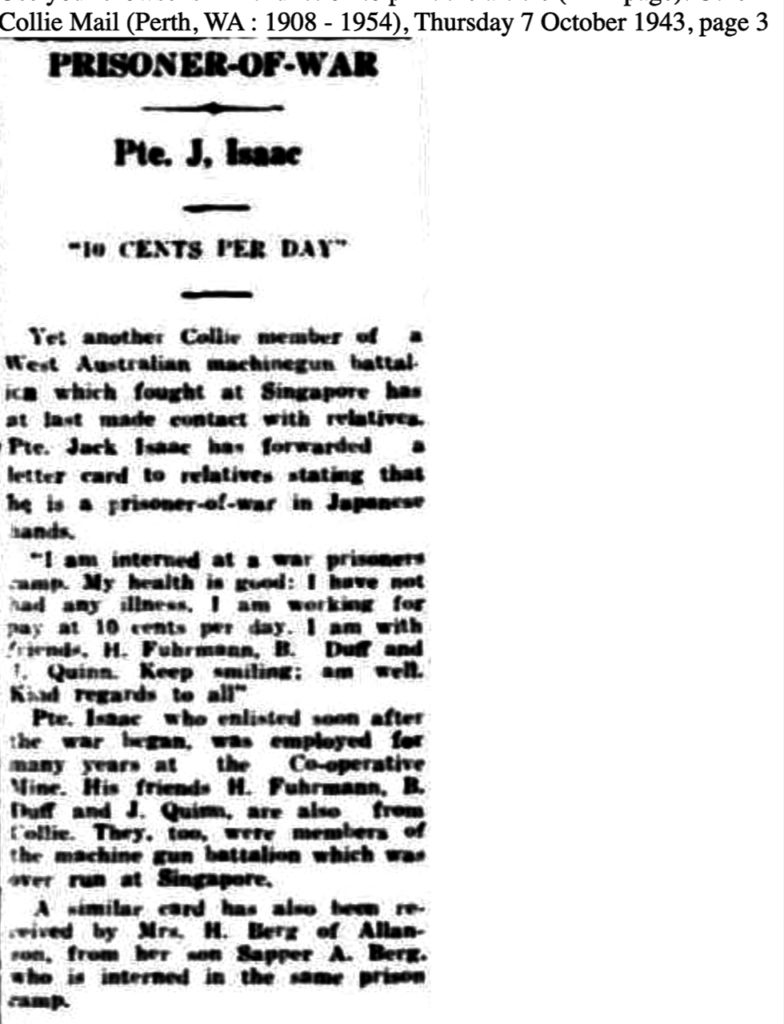
Below:  A card in 1943 from Jack Issac of Collie, mentions Harry Fuhrmann and Jim Quinn

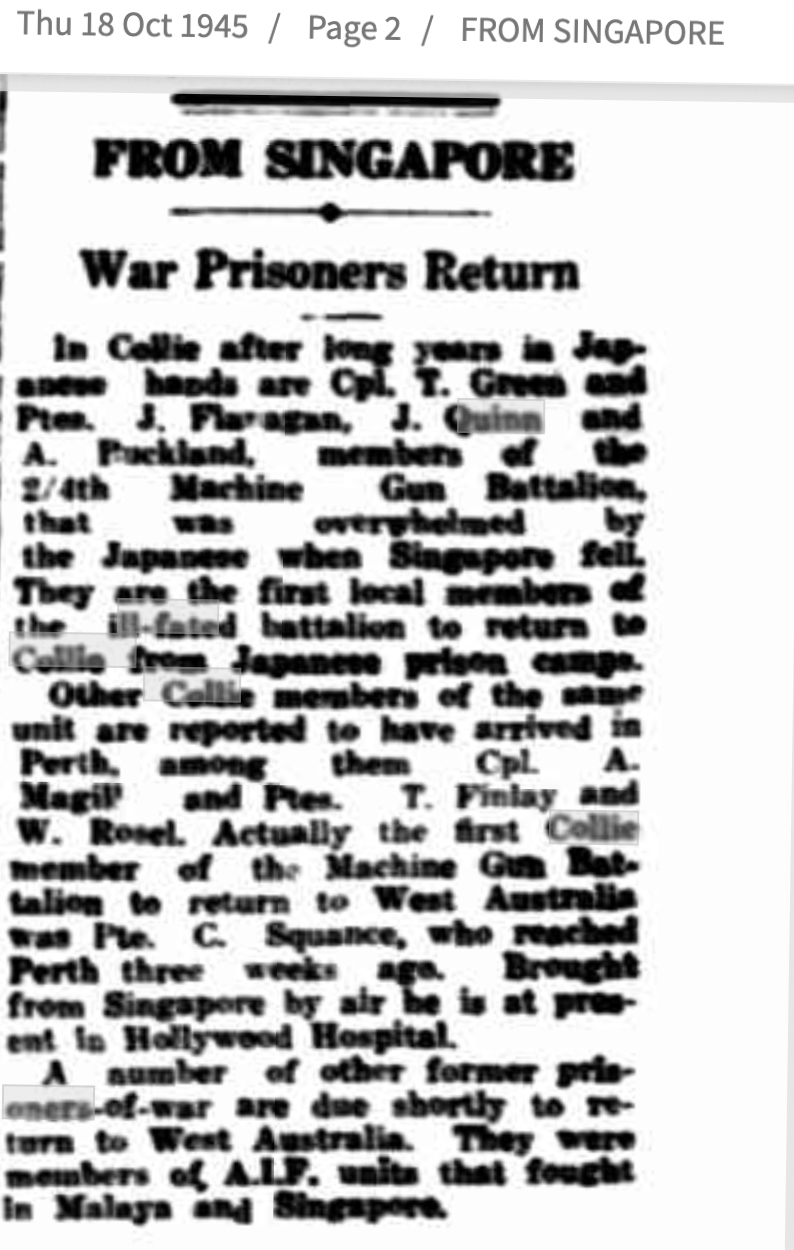
Below:  Collie POWs return home and mentions Squance who was very ill being airlifted from Sumatra via Singapore

WX9316 Pte Albert Brooksbank was born Leeds 1900, served in WW1 British Forces.  He joined “B” Coy Headquarters was Batman/Runner to CO Capt Bunning.  Brooksbank remained a POW at Singapore, escaping the terrible work force parties to Bura-Thai railway and Japan.  He was recovered at the end of war from Changi.
He moved to Collie and was working as a miner – but had not previously lived in Collie.  He married in 1948.  Albert died 27 Nov 1960 and was buried at Collie.


WX7852 Harry Fuhrmann, Sergeant (Promoted 11 Feb 1942) – .b. Bunbury 1909.
Enlisted 13 Aug 1940 and joined ‘C’ Coy No. 10 Platoon.  Left Singapore with ‘A’ Force Burma, Green Force No. 3 Battalion.  Was recovered from Thailand at the end of the war.  (retired and later moved to Perth)

Awarded Distinguished Conduct Medal for outstanding leadership during battle of Singapore.  


WX7831 James Patrick ‘Jim’ Quinn – b. Dalry, Scotland 1907.  Enlisted 13 Aug 1940. Joined Headquarters Company No. 3 Platoon.  Left Singapore with ‘A’ Force Burma, Green Force No. 3 Battalion.  Was recovered from Thailand at the end of the war.
Married 1946 returned to Ewington near Collie where he originally lived with his mother and siblings after sailing from Scotland to Fremantle  in 1914 when he was  6 years old.

He married in 1946 to Collie girl Elizabeth ‘Bessy’ Johnstone Dodd.
They had two sons.
Jimmy also returned to work as a miner and resided at Ewington.   He died 5 Oct 1973 aged 66 years at Ewington).
WX15952 Roy Albert ‘Toona’ Simmonds b. Collie 1919. Enlisted 8 Oct 1941 was fortunate to join ‘B’ Company 7 Platoon rather than ‘E’ Company made up of reinforcements which ran into Japanese ambush at Bukit Timah during fighting and lost half Battalion.
He left Singapore to work on Thailand end of Burma-Thai railway with ‘D’ Force S Battalion.  He was recovered from Thailand at the end of the war.  (former prominent Mines-Rovers footballer) and later was Colliery Deputy for some years before retirement.


Roy Simmonds and Clifford Squance
WX16885 Clifford Dudley ‘Cliff’ Squance b. Round Hill, Moora 1920. Enlisted 6 Oct 1941.Was reinforcement with ‘E’ Company which ran into Japanese ambush at Bukit Timah and managed to escape to Sumatra.  Squance was rescued from Sumatra to Singapore then flown to Perth.   He had worked and starved in appalling conditions on the rail link in Sumatra.
Please read about Sumatran Railway
WX16324 George Douglas ‘Doug’ Tanner b. London, England 1922.  Former Fairbridge Farm School  Boy – one of 21 who enlisted 2/4th.
Enlisted 3 Sep 1941 joined Headquarters Company No. 3 Platoon.  Left Singapore with  ‘D’ Force Thailand V Battalionhe survived to be selected fit to work in Japan.  Sailed with ‘Aramis’ Party and had the misfortune to work in the notorious Omuta Camp and mine.   Tanner was recovered from Japan, and was found to be suffering severe health problems was flown to Darwin to be hospitalised.   Formerly employed as a miner in Collie, he chose not to return to mining  – working in Japan’s terrible mines and conditions would have ended any ambitions (Doug worked for Shire Council and retired Collie)
Please read about Fairbridge Farm Schoolboys


WX7864 FLANAGAN, James Joseph ‘Jim’  b. Collie 1915 enlisted 39 Aug 1940, joined ‘B’ Company.  Jim worked on Burma-Thai Railway with D’ Force Thailand Captain Fred Harris 

Flanagan survived the Railway to be selected as fit by the Japanese to work in Japan. He sailed with Aramis’ Party and worked at Omuta Camp  (with  Tanner, one of Japan’s most notorious  camps.
He was recovered from here at the end of the war.


WX7869 GREEN, Thomas Henry ‘Tom’ Corp enlisted 13 Aug 1940 and later joined ‘B’ Company 7 Platoon, Worked on BurmaThai Railway with ‘D’ Force Thailand S Battalion.  He was recovered from Thailand at the end of the war.
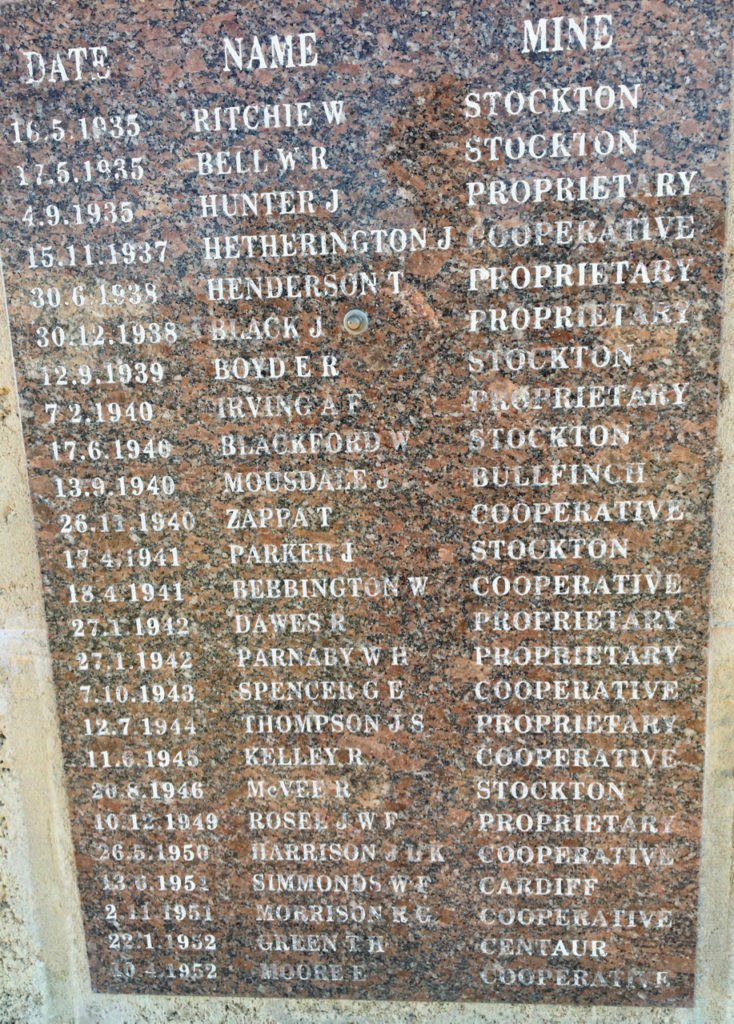
In 1952 Tom Green tragically died in a work accident at the Centaur Mine, Muja.  His young wife was left widowed with a young son.


WX7885 Albert ‘Alby Miller
 b. Collie 1913.  Worked on Burma-Thai Railway with ‘H’ Force Thailand  Group No.3.  He was recovered from Singapore at the end of war.  Alby died Collie 10 Jan 1985.


WX16886 Corporal Arthur Melville Magill – b. Collie 1919.


Enlisted 6 Oct 1941was reinforcement and joined ‘E’ Company. 
Was wounded twice, the last time at Bukit Timah Japanese ambush.  Managed to escape whilst wounded,to Sumatra.  He was recovered from Sumatra at the end of the war.
Awarded Military Medal for Gallant Conduct during Singapore Battle


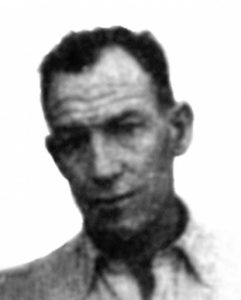
WX7889 John ‘Jack’  Isaac – b. Wales 1908. Enlisted 13 Aug 1940 joined Headquarters Company No. 2 Platoon.  Left Singapore with ‘A’ Force Burma, Green Force No. 3 Battalion.  Recovered from Thailand at the end of war.    Returned to Collie and mining.  John Isaac passed away at Collie on 14th February 1975 aged 66 years.


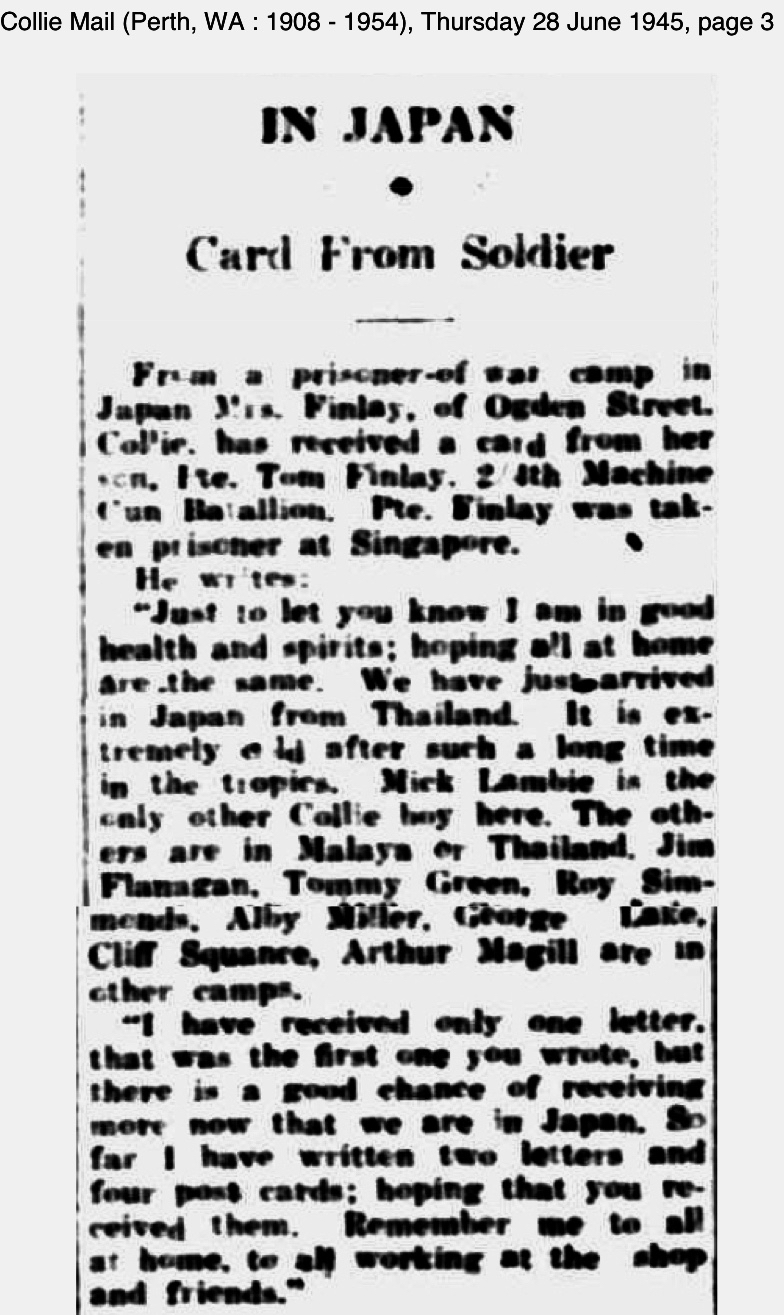
WX7886 Thomas (Tom) Finlay – Collie born Tom left Singapore with ‘D’ Force S Battalion to work on Burma-Thai Railway.  He survived and was selected by Japanese as being fit to work in Japan. He sailed on ‘Rashin’ Maru on a long 70 day journey from Singapore to Moji Japan.  He was recovered from Niihama where he had been working in a copper mine.


b. Collie 1913.   He worked on Burma-Thai Railway with ‘H’ Force Thailand  Group No.3.  He was recovered from Singapore at the end of war.  Alby died Collie 10 Jan 1985.


WX9101 Jack Clifford EWEN b. 1913 Mt Hawrhorn.  Joined ‘A’ Coy Promoted Corporal 11 Feb 1942. Worked Burma-Thai Railway with ‘F’ Force. Survived to return Singapore, Worked X8 Party. Collie Farmer, retired to live in town.
WX9101 ‘Black Jack’


WX7835 ROSEL, William Lowes ‘Bill’  enlisted 13 Aug 1940. Joined ‘C’ Company 11 Platoon as a driver.  Worked on Burma-Thai Railway with ‘H’ Force Thailand, Group 3.  Recovered from Singapore.  Bill returned to Collie and mining.  His older brother John ‘Jack’ Rosel died in an accident at Proprietary Mines, Collie in 1949.  Bill and another brother Henry were also working at same mine.


Roy Simmonds  (known as ‘Toona’) and Clifford Squance

Emaciated Cliff Squance WX16855 arrives Guildford Airport


1945, with Noel Banks and Richard Annear having been rescued from Sumatra. These 3 men from 2/4th were flown on Duke of Gloucester Plane and shows Governor Sir James Mitchell greeting Squance.


Below:  The name Annesley is mentioned – probably related to Annesley above.  Also Jim Scott of Donnybrook.


Collie was chosen by  2/4th Machine Gun Battalion ex-Members Assoc (Est 1946) for their first Country Reunion held 26th November 1954 – it was a great success.


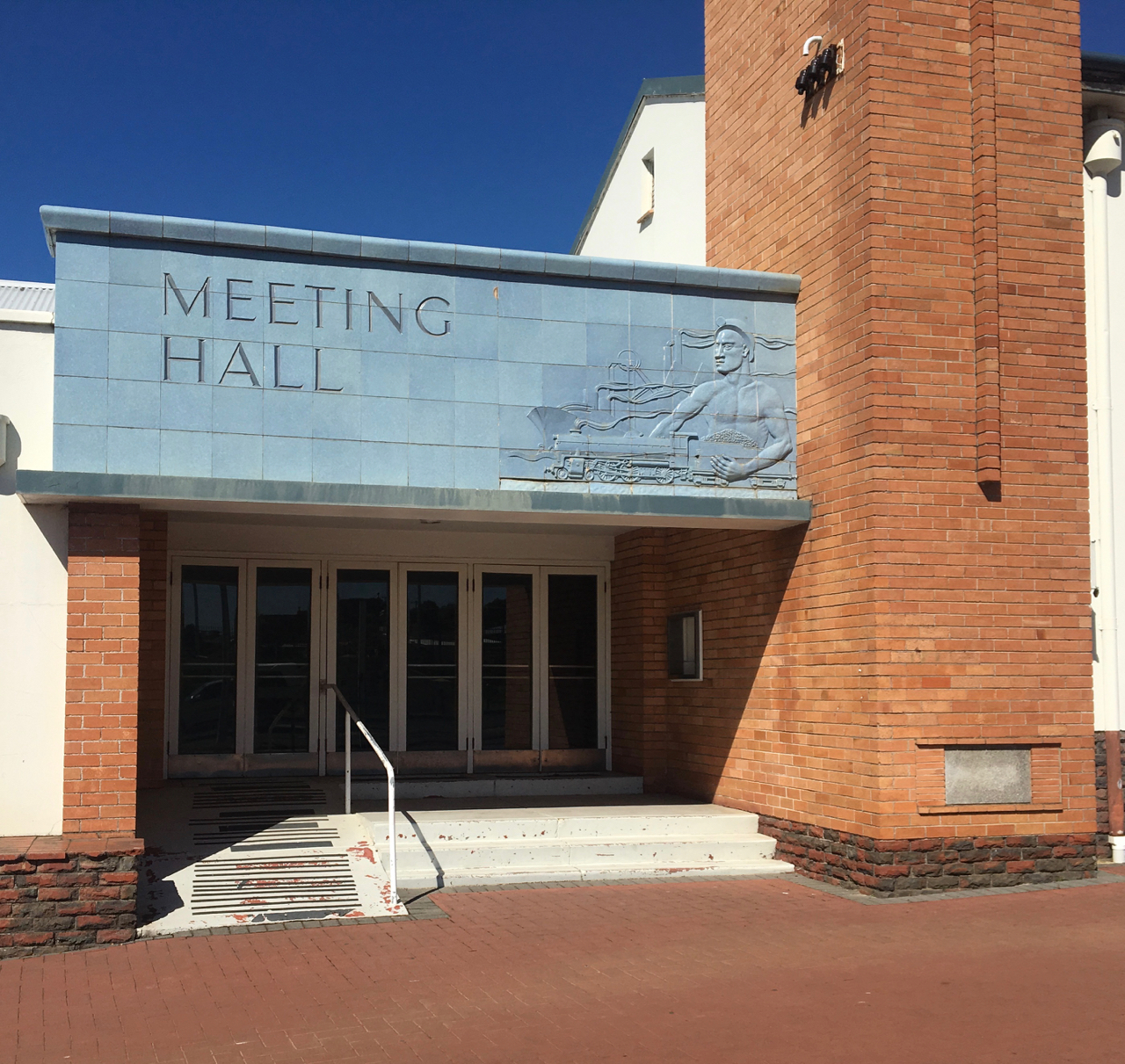
Large numbers of enlistments from Collie worked in the mines and they returned to do so after the war.


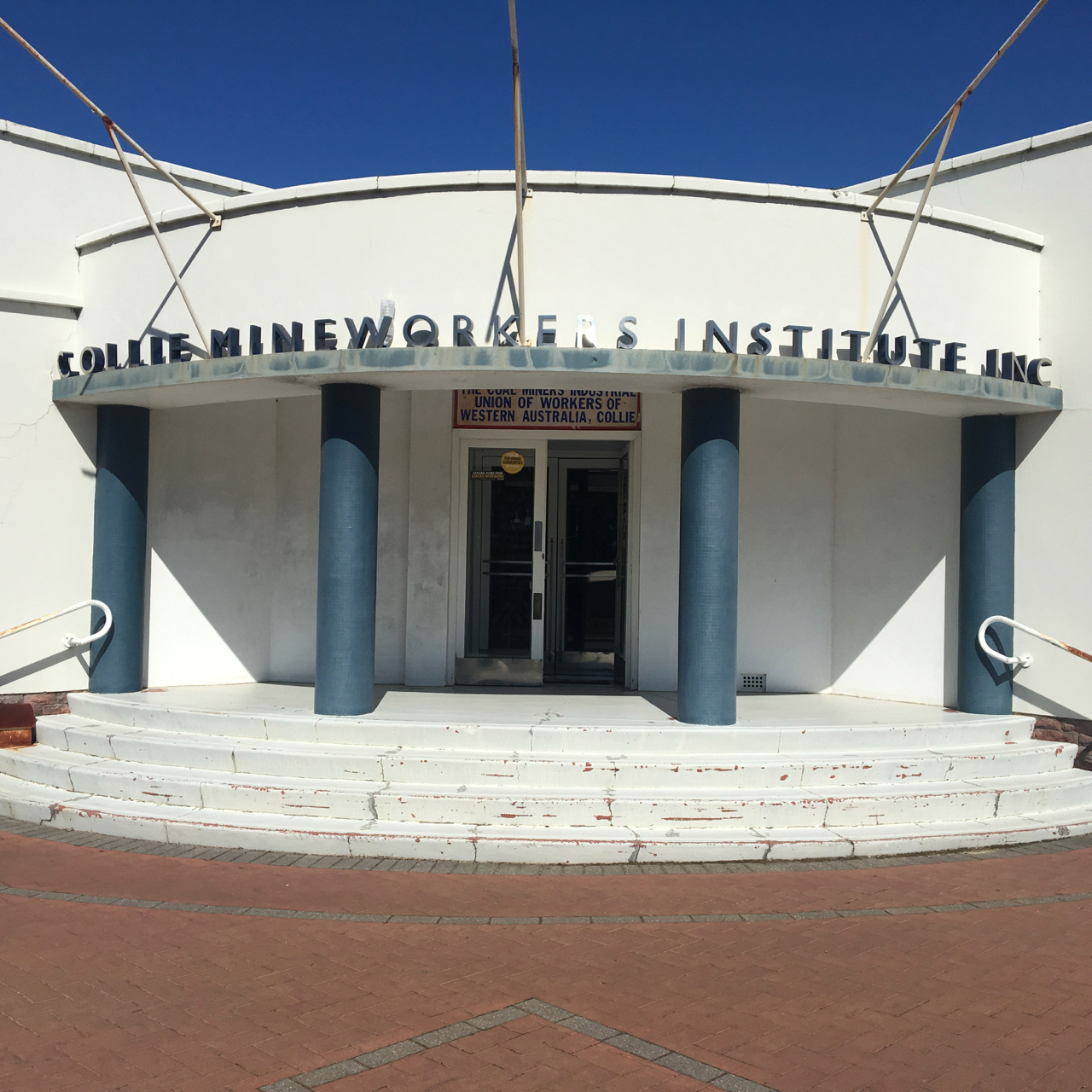
Opposite the Miners Institute is Pioneer Park, where the names of all miners who died working in the mines have their names recorded.


Above & Below: He survived being POW of Japan for nearly 4 years – 33 year old Tom Green was tragically killed in an accident at Centaur Mine in 1953.  He was the father of one young son, Trevor.


We recommend you see the RSL’s murals

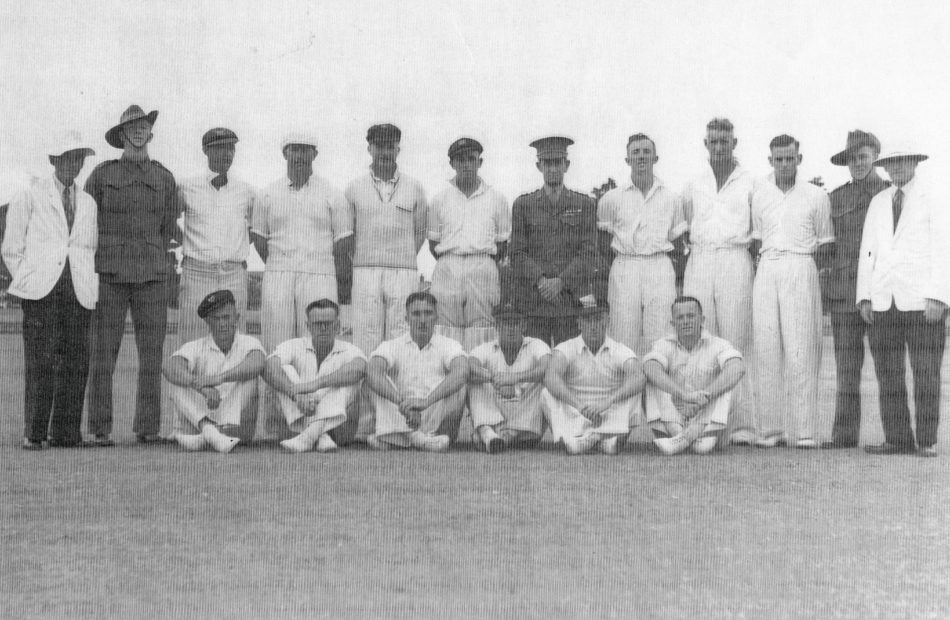
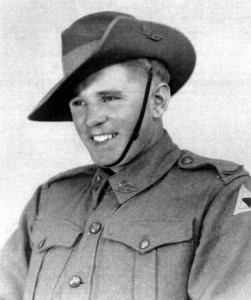
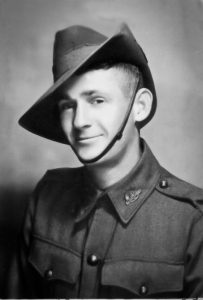
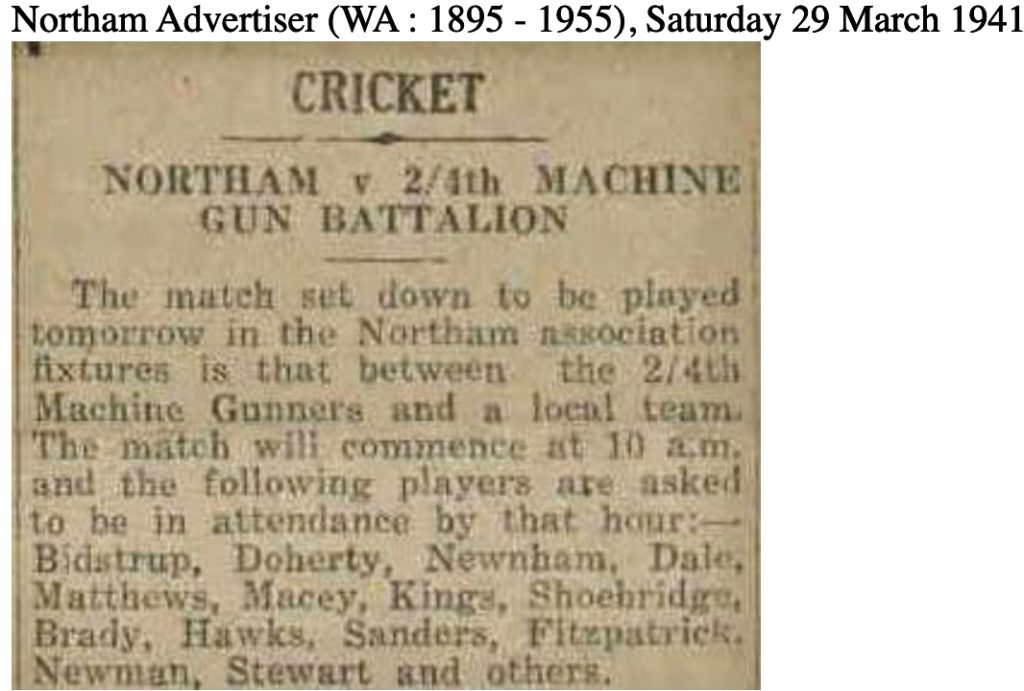
2/4th Cricket Team, Northam

2/4th Cricket Team – Property of Geoff MacDonald, nephew of Lindsay Murray MacDonald who is standing 2nd from left amongst those in whites. MacDonald was KIA at Singapore 9 February 1942.


2/4th Cricket Team Members


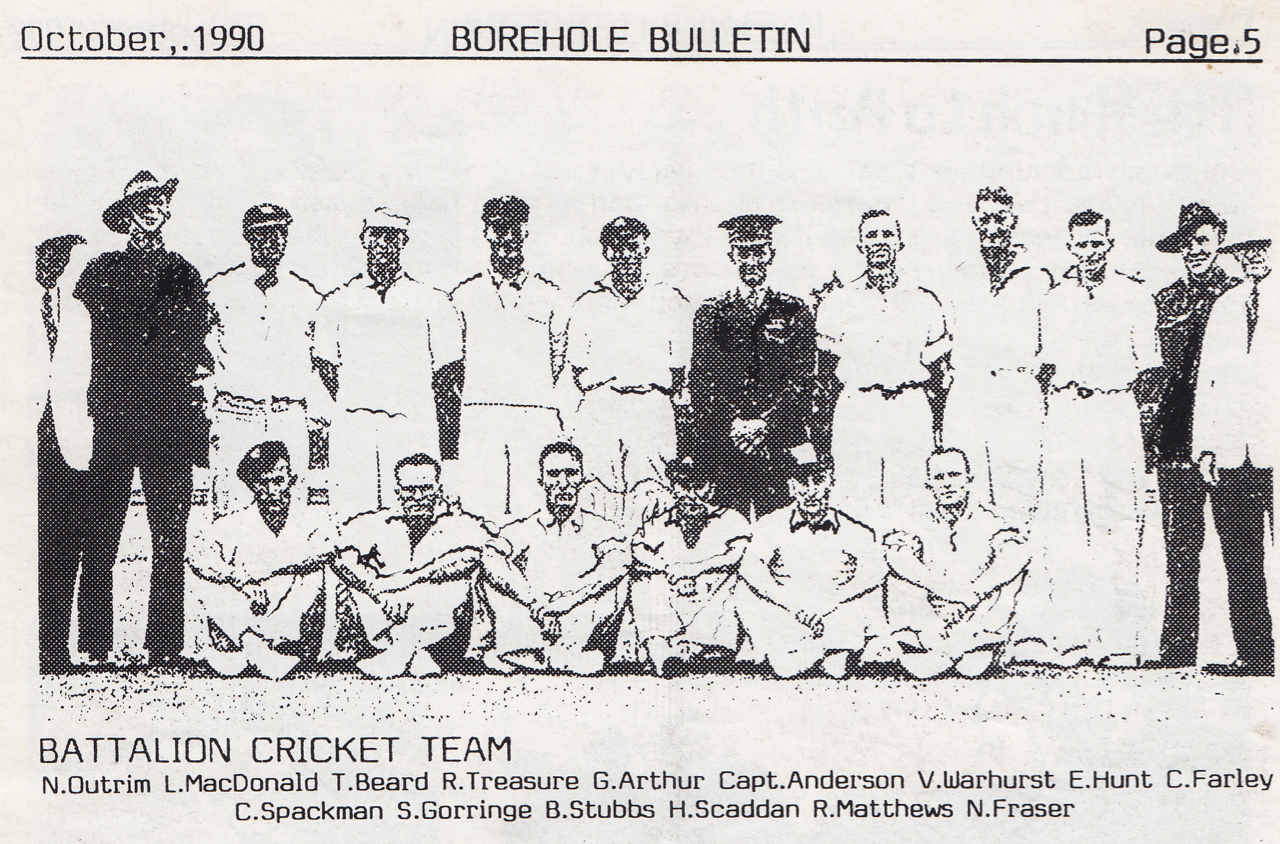
The team above L-R (as per October 1990 Borehole Bulletin)
N. Outrim, L. MacDonald, T. Beard, J. Treasure, G. Arthur WA State Wicket Keeper,  Capt. Anderson, V. Warhurst, E. Hunt, C. Farley (did not remain with 2/4th)
Front L-R . C. Spackman, S. Gorringe, Bowe Stubbs, H. Scadden, R. Matthews, N. Fraser.
Many of the above players were also members of the 2/4th Football team:  Treasure, Spackman, Edgar Hunt. 
According to Les Cody the team included Sid Gorringe (first Captain), Major (Granny) Saggers, Vic Warhurst, Cliff Spackman, Roy Matthews, Edgar Hunt, Alex Minchin, Bert Fidge, Cec Farley, Bowe Stubbs, Neil Outtrim, Harry Scadden, Gerry Arthur, Lin McDonald, Jack Treasure, Norm Fraser and Tom Beard.


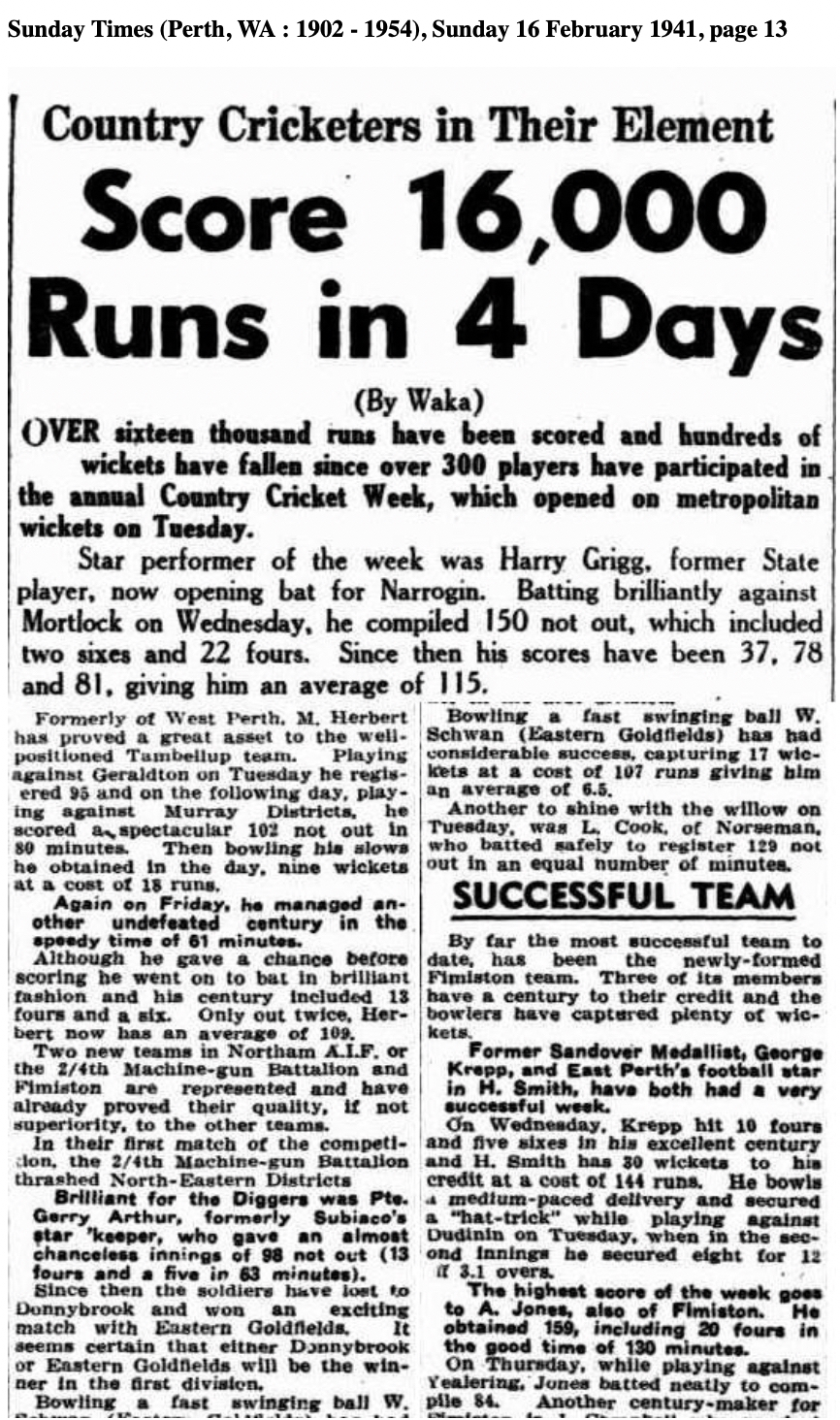
WX9031 Gerald ‘Gerry’ Arthur played for WA Cricket.  He was the star wicket keeper for Subiaco prior to enlisting.  Gerry was included in the above team.

WX13562 Peter Moate was regarded as a talented cricketer from Merredin, however as he did not enlist until May 1941 and missed the cricket season.

Another soldier who was a talented cricketer is Jack Leahy WX9312 from Pithara.

The team played in Country Week Cricket in 1941.  Syd Gorringe was the recipient of an award for taking 21 wickets and Gerry Arthur received an award for making total of 205 runs.  Below:  Gorringe

West Australian Tuesday 11 Feb 1941

“An interesting innovation is the inclusion of a team from ‘the men who have enlisted in the A.I.F. and are at present in camp at Northam. That the soldiers are pleased to be able to play again in a cricket competition is indicated by an arrangement for the members of the team to have practice early this morning. The list of players registered includes Major Saggers, Scaddon, G. Arthur and C. Farley, (formerly of Subiaco), Haddon, MacDonald, Matthews, Gorringe, Minchn, Hunt, Fleay, Treasure, Stubbs (formerly prominent in Country Week cricket), Fraser, Beard and Spackman.”
Fleay, Saggers, Hadden and Minchin did not actually appear in the team.
Bert Saggers – ex Fremantle, Subiaco and Claremont wicketkeeper and batsman 1923/24 to 1933/34

Pte Harry Wright Scaddan – Hockey and Cricket player.  Scadden is evident playing cricket for Boyanup in 1937/37. He played cricket for Elgin-Statham (‘Elgin’) as an opener in the Vasse CA in 1939/40. They lost to St Mary’s in the final at the end of April 1940. In late Nov 1940, H Scaddan is evident playing for Elgin again (1940/41). He played football for Elgin in 1938 and in 1940 at least. Elgin just 10 km from Boyanup, both about 15 km S of Bunbury, all 200 km S of Perth.

Lloyd Foster Hadden WX9139 – A couple of possible matches in 2/4 MG Battalion, but from Pingaring WA was a POW (survivor). He played Country Week cricket for Lake Grace (close by Pingaring, and his parents’ location) in 1934/35. Both Lloyd and his brother Ron (RAAF) were prisoners of the Japanese. Ron escaped from a gaol in Rangoon in mid-1945 just before the British captured the city (Perth Mirror Sat 23 Jun 1945, Western Mail Thu 26 Feb 1946). He was a Driver in B Company. He was held in Singapore in various places, and in Thailand as part of “D” Force, Captain Harris Party. Died Jan 1967.


Lin MACDONALD – Quairading batsman and four-time Country week centurian.


Lance Corporal Roy (‘Scotty’) Matthews – No record of his playing.


Warhurst – He may be the V Warhurst at Norwood HS in 1932 as under-15. V and R Warhurst are evident for East Torrens Colts in Adelaide Turf CA in 1933/34 and 1934/35. In late 1936/37 and through 1937/38, V and W Warhurst played cricket for University C team in Students grade (opening the batting).  Was KIA Singapore 11 Feb 1942 with ‘E’ Company SRB


Sydney (‘Sid’) Gorringe  – Evidently a bowler, he took 7/37 vs Eastern Goldfields and 6/25 vs Bruce Rock. 23 year old farmhand on enlistment at Hyden.


His older brother John (Jack, ‘Cocky’) Gorringe – he played Country Week in 1949/50 and 1950/51 for Kalgarin-Hyden.


Of the original 15 named players, Farley did not continue with  2/4th, eight of the 14 remaining soldiers did not return to Australia and Syd Gorringe had his left leg amputated below the knee:


WX10366 Norman Wilson FRASER born Claremont 1913 was a former Scotch College student.  Enlisted AIF 18 Dec 1940 and joined 2/4th’s ‘C’ Coy 11 Platoon under CO Lt Boyle.


He departed for the Burma end of the Railway with ‘A’ Force Burma, Green Force No. 3 Battalion (as was Harry Scaddan).
Fraser died of cholera at Aungganaung 105 km Camp, Burma  4 June 1943 aged 29 years.  He was married and father to two young children.


WX9327 Edgar Harold HUNT Corporal born 1914 Beverley and enlisted AIF 30 Oct 1940 and later 2/4th’s ‘D’ Company.
Edgar departed Singapore with ‘D’ Force Thailand V Battalion to work on the Burma-Thai Railway. He died of bacillary dysentery at Hindaine Camp, Thailand on 10 August 1943.  He was 29 years of age.
Hunt had been working at Jacobs Well near Beverley and Dangin when he enlisted.
WX10802 Corp. Noel James OUTTRIM was a Glen Forrest boy who was a Rangetaker with ‘B’ Coy, 8 Platoon.  He worked on the Burma-Thai Railway with Capt Fred Harris Party.    Almost all POWs had been evacuated out of Burma & Thailand’s railway by end of 1943. Please read further
Outtrim was obviously part of a maintenance party which was sent back up the line.
Noel, a former ‘letter carrier’ died of cerebral malaria at Kinsaiyok Camp on 22 November 1944.  He was just 24 years old.
Noel’s name is included on the Mundaring WWII Memorial, along with Arnold Vivian Cousins and Alex A.J. Colquhoun.  Please read further.


WX9279 Lindsay (Lin)  Murray MacDONALD

Was with ‘D’ Coy 13 Platoon under Commanding Officer Lt Wankey.  They were located on the very front line when the Japanese landed on 8 Feb 1942.

13 Platoon were overrun by the Japanese and evacuated from the front line.
‘Lin’ was KIA 9 Feb 1942 at Lim Chau Kang Road.  He was 27 years old.
Prior to his enlistment he was farming on the family farm at Quairading.
He was also with the 10th Light Horse before joining 2/4th.


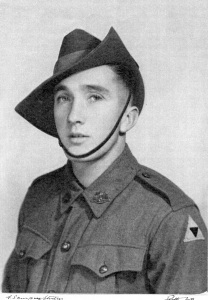
WX7617 Harry Wright SCADDAN born Ashington, England in 1914 Harry came to Pinjarra as a young boy to attend Kingsley Fairbridge Farm School.
Scaddan
Harry excelled in most sports.  He was sent to work on farms from the age of 14 (as all Fairbridge kids were) however was able to maintain his keen interest and played cricket and hockey for local teams.
Scaddan was included the first work party out of Singapore in May 1942 –  ‘A’ Force Burma Green Force No. 3 Battalion.  They sailed first to south west Burma and repaired and enlarged 3 airfields before making their way to the most northern end of the railway.  Harry die of cerebral malaria at Tamarkan Hospital Camp on 22 April 1944, aged 29 years.
Towards the end of 1943 when the railway was completed, the Japanese began moving all the POWs in Burma south to one of 3 or 4 very large camps where the fit were selected to send to work in Japan.  Prior to Harry travelling south, he was at Khonkan 55km Camp from 4 July to 19 Oct 1943 – a long period of time and where sick were sent in Burma.

Please read about 55km Khonkan Camp

Scadden seated centre front in the Boyanup Cricket Team.
WX9332 John ‘Bowe’ STUBBS born Narrogin he lived his formative years at Kondinin.  Bowe was the youngest of 7 children.  With his two older brothers Len and ‘Bill’,  Bowe played for both local cricket and football teams and was mentioned regularly for his talent.
Bowe enlisted 30 Oct 1940 aged 20 years and was drafted into ‘B’ Coy 8 Platoon under CO Lt Penrod Dean – same Platoon as Noel Outtrim who died of illness Thailand in 1944. He was KIA on second day of fighting trying to protect Tengah Aerodrome – but the Commonwealth Forces were soon overrun.
Bowe’s body was never recovered and he is remembered on a Singapore Memorial Epitaph Column 36 at Kranji War Memorial, Singapore, he was just 23 years old.
His family were notified of his death within weeks – many families did not learn of their loved one’s death until after the war – they spent years praying and hoping they were alive.
In July 1942 his brother ‘Bill’  who had joined Australian Air Force was killed during a training flight in NSW.  Bill was  two years older than Bowe.


WX9351 John (Jack) TREASURE was another talented football and cricket player (from the south west) who played in the 2/4th teams.  He spent his formative years around Broomehill.  His brothers, fathers and uncles were all keen cricket players.  He was the eldest son of Leo and Victoria Treasure and born 1919.

He enlisted AIF 30 Oct 1940 and later joined Headquarters No. 3 Administrative Coy as a driver under Quartermasters Capt Phelps and Lt. B. O’Sullivan
As a POW in Singapore Jack left to work on the Burma-Thai Railway about May 1943 with ‘D’ Force V Battalion.  He died of cerebral malaria at a dreadful camp known Kuii.  He was 24 years old.  V Battalion suffered a horrific 50% death rate on the railway.  Subjected to tropical illnesses, bashings and spiteful guards.
Please read about V Battalion.


NX70433 Victor Ingleby (Bunny)  WARHURST LT born 1918 Adelaide, SA.    Enlisted 30 Oct 1940.  Was a regular officer and Graduate of Duntroon.  He was KIA with ‘E’ Company Special Reserve Battalion when they ran into  Japanese ambush at south west Bukit Timah on 11 Feb 1942. Almost half the Company were wounded or KIA.

It was later confirmed Warhurst had been wounded by mortar fire shattering his thigh.  Unable to move five Japanese soldiers killed him with his own rifle and bayonet.
The Japanese would not allow the Australians to recover any of their dead until later in the year – 10 months after the battle.  It was far too late to recover or recognise most of those who had died who were uncovered and exposed to the elements and wild animals. The Japanese  buried their own dead amongst and nearby their enemy.  This created much anger and grief amongst the POWs.  His death left his  wife widowed in Adelaide with a young daughter whom Warhurst had never seen.


Those fortunate to return to Australia at the end of the war included:

WX9335 Sydney GORRINGE b. 1916 Perth enlisted 30 Oct 1940 with his older brother John WX9336.  Both boys survived to return home, however Syd had his left leg amputated on 30 Sep 1943 below the knee due to a tropical ulcer. He worked on the Burma-Thai Railway with ‘D’ Force Thailand ‘S’ Battalion at the Hellfire Pass Cutting region.
Sadly Syd would never play cricket again.


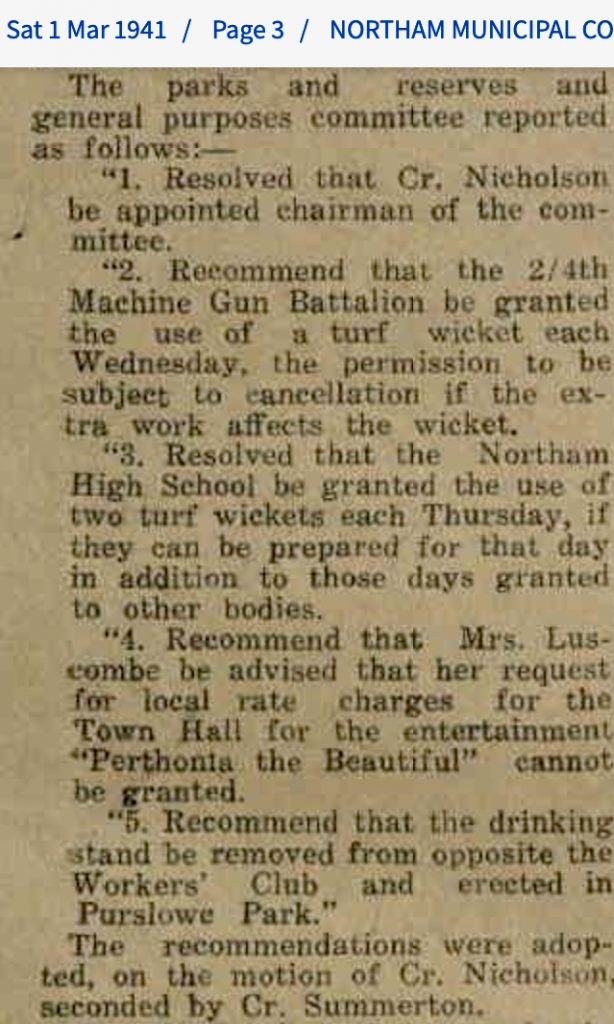
Below:  a scheduled cricket match with Northam March 1941 – unfortunately there are no names of players.

Soldiers of 2/4th who were ill and returned to Australia and those who were not taken POW

2/4th SOLDIERS NOT TAKEN PRISONER OF WAR and returned Australia mostly due to illness/injury 1942.

BURNS, ARTHUR JOHN WX7333 
Departed Fremantle on HMT  ‘Marella’  to Java.    Disembarked Java 13 February 1942.  Evacuated sick to 2/12th Australian General Hospital Ceylon on 3 March 1942.   Disembarked Fremantle ex-Ceylon on 6 May 1942.  Served with following:

  1.  25th Australian Divisional Cavalry.
  2.   Guerilla Warfare Group.
  3.  43rd Water Transport Company and discharged 23 June 1945.

BYRNE, LEO PATRICK WX6155 
 Departed Fremantle on HMT  ‘Marella’  to Java, joining ‘Blackforce’ attached to 2/3rd Machine Gun Battalion.  Admitted sick to hospital in Java from 18 February to 25 February 1942.  Embarked 25 February 1942 on H.M. Hospital Ship ‘Wui Sueh” for Ceylon. This ship had departed Singapore on 9 February 1942 to Java and departed Tanjong Priok Harbour, Batavia crowded with patients.   Byrne was admitted to 2/12th Australian General Hospital at Columbo, Ceylon on 4 March 1942.  Returned by Ship to Melbourne and by train to Perth.

Byrne was discharged 29 June 1942.  Died 22 February 1954 Boulder aged 51 years, in a mining accident.

GAULT, CLYDE WILLIAM WX10622 
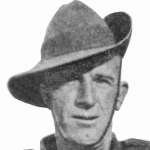
Last seen at Ulu Pandan, Singapore.  Reported missing from 18 February 1942.  Soldier was shell shocked on 13 February 1943 and remained unconscious for seven hours.  He was evacuated from No. 1 Malaya General Hospital (believed to be the Alexander Military Hospital, Singapore) to Colombo from where he was returned to Australia, disembarking at Melbourne on 6 April 1942 ex HMT ‘Stirling Castle’ .

Gault returned to WA after a period in hospital of three weeks convalescing, and posted to 43rd AA Gun Station.  On his first shoot, headaches forced his transfer to 4th Australian Signal Training Unit.  From here he was again transferred to 51st Water Transport Company.   Discharged 30 June 1944.

HARRISON, BERNARD GEORGE WX7745
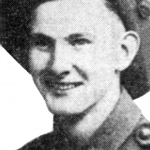
When being led out from the west coast on the night of 9 February 1942 by Sergeant Ron Arbery ‘D’ Coy, 16 Platoon, contact was lost with soldier who it was later heard, had escaped to Australia.  Harrison disembarked at Fremantle ex-‘Erindale’ on 5 March 1942.  He was Taken on
Strength, General Details Camp Claremont ex-Batavia, the same day.

  1.  13th Training Battalion 1 April 1942.
  2.   25th Divisional Cavalry Training Squadron 23 August 1942.
  3.   3rd Australian Motor Brigade 2 November 1942.
  4.  4th Motor Regiment, 1st Armoured Div. 3 November 1942.
  5. NCO’s Course 5 April 1943 and discharged 31 January 1944.

MCGRATH, LAURANCE JAMES WX8611
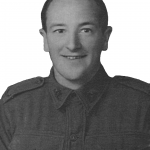
Remained onboard HMT ‘Aquitania’ at Java and returned to Australia sick.  Admitted to 110 (P) MH on 25 January 1942 and discharged to unit on 31 March 1942.  McGrath went on to serve at Wewak, Lae and Aitape with the rank of A/Sgt from 28 August 1943.  He was mentioned in Despatches whilst serving with 43rd Water Transport Company.  There was an explosion on a landing barge which caused a fire to break out.  Acting Sergeant McGrath exposed himself to the flames and rescued an unconscious soldier.   Discharged 16 November 1945.

MORRIS, WILLIAM RICHARD WX8200
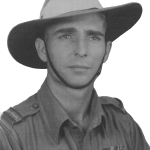
Repatriated sick ex-Java.  Embarked on HMT ‘Stirling Castle’ at Ceylon on 13 March 1942 and disembarked at Melbourne on 28 March 1942.  Transferred to 5th Military District disembarking HMT ‘Egra’ on 13 April 1942.  Classified medically fit on 27 April 1942 and Taken on Strength with 2/3rd Machine Gun Battalion on 20 May 1942.  Admitted to hospital on 25 November 1942 after an explosives accident and evacuated to 113th Australian General Hospital.  Transferred to 115th AGH on 18 December 1942.  Soldier’s right hand was amputated above his wrist on 9 February 1944.  Discharged 4 May 1944.

O’NEILL, WILLIAM DARCY WX8828 
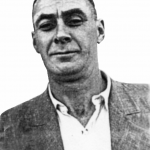
Departed Fremantle on HMT  ‘Marella’ to Java.  O’Neill was attached to 2/3rd Machine Gun Battalion.  He was evacuated sick to hospital ship ‘Wu Sui’ which departed Tanjong Priok, Batavia approximately 20 February 1942 for Ceylon where he was admitted to 12th Australian General Hospital, Colombo.  O’Neill was discharged from Hospital on 12 October 1943 on his return to Melbourne ex HMT ‘Stirling Castle’.  Discharged 12 October 1943.

PRITCHARD, FRANK KENNETH WX8716
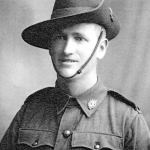
Pritchard remained onboard HMT ‘Aquitania’ at Fremantle.  He had fallen 10 feet onto his right foot on 15 January 1942 twisting his knee.  He did not trans-ship at Ratai Bay, Java with the Battalion bit remained onboard the ‘Aquitania’ and returned to Fremantle due to synovitis to his knee.  An operation was performed on Pritchard’s right leg which was placed in plaster for three months.  Soldier then convalesced for four months and after plaster  was removed he was Taken on Strength as reinforcements for 2/4th Machine Gun Battalion on 17 July 1942.  Taken on Strength with 35th Infantry Battalion on 25 September 1942 and then the reformed 2/2nd Pioneer Battalion on 12 December 1942.
Embarked Fremantle HMT ‘Duntroon’ on 23 July 1943 and disembarked Port Moresby on 28 July 1943.  Pritchard saw action at Ramu Valley when 2/2nd Pioneers were brought in to replace 2/16th Battalion.  He disembarked at Balikpapan from LST 632 (Landing Ship) sometime after 13 May 1945.  Discharged 6 December 1945.

ROBERTS, STANLEY HENRY WX7750 
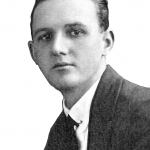
Departed Fremantle on HMT  ‘Marella’ to Java Assigned to ‘Blackforce’ attached to 2/3rd Machine Gun Battalion at Java.  He was returned to Australia sick and arrived in Melbourne on 28 March 1942.   No other details are known.  Roberts was discharged 18 July 1943.

ROWLAND, ARTHUR JOHN WX17293 
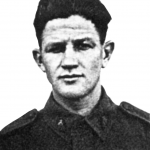
Soldier received gunshot wound to his right thigh on 11 February 1942 and was listed as missing in action.  It is believed he escaped to Sumatra.  He was admitted to 2/12th Australian General Hospital at Colombo, Ceylon on 9 March 1942.  Embarked on HMT ‘Stirling Castle’ for Australia on 13 March 1942 and disembarked Melbourne on 6 April 1942.  Disembarked Fremantle on the British ship ‘Egra’ on 13 April 1942.  On 13 March 1944 Taken on Strength with 2/3rd Machine Gun Battalion and joined the 1st Australian Machine Gun Training Company on 6 August 1944.  Discharged December 1945.

TAYLOR, GEORGE WX8448 
Listed as missing in action, believed killed at Sungei Jurong, Sibgapore.   It was later discovered soldier had escaped to Sumatra and been picked up by HMAS ‘Hobart’ at Padang on west coast of Sumatra and taken to Ceylon.  On arrival at Columbo on 9 March 1942 he was admitted to 2/12th Australian General Hospital.  On 13 March 1942 he boarded the ‘Stirling Castle’ and disembarked at Melbourne on 6 April 1942.  From Melbourne to Fremantle he sailed onboard the ‘Egra’ disembarking on 13 April 1942.    On his return to Australia he was Taken on Strength with the reformed 2/3rd Machine Gun Battalion on 1 July 1942.  Taylor served on Bougainville with 58th Australian Corps Battalion Field Park Company.  Discharged 26 February 1946.

__________

The following soldiers never left Australia and died whilst serving with AIF.

WX7629 BUGG FREDERICK – died 29 September 1941 at Woodside Army Camp, South Australia where 2/4th MGB was training. Please read further.

WX8433 HALDANE ROBERT WILLIAM – drowned 9 January 1942 aged 18 years at Sydney Harbour. Please read further.



Wesley Colllege, South Perth – 2/4th Soldiers – former students who lost their lives WW2

WESLEY COLLEGE, SOUTH PERTH


The following former Six Wesley College students were soldiers with 2/4th Machine Gun Battalion, AIF, WW2 and lost their lives during the battle for Singapore in February 1942 or were Prisoners of War between February 1942 to August 1945 who died:


WX239 John Roughton ABERLE            

Corporal with ‘C’ Company was KIA Ulu Pandan, Hill 200 on12 February 1942 aged 21 years.
John Aberle grew up in a home where there was much activity revolving around the RSL, his father’s commitments to this as well as the community.  John enlisted a few days after he turned 19 years old (the minimum age at that time).
He was at school with Henry de Moulin who was also KIA Singapore.  John would have also known of Gibson and Giese who were to die of illnesses as POWs and were former Wesley students.

Please read further.
 

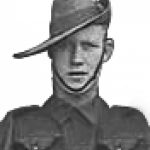
WX7504 Desmond ‘Bruce’ CHAPMAN      

Staff Sergeant, taken POW Singapore. Shipped from Singapore to north-west Burma with ‘A’ Force to work on Burma-Thai Railway.  He died Khonkan 55km Hospital Camp with tropical ulcer, malaria and dysentery 11 September 1943 aged 27 years. 
He was evacuated to Khonkan Hospital with an irregularly large 8 inch by 8 inch tropical ulcer, exposing  bones and tendons on his right foot. Soldier’s right leg was amputated below his knee. The surgical re-amputation of stump was conducted due to gangrene.
Already ill with tropical ulcers and dysentery, Des was unable to recover from his amputation.  He died on 11 September 1943.
Please read further about Khonkan Hospital Camp.
Please read further.
Bruce Chapman’s  parents William George Chapman and Hilda Harriett Crowder married 1914 in South Australia.  They were both born in Tasmania.  Hilda died in Tasmania in 1922.   Bruce would have been about 6 years old.  He had one sister.
Bruce was a student of Wesley College, South Perth.
Bruce Chapman married Nellie Batt in 1940, a few months after enlisting.  Bruce and Nellie had a daughter Janis Anne Chapman.
Bruce’s father William George Chapman died in 1957, Perth.
Nellie Chapman remarried about 1948 to Alan Westerberg.


WX8389 Henry ‘Harry’ Francis DE MOULIN        

Lieutenant KIA 11 February 1942 aged 21 years during a Japanese ambush at South-West Bukit Timah.    Served with ‘E’ Company in Singapore. In 1946 Moulin’s sister married Ken Tucker from 2/4th.
De Moulin’s uniform is displayed at the Military Museum, Kalgoorlie.
Please read further.
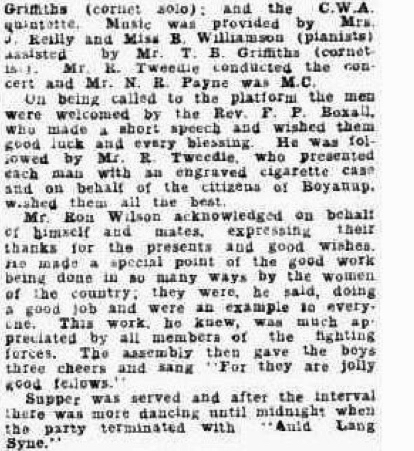


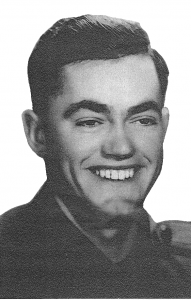
WX10994 Norman Allen GIBSON  

Private, was wounded in action with shrapnel to back, recovered. As a POW Singapore. Shipped from Singapore to Sandakan with ‘B’ Force Borneo. Died Sandakan-Ranu Track, 26 June 1945. Aged 25 years.
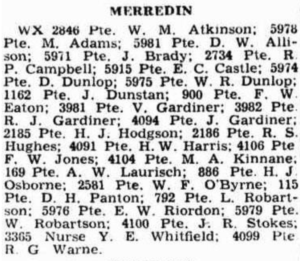
Please read further about Allen Gibson’s family

Allen died in June 1945 on Sandakan-Ranau Track aged 25 years.  The last months were horrific for POWs – so very little food using what they had stockpiled as the Japanese no longer provided for them.      We now know Japanese guards had been ordered to ensure no POWs survive – from the end of 1944 the Japanese starved the POWs to death or to die of illness.
Allen Gibson was selected for the Second March Sandakan to Ranau.  356 POWs began leaving Sandakan in groups of about 50 with their guards, loaded up carrying munitions, rice and sometimes Japanese personal belongings.  The track was tortuous – muddy and slippery, through swampy areas, up and down steep slopes always prodded by their guards.  Allen died on the Track 28 miles from Sandakan on 24 June 1945 aged 25 years.

Please read further about Sandakan


WX7998 Philip ‘Arthur’ GIESE               

Corporal, wounded in action with shrapnel to right leg, became POW Singapore. Sent by train from Singapore to Thailand with ‘D’ Force V Battalion. Died dysentery Brankassi Camp, Thailand September 1943 – whilst working on Burma-Thai Railway aged 25 years.  He was one of 8 men from 2/4th Machine Gunners to die at Brankassi out of a total of 27.

Please read about D Force V Battalion


WX7645 William James NICHOLLS       

Private. Shipped from Fremantle to Java 1942 ‘Blackforce’. Died bacillary dysentery Bicycle Camp Hospital, Batavia on 13 October 1942 having fallen sick on 30  September 1942. Aged 32 years.  There were five machine gunners who died at Java.  They all died of dysentery during 1942 as did Nicholls.

Please read further.