

Archives: Stories
Climie and Hardey – Mates
WX12157 Ted Hardey and WX4927 Aussie Climie
The tale of two young kangaroo hunters in WA’s northwest!
In October 1986 ‘Borehole Bulletin’ a letter receieved, was printed from Mr. D.E. Powell who had given his address as ‘Int’l. Airport Projects, Riyadh, Kingdom of Saudi Arabia’. He was a nephew of WX Edward Charles (Ted) Hardey ‘D’ Company and was hoping somebody from 2/4th could provide any information.
Powell had included in his letter the following information:
Powell thought his uncle Ted Hardey had seen service in France WW1 and enlisted again May 1941 with a mate, Climie. Climie had in fact enlisted July 1940 and was with C Company. Ted Hardey enlisted May 1941 aged 43 years.
Ted, who was married gave his address as 29 Woodville Street, North Perth.
Hardey and Climie had been mates together and kangaroo shooting (for payment in those days) around Carnarvon. Hardey’s family resided in Carnarvon.
From Singapore, both men were selected with ‘A’ Force Burma, Green Force No. 3 Battalion to work on the northern end of railway in Burma. Their ships departed Singapore Harbour 14 May 1942 for southwest Burma. Green Force disembarked at Victoria Point, with their main focus on repairing and extending the airfield. At completion A Force Green Force No. 3 Battalion were the first Burma work party for the railway and arrived Kendau 4.8 km Camp commencing work 1 October 1942. The two men moved to other designated camps – Thetkaw 14km, Meiloe 75k, Augganaung 105km between 1 Oct 1942 to end of December 1943.
At this point when the railway was completed, the Japanese transported all POWs working in Burma south to Thailand to one of 4 or 5 large Camps, depending on their health.
Hardey and Climie were very fortunate to remain fairly healthy during their time working on the railway and arrived at Tamarkan where the POWs were able to take advantage of better food and living conditions. Climie was selected fit to go to Japan with what would become ‘Rakuyo Maru’ Party. Powell wrote Hardey missed out on this draft – he was with a work or ration party. Eddie tried every way to get himself into ‘Rakuyo Maru’ Party – his efforts unsuccessful. (He would have been thankful!)
Climie eventually reached Japan having survived his time in the South China Ocean and sinking of his ship ‘Rakuyo Maru’ – torpedoed by American submarines. He was picked up with survivors by a Japanese ship. The POWs already traumatised and injured were nor treated like survivors – in fact were treated appallingly and were duly delivered to Japan having first sailed to Taiwan.
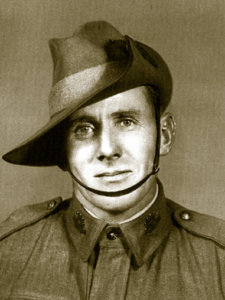
Climie was really out of luck. He was sadly killed during an Allied air raid over Kawasaki Camp 14D on 13 July 1945 – just one month short of the end of the war. He was 37 years old. Read further about Climie.
Hardey fared a little better in that he did make it home – he sailed to Japan with ‘Awa Maru’ Party but had the misfortune to be sent to Omuta, the Mitsui Camp which was run by American Mafia and brutal Japanese guards.
Hardey had enlisted for service in WW1 at the age of 17 or 18.
Read further about Ted Hardey.
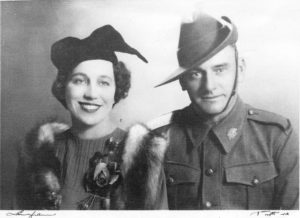
Khonkan Hospital Camp 55km, Burma – William (Bill) Hood WX7471, Tom Davison WX7909, Allan Bamford WX8485 –
Sir Albert ‘Bertie’ Coates was the most modest of men. ………
words written by author Patsy Adam- Smith ‘Australian Prisoners of War’ ISBN:9781760062781
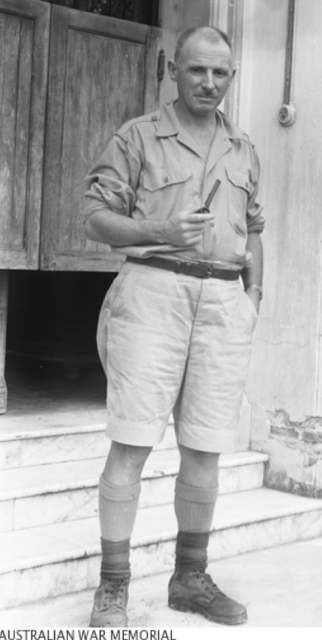
Please read fabout Albert Coates from AMAVIC
KHONKAN 55 KM HOSPITAL CAMP, BURMA 1943
Known to all who were there as 55 KM
Please read further about Albert Coates, 55km Camp
Corporal Bill Hood WX7471 of 2/4th:
“The great doctor, Col. Albert Coates was one of the finest men I have known in my life. All the men who came into contact with him believed that. He not only saved lives but saved reason. I had a tropical ulcer on my instep and it was thought the foot would have to be amputated. Dr. Coates told me he’d go on trying for a little while longer to see if he could arrest the gangrene, and nine days later I had begun to recover.”
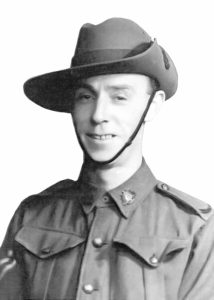 Bill worked for a time at Khonkan 55km ‘Hospital’ Camp theatre where Coates was operating “I held men during the operations. They were laid down on the table and injected in the spine with diluted novocaine the chemist had to make do with what he had to go around. It did not completely deaden but it eased the pain. I remember when Alan Bamford WX8485 from 2/4th had his leg off, we took the piece of rubber from inside the crown of a soldier’s tin helmet and gave it to him to bite on, and another bloke and I each gave Alan our hand to hold. I couldn’t hold my hand properly for days after.”
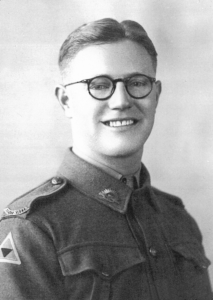
Below: Bamford
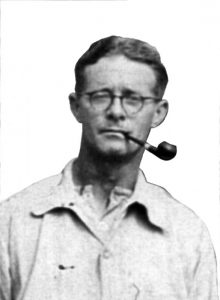
“I will never forget the burial of Tom Davison WX7804 from Marble Bar, WA. He had an ulcer in the foot, similar to mine. He struggled with it and Dr. Coates fought for him but eventually it had to come off; but he was too low (suffering chronic diarrhoea and malnutrition) he died. Tom had got a fixation about what little use it would be for him to go home to Marble Bar without a leg. ‘You couldn’t even kick anything’ said Tom.”
 “The men were sorry for Coates because he had to work with a butcher’s saw, chisels and that sort of thing for major operations. We could put ourselves in this position, day after day, knowing how he felt about his patients. I often thought what it must have done to Col. Coates, on top of his surgical and medical roles he had all his administrative work to do. He was the senior man. He looked like an old farmer with rosy cheeks. But he couldn’t save everyone and Tom Davison knew that. So, we put a rice bag over Tom‘s head and another over his remaining leg and dug a hole and he was buried.”
Bill Hood went to the funeral on bamboo crutches.
Tom Davison died at Khonkan 25 October 1943 aged 34 years. He had a 3 inch by 2 inch tropical ulcer. Coates had no other option and was forced to amputate the left leg above the knee.
Bamford’s successful operation to remove his right leg at mid-thigh because of tropical ulcer, took place 22 November 1943.
Another 2/4th soldier who had his leg amputated at Khonkan was Eric Ryan WX16767 of HQ Coy.
His amputation took place 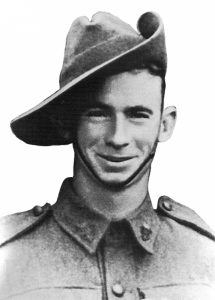 on 21 Oct 1943 he was 22 years old at that time and had been evacuated from Aungganaung 105 Km Camp.
Ryan was evacuated to Tamarkan Hospital 25 Dec 1943 and later sent to Nacompaton where he was a medical orderly and from where he was recovered at the end of the war.
Death of WX9231 HODGSON, Leonard Sydney (Tim)
d. 24 Sep 1943 aged 24 years
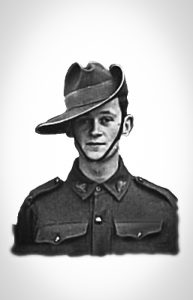
following re-amputation above his knee. Due to tropical ulcers Tim’s first amputation was below the knee.
Hodgson had grown up at Denmark where his parents were Group Settlement farmers. He had two brothers one of whom gave Tim a watch as a farewell gift.
Hodgson’s watch returned to WA with Capt Phelps, 2/4th who was at Khonkan and believed to be working as an orderly. Sadly Phelps did not return Hodgson’s watch to his parents who were alive at the end of the war. A son of Phelps found the watch amongst his late mother’s belongings. It had obviously become mislaid. It was returned to Hodgson’s family about 2010.
WX7724 PARKE Albert Sydney (known as ‘Major)
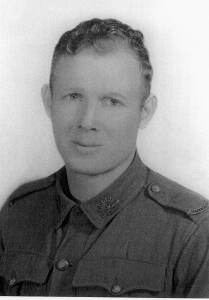
‘A’ Force Burma. He was a medical orderly at 55 km from 7 July – 19 Oct 1943. He was previously at Meiloe 75 Km at the RAP 28 March 1943.
He was evacuated from 55km to Tamakan by train January 1944. Later sent to Nacompaton Hospital Camp 30 Aug 1945 until the end of war.
The Major’s brother WX7738 Charlie Parke worked the Thailand end of the Railway with ‘D’ Force Thailand V Battalion which suffered a terrible death rate under appalling Conditions. He was then selected to work in Japan at the Omuta Coal Mining Camp which again was judged to a terrible camp. He survived to return home.
WX9145 Alfred Joseph McGhee known as ‘Tubby’ was another ‘A’ Force Green Force POW who was evacuated to Khonkan 55km with leg ulcers on 6 November 1943. He had his leg amputated 4 January 1944, was evacuated to Tamarkan Hospital Camp and discharged 27 April 1944 to Bangkok. He was recovered from Nacompaton at the end of August 1945.
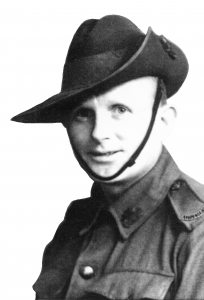
Others to die at Khonkan Hospital Camp:
WX7625 Pte James Sydney CLARKE – died 13 Aug 1943 of pellagra and cardiac failure Khonkan Hospital Camp, Burma aged 25 years. From Picton Junction, Bunbury Jim Clarke’s body was after the end of the war moved to rest at Thanbyuzyat War Cemetery, Myanmar.

Jim Clarke had been evacuated sick from the Burma-Thai Railway Aungganaung Camp to Khonkan Hospital Camp, Burma.
WX10797 Corporal Frank McPhail TOWNSEND – died 16 August 1943 chronic diarrhoea, pellagra and tropical ulcers aged 22 years. Kalgoorlie boy Townsend enlisted Jan 1941 became Corporal to CO Lt John Morrison of A Coy 6 Platoon.

WX8798 Guy Percival Biggs – died at Khonkan on 21 August 1943 of cardiac beri beri, dysentery and tropical ulcers. Guy was 39 years of age. Read further about Biggs.
WX5050 John Arthur Briggs – was evacuated with a tropical ulcer to his ankle, to Khonkan from Aungganaung 105km Camp. He died the same day as Des Chapman on 11 September 1943, aged 29 years.
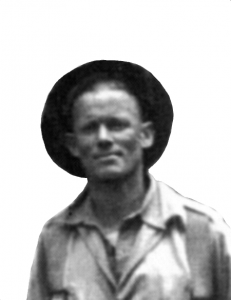
John’s younger brother Roy Briggs WX7329 also enlisted with 2/4th and joined ‘B’ Company. Roy Briggs was with ‘D’ Force S Battalion and was recovered from Thailand at the end of the war.
WX7504 Desmond Bruce Chapman
Already ill with tropical ulcers 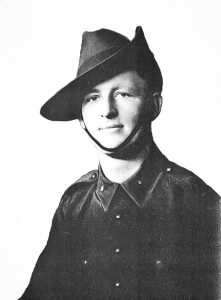 and dysentery, Des was unable to recover from his amputation and died on 11 September 1943. He was 27 years old.
Soldier evacuated to 55km Camp from Aungganaung 105km Camp on 1.7.1943 due to an irregularly large 8 inch by 8 inch tropical ulcer that exposed bones and tendons on his right foot. Soldier’s right leg was amputated below his knee. The surgical re-amputation of stump was conducted due to gangrene.
He left behind a young wife and daughter in Western Australia.
WX7022 Hope Edwin James (Eddie) -died 8 August 1943 of beri beri aged 23 years. Eddie enlisted end of July 1940 and joined ‘D’ Company. He was wounded during short Battle for Singapore – received GSW to his left elbow during action at Hill 200, Ulu Pandan where a large number of 2/4th lost their lives. He was admitted to Alexandra Hospital 12 February 1942 and returned to his unit on 24 February 1942.
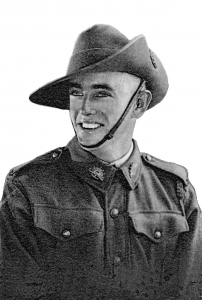
WX8137 NEEDHAM, John Wiliam Haynes, Lance Corporal
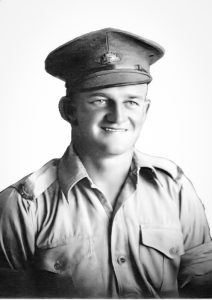
Born Broome 1913. He enlisted AIF 16 Aug 1940. He joined 2/4th’s ‘C’ Coy HQ as a driver/mechanic.
Needham was evacuated to Khonkan with tropical ulcers on his right foot.
In a weakened state of health, John Needham succumbed to pneumonia on 5 Dec 1943 aged 30 years.
WX9358 ROBERTS, William Charles d. 16 Aug 1943 cardiac failure following bacillary dysentery.
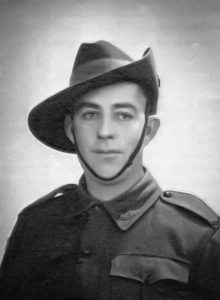
Aged 35 years, he was evacuated from Aungganaung 105 KM Camp, Burma, 1 June 1943 to Khonkan Hospital Camp, Burma.
Roberts had been farming at Williams and was engaged to be married. William Charles Roberts was born Ravensthorpe 1907.
WX17737 MOHER, Kenneth died 24 July 1943 of amoebic dysentery. He was 28 years old.
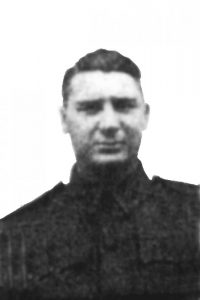
Presumed to be evacuated from Aungganaug 105 km camp to Khonkan. Moher was another Goldfields ‘Boy’ born Gwalia. Ken had a bakery with his brother. He enlisted 15 Dec 1941and joined 2/4th as reinforcement.
Please read further about Albert Coates and Claude Anderson from 2/4th.
Also please read about Khonkan 55km Camp.
WX7224 Albert (Bert) Parke worked as medical orderly at Khonkan 55km between 7 July 1943 and 19 October 1943.
WX11629 Keith Bedford Mitchell worked as M/O arriving 1 July 1943. We believe he remained here until the Japanese began moving POWs working Burma end of rail link south to Thailand about end of 1943 and railway was completed.
WX9157 Albert ‘Snow’ TAPPER was evacuated from 105km camp with an injured arm to 55km Camp.
Snow became a medical orderly for ‘Bertie’ Coates.
Snow was recovered from Nacopaton Camp, Thailand at the end of the war.

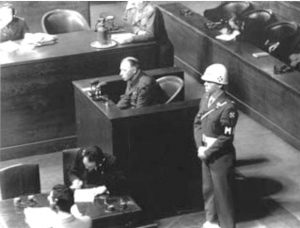
Above: Coates was a principal witness at the Tokyo War Trials. He found it difficult to accept the brutality of the Japanese.
I believe the POWs would have appreciated ‘Bertie’s’ evidence.
Interesting, Weary Dunlop chose not to give evidence at any War Trials.
Vale – W.T. (Bill) Castles WX8792
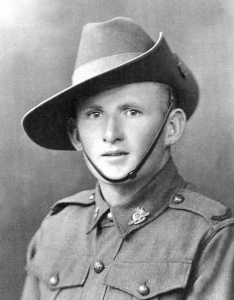
Vale W.T. (Bill) Castles WX8792
On Christmas Day 1991, our long standing Committeeman Bill Castles passed away.
With Bill’s passing a long association with ex-members of our Battalion and all Jap POWs ended and the Hay Street ‘Office’ closed.
Bill had a long association with the ‘Borehole Bulletin’ in the early years of publication he wrote about different members he met in various places around the state and in the Eastern states. He was employed at Hollywood Hospital and never missed callimg on battalion members. When he retired he still visited Hollywood and reported progress on the different men who were admitted. Bill used to make a country run every now and again and call on all the various members in all the towns he could.
Each year with a couple of mates, he would travel to Tasmania to the 2/40th Btn. Reunion and bring back a lot of news from the Apple Isle.
For many years be resided at the Savoy Hotel – full board, with meals – and the office was located on several PCC seats outside the Savoy. When the Savoy closed, Bill was forced to find alternative accommodation. He moved to one of the hotels in Beaufort Street. But life was never again the same for Bill.
He passed away soon after.
All interstate and country ex Japanese POWs were able to get information from Bill in the Hay Street Mall, our Perth ‘Office’. Bill was a mind of information on members, what they were doing and where they could be found. He will be sadly missed.
There was a large contingent of 2/4th and other POWs at his funeral in January (1992).
Rest In Peace – Bill
(included in Borehole Bulletin April 1992)
The Hay Mall, Perth Office – a gathering in the Mall outside the Savoy Hotel -Bill Castles and McGhee were to be found here daily. Sometimes there would be half dozen men and other times three or four. They would meet, exchange news and updates about former POWs.
His parents Albert Thomas Castles and Elizabeth Kennefick married 1915 Dubbo, NSW and Bill was born 1917 Subiaco. Bill’s mother died when he was about 6 years old. He grew up in Kalgoorlie, knew Ron Badock and other boys from Kal.
Bill never married.
He enlisted October 1940 and joined 2/4th and became scout with ‘B’ Company. Prior to enlistment he was working in Kalgoorlie as a miner. He returned here after the war for several years before moving to the city.
From Selarang, Singapore he was selected with ‘‘ Force Burma Geeen Force No. 3 Battalion to work on Burma end of A Thai-Burma Railway. ‘A’ Force comprised of 3,000 POWs was the first work party to leave Singapore embarking 14 May 1942 to sail to south west coast of Burma. Green Force made up of about 1,000 men, disembarked at Victoria Point, where their main task was to repair and extend the aerodrome before making their way to northern point of the rail link.
Green Force No. 3 Battalion included the largest number of men from 2/4th – as did ‘D’ Force S Battalion. For this reason Billy was in good company – many men he had known since October 1940.
Green Force No. 3 Battalion was the first work party on the Burma end of the rail, their first work camp was Kendau 4.8 km commencing work 1 Oct 1942. Thanbuzayat became Japanese HQ and later one of their largest hospital camps holding 3,000 sick POWs (with no medical supplies and no medicines). It was also located at a major railway junction with workshop and supply depot (to assist Japan’s thrust deep into Burma and fight the Allies). ‘Thanyby’ as it became known, would be bombed by the Allies on several raids killing and injuring sick POWs including 2/4th boys.
In early July 1943, after nine months slaving on the railway, Billy was evacuated sick from Aunggangaung 105km Camp to Khonkan 55km Hospital Camp. Khonkan was also without any medical supples and equipment. When the railway was completed, the Japanese at the end of Dec ordered all the POWs working on the Burma end of the railway, travel south to Thailand to one of about 4 or 5 very large camps. They travelled by train and barge. The very sick were left to die in Burma – unable to travel they were looked after by medical staff until their deaths.
Many of Green Force No. 3 Battalion were selected from these camps to work in Japan – most lost their lives when ‘Rakuyo Maru’ was sunk by American submarines in South China Sea in September 1944. Billy was obviously not sufficiently fit to be selected and was initially delivered to Tamarkan Hospital and fortunately remained in Thailand to work. From Tamarkan – then sent onto Kanchanaburi Hospital camp before being selected for work party to Hindato, Chungkai, Ratburi, Petchaburi, Bangkok and was at Nakom Nayok Camp when the war ended.
At Ratburi POWs were operating ferry services as the bridge had been bombed. They ran a relay service transferring goods from one train to another. Others were put to work on road and rail maintenance.
At Ratburi, Petchaburi and Bangkok the POWs were subjected to Allied bombing raids. The men arrived at Nakom Nayok about 7 July 1945 having marched/staggered 45 kms persuaded by bayonets and Japanese boots.
The end was near but they didn’t know when. They feared the worst, the Japanese were nervous and tension filled their days – the totally exhausted POWs were now forced to dig dugouts, ammo dumps, trenches, tunnels into the side of the hill, etc. 8 kms away to store supplies and what was thought to be aviation fuel.
The hours were long and the work hard. The camp was constantly under water with storms and conditions could not have been more harsh.
The Australian POWs organised themselves into three groups planning to escape in different directions if it became necessary.
It became evident about 17th August that something had happened. A plane dropped men and supplies on 1st Sept and this was repeated over several days. Their war was finally over!
WX9229 Walter Edward ‘Bill’ Breed – Former POW of Japan, 2/4th Machine Gun Battalion, man with big personality returns farming Gnowangerup
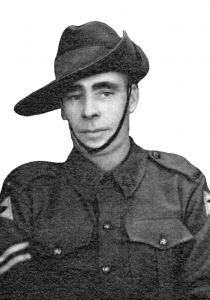
BILL BREED MEMOIRS
25 June 1902 to 11 October 1996
Bill was born in London to Agnes and Alfred Breed and one of three children with older brother Bert and sister Agnes.
His first job was working in the undercarriage section for Deport General Aircraft Company that built Sopwith planes for WWI.
At the end of the war in 1919 Bill started work as a fitter’s mate building gas hot water system for Ajax Gyser Company. Money was very scarce. Bill’s older brother had already enlisted so at 19 years of age in January 1921 Bill also enlisted with the Yorkshire Regiment based at York Barracks.
As children Bill and his brother always dreamt of going to Australia for the warm weather. There was always news about the gold rush. The army was for them the first step in this direction.
Recruit training was at the York Barracks and the end of 1921 saw Bill posted to Ireland to a place called Kisdale, just south of Cork. His job was to guard the Old Head lighthouse.
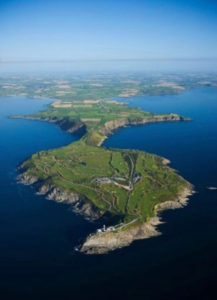
From Kisdale he went back to York enroute for the Rhine, Germany and spent 2½ years in the British, American and French occupation Forces. **
He returned to York and transferred to 2nd Battalion, located in India. Following three years in India Bill was given the opportunity to return to England or immigrate to Australia.
** Part of the Armistice signed 11th November 1918. The details, including zones of occupation, were worked out by French Marshal Foch and the British were allocated the city of Cologne and surrounding area.
Bill arrived at Fremantle January 1928 and took a job chopping trees and clearing new land for Jim Green at Yealering. He became good friends with Hyram Scott who offered Bill a contract to clear his ‘selected land’ at the Creek in Newdegate. At the end of the contract Bill had money and Hyram had none!
They agreed to become partners and Bill became a farmer.
After several years Bill had enough money to go his own way and took over the abandoned farm of Andersons.
In October 1940 Bill enlisted, claiming he was a farm labourer not an owner. Other Newdegate locals who also enlisted included John Waddell, Alan Brooker and Charlie Roberts.
Harold Bryce took over running Bill’s farm while he was in the army. Bill was taken prisoner of war in Singapore and spent time at Changi and the Burma Railway.
He returned to WA in 1945 and was back farming in 1946. Being a POW of Japan was a very distressing period about which Bill preferred not to talk. He was part of the community and played badminton at the South Newdegate Hall and later took up golf.
Bill developed a reputation for having a good time at the Club, pub or anywhere else. Quite often these good times led to disasters on his way home! Many times Bill had difficulty negotiating the bends on the road near Lake Hills. His last serious motor accident occurred on the bend south of Belman’s gate. This accident slowed Bill down considerably and soon after in 1974, he sold his farm to Vern Hall.
Bill had developed a love of fishing and Hopetoun. In the early 1950’s Bill arranged for Des Cuff’s father to bid at auction in Lake Grace for a block of land at Hopetoun. It cost 25 pounds. Progressively the original shack developed into his last home.
Many a good time was had at Bill’s playing cards, having a drink or having a chat. As the years went by Bill’s home became the meeting place for what was referred to as ‘elevenes at Bills’.
The writer of the above is unconfirmed however, it is believed to be Mary Saunders. The below was included in a Borehole Bulletin, written by the then elected President, Ted Wallin.
Ted wrote ‘on behalf of the members of 2/4th MGB we wish to extend our thanks to Mary Saunders (daughter of Polly and Tom Finlay ) for the care she has given to Bill Breed over many years. A job well done, Mary.’
‘My Grand-Pop was a Hero’ by Amanda Van Hall (granddaughter of Wally Winter WX10373
The following was included in the ‘Borehole Bulletin’ January 1997

“MY GRAND-POP WAS A HERO”
by Amanda Van Hall (Grand-daughter of Wally Winter WX10373)
Extracted from the Riverton RSL Newsletter
My Pop was a Prisoner of War to the Japanese. To the Japanese he was nothing more than the enemy …… but to me ‘He was a Hero’.
He was a spirited 20-year-old when he was shipped to Singapore a month before its fall. The day the Japanese struck it was early, they captured 8000 prisoners. They were taken to the Burma and Thailand jungles where they were put to work on the infamous Burma Railway, also known as the notorious ‘Railway of Death.’
Pop didn’t talk about the treatment he and his mates endured. The unspoken horrors of the railway left scars so deep in Pop’s mind that all his life he never spoke of the war.
From hell in the jungles, to hell at sea ……… recruited for forced labour, Pop was jammed into the holds of a convoy sailing to Japan. The conditions on the ship were terrible …… sickness and disease raged.
One week later an American submarine torpedoed the ship. The POWs jumped overboard out of the ‘frying pan’ into the ‘fire’ literally as the ocean was covered in burning oil. The American submarine USS ‘Pampanito’ picked Pop up after six cruel days in the water.
After four long painful years of war – Pop was a free man.
I can’t say that I will ever begin to understand what he and the many others endured during the time ……… but I do know I have amazing respect and admiration for my Pop and those who went through the war.
Although I never knew my Pop as a young man, I can imagine what he would have been like and I know we will meet again ‘in our next life’.
Tamuang POW Camp, Thailand 17 August 1944 Australian Rules Football
Tamuang POW Camp, Thailand 17 August 1944
The names of the team provided by former POW of Japan Joe Pearce WX9269 from 2/4th MGB to ‘Borehole Bulletin’ Dec 2001. Joe was an extraordinarily talented West Australian sportsman prior to his time spent as POW of Japan. Incredibly, he was able to return to highest level of AFL Footy played in West Australia. It took Joe at least a year or two to recover and to reach his past performance level.
WA and Tasmania versus the Rest of Australia
Won by WA and Tasmania
Team:
Holloway Tas
Tapping WA
Basil WA
Cannon Tas
McCullock Tas
Pearce (Capt) WA
Tunks Tas
Bradley Tas
Green WA
Bonzer WA
Plunkett Tas
Reibe WA
Simmons WA
Butcher Tas
Payne WA
O’Meara WA
Neville WA
Howard Tas
Were there bets placed on winning team? You bet!
Without doubt – the Aussies would bet on any event!
Tamuang Camp Aug 1944 International Basketball
The following story was sent by Joe Pearce WX9268 and published in ‘Borehole Bulletin’ Dec 2001.
Tamuang Camp 31 August 1944
International Basketball won by Australia
Australia defeated Ireland, England defeated Holland.
Final – Australia defeated England
Australian Team
J. Pearce (Capt) WA, 2/4th
J. Kerr Vic
T. McFarlane SA
W. Walker NSW
G. Neville WA
W. Bell NSW
B. Allen Tas
Borneo Sep 1945 – Owen Colin Campbell one of 6 survivors – 600 Australian POWs reported died


Helsin Family – WX10095 John Frederick Helsin
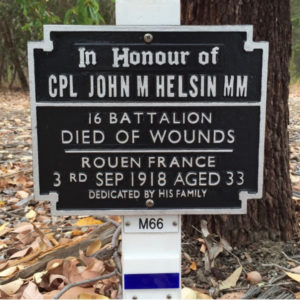
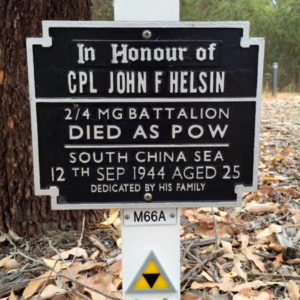 Father and son, casualties of WW1 and WW2 are together remembered at Kings Park Avenue of Honour.
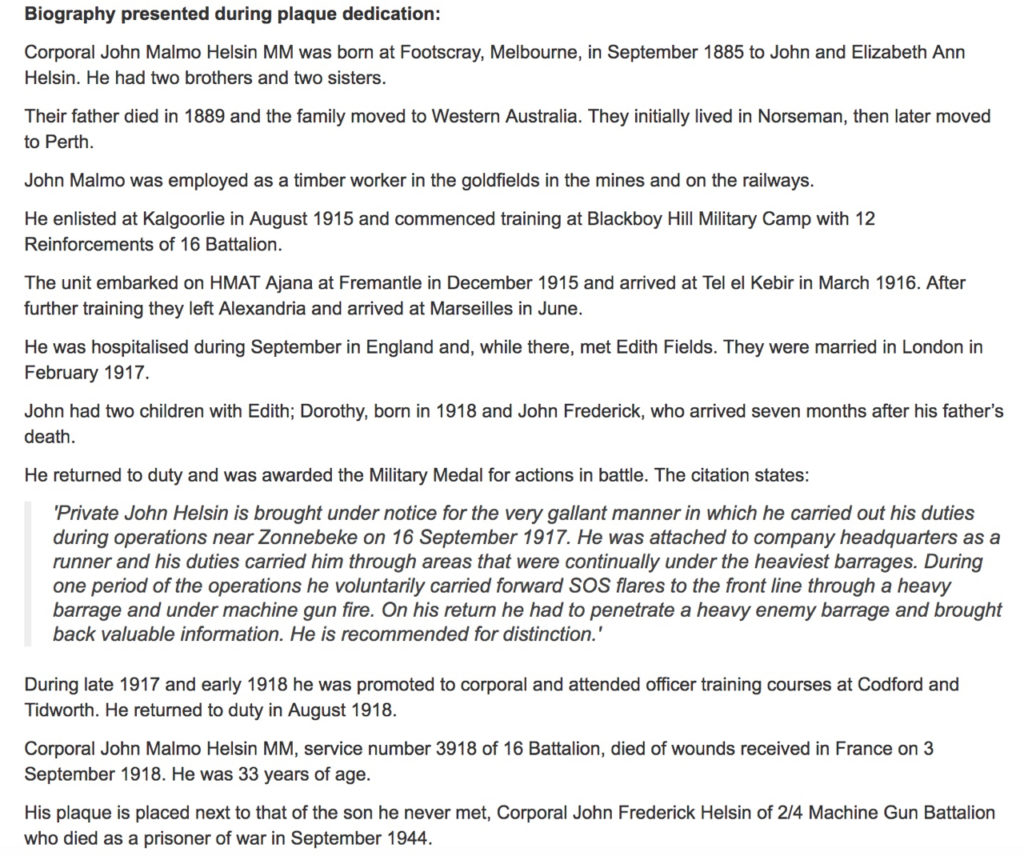
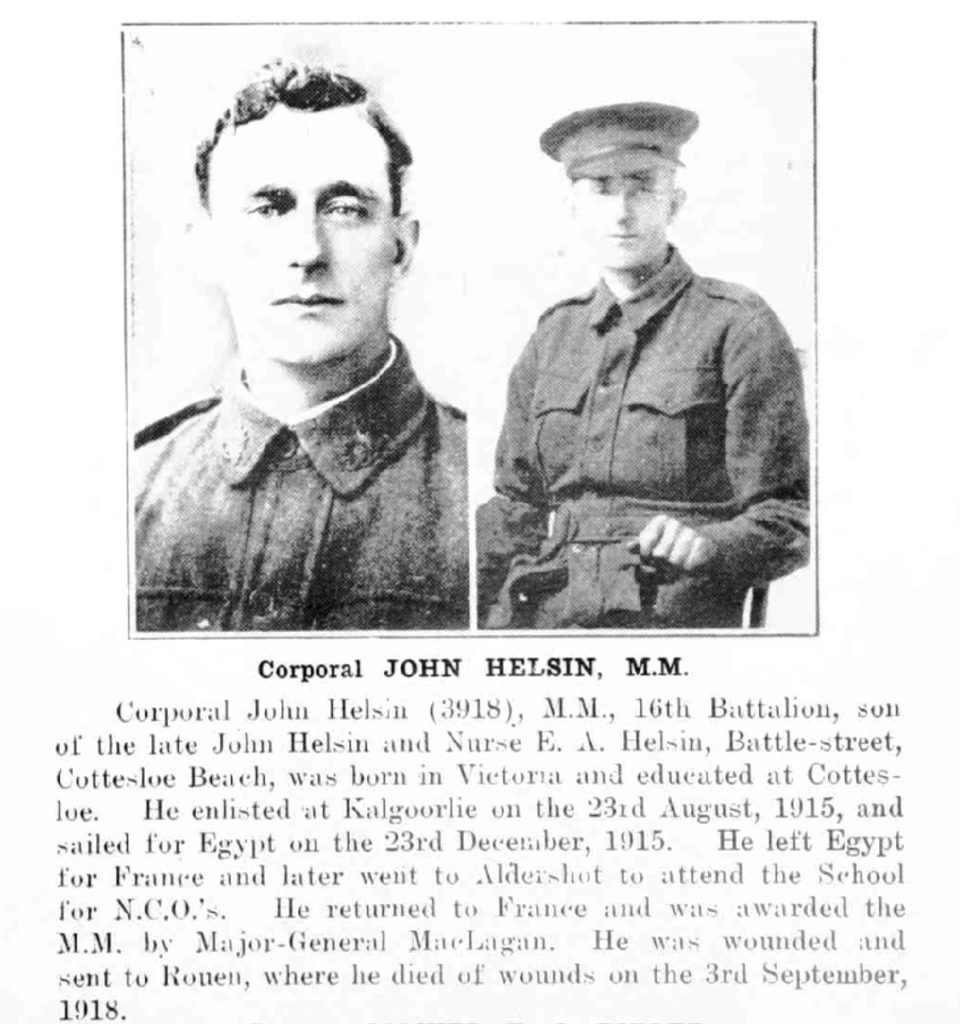
WX10095 John Frederick Helsin was born London 3 April 1919. He was the son of Australian born John Malmo Helsin and English born Edith Emily Field who married during WW1 London. Son and father never had the opportunity to meet.
Earlier during the war, John Malmo had been awarded a Military Medal whilst serving in France.
John Malmo Helsin who was with Australia’s 16th Battalion, died in France on 3 Sep 1918. He was born in Melbourne, Victoria. His Swedish father had come from Malmo and it was his wish for his son to remember their family roots. John Malmo’s mother Elizabeth Ann Helsin was widowed young and moved from Melbourne to Western Australia with her only son and two daughters. John Malmo was educated at Cottesloe.
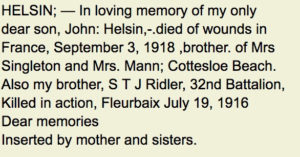
Widow Elizabeth Helsin lost her only son and her brother during WW1.
She would later mourn the loss of her grandson John Frederick Helsin who lost his life in WW2.
Nurse Helsin
Widow Elizabeth Ann Helsin (nee Ridley) became a highly regarded midwife around Cottesloe. There were no maternity hospitals then – babies were delivered by midwives (sometimes neighbours/relatives).
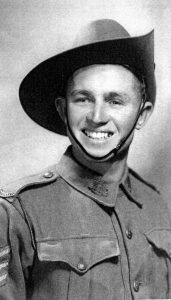
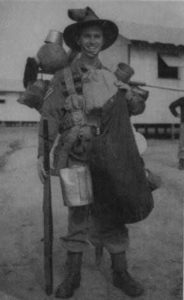
At the age of 6 months John Frederick Helsin sailed to Fremantle from London in Sept. 1919 with his widowed mother Edith Emily Helsin (nee Field) and 2 year old sister Dorothy Mabel known as ‘Molly’. The small family would have been much welcomed by Elizabeth Helsin, mother of John Malmo.
Edith Helsin would later remarry.
Their grandmother, Nurse Helsin was part of their small family unit.
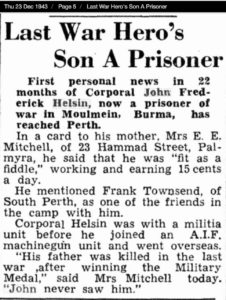
John Helsin WX10095 enlisted December 1940 and joined ‘B’ Company. Following the capitulation by the Allies to Japan and the Australian 8th Division became POWs, mostly at Selarang Camp. Corporal Helsin was selected to work on the Burma end of the Thai-Burma Railway with ‘A’ Force Burma, Green Force No. 3 Battalion. Please read further about this Force.
3,000 POWs sailed from Singapore on 14 May 1942 for South West Burma, with Green Force stopping at Victoria Point to repair and enlarge the aerodrome before heading to the beginning of railway in Burma, the first work camp being Kendau 4.8 km.
By the end of 1943 the railway was completed, the Japanese began moving the POWs from Burma by railway – the track the POWs had been building for past 12 months, to one of several large camps in Burma. Those too ill to be transported, remained behind with medical staff, and waited to die.
In Dec 1943, some mail and messages from POWs successfully arrived from Thailand. Edith would have had her hopes raised, she was one the fortunate, most mail did not leave Thailand let alone arrive in Australia.
During May through to Dec 1943 John was evacuated sick from Aungganaung 105 Km Camp to Khonkan Hospital. We have no details of his illness or dates however he must have recovered sufficiently to be sent by trains south to Thailand and may well have arrived at Tamuang Camp, from where most POWs selected for Japan were accommodated.
He was selected for what would become known as ‘Rakuyo Maru’ Party. The Party was first sent by train via Bangkok to French Indo-China with Saigon as their destination. It was intended the POWs would be shipped to Japan from here. While they waited in Saigon the POWs worked at the wharves and other nearby projects, several times attempted to make their way to their intended ship but were returned to their Saigon accommodation.
Finally after many weeks, the Japanese decided the American submarine blockade had become too successful, the waters were filling with sunken Japanese ships.
The ‘Rakuyo Maru’ Party was then advised they were being returned by train to Singapore, via Bangkok. In Singapore they were accommodated at River Valley Road Transit Camp to wait for a ship. POWs worked again at the wharves and other locations around the island before finally boarding their ship ‘Rakuyo Maru’ and sailing out of Singapore about 9 Sep 1944.
The ‘Rakuyo Maru’ which was transporting POWs from Singapore to Japan was sunk 12 Sep 1944 in the South China Sea by an American submarine – part of a ‘Wolf Pack’ which successfully sank several ships in the convoy. Although it was 12 hours before the ship sank, the worst was to follow. Hundreds of POWs were now in the water, covered in oil, some with injuries. None of these young POWs had begun their journey in good health. They scrambled for floating devices as the Japanese crew were picked up by their own ships. Some POWs re-boarded the ‘Rakyuyo Maru’ before it sank, looking for water and food. For most men – they had nothing. Thirst was their greatest challenge. The men remained in the water for several nights and days and each morning their mates would count the lose of mates who had fallen asleep and disappeared quietly in the night’s darkness. Some went mad having drunk sea water, several endangered others in their madness. By some miracle, a very small number of POWs were alive when the American submarines returned to the battle scene. They couldn’t believe what they saw!
John was one of hundreds of POWs who perished during those terrible days following the sinking of their ship. He was 25 years old.
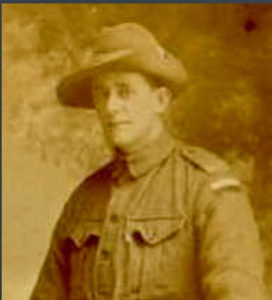
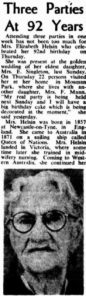
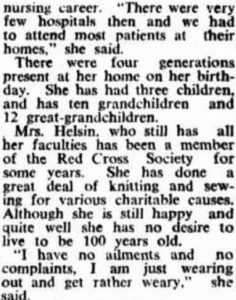
John’s grandmother Elizabeth Helsin, aka Nurse Helsin celebrated her 92nd birthday in 1949. She arrived in WA in early 1900’s as a young widow with 3 young children, lived through WW1 – the death of her only son John Malmo Helsin and live through WW2 and learn of the death of her son’s son and her grandson John Frederick Helsin WX10095 who perished in South China Sea in Sep. 1944 at the age of 25 years.
Northampton – 2/4th Boys & WW2 Memorial Inscriptions
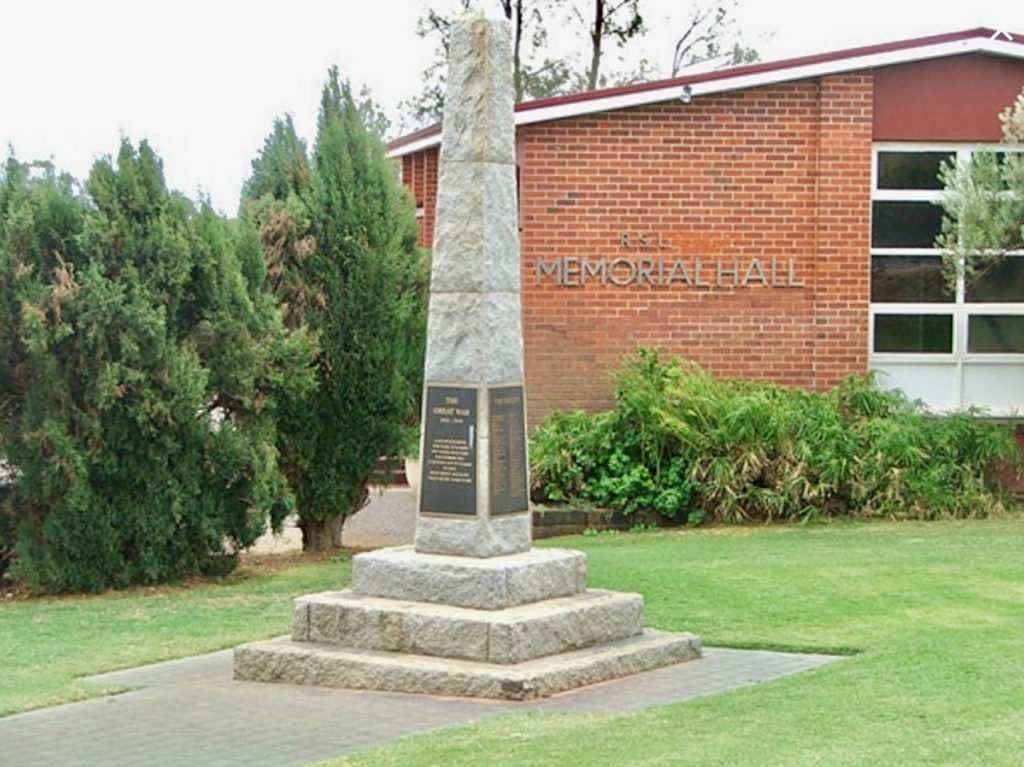
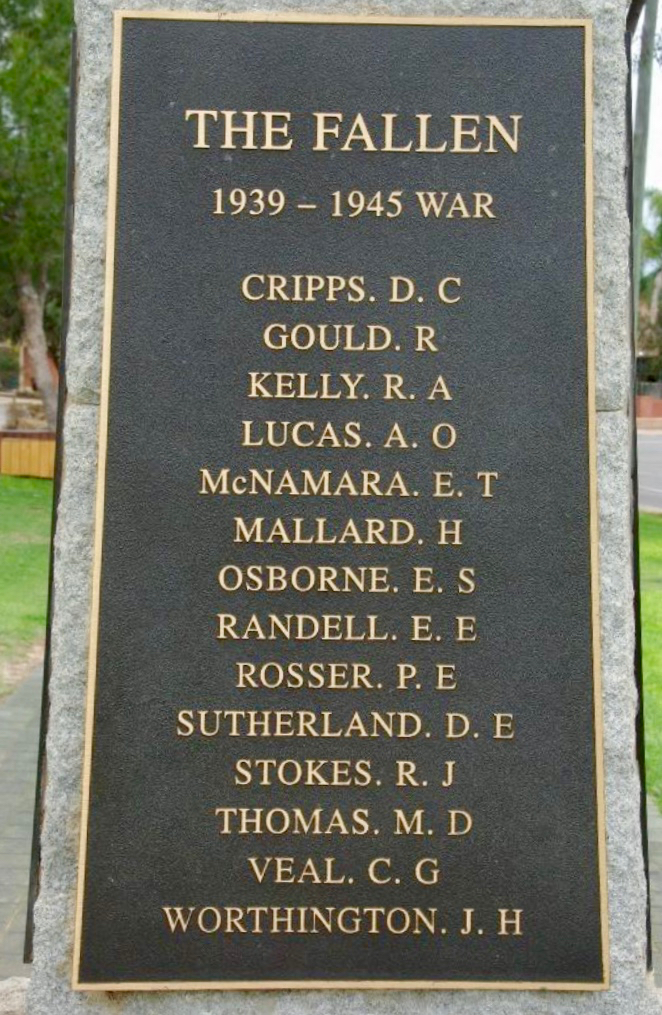
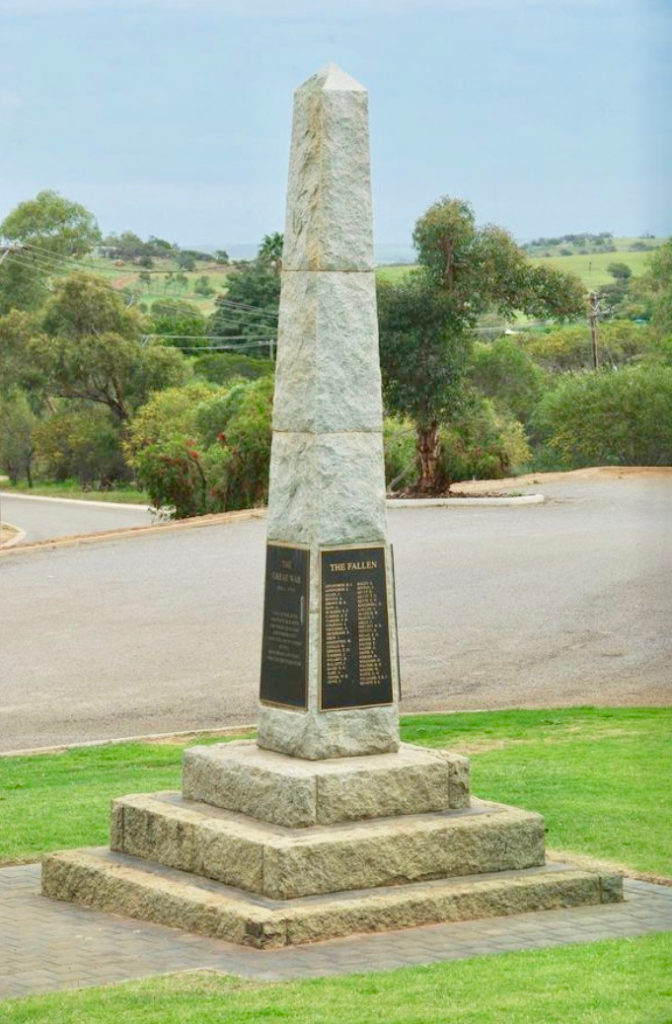
War Memorial with beautiful rural Northampton in the background.
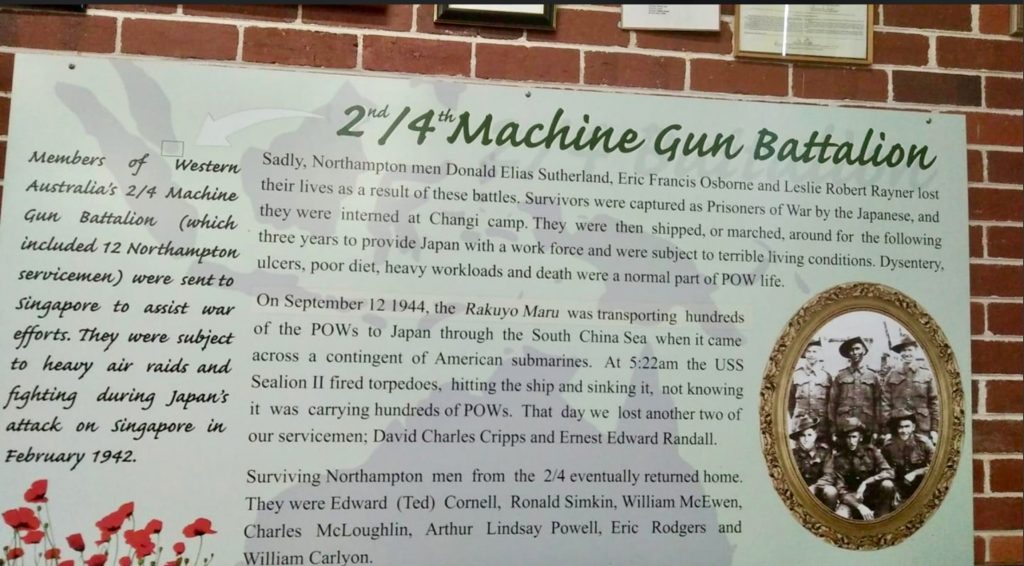
WX15783 CRIPPS David Charles known as ‘Davey’ was born December 1921 Geraldton. He enlisted 13 August 1941 and joined ‘A’ Company HQ. Following the fight for Singapore and Allied Capitulation he was taken POW of Japan. He was interned at Selarang Camp, Singapore however joined work parties around the island before being selected to work on the Burma end of Thai-Burma Railway with ‘A’ Force Burma, Green Force No. 3 Battalion. He survived working on the railway and was fortunate not to fall seriously ill. When the railway was completed, all POWs working in Burma were sent south to Thailand to one of several large camps. Cripps was selected fit from Tamarkan Camp, Thailand to sail to Japan to work.
He lost his life aged 22 years when the ship ‘Rakuyo’ Maru on which he was a POW was hit by torpedoes from an American Submarine ‘wolf pack’ in the South China Sea September 1944. His mate from Northampton, Jimmy Randall also lost his life at the same time. Their Japanese guards left the men to fend for themselves with few if no life boats.
You can read about A Force Burma Green Force
Also please read about ‘Rakuyo’ Maru
OSBORNE, Eric Francis WX16279 was born 31 August 1922 Perth to Henry Joseph Osborne and Edith Beatrice Ash of Isseka. Sadly, Osborne spent most of his young life in Clontarf Orphanage, Geraldton as his mother died in 1929. He enlisted 1 September 1941 and joined ‘A’ Company HQ with Cripps.
Eric Osborne & Davey Cripps have a family connection. Davey’s young mother Mary Grace Ridley was widowed with young Davey. Widowed Mary remarried about 1927 into another Northampton family – Bertie Ash – an older brother of Edith Beatrice Osborne (nee Ash) – Eric’s mother. Bertie Ash’s young wife died a year or so earlier, leaving him with four young children. Sadly the marriage ended in divorce in 1948.
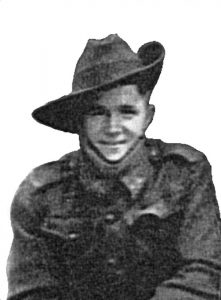
Tragically Osborne was killed in action 15 February 1942 during the week’s fighting at Singapore. He was very young, only 19 years of age having enlisted the day he turned 19 as so many keen young men did. Please read further.
RANDELL Ernest Edward WX16356 (Jimmy) was born 1908 at Northampton to Edward Harrison and Martha Randall. He married Jessie Oxenham about 1940. Jimmy enlisted 3 Sept 1941 and as a reinforcement joined 2/4th MG Battalion’s ‘A’ Company HQ as did Cripps, Sutherland and Osborne.
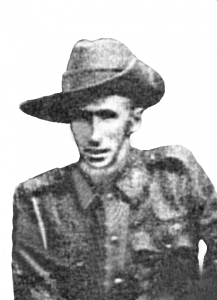
Randall left Singapore the first work party to leave – ‘A’ Force Burma Green Force No. 3 Battalion to work on the northern, i.e. Burma end of the railway.
When the rail link was completed by end of 1943, the Japanese began to bring all POWs working in Burma, south to one of several large POW Camps in Thailand. Jimmy was considered ‘fit’ by the Japanese and selected to work in Japan.
Jimmy Randall was 36 years old when he perished with Davey Cripps in the South China Sea following the sinking of ‘Rakuyo’ Maru.
Jimmy’s wife Jessie died 19 June 1980 and is buried at Northampton Cemetery. Jessie and her children highly regarded Jimmy.
SUTHERLAND, Donald Elias WX15967 was born 28 March 1921 Fremantle to William James Alexander and Amelia Georgina Victoria Sutherland. Don enlisted 22 August 1941. He joined 2/4th MG Battalion’s ‘A’ Company HQ with Cripps, Osborne and Randall as reinforcements.
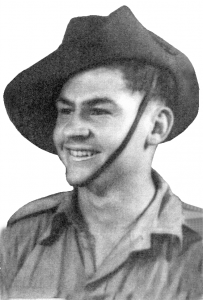
During the battle for Singapore, Don was Killed in Action at Tanglin Halt, Buona Vista, Singapore on 15th February 1942 as was Eric Osborne. He was just 20 years old.
Please read further for more information about the men who enlisted from Northampton into 2/4th MGB
Don Sutherland’s first cousins are WX9260 Stanley Edward NEALE enlisted Oct 1940, joining 2/4th’s 88th Light Aid Detachment – lost his life Sandakan Feb 1945.
Stan Neale’s sister Hannah Jemina Nora NEALE b. Northampton 1917 married 1940 to WX7656 George Robert ROUSE, 2/4th MGB who died 9 Feb 1942 Singapore.
Stan and Hannah were born to parents Edward NEALE and Ruby Elizabeth Ainsworth. Ruby Ainsworth’s sister is Amelia Georgina Victoria Ainsworth who married William James Alexander SUTHERLAND – parents of Donald Sutherland.
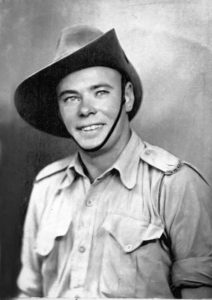
Right: Stan Neale
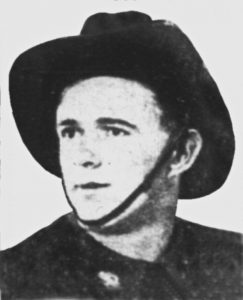 Left: George Rouse
Please read further about the Ainsworth family
_________________
Those who survived and returned to Australia included:
WX15785 CARLYON, William (Bill) b. 1905 around Northampton. Left Singapore by sea to work on the Burma end of the railway with ‘A’ Force Burma Green Force No 3 Battalion. When the rail link was completed the Japanese began moving all POWs in Burma and Thailand to one of few larger Camps in Thailand. Sick POWs were were sent to Tamarkan Hospital Camp. In Carlyon’s case he was sent to Chungkai Hospital Camp. From here he was selected to work with the Linson Wood Camp as was Cornell. He was recovered from Nacompaton Hospital Camp when the war ended 15 Aug 1945. Flown to Singapore from Bangkok, Carlyon sailed to Fremantle on Hospital Ship ‘Karoa’.
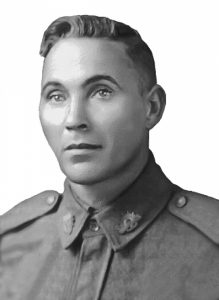
WX16260 CORNELL, Edward Ainsley (Ted) below. Enlisted Aug 1941 and was with Reinforcements to join 2/4th on board ‘Aquitania’ anchored at Gage Roads, Fremantle on 15 Jan, 1942. Promoted to Lance Corporal 7 Feb 1942 he served with ‘E’ Company, Special Reserve Battalion.
Cornell left Singapore by sea with ‘A’ Force Burma, Green Force No. 3 Battalion to work on the Burma end of the Burma-Thai Railway as did Cripps, Randall and Carlyon. It is probable Cornell was sick when the POWs were selected to work in Japan. He remained at Tamarkan, Thailand and was sent on work parties to Linson Wood Camp and Banderra bridge repairs Chao Puraya River from where he was recovered at the end of the war.
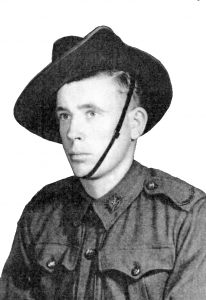
Cornell died 24 September 1981 aged 68 years and was buried Northampton Cemetery.
Geraldton Region
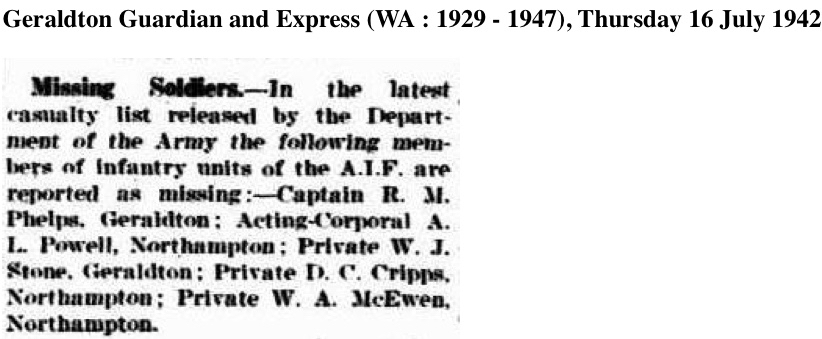
WX20095 McEWEN, William Alexander enlisted AIF 1 Oct 1941 and with Cornell boarded the ‘Aquitania’ at Fremantle on 15 Jan 1942 as reinforcement for 2/4th MGB. He fought in Singapore with ‘E’ Company Special Reserve Battalion.
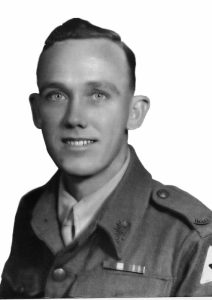
McEwen sailed from Singapore in 1942 with Cornell and others from Northampton for Burma end of Burma-Thai Railway with ‘A’ Force Burma Green Force No. 3 Battalion.
It appears McEwin was sick when POWs were selected for Japan. He was at Tamarkan Hospital Camp and on recovery was sent with work parties to Petchaburi, Linson Wood Camp and recovered from Nacompaton at the end of war. Carlyon and Cornell were also at Linson Wood Camp.
Known to all as Bill. The McEwen family spent many years at Galena, Northampton where Bill’s father worked at the mines – foreman at Grand Junction Mine.
Bill’s maternal grandfather Alexander Salter died Northampton in 1935 and was buried at the Old Catholic Cemetery, Northampton .
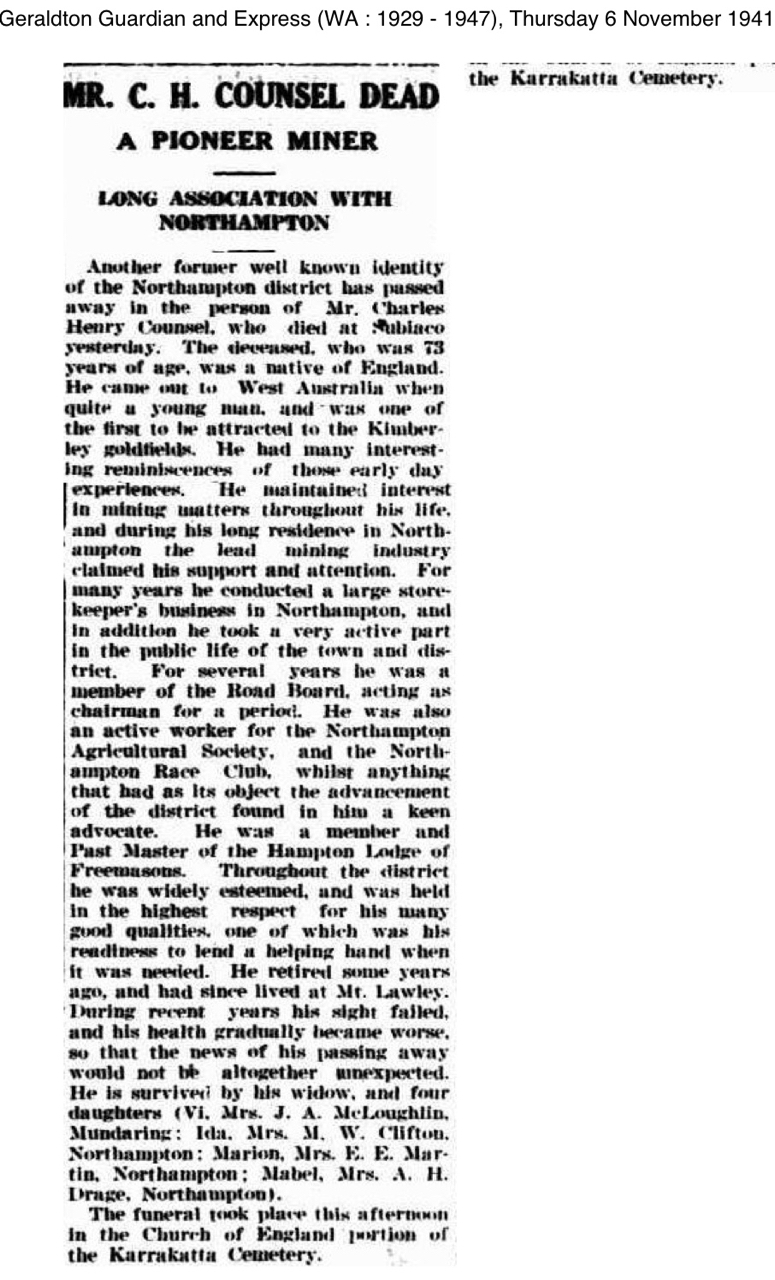
WX9825 McLOUGHLIN, Charles (Peter) b. Northampton 1920 to James Archibald McLoughlin and Violet Minnie Counsel. He enlisted AIF 6 Dec 1940, later joined 2/4th’s ‘C’ Coy 12 Platoon under C.O. Lt Wedge. McLoughlin was left in Fremantle when ‘Aquitania’ sailed from Fremantle 16 January 1942. He was one of about 100 well trained machine gunners who were AWOL and later sailed to Java where they were taken POWs of Japan 8 March 1942. He worked on the Burma Thai Railway with ‘A’ Force Burma, Java Party No. 4 Williams Force.
McLoughlin was recovered from Thailand at the end of the war.
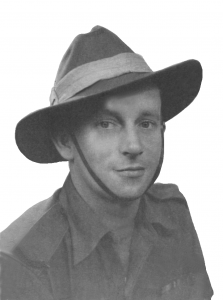
Was born Northampton 24 Jan 1920, the eldest of five sons to parents James Archibald McLoughlin and Violet Minnie Counsel who married Holy Trinity Church Northampton in 1918. Violet was the eldest daughter of Charles Henry Counsel of Northampton.
Violet’s three younger sisters: Ida Mary who married 1921 Northampton to Marshall Walter Clifton. Ida and Marshall resided and died Northampton.
Marion married Edward E Martin and Mabel Agnes Counsel married Allan H. Drage.
Violet McLoughlin returned regularly to Northampton to visit her sisters.
Peter was working at a garage in Midland when he enlisted 6 Dec 1940. He survived to return to Australia.
His brother James Archibald McLaughlin Born 1921, also enlisted and died January 1944 over Germany. His burial place is Charlottenburg, Charlottenburg-Wilmersdorf, Berlin, Germany.
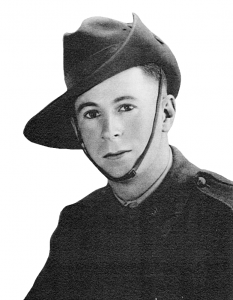
WX9554 POWELL, Arthur ‘Lindsay’ Roy (known as Lin) born Northampton July 1918 to Arthur Powell and Clara Evelyn Trenaman from Nanine.
Powell initially joined 11th Battalion Militia prior to enlisting AIF Dec 1940. He later joined Headquarters Company No 3 Platoon. On 2 January 1942 he was promoted to Corporal.
In 1943 Lin Powell departed Singapore by train for the Burma-Thai Railway with ‘D’ Force Thailand ‘V’ Battalion under the leadership of Alf Cough. He was recovered from Pratchai when the war ended. Please read story of ‘V’ Battalion.
We recommend you read the story of Lin Powell’s uncle, WW1 Camel Corps, after whom he was named.
Lin Powell’s mother Clara Evelyn Powell, died 13 December 1979 aged 89 years and was buried at Northampton Cemetery.
WX9005 ROGERS, Eric Reginald (known as Buck or Reg) b. Berkshire, England 1905. It is probable Rogers had been working in the Northampton area prior to acquiring land at Mukinbudin. Please read about the Boys from Muckinbudin. He enlisted AIF Oct 1940 and joined 2/4th ‘C’ Company 12 Platoon under Commanding Officer Mick Wedge.
From Singapore Rogers joined with the men from Northampton to sail to the Burma end of the Burma-Thai Railway with ‘A’ Force Burma, Green Force No. 3 Battalion.
When the rail was completed towards end of 1943 the Japanese began sending all POWs in Burma and Thailand to one of several large Camps or hospitals in Thailand. Rogers was evacuated to Tamarkan Hospital Camp, then sent in 1944 to Nacompaton Hospital Camp until 30 August 1945 and the end of war.
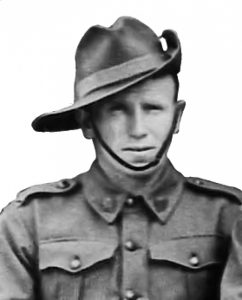
Returning to WA Rogers returned to his farm at Mukinbudin, where he and his wife had three Children – Hazel, Jim and Betty. Elizabeth and Eric Rogers retired to near Northampton where he died in 1972 aged 67 years. He was buried in Northampton.
Eric died 20 January 1972 aged 67 years and his wife Elizabeth Rogers died 21 June 1991 aged 78 years. Both are buried at Northampton Cemetery.
WX8141 SIMKIN, Ronald Henry b. 22 September 2917 Geraldton to Henry Simkin Annie May Simkin.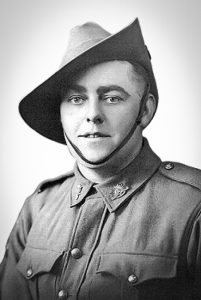
Ron enlisted AIF 16 Aug 1940 and later joined 2/4th’s ‘C’ Company Headquarters as a Driver.
Otherwise known as Ron, Simkin returned to Australia and took up farming north of Northampton. He married and had a family.
Ron was the veteran of the Northampton boys.
Simkin left Singapore with the first work party ‘A’ Force Burma Green Force No. 3 Battalion starting at the Burma end of the railway. He was recovered from Thailand at the end of the war.
Ron had a toe on his left foot amputated in 1944.
Ron Simpkin died 2 May 1984 and is buried at Northampton Cemetery. His mother and father are also buried at Northampton.
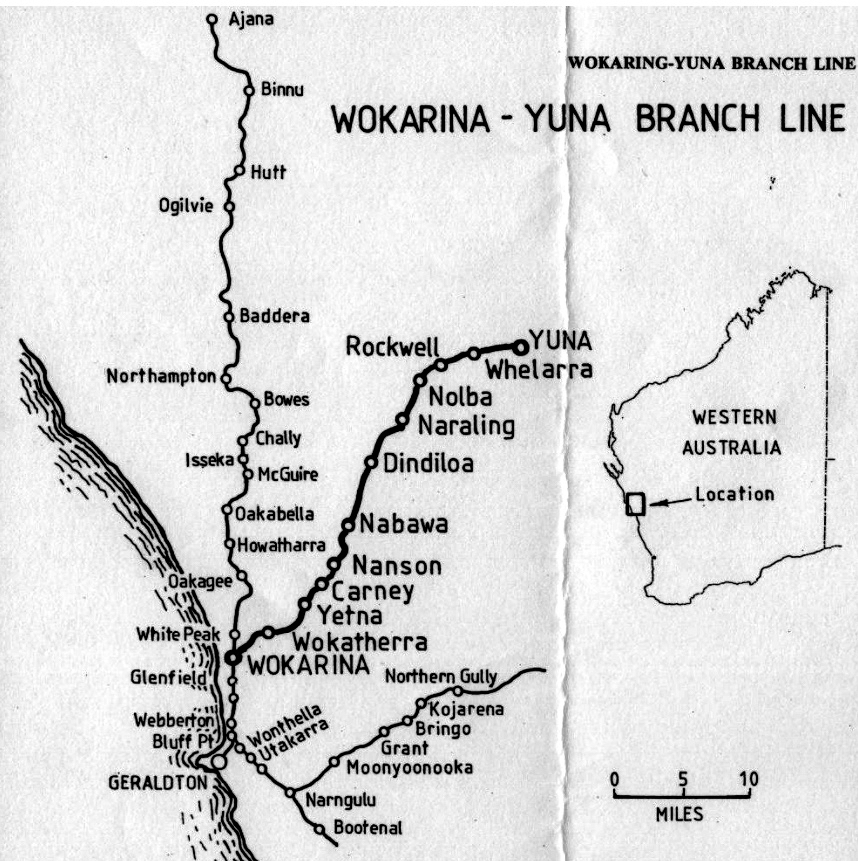
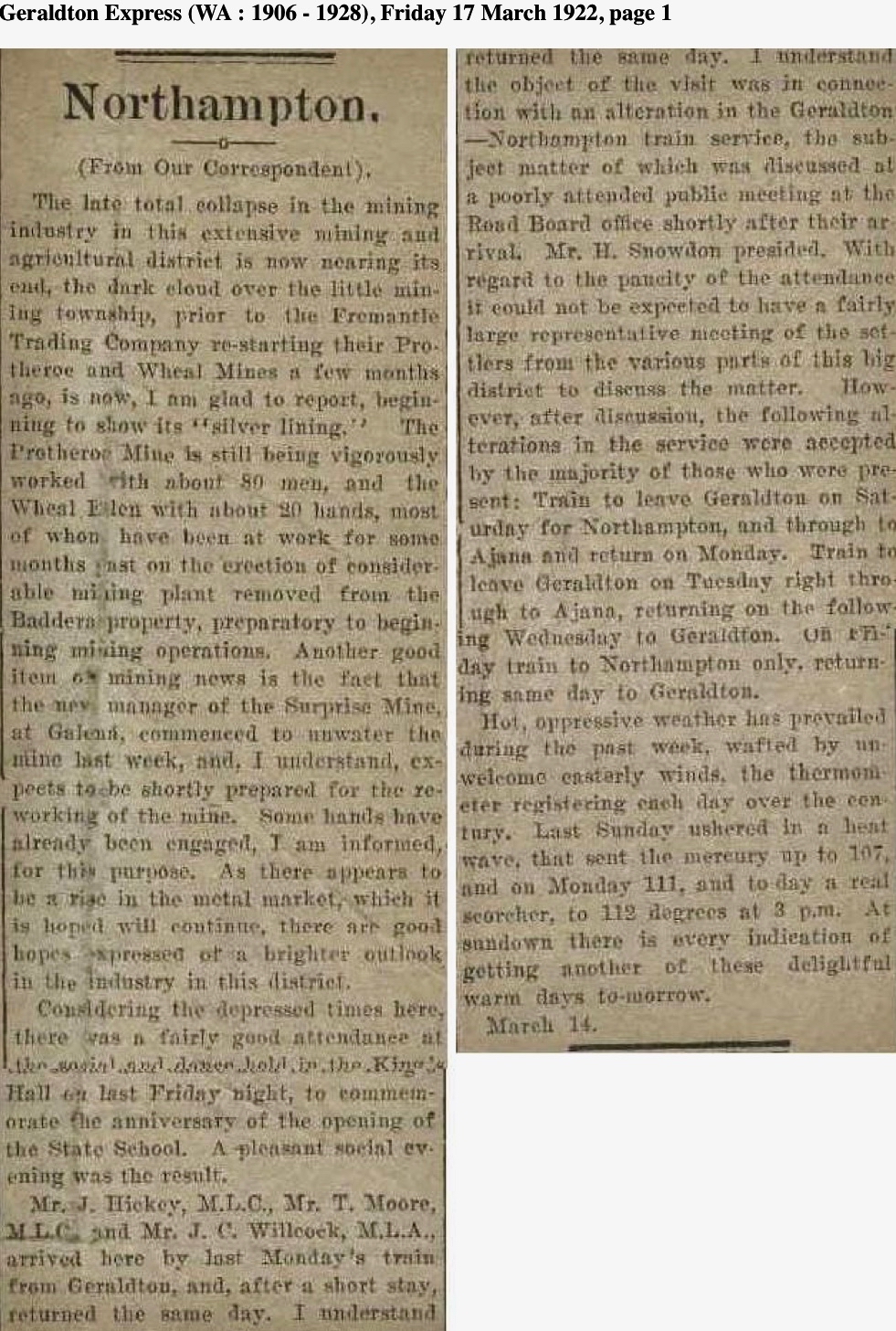
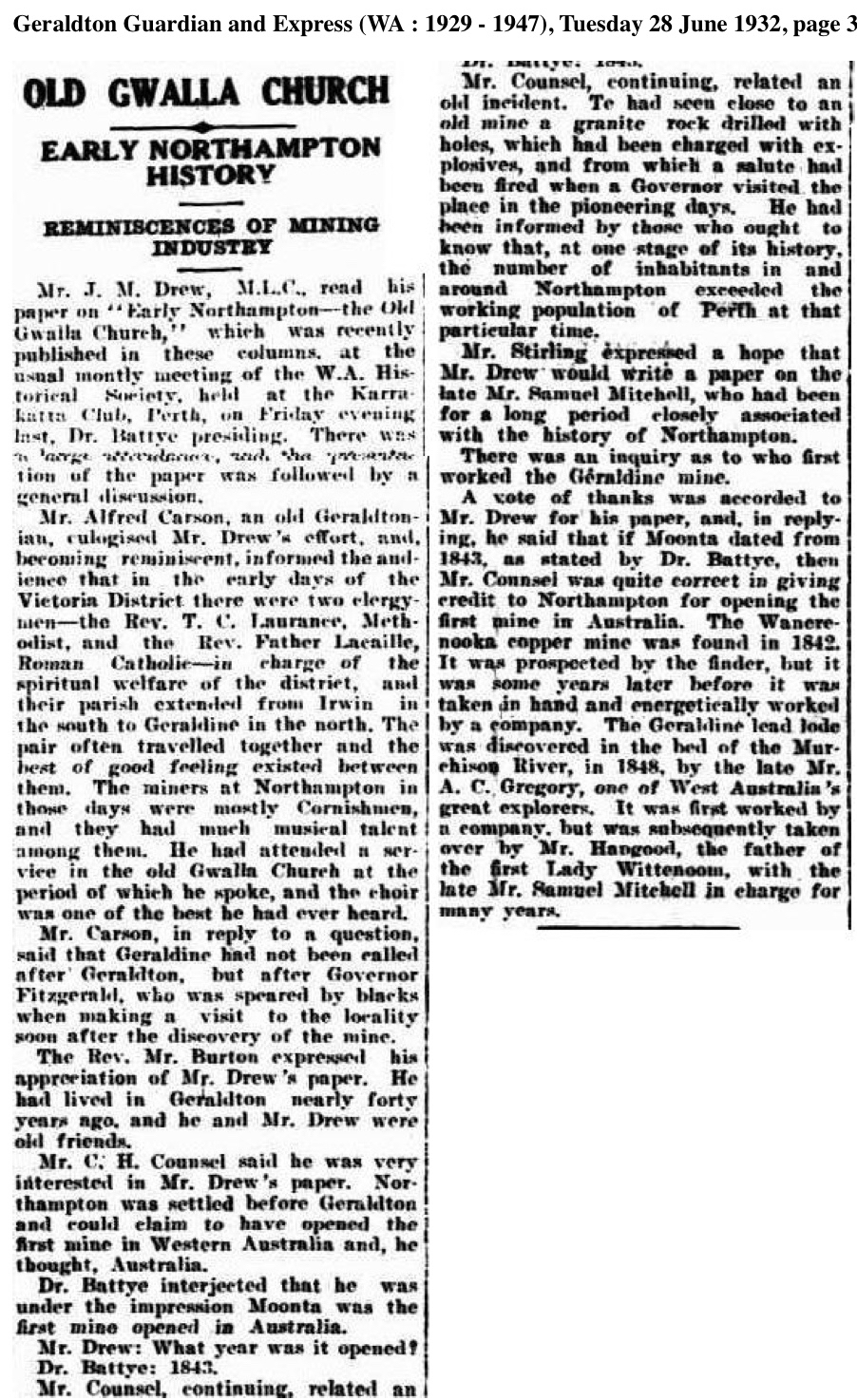
Below: Rail map. Showing route from Geraldton through Northampton to Ajana.
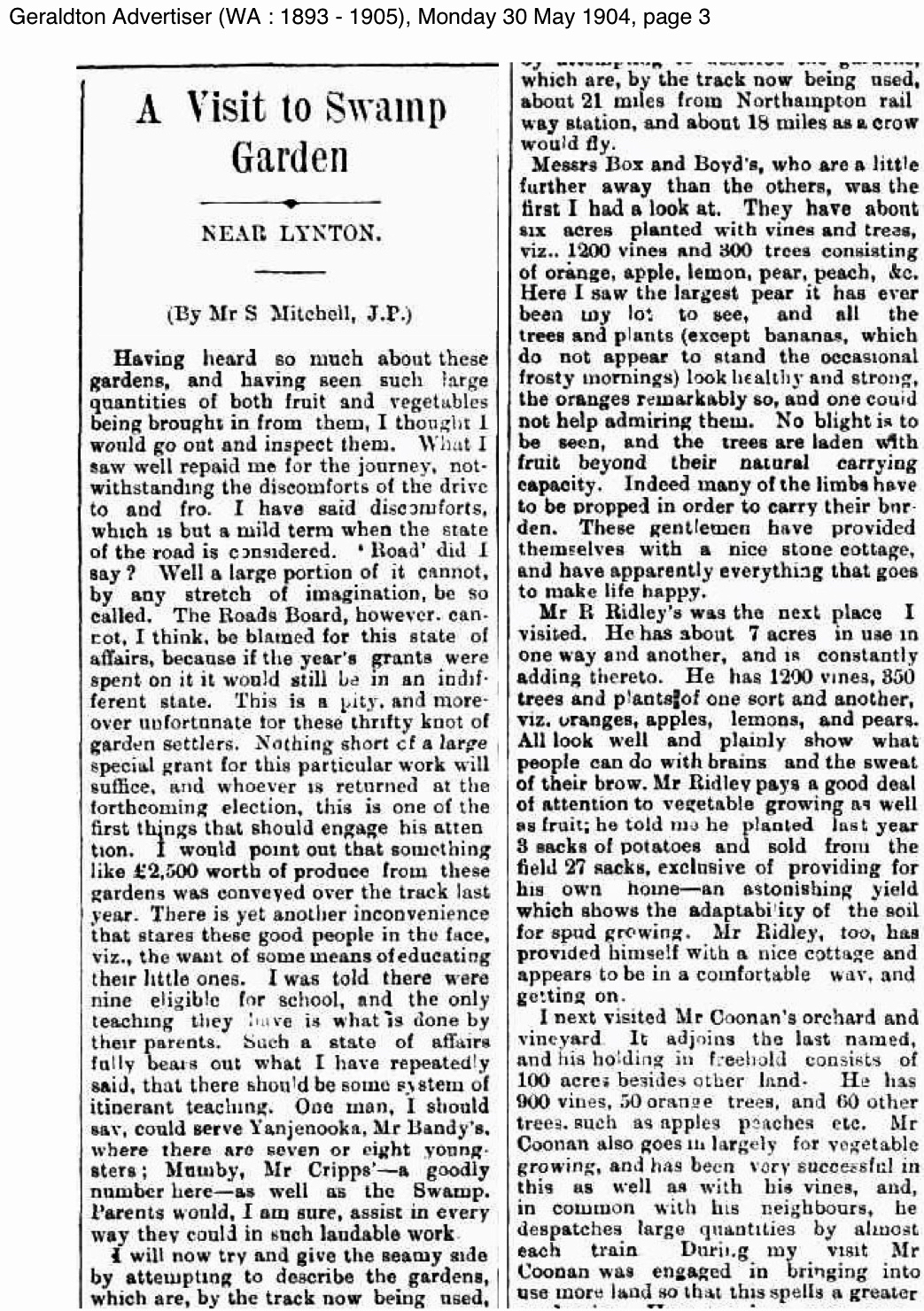
Below: Ridley and Cripps families.

Abergavenney & District War Memorial, Wales
WX8798 BIGGS,Guy Percival born 17 August 1905 Monmouth, Wales and sailed to Western Australia in 1924 aged 19 years. He enlisted 23 October 1940 and joined 2/4th Machine Gun Battalion ‘B’ Company as a Driver. He died of illness Burma August 1943.
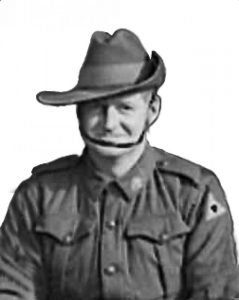
Following the Fall of Singapore on 15 February 1942 Guy became POW of Japan at Selarang, Singapore. He was selected to work on Thai-Burma railway with ‘A’ Force Burma Green Force No. 3 Battalion on the Burma end of the railway.
Please read further about Guy Biggs.
Guy died of cardiac beri beri, dysentery and tropical ulcers at Khonkan Camp Hospital, 55km in Burma 21 August 1943 aged 39 years. Khonkan Camp had been especially designated by the Japanese as a so-called hospital camp, however there were no medical facilities nor medicines to be found. The Japanese appointed ‘Bertie’ Coates as head of this ‘hospital’. Lt-Col Albert Coates A.A.M.C. was so ill when he arrived, to visit patients he had to be carried around on ‘Burmese style stretcher-bed’ made by POWS.
Guy Biggs had worked as a miner at remote Wiluna since at least 1936 (Electoral Roll) until he enlisted 23 October 1940. Although remote, Wiluna in 1930’s was a bustling mining town with a population of 9,000 people. It had a hospital, 4 or 5 doctors and 4 to 5 hotels with a regular train service to Perth. (WX17737 Kenneth Moher was also from Wiluna. He was a Baker with his brother Gilbert James Moher. Moher went to Burma with Green Force No. 3 Battalion, departing Singapore 14 May 1942 to work on the railway. He too died at Khonkan 55km Camp of amoebic dysentery on 24 July 1943 aged 28 years. Although Moher enlisted November 1941 and joined ‘E’ Company, there is no doubt the men would have known each other if not prior to war but certainly from the time they became POWs.)
Moher was buried Grave No. 27 Khonkan when he died 24 July 1943, and Biggs died 21 August 1943 and buried Grave No. 61 Khonkan.
Biggs joined 2/4th and was a Driver with ‘B’ Company with Headquarters initially training at Northam Army Camp. He later went to South Australia and Northern Territory for further training, before sailing to Singapore in January 1942. The 2/4th Battalion were only weeks in Singapore before the Japanese invasion. They lost many lives before being taken POWs of Japan.
It is indicative of the sense of a close-knit community recognising the Welsh born Guy Biggs on their war memorial. His farming family would have been there for generations, and probably his father and brothers living when he died. His mother died in 1933.
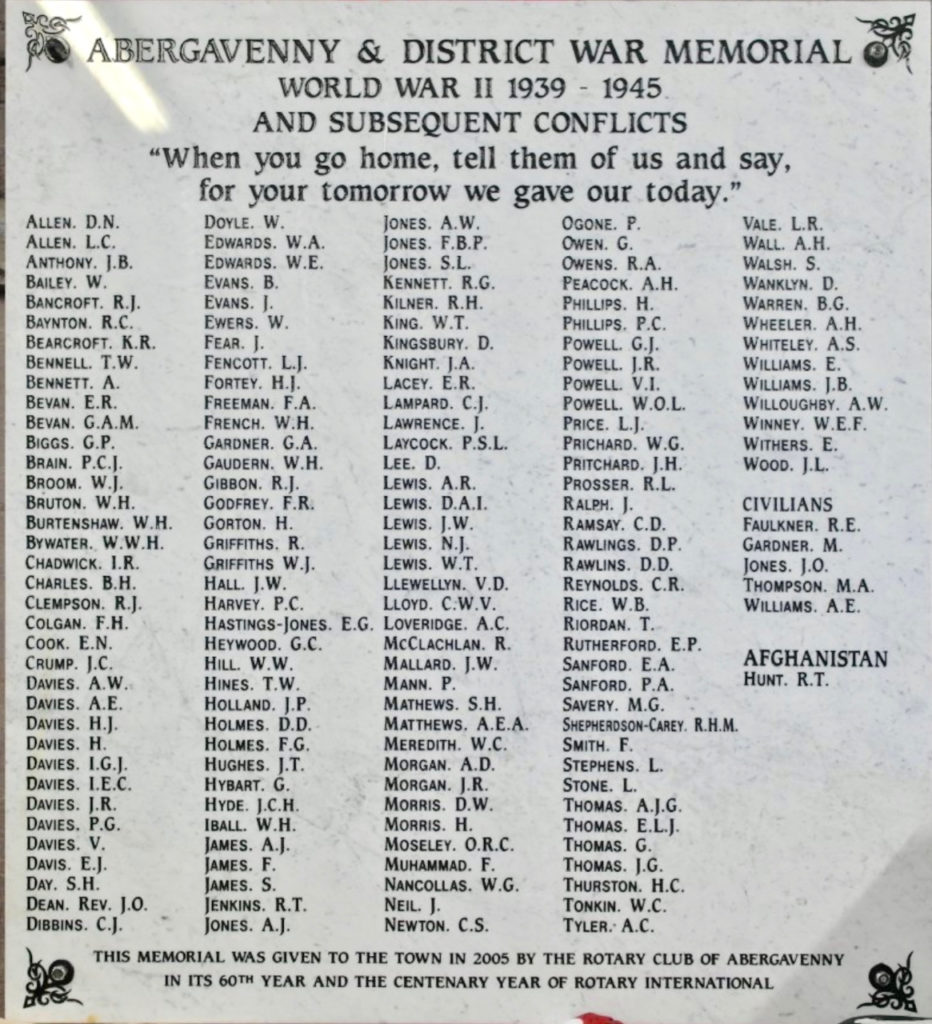

*** See below, Jones A.W.
Read further about the misery of Khonkan 55km Camp.
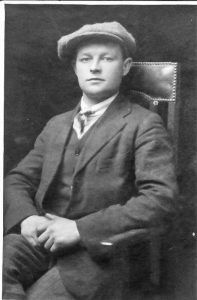
WX7234 Jones, Ivor William enlisted 1 August 1940, joined ‘D’ Company was born 28 September 1900 Abergavenney, Monmouthshire, Wales.
His parents were also farmers – 1911 Census his widowed mother Ada Jones with her 3 sons, including 10 year old Ivor, farmed at Crom Farm, Walterstone, Near Abergavenney, Hereford, England – near to border of Wales.
Ivor Jones 25 years and younger brother Artis William Jones 21 years arrived Fremantle on ‘Orama’ 26 August 1926. When he enlisted, Ivor was a fireman at Laverton and Artis was living at Meckering. Ivor Jones died November 1943 with ‘F’ Force at Kami Sonkurai. Artis died as a POW in Germany in 1945 having joined 2/11th AIF.
Please read further about Ivor Jones
***Included on the above WW2 Memorial is Ivor’s younger brother:
-
Jones, Artis Walter, Private WX331. Died 04/04/1945 aged 39. Australian Infantry, 2/11th Btn. Mentioned in Despatches. Buried Berlin 1939-1945 War Cemetery. Son of William and Ada Jones of Abergavenny.