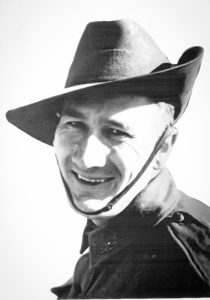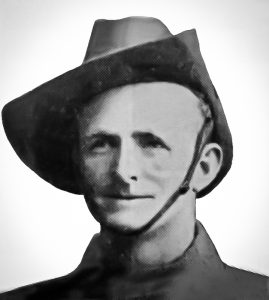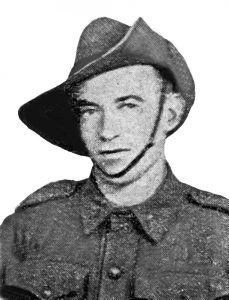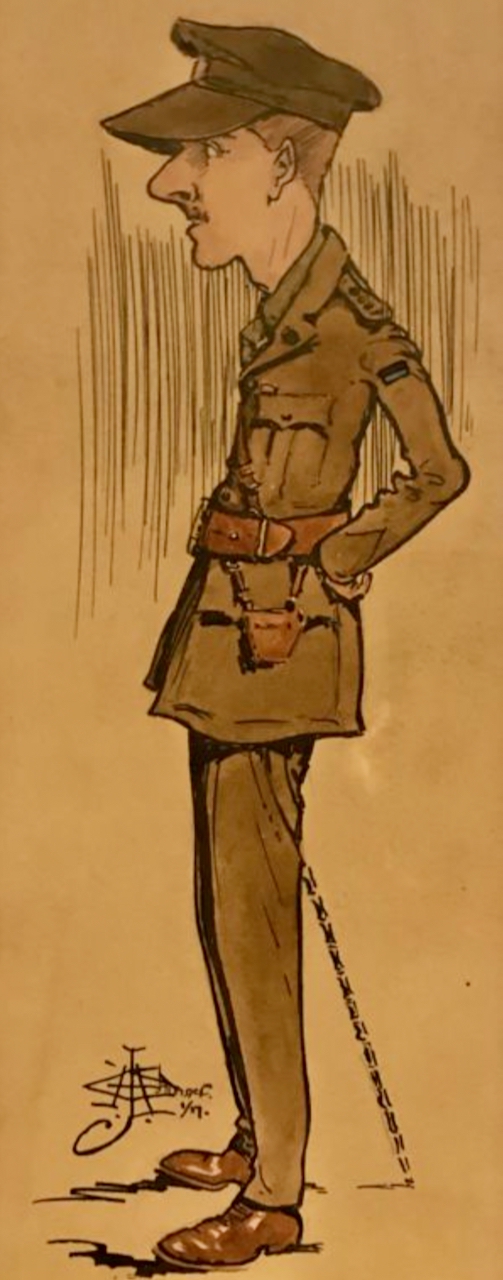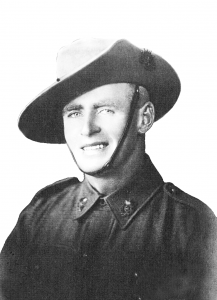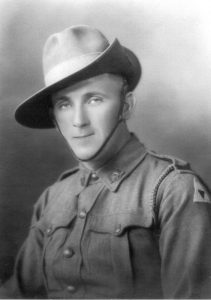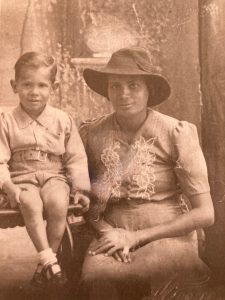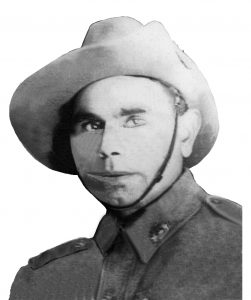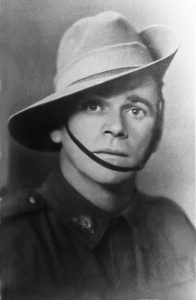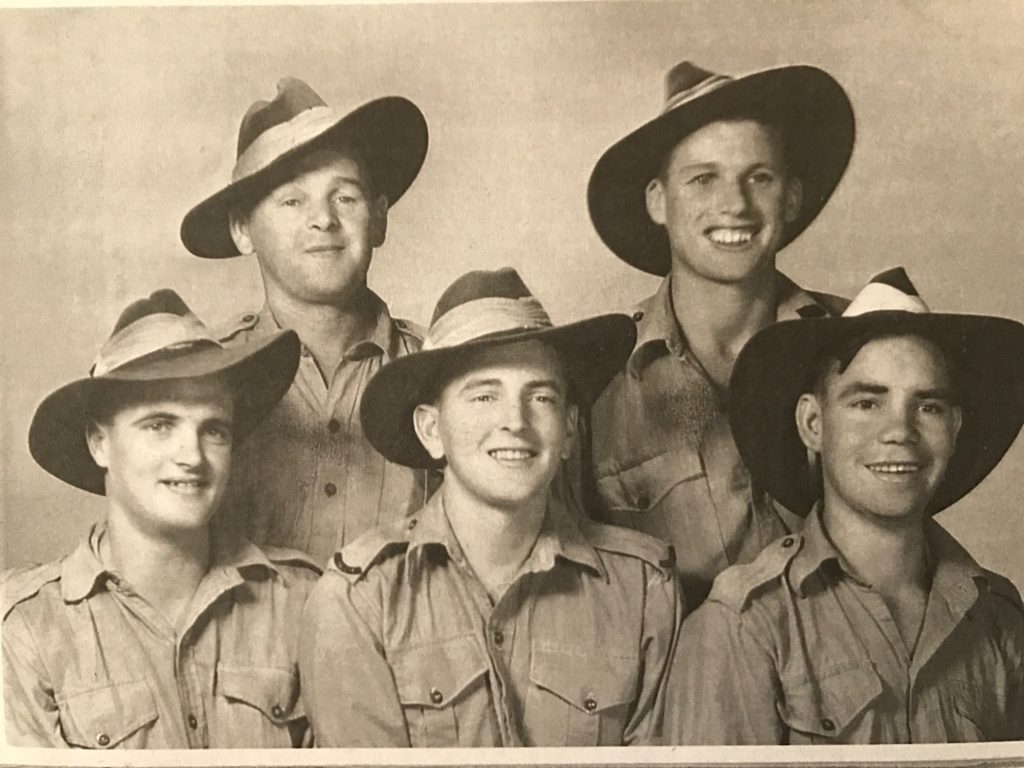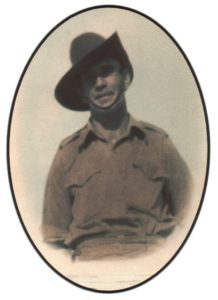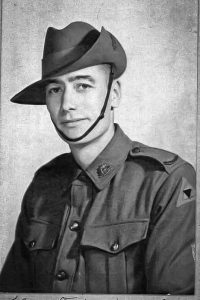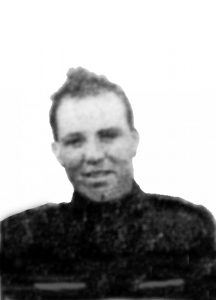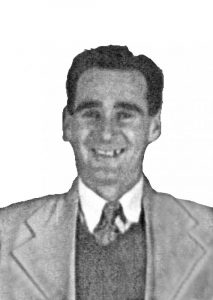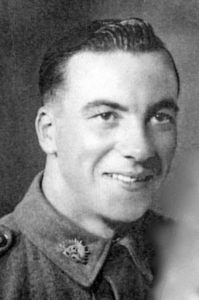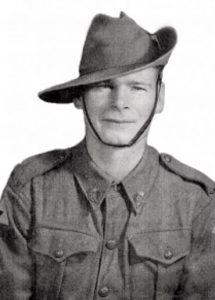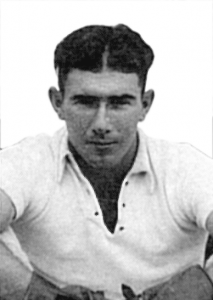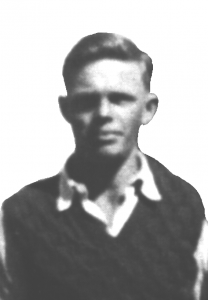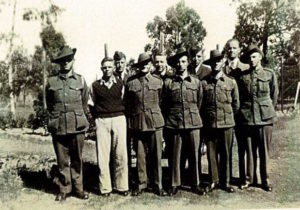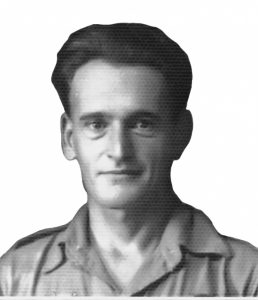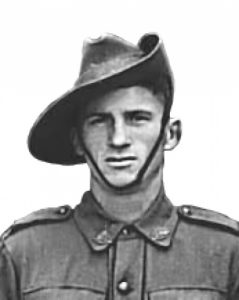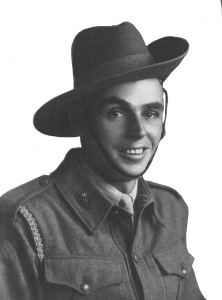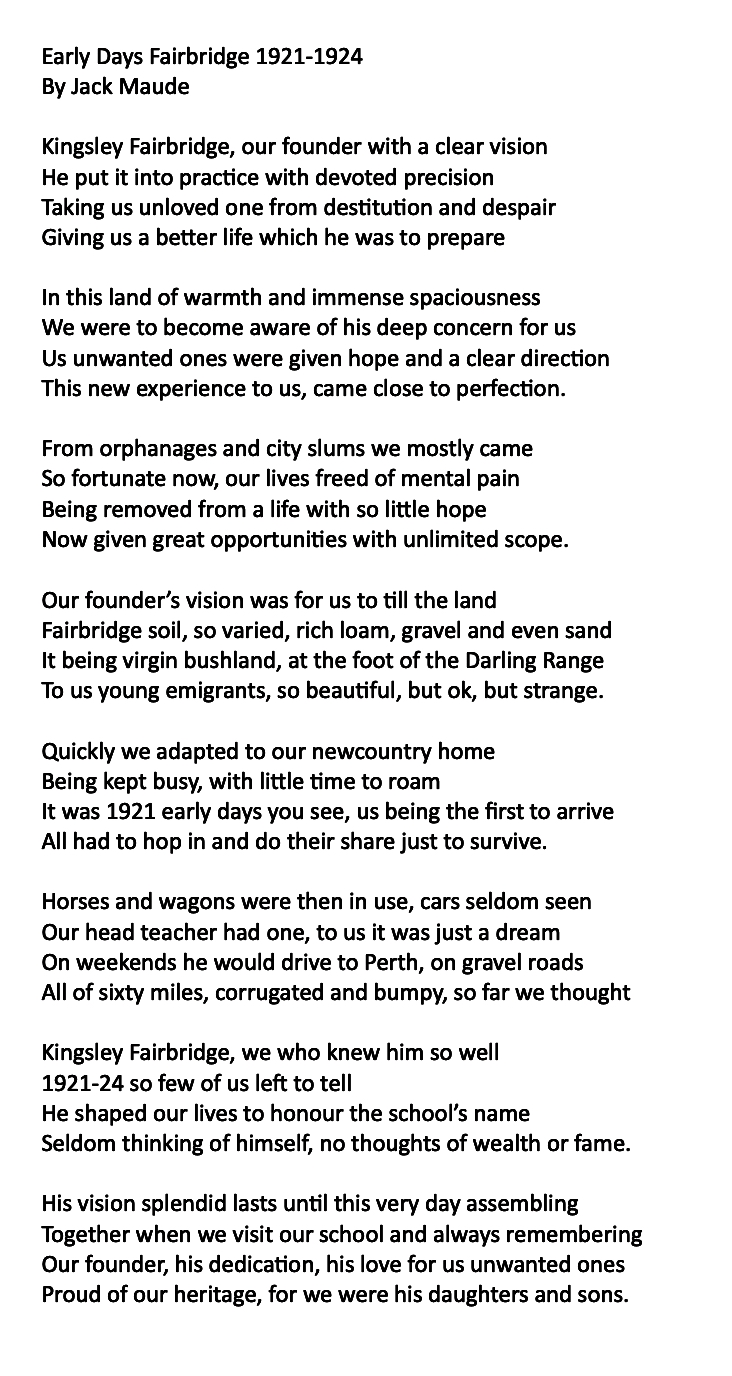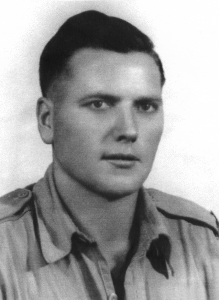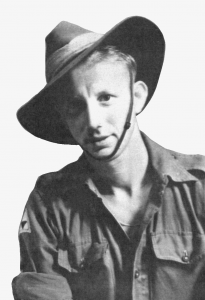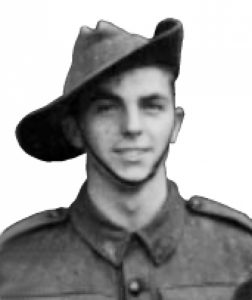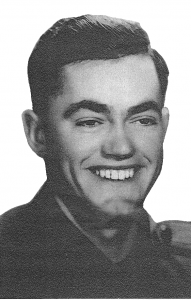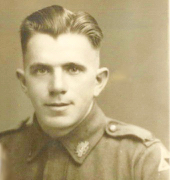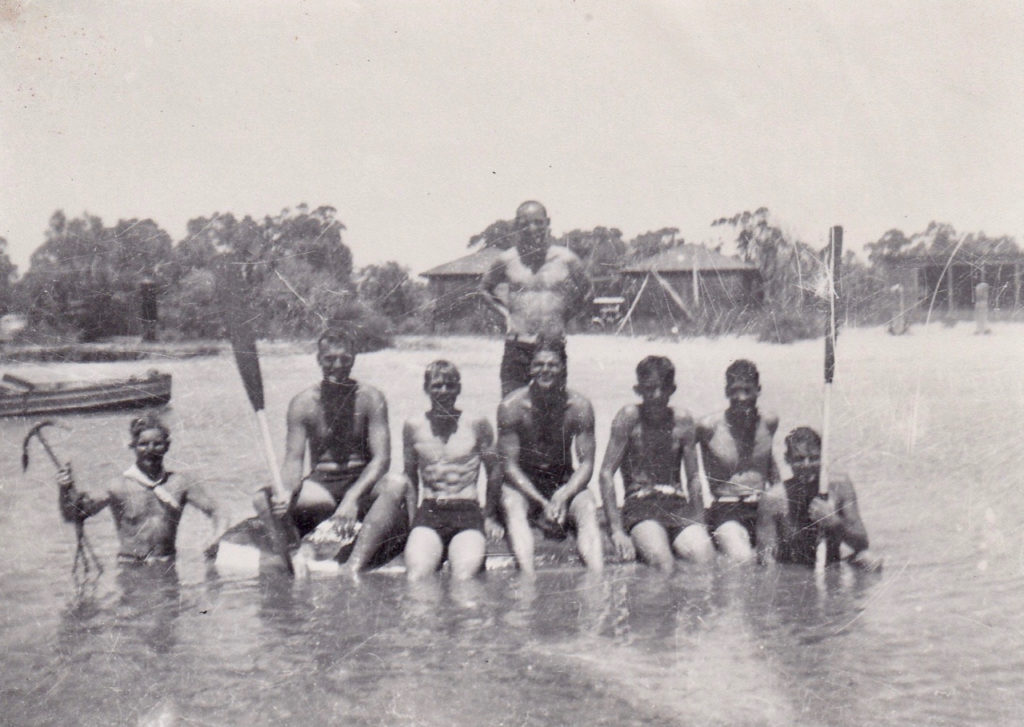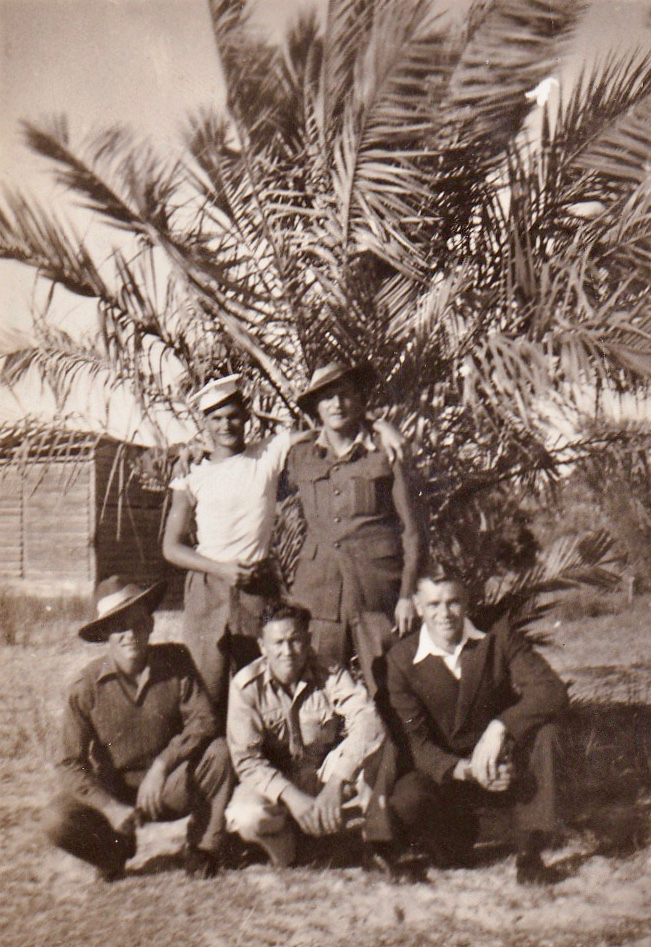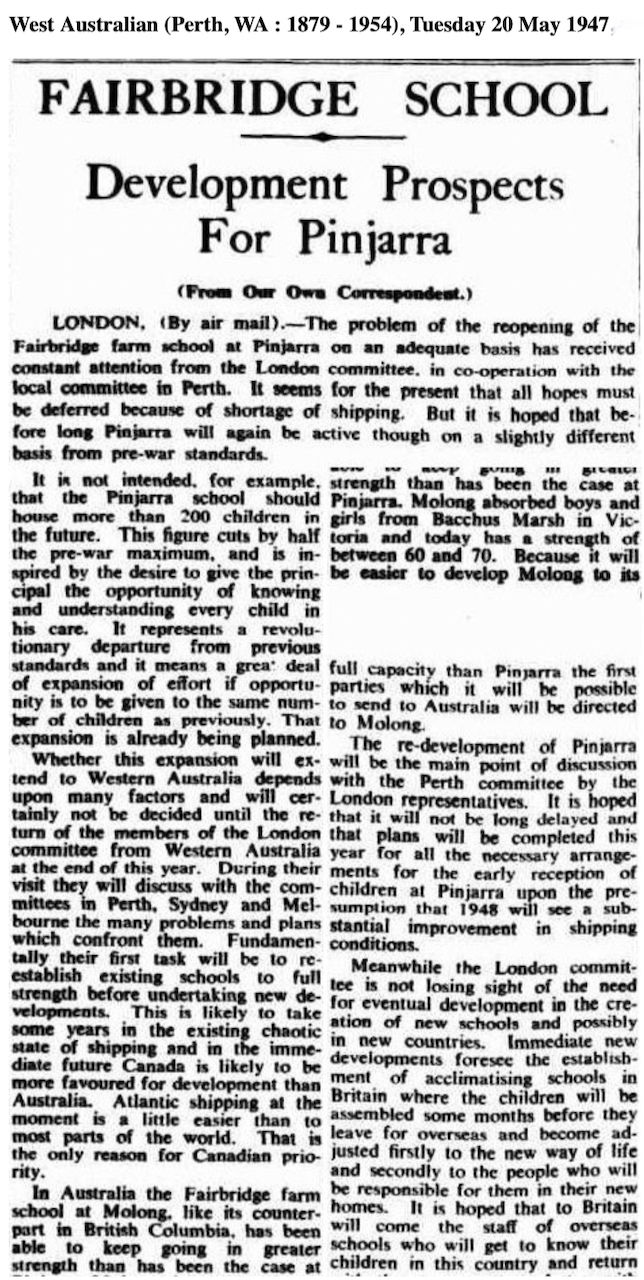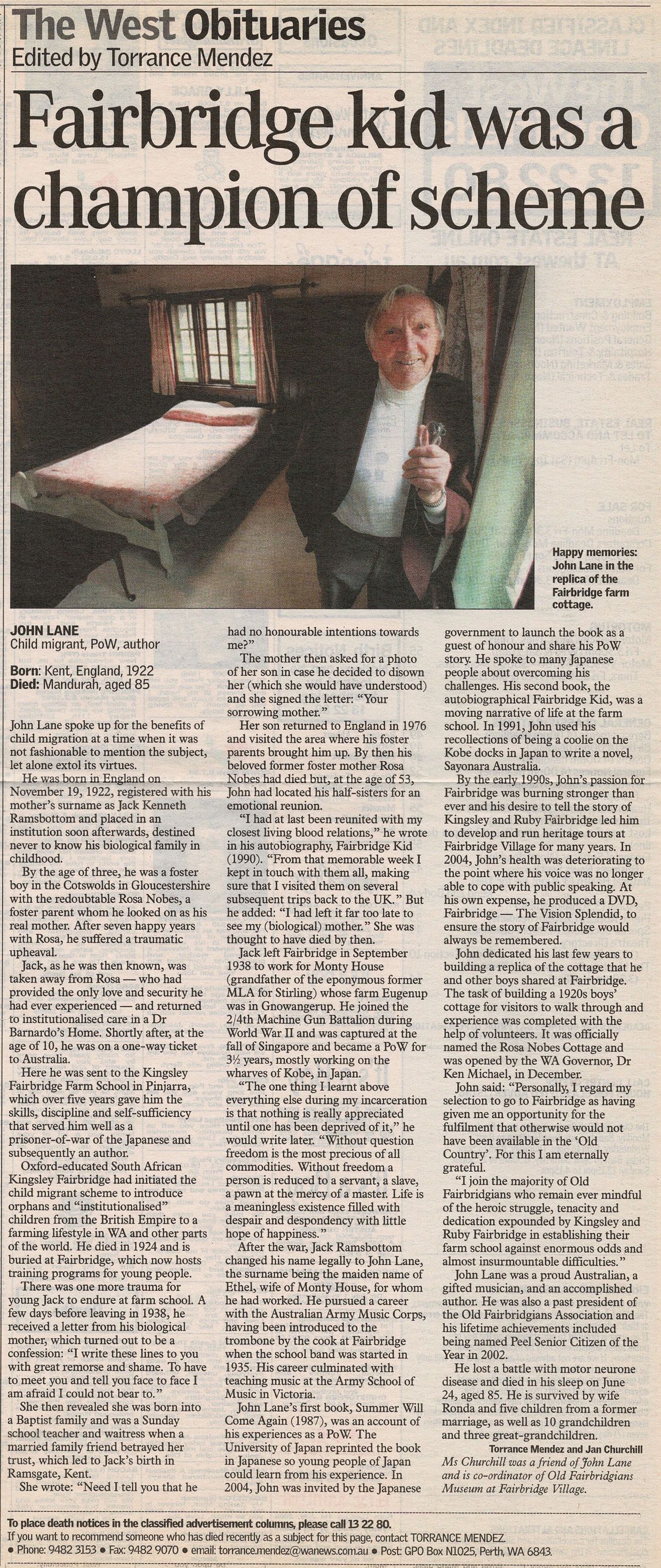
Obituary for WX14836 John (Jack) Keneth LANE (formerly Ramsbottom) A Fairbridge Kid

John Lane Obituary The West Australian July 8 2008

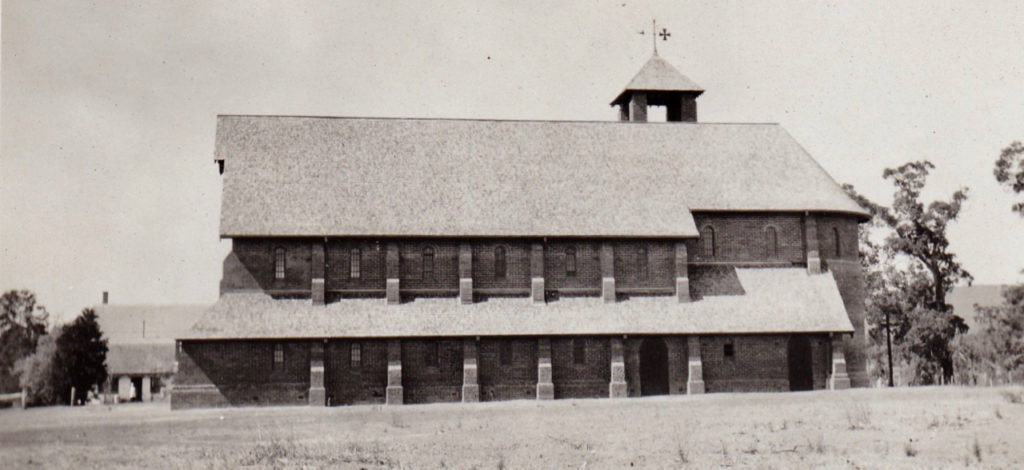
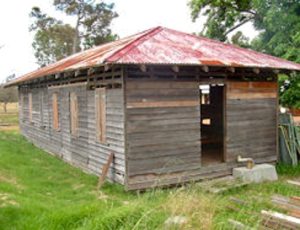
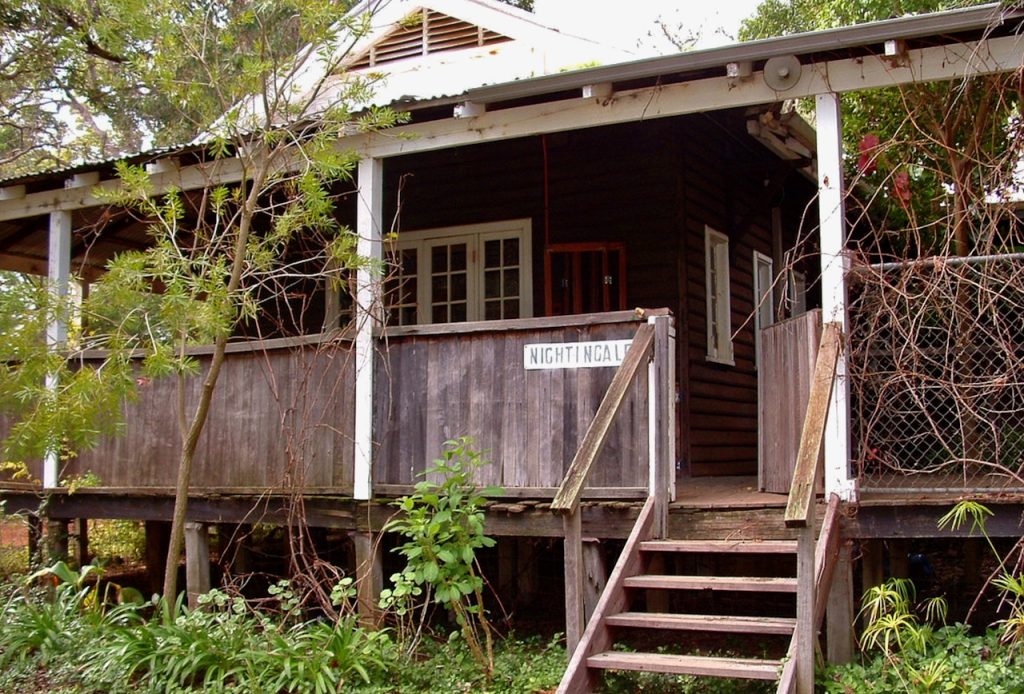
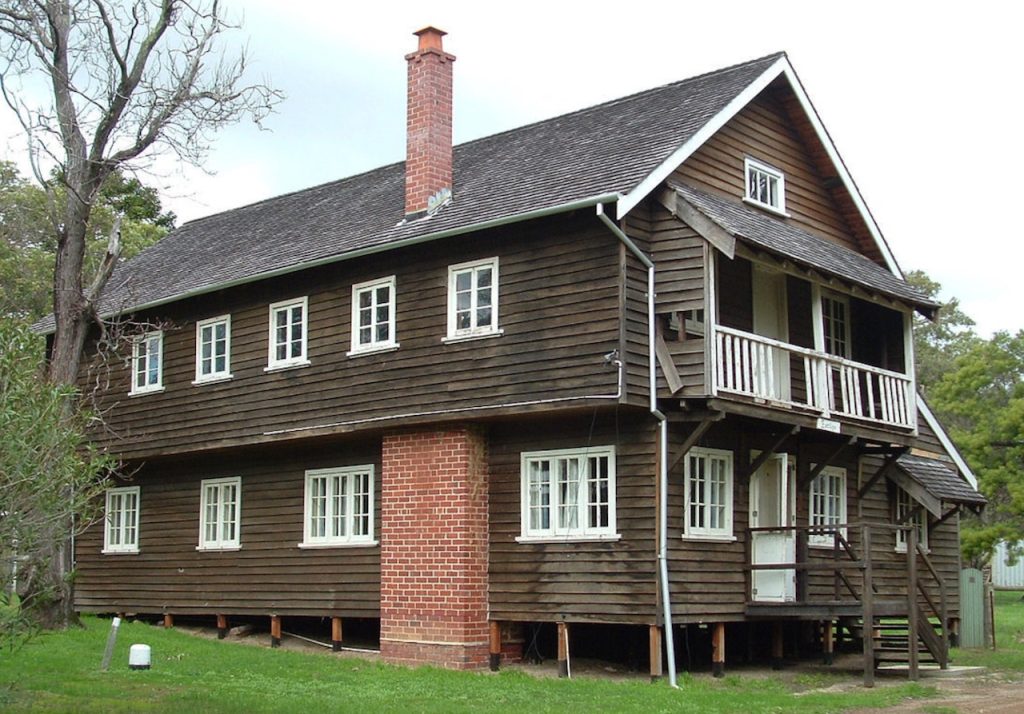
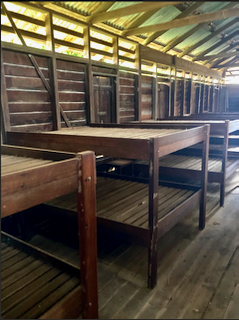
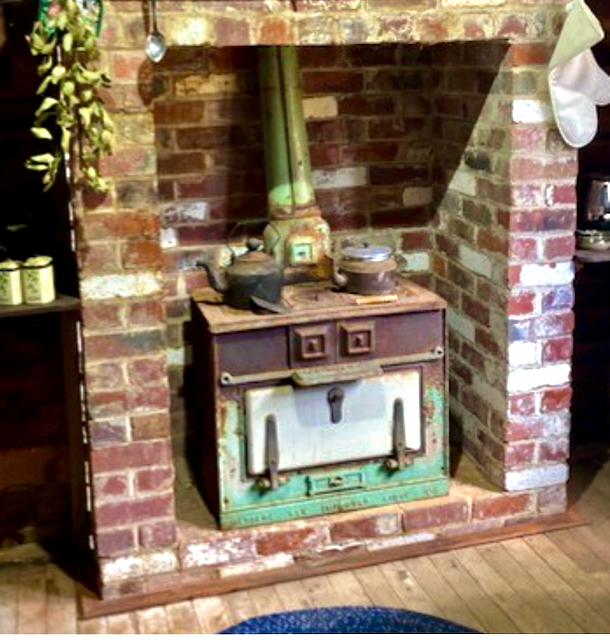
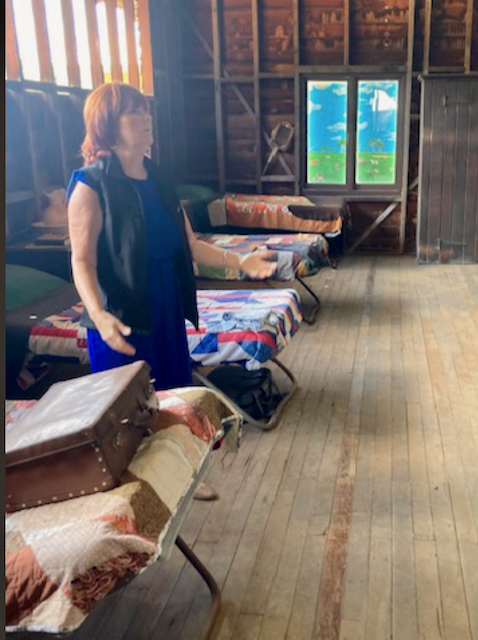
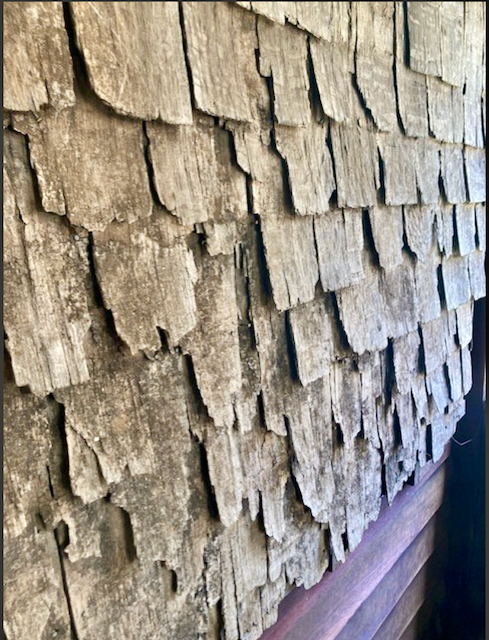
Fairbridge – Nightingale

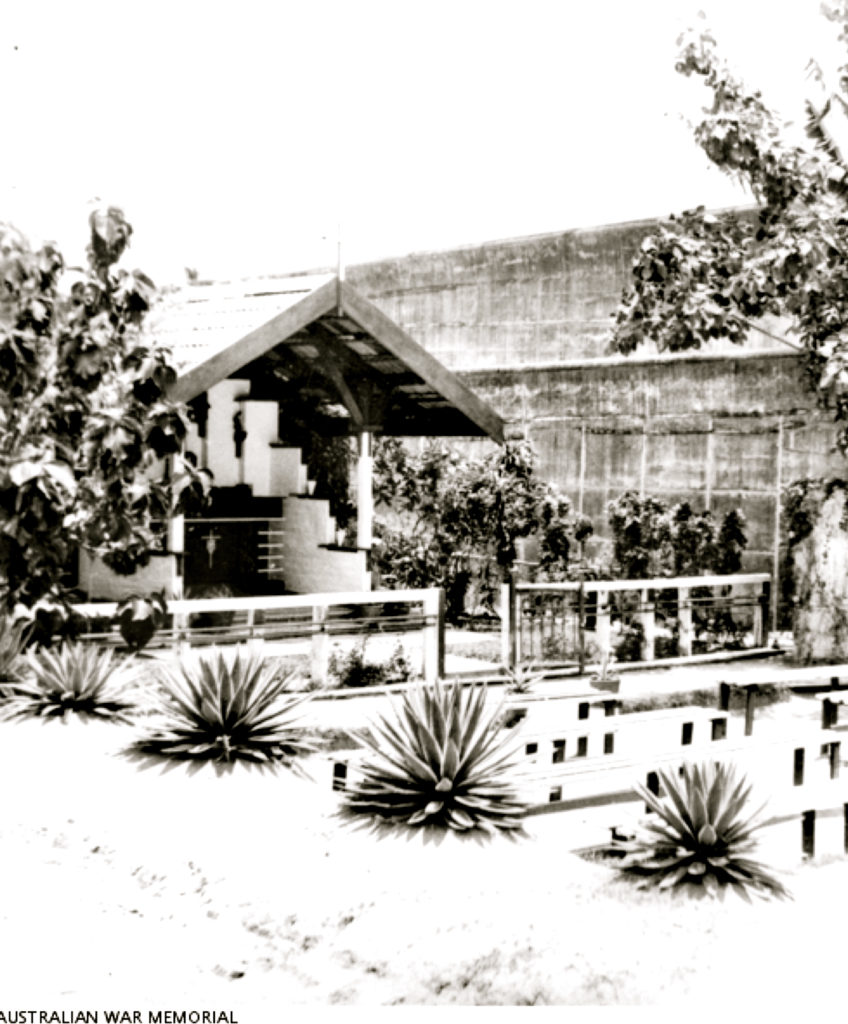
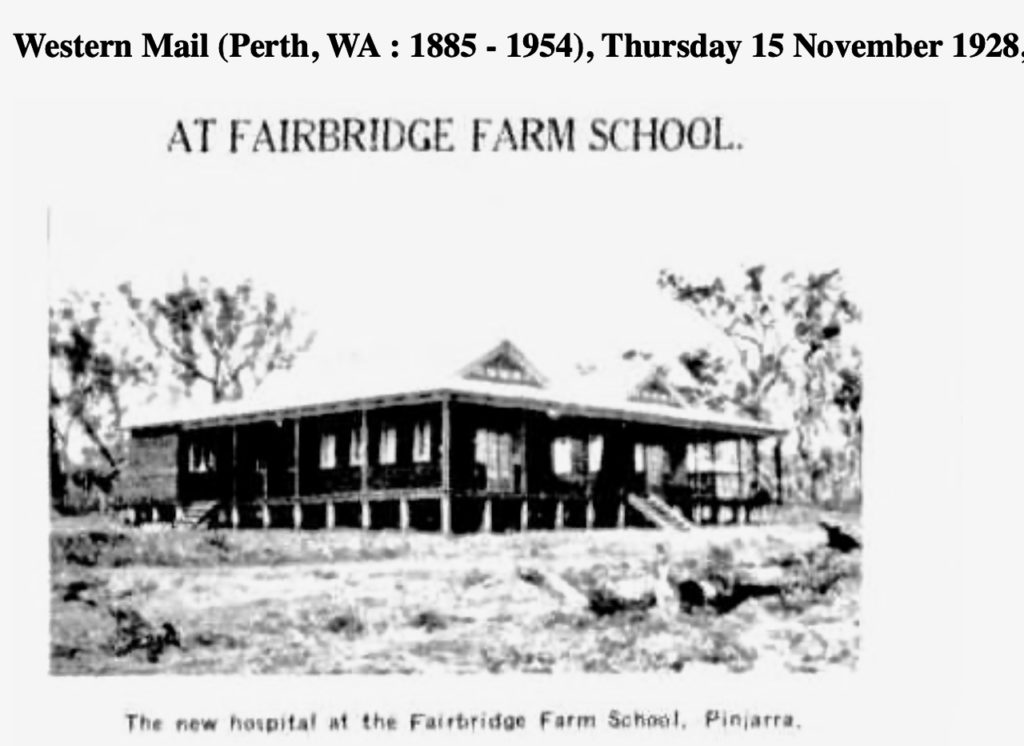
Nightingale is a purpose built hospital constructed in the early 1930’s. The resident sister lived here at the rear. The hospital had 2-four bed wards, one for boys and the other for girls. July 2005. Photos Ref: KFFS023

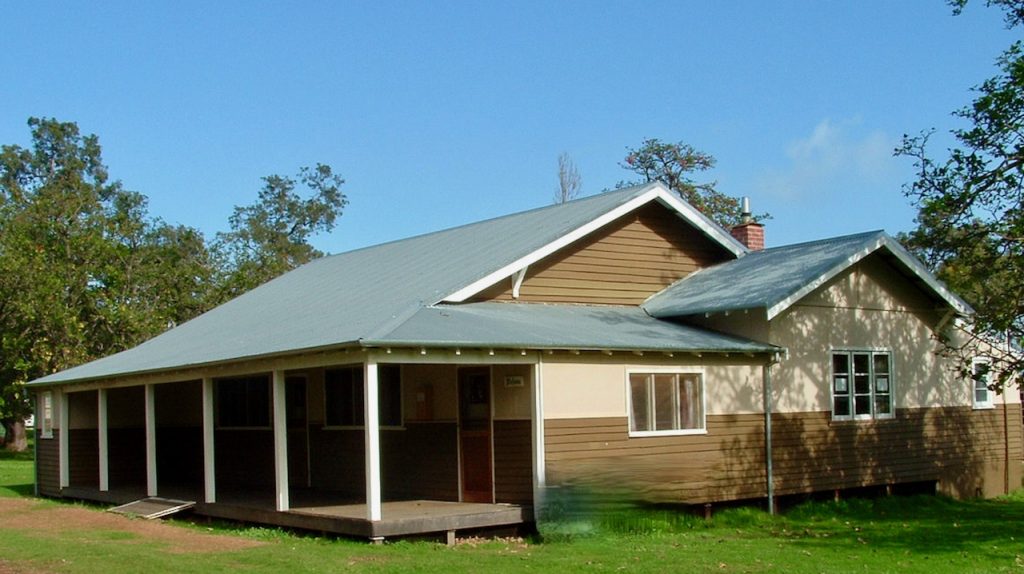
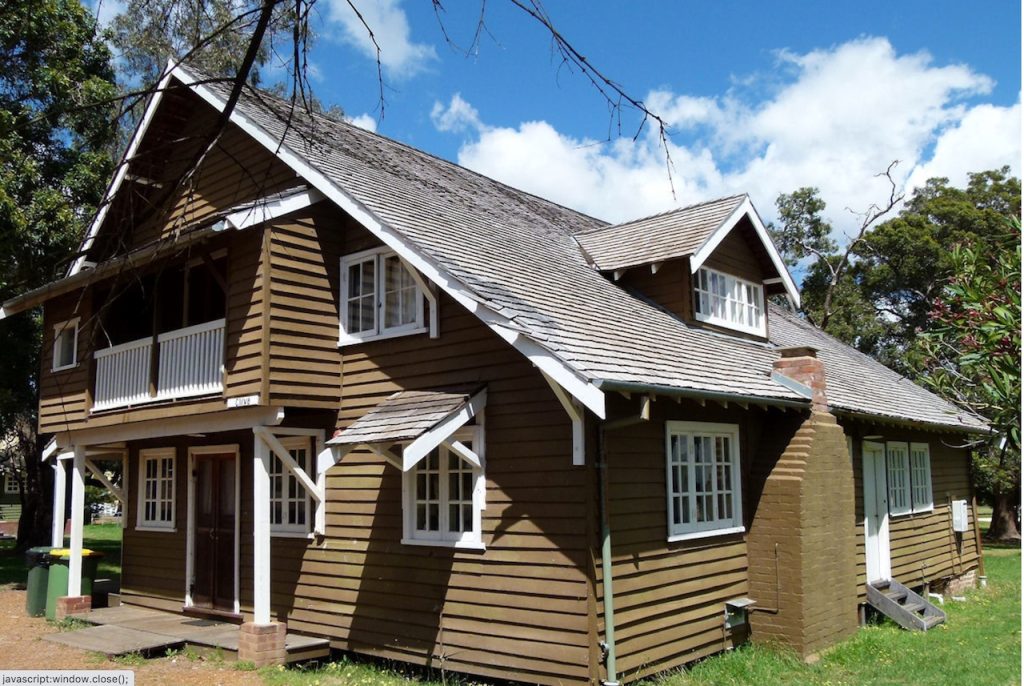
Fairbridge – Nightingale

Nightingale is a purpose built hospital constructed in the early 1930’s. The resident sister lived here at the rear. The hospital had 2-four bed wards, one for boys and the other for girls. July 2005. Photos Ref: KFFS023

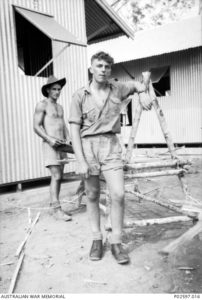
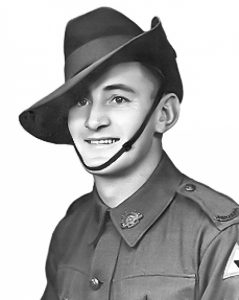
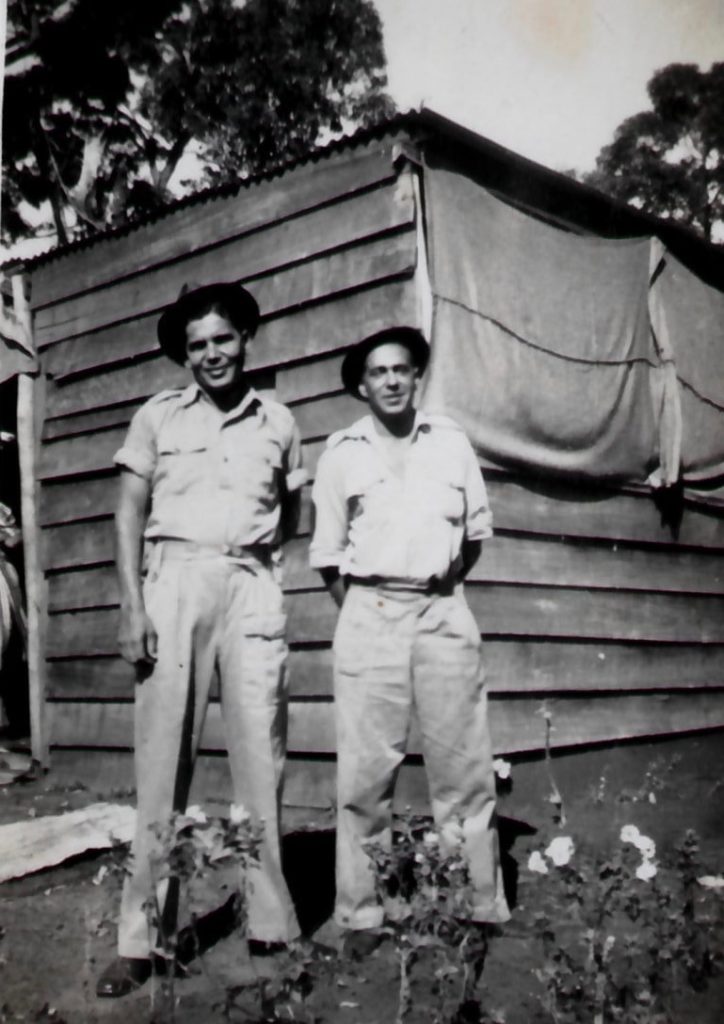
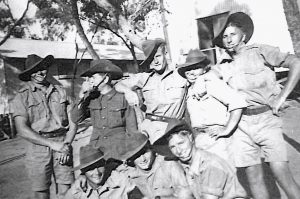
Darwin, NT. c. October 1941. WX8707 Private (Pte) Frank Nazzari and John Ramsbottom, both of 5 Platoon, A Company, 2/4th Machine Gun Battalion beside an A frame bed which they are constructing from bamboo and mangrove saplings to use at Winellie Camp. When the unit arrived at the camp, galvanised huts had been erected, but many were without concrete flooring and windows, requiring the first weeks at the camp to be spent finishing off the accommodation. Pte Nazzari later died of illness on 24 April 1945 in Borneo, whilst a Prisoner of War (POW). (Donor J. Lane)


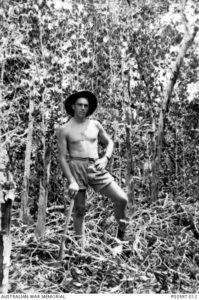
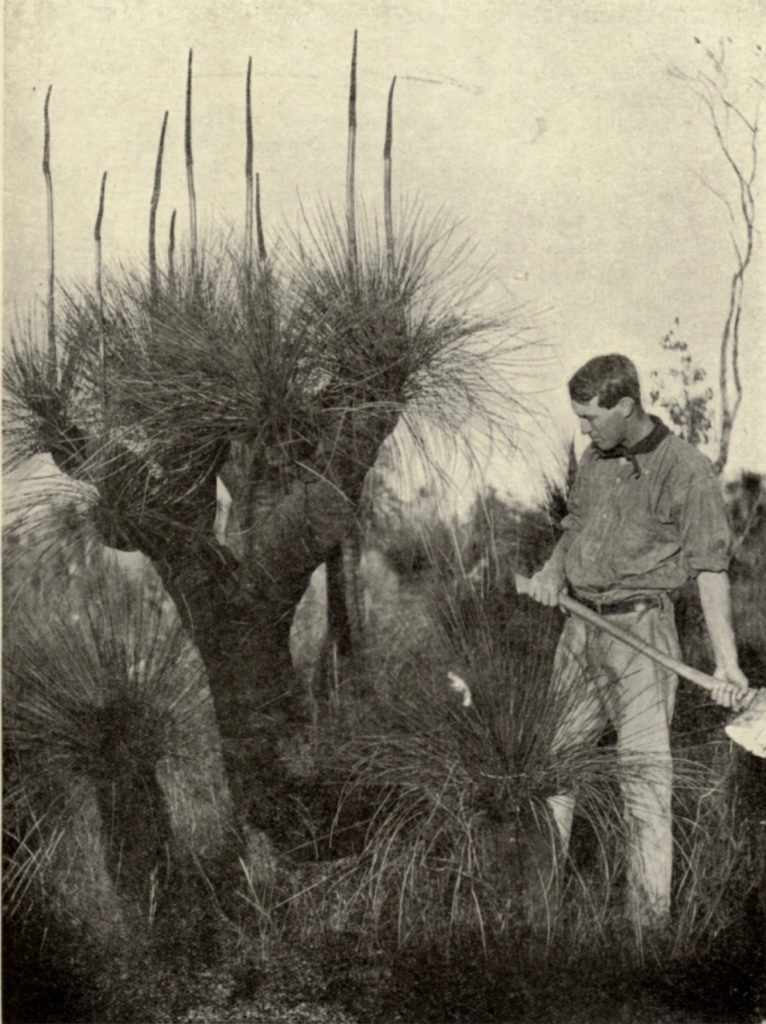
Above:  John Ramsbottom (later Lane) cutting Bamboo, Darwin.


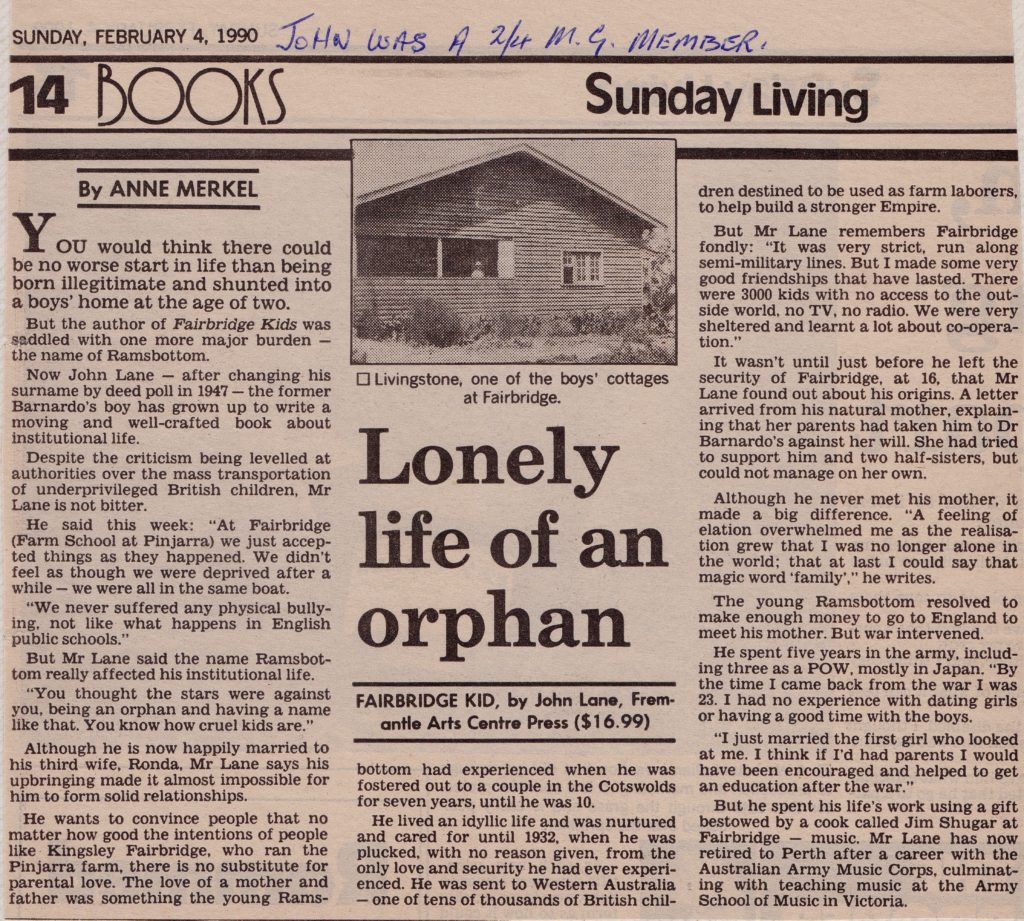
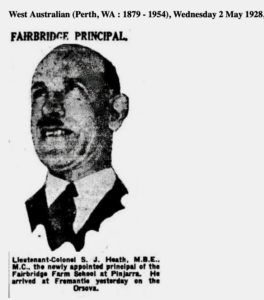
‘John Ramsbottom was fostered out at the age of two years. He stayed with his foster parents for seven years and was then recalled to London by Barnardos.
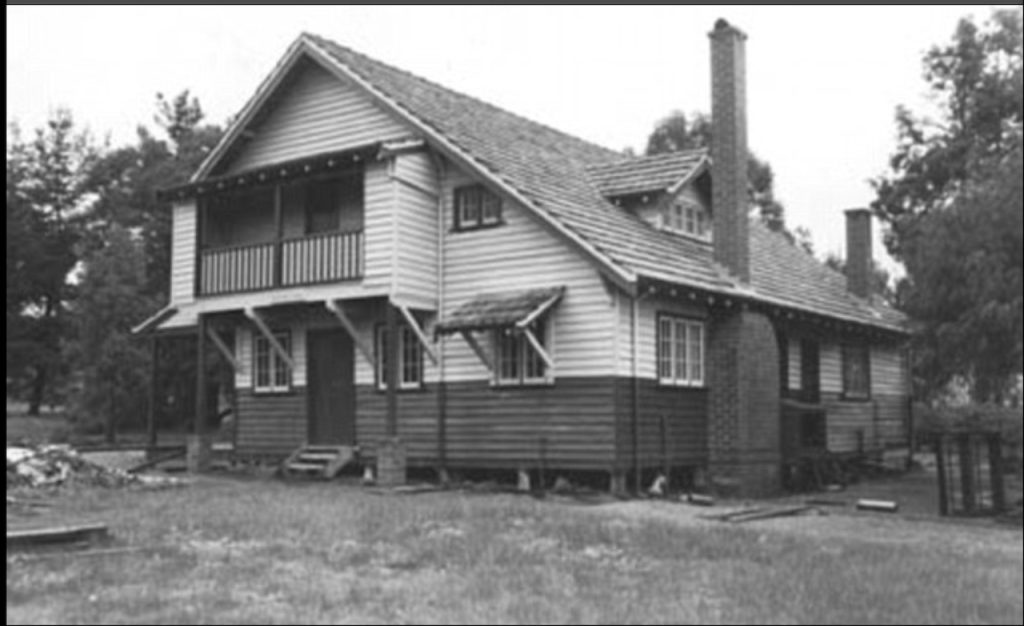
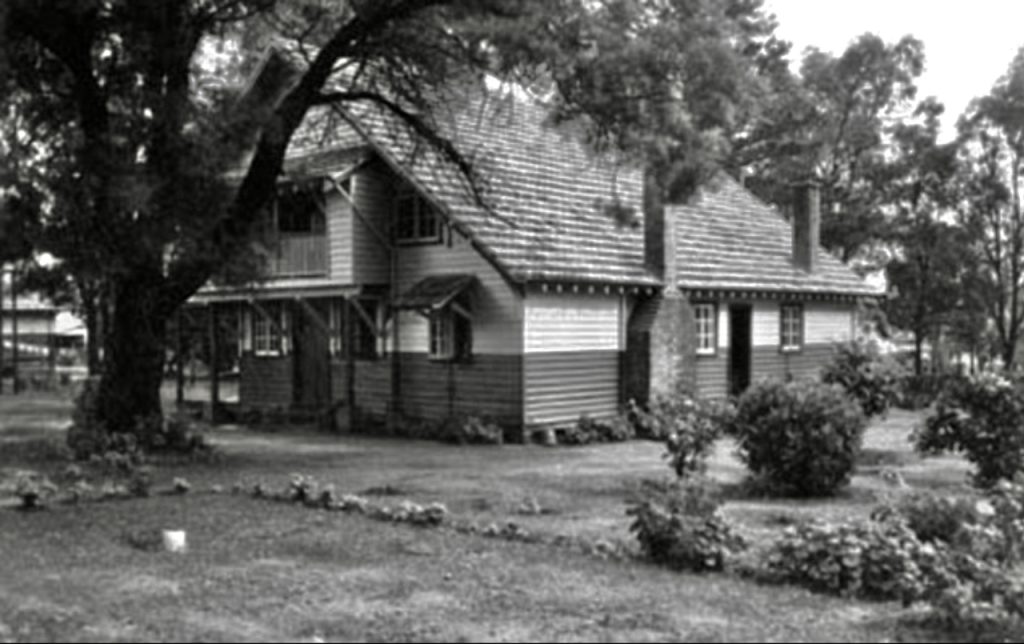
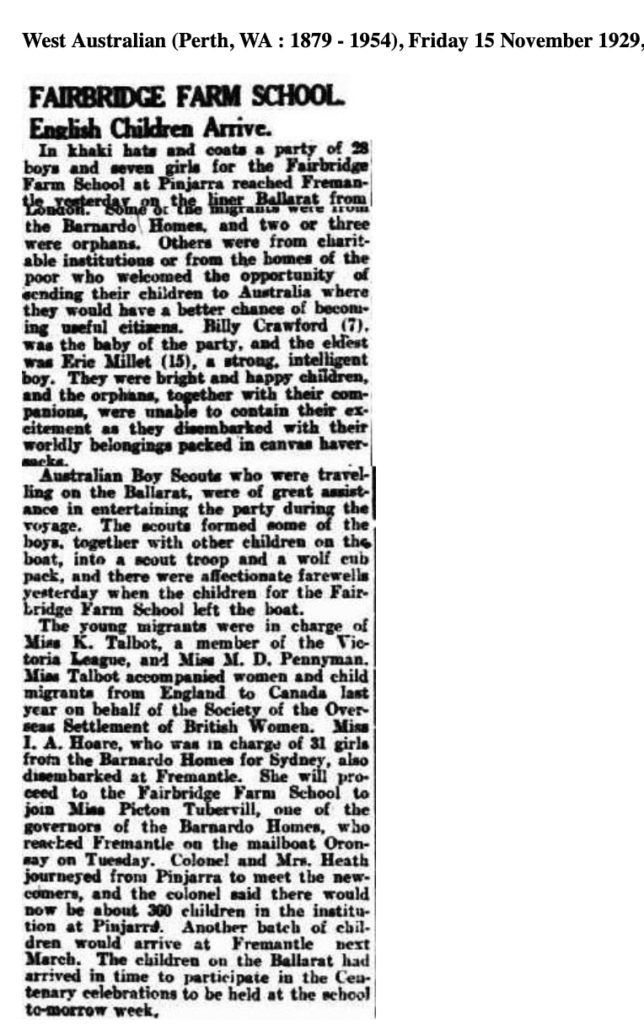
In 1933, John aged 10, arrived at Fremantle, Australia, in a group of more than 50 children from the Child Emigration Society, en route to Fairbridge Farm School, Pinjarra, Australia. He was placed in Rhodes cottage.
He is remembered for his outspoken attitude and on one occasion for fighting to have justice prevail at Fairbridge. John ran away from the farm because he missed his foster family but was returned. John was a fairly plain-spoken lad who retained the characteristic of writing how he speaks. He was always determined and very honest and open. He didn’t shirk demanding tasks.
He became involved very early with music lessons on the trombone which were given by the head cook and, later, becoming involved in the boys’ brass band.
John left Fairbridge in September 1938 to work on Monty House’s farm.
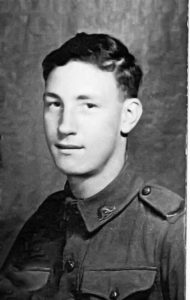
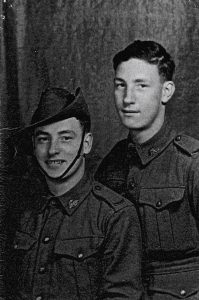
John WX14836 enlisted, joining the 2/4th MG Battalion ‘A’ Coy.   He was taken a prisoner of war taken at Singapore, taken to the Burma/Thailand railway then onto Japan where he was slave labour on the docks at Kobe. He wrote a book ‘Summer Will Come Again’ on his experiences which was translated into Japanese and distributed among schools in the Kobe district.
In 2004 John was invited by the Japanese Government to visit Japan as a guest of honour to share his story as a P.O.W. in the Japanese concentration camps. John was able to speak to many Japanese young people about the challenges he faced and how he overcame them. This was a very special time for John and helped him in putting that traumatic period in his life to rest. John was honoured to have the University of Japan reprint his book ‘Summer Will Come Again’ in Japanese so the young people of Japan could learn from his experience.
John was an early member of the Western Command Band serving 1950 to 1967 up to Corporal, with a stint at the School of Music as a Brass Instructor.
After the war, he decided to discard his association with Jack Ramsbottom and resume his life with the legally acquired name of John Lane.
John Lane was also a well-known author of another book, ‘Fairbridge Kid’ an outspoken account of his days spent at the former Pinjarra boarding school for English orphans. He said “For most of us Old Fairbridgians, we were the rescued children. Most of us were really grateful. It gave us a life. We would never have had a life back in England.”
In the early 90s John’s passion for Fairbridge burned strong and his desire to tell the story of Kingsley & Ruby Fairbridge culminated in him developing and running heritage tours at Fairbridge Village for many years.
In 2004 John’s health was deteriorating to the point where his voice was no longer able to cope with speaking publicly to large groups so he, at his own cost, produced a DVD called ‘Fairbridge – The Vision Splendid’ to ensure the story or Fairbridge would not be lost. In producing the video John commented “Personally, I regard my selection to go to the Fairbridge Farm School as having given me an opportunity for the fulfilment that otherwise would not have been available in the ‘Old Country’. For this I am eternally grateful. I join the majority of Old-Fairbridgians who remain ever mindful of the heroic struggle, tenacity and dedication expounded by Kingsley and Ruby Fairbridge in establishing their Farm School against enormous odds and almost insurmountable difficulties.”
While not being well enough to speak to large groups John would still take time out to come out to Fairbridge to share his personal story to the Fairbridge Kids of today and to encourage them through his own story that from difficult circumstance, with support, you could succeed. John was very proud that the vision of Kingsley still continued on today as Fairbridge worked to help young people in need reach their full potential. Just a few days before he passed away his wife Ronda had brought John out to Fairbridge Village and he again commented on the importance of keeping Kingsley Fairbridge’s vision alive.
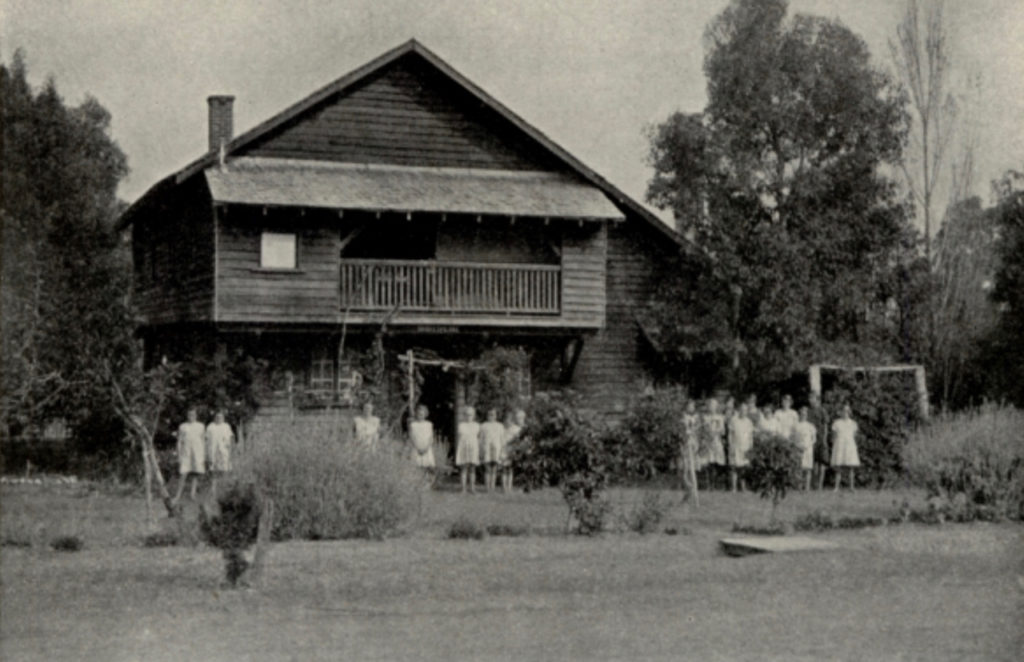
In 2005, John’s dedication turned to the construction of a replica cottage at Fairbridge Village. John dreamt up the project as a dedication to his foster mother in England, Rosa Nobes, whom he fondly remembers as being the only mother figure he truly knew as a child. Before arriving at Fairbridge, at the age of two John had been placed into the care of Dr Barnardo’s Homes near London, and soon after went to a foster family in the idyllic rural Cotswolds for six years. His time there, with foster mother Nobes, he remembers as the happiest years of his life. With John and Ronda funding a lot of the project themselves, the cottage replicates the one in which he lived in during his stay at Fairbridge. Not only is the cottage a dedication of his love for Rosa Nobes but also a symbol of John?s admiration for her lifetime of devotion to foster care. His dream became a reality in December 2007 as the Rosa Nobes Replica Boys Cottage was officially opened by the Governor of Western Australia.

John was awarded with the title of Peel Senior of the Year in 2006.

His books are for sale through the shop at Fairbridge and are still available through local and online bookshops.
John died in his sleep in the early hours of Tuesday, 24 June, 2008 at the age of 86. He had been in a Nursing Home for a few weeks. His Motor Neuron Disease condition meant that he was not feeling any pain and for some time he had been carrying a broken shoulder, sleeping on it and doing everything as normal. John was always stoic and upbeat even to the end. His life was celebrated at a gathering of 150 of John’s family and friends held at the Old Fairbridgians Clubhouse at Fairbridge Village in Pinjarra on June 28, 2008.’
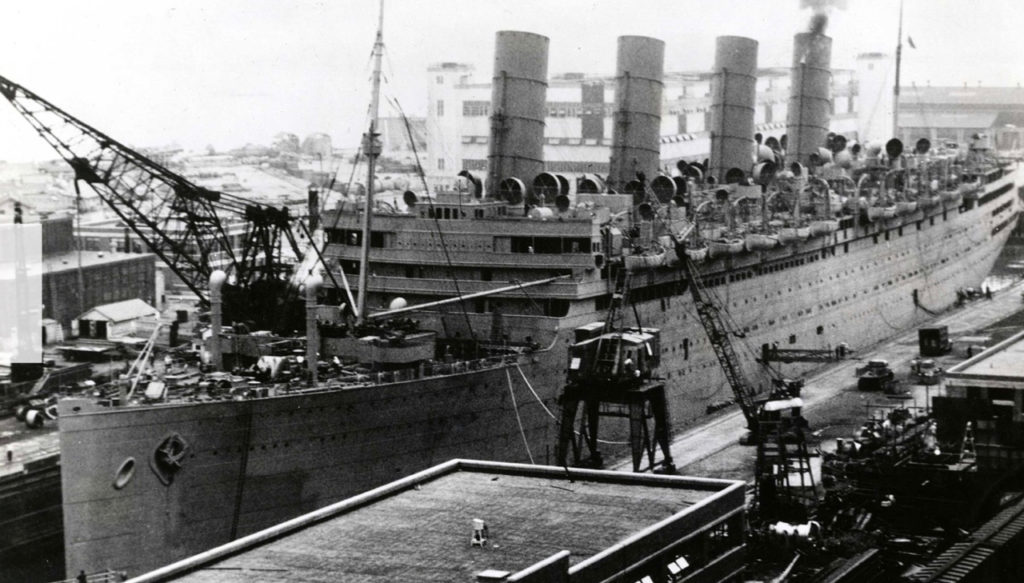
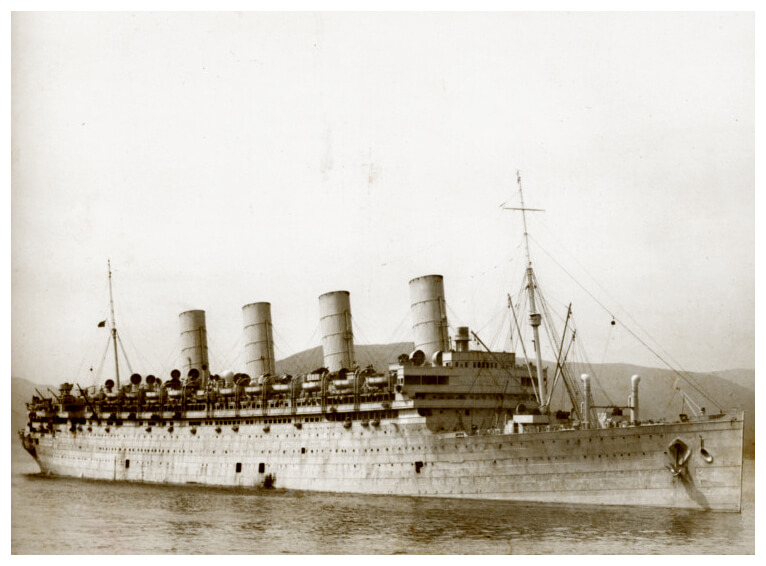
 

AWOL ‘Aquitania’ Fremantle – Formation ‘Blackforce’ Java – Central Story

The ‘Aquitania’ Incident

Fremantle & 2/4th Machine Gunners left
in Java 1942


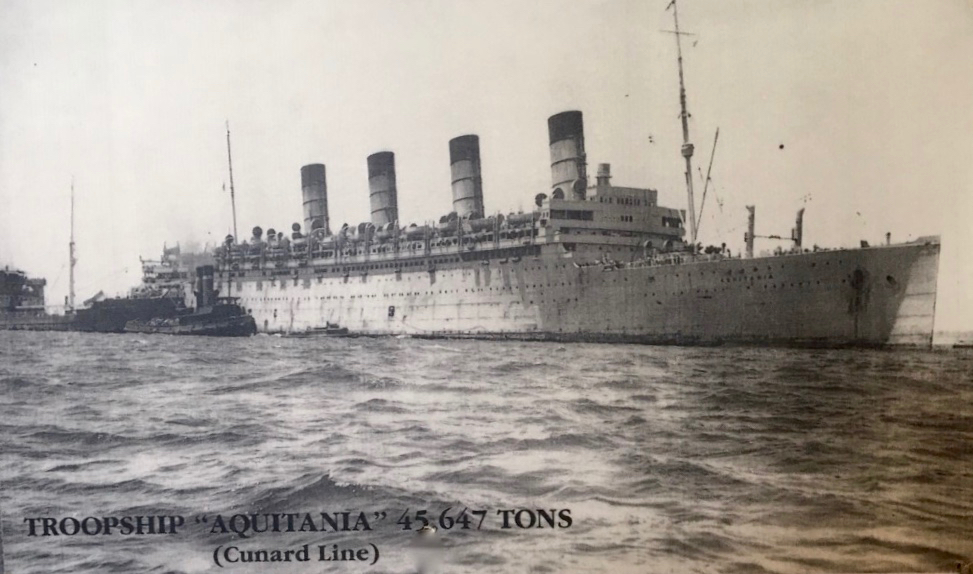
‘Aquitania’ Boston Naval Yard, 1942


In ‘Ghosts of Khaki’ Captain Archie Thomas WX3424 wrote of their departure from Sydney for Fremantle and ultimately Singapore.
Saturday 10t January 1942:  Paraded for an inpection by Lord Gowrie.  The reinforcement troops were now aboard as were some sailors, airmen, nurses and civilians returning from Malaya returning to join the Malayan Forces.  A lot of our equipment that had been left behind on the Marella and the Westralia during transhipment to the Aquitania had been replaced by Eastern Command.
We sail at 14.00 hours our escort HMAS Canberra.
Sunday 11th January 1942:  Very Calm day.  Church Parade. Passed very close to Wilsons Promontory.  Received our embarkation comforts today – pair socks, pair of stockings, 3 handkerchiefs, packet of razor blades, toothpaste and packet of barley sugar.
Monday 12th January 1942:  We are now well into the bight – sea calm, weather cold.  Instructions on the Bren gum and an introduction to the Tommy Gun (Thompson Sub Machine Gun).
Wednesday 14th January 1942:  Ship is rolling a bit, I think we are now approaching the Leeuwin.  We will be in Fremantle at 8 o’clock tomorrow.

______

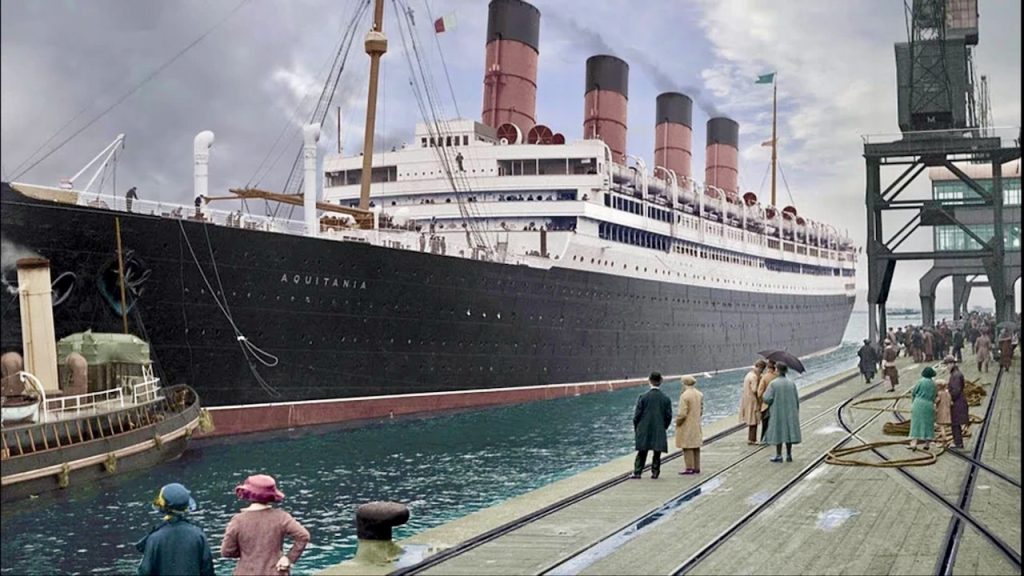
The ‘Aquitania’ sailed into Gauge Roads from Sydney 15th January 1942 carrying large numbers of Australian reinforcements  who would end their journey at Singapore (they did not know their final destination until reaching Fremantle).  Included onboard was 8th Division’s Western Australian raised 2/4th Machine Gun Battalion.  They had been training at Woodside, South Australia  and more recently Darwin – at that time the men believing they were to be sent to  middle east – they had been training for this desert warfare.
Please read further about ‘Aquitania’ picking up survivors from sinking Komoran following her ‘altercation’ with Sydney November 1941 off Western Australian coastline


Please read details of the ship ‘Aquitania’

Also read West Australian journalist Athol Stewart’s story of Aquitania & 2/4th, published 1945 Midland Newspaper
The troops were very hopeful of leave to see their families and loved ones whom they had not seen for at least 6 months, before they went to fight who knows where? This thought was sadly quelled when receiving instructions “No Leave” would be provided to any soldier at Fremantle.  ‘Aquitania’ would only stay overnight to load further provisions and reinforcements for 2/4th.
Ship Staff Officer, Major L C Allen and the Captain of the Day were responsible for posting guards and sentries.  An anchorage guard of two Officers, three Sergeants, three Corporals and 30 privates was mounted immediately ‘Aquitania’ dropped anchor at 8.30 am on 15 January 1942.
The Commanding Officer Troops on convoy “MS 2” was Col Chas H. Lamb.   Col. Lamb promulgated orders that during the Fremantle stopover, no leave was to be granted to the troops on board ‘Aquitania’. These instructions were issued to Lt-Col. M J Anketell and the other group commanders.
When advised of the situation Lt-Col M J Anketell said that he did not expect trouble from the men of his battalion!
A guard from Western Command also embarked for the duration of the stay at Fremantle.  As launches and tugboats towing lighters came alongside, men appeared on deck in readiness to go ashore.
Earlier,a rumour had circulated amongst the troops that the ship’s company had been granted leave until 1300 hours the following day.  This of course proved to be false as ‘Aquitania’ was under orders to weigh anchor at 1100 hours, the next day on 16 January.  With trouble looming, the guard was doubled on exits and gun ports and all Officers and NCO’s not on essential duties were placed on picquet duty.  The strengthening of the guard was to no avail as by 1030 hours approximately 40 troops had managed to squeeze out of the portholes and scramble down hawsers.
The first wave of ship breakers were obviously determined to get ashore and by their actions brought home the reality that a riot and possible bloodshed could ensue.
The launch with the first ship breakers compelled the helmsmen to take them ashore, a request he duly obliged despite a call requesting the Navy to intercept the launch.  Orders were cabled to the Military Police and the Garrison Battalion Guard ashore to form a reception committee and take the first wave of ship breakers into custody.  This military manoeuvre, like the naval plan, did not eventuate and a request to the tug masters not to tow the lighters ashore also proved useless.
Seeing the first wave of troops go ashore appeared to encourage more on board  to try their luck at scaling down hawsers and ropes onto lighters.  Officers were instructed to go onto the lighters and to plead with the men to return to the ship, but by this time hearts were ruling minds as many men steadfastly refused to budge.  Approximately 1,300 troops including, it is believed, more than half of the 2/4th MGB broke ship that day and proceeded ashore.  Strong shore patrols of Western Command personnel with a large proportion of motor transport patrolled the Fremantle area, Perth city and suburbs during 15 and 16 January with the result that about 150 troops were apprehended  and returned to the ‘Aquitania’.
On the 16th between 0700 and 1030 hours another 650 troops returned to the ship.  When the ship was due to sail at 1100 hours  there were still 500 troops absent, however between 1030 and 1330 hours another 350-400 troops returned onboard.  Some of these men had made it back to Fremantle wharf and been shepherded out of harm’s way by the troops of the Garrison Battalion Guard and pointed in the direction where they could find transport out to Gauge Roads.
Others were not as fortunate and were apprehended by the M.P.s.  Many were assured they would be ferried back out to their ship.  Unfortunately for the ship breakers the M.P.s were under orders.   Their motives were not in the troop’s best interests as they were taken into custody and given a cell for the night at Fremantle Prison.  The prison was being used as a detention barracks for the AIF as all the civilian inmates had been relocated to Barton’s Mill Prison.
The final tally of 169 imprisoned 2nd AIF  personnel consisted  of 81 Sydney reinforcements and 88 2/4th machine gunners.
Partly compensating for the loss of these men from 2/4th were 145 reinforcements for the battalion who had travelled overnight from Northam Army Camp.  This group included 6 Officers, 4 Sergeants and 134 other ranks – who would become ‘E’ Company.
However when the ship pulled up anchor later on 16th January there were 93 men from 2/4th AWOL.
Please read the story of 2/4th boys who headed to the city for a last drink on Western Australian soil
(Their reasons were varied  – some had been imprisoned at Fremantle  unable secure release,  a truck carrying a number of men from the country region west of Perth hills had broken down)
The above information is from ‘Colour Patch’ by Murray Ewen.  Ewen wrote in his book ‘That is the story as it occurred and one that has been recounted faithfully utilising official records.  (MPO729/7 File 42/422/68 Western Command Convoy “MS2” National Archives of Australia.)
Amongst those men who went AWOL and managed to return before ‘Aquitania’ sailed included Bert Norton, John and Jim Gilmour, Clarrie and Jeff McDonald, Jim Elliott and Jim Dore just to name a few!
Many of those who were unable to  reboard ‘Aquitania’ were arrested at the harbour by Military Police who were waiting with vehicles.  The MPs took men to Fremantle gaol – even though it was obvious they were trying to board ‘Zepher’ to reach ‘Aquitania’.    Losing 90 well trained machine gunners was a huge loss to the Battalion. There was a lot of anger about this incident.  Nobody knew who gave the order to the MPs.

John Gilmour wrote in his book ‘All in My Stride’ ……

with 2/4th MGB on board ‘Aquitania’ as ship sailed to Fremantle to anchor at Gauge Roads.
‘It had been more than 6 months since we left Perth.  As ‘Aquitania’ prepared to pick up supplies and more troops the last straw for the 2/4th MGB was to be told there would be no shore leave.
Some orders are just too mean to be followed. 
The men knew it was possibly their last chance to see their loved ones before they went to war.  When the barges came out we jumped ship by the dozen and in most cases it was a jump of between 3 and 5 metres.  The skippers of the barges were well paid for cooperating and for them the choice was simple:  either head back to the wharf or risk sinking because the longer the barge stayed alongside the more soldiers jumped aboard.  Some men were climbing through the portholes to jump.
An officer pulled his revolver on us and yelled “Stop it”. 
He got a kick in the shins and his revolver dropped overboard into the ocean.  There was no way he could identify the culprit in that seething mass of men scrambling for the opening at the side where the supples came aboard.  The men were in no mood for obstruction and the officer was lucky he didn’t go overboard with his revolver.
My brother Jim and I jumped on to a water barge where we were soon joined by Clarrie and Jeff McDonald, Jim Elliott and Jim Dore. Once on the wharf we split up and went our separate ways knowing we had to be back the following day to sail away.
It was grand being home, even for a few hours. Perth was full of soldiers because many troops from the Eastern States had never been to Perth and they too had jumped ship to see the Western Australian capital for the first time and maybe the last time. Who could know what the future held for them in those circumstances?
Getting back onboard the ‘Aquitania’ the next day was tricky. The military police were rounding up all the men and taking them to Fremantle Gaol. Luckily my father a Corporal was a guard at the wharf and was on duty when we returned. He helped me get on the last launch, accompanied by Jeff and Clarrie, before ‘Aquitania’ sailed. By the time we got out to the ship, she was hauling her anchor in and we had to climb aboard using a rope ladder, not any easy feat because the ship was spinning around with the drag on the anchor.
Back on board, some of the men who had been drinking decided it was time for a swim. They dived in from the deck despite a warning from the crew that sharks had been seen scavenging on the ship’s wastes. The departure was delayed while the crew coaxed the swimmers out of the water and up the rope ladder. Being somewhat under the weather this task seemed to take forever.
One of the swimmers, Wally Kenney, lived in Fremantle and was a member of the 2/4th.
I could understand why he took that farewell swim. Fremantle people generally have a powerful bond of affection for their home city and the clean, flashing waters of the ocean send them a cooling wind, the ‘Fremantle Doctor’ on hot summer afternoons. Wally was taking a last lucky dip in the sources of his city’s sanity during what might turn out to be his last summer. Any West Australian will tell you that such behaviour is fully comprehensible. The war would still be there tomorrow!
So many of us had gone ashore the admission of guilt was voluntary. There were people who would not own up but I wasn’t one of them, and for my sins I received the only red mark in my pay book. I was fined a few days’ pay but proud of it (some lost their stripes).
The ‘Aquitania’ took us to the Sundra Straits where we transhipped to small Malaysian freighters which took us on to Singapore.”


From Bert Norton
‘We were told that there would be no leave ashore as troops were required urgently in Malaya. Under those circumstances most agreed okay that is the way to run a war. Late in mid morning we saw crew members going ashore and were told they had been granted 24 hours leave. The ship’s captain requested Western Command to grant us leave but, no leave. We were still under Eastern Command who, when asked said “no leave”. Troops thereupon decided to go AWOL. Climbing down ropes and ladders and out portholes on to water lighters tied up to ship. The lighter I was on pulled into wharf. On the wharf was a C.O. of the local Garrison Battalion who didn’t look too happy at being there. They were WWI Veterans and were sympathetic. Neither were we very happy as it looked as if there could be trouble. Their C.O. called down to us “are there WA men down there?” and were told yes, we are all from WA. Probably 50% were, the rest probably including the Convoy Dodgers who came aboard in Sydney. He told us to come up on to the wharf and fall in behind his men. He then marched us into the street and said “off you go and be back here tomorrow morning.” A Mills and Wares delivery van pulled up in front of us, the driver who offered us a lift took about 50 of us, a standing load and as I was the last on asked him to drop me at the corner of St Geo’s Tce and Milligan Street intersection. It was only a few minutes walk down Spring Street and along Mounts Bay Road to my parents’ home at 210 Mounts Bay Road. I stayed with them for an hour then to Barrack Street jetty to catch ferry to Coode Street. The ferry master told me the M.P.’s had been stopping all service men and checked for leave passes and advised me to hide my Colour Patch on hat by turning hat band inside out which I promptly did. Home to Thelma at 301 Suburban Road which is now Mill Point Road, for the night. Next morning Eddie Pummel (Battalion’s bootmaker) came with his wife Audrey who was a friend of Thelma’s to see if I had got ashore. He said that he heard M.P.s were arresting all AWOLs and taking them to Fremantle Gaol. So I wasn’t able to cross river and say goodbye to my parents. Eddie, Audrey, Thelma and I caught the Metro Bus to Fremantle, warned by driver to keep down in seats as M.P.’s were checking buses from their vehicles. If they saw uniforms they were stopping buses and checking I.D.’s. Changed to tram at Beaconsfield, conductor gave us the same warning and said driver would drop us at nearest street to wharf. Got to wharf where R.A.N. guard at gate told us not to go down harbour side of sheds. M.P.’s had vehicles there and were arresting men and taking them to Fremantle Gaol, even though they can see that men are going back to “Aquitania” by “Zephyr”. Major Saggers spoke to me and hoped I had seen my family, he was very angry at the way M.P.’s were acting. Ninety 2/4th missed the ship because of the M.P.’s action. It was never found out which idiot gave orders to M.P.’s. to arrest men.  Ship preparing to leave harbour at 1pm, sent with other 2/4th to man ships anti aircraft Vickers Machine Gun as ship left harbour on 16.1.1942.’


Frank Thaxter was one of the 2/4th men who went AWL. His record’s say from 1400  on 15 January to 0900 hours the next morning 16 Feb 1942 – he was fined 40/- ………….we are sure Frank thought it was worth it, he would have seen his wife who gave birth to their first child in April 1942. 

Above:  Frank Thaxter

Those who were unable to re-board ‘Aquitania

Ninety-three members of 2/4th failed to re-board HMT ‘Aquitania’ on the morning of 16 January 1942. They were detained at Fremantle Prison before being transferred to Claremont Details Camp, charged (AWOL) and fined. They remained here until 30 Jan 1942.  They then embarked on ‘Marella’ to Java 12 Feb 1942. For reasons of age or health, five of these men did not continue their journey overseas.

Noel Banks from Woorooloo left the ‘Aquitania’ with others from around his hometown including Hubert Millar, Harold Steele and Clayden.  Banks said he had been unsure whether to leave, but because he was assured by others including an officer, he would be returned to the ship in time, he went over board.  The following morning the truck transporting them back to Fremantle broke down on the Greenmount hills, Great Eastern Highway.  They were stranded, unable to repair their truck or get lifts.  They would have been frantic.  There was little traffic in those days.  The men were unable to report for duty when the ship sailed next day,16 Jan 1942 for Singapore remaining in Java.

On 30th January 1942 the remaining 88 men were transported to Fremantle with their escort Officer, Lt. Colin Blakeway and boarded convoy “MS 3” departing Fremantle. The small convoy escorted by HMAS ‘Canberra ‘consisted of seven tankers destined for Palembang on Sumatra and four cargo ships for Tanjong Priok, the Port of Batavia on Java. One of the 4 cargo ships was the 7,475-ton SS ‘Marella’ carrying the machine gunners and their escort officer Col Blakeway,
The initial intention had been to put these well-trained machine gunners ashore at Java and transship them onwards to Singapore.
Before they arrived in Java, it was apparent Singapore would fall to the Japanese,  it was therefore decided the machine gunners would remain in Java.  They disembarked at Tanjong Priok on 13th February 1942 where they were moved to their barracks at Meester Cornelis, an older European area on the south side of Batavia. Batavia was divided into three sections. The northern section was the old town, the south was the new town of Weltevreden and further south of this was the new town of Meester Cornelis. The towns formed the municipality of Batavia, covering about 66 square miles.
Please read Strawb Dyson’s account of AWOL Fremantle and Bobbie Haldane

Also read about the Stowaway on board ‘Aquitania’

Please read about Tanjong Priok – Java’s harbour 1942
The machine gunners found they were then reinforcements for the Allied Forces in Java and assigned guard duties at ammunition dumps within the area of Batavia and tasked with movement of stores from the wharves to the aerodromes.
Following the landing of further Australian troops from HMT Orcade’s on 19th February the 2/4th reinforcements joined either the 2/3rd Machine Gun Battalion or 2/2nd Pioneer Battalion for airfield defence at either Kemajoran or Tjilitan Aerodromes. **** At Tjilitan many of the ‘stragglers’ absconded from their posts leaving a dangerous gap in the 2/2nd Pioneers defence.  Blackburn gave the entire Reinforcement Battalion a ‘roasting’ however 52 men refused to fight.
Australians guarding the aerodromes were amazed to find the Dutch officers left their posts each night to return to the comfort of their homes – returning in the morning!  This Dutch indifference did little to increase the troops respect of their new allies.  The Royal Netherlands East Indies Army were barely prepared to fight the Japanese.
2/2nd Pioneers history records say these men ‘were escorted from the position lest their low morale and deplorable fighting spirit contaminated their more worthy comrades-in-arms.’  Most were placed in a Dutch lock-up, returned to Australia on one of the last ships to leave Java.  The rest were officially transferred to 2/2nd Pioneer Battalion and with later fighting impressed everyone with ‘courage and steadfastness.’  From ‘The Lost Battalions’ by Tom Gilling.****
By 17th February the Japanese were rapidly closing on Java from both east and west. Singapore had fallen. The Japanese invaded Bali on 18th February and on 19th February Darwin was subjected to aerial attack. General Wavell secretly notified the British joint staff mission Washington on 18th February 1942 that Hong Kong, Malaya and Singapore had been lost to the Japanese as had most of the islands of Netherlands East Indies.

Please read about Tanjong Priok, Java’s Harbour

Tom Hampson was allotted to 2/3MGB 11 Ptn C Coy under CO Col Blakeway.
Later Hampson with 2/3 was moved near Buitenzorg and a Battalion was formed under De-Crespigny.


BLACKFORCE

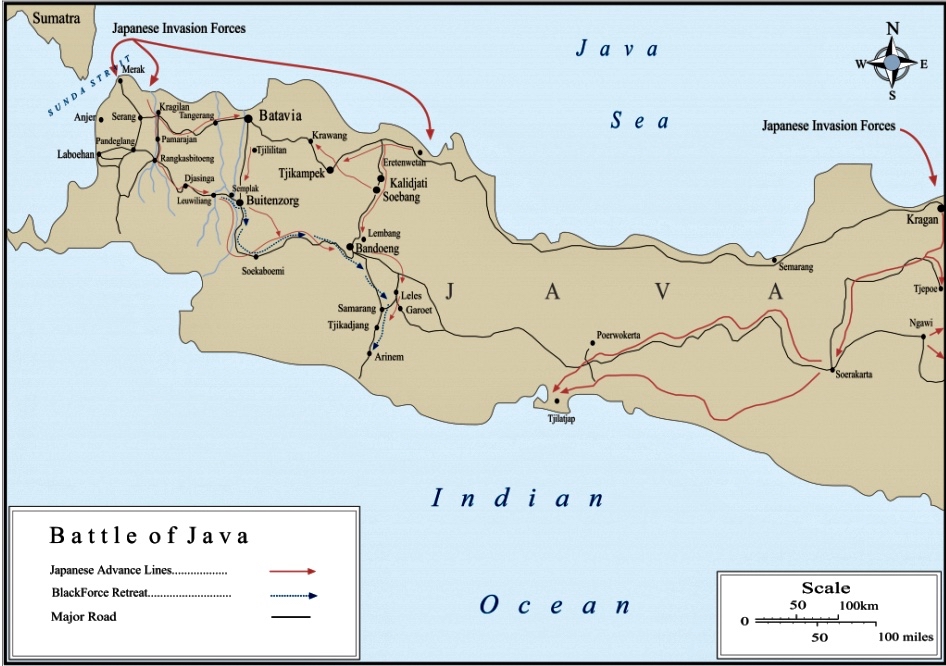
On 21st February 1942, Lt-Col Arthur Seaforth Blackburn was promoted to Brigadier and appointed to command all A.I.F. troops on Java, to be known as ‘Blackforce’. At the same time Brigadier Blackburn was to come under direct control of Dutch Commander, Chief Lt-Gen Hein ter Poorten.
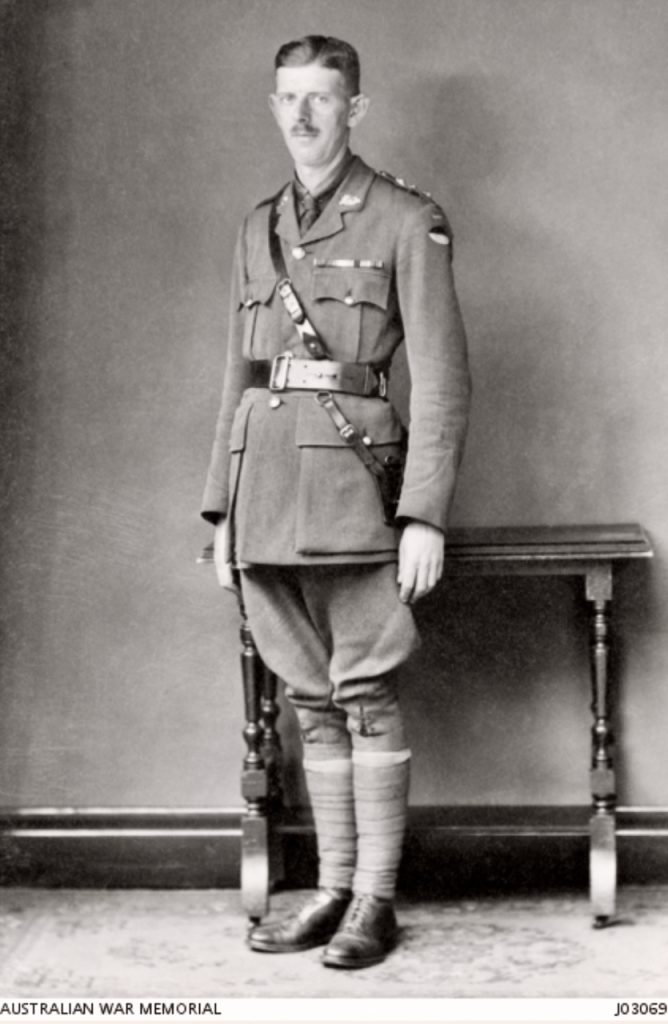
Blackburn had earned a VC as a 23 year old fighting on the Somme, France in WW1. He had earlier fought at Gallipoli.
Enlisting again in 1940 Blackburn was given Command of 2/3rd Machine Gun Battalion and fought in Syria.
He was one several senior Australian Officers not happy at being ordered to Batavia by General Wavell – the ‘Orcades’ sailed into Tanjong Priok on 17 February amidst scenes of total confusion bordering on panic. Refugee vessels of all shapes and sizes from Singapore and Sumatra bobbed around a sea of ship masts sunk by Japanese planes and there were two battle scarred British cruisers with gaping holes.
Deserters from Singapore who had been looting stores on the wharves began pelting ‘Orcades’ with tins and other items.  It is said Blackburn, described as being the ‘tall, skinny solicitor’ from Adelaide was a ‘hotheaded old so-and-so’ and threatened to go ashore and shoot them. Instead he sent an armed patrol of Pioneers ashore who sent them scurrying.
(Blackburn later had the looters rounded up and placed under close arrest.  Perth boy Bill Haskell from 2/3rd remembers Blackburn giving the deserters the option of teaming up with him or being classed as deserters when the war was over.  Those who refused were sent back to the lock-up).  At the time of organising the defence of Java, Blackburn expected little from the 180 ‘stragglers’ from Singapore – he knew their poor morale and indifferent training made their ability to fight very doubtful.  Fearing the worst he assigned them to a reinforcement draft. ****
Meanwhile most of the Australian troops remained on board ‘Ocades’  on 17th and 18th February.  They were all dead keen to leave Batavia and all the dramas as soon as possible.  It was a depressing scene.  On the 18th,  7th Division’s commanding officer, General Allen and two senior staff came onboard and held long discussions with Blackburn, presumably delivering General Wavell’s order to disembark.  Blackburn strongly argued against his men being put ashore.
On the night 19th Blackburn received orders that certain troops on board, numbering about 2,000 should be disembarked.

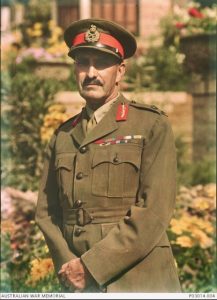
 Right:  Lavarack
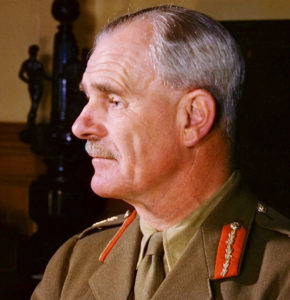
Above:  Wavell

Lavarack and other senior Australian officers disagreed with the Java disembarkation, however were ignored by Wavell.  – Blackburn’s men would defend Java’s airfields and stiffen Dutch resistance when the Japanese invasion came.
Apart from the unreliable Dutch colonial army on Java – the Australians with a few thousand RAF personnel, were now on their own!
Intelligence reports state Wavell had decided as early at 27 Jan that Singapore could not be held.  The Australian 6th and 7th Divisions were not to come to Java – and only a small division under Blackburn was to stay for political reasons, to bolster the Dutch resistance to prolong the war as long as possible!    On  27 Jan the 2/3rd Machine Gunners were still in Lebanon – their fate had been sealed prior to their departure for Australia, which is where they believed they we heading.
The men were told to disembark then re-embark 5 – 6  times before the men finally left the ship.  With all that was going on, the men could only guess and did not really know. Some finally left part of their belongings behind believing they would be ordered to stay once again. As the 2/1st Light Anti Aircraft regiment were marching off ‘Orcades’ they suddenly received orders  to get back on-board.  Darwin had been bombed that morning so the 2/1st Bofors guns were needed for ground defence in Australia.
Finally ‘Blackie’ as was endearingly called by his men, was promoted to Brigadier and ordered off the ship.  He had to obey or face a court martial.  He was too good a soldier to disobey.  Poor Bugger.
The men of the  7th Division remaining onboard with those at that time sailing back to Australia – would go on to fight in New Guinea.
2,000 downhearted soldiers trudged off  ‘Orcades’ as others boarded on another ramp to leave Java.    It was not a happy day – each man carried three day’s rations because no arrangements had been made to feed the men.  The soldiers knew they were outnumbered by the Japanese and dreaded what lay ahead.  They had no machine guns, no ammunition and no transport.
It seems so similar to circumstances on Singapore – the Australian senior command had a lot to answer for.
Wonder what Wavell reported on the men he left behind on Java?
You may recall Wavell was scathing of the Australians at Singapore, blaming them for the surrender of Singapore!
Lavarack appointed Blackburn brigadier in charge of all Australian troops on Java – 3,000 of them – sufficient for a whole Battalion.  However as was the situation at Singapore, about half this number of 3000 were non-combatant troops – engineers, cooks, drivers, clerks, etc.
Blackburn knew there to be Japanese spies (5th column) on the ground in Java and undertook in the next week or so, a ploy to give the impression to the local force (and spies) of a larger force than in reality.  He had the transport vehicles drive ‘around the blocks’  several times to give the impression of far greater numbers of troops.  Who knows if it worked.
As in Singapore, Java had too many men at the top making decisions:
Wavell – then at his his head quarters at the Grand Hotel at Lembang, near Bandung.  Blackburn met with Wavell late in the afternoon of 24 Feb 1942 at his HQ.  It was a five hour journey of 100 kms for Blackburn.   – his orders were to ‘give every assistance possible to the Dutch forces in resisting the invasion – impressing every hour gained by resistance would be of value to the Allied cause to SW Pacific in general and to Australia in particular.  Blackburn was to use his troops in offensive operations against the Japanese wherever possible.
An Australian Officer seconded to Wavell’s staff told Blackburn that Wavell had already given Java up as lost. With no substantial force on Java to command, his Java command would be dissolved and Wavell would fly to India to take up a new role Commander-in-Chief India!
Wavell had messed up with Singapore and now Java.  There was no-one to answer to!
Churchill must also take responsibility.  In Burma, Wavell was replaced by Mountbatten in 1943.  His attempts to organize the liberation of Burma during the spring of 1943, his troops led by General William Slim, failed in several attempts to drive the Japanese out of the area.
General Lavarack, Australian 7th Division Commander – should he have stood firmer against Wavell.  He said to Blackburn he would arrange for Blackforce to be evacuated by ships – this never eventuated.  Everybody had moved onto bigger things by then.
Major General Allen – Commanding Officer of parts of 7th Division.
British Major General Sitwell – Wavell’s anti-aircraft commander – Blackburn and his troops were placed under his command (this order came from the British Chief of General Staff, South West Pacific Command, General Playfair in Washington.)
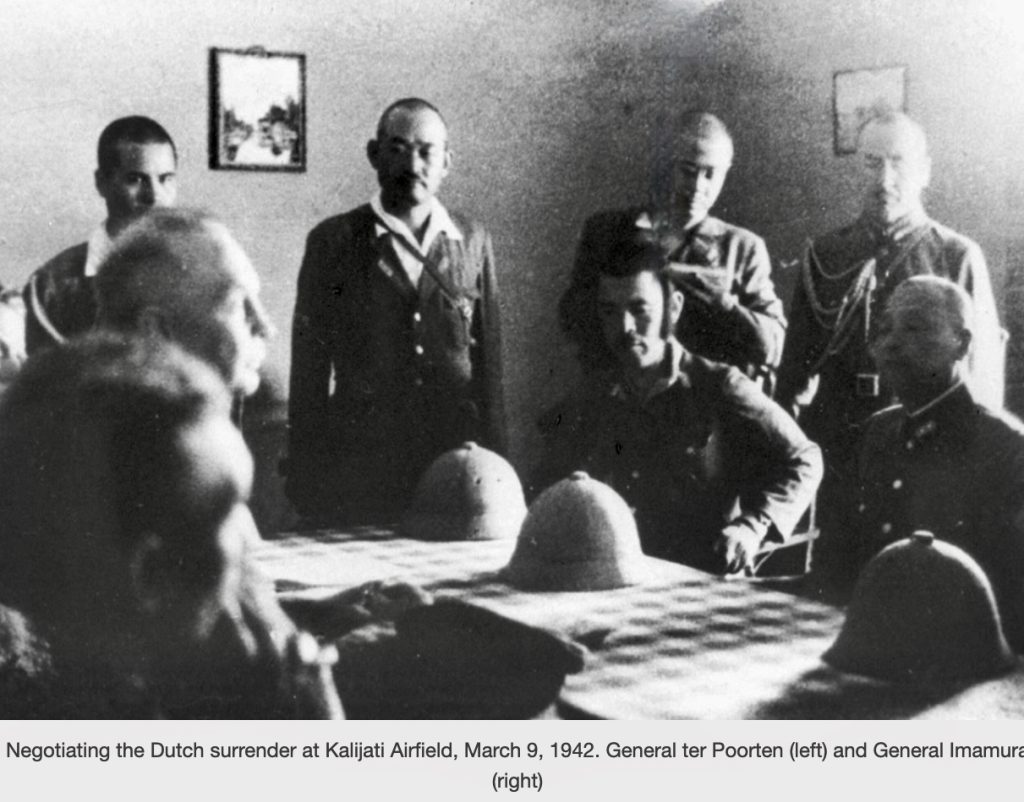
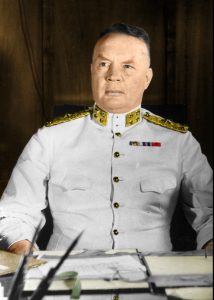
General ter Poorten, Dutch Commander-in-Chief – local Dutch Commander  and the appointed commander of land forces in the American-British-Dutch-Australian Command, a short-lived unified command of all Allied forces in South East Asia – to whom Blackburn was to support and report to.
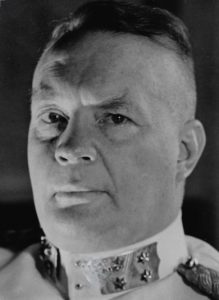
**Hein ter Poorten (21 November 1887 – 15 January 1968) was a Dutch military officer. He was commander of  Royal Netherlands East Indies Army in World War II. Ter Poorten was also Allied land forces commander in the American-British-Dutch-Australian Command on Java during early 1942.

Below:   Blackburn WW1

Blackforce consisted of approximately 2,900 Australian, British and American troops. Organised on a brigade basis Blackforce consisted of three battalions.
No. 1 Battalion – Total Strength 700
710 troops 2/3rd Machine Gun Btn under command of Lt-Col Lyneham
One section from 2/6th Field Company – 222 engineers.
One Officer and a number of other ranks ex-Singapore and a proportion of reinforcement draft from Australia.
No. 2 Battalion – Total Strength 900
937 troops with 2/2nd Pioneer Battalion under command of Lt-Col J.M. Williams
‘C’ Company No. 10 Platoon, 1st Australian Corps Headquarters Guard Regiment as well as those troops ex-Singapore and the reinforcement draft ex-Australia not allocated to other two Battalions.  The guards platoon included WW1 veterans in their 4o’s and 50’s who lied about their age when joining up – found out later, they were assigned to headquarters units.
This 3rd Battalion was formed 28th February when all surplus reinforcements were allotted to this unit. This included Lt. Colin Blakeway and 40 of the 87  X 2/4th machine gunners that were transferred across from 2/3rd Machine Gun Battalion on this day.


On 1st March Japanese troops simultaneously began their invasion of Java at four different points.
Strategic places like Bandung, Batavia and Surabaya were invaded by two invasion forces totalling 45,000 Japanese troops accompanied by superior Japanese air power.    Following 8 days of fierce fighting and the loss of 1,000s of lives, the Allied Forces surrendered.  The Australians were not happy, they felt the Dutch Forces had’ rushed in’. The Allied troops were advised any further resistance would result in instant reprisals against the civilians.  The Japanese terms of surrender were unconditional.  The Allied POWs were made up of Dutch, Australian, American, British and Naval personnel from Australian and American ships who had survived the sinking of their ships.


Troops retained to defend the Dutch airfields on Java, Batavia, Java, 19-02-1942

Members of ‘Blackforce’ in preparation of invasion of Java Feb/March 1942.


2/4th MGB Personnel AWL Fremantle,
When ‘Aquitania’ Sailed from Fremantle 16 January 1942

Total 88 men sent Java 1942

24 men died of illness/lost at sea
Including Five Men died of illness in Java – several others remained Java throughout war.
Three men were evacuated  ex Java to Ceylon then to Australia
WX8245 Adams E.T. (10 Pln) Java Party No. 6 P Battalion.  With ‘Rashin’ Maru Party to Japan, recovered Niihama, Japan
WX7064 Allpike B.W.J. (Btn HQ). Java Party No. 6, O Battalion to Thailand.  Recovered from Thailand.
WX7905 Annesley F.J. (HQ Coy 2 Pln)      Java No. 4       Died ‘Rakuyo’ Maru sinking in South China Sea Sept 1944
WX9367 Baker John Robert  (6 Pln)  Java Party No. 4 Black Force to Burma.  Recovered Thailand.
WX8682 Baker W.R.S. (‘B’ Coy 7 Pln)         Java No. 4       Died ‘Rakuyo’ Maru Sept 1944
WX10343 Banks N.E. (‘C’ Coy HQ) Recovered Sumatra Railway.  MUNDARING TRUCK BREAKDOWN.
WX7587 Barbour T.  (11 Pln) Java Party No. 6 O Btn.  Leg amputation Thailand.  Recovered from Thailand.
WX7164 Barker F. (11 Pln) Java Party No 4, BlackForce to Burma end of Railway.
WX6970 Barnes A.J. (4 Pln) attached 2/2 Pioneers.  Java Party No. 4 William Force to Burma end of Railway.
WX10791 Beattie A.R. (4 Pln) Java Party No. 6, P Battalion to Burma-Thai Railway Thailand, Recovered from Omuta Camp, Japan.
WX8766 Booth Harold Vernon (‘B’ Coy 8 Pln) Java No. 22     Died Apr 1944 Pakan Baroe, Sumatra aged 37 years.
WX7600 Bousefield (13 Pln) Java party No. 4, Williams Force to Burma end of railway.  Worked with William Force No. 1 Mobile Force. Recovered from Thailand.
WX7333 Burns A.J. (8 Pln) Evacuated sick to 2/12th AGH Ceylon 4 March 1942.  Disembarked Fremantle ex Ceylon 6 May 1942.  Served with 43rd Water Transport Company.
WX6155 Byrne L.P. (10 Pln) Admitted to hospital 18-25 Feb 1942.  Embarked HM Hospital Ship ‘Wuseh’ on 25 Fe 1942 to Colombo, Ceylon.  ‘Wuseh’ sailed from Singapore 9 Feb 1942 left Java crowded with patients.
WX10365 Caldwell (‘B’ Coy HQ) Remained POW at Java throughout war.  Recovered from Java.
WX9551 Carroll F.V. (10 Pln) Remained POW Java. Recovered Java.
WX8240 Carter D.N.H. (9 Pln) Java Party No. 6 O Battalion to railway in Thailand.  Recovered from Ohama POW  Camp, Japan.
WX10354 Clayden H.T. (Buck)  (11 Pln) – MUNDARING TRUCK BREAKDOWN.  Clayden had older brother Syd Clayden who also survived.   Java Party No. 4 Williams Force to Burma. Selected to work in Japan with ‘Awa’ Maru Party, but remained French Indo China.  Harold was recovered from French Indo China.
WX16369 Cocking A.J. (8 pln) Java Party No. 4, Williams Force to Burma end of Railway.  Sent to Japan on ‘Rakuyo’ Maru – survived ship sinking and was rescued by US submarine four days later, USS Pampanito.   Arrived back WA end 1944.
WX10048 Cosson E.J. (1 Pln) Ted Cosson with Java Party 5a, Robertson Force to Burma end of Railway. Recovered from Thailand.
WX8855 Davies David John  (HQ Coy 2 Pln)       Java No. 4.  Evacuated sick to Thailand. Died Jan 1944 Kanchanaburi, Thailand aged 33 years.
WX9310 Dickson Andrew A. (6 Pln) Java Party No. 4 Williams Force to Burma.  Recovered from Kachu Mountain Camp, Thailand at end of war.
WX7299 Doyle Tom F. (14 Pln) Java Party No, 4 Williams Force to Burma.  Evacuated from railway Burma.  Seriously ill Nacompaton Hospital Camp, Thailand 29 April 44 to 9 Jan 1945.  Recovered from Thailand.
WX8830 Drummond A.McD. (‘B’ Coy HQ)  Java No. 4       Died ‘Rakuyo’ Maru sinking Sept 1944 aged 33 years.
WX9266 Dunwoodie W.  Bill (6 Pln) Java Party No 6, P Battalion. Recovered from Kachu Mountain Camp, Thailand.
WX9199 Farmer A.F. (6 Pln) Java Party No. 4 Williams Force.  Recovered from Thailand.
WX9070 Fielder, Charles  (12 Pln) Rangetaker.  Java Party No. 6 P Battalion.  Recovered from Thailand.
WX5132 Fisher George (12 Pln) Rangetaker.
Remained Java and recovered from there.
WX7569 Foxall Stuart Edward  (‘C’ Coy 11 Pln) Java No. 4  Party Williams Force to Burma.       Died Jul 1943 Beke Taung Hospital, Burma aged 22 years.
WX15422 Frost Basil M. (3 Pln) Java Party No. 4 Williams Force to Burma end of Railway. Selected with ‘Rakuyo ‘Maru Party to work in Japan.  However evacuated to Changi Gaol Hospital with infected leg.  Remained in Changi and recovered from here.  Lucky man,
WX9270 Fury Thomas Joseph  (‘A’ Coy 6 Pln) Java No. 4  Williams Force to Burma.       Killed air raid Thanbuyuzayat, Burma Jun ‘43 aged 35 years.
WX7595 Glass George (Btn HQ) Java Party No. 4 Williams Force to Burma end of Railway.  Recovered from Thailand
WX6980 Golden Percy (6 Pln) Java Party No. 4 Williams Force to Burma end of Railway.  Recovered Nacompaton Thailand.
WX8540 Green T.W. (HQ Coy 3 Pln)         Java No. 4       Joined ‘E’ Force at Sandakan died Jan ‘45 aged 23 years.
WX8265 Gregory W.R. (5 Pln) Rangetaker ‘A’ Coy.  Java Party No 4, Black Force to Burma end of Railway.  Recovered from Thailand.
WX6975 Ham Reginald John (14 Pln) Driver.  Java Party No. 4 Battalion Williams Force to Burma.  Recovered Thailand.
WX7123 Hampson Robert Douglas  (4 Pln)  Java party No. 4 Williams Force. Selected to work in Japan with ‘Rakuyo’ Maru Party – rescued from China Sea by US Submarine USS-Barb. Sent home late 1944.
WX15736 Hansen Robert  (15 Pln)  Java Party No 4. Williams Force to Burma.  Recovered Thailand.
WX8695 Harris William Denis (Btn HQ) Java Party No. 4 Williams Force to Burma.  Recovered from Thailand.
WX8408 Hayes A.G. (HQ Coy 2 Pln)          Java No. 4       Died Sept 1944 ‘Rakuyo’ Maru
WX7642 Henderson Clarence George (10 Pln)  Java Party No. 6 P Battalion to Thailand.  ‘Rashin’ Maru party to sail to Japan.  Recovered Saganoseki Copper Smelter, Japan.
WX7465 Holdman N. (HQ Coy 2 Pln)        Java No. 4       Killed air raid Bangkok wharf area whilst being transported on train.
WX10795 Hughes Ronald Edward  (‘A’ Coy 5 Pln) Java No. 4 Williams Force to Burma. Died Sept 1944 when ‘Rakuyo’ Maru was torpedoed and sunk by US Submarines moving around in a Wolfpack.  Hughes was 24 years old.
WX9130 Hunter Malcolm Ashton  (9 Pln) Java Party No. 6 O Battalion to Thailand.  Contracted cholera at Hintok Road Camp and survived.  Recovered from Thailand.
WX5118 Jenkins Cpl James Morgan  (‘C’ Coy 12 Pln)  Java No. 4 Williams Force  to Burma.        Died Nov ‘42 Thanbyuzayat, Burma aged 41 years.
WX7453 Jones Edgar Cheetham (HQ Coy 2 Pln)                  Died Jul ’42 Bicycle Camp, Java aged 40 years.
WX7612 Kelly Charles George McQueen (‘D’ Coy 13 Pln)     Java No. 4  Williams Force to Burma,  Evacuated to Thailand Died Jan ‘44 Tamarkan Hospital Camp aged 39 years.
WX4949 Kingswell Ronald James  (‘C’ Coy 12 Pln)            Died Mar ’42 No. AGH Bandeong, Java aged 23 years.

WX8336 Kuhl F.G. (Btn HQ) Java Party 4 Williams Force to Burma end of Railway.  Evacuated to Tamarkan Hospital Camp 21 Sep 1945.
WX7230 Lee Leslie H. (8 Pln)  Java party No. 4 to Singapore then joined Java Party 5a Robertson Force to Burma.  Recovered from Thailand.
WX15744 Lee Leslie Wallace (6 Pln)   Java Party No. 6 O Battalion to Thailand.  Evacuated sick to Tarsau 1 Sep 1943. Recovered from Thailand.
WX11316 Lewis Laurence Harold  (‘D’ Coy HQ) Java Party No 4 Williams Force to Burma.  Recovered from Ubon, Thailand.
WX7285 Love  Harrie R. (4 Pln)  Trade Group No. 1. Java Party No. 4 Black Force – sailed to Singapore however was evacuated sick to Roberts Barracks Changi and did not continue journey to Burma probably due to his trade skills.  Recovered from Singapore.
WX16341 Martin Samuel Thomas  (3 Pln)  Java Party No. 4 William Force to Burma.  Recovered from Thailand.
WX13285 Maude Jack (6 Pln) Java Party No. 4  Williams Force to Burma.  Sent to Japan with ‘Awa’ Maru party to Sendyu.  Recovered from Japan.
WX8261 McAskil Robert Ramsay  (10 Pln) Java Party No. 20. Died Sumatra Railway 28 Mar 1945.  (He missed draft to Japan due to illness – later joined Java Party No. 22)
WX9825 McLoughlin C.P. (HQ 12 Pln). Java Party No. 4 Williams Force to Burma.  Recovered from Nakom Nayok Thailand.
WX9826 Millar Hubert James (11 Pln) Driver.  MUNDARING TRUCK BREAKDOWN.  Java Party No. 4 Williams Force to Burma.  Recovered from Thailand.
WX13562 Moate Peter Joseph (‘C’ Coy HQ) Java Party No. 6 O Battalion to Thailand.  Recovered from Thailand.
WX8200 Morris William Richard (10 Pln) Storeman.  Evacuated sick from Java.  Embarked  HMT ‘Stirling Castle’ from Ceyon on 13 Mar 1942 to Melbourne arrived 28 Mar 1942.
Classified medically fit on 27 Apr 1942 was Taken on Strength with 2/3rd  MGB on 29 May 1942.
WX15746 Morrison A.E. (13 Pln) Java Party No. 4 Williams Force to Burma, then worked Thailand and recovered from Tamuang Camp, Thailand.
WX5336 Murdoch James Lewis (D Coy 15 Pln) Java Party No. 4 Williams Force to Burma.  Recovered from Ubon Camp, Thailand.
WX7645 Nicholls W.J. (HQ 1 Pln) Died 10 Oct 1942 illness Bicycle Camp Hospital, Batavia.

WX16417 Ninyette Samuel (D Coy 15 Pln) Java Party No. 4 Williams force to Burma end of Railway.  Recovered from Thailand.
WX8856 Pearce Harry Walter  (C Coy 11 Pln) Java Party No. 5 Williams Force sent to Burma end of Burma-Thai Railway.  Whilst in Thailand he was selected fit to work in Japan.  He died when  ‘Rakuyo’ Maru sank after being torpedoed by US submarines12 Sep 1944 aged 30 years.
WX8725 Pryce John Henry Lloyd (HQ 1 Pln) Signaller.  Javva Party No. 6 P Battalion.  Recovered from Kachu Mountain Camp, Thailand at end of war.
WX9059 Ramage G.R. (HQ 1 Pln) Died 23 Sep 1943 dysentery  Payathonzu 108km Camp, Burma
WX9563 Randall John (88th LAD) Butcher.  Java Party No. 4 Williams Force to Burma.  ‘Both’ Party.  Recovered from French Indo China.
WX7493 Rennie R.G.S. (HQ 3 Pln)  Java Party No. 6  P Battalion.  Died post leg amputation 4 Oct 1943 Tamarkan, Thailand.  
WX7750 Roberts Stanley Henry George  (A Coy 6 Pln)  Was returned to Australia sick and arrived Melbourne 28 March 1942.
WX16427 Robertson Donald Charles  (B Coy 8 Pln) Java Party No. 4 Williams Force to Burma end of Burma-Thai Railway.  He was recovered from Thailand.
WX5200 Robinson William Joseph  (B Coy HQ) Sel;ectd with Java Party No. 6 O Battalion to Thailand to work on Burma-Thai Railway.  Died 17 Jul 1943 dysentery Hintok, Thailand aged 25 years.
WX7939 Sawyer Clarence John (Btn HQ) Died 1 Apr 1942 dysentery at No. 1 General Hospital, Bandeong,  Batavia aged 34 years.

WX8843 Scales J. (A Coy 5 Pln) Sent with Java Party No. 6 O Battalion to work on Burma-Thai Railway in Thailand. Died  11 Sep 1943 illness Chungkai, Thailand aged 35 years.
WX7576 Simmonds Norman Edward  (C Coy 10 Pln).  Java Party No. 6 P Battalion to Thailand.  Recovered from Nakom Nayok, Thailand.
WX16424 Sing Alfred (A Coy HQ) Java Party No. 4 Williams Force to Burma end of Railway. Selected in thailand to work Japan with ‘Rakuyo’ Maru Party.  Was another very lucky man to be rescued by US Submarine UUS Sealion from
South China Sea Sep 1944 after Rakuyo Sank.  Returned home by end of 1944.
WX7893 SMITH James Stanley  (C COY 12 Pln) Lance Corporal promoted 1 Mar 1942. Java Party No. 4  Williams Force to Burma.  Recovered from Thailand.
WX8506 Smith Walter John  (88 LAD) Driver.  Java Party No. 6 O Battalion to Thailand.  Recovered from Tamuang Camp, Thailand.
WX9419 Steele, Harold William (Bill) (C Coy HQ Pln)  MUNDARING TRUCK BREAKDOWN. Java Party No. 4 Williams Force to Burma end of Burma-Thai Railway.  Recovered from Kachu Mountain Camp, Thailand.
WX9827 Stribling Reginald Harold  (C Coy 12 Pln).   MUNDARING TRUCK BREADKDOWN Driver. Java Party No. 4 Williams Force to Burma end of Burma-Thai Railway.  Recovered from Thailand.
WX8585 Vidler Cyril Jack (A Coy 5 Pln)  Java Party 5A Robertson Force.  Recoverd from Thailand.
WX15654 Walker Robert Joseph (HQ 3 Pln) Died 5 May 1942 dysentery Bicycle Camp, Batavia aged 36 years.

WX7466 Walsh, Bernard James  (HQ 3 Pln)  Driver.  Java Party No. 6 P Battalion to railway Thailand.  ‘Rashin’ Maru Party to Japan.  Recovered from Omuta Camp, Japan.
WX8356 Watkins, Walter Stafford (Btn HQ)  Java Party No. 3 Williams Force (advance party with Lt. C.J. Mitchell) to Burma.  Recovered from Thailand.
WX10762 Watters Tom Murray  (HQ 3 Pln) Remained Java and was recovered from there.
WX7502 Wayman Tom S. (HQ 3 Pln) Driver. Java Party No.  6, P Battalion to Thailand.  ‘Rashin’ Maru to Japan.   Recovered from  Niihama, Japan.
WX10049 Wilkinson Mervyn Wilfred  (HQ 1 Pln)  Java Party No. 5a, Robertson Force  and later attached to Williams Force.  Recovered Thailand.
WX1138 Williams A.G. (C HQ) Cook, Java Party No. 4 Williams Force to Burma.  Recovered from Thailand.

Please read further for overview of Java POW Camps

Below:  Blackburn


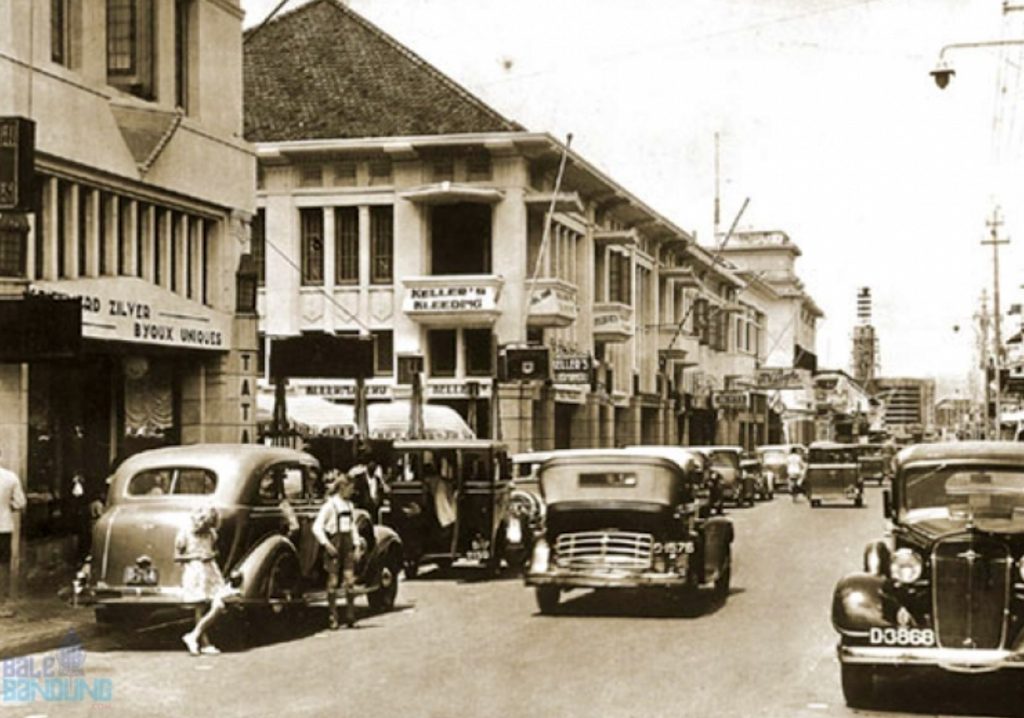
Central Bandung, 1941

Please read further about ‘Blackforce’

Below:  Blackburn with Blamey

Murray Ewen wrote what every 2/4th soldier thought – even after the war.
The question must be asked ‘why 88 trained machine gunners and support staff who were all trained as infantry were kept behind bars as ‘Aquitania’ weighed anchor and set sail for Singapore?’
Whether the soldier was a driver, cook or a member of the Vickers Machine gun section, the Battalion’s fighting strength was effectively weakened.  Someone had issued the order to restrain these men from re-boarding their ship but this  person  remains a mystery to this day.


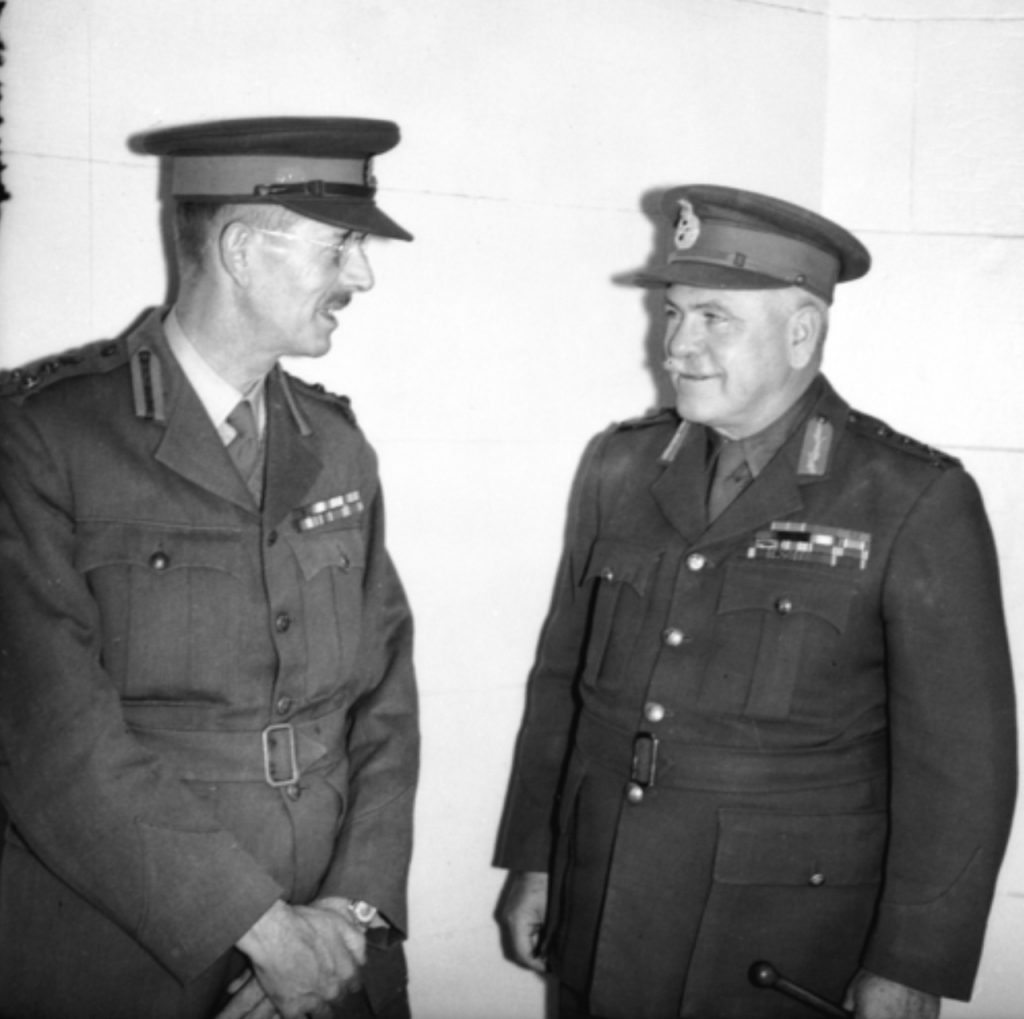
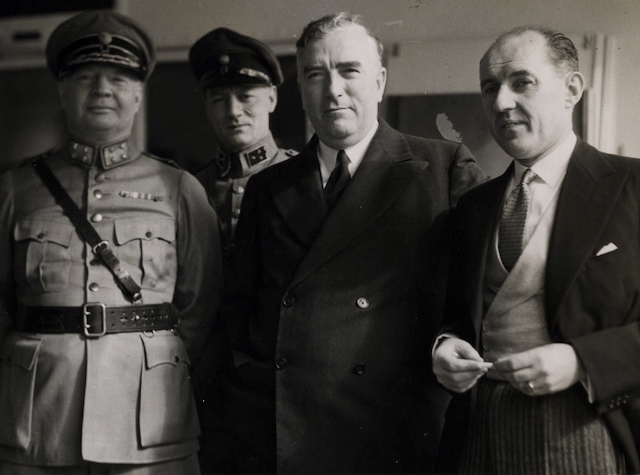
Above:  Left General Hein ter Poorten with Robert Menzies.

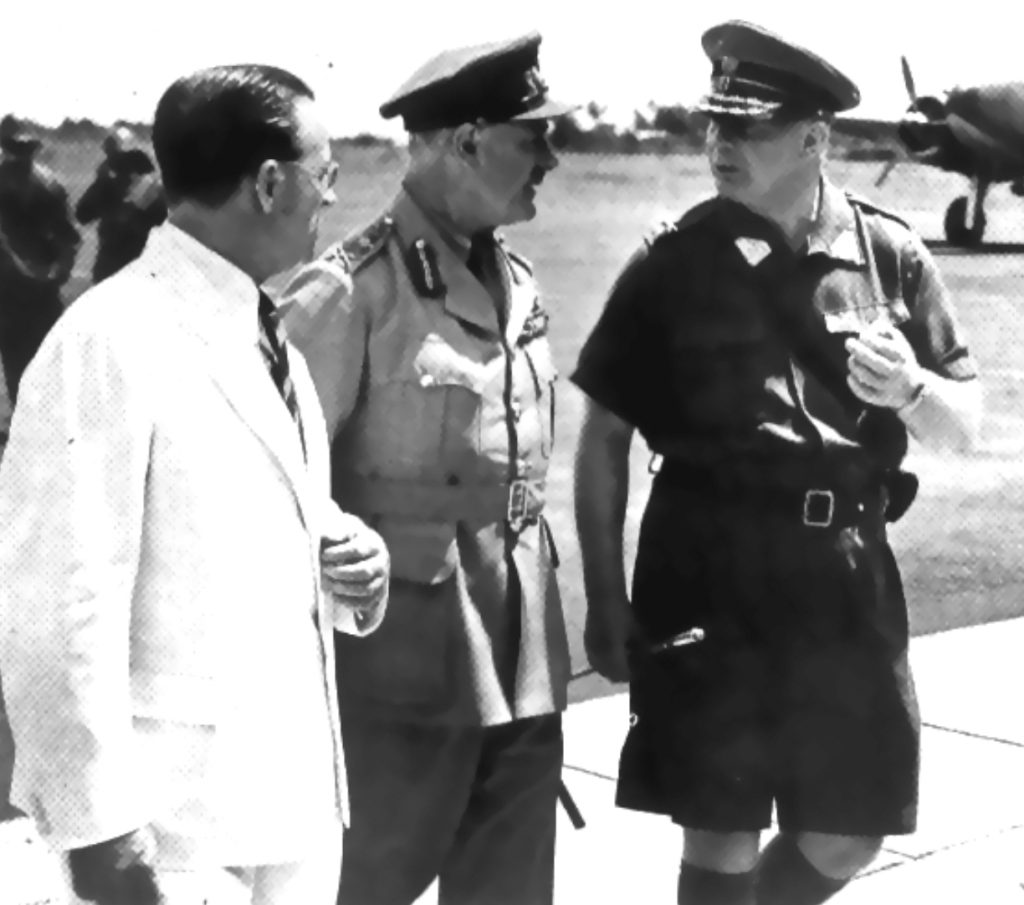
Above:  Centre Hein ter Poorten with Wavell on Right.

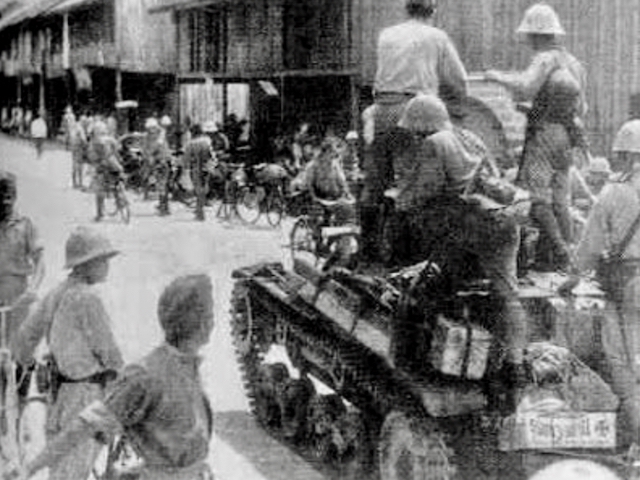
Below:  Japanese arrival


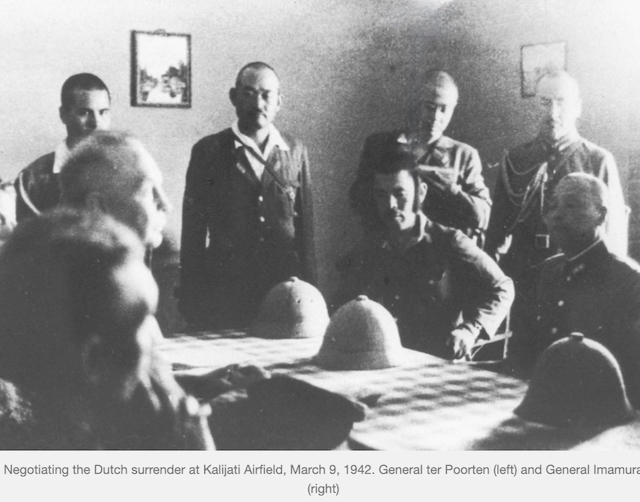
9 MARCH 1942 DUTCH COMMANDING OFFICER GENERAL TER POORTEN SURRENDERED TO GENERAL COMMANDING OFFICER 16TH ARMY – DUTCH EAST INDIES.
1941-11-06 1942-11-09 General Officer Commanding 16th Army [Dutch East Indies]
1942-11-09 1945-09-02 Commander in Chief 8th Area Army [New Guinea – Solomons Island]
1946-04-XX 1947-05-XX Arrested and tried as a war criminal
1947-05-XX Condemned to 10 years imprisonment as a war criminal
1954-11-XX Released

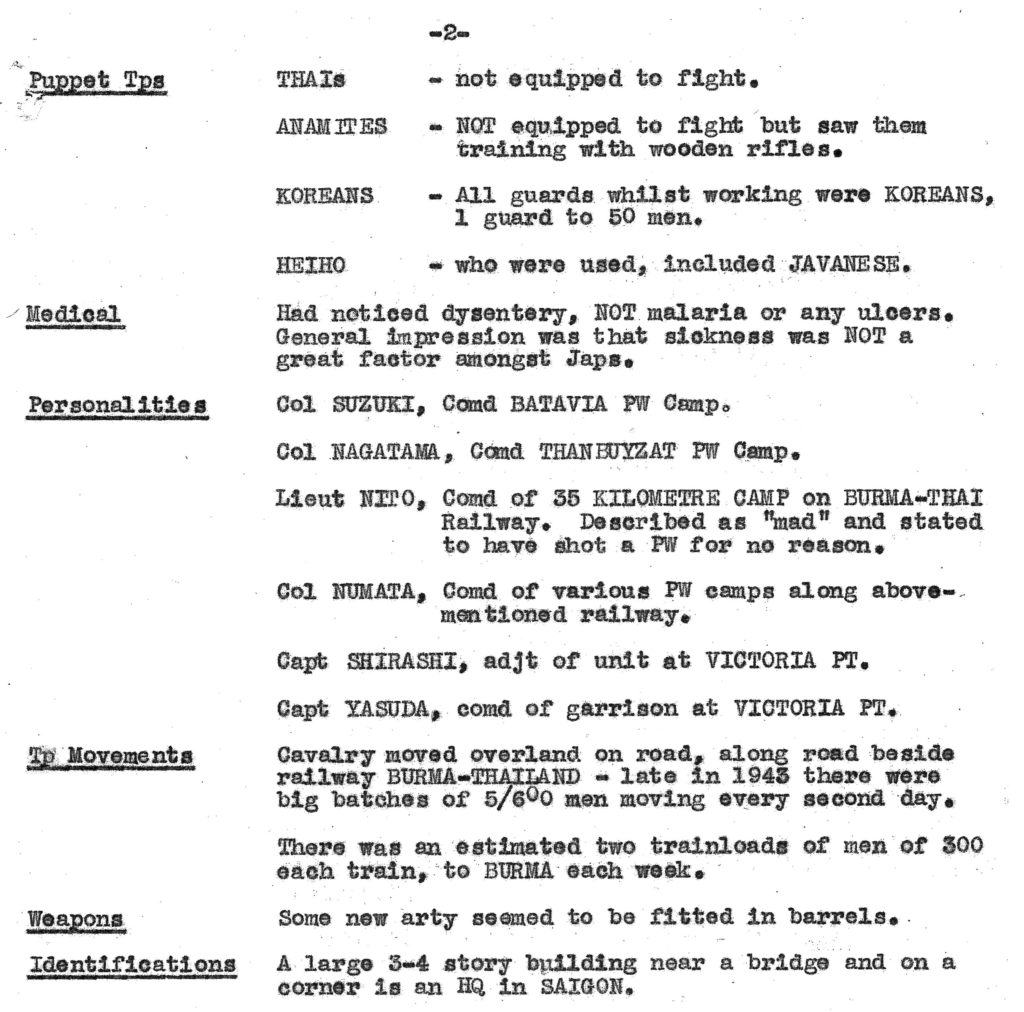
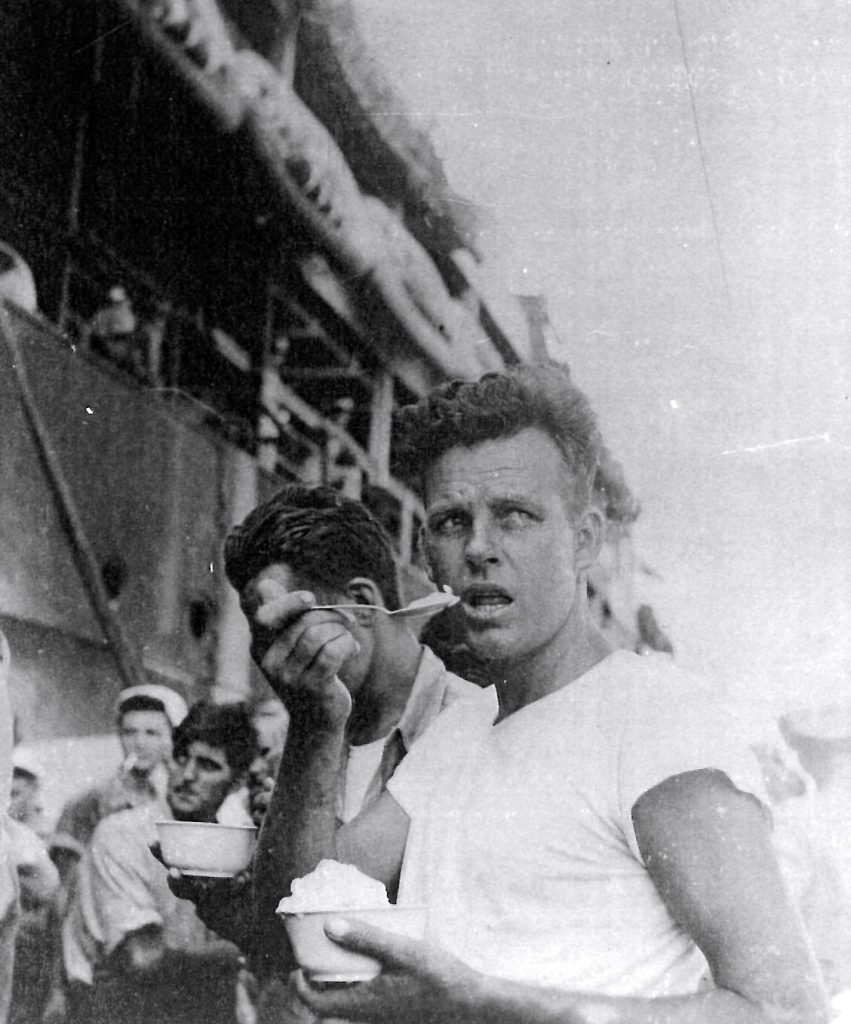
COCKING – Released Prisoner of War – Survived sinking of Rakuyo Maru – rescued by USS Pampanito, returned November 1944 Western Australia

Jack Cocking WX16369 was a lucky man.  One of the lucky few to survive the sinking of the ‘Rakuyo Maru’
He was one of 1300 POWs onboard when hit by American torpedoes in the South China Sea.  He survived  several days in the water and was fortunate to be rescued by USS Navy submarine ‘Pampanito‘.  He eventually arrived back in Perth 1st November 1944.  ‘Pampanito’ and the other American submarines had sailed from Fremantle for this tour.  Fremantle hosted the largest American Submarine base in the southern seas.
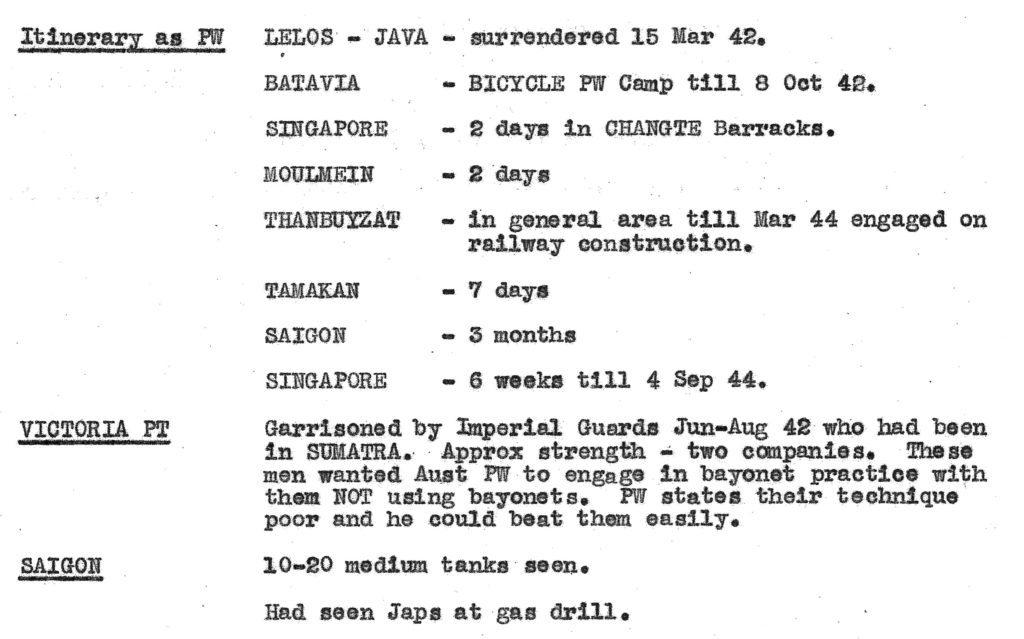
The following is a copy of the official overview of his interviews with Australian Military personnel.
Cocking Doc 1
Cocking Doc 2
Cocking Doc 3
Cocking with US Navy after rescue.
USS PAMPANITO
USS PAMPANITO


Read further about US submarines

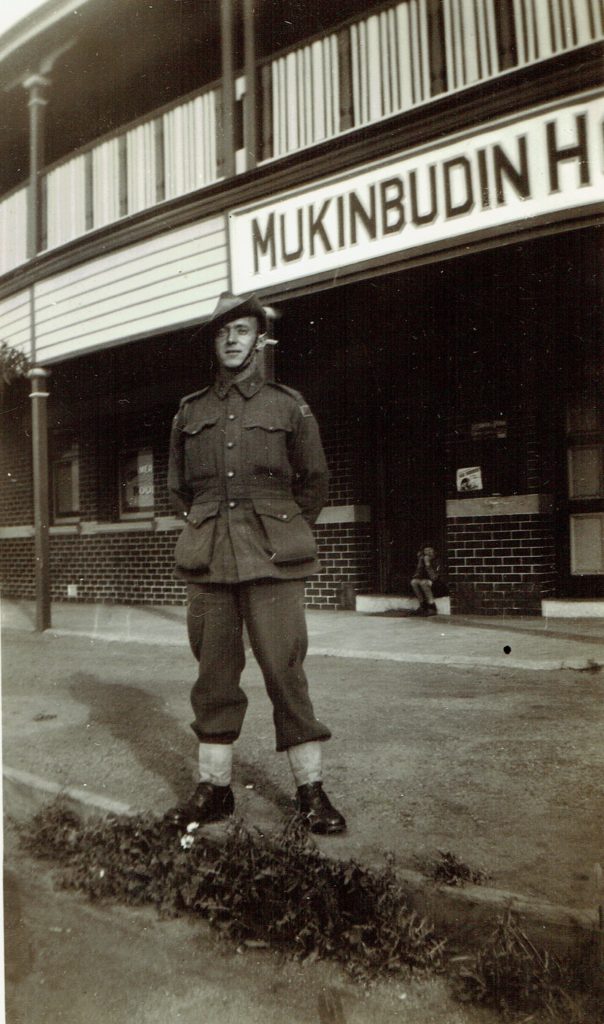
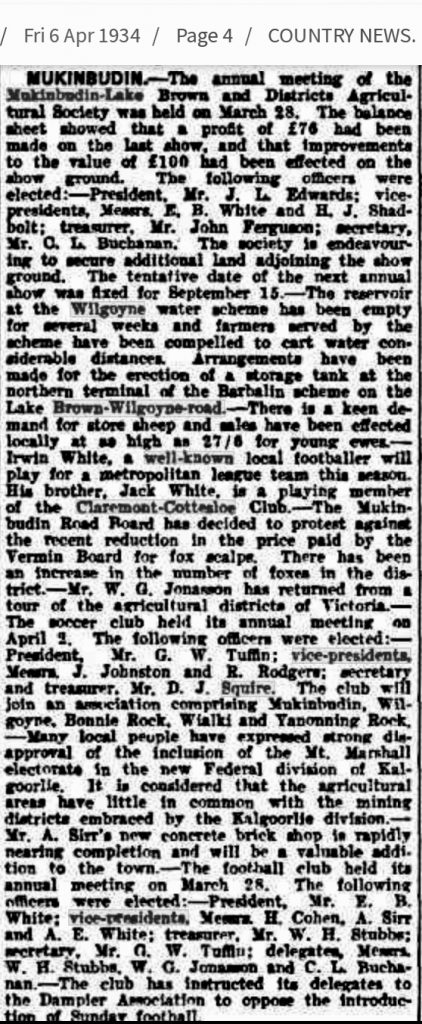
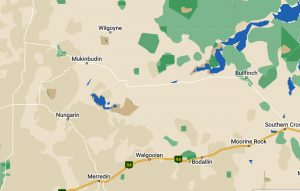
The Boys from Mukinbudin

Montague ‘Monty’ Joseph Smith WX9143 died 1943 

Joseph ‘Joe’ Sevier WX8544 died 1945 

Dudley Joseph Squire WX9330 KIA 1942 

Eric Reginald (Reg) ‘Buck’ Rogers WX9005 Returned to WA


Smith, Squire and Rogers joined ‘C’ Company No. 12 Platoon and Sevier joined Headquarters Company.
Mukinbudin began to take shape following end of WW1 with the release of land to attract settlement.
Thereafter came the construction of community and commercial businesses and a railway extension provided three trains a week bringing supplies and transporting wheat.  As with all country towns Mukinbudin had its popular football and cricket teams. To cater for the increasing population of post war migrants a soccer team was added to the town’s sporting options.
During early 1930’s the district suffered droughts and poor wheat prices. Many farmers relinquished their farms, leaving their properties with little and their hopes and dreams crushed,
The four men enlisted in October 1940. Smith was the only Western Australian born; the other three migrated from England.
Montague Smith WX9143


‘Monty’ Smith was born in Perth, attended Victoria Park Primary School before his family moved to Koorda where he continued school. In 1926 the Smiths took up a property within the Mukinbudin district, in a new settlement at Lake Brown.
The property would have been virgin land.
His mother Lillian Smith was left on her own and with her large family took on the responsibility of running the farm. There was little time for outside interests for ‘Monty’ or any family members He did play football and cricket but was not able to commit regularly to a district team.
Lillian Smith known as ‘Mrs. L.M.’ was much respected in the district and in 1933 was the only woman from the area to be called to a Royal Commission into the Agricultural Bank.
From Singapore Monty Smith was drafted into ‘F’ Force to go to Thailand.   He died of dysentery and tropical ulcers at Tanbaya Hospital Camp, Burma on the 13th November 1943.
Sevier Joseph
In 1928 his mother and an older brother and his family joined Joe Sevier who migrated to Western Australia 1925/26 with two older brothers.  He was the youngest of 8 children born near Bristol, England.  (Four older brothers served in the British forces during WW1.)  Joe worked in the wheatbelt area of Narrogin and Korrelocking before settling at Wilgoyne near Muckinbudin in 1927.
In 1928 his mother and an older brother and his family joined Joe. They initially lived in tents on their employer’s farm.  With only a horse and cart, trips to Mukinbudin were rare. They went to the nearest rail siding Lake Brown where there were several wheat lumpers’ camps.   There was one store, one bakery, one butcher and a hall.
Joe and his brothers worked in the area clearing roads, tractor driving, fencing and general farm work.  Joe and one of his brothers, Fred took up virgin land.  They cleared a small area and Emus invaded and destroyed their first crop.
Joe was a keen soccer player and represented Wilgoyne playing in the same competition as Dudley Squire from Mukinbudin.  He rode a Harley motor bike.  His last job was at Nungarin before he enlisted.
Joe Sevier married a girl from Adelaide shortly before going overseas.
Squire Dudley J
In 1926 Dudley Squire aged 17 years migrated to South Australia from England. He later joined his brother Michael at Muckinbudin to gain further farming experience before purchasing his own small property. With the bad seasons and fluctuating returns Dudley had to take up casual work to keep going.
Dudley Squire was an active community member and joined the Muckinbudin Soccer team which played in the same competition as Joe Sevier, Wilgoyne.
As a farmer, Dudley was ‘manpowered’ and before enlisting had to arrange for his brother to work his property until his return.
Tragically Dudley was KIA 12th February 1942 and did not return to his farm.
Rogers Eric R
Eric Reginald Rogers, known as Reg could not fail to be nicknamed ‘Buck’ Rogers!
Born in Berkshire, England he migrated to WA in 1924 in his late teenss with several young brothers and a group of young men to provide labour in WA’s rural area.  He spent his first years timber and sleeper cutting at Waroona before moving to Wubin/Buntine area changing jobs to labouring and wheat lumping at the Railway sidings. (Wheat was bagged in those days).
In 1929 Reg took up a property in the Muckinbudin area and a heart-breaking job of clearing 1126 acres of virgin bush. With an all time low wheat price his first crop was a disaster and he was forced to leave his property, seeking work to keep going. Reg was employed stump-grubbing and clearing land for the main Mukinbudin-Kununoppin Road, drain digging for the Barbalin Water Supply and some share-farming.
In 1935 Reg married Elizabeth Rann.
Reg played soccer for the Mukinbudin team. When he enlisted he dropped his age by 5 years, listing his occupation as labourer to escape the ‘manpower’ restrictions.
Reg ‘Buck’ Rogers was the only one of the ‘Mukinbudin boys’ to return home to Western Australia.
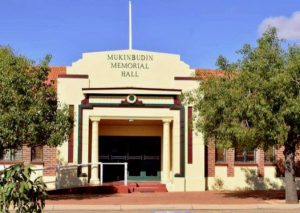
The names of the four men are inscribed on the War Memorial at Mukinbudin.
(Information from ‘Ghosts in Khaki’ by Les Cody)
THE DORIZZI CONNECTION TO NUNGARIN
Tom, Gordon and Bert moved to Nungarin to work with their trucks after their father moved to the district to take up one of the earliest school bus contracts.
.
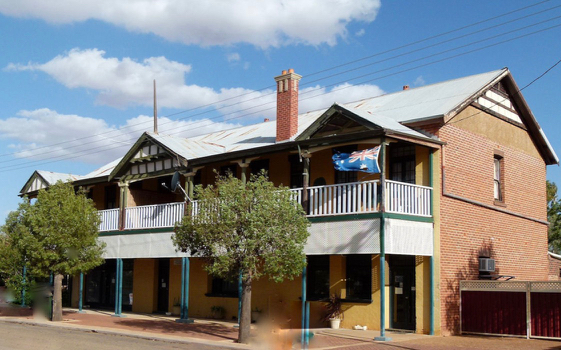
Mukinbudin Pub today
The hotel is significant as a social centre and place where travellers have stayed when travelling to or through Mukinbudin since 1925. It is the only two storey building in Mukinbudin and has retained its integrity. It is a landmark building dominant in the streetscape and townscape character of Mukinbudin.
When the first of the 32 Mukinbudin town lots were auctioned in 1922, H Hale (lawyer), EB Johnston (MLA) and Paddy Connolly (racehorse owner/hotelier) speculatively purchased several lots. The site of the hotel was where the 1923 New Years Eve inaugural Mukinbudin Sports meeting was held. In 1924, it was announced that they were to build a hotel at the cost of £8000, and put Mukinbudin on the map. Prior to the hotel, EB White had a bar at the rear of his store, selling non alcoholic beverages. The hotel owner, Paddy Connolly was generous to district needs. The ‘Commercial room’ was used by the doctor as a consulting room, as the boardroom for the Road Board meetings, and the first meeting of the CWA branch was held there in 1929, and the football club met there regularly until 1970.


Hindaine Camp 10.7.1943 – 31.8.1943

This camp was located about 8 kilometres south of Brankassi close to Hindato on a small tributary of the River Kwae Noi. This would place it around the 200km point. The camp was also under canvas and as usual the tents would not do what they were designed to do.

Major Alf Cough wrote:

‘This camp is just hell, the whole area a sea of black stinking mud, very little food; and men dying every day. For the last three weeks we have eaten nothing but rice and dried fish; for three weeks prior to that we had rice and dried cabbage at the rate of one cupful of rice plus a dessert spoon of fish or cabbage. The men cannot last much longer unless we get some decent food and medical supplies. I am tired of reading burial services and watching my men die without being able to lift a hand to help them; they are full of courage and keep their chins up until the last moment.’

On 27th July Lt. ‘Scotty’ Howell was detached to Brankassi with about 80 other ranks as W Party. ‘D’ Force V Battalion now consisted of three separate groups, one at Onte, one at Hindaine and W Party at Brankassi.

On the 10th August forty of the heavy sick including Capt. John Hill were evacuated. On 30th August 1943 Major Cough was ordered to take 150 of his fittest men to the next camp, Kuii. The remainder of this group returned to Brankassi Camp.

During less than two months a total of 28 men died at Hindaine Camp including several 2/4th Machine Gunners including Mick Geary WX8000, John Mostyn Clare WX6976, Lawrance Roy Nybo WX14327.


Northam to Perth March

2/4 Machine Gun Battalion march a total of 61 miles in four stages from Northam to and through Perth. The object was to test the physical fitness and endurance of the personnel and officers of the Battalion and to test the efficiency of the Battalion’s motor transport and administration personnel. Major General James Murdock Archer Durrant takes the salute at march past in Perth. Lieutenant Colonel M J Anketell Commanding Officer 2/4 Machine Gun Battalion.

Watch the video of the march courtesy of the AWM.

Clay & Wade return to Singapore

In the afternoon of 9 September 1945, five C47 Dakota transport aircraft arrived over Singapore Island in formation and after circling the city, landed at the civil airport. They contained men of 1 Australian Paratroop Battalion who had been waiting at Labuan Island for the previous work. These planes are the first Australian planes to fly over Singapore for three and a half years. Flying Officer Knight, co-pilot of the first aircraft to touch down, followed by a Squadron Leader and Major W D Clark, Officer Commanding the Paratroop detachment. Paratroops deplaning from C47. VX130965 Private Martin John Sharman. QX22540 Sapper Lyle Lester Brown. Lieutenant G C Martin, Platoon Commander, all these paratroops volunteered for duty at Singapore as occupation force. Three nurses of RAAF Medical Air Evacuation Unit, who came with the Paratroops. Left to right: 502347 Sisters Margaret Honora Wroe; 504388 Margaret Alice Braid and N4452 Helen Agnes Cleary. A RAAF Catalina aircraft with recording unit and war correspondents disembarking. WX12488 Private (Pte) John William Clay, 2/4 Australian Machine Gun Battalion – captured February 1942. WX7287 Sapper David Henry Herbert, 2/6 Australian Field Park Company – captured February 1942. VX62744 Sapper Edward Leonard Hunt, 2/10 Australian Field Company, RAE – captured February 1942. WX17879 Private Gabriel John Wade, 2/4 Australian Machine Gun Battalion – captured February 1942. Aircraftman 1 Nilan of Thorne, England, talking to VX123484 Lieutenant Norman Bradford Stuckey, Australian Army photographer.

View the video courtesy of AWM – audio not available – of this arrival.

Original 2/4th Flag

EPSON MFP image


Best Wishes From 2nd 4th M.G.Bn.

M.J. Anketell  CO.

This is believed to be the original 2/4th flag – dating from Northam Camp and hand made when 2/4th got their colour patch.

This aged and very fragile flag had never been retrieved after being left with picture framers with instructions to ‘frame in aluminium and glass’.

On discovery some years past, the then Secretary, Laurie Morris gave it to Peter Dimopolous to place in the RSL at Bedford.


Leave Denied

Ossie Trigwell, younger brother of Vern was going off to school on the morning that Vern, WX17863, was leaving for Northam.  Riding off down the farm track, he turned to Vern and said, “I haven’t said goodbye yet”.  Vern called out, “Don’t worry about that, I will get leave before I go overseas”.  And that was the last he saw of him as there was no leave.’

Early January 1942 the men of the 2/4th were eager to reach port for the leave they believed they were to have before heading off to Singapore to ‘stop the Japs’.

The battalion had been on a circuitous route around Australia from Northam to Woodside in South Australia in July 1941 for further training. Then on to Darwin in October, as it was felt that the future of the 2/4th Machine Gun Battalion and the 2/4th Pioneers was home defense.

December 8th 1941 – ‘Japan has attacked Pearl Harbour and landed troops on the West Coast of Malaya, Singapore has been bombed’. Action Stations! A sense of urgency now intruded into every activity. Then the decision was made on December 23rd and the 2/4th Battalion was alerted for embarkation.

Reaching the Aquitania off Port Moresby, the troops learnt that they were heading for Sydney and then on to Fremantle to take on more troops from different battalions, including ‘E Company’ of the 2/4th. The Battalion had not seen their families since July.

The Aquitania spent one day in Sydney, just long enough to refuel and take aboard a few thousand more troops, before steaming through the Heads and moving south. As she raced across the Bight, the excitement grew in anticipation of a night ashore in Fremantle.

On that early Thursday morning, January 15th 1942 (exactly one month before Singapore surrendered) the Aquitania sailed serenely into Gage Roads between Rottnest Island and the coast, some of the men could see their homes.

The Aquitania was to refuel, take on stores, water, equipment and a small detachment of troops, among them the reinforcements for the 2/4th, ‘E’ Company. She was to be at anchor for about 36 hours.

The military authorities made a gross error. Because there had been problems in Sydney, and, because of the purported security risks, their decision was that the men would not be permitted ashore in Perth.

No shore leave? ‘Command refuses leave to all troops’. To men who could see their homes, or nearly so, and who had not seen loved ones for nearly seven months, and might never see them again, this was too much, especially when they learned that members of the ship’s crew had leave. With faultless logic the men reasoned; if the crew were permitted ashore, then security could hardly be a factor. As tankers, ferries and lighters came out to deliver, fuel, reinforcements, and provisions, so they carried back to port privates, corporals, sergeants, who had scrambled through portholes, slid down ropes, commandeered a gang plank, disobeyed orders (told one subaltern, silly enough to draw a pistol and threaten the ‘deserters’ ‘piss off and grow up’) and so made their triumphant home-coming. Saggers p7

Some orders are just too mean to be followed. The men knew it was possibly their last chance to see their loved ones before they went to war. When the barges came out we jumped ship by the dozens and in most cases it was a jump of about 3 or 5 metres. The skippers of the barges were well paid for cooperating and for them the choice was simple: either head back to wharf or risk sinking because the longer the barge stayed alongside the more soldiers jumped aboard. Harris p12

One of our corporals, quite a good soldier, was breaking his neck trying to get ashore. He had just got news that his wife had given birth to their first child. I suggested he try sliding down the rope tying the barge to the ship. I helped him get to the rope, and over the side he went. ‘Loosen your grip and slide down’, I called to him. He did so, and you could almost see the smoke coming from his hands. But he managed to get onto the barge just before they cast off. He was only wearing shorts, so he burned the inside of his legs as well, but he got ashore. Airey p113

Stories of family reunions and parties, which were celebrated in the next fifteen or sixteen hours, were faithfully told and irreverently exaggerated in the days and weeks and months and years that followed. Saggers p7

Bert Norton like all soldiers who had ‘gone AWL’ found the return to the Aquitania challenging ‘ I stayed with them for an hour then to Barrack Street jetty to catch ferry to Coode Street. The ferry master told me the M.P.’s had been stopping all service men and checked for leave passes and advised me to hide my Colour Patch on my hat by turning hat band inside out which I promptly did. Home to Thelma, at 301 Suburban Road, which is now Mill Point Road, for the night. Next morning Eddie Pummel (Battalions boot maker) came with his wife Audrey, who was a friend of Thelma, to see if I had got ashore. He said that he had heard M.P.s were arresting all AWL’s and taking them to Fremantle Gaol. So I wasn’t able to cross the river and say goodbye to my parents. Eddie, Audrey, Thelma and I caught the Metro Bus to Fremantle, warned by driver to keep down in seats as M.P.’s were checking buses from their vehicles. If they saw uniforms they were stopping buses and checking I.D.’s. Changed to tram at Beaconsfield, conductor gave us the same warning and said that the driver would drop us at nearest street to wharf. Got to wharf where R.A.N. guard at gate told us not to go down harbour side of sheds. M.P.’s had vehicles there and were arresting men and taking them to Freo Gaol, even though they can see that men are going back to “Aquitania” by “Zephyr”. Major Saggers spoke to me and hoped I had seen my family, he was very angry at the way M.P.’s were acting. Read Bert Norton’s recollections as per his diary.
On the 16th January, 1942 the Aquitania weighed anchor bound for Singapore.

Ninety-four men missed the Aquitania, and most did so because they believed what garrison soldiers on the wharf incorrectly told them of the ships sailing time. These men were ‘housed’ for a time in Fremantle gaol and at Karrakata military camp before being sent on to Java, where they were subsequently captured. Saggers p7

For the breach of military conduct, the soldiers were fined two days pay – for a private, a loss of twelve shillings. NCO’s that had gone ashore and returned, lost rank, some all of their rank, others just a stripe or two – ‘but the experience was worth every shilling’.

The visit to Fremantle was immortalized in verse by one of the staff of the ship’s Magazine Transportholes in the first issue produced a few days after departing.


The Gunners Go Through

Out through the portholes like eels they wriggled,

While lesser souls just stood and giggled,

Their toes in the air they gaily wiggled

That’s how the gunners went Thro’.


Sailed like Lords in borrowed boats,

Lots of ’em minus hats and coats,

While we just gaped like silly goats,

That’s how the gunners went Thro’.


Painted the town in colours bright,

Lodged in boudoirs – and cells – for the night,

That’s how the gunners went Thro’.


Brought two quid and two days pay,

Said “It was worth it any day”

And they’ll do their job when they’re in the fray –

And damned if they won’t get Thro’.


There was an epilogue added, in the Battalion’s own magazine The Borehole Bulletin after return to Australia.


Left Australia – changed boats twice….

Landed Singapore – not so nice….

Part of a gamble – loaded dice….

Finished in Gaol – eating rice…..

That’s how the gunner got Thro’.   Cody p68


Personnel AWL at Fremantle, Western Australia

WX8245              E.T.Adams (No.10 Pln.)

WX7064               B.W.J.Allpike (Bn. Hq’s)

WX7905               F.J.Annesley (No.2 Pln.)

WX9367               J.R.Baker (No.6 Pln.)

WX8682               W.R.S.Baker (No.7 Pln.)

WX10343             N.F.Banks (‘C’ Coy Hq’s)

WX7587               T.Barbour (No.11 Pln.)

WX7164               F.Barker (No.11 Pln.)

WX6970               A.J.Barnes (No.4 Pln.)

WX10791             A.R.Beattie (No. 4 Pln.)

WX8766               H.V.Booth (No 8 Pln.)

WX7600               G.R.Bousfield (No.13 Pln.)

WX7333               A.J.Burns (No.8 Pln.)

WX6155               L.P.Byrne (No.10 Pln.)

WX10365             M.W.Caldwell (‘B’ Coy Hq’s)

WX9551               F.V.Carroll (No.10 Pln.)

WX8240               D.N.H.Carter (No.9 Pln.)

WX10354             H.T.Clayden (No.11 Pln.)

WX16369             A.J.Cocking (No.8 Pln)

WX10048             E.J.Cosson (No.1 Pln)

WX8855               D.J.Davies (No.2 Pln)

WX9310               A.A.Dickson (No.6 Pln.)

WX7299               T.F.Doyle (No.14 Pln.)

WX8830               A.Mc.Drummond (‘B’ Coy Hq’s)

WX9266               W.Dunwoodie (No.6 Pln.)

WX9199               A.E.Farmer (No.6 Pln.)

WX9070               C.Fielder (No.12 Pln.)

WX5132               G.Fisher (No.12 Pln.)

WX7569               S.E.Foxall (No.11 Pln.)

WX15422             B.M.Frost (No.3 Pln.)

WX9270               T.J.Fury (No.6 Pln.)

WX7595               G.Glass (Bn. Hq’s)

WX6980               P.Golden (No.6 Pln.)

WX8540               T.W.Green (No.3 Pln.)

WX8625               W.R.Gregory (No.5 Pln.)

WX6975               R.J.Ham (No.14 Pln.)

WX7123               R.D.Hampson (No.4 Pln.)

WX15736             R.Hansen (No.15 Pln.)

WX8695               W.D.Harris (Bn. Hq’s)

WX8408               A.G.Hayes ( No.2 Pln.)

WX7642               C.G.Henderson (No. 10 Pln.)

WX7465               N.Holdman (No. 2 Pln.)

WX10795             R.E.Hughes (No. 5 Pln.)

WX9130               M.A.Hunter (No. 9 Pln.)

WX5118               Cpl.J.M.Jenkins (No. 12 Pln.)

WX7453               E.C.Jones (No. 2 Pln.)

WX7612               C.G.McKelly (No. 13 Pln.)

WX4949               R.J.Kingswell (No. 12 Pln.)

WX8336               F.G.Kuhl (Bn. Hq’s)

WX7230               L.H.Lee (No.8 Pln.)

WX15744             L.W.Lee (No. 6 Pln.)

WX11316             L.H.Lewis (‘D’ Coy Hq’s)

WX7285               H.R.Love (No. 4 Pln.)

WX16341             S.T.Martin (No.3 Pln.)

WX13285             J.Maude (No.6 Pln.)

WX8261               R.R.McAskil (No.10 Pln.)

WX9825               C.P.McLoughlin (No.12 Pln. Hq’s)

WX9826               H.J.Millar (No.11 Pln.)

WX13562             P.J.Moate (‘C’ Coy Hq’s)

WX8200               W.R.Morris (No.10 Pln.)

WX15746             A.E.Morrison (No.13 Pln.)

WX5336               J.L.Murdoch (No.15 Pln.)

WX7645               W.J.Nicholls (No.1 Pln.)

WX16417             S.Ninyette (No.15 Pln.)

WX8828               W.D.O’Neill (No.7 Pln.)

WX8856               H.W.Pearce (No.11 Pln.)

WX8725               J.H.L. Pryce (No.1 Pln.)

WX9946               E.A.Pummel (Army Ord.Corps)

WX9059               G.R.Ramage (No.1 Pln.)

WX7493               R.G.S.Rennie (No.3 Pln.)

WX7750               S.H.G.Roberts (No.6 Pln.)

WX16427             D.C.Robertson (No.8 Pln.)

WX5200               W.J.Robinson (‘B’ Coy Hq’s & No.9 Pln.)

WX7939               C.J.Sawyer (Bn Hq’s)

WX8843               J.Scales (No.5 Pln.)

WX7576               N.E.Simmonds (No.10 Pln.)

WX16424             A.Sing (‘A’ Coy)

WX7893               J.S.Smith (No.2 Pln.)

WX8506               W.J.Smith (88 L.A.D.)

WX9419               H.W.Steele (‘C’ Coy Hq’s)

WX9827               R.H.Stribling (No.12 Pln.)

WX8585               C.J.Vidler (No.5 Pln.)

WX15614             R.J.Walker (No.3 Pln.)

WX7466               B.J.Walsh (No.3 Pln.)

WX8356               W.S.Watkins (Bn. Hq’s)

WX10761             T.M.Watters (No.3 Pln.)

WX7502               T.S.Wayman (No.3 Pln.)

WX10049             M.W.Wilkinson (No.1 Pln.)

WX1138               A.G.Williams (‘C’ Coy Hq’s)    Ewen p808

The following soldiers were known to also have left the Aquatania at Fremantle but were able to return before it departed.

WX13285             J.Martin (No.3 Pln.)

WX8493               A.W.Norton (No.4 Pln.)

WX8642               D. Parker (No.9 Pln.)

References:

Cody, Les, Ghosts in Khaki : the history of the 2/4th Machine Gun Battalion, 8th Australian Division A.I.F(Carlisle, W. Aust.: Hesperian Press, 1997)

Ewen, Murray, Colour Patch the men of the 2/4th Australian Machine Gun Battalion, 1940-1945(Victoria Park, W.A.: Hesperian Press, 2003)

Harris, Richard All In My Stride: John Gilmour’s story: Changi to world Champion (Carlisle, W. Aust: Hespian Press, 1999)
Lane, John Summer Will Come Again: The story of Australian POW’s fight for survival in Japan (Fremantle, W. Aust: Fremantle Arts Centre Press, 1987)
WX8493 Bert Norton’s recollections as per his diary found in ‘Stories’

Saggers, Ian; Saggers, A E, To Hell-fire, Purgatory and Back : an account of the battle exploits and prisoner-of-war experiences of Major A. E. Saggers, commanding officer ‘A’ Company, 2/4th Machine Gun Battalion and Special Reserve Batallion, A.I.F. : based on his secret diaries(Dalkeith, W.A.: I. Saggers, 2000)
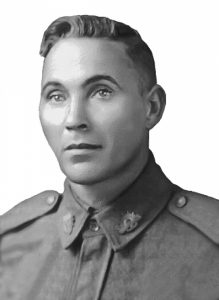
 

Indigenous Western Australians who joined 2/4th

There were 8 indigenous men in the Battalion.

  1. CARLYON William WX15785
  2. FLARTY Neave  WX17374
  3. HANSEN Robert WX15736
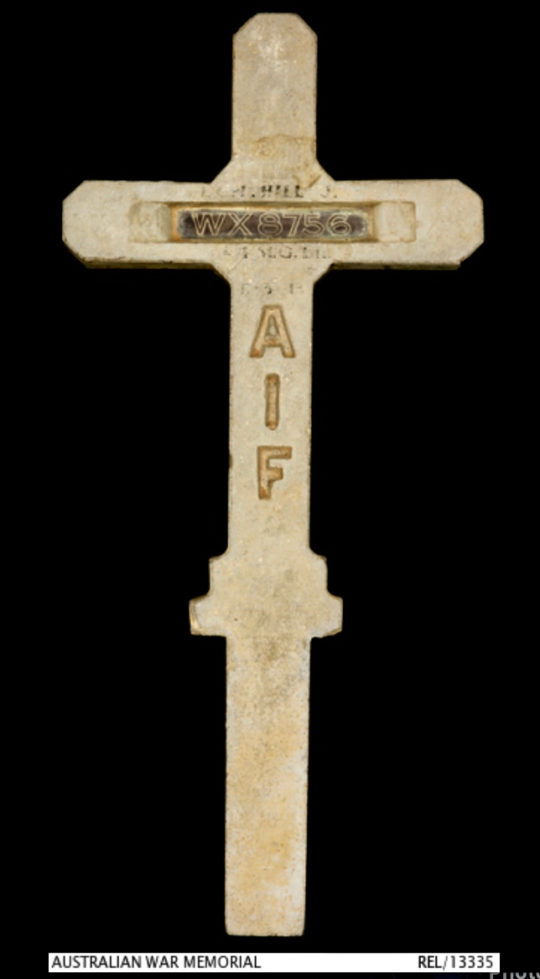
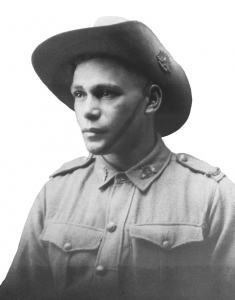
  4. HILL John WX8756
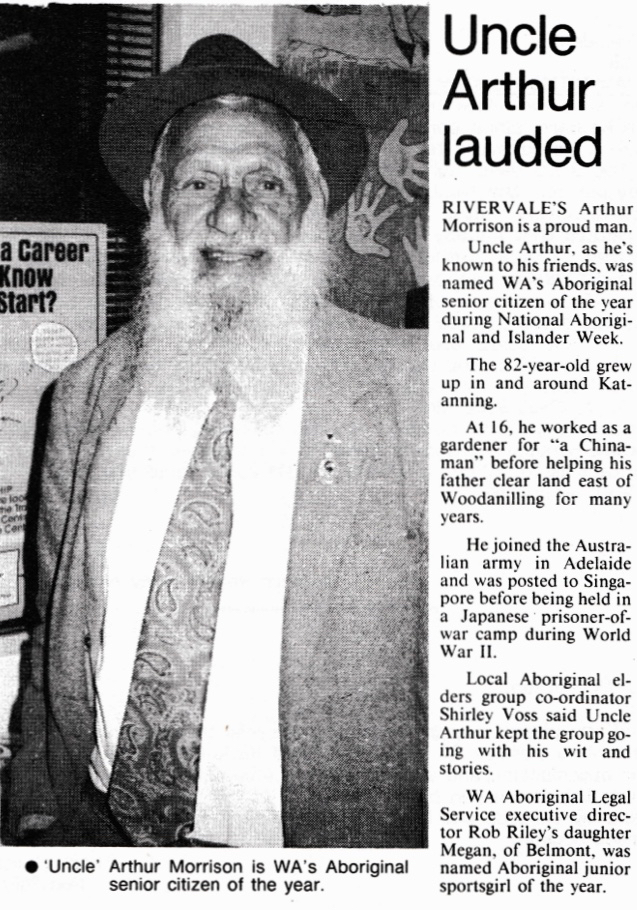
  5. MORRISON Arthur Edward WX15746
  6. NINYETTE Samuel  WX16417
  7. RALPH Arthur WX20107
  8. RONAN Edward John WX1626


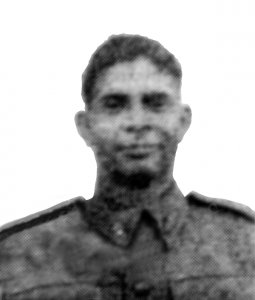
Right:  Bill Carlyon 
WX215785
Was working at Galena near Ajana, near Northampton when he enlisted.  There were a number of enlistments from this area. Those who survived the battle for Singapore all went with ‘A’ Force Burma, Green force No. 3 Btn to Burma to work on the northern end of the Burma Thai Railway.  Please read further about this work force.
Also read about the men from Northampton

Bill Carlyon used his bush knowledge, and risked his life to ‘go under the wire’ on the Burma-Thai Railway –  seeking out plants which may be of medicinal and/or vitamin value for his mates who were starving and ill.
Bill with his dark complexion was often overlooked by Japanese guards and was able to move around more freely.  The guards often found it challenging to distinguish ‘different’ nationalities amongst the local population.  The POWs were also very skinny and undernourished.
We know the Japanese did not choose any POW with dark complexions, or freckles to send to Japan.  They only sought out what they considered ‘men of European complexions’ to show off to their population in Japan. Perhaps they were fortunate!


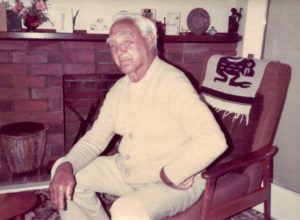
Carlyon Bill, at home.

Please read further about Bill Carlyon.

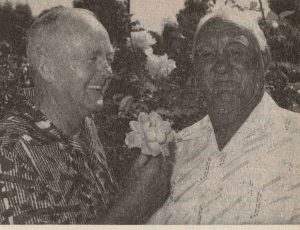
 Soldier Reunited with Saviour – as per August   1985  “Barbed Wire and Bamboo”
The generosity of Onslow residents has reunited veteran Tom Hampton with a man who helped save his life in a Japanese prisoner of war camp.
When Mr Hampton needed an emergency stomach operation, Bill Carylon was among the prisoners who carried him on a makeshift stretcher 2km through thick Thai jungle to an Australian surgeon.
The two friends fought with the WA 2/4th Machine Gun Battalion. The last time they met was on a ship home after the war.
Now the Onslow community has got together to raise more than $1100 to send Mr Carylon (80) to Perth for his first ANZAC Day march and to see Mr Hampton again.
Mr Hampton (68) said – “I will never be able to repay Bill, but it is good to be able to thank him properly. I had a burst duodenal ulcer in the POW camp, and I thought that I would be lucky to survive. But some of the boys had heard about an Australian surgeon at a nearby camp. They made a stretcher and persuaded the Japanese to let them take me.”
Mr Carylon said, “They have been marvellous. It was a total surprise when they told me about the trip. It means so much to me to see the men of the battalion again and Tom.”
Onslow storekeeper, Mr Martin Petering said, “We are all so proud of Bill. He is a wonderful old man. We knew how much he wanted to take part in the Perth ANZAC Day parade, so we started raising the money”.


Robert Hansen, Bill Carlyon, Jimmy Till J & Les Kemp covered with red dirt in NT prior to sailing to Singapore Feb 1942.  ( Photographer marked Lt Till with a cross for good luck – sadly Till died during battle for Singapore)


Robert HANSEN WX15736

Please read further about Bob Hansen. 
Enlisted from Bridgetown.His NOK was his wife Topsy Hilda Hansen.
Hansen was one of about 90 men from 2/4th who left transport ship ‘Aquitania’ anchored off Fremantle 15 Feb 1942 for one night on her journey to Singapore.  These men sailed to Java instead where they were taken POWs of Japan just a few weeks after Singapore fell.  Read further about this incident


Above:  this wonderful photo of Robert Hansen and his mother

 WX16417 Samuel NINYETTE

We believe Ninyette was born in Beverley and was resident at Wagin when he enlisted.  Samuel Ninyette had 6 children with his wife Emmeline Francis Jones whom he married at Wagin 17th July 1941.
He died 17th February 1981at RPH and was buried at Serpentine.
Ninyette was one of more than 90 men from 2/4th who left ‘Aquitania’ when she anchored off Fremantle for one night on 15 Feb1942 and sailed for Singapore the following day.

Please read about these men who then sailed to Java.

Please read further about Sam Ninyette who died 17th February 1981 at  RPH and was buried at Serpentine.


It is estimated about 3,000 Indigenous Australians served their country during WW2.  Their experiences were mixed.   On returning to civilian life most found they did not have access to War Service benefits such as those offered and accepted by non indigenous Australians in particular, War Service Loans for housing and War Service Farms.  The opportunities and dreams that possibly urged them to enlist were not available.
Before 1967 indigenous men were denied a drink at the pub with their service mates!  Indigenous were unable to enter Perth city radius – if they worked in the area they had a special pass.
It was acceptable to serve together, however not acceptable to march together on Anzac Day!  Or share a drink at a bar with mates.
There are several stories of incidents with publicans/bar attendants demanding 2/4th indigenous who had gathered with mates for a drink being told they would not be served and to leave the premises. There was outrage and uproar until the publican’s decision was overturned.
These men had not survived 3 1/2 years together incarcerated as POW’s working as slave labourers, working in appalling and dangerous locations, starved, beaten, humiliated, living each day facing illness and injuries with no medication, watching their mates dying like flies to tolerate such appalling bigotry. They each knew the value of life and knew it was precious!
How often had they been there for each other during sickness and times of utter hopelessness?
The majority of former POWs remained a tight-knit group attending services and having a drink after.  Of course they each wanted to get on and live their lives, but for many that was a dream only.


WX8756 John HILL

The only indigenous soldier who did not return was Lance Corporal John Hill of ‘B’ Coy who died 11th March 1943. 
On 14th February 1942 John HIll was wounded in action at Pasir Panjang. With gunshot wounds to his left arm and head John Hill managed to drive his Bren gun carrier with his wounded and dead crew members to an aid post.  On 16th February Lance Corporal Hill was admitted to 2/13th Australian General Hospital.
Hill was soon moved to Selarang Barracks where he faced a slow recovery.  Hospitals had been set up here to deal with the large numbers of battle casualties.
He was later sent to Adam Park where he was sent out on work parties.
In late February 1943, John Hill was admitted to hospital with dysentery. On 11th March 1943 John Hill died at the Australian General Hospital at Roberts Barracks, Changi, from mycotoxicosis, diphtheria and acute but resolving bacillary dysentery. On Japanese orders his body was cremated and buried on 11 March.
The funeral service for Lance Corporal John Hill, aged 31 years was conducted by Chaplain G. Polain of 2/26th Battalion.
A member of the Wardandi Nation, John Hill was born in Fremantle, 1 January 1912, to Arthur and Margaret Hill.  John was the eldest of nine children. The Hill family lived in a weatherboard cottage called “Snake Gully” in Busselton. John and his 3 brothers  during free family time would go fishing with their father.
As young men, John and Roy saved to purchase a Chevrolet truck which they successfully sought contracting work and wheat carting in the wheat-belt area.
When war broke out John and two of his brothers enlisted.  John on  23rd October 1940 into the Second Australian Imperial Force, Roy enlisted with Royal Australian Air Force and Harold with the Royal Australian Navy where he joined the crew of HMAS Perth.
When HMAS Perth sunk Harold too became a POW of the Japanese.  In October 1942 Harold passed through Singapore on his journey to Burma-Thai Railway.  Sadly the two brothers did not meet.
Harold and Roy survived the war to return home.
Roy Hill became a pilot and officer in Bomber Command.  He served in Britain with the RAF flying Lancasters.
Changi Changi
Changi Cemetery where John Hill was originally buried.


The original cross was collected and taken back to Western Australia by John Hill’s mates.    It was later donated to AWM, Canberra.
The Last Post Ceremony is presented in the Commemorative area of the Australian War Memorial each day. The ceremony commemorates more than 102,000 Australians who have given their lives in war and other operations and whose names are recorded on the Roll of Honour. At each ceremony the story behind one of the names on the Roll of Honour is told. Hosted by Richard Cruise, the story for 22 September 2016 was (WX8756) Lance Corporal John Hill, 2/4th Machine Gun Battalion, 2nd AIF, Second World War.  John Hill’s photograph was displayed beside the Pool of Reflection. Watch a recording of the ceremony courtesy of the Australian War Memorial.


Below: is the wooden cross made for John Hill and brought back to Australia by his 2/4th mates.


WX15746 Arthur Morrison
Arthur’s nickname was ‘Snow White’ – nothing to do with his skin colour – please read further.
Arthur was sent to Java and then to Burma-Railway with ‘A’ Force Burma Java Party No. 4 Williams Force. This work Force endured a pretty torrid time because most were members of 2/2nd Pioneers, an Engineering Force who were shipped back from the Middle East intended to reinforce Singapore.  They landed at Java  and were captured there about 8 March 1942.   The Japanese were excited to have so many qualified and experienced engineering POWs – and was the reason Williams Force were moved frequently up and down the Burma end of the Railway.  They had little rest and were never in one place very long.    Working all day, and walking to the next place at night and usually began working again that same morning.
‘Snow White’ attended most reunions.  Well liked and respected by all, Arthur’s arrival was always welcomed.  The men loved to get together – they never talked about the terrible memories – just laughed as they re-told the funny ones!


WX17374  Neave FLARTY
Sadly very little is known of Neave.  He died in Queensland 30 January 1980.  He was 57years old and buried Collinsville Cemetery, Collinsville, Whitsunday Region, Queensland, Australia.   You can read further information about Neave. 
Flarty enlisted 22 Oct 1941 and was sent with reinforcements to board ‘Aquitania’ sailing to Singapore on 16 Jan 1942.  He was lucky to survive the Japanese ambush at South West Bukit Timah, was injured and carried to safety by a mate.
Neave worked on the Burma-Thai Railway with ‘D’ Force T Battalion.  He was recovered from Ubon POW Camp in Thailand when the war ended.
Should any family and/or persons with knowledge are able to provide information can you please contact us Email:   2nd4thmgb@gmail.com
Rear L-R T.Allen & H.Wilkes
Front L-R M.Wilkins, T.Gough & N.Flarty.


During the battle at Singapore, Wilkes carried his mate Flarty (who had suffered gunshot wound to his knee) back to safety.)


WX20107 Arthur RALPH remained at Singapore throughout the war,  He dislocated ligaments in right knee on 12/2/1942 and was evacuated to Alexandra Hospital until end of hostilities. Discharged to unit on 22/2/1942.
12 Aug 42 AGH beri beri.
14 Mar 1943 admitted AGH encephalitis  discharged 20 Mar 1943, admitted with dysentery 25 Mar 1943 discharged 31 Mar 1943.  Arthur missed working parties to the Railway Line due to illness.  He was sent with a  work party to Blakang Mati Island  5 Nov 43, where living conditions were reasonable however Japanese brutality and punishments were frequent and work conditions tough and often violent. Please read further about Arthur Ralph


Ted Ronan and his mate Edgar Pell


WX26269 Edward John ‘Ted’ RONAN
Was born at Mingenew 1917.  Prior to enlisting 27 Aug 1941 Ted worked as a miner.  He joined the large number of (mostly untrained newly enlisted) reinforcements to 2/4th, ‘E’ Company SRB – they joined the Battalion at Fremantle when the boarded ‘Aquitania’ and sailed for Singapore on 16 January 1942.
He was one of the fortunate to survive the Japanese ambush at south west Bukit Timah when ‘E’  Company lost almost half of the battalion to those wounded and those who were KIA.

Please read about ‘E’ Company

As a POW in Singapore Ted was unfortunate to leave with ‘D’ Force Thailand V Battalion to work on the Burma-Thai Railway.
This Force endured nearly 50% death rate from starvation, terrible tropical illness and Japanese brutality.  Please read
Ted was recovered from Ubon Camp at the end of the war.
Right:  Ted Ronan.  He  died April 1991 Busselton aged 73 years where he resided with his wife Phyllis.  You can read further about Ted and his family


PLEASE NOTE:
‘FOREVER WARRIORS’ by Jan James of Northam includes the name of WX7213 Gilbert Valentine HADDEN of Leonora.
Ms James died about 2021.  Historian Cheryl Mellor visited her at Northern however Ms James had no plans to reprint her book which would have  provided her the means to rectify this mistake.
C. Mellor also spoke with a granddaughter of Hadden who had just by chance recently received her DNA results – she did not have any indigenous ancestry.
We believe this incorrect information came about because the 2/4th nickname for Hadden was ‘Boong’ acquired because Hadden was deeply tanned from years of prospecting in the Goldfields.  His appearance did not change during his time working on the Burma-Thai Railway where the POWs were dressed only in ‘Jap happies’.
It was Dick Ridgwell and Ron Badock who confirmed these details for us.
We apologise to anybody offended by the use of the word ‘Boong’ –  it was the 1940’s, it was the Army and it was war.   It appears nobody was offended at that time.

If you would like to read further about Gilbert Hadden, please go to

18 Nov 2023
I have been communication with Heather Young, daughter of Jan James.  Heather has reprinted ‘Forever Warriors’ written by Jan James.  Unfortunately, Heather was not aware of the incorrect inclusion of Gilbert Hadden from 2/4th. She has made notes if she reprints.
Heather Young has copies of ‘Forever Warriors’ – Cost $90.00 plus postage, $12.00 in Australia.  Heather can be contacted by phone:
0448589559.
Below is a brief overview of the Men’s Companies, Work Parties etc so you can see where they were sent, and if any were together.
  1. CARLYON William WX15785 – HQ Coy No. 3 Platoon – joined 2/4th 5 Oct 1941 Woodside SA.
  2. FLARTY Neave WX17374 – ‘E’ Company SRB. Reinforcement Fremantle.  Worked Burma-Thai Railway with ‘D’ Force Thailand,  T Battalion.
  3. HANSEN Robert WX15736 – ‘D’ Coy 15 Platoon (Reif) – Captured Java – ‘Blackforce’ – Williams Force to Thai-Burma Railway – (joined 2/4th 5 Oct 1941 Woodside SA.)
  4. HILL John WX8756 – ‘B’ Coy 8 Platoon – Original Member 2/4th
  5. MORRISON Arthur Edward WX15746 – ‘D’ Coy 13 Platoon (Reif) ‘Blackforce’ attached 2/2nd Pioneer Battalion, Captured Java, Williams Force to Thai-Burma Railway – (joined 2/4th Woodside SA 5 Oct 1941)
  6. NINYETTE Samuel WX16417 – ‘D’ Coy, 16 Platoon (Reif) – Captured Java – ‘Blackforce’ – Williams Force to Thai-Burma Line.  (joined 2/4th 5 Oct 1941 at Woodside SA.)
  7. RALPH Arthur WX20107 – ‘E’ Coy SRB. Reinforcement Fremantle.  Remained in Singapore throughout war.
  8. RONAN Edward John WX1626 – ‘E’ Coy SRB. Reinforcement Fremantle
Lance Corporal John Hill died of illness March 1943 at Singapore aged 31 years.  Hill was  very popular amongst the 2/4th.  The men constructed a wooden cross for John, which at the end war was brought back with those in Singapore.  It was donated to AWM.
Hansen, Ninyette, Morrison were taken POWs March 1942 at Java, having missed transport ship ‘Aquitania’ which sailed from Fremantle 16 Jan 1942.  Morrison, Hansen and Ninyette  worked with Williams Force, most of whom were from engineering 2/2nd Pioneer Btn from Middle East.  Williams Force were constantly moved up and down the railway, repairing the track.
WX20107 Arthur RALPH survived ambush at SW Bukit Timah with ‘E’ Coy however dislocated ligaments in his right knee 12 Feb and was evacuated to Alexandria Hospital.  Remained Singapore due to ill-health and missed working on  Railway.  He was included in work party to  Blakang Mati Island Nov 43.  POWs faced terrible Japanese brutality and work conditions here.  Recovered Singapore.
Neave Flarty was a reinforcement with ‘E’ Coy – wounded during Japanese ambush at SW Bukit Timah, however was carried by mate to safety.  Flarty worked on Burma-Thai Railway with D Force T Battalion. Recovered from Ubon at end of war as was Ronan.
WX26269 Edward John ‘Ted’ RONAN like Flarty was a reinforcement.  He fortunately survived the SW Bukit Timah ambush where nearly half of ‘E’ Coy were KIA or WIA.  He left Singapore with ‘D’ Force Thailand V Battalion – a work force which endured too many deaths and shocking working and living conditions on Burma-Thai Railway. Recovered from Ubon at end of war with Flarty.
Message from Cheryl Mellor, Historian (2025)
‘ I regret to say my knowledge of the past history is limited.  To say I didn’t know how desperate life was for our indigenous could be seen as an excuse –  but I  wished past 2/4th Committees had been able to take more leadership in the fight to acquire ‘their indigenous mates’ the same benefits as they had. 
My personal feelings include shame.   Shame that it took so long for our men to find housing for their families and themselves.’


Fairbridge Farm School, Pinjarra


‘The Church of the Holy Innocents, Fairbridge House and the Old Fairbridgians Clubhouse have high cultural heritage significance in their own right. Fairbridge Village is an excellent example of the use of the Inter-War Old English architectural style. Fairbridge Village was the first of a number of similar institutions established by the Child Emigration Society and is the only remaining site where tangible evidence remains to illustrate how the institution was organised. Fairbridge Village is important for its associations with Kingsley and Ruby Fairbridge, Sir Herbert Baker, who designed the Church of the Holy Innocents, and for its associations with the architectural firm Powell, Cameron and Chisholm. Fairbridge Village has a high level of significance to members of the Old Fairbridgians’ Association who continue an active involvement with the place.’


Kingsley Fairbridge’s project Pinjarra Fairbridge Farm School commenced about 1910. Until WWI about 30 boys had passed through. Following the end of WWI and in 1921 parties of boys and girls once again began arriving at Fairbridge. From Fremantle the first group of 15 boys and girls took the train to Pinjarra where they were met and transported to Fairbridge.  This group was initially accommodated at another less permanent location on the farm until two cottages were completed at the current site. Shakespeare for  girls and Warren Hastings for the boys. Kingsley Fairbridge was himself living in a tent as his home during the early stages of construction.
Over the years further houses, workshops, school, dairy shed, machinery shed, etc. were constructed.
Sadly Kingsley Fairbridge died in 1924, however his ideals were continued under the guidance of Fairbridge Society up to and including WW2.  The formula changed after WW2 and it is believed Fairbridge’s ideals were no longer relevant.
The history of Fairbridge Farm Schools,  Kingsley Fairbridge and management from England and Australia is far more complex than we have written here.
(Please be aware ‘Fairbridge Farm School’ Molong NSW  which operated between 1938 to 1974  has absolutely no connection to Fairbridge Farm School, Pinjarra, and further no connection to Kingsley Fairbridge.  Moolong was in fact established and run by NSW Government.)


Map of Fairbridge 1996
(Tourism ) Map of Fairbridge 1996


The children were always referred to by the surnames, never their christian names.
At most times the School housed 340 students.
There were instances when children who were considered ‘unsuitable’ they were returned to England. (unsuitable could be  deep seated health or behavioural issues)
There were 7 girls’ cottages housing 100 girls and 16 boys’ cottages housing  234 boys. The girls and boys were not allowed to mix!
Students were  Wards of the State until they turned 21 years. This means they were not officially able to leave their place of work.  If they were unhappy in their job/location they were required to write to Fairbridge to ask to be relocated – it is believed changes rarely occurred.


Above:  Shakespeare Cottage

Research shows 70% of all Old Fairbridgians enlisted into the WWII Australian Forces, which is a remarkable number. One wonders whether they were fighting for Australia or England!
In reality the reason so many former students enlisted was for the following reasons:
To escape their current working positions and life which really held very few options.  They were contracted through Fairbridge and were Wards of the State until they were 21 years old.   A very large percentage of the Fairbridge workforce were seen as hardworking (due to their disciplined early life) and they were inexpensive ti their employees  – many of whom were struggling during  the Depression of the 20s and 30s.  These were difficult years before WW2.
Enlisting offered the opportunity for adventure and to see the World!  For some it was the means of a dream to return to England.  Perhaps for most it was a chance to get away from their places of employment.
1500 students students passed through Fairbridge up until WW2. 620 young women and men enlisted with the Australian Forces – the largest contingent in Western Australia.  500 returned home to Western Australia.
Those who enlisted with the AIF mostly joined the 2/28th or 2/4th MG Battalion.
Once you turned 14-15 years of age children were found employment within the state. Girls to domestic jobs in rural areas and the boys to assist with farm work, i.e. agricultural labourers.  Fairbridge Farm School Students remained officially Wards of the State of Western Australia until they turned 21 years old.  As a student of Fairbridge there was no question of furthering one’s education – there were some who were talented students and could only dream of what might be.
Many were fortunate to be placed with kind and generous employers and for others, it was anything but ideal. They encountered isolation in remote locations, particularly in the north-west and wheat belt regions, inadequate accommodation and discrimination. Communication with Fairbridge and friends was by letter only. The cost of telephone calls was prohibitive in rural regions.  For those isolated it proved very difficult as they were used the institutional Fairbridge life of many children along staff members and teachers. They often worked alone, were unable to visit the local town, did not know where their former school friends were and would spend their day off at the property.  Some never had or rarely had a free day.
There have been many humorous stories over the decades.  This one concerns Reg Pascall, a most gentle and delightful man.   He was employed on a farm where he was regarded as nothing more than a ‘slave’.  When the farmer and family drove away for the day Reg recognised an opportunity to take a proper bath in warm water!   He filled the bathtub to capacity with nice warm water. Naturally he didn’t think to clean the evidence and tell -tale deep-water bath stains.  Reg was soon sent on his way!  (and of course he did not have running water nor a bath for his own use!)
Fairbridge representatives would drive around the countryside and check on their wards, however it could be a long time between visits.  Several reports printed in the “Fairbridgian” Magazine barely mention the names of the Fairbridge kids they were visiting, only writing of ‘their’ interlude with the property owners, describing morning or afternoon tea, conversations, how many miles driven, how many towns they visited and how many children!
Did they ever talk alone with the children?  Did they know what conditions these teenagers were dropped into?  We don’t believe so.
Reports from these visits were compiled on each child, in particular the quality of accommodation, etc. These employment records, school reports and records for every Fairbridge kid was maintained and unless collected by families, are today kept at the Battye Library.
Noel Matthews’ (aka ‘Cowboy’) first job was on a farm south of Fairbridge.  His accommodation was in the upper level of a shed housing a stallion.  He was absolutely terrified as this horse kicked and lashed out at the walls every night as he tried to sleep in the loft above.  
For many prospective farmers it was an opportunity to have cheap labour.  The girls were employed in the farmhouses and boys outside.  Their only skills and knowledge came from Fairbridge, this was all they had ever known.
At Fairbridge these children were fortunate to eat good food – the farm grew vegetables, they produced their own eggs, milk and meat. Their bakery baked fresh bread every day.  In many aspects the children were tough – they never owned a pair of shoes since they day of their arrival in Pinjarra. They were rostered on chores everyday either milking cows, in the bakery or workshops either carpentry or machinery.  They were also required to maintain their cottage garden and their cottage.
For this reason it would be fair to say most Fairbridge children, in particular boys were physically well developed. They had the privilege of eating well (with meat) but also exercised consistently in the form of farm-work, gardening, and sport – possibly more so than many young Australians living through the Depression with unemployment and poverty at that time.  And most importantly they were well disciplined.   They were also wards of the state until the age of 21 years and were supposedly bound to Fairbridge and their contracts.
For Fairbridge kids, from wherever they were and whenever they could, would make their way ‘home’ .  The construction of the Old Fairbidgians Club House in 1933 meant they were able to have full board whenever they wished, i.e. annual holidays. This was their ‘home’ – they could meet up with other ‘kids’, catch up with the many employed staff and be where they knew best.   They could also swim in the pool, play tennis, etc. There was a record book for names and addresses of  Fairbridgians who stayed throughout the year, with news of their lives and their locations.  (the only way former Fairbridge students tracked and resumed friendships)

EPSON MFP image


Other than two week annual holidays, Fairbridge kids would try for a Christmas lunch or other festivities to be at Pinjarra – anything to return to what they only knew as ‘their home’  Another favourite was the Mandurah Holiday Camp which ran in January. The Old Fairbridgians Assoc. organised a camp for former students to use (for a fee).  This was the highlight of  student years – when the school set off for Mandurah.  Swimming, fishing and lots of fun.


OFA Rule P. 1
OFA Rule P. 1

EPSON MFP image

OLD FAIRBRIDGIANS’ ASSOCIATON

The Club House was opened June 1933 financed by donations from supporters in England. 365 pounds raised towards the erection of a club house by O.F.A. was used to furnish the building.
Prior to 1933 it was difficult to accommodate Old Fairbridgians returning to school either for holidays, illness or when changing employment. Girls were camped in rows on the Rectory verandah and at one time the boys had to sleep in a disused dairy.
Founded in 1929 the OFA had a membership of 120 with an annual subscription of 10/6. In its first year 350 members visited and in 1934 there were 400. During those years a weekly average of 20 girls and young men were staying at the club house.
Girls paid 12/6, boys 16/- per week and non-members paid a further 5/3 more. Those who were not earning wages could visit the club, provided they work for the school in lieu of their board. Girls over 21 years paid 16/- and boys one pound weekly.
The Club House was ‘home’ to Old Fairbridgians as was their cottage in school days.
For many prospective farmers it was an opportunity to have cheap labour. The girls were employed in the farmhouses and boys outside.
At Fairbridge these children were fortunate to eat good food – the farm grew vegetables and produced their own eggs, milk and meat. Their bakery produced fresh bread every day.  In many aspects they were tough – had never worn a pair of shoes since they day of their arrival in Pinjarra. They were rostered on chores everyday either milking cows, in the bakery or workshops either carpentry or machinery.  They were also required to maintain their cottage garden.
For this reason it would be fair to say most Fairbridge children, in particular boys were physically well developed. They ate well (perhaps not hugely) with home grown vegetables and farm meat also exercised consistently in the form of farm-work, gardening, and sport – possibly more so than many young Australians living through the Depression with unemployment and poverty at that time.

Below:  Magazine with list of earlier visits

below:  Fairbridge Mandurah bunk-house – discovered on a farming property.


Above:  Believed to be 8 Fairbridge ‘boys’.
‘Cowboy’ Matthews standing 3rd from with arm around shoulder of Hurst.
L-R Standing:  Harry Lucas, possibly Reg Tooze or King,  Cowboy Matthews, Pat Hurst, possibly Ron Burchell, Front L-R unknown, unknown, Tom Pilmoor. Others could be Pascall, Davies.

600 former Fairbridge Farm students enlisted in WW2.

21 OLD FAIRBRIDGIANS  JOINED 2/4TH MACHINE GUN BTN 
WX8397   CHIPPERFIELD, Robert William b. 5 May 1916, London, England.
Bob arrived at Fairbridge aged 6 years  on ‘Themistocles’ 9/8/1921 with his older brother Charles Edward aged 11 years.
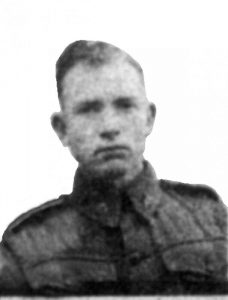
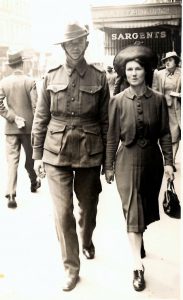
Bob was housed in Wolfe and Charles in Darwin (one would have thought brothers could be housed together!)  Bob Chipperfield’s parents died in 1922.
Bob was an early enlister – 7 Oct 1940, later joining 2/4th’s ‘A’ Coy 5 Platoon. Bob was a caring and gentle giant of a man.
Bob was the  ‘Tallest man in 2/4th’. He was shell-shocked at Ulu Pandan.   He died of illness on the First March, Sandakan to Ranau Track, Borneo of  Cardiac Beri-beri 11/2/1945  (28 years)
Please read further about the tragedy of Sandakan 
WX20086  DAVIES, Gustav (Gus)

was born 22 Oct 1921, Wales. arrived Fremantle on  ‘Balranald ‘aged 11 years on 14/11/1932.  On the same 1932 journey was Ronald Burchell WX14023 and Ron’s brother. 
Gus was housed at Kitchener at Fairbridge.
He enlisted AIF 1 Oct 1941 and later joined reinforcements ‘E’ Coy.   KIA  Buona Vista, Singapore, during the last day of fighting on 15/2/1942 he was only 20 years old.
Gus’s parents Charles A Davies and Agnes Mabel Rapson married March 1920 Pontypool, Monmouthshire, Wales.  Gus had an older brother Charles Allan born 1920 and younger sister Ursula who was born 1924.
His father Charles Davies died Sep 1931 Pontypool, Monmouthshire.  His mother Agnes  died in NSW, Australia in 1974.  Agnes had gone to Australia with her son Charles who died in 1991.  It is not known if Agnes kept in contact with Gus.
WX9131 GOODWIN, Reuben

Born 14 Aug 1916 Essex, England.
Rueben was from Barnardos homes, England and arrived Australia on ‘Ballarat’ 1928 aged 11 years. He was housed in Forrest.
(We have traced a brother Arthur and sister Beatrice).
Rueben was working for Bailey family, Konnogorring (near Goomalling) as a farm labourer when he enlisted. (another local  was Leonard ‘King’ Thistlewaite who was known to Pard Riches of 2/4th)
Enlisted AIF 30 Oct 1940 later joined ‘B’ Coy 9 Platoon. Selected in Singapore with ‘F’ Force to work on the Burma-Thai Railway.  He was evacuated sick to Tambaya Hospital Camp in Burma where he  died of beri beri and dysentery 6/11/1943 . (27 years). 1700  F Force men were initially evacuated to Tambaya.  Of these 750 died.  Tambaya had no medical supplies or equipment.
Please read further about ‘F’ Force Thailand
WX17351  HURST, Patrick George (Pat)
Pat arrived aged 12 years
Arrived Australia on ‘Baradine’ Christmas day, December 1934. Although not recorded on his enlistment papers, and perhaps he did not know, Hurst’s parents were George Hurst (Snr) & Edith M. Millingsley.
Hurst enlisted 22 Oct 1941 at Claremont, initially recorded the Fairbridge Headmaster as his next of kin, later changing to his then wife Patricia May (Martain) whom he married in 1941.
His widow Patricia remarried in 1947.
He joined reinforcements for 2/4th.  With  ‘E’ Coy he was KIA  South-west Bukit Timah Japanese ambush, Singapore 11/2/1942 aged 20 years.
WX16236  KING, Alfred Victor (aka Albert John)
Believed to be born at late as 1924, King recorded his birth as 21 Feb 1922. Along with his name variations this was to disguise the fact he enlisted underage.  As a Fairbridge Farm kid he was a ward of the state until 21.
King arrived on ‘Oronsay’ departing England July 1932 aged 8 years.  Also on board was 13 year old ‘Ted’ Edward Jonathon Leadbitter WX8425.
He enlisted AIF 27 Aug 1941 later joining the reinforcements for 2/4th, with ‘E’ Coy.  King survived the battle for Singapore.    Selected in Singapore to work on Burma-Thai railway with ‘D’ Force S Battalion in Thailand.   Sent to Japan with ‘Rashin Maru’ worked Yamane, Niihama.  Recovered from Japan at end of war (other ‘D’ Force  S Battalion Fairbrige boys were  Westlake, Pascall, Matthews)  The last two were also with ‘Rashin Maru’ Party to Japan.)
Rejoined AIF and was KIA  8/11/1950 Korea aged 26 years.   (after 42 days in Korea)


WX4949  KINGSWELL Ronald (Ron) James, Sgt


Ronald James Kingswell arrived in Australia 14/2/1928 on ‘Bendigo’  aged 12 years. He was housed at Wolfe Cottage. He enlisted AIF 23 Jul 1940, later joining ‘C’ Coy.  He and Gibbons were Sergeants for No. 12 Platoon.
Died 25/3/1942 appendicitis Allied Hospital Bandoeng, Java aged 25 years. Kingswell never reached Singapore with the 2/4th – instead he arrived with about 90 machine gunners at Java, where they joined the Allied Forces to fight the Japanese.  They were taken POWs in early March 1942.
Please read about 90 men from 2/4th who were AWOL at Fremantle.

Ron was engaged to be married, the reason he jumped ship!

As we later discovered Ron has a half brother and quite an extended family, of which he knew nothing.


WX8425  LEADBITTER Edward Jonathan (Ted)
Born 5 Dec 1918 London to George & Maud Leadbitter.
His father had died in the Battle of Jutland and his mother had passed away when he was 11 years old.
Ted arrived in Australia on 23/8/1932 on ‘Oronsay’ aged 14 years as did another 2/4th WX16236 Albert John King aged 8 years who was KIA Korea 1950.   He enlisted AIF 18 Oct 1940 and later joined 2/4th’s ‘D’ Coy 15 Platoon under Commanding Officer Lt. Meiklejohn.
Please read about ‘D’ Company, 15 Platoon.
Ted had married prior to departing.
Selected in Singapore with ‘D’ Force V Battalion to work on Burma-Thai Railway.  Died cholera following a brutal and extended beating at Kuii Camp, Thailand from a spiteful guard called ‘Blackcat’ on 10/10/1943 aged 24 years.
Please read further about ‘D’ Force V Battalion


WX7634   OSBORNE Sydney Albert (SYD)
Born 23 May 1919 London, England.  He arrived 11/2/1924  aged about 5 years. Osborne was housed at Jenner Cottage.
Sydney Albert Osborne married in 1937 to Fairbridge girl Irene Daphne Randall who arrived in WA November 1929 and was housed in Wolfe cottage. At 14 Irene would have been sent to work as a domestic in rural WA.

Syd Osborne enlisted AIF 10 Aug 1940 later joining 2/4th MGB’s ‘D’ Company No. 14 Platoon as a driver with Commanding Officer Lt .Tom Tompkins.  Other 2/4th ‘boys’ in this platoon included Percy Westlake. Although tall, Syd was not as tall as Bob Chipperfield.
Osborne was wounded in action at Ulu Pandan. Admitted to 2/13th Australian General Hospital on 16.2.1942 with shrapnel wounds to his back, shoulder and left buttock. Discharged to unit on 7.3.1942.  There were many 2/4th KIA or wounded at Ulu Pandan.
Selected from Singapore to Borneo with ‘B’ Force Borneo with Bob Chipperfield,  he never left Sandakan Camp and died malaria  26/6/1945 aged 31 years. Syd was married with two young sons.  One son Brian, is today (April 2021) 80 years old.
Irene Osborne remarried.   Thereafter at the request of her new husband, she and the boys were never allowed to talk of Syd again and his photos put away.
Please read about the Sandakan Tragedy
WX7617   SCADDAN Harry Wright 
was born 20 Aug 1914 Ashington, England to Harry (Snr)and Winnie Scaddan.
Harry Scaddan arrived in Australia 21/3/1926 on ‘Berrima’ aged 12 years.  He was housed in Wolfe.  His father had died and his mother was unable to take care of both Harry and his sister however they corresponded.
His sister pursued her interests and talent in ballet of which Harry was most proud.  His future plans included returning to England to see his mother and sister.
Scaddan was sent to Boyanup to work with Bill Smith then left to work at Argyle Mill.  He later went to work for T.E.  Reilly and became best friends with son Joe Reilly.    Harry was a talented sportsman – he played cricket, hockey and tennis.
Harry was a noted sports boy at Fairbridge.  His name is recorded in athletic events with John Ramsbottom (also 2/4th).  Harry also played drums!
He enlisted AIF 10 Aug 1940 and later joined 2/4th’s HQ Coy.  Selected in Singapore with ‘A’ Force Burma Green Force No. 3 Battalion to work on  Burma end of Burma-Thai Railway.  Evacuated sick from Burma to Tamarkan Hospital Camp, Thailand where he died of malaria  22/4/1944 aged 29 years.  * (Claude Knott enlisted same day). Please read about A Force Burma Green Force No. 3 Btn.


WX16323  TOOZE Reginald Gerald 
B. 24 Sep 1920 Somerset, England to May Tooze.
Reg arrived Australia 14/5/1931 aged 11 years.  He arrived on same ship as ‘Cowboy’ Matthews, the ‘Largs Bay’.  Both were housed in Nelson Cottage.
He enlisted AIF 3 Sep 1941 later joined 2/4th reinforcements, ‘E’ Coy’ as a Batman/runner.    KIA 11/2/1942 South-west Bukit Timah during the Japanese Ambush where nearly half ‘E’ Coy died. Reg was 21 years old.  Reg had been working and residing at Yarloop when he enlisted.

* Tooze & Tanner enlisted same day.


Right: believed to be taken Fairbridge.  Tooze in civilian clothes – Reg did not enlist until 3 Sep 1941 – this photo taken prior to that date.
During Mar 2020, a member of Reg’s extended family in England made contact with 2/4th.    Geoffrey Tooze is the son of Reg’s younger brother George.  When George died, his children discovered they had an Uncle who had lived in Australia and was KIA Singapore 1945 – they previously had no knowledge of Reg’s existence.
Reg Tooze’s name is inscribed on WW2 Memorial at Yarloop.
It is believed Reg was in the Fairbridge Choir.
He was working on a farm in 1935  at ‘Byeen’, Wattening via Toodyay
In 1936 Reg was working at Pindawa Pastoral Company, Canna (small town located between Morawa and Mullewa) and was working at Yarloop prior to his enlistment.
When Reg Tooze was about 14 years old he was with a party of boys sawing wood with a group of boys. They had been on this task for about 6 weeks splitting sheoak, jarrah and banksia.   The large and bulky steam combustion engine which weighed over a ton and could not be moved or budged if tripped over or lent on, was used to drive a 10 foot cross-cut saw to segment larger tree trunks into more easily handled lengths.
The piece of wood being sawed was jarrah with many knots in the grain so the crosscut saw had difficulty cutting through. Without warning the saw jerked sharply to a stop and the leather-driving belt thrashed out violently in all directions striking Reg Tooze. Although several boys suffered very slight wounds, Reg lay seriously injured on the ground.   Bill McCormack immediately recognized Tooze’s injuries were such that he should not be transported back to Fairbridge in the Reo truck as the ride on  corrugated track as the ride would be far too rough.
He ordered the boys to put together 2 strong sapling sticks and with bags from the truck made up a bush stretcher for 4 boys to carry the injured Tooze. There were 5 boys and Bill McCormack.   They took turns carrying their patient, stopping at 5-minute intervals and one driving the Reo truck behind the party.
They had travelled a mile when it became obvious the boys were no longer able to carry Tooze. They all had severely blistered hands from the moisture of the green saplings mixed with perspiration and grimey hands. They were physically exhausted. They were also in a state of shock.
By this time Tooze was conscious and able to speak a few words. He managed to tell them he was cold, stiff and couldn’t feel his legs. With this news Bill McCormack ran to the Reo truck telling the boys not to leave under any circumstances. Reg’s mate Gordon Bowles sat beside him waving his hands to keep the flies away as Cormack drove away towards the village.
Within half an hour Bill McCormack was back in the Reo with the Fairbridge Nurse- dressed in her white stockings, white uniform and white cap.   She hurriedly made her way to Reg; felt his forehead, raised his eyebrow to peer into his eyes and after shaking her thermometer proceeded to take his temperature. She did not attempt to straighten his doubled up knees.
After conferring with Bill McCormack the Red Cross Warden announced Reg was to be carefully lifted onto the back of truck and the boys to pack in tight around the stretcher so much so that it wouldn’t move or bounce about.
It was late when the truck arrived back at the village, in fact almost dark. While Reg was taken to Hospital at Pinjarra those with surface injuries were nursed in their beds and after a few days placed on light duties only.
It was several weeks later before Reg Tooze was found by the boys sitting on the steps of Stratton House – home to the senior boys. He lifted his shirt to show the deep welts on his abdomen some of which were still inflamed. Reg was put on light duties in the vegetable garden with Bowles.  The two had previously lived in different houses, but opposite each other. Bowles was in ‘Glasgow’ right opposite Nelson where Tooze was. And they had both been in the church choir.
Both boys went out to their respective farm labouring jobs at 15 years of age.  They never met again.
Reg had never voted or married.  Fairbridge was all he really knew to be his family.
Bowles enlisted with 2/48th. and survived.
Please read about WX14836 John (Jack) Kenneth Ramsbottom (later Lane) form Fairbridge boy and author.


Below:  Nightingale – Hospital constructed 1930s with two four bed wards – one each for girls and one for the boys.  There was a Nursing Sister’s accommodation at rear.

Above: Nelson Cottage

Above:  Evelyn Cottage

Above:  The Fairbridge Dairy

Above:  Cook Cottage

Above:  Clive Cottage

Above:  Jarrah bunk beds in one of the original Fairbridge Farm Holiday buildings at Mandurah.  A local farmer had this original building on his property and offered it back to the village. The windows all had jarrah shutters, the floor was jarrah.  Visited by Cheryl Mellor 2025 (dau of Noel/Cowboy Matthews)

Above:  Metters wood stove – they would have been in all the Houses at Fairbridge.  The floor boards would have been bare.


Above:  Fairbridge Village guide showing copy of iron beds in the bedrooms the children slept on.


Above:  Collection of original shingles for probably the Mandurah holiday houses.

Above:  A copy of possibly the common room of the Fairbridge houses with open fire, jarrah floors, stools, etc.

Above:  Laundry with cement trough, and wood heating copper for heating water for baths, laundry etc.  Most houses had these items at that time.

Above. Looking out the shuttered windows in the Mandurah holiday houses.

 **** Please read below about Andrew Smeaton, 2/2nd Commandos,
THOSE WHO RETURNED
WX7600  BOUSFIELD George Reginald 
Formerly from  Barnardos he arrived in Western Australia on ‘Euripides‘  on 11 February 1924 at Albany.  George aged 10 years, was housed in Glasgow Cottage.
B. 8 Aug 1914 Liverpool, England.  He enlisted AIF 6 Aug 1940, later joining ‘D’ Coy.
Bousfied was one of about 90 machine gunners AWOL when ‘Aquitania’ sailed from Fremantle 16 Jan 1942 (as was  Kingswell)  Sent to Burma from Java, Bousfield worked on Burma-Thai railway with Williams Force and No. 1 Mobile Force. Recovered from Nakom Nayok Camp, Thailand.


WX7616  KNOTT Claude
Born 17 Jul 1917 Hereford, England to Fred and Mabel Knott.  He arrived Western Australia from London on the ‘Beltana’ on 3/10/1928 in a group of 52 children.  Claude was 11 years old.  He was placed in Henry Hudson House.
Claude enlisted  AIF 10th
Aug 1940 and later joined 2/4th’s
‘A’ Coy as a Driver.  Selected in Singapore with ‘A’ Force Green Force, No. 3 Battalion for  Burma to work on Burma-Thai Railway.  Selected from Non Pladuk Camp, Thailand to work in Japan.  Left with ‘Awa Maru’ Party and worked at Fukuoka sub-Camp No. 17, Omuta. Was recovered from here at end of war.  * (Harry Scadden enlisted same day).  Harry Lucas also with Green Force and same camp Japan.
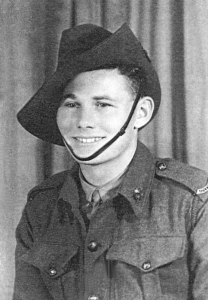
Knott was working in 1935 & 1936 for J. Renfree & Sons, Boyanup.  He visited and stayed at Fairbridge during March and April 1936.  According to social notes recorded in the magazine “The Fairbridgian”  Claude was an entertainer!  Walking upside down on his hands.
In 1938 Claude married Ellen Bertha Harris.  They had four children.  Claude and Ellen lived in Ray St, Boyanup.
It is probable Knott and Scadden who was also at Boyanup, were in touch with each other prior to enlisting.
Claude Knott, Don Ross and Harry Bunker were in No. 6 Platoon, ‘A’ Company.
Former Fairbridge Kids in No. 6 Platoon included Knott and Maude; Reinforcements included Harry Lucas and Reg Pascall.
Don Ross WX9253 died Sandakan.  He was married to Harry Bunker’s sister Ada.
Knott, Ross, Bunker enlisted 30 Oct 1940 into ‘A’ Coy.  Charles Harris enlisted 13 Aug 1940 and Harry Delaporte enlisted 10 Aug 1940 in to ‘A’ Coy.
Delaporte was on Rakuyo Maru as was Harry Bunker.  Only Bunker survived.   Ross perished Sandakan 23 May 1945 and Harris died 27 May 1945.
WX13752  LUCAS Harry 
b. 11 Oct 1919 to Frank & Alice Lucas at Windsor, England.
He was one of two sons.
Harry arrived in Australia on 20th March 1928 on ‘Benalla’ aged 8 years.  His mother died in 1922 when Harry was 3 years old.
He attended Fairbridge school for 6 years before being assigned to work.
In 1935 Harry was working at Calingiri in 1936 and working for J. Thomson Esq, Yericoin. The magazine “The Fairbridgian” wrote Harry stayed at Fairbridge for a visit in January and February 1936.  Other 2/4th boys staying about same time included Ted Leadbitter, Syd Osborne, and Rueben Goodwin – all three lost their lives.
Harry recorded his brother Frank as his NOK.  Frank was living in Windsor, England.
He enlisted AIF 28 May 1941and later joined 2/4th’s ‘A’ Coy.  as a Driver/mechanic.   Selected in Singapore with ‘A’ Force Burma Green Force, No. 3 Battalion to work on the Burma-Thai Railway.  From Tamarkan Camp Thailand, he was deemed fit and selected to go to Japan to work with ‘Awa Maru’  Party and worked at Fukuoka sub-Camp No. 17  Omuta, from where he was recovered at the end of the war.  Claude Knott also in Green Force and Japan.
WX17000  MATTHEWS Frederick Noel (Cowboy)
b. 23 Dec 1923 Liverpool, England to Elizabeth Matthews.
He arrived in Australia 14/5/1931 on ‘Largs Bay’ aged 8 years.  Also on board was  Reginald Gerald Tooze WX16323.  They were housed in ‘Nelson’ Cottage.
Cowboy was with ‘E’ Coy during the fight to save Singapore, he was one of the few survivors of Fairbridge boys in E Coy.
Enlisted 23 Oct 1941 (underage) Reinforcement with ‘E’ Coy, Special Reserve Battalion.  Sent to work Burma-Thai Railway at Hellfire Pass Cutting with ‘D’ Force Thailand ‘S’ Battalion. In 1944 selected by Japanese as fit to work in Japan.  Sailed Rashin Maru (70 day journey on ‘junk’ ship) to Moji, Japan then travelled to Yamane and Nihama – Mitsui copper mines till end of war.


WX13285  MAUDE Jack
Jack’s father was a doctor who was killed serving with the French Army during WW1. Jack had been sent out to Australia from Swanley Boys Orphanage in Kent.
He arrived Australia 9/3/1921 on “Omar” having just turned 10 years old.  His group was the first to be sent from England after WWI and consisted of just 15 boys and girls.  Later groups were much larger.
Jack maintained a life friendship with several other Fairbridge Kids including twins Dorothy and Florence Webb who also sailed with the “Omar” group.
His working contract from Fairbridge took him to Carnarvon 1921-1926, then 1929-30 he was located at Boyanup, Dardanup and Mt Barker.  Between the years 1931-1935 Jack was back working in the Carnarvon area and in 1941-42 was recorded in the City Directory as residing in Palmyra.
With Fairbridge mates Ken Waters and Steve Brown, Jack regularly visited and maintained the friendship of Dorothy Webb and Henry Hawkesford, the first couple to marry at the new Fairbridge Church. The Hawkesford’s farmed at Cowamwerup.   Phoebe Pinker (nee Hawkesford) daughter of Dorothy & Henry remembers ‘Uncle Jack’ being quietly spoken and a caring man.
Jack was sent to work on Burma-Thai railway from Java, where he landed rather than Singapore because he was one 90 odd 2/4th men who went AWOL from Aquitania  (the 3rd Fairbridge Boy) when it anchored for one night at Gauge Roads off Fremantle on its journey to Singapore 15 January 1942.
From Java he was selected from Bicycle Camp Batavia with ‘A’ Force Burma, Java Party No. 4 Williams Force. Was later selected from Kanchanaburi, Thailand to work in Japan. Left with ‘Awa Maru’ Party with Harry Lucas and Claude Knott however separated at Moji and worked at Fukuoka sub-Camp No. 24 Sendyu.  Was recovered from here at end of War.
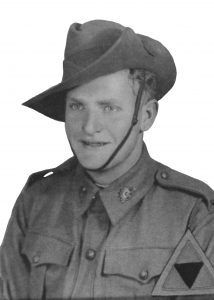
Jack Maude suffered all his life with the effects of radiation from atomic bomb.


WX12336  PASCALL Reginald
Born 5 Nov 1920 Kent, England to Elizabeth Pascall.
Reg arrived in Australia with Party No. 25 on SS ‘Ballarat’ on 23/11/1931 aged 11 years.  He was housed in ‘Kitchener’.

In 1936 Reg was working at Brick House Station, Carnarvon. He enlisted 2 May 1941, Taken on Strength to SA joined ‘A’ Coy as a rein reinforcement,
At Singapore Reg went with ‘D’ Force Thailand S Battalion to work on Burma-Thai Railway.  Deemed fit by the Japanese in 1944, he was selected to work in Japan with ‘Rashin’ Maru Party.  He worked at Yamane and Niihama & recovered from Japan at the end of the war.
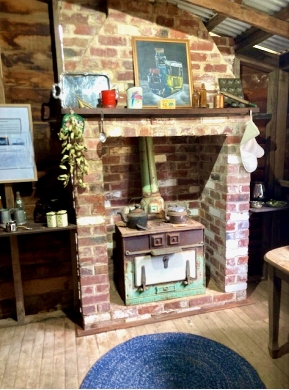
Others with ‘D’ Force  S Battalion: Westlake, Pascall, Matthews, King.  The last three were also with ‘Rashin Maru’ Party to Japan. 
Returning from war, Reg married 1948 in Victoria to Lorna Francis Barry.
Lorna died 10 June 1997.  Reg died 20 June 2006 aged 85 years.  Both are buried Portarlington Cemetery, Portarlington, Greater Geelong, Victoria, Australia
                   ‘
WX17393  PILMOOR Thomas 
Born 4 Jul 1917 Gloucestershire, England to Robert and Sarah Pilmoor.
Tom arrived in Australia from England with older brother Robert on  3/10/1928.  Tom was 11 years old and Robert  13 years.  Tom was housed in Livingstone.  He was a student at Fairbridge for 5 years before being sent to work.
From 1933 to 1936 Tom was working for W. Green Esq., Mt Barker.
He enlisted AIF 27 Oct 1941 and as a reinforcement joined Battalion HQ as temporary Batman/Runner.
Selected from Singapore to work Burma, with ‘A’ Force Green Force No. 3 Battalion.  He was recovered from Bangkok, Thailand at the the end of war.  Tom had been selected to work in Japan, however missed the draft due to illness.
 Lucas and Knott were also with  ‘A’ Force, Green Force No. 3 Battalion in Burma.


WX14836  RAMSBOTTOM Jack Kenneth (later known as John LANE). 

Born 18 Nov 1922 Ramsgate, Kent, England.

John arrived in 1933 was housed at Rhodes and left to go to work in 1938.  John wrote the story of his life ‘Fairbridge Kid’ and later a book about Japan.
John was a noted athlete at Fairbridge along with Harry Scaddan.
He enlisted 4 July 1941 and joined ‘A’ Coy  as a reinforcement.
Selected from Singapore with ‘J’ Force Wales Maru’  Party to work in Japan at Kobe.  He in fact spent most of his POW days in Japan.  From Kobe he worked at Kawasaki Camp, Maruyama Park Wakinohama from where he was recovered at the end of the war.  (After the war changed his name to Jack Kenneth Lane.)
John Lane gave much back to Fairbridge.  He is responsible for the construction of the cottage on the Fairbridge grounds which shows how life was for the children.  John also organised bus tours of Fairbridge Farm School – driving a bus and providing history to passengers.

John gave much back and was proud of his Fairbridge heritage

Below: Replica of a cottage donated by John Lane.

WX16324 TANNER George Douglas (Doug)
born 12 Jan 1922 London, England.
He was one of 22 boys and girls who arrived in Australia on ‘Ballarat’ 15/5/1934.  Doug was 12 years old.  He was accommodated at ‘Newton’ House. He has two older sisters and was 4 years old when his mother, Alice Beatrice Tanner (nee Legg) born 1879 died in 1926 at the age of 47 years. His father George Thomas Tanner was born 1880 and died in 1940.
Doug and Fairbridge Kid Reg Tooze WX16323 were together when they enlisted.  Reg Tooze was KIA 11 February 1942 aged 21 years.
He enlisted AIF 3 Sep 1941and joined HQ Coy as a reinforcement. He was selected in Singapore with ‘D’ Force V Battalion to work Burma-Thai Railway. It appears Doug spent a great deal of time at Brankassi Camp before being moved to Non Pladuk.  It was here he was deemed fit for Japan and selected with Aramis Party to work at Fukuoka sub-Camp No. 17 Omuta.
Claude Knott and Harry Lucas were at same camp at Omuta, although they sailed with ‘Awa Maru’ Party.  Doug was recovered from Omuta, Japan at end of the war.
Please read further about ‘D’ Force V Battalion
WX9570  WESTLAKE Percival Leonard
Westlake, Percy
Born 28 Jan 1917 Aldershot, England to George & Marie Westlake.
‘With D’ Coy he received shrapnel wounds to his right knee and abdomen 8 Feb 1942.
Selected from Singapore with ‘D’ Force Thailand S Battalion to work on Burma-Thai Railway.  Percy was recovered from Nacompaton Camp, Thailand at end of the war.
Chipperfield and Ramsbottom were in ‘A’ Company No 5 Platoon.  When Ramsbottom was very sick, Chipperfield endangered himself to get food supplies for him.
Claude Knott and Jack Maude were also in ‘A’ Company, however in No. 6 Platoon.  They were joined by reinforcements Harry Lucas and Reg Pascall.
The four young men who died February 1942 were part of ‘E’ Coy, Matthews was the only Old Fairbridgian in Reinforcements in ‘E’ Coy to survive Fall of Singapore.
There were two Old Fairbridgians who were Taken on Strength Woodside Camp, South Australia 5 October 1941.  King (KIA Korea) and Tanner.
After the war, those who were not married and without family returned to Fairbridge to stay.  The below photos (from Cowboy Matthews Collection) show many ‘recreational’ aspects of these men living life after the Forces and after surviving life as a POW!
For them it was back to Fairbridge, the only home they had known!
if you can identify the young men in any of  following photographs, please email; 2nd4th@gmail.com 
Below:  taken summer of 1945-1946 at Fairbridge Holiday Camp at Mandurah.

Sitting far Left Cowboy Matthews.

Old Fairbridgians after war.

‘Cowboy’ Matthews standing centre back in white.


Believed to be taken after the war.  ‘Cowboy’ Matthews standing on right.


Standing in front of Old Fairbridgians Hall.  Matthews standing on left.

Old Fairbridgians after war
Returned Soldiers were entitled to generous (?) fuel rations – this group decided to go touring.  Matthews standing far right.  Far Left:  possibly Doug Tanner


EPSON MFP image
John Lane (Left) and ‘Cowboy’ Matthews taken Fairbridge.

John Lane is wearing Fairbridge Farm School Tie.

Pease read John Lane’s obituary

The following was printed in Borehole Bulletin newsletter December 2000.

Below: 2/4th day at Fairbridge 2001.  2/4th were held events annually.

Fairbridge Farm 25 November 2001


Back Row L-R: Jim Burns, John Lane, Jim Elliott, Cowboy Matthews, Frank Evans, Alf Worth, Trevor James, Wally Lynn, Les Cody, Owen Morris


Front Row L-R: Greg Burdon, Ron Badock, Des Colevas, Jim Gilmour, Joe Pearce
Matthews, Lane & Pascall Old Fairbridgians


Above:  From Beattie Collection.

Matthews Cowboy, Obit, West Australian


Below:  1928 Fairbridge Hospital is constructed.

Below:  Lt. Col Heath arrived 1928 as the new Fairbridge Principal

Below:  ‘Ballarat’ arrives 1929 with boys and girls from England.  Amongst them is Bill Crawford who became a close mate of ‘Cowboy’ Matthews.  Standing next to each other at Northam, Matthews was sent to 2/4th and Crawford I believe to 2/28th.  They each managed to survive the war.

Below:  Fairbridge Sports Day 1933 – Participants include Harry Lucas and Noel Matthews.

Below:  1938


AFTER THE WAR
Fairbridge Farm School was run quite differently.  In fact the WA Government wanted to close the school because it did not meet health and safety standards.  This was overlooked  because of ‘Royal’ connections in England, ignoring the State Government’s assessent!
There are many stories of children whose lives were extremely traumatised and abused during the 1950’s onwards at Pinjarra and far worse at Moolong.


**** WX5537 Andrew Smeaton was born Stirling, Scotland 1918, enlisted AIF Claremont 11 Dec 1940 at the age of 22 years.  Andrew had no NOK to record and had been working as a farmhand at Wagin. He later joined 2/2nd Commandos.  
He was an original member of the unit, embarking aboard “S.S. ZEALANDIA” on 8 Dec 1941 for Timor as a Private in No 8 Section, “C” Platoon.
No 8 Section were operating an observation post (OP) near Mindelo, overlooking Maubisse, reporting on Japanese movements. Before dawn on the 11 Nov 1942, Andrew and Private George Thomas, went to man the OP and they were never heard of again. It was surmised that they were ambushed by the Japanese when they arrived and must have put up a terrific fight, as a patrol who went there later, although not finding any bodies, saw a big heap of expended ammunition shells, as indication that these two men had sold out dearly.
Some parts of the above information is from https://doublereds.org.au/history/men

FAIRBRIDGE, KINGSLEY OGILVIE 1885-1924 FOUNDER OF FAIRBRIDGE SCHOOLS

was born at Grahamstown, South Africa, on 5 May 1885. His father, Rhys Seymour Fairbridge, was a government land-surveyor. He was educated at St Andrew’s College, Grahamstown, until he was 11 years old, when the family moved to Rhodesia. He had no further schooling until he prepared to enter Oxford. At 13 he became a clerk in the Standard Bank of Africa at Umtali, and two years later tried to enlist for the Boer war, then took up market gardening and early in 1903 visited England. He was away for about 12 months and could not help being impressed by the contrast between the crowded cities of England and the open spaces of Rhodesia. On his return he worked for two and a half years for a Mr Freeman who was recruiting natives for the mines at Johannesburg. He began writing verses and was pleased to have two poems accepted by the South African Magazine. Slowly a scheme was being formulated in his mind to bring poor children from London to South Africa where they could be trained as farmers. He applied to the Rhodes trustees for a scholarship, feeling that once in England he would find ways of developing his scheme. He was informed by the Rhodes trustees that if he passed the Oxford entrance examination his application would be favourably considered, and in 1906 he went to England to be privately coached. Greek was essential and he had never done any. He worked hard at it and succeeded in passing the required examination at the fourth attempt. In October 1908 he entered Exeter College, Oxford, with a Rhodes scholarship. There he obtained his blue for boxing, beating Julian Grenfell twice in the trials, and made many friends. He began to write on child emigration until he was advised by a friend that speaking might be more effective. His first rebuff was from the British South Africa Company, which informed him that they considered Rhodesia too young a country in which to start child emigration. He was, however, cheered by a favourable answer from the premier of Newfoundland.
In October 1909 Fairbridge made a speech to the Colonial Club at Oxford, and at the end of the meeting a motion was carried that those present should form themselves into a society for the furtherance of child emigration to the colonies. The movement had begun. The next two years were spent in trying to interest people in the project and collecting money which came in slowly. He obtained his diploma in forestry, in 1911, and in December of that year was married to Ruby Ethel Whitmore who had been encouraging and helping him for some time. In March 1912 they sailed for Western Australia with a total capital of £2000. A property of 160 acres was purchased near Pinjarra about 60 miles south of Perth, and the Western Australian government agreed to help by paying £6 for each child towards the cost of the passage money. The first party, 13 children aged between 7 and 13, soon arrived, and was followed by another party of 22 boys some months later. Some kind of shelter had to be prepared for them, the utterly neglected orchard had to be pruned, and the English committee had to be satisfied that every item of expenditure was necessary. Fairbridge and his wife worked unceasingly and gradually each difficulty was overcome. But when the war came financial difficulties became very pressing, until a grant was obtained from the Western Australian government which tided the school over the war period. After the war Fairbridge went to England and so impressed everybody that a sum of £27,000 was procured for the development of the school. A more suitable site of 3200 acres was found and new buildings were put up. In 1922 the help of the Commonwealth government was secured, and in 1923, after years of discomfort, Fairbridge and his wife and family were able to move into a suitable house of their own. He had, however, suffered much from intermittent bouts of malaria and he now found himself often in pain. On 19 July 1924 he died after an operation. He was survived by his wife and four children. Three years after his death there were over 200 children at the school, and in 1935 the number had reached 370. In that year over 1000 employers applied for the 100 boys ready to go out to work. Other schools have since been established at Vancouver Island, Bacchus Marsh, Victoria, and Molong, New South Wales.
Kingsley Fairbridge was tall, athletic and good-looking with an attractive personality. He had vision and determination and a capacity to make his dreams become realities. His volume of poems Veld Verse, published in 1909, contains verse of more than average quality, his Autobiography written with simplicity and charm ends before he was 25. With the never-failing help of his wife he showed how an emigration farm school for children could be successfully carried on at a low cost in money, and that ill-nourished children from the slums could be made healthy, vigorous and worthy citizens of a new land.
The Autobiography of Kingsley Fairbridge; Ruby Fairbridge, PinjarraThe Times, 23 July 1924; W. Murdoch, The Argus, 20 March 1937; Rev. A. G. West, The Quarterly Review, April 1941.
COPIED FROM……
DICTIONARY OF AUSTRALIAN BIOGRAPHY
https://gutenberg.net.au/ebooks15/1500721h/0-dict-biogF.html


FAIRBRIDGE VILLAGE 2026

An original Mandurah hut was donatated to Fairbridge in 2025  from a farm from where it had been since the accommodation was pulled down for development.
Fairbridge organisation has collected historical items to show how the hut looked in he 1930’s and 1940’s.


Kitchen at Mandurah Fairbridge accommodation.